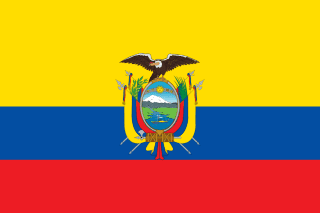
Moving to EcuadorShare
While living in Ecuador comes with a higher tax burden of 31.0%, expats often benefit from its robust social infrastructure and high quality of life. With a very high English proficiency score of 466, daily communication and business integration are seamless. It hosts a vibrant and diverse expat community, notably drawing a significant number of residents from Colombia.
Lifestyle & Vibe
Ecuador - particularly Quito and the coastal city of Salinas, plus the expat-heavy enclave of Cuenca - offers one of Latin America's most compelling cost-of-living-to-quality-of-life ratios, with USD-denominated economy eliminating currency risk and modern apartments available at a fraction of comparable US or European prices. Internet infrastructure in major cities is solid and improving, co-working spaces exist in Quito and Cuenca, and the expat social scene in Cuenca is particularly mature and English-friendly, skewing toward long-term retirees and established remote workers rather than transient nomads. Security has deteriorated significantly since 2022, with organized crime and extortion becoming serious concerns in Guayaquil and parts of Quito - real situational awareness is non-negotiable. The digital nomad visa framework is still developing, but Ecuador's general openness to foreign residents and its stable dollar economy make it worth serious consideration for the right risk profile.
Digital Freedom & Remote Work
Censorship and network interference data is currently being collected for Ecuador.
Society & Demographics
Ecuador's society is characterized by a balanced gender ratio with 49.85% males and 50.15% females. With 77.17% of the population connected to the internet, digital literacy is prevalent, enhancing communication and information access. The country demonstrates moderate income inequality as indicated by a GINI Index of 45.90, with 43.0657% women in parliament reflecting progress towards gender equality. Urbanization stands at 63.24%, while the population over 65 years old accounts for 8.34%, suggesting ongoing demographic shifts. Ecuador invests significantly in education, dedicating 15.49% of its GDP to this sector, fostering a skilled workforce and contributing to societal development.
Gender Distribution
Aging Society
Population over 65 years old
Education Spending
UNESCO Data. Indicates focus on public schooling.
Quality of Life
Ecuador has a life expectancy of 73.96 years, indicating a generally healthy population. With a high universal health coverage index at 78.00 and 23.13 medical doctors per 10k people, the country ensures accessible healthcare to its citizens. However, an obesity rate of 28.93% and a happiness score of 6.14 on a scale from 0 to 10 suggest areas for improvement in lifestyle and overall well-being. Despite having relatively clean air with PM2.5 levels at 16.66 µg/m³, the homicide rate of 45.72 per 100k poses significant safety concerns.
Economic Freedom & Business Climate
The Ecuadorian economy demonstrates a relatively balanced performance with an unemployment rate of 3.31%, indicating strong labor market conditions, and an inflation rate of 1.55%, suggesting stable prices. However, the overall economic freedom score of 55.60 out of 100 indicates room for improvement in areas such as property rights (33.20), government integrity (33.00), and financial freedom (40.00). The fiscal health is robust with a score of 90.30, while business and monetary freedoms score relatively high at 64.30 and 76.30 respectively, reflecting favorable conditions for entrepreneurs and investors.
Evaluated across 12 quantitative factors. Scores span 0-100, where higher scores indicate greater economic liberty, lighter tax burdens, and stronger property rights.
Climate Profile (Quito)
Ecuador has a mild and temperate climate, characterized by moderate temperatures and varying levels of rainfall throughout the year, with the hottest period typically occurring between August and September, when average maximum temperatures soar to 18.97°C and 19.52°C respectively. The rainiest periods are usually from February to April and November to December, with the month of March experiencing the most rainy days at 29, while the dry season from June to September offers the most pleasant weather, making it the ideal time for expats and digital nomads to relocate or visit. For those seeking comfortable weather, the best season to visit or relocate to Ecuador is during the dry season, from June to September, when the average maximum temperature is a pleasant 17.09°C to 19.52°C, and the number of rainy days is significantly lower, ranging from 10 to 17 days per month.
Political Stability & Governance
Evaluated across Worldwide Governance Indicators (WGI). Scores span approximately -2.5 to 2.5, where higher scores indicate stronger governance, better stability, and lower corruption.
Relocation Guides & Articles

September 10, 2026
Moving to Ecuador in 2026: $1,446 Pension Visa, 0% Tax on Foreign Pensions, and Cuenca Reality
Ecuador combines a dollarized economy and low inflation with a $1,446/mo Pensioner Visa, tax-free foreign pensions, and low living costs in Cuenca. Full 2026 guide.

July 10, 2026
Ecuador Digital Nomad Visa 2026: Exactly $1,446/Mo, $320 Total Fee & 183-Day Tax Trap
Ecuador's Rentista visa requires exactly $1,446/month and costs $320 total. Learn how the 183-day tax residency rule works, apostille pitfalls, and 2-year renewal terms.
Explore Similar Destinations
Frequently Asked Questions
What is the tax burden in Ecuador?
The tax burden in Ecuador is approximately 31.0%, according to World Bank data.
Is Ecuador safe?
The homicide rate in Ecuador is 45.7 per 100,000 people (World Bank).
Are people happy in Ecuador?
The World Happiness Report scores Ecuador at 6.1 out of 10.