
Ecuador Digital Nomad Visa 2026: Exactly $1,446/Mo, $320 Total Fee & 183-Day Tax Trap
July 10, 2026
ShareEcuador has officially finalized its regulatory framework for the 2026 residency cycle, establishing a system that prioritizes economic stability and digital efficiency. For the first time in nearly a decade, a historic consensus between the national government, labor unions, and the employer sector has stabilized the economic gatekeepers of the country’s residency programs [3][13]. The result is a fixed minimum income requirement for the Digital Nomad Visa (officially the "Rentista for Remote Work") set at exactly $1,446 per month [2][5]. This figure is mathematically tied to the 2026 Salario Básico Unificado (SBU), which has been increased to $482 [7][15].
This visa category offers an initial authorization of 2 years of legal residency, providing a far more stable alternative to the standard 90-day tourist stay that often leaves remote workers in a cycle of "border runs" and legal uncertainty [1][10]. While other nations have raised their barriers to entry or introduced complex tax hurdles, Ecuador has maintained a dollarized economy that appeals to North American and European professionals seeking a lower cost of living without the volatility of local currency fluctuations [5][11]. However, the shift to a fully digital application system means the margin for administrative error has effectively vanished; the government now relies on automated triggers and strict document labeling that can derail an application in seconds [1][11].
Understanding the nuances of this residency path is critical because it represents more than just a temporary stay. For the strategic expat, the Digital Nomad Visa serves as the fastest and most cost-effective legal bridge to permanent residency in South America, requiring only 21 months of physical presence to qualify for a status that never expires [5][12]. If you earn at least $1,446 and can manage the logistical hurdles of "Ecuadorianization" of your documents, the path to Andean residency is clearer in 2026 than it has been in years.
1. What is the Ecuador Digital Nomad Visa?
In the official halls of the Ministerio de Relaciones Exteriores y Movilidad Humana (MREMH), this permit is not referred to as a "Nomad Visa." To avoid administrative rejection, you must recognize its legal nomenclature: the Visa de residencia temporal rentista para trabajo remoto [1][14]. This distinction is vital; applying under the wrong category in the digital portal will result in an immediate loss of your non-refundable application fee. The visa is a specific sub-type of the "Rentista" category, designed for those who possess their own foreign business or work for foreign entities while residing within Ecuadorian borders [1][8].
The legal architecture of this visa is governed by the following parameters:
- Administering Body: The Ministerio de Relaciones Exteriores y Movilidad Humana (MREMH) handles all processing, though much of the initial review is now automated through the e-VISAS platform [1][10].
- Legal Basis: It is grounded in Article 60 of the Ley Orgánica de Movilidad Humana (LOMH), which defines temporary residency as a 2 years authorization [1][13].
- Purpose: To allow foreign nationals to perform professional activities or services remotely via digital means or telework for entities domiciled abroad [1].
- Launch Context: Developed to leverage the global shift toward remote work and stabilize foreign direct investment through dollar-earning residents.
The visa is open to a wide range of professionals, including remote employees, independent contractors, freelancers, and business owners who pay themselves from their own foreign-domiciled corporations [1][14]. However, eligibility is not universal. The Ecuadorian government explicitly restricts citizens of specific countries from accessing this category. Citizens of the following nations are prohibited from receiving this visa: Afghanistan, Angola, Bangladesh, Cameroon, North Korea, Cuba, Egypt, Eritrea, Ethiopia, Philippines, Gambia, Ghana, India, Iraq, Iran, Kenya, Libya, Nepal, Nigeria, Pakistan, Democratic Republic of Congo, Senegal, Syria, Somalia, Sri Lanka, Venezuela, Vietnam, and Yemen [8][10].
[!WARNING] While the visa grants a legal stay of 2 years, your residency is not "fully active" until you complete the post-grant registration and obtain your Cedula (national ID card). The "Arrival" registration is the legal trigger for the 21-month permanent residency clock; if you fail to register your arrival or ignore the transition from visa approval to ID issuance, you are essentially residing in a legal limbo where you have a digital file but no recognized standing in the local health or banking systems.
2. Eligibility Requirements: The 2026 Thresholds
The strategic importance of the Salario Básico Unificado (SBU) cannot be overstated. It is the "gatekeeper" for all Ecuadorian residency. Because the Digital Nomad Visa is pegged to 3x the SBU, any change in the national minimum wage-which is reviewed every January-immediately changes your eligibility [2][7]. For 2026, the SBU consensus at $482 has set a firm floor that applicants must clear to even be considered by the e-VISAS system [3][15].
2026 Eligibility Criteria
| Requirement | Specific Metric | Source Evidence |
|---|---|---|
| Minimum Individual Income | $1,446 per month (3x SBU) | MREMH Official Portal [1][7] |
| Dependent Income | +$250 per month per person | Ministerial Agreement 70 [1][2] |
| Minimum Savings Alternative | $34,704 (for the full 2 years term) | BilDev/Ministry Guidelines [1][8] |
| Proof Type | 3 months of consecutive bank statements | MREMH Requirements [1][7] |
| Health Insurance | Full coverage for the 2 years term | LOMH Art. 61 [5][13] |
The math for the savings alternative is precise: 36 times the current SBU multiplied by the number of years requested. For a 2 years visa, the calculation is 36 * $482 * 2 = $34,704. Applicants choosing this route must show this balance in an international account for the three months prior to the request.
Verification of these funds requires more than just a balance check. The government mandates that you "accredit lawful means of support" in accordance with Ministerial Agreement No. 70 [1]. This means the e-VISAS system looks for specific keywords in your bank statements or employment letters. If you are a freelancer with irregular income, you must show that your average over the last three months meets the $1,446 threshold, supported by client contracts or a company deed if you are self-employed [1][14].
Grey areas persist in 2026 regarding irregular freelance income and crypto-based earnings. While crypto is not explicitly banned, the Ministry requires "lawful source" verification. Practically, this means crypto must be liquidated into a traditional currency and shown as a recurring deposit in a regulated bank account. One-off transfers from exchanges like Coinbase or Binance are frequently rejected if they cannot be linked back to a professional service contract.
[!WARNING] The e-VISAS platform reviewers are notoriously literal. If your bank statements do not explicitly show the source (employer name or "Remote Work" description), or if they show transfers from "Paypal" or "Venmo" without an accompanying employment contract, the application will likely trigger a "Request for Information" (RFI). An RFI is not a rejection, but it can delay your process by 30-60 days as it moves your file to the back of the manual review queue [11]. Once eligibility is confirmed, the focus must shift to the logistical hurdle of document "Ecuadorianization."
3. Required Documents: Apostilles and Translations
In the world of Ecuadorian immigration, the "apostille" is the single most common point of failure for North American and European applicants. An apostille is an international certification that authenticates a document for use in another country. If a document is not apostilled by the state or federal body that issued it, the Ecuadorian Ministry will treat it as if it does not exist [5][10].
Every applicant must procure the following mandatory documents:
- Valid Passport: Must have at least six months of validity remaining at the time of the request [1][8].
- Criminal Record Check: This must cover the last five years and come from your country of origin or the country where you resided for the last five years. For federal countries like the United States, the certificate must be at the national level (FBI Report) [1][10].
- Proof of Income: Employment contracts, company deeds, or letters from clients specifying the remote nature of the work and the $1,446 monthly minimum [1][14].
- Health Insurance: A certificate of policy coverage specifying "Coverage in Ecuador" for the full 2 years duration [5][13].
Documents originating outside of Ecuador must be "Ecuadorianized." This involves two mandatory steps: a certified Spanish translation and an apostille from the country of origin [1][7]. Note that for U.S. Citizens, getting an FBI report apostilled by the US Department of State currently involves an 8-12 week backlog. You cannot use a state-level apostille for a federal FBI report; the hierarchy must match [12].
The criminal background check is the most time-sensitive document; it is only valid for 180 days from the date of issuance to the date of your last entry into the country [1][8].
[!WARNING] Beware the "180-day trap." If your FBI or police background check is dated January 1st, it expires on June 30th. If the e-VISAS system experiences a technical outage-which is common-or if your procurement of other documents is delayed past that 180 days window, the background check becomes legally void. You will be forced to restart the entire procurement and apostille process from scratch, including the 8-12 week wait for federal authentication.
4. Application Process: A Step-by-Step Execution Plan
Ecuador has phased out in-person visa applications. The process is now managed exclusively through the e-VISAS virtual platform [1][11]. This shift has removed much of the human "discretion" previously found at local consulates, replacing it with a rigid, binary review of uploaded files [10].
The 6-Step Execution Plan
- Step 1: Digital Registration: Create a profile on the official Ministerio de Relaciones Exteriores portal (serviciosdigitales.cancilleria.gob.ec). You will receive a verification code via email to activate the account [1].
- Step 2: Document Upload: You must upload your documents with specific labels. Photos must be JPG (maximum 1MB, 5x5 cm), while all legal documents must be PDFs [1].
- Step 3: Initial Payment: Upon submission, you must pay the $50 application fee. This is a critical juncture: the fee must be paid by 23:55 Ecuador time on the same day as the submission [1][12].
- Step 4: Virtual Review: The Ministry reviews the data for consistency. At this stage, they may schedule a virtual interview or request additional "support" documents via the portal [10][11].
- Step 5: Approval and Grant Fee: Once "Approved," you receive a notification to pay the $270 grant fee. Unlike some third-party reports claiming higher fees, the official government grant fee remains $270 [1].
- Step 6: Cedula Issuance: After the visa is electronically issued, you must visit an Ecuadorian Civil Registry office in-country to obtain your physical ID card (Cedula), which is your primary ID for daily life [7][12].
[!WARNING] The e-VISAS system is unforgiving regarding the payment deadline. If your application is not paid by 23:55 Ecuador time on the day of submission, it is automatically deleted by the system [1]. You will not receive a warning or an extension; the file simply vanishes, requiring you to re-upload and re-label every document from the beginning. Ensure your payment method (credit card or Banco del Pacífico deposit) is ready before hitting the "Submit" button.
5. Costs: Complete 2026 Fee Breakdown
While the cost of living in Ecuador is significantly lower than in G7 nations, the upfront cost of residency is a tangible expenditure that must be budgeted with precision. The total realistic budget for a single applicant generally ranges between $1,120 and $1,720 when including legal assistance and document procurement [12].
2026 Fee Breakdown (USD)
| Category | Item | Estimated Cost |
|---|---|---|
| Government Fees | Application Fee (Non-refundable) | $50 [1] |
| Visa Grant Fee | $270 [1] | |
| Cedula ID Card | ~$15 [7] | |
| Third-Party Costs | Certified Spanish Translations | $160 - $270 [12] |
| FBI / National Apostille Fees | $20 - $100 [12] | |
| Legal/Consulting Retainer | $600 - $900 [12] | |
| Total Realistic Budget | Single Applicant | $1,120 - $1,720 |
For dependents, the government fee structure is separate. The sponsor must demonstrate an additional $250 per month in income for each spouse or child added to the file [2][11]. Note that for those over 65 years of age, a 50% discount on government fees applies [1].
[!WARNING] The $50 application fee is non-refundable. If you are rejected because of a typo, a blurry scan, or a background check that exceeded the 180 days limit, the Ministry will not credit that money toward your next attempt. Every submission is a "new" transaction; "DIY" applicants who make multiple errors often find themselves paying the application fee three or four times before receiving an approval.
6. Tax Implications: The 183-Day Threshold
Ecuadorian tax law operates under a strategic "Territorial vs. Worldwide" tension. Under the specific terms of the Digital Nomad Visa, your foreign-sourced income is generally not subject to local income tax because you are prohibited from serving the local market [5][11]. However, your physical presence in the country creates a new set of obligations that many nomads ignore until it is too late.
The "Magic Number" for taxes is 183 days. If you remain within the borders of Ecuador for more than 183 days in a 12-month period, the government considers you a tax resident [7][11]. Staying in the country for 184 days makes you a tax resident by law, potentially exposing your global portfolio to progressive rates, regardless of your visa type.
To mitigate this, Ecuador has maintained a "Temporary Tax Regime." This allows qualifying newcomers a five-year window where they may be taxed only on income generated within Ecuador [11]. To access this, you must complete a proactive registration with the Servicio de Rentas Internas (SRI) to obtain your Tax ID (RUC) and formalize your status under the regime. Failing to register does not exempt you; it simply means you are a tax resident without a documented exemption, which is a dangerous posture to hold in a dollarized economy with strict banking KYC (Know Your Customer) rules.
[!WARNING] The tax authority (SRI) and the immigration office share data. If you spend 184 days in the country and fail to file the appropriate "foreign source" documentation, you may find your local bank accounts flagged or frozen. If you have significant investment income or a global business, a consult with a cross-border CPA is mandatory before you hit your sixth month in-country. This legal status does not provide a "pass" on local tax laws; it merely offers a specific, time-limited window of exemption that must be managed.
7. What This Visa Does NOT Give You
A common mistake among expats is treating the Digital Nomad Visa as a "Green Card" equivalent. It is a restrictive permit designed for a specific professional profile, and overstepping its bounds can result in immediate revocation [8].
- No Right to Local Employment: You are explicitly prohibited from serving Ecuadorian clients or working for companies domiciled in Ecuador. Working for an Ecuadorian company while on this visa is a violation of status that can lead to immediate deportation [7][8].
- No Immediate Permanent Residency: Holding this visa for 2 years does not make you a permanent resident automatically. You must complete at least 21 months of residency with no more than 90 days of absence to qualify for the permanent application [1][7].
- No Automatic Access to Public IESS Healthcare: While nomads can join the IESS system, they must have a private policy first to get the visa approved. You cannot enroll in IESS until you possess a physical Cedula [13].
[!WARNING] Working for an Ecuadorian company-even as a "side gig"-is a violation of your visa status. Ecuador’s labor and immigration offices coordinate data; if you are found to be competing with local labor without the correct "Worker" visa, your residency can be revoked, leading to immediate deportation and a multi-year ban on re-entry [10]. This visa is a silo; you are here to spend foreign money, not to earn local money.
8. Digital Nomad Visa vs. Alternatives
For many professionals, the Nomad path is actually the more expensive option. If you hold a university degree, the "Professional Visa" is a "sleeper" path that offers a significantly lower financial hurdle [12][14].
Residency Path Comparison (2026)
| Visa Type | Monthly Income | Primary Requirement | Lead to PR? | 2026 Gov Fee |
|---|---|---|---|---|
| Digital Nomad | $1,446 | Remote Work Proof | Yes (21 months) | $320 |
| Professional | $482 | Registered Degree | Yes (21 months) | $370 |
| Investor | N/A | $48,200 Investment | Yes (21 months) | $320 |
| Pensioner | $1,446 | Social Security/Pension | Yes (21 months) | $320 |
The Professional Visa only requires income of 1x SBU ($482) [2][14]. If you have a degree from an accredited institution, you can qualify with one-third of the income required for the Nomad Visa. However, the total government fee for the Professional path is slightly higher ($370 vs $320) due to the mandatory SENESCYT degree registration costs [12].
[!WARNING] The Professional Visa requires SENESCYT registration, which can take 45 days and might be rejected if your university isn't on the "approved" list [14]. The Professional path often requires a "Study Modality" letter proving your classes were not 100% online. If your degree is from a non-accredited or purely online institution, the Professional Visa is a non-starter, making the Digital Nomad Visa your only viable income-based path.
Quick Reference Cheat Sheet
| Feature | Detail |
|---|---|
| Official Name | Rentista for Remote Work (Nómada Digital) |
| Portal Link | serviciosdigitales.cancilleria.gob.ec |
| Min Income | $1,446 (3x SBU) |
| Visa Duration | 2 years (Renewable) |
| Total Gov Fees | $320 (Single Applicant) |
| PR Eligibility | After 21 months of physical presence |
References
[1] Ministerio de Relaciones Exteriores y Movilidad Humana. "Concesión de visa de residencia temporal rentista para trabajo remoto (Visa Nómada)." gob.ec. 2024.
[2] EcuaAssist. "How Much Monthly Income Do You Need for an Ecuador Visa? - 2026 Guide." ecuaassist.com. 2026.
[3] Ministerio del Trabajo. "Gobierno, empleadores y trabajadores acuerdan fijar el Salario Básico Unificado de 2026 en USD 482." trabajo.gob.ec. 2025.
[4] DNews YouTube. "Ecuador incrementa el sueldo básico a partir de enero del 2026 a 482 dólares." 2025.
[5] Grace & Nelson Law. "Ecuador Digital Nomad Visa 2026: $1,446/Mo, 2 Years." myecuadorvisa.com. 2026.
[6] UNIR Ecuador. "Salario Básico de Ecuador 2026: todo lo que debes saber." ecuador.unir.net. 2025.
[7] Tagline Soluciones. "Sueldo Básico Ecuador 2026: $482 | Tabla Sectorial IESS." 2026.
[8] BilDev Tours. "Visa de residencia temporal de rentista por trabajo remoto (Nómada Digital) - Requirements." bildevtours.com. 2026.
[9] Ley Orgánica de Movilidad Humana (LOMH). "Article 60: Residencia Temporal." 2025.
[10] Nomad Embassy. "Ecuador Digital Nomad Visa: How to Apply in 4 Steps." nomadsembassy.com. 2025.
[11] Global Wealth Protection. "Ecuador vs Panama vs Thailand: Best Tax Residency for Digital Nomads." globalwealthprotection.com. 2026.
[12] EcuaPass. "Ecuador Visa Costs 2026: Complete Fee Breakdown." ecuapass.com. 2026.
[13] Grace & Nelson Law. "Health Insurance for Ecuador Visas: Who Needs It." myecuadorvisa.com. 2026.
[14] Grace & Nelson Law. "Ecuador Professional Visa vs Digital Nomad Visa." myecuadorvisa.com. 2026.
[15] El Comercio. "Gobierno y trabajadores acuerdan nuevo SBU de 2026." elcomercio.com. 2025.
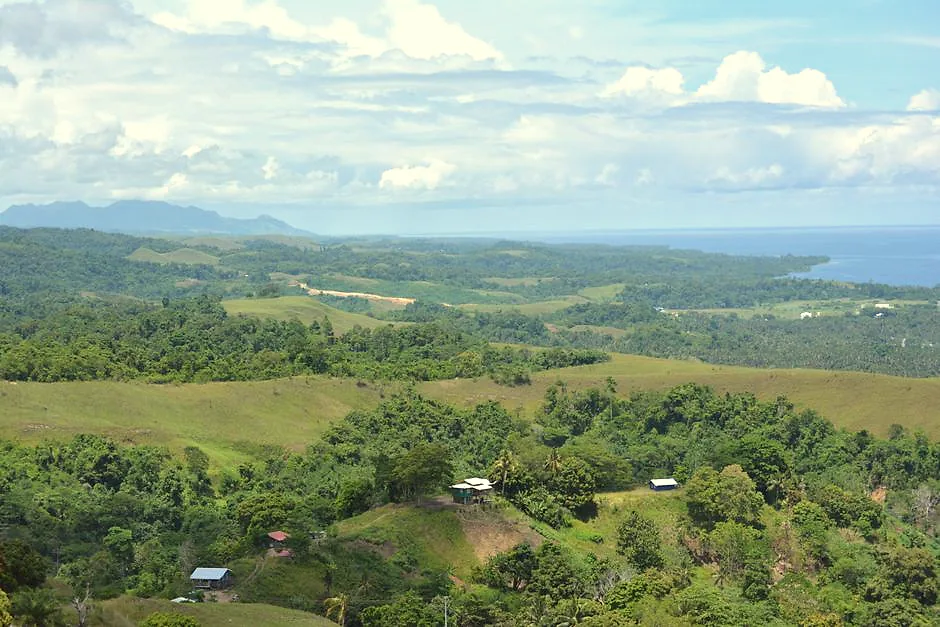
Cover photo by Lloyd Douglas on Pexels.
Frequently Asked Questions
What is the exact monthly income required for Ecuador's nomad visa? The requirement is exactly $1,446 per month (or $17,352 annually), mathematically pegged to 3 times Ecuador's 2026 Salario Básico Unificado ($482).
What are the official government fees for the Ecuador Rentista visa? Government fees total $320: a non-refundable $50 application review fee plus a $270 issuance fee upon visa approval.
When do remote workers become tax residents in Ecuador? Spending 183 days or more (consecutive or non-consecutive) in Ecuador within a 12-month window triggers fiscal residency, making your worldwide income subject to progressive tax rates up to 37%.
Can family members be included on the Ecuador nomad visa? Yes. Spouses and children can be included as dependents by demonstrating an additional $250 per month for each dependent.
Cover photo by Lloyd Douglas on Pexels.
Want to see how Ecuador stacks up?
Are you seriously considering a move? Use our interactive tools to explore Ecuador's climate, tax brackets, and nomad visas.
Looking for other options?
See how this visa compares against 55 other countries.
📊 Compare all 56 digital nomad visasRelated Articles

September 10, 2026
Moving to Ecuador in 2026: $1,446 Pension Visa, 0% Tax on Foreign Pensions, and Cuenca Reality

October 12, 2026
Moving to Yemen in 2026: Active Conflict, Dual Currencies, and Expat Security
October 11, 2026