
Moving to ThailandShare
Thailand is a solid destination for global professionals, featuring a moderate tax burden of 20.2%. With a very high English proficiency score of 402, daily communication and business integration are seamless. It hosts a vibrant and diverse expat community, notably drawing a significant number of residents from Myanmar.
Lifestyle & Vibe
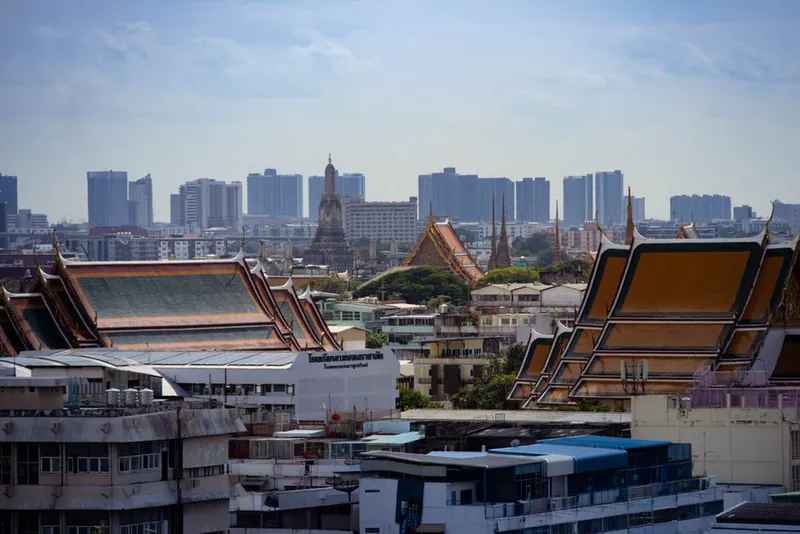
Thailand launched a formal Long-Term Resident (LTR) visa and a dedicated digital nomad program during 2024 - 2025, cementing its position as Southeast Asia's most mature remote work ecosystem, with Chiang Mai and Bangkok anchoring the two dominant nomad communities globally. Monthly living costs range from $800 - $1,200 in Chiang Mai to $1,200 - $1,800 in Bangkok for a comfortable solo lifestyle, with coworking spaces, expat social scenes, and digital nomad meetups available at every price point. Internet infrastructure is reliable in major urban centers, and cashless payments via QR code systems are widespread. The bureaucratic complexity around long-term visa extensions has historically been a friction point, but the new LTR visa pathway provides a much cleaner 10-year residency option for high-earning remote professionals.
Digital Freedom & Remote Work
Censorship and network interference data is currently being collected for Thailand.
Society & Demographics
In Thailand, as of recent data, the society is predominantly female with 51.31% of the population being women, indicating a demographic balance that leans slightly towards females. With 90.87% internet penetration, it reflects a technologically advanced and connected populace. The country scores an EF English Proficiency Index of 402, showing moderate proficiency in English, likely influenced by its significant urbanization rate of 61.87%, where most people reside. Thailand also exhibits a relatively low GINI index of 33.30, suggesting a more equitable distribution of income compared to many other countries.
Gender Distribution
Aging Society
Population over 65 years old
Education Spending
UNESCO Data. Indicates focus on public schooling.
Quality of Life
Thailand has a robust quality of life with a Life Expectancy of 75.29 years, reflecting its overall health outcomes. The country's healthcare system is well-supported by 5.91 medical doctors per 10,000 people and has achieved an impressive Universal Health Coverage Index of 82.00, ensuring widespread access to care. While the obesity rate stands at 16.36%, air quality (PM2.5 concentration) is relatively good at 31.01 µg/m³, contributing positively to residents' general well-being. Thailand’s happiness score sits at 6.29 on a scale of 0-10, and its average working week is just 42.77 hours, suggesting a balance between work and leisure that further enhances the overall quality of life. Notably, with only 4.79 homicides per 100,000 people, Thailand ranks among countries with relatively high safety standards.
Economic Freedom & Business Climate
The Thai economy exhibits a robust business climate with an inflation rate of 1.37%, reflecting stable purchasing power. With an overall Economic Freedom Score of 62.20, Thailand demonstrates significant openness to business activities, though areas like property rights and government integrity require improvement, scoring 41.80 and 38.90 respectively. Financial freedom stands at a moderate level with a score of 60.00, indicating room for enhancing access to financial services and investments.
Evaluated across 12 quantitative factors. Scores span 0-100, where higher scores indicate greater economic liberty, lighter tax burdens, and stronger property rights.
Climate Profile (Bangkok)
Thailand's tropical savanna climate is characterized by high temperatures and distinct wet and dry seasons, with the hottest period typically occurring in April when average maximum temperatures soar to 34.22°C, while the rainiest months are from May to September, with July, August, and September experiencing the most rainfall with 26, 26, and 27 rainy days respectively. The country's sweltering heat and torrential downpours during these periods can be overwhelming, making the cooler months from November to February the most ideal time to relocate or visit, with average maximum temperatures ranging from 31 to 32°C and significantly fewer rainy days. For expats and digital nomads seeking a comfortable and pleasant climate, the best season to visit or relocate to Thailand is from November to February, when the weather is warm but not scorching, and the rainfall is relatively low, making it perfect for exploring the country's stunning landscapes and vibrant culture.
Political Stability & Governance
Evaluated across Worldwide Governance Indicators (WGI). Scores span approximately -2.5 to 2.5, where higher scores indicate stronger governance, better stability, and lower corruption.
Relocation Guides & Articles
August 11, 2026
Moving to Thailand in 2026: 5-Year DTV Nomad Visa, No Income Test, and Tax Rules
Thailand's DTV visa is the best digital nomad deal in Asia with no monthly income test. Here is the honest 2026 guide to living in Bangkok, real costs, and taxes.

June 16, 2026
Thailand Digital Nomad Visa 2026: Requirements, Costs, Process, and What Nobody Tells You
A complete 2026 guide to the Thailand DTV (Destination Thailand Visa). Discover the 500k THB financial requirement, 5-year duration, and exact application process.
Explore Similar Destinations
Frequently Asked Questions
What is the tax burden in Thailand?
The tax burden in Thailand is approximately 20.2%, according to World Bank data.
Is Thailand safe?
The homicide rate in Thailand is 4.8 per 100,000 people (World Bank).
Are people happy in Thailand?
The World Happiness Report scores Thailand at 6.3 out of 10.
Head-to-Head Relocation Comparisons
Compare taxes, safety, and living costs of Thailand against top alternatives.