Thailand Digital Nomad Visa 2026: Requirements, Costs, Process, and What Nobody Tells You
June 16, 2026
ShareThe implementation of the Thailand Digital Arrival Card (TDAC) in 2026 has replaced the defunct TM.6 paper system, mandating that all Destination Thailand Visa (DTV) holders register via the tdac.immigration.go.th portal within 72 hours of entry [12]. This digital shift coincides with the rigid enforcement of the 500,000 THB ($14,500 - $17,000) financial threshold, a liquidity requirement designed to filter out low-capital travelers [2][7]. Since its July 2024 launch, the DTV has moved from a experimental policy to a pillar of Thai immigration, offering a 5-year multiple-entry window that contrasts sharply with the 60-day tourist exemption currently granted to citizens of 93 countries [2][11].
Thai authorities have utilized the DTV to transition away from the "visa run" culture of the previous decade. By creating a regulated framework for remote work, the government has effectively monetized the presence of digital nomads while increasing oversight via mandatory extensions and bank-level scrutiny. This is not a "set and forget" residency permit; it is a high-maintenance immigration product that requires the applicant to manage recurring bureaucratic friction every 180 days [10][13].
1. What Is Thailand's Digital Nomad Visa?
The Destination Thailand Visa (DTV) is a long-term visa category managed by the Ministry of Foreign Affairs and issued through Royal Thai Embassies and Consulates [2]. It functions as a 5-year multiple-entry permit, allowing stays of 180 days per entry [7].
Who Qualifies:
- Workcation Category: Remote workers, digital nomads, and freelancers with contracts or portfolios tied to employers outside Thailand [2].
- Soft Power Category: Participants in Muay Thai training, Thai culinary courses, or those receiving medical treatment [2].
- Dependants: Legal spouses and biological or adopted children under 20 years of age [2].
Who Does Not Qualify:
- Local Employees: Anyone seeking work with a Thai-registered entity [10].
- Language Students: As of late 2025, language schools were removed from the "Soft Power" eligibility list due to systemic fraud [10][12].
- Investment-only Applicants: Those without active remote work or "Soft Power" enrollment [2].
The "Workcation" category provides the first explicit legal basis for remote work in Thailand, ending the era where nomads operated in a legal gray zone. However, the definition of "Soft Power" is narrowing; embassies now frequently reject applications for courses shorter than 6 months [7][16].
2. Eligibility Requirements
The primary barrier to entry is the solvency test. Applicants must prove immediate access to liquid funds.
| Requirement | Minimum Threshold (THB) | Minimum Threshold (USD/EUR) | Accepted Evidence |
|---|---|---|---|
| Personal Savings | 500,000 THB | ~$14,500 - $17,000 | Savings/Checking statements in applicant's name [2]. |
| Minimum Age | 20 Years | N/A | Passport biodata page [10]. |
| Remote Status | N/A | N/A | Employment contract or portfolio [2]. |
| Activity Proof | N/A | N/A | Enrollment letter from accredited institution [2]. |
Analyzing the "Grey Areas" Freelancers without a registered business entity are subject to forensic-level scrutiny. A simple invoice or digital signature is no longer sufficient; authorities now demand a professional portfolio that demonstrates a history of foreign-sourced income [2].
[!WARNING] Honest Warning: The "Savings Trap" has become the leading cause of rejection. Funds must be held in a personal savings or checking account. Many embassies now require a 6-month bank history to ensure the 500,000 THB was not a temporary deposit made specifically for the application [10]. Cryptocurrency wallets, brokerage accounts, and fixed-term investment vehicles are frequently dismissed as non-liquid and insufficient [10].
3. Required Documents
All applications are processed via the thaievisa.go.th portal, though the document requirements remain rooted in traditional bureaucratic standards [4].
- Passport: Valid for at least 6 months from the intended travel date [2].
- Recent Photograph: Taken within the last 6 months [2].
- Financial Proof: Bank statements showing 500,000 THB (~$14,500 - $17,000) [2].
- Professional Status: A hand-signed employment certificate or contract from a non-Thai company [2]. Note: Pay stubs are explicitly rejected by many consulates [2].
- Soft Power Letter: Acceptance letters from hospitals or invitation letters from accredited gyms/schools [2].
- Proof of Location: A utility bill or driver's license proving the applicant is currently outside Thailand [2].
All documents issued outside Thailand or the U.S. must be accompanied by certified English translations and notarized by the relevant Embassy, Consulate, or Ministry of Foreign Affairs [2].
4. Application Process: Step by Step
The DTV requires a physical exit from Thailand. Applying from within the country-even using a VPN-is detectable and results in immediate rejection [7][13].
- Preparation: Accumulate 500,000 THB in a personal account. Joint accounts require a marriage or birth certificate to be considered valid [2].
- Digital Submission: Upload high-resolution scans to thaievisa.go.th.
- Bureaucratic Processing: While the official window is 3-5 business days, real-world processing often stretches to 15-20 days during peak seasons [13][14].
- Response to Inquiry: Applicants are often placed in "Request for More" status. Failure to provide additional documents within the embassy's timeframe leads to a non-refundable rejection [2].
- Activation: Upon entry, immigration grants a 180-day stay stamp.
- Extension: At the end of 180 days, the holder must pay 1,900 THB at a local immigration office for a one-time extension [7][10].
[!CAUTION] Honest Warning: The 7-day stamp issued after an extension expires is an "exit window." It does not allow for further extensions. After a total of 360 days, the holder must physically leave and re-enter Thailand to reset the stay [10][13].
5. Costs: Complete Fee Breakdown
The DTV is the most cost-efficient long-term option, but it carries significant variable costs.
| Item | Cost (THB) | Cost (USD/EUR) |
|---|---|---|
| Visa Fee (Base) | 10,000 THB | $275 - $1,150 [7][10] |
| Extension Fee | 1,900 THB | ~$55 - $58 [10] |
| Document Notarization | ~2,000 THB | ~$60 |
| Agent Fees (Optional) | ~7,000 THB | ~$200 [14] |
Embassy fees fluctuate based on jurisdiction; some consulates charge as much as $1,150 (~40,000 THB) for the same 5-year sticker [7]. Over 5 years, the DTV total cost (including extensions and regional flights to reset stays) averages 30,000 - 90,000 THB [10]. This is significantly lower than the 650,000 THB required for the Thailand Privilege (Elite) Bronze visa, though the latter removes the logistical friction of the 180-day reporting cycle [10].
6. Tax Implications
The DTV provides no immunity from the Thai Revenue Department. If you reside in the country for 180 days or more in a calendar year, you are a Thai tax resident [5].
Revenue Department Order No. Por. 161/2566: Foreign-sourced income is taxable when remitted into Thailand if the income was earned during a year the individual was a Thai tax resident [5][9].
[!IMPORTANT] Critical Nuance: The residency test is anchored to the year the income was earned. If you were a resident in 2024 and earn $50,000, that money remains taxable in Thailand whenever it is eventually remitted, even if you are no longer a resident in the year of transfer [5].
Progressive Tax Rates & Deductions
| Net Assessable Income (THB) | Tax Rate |
|---|---|
| 0 - 150,000 | 0% |
| 150,001 - 300,000 | 5% |
| 300,001 - 500,000 | 10% |
| Over 5,000,000 | 35% |
Source: Revenue Code Section 41 [5]
Standard Allowances (THB)
- Personal Allowance: 60,000 THB [5]
- Spouse Allowance: 60,000 THB (if non-earning) [5]
- Child Allowance: 30,000 THB per child [5]
- Life Insurance: Up to 100,000 THB [5]
- Mortgage Interest: Up to 100,000 THB [5]
7. What This Visa Does NOT Give You
The DTV is a "long-stay tourist" hybrid, not a path to permanence.
- No Path to PR: Time on a DTV does not count toward the consecutive years required for Permanent Residency or Citizenship [7].
- No Social Security: You have no access to Thai state healthcare or the pension system [7].
- No Local Work Permit: You cannot legally be hired by a Thai firm; the visa strictly prohibits Thai-sourced employment [10].
- Banking Friction: While it allows residency, many Thai banks are tightening rules and frequently decline DTV holders for standard current accounts without a letter of recommendation from an embassy or a Thai guarantor [10].
8. Digital Nomad Visa vs. Alternatives
The DTV suits solo nomads, but high-net-worth individuals often find the LTR Professional or Thailand Privilege more stable.
| Feature | DTV | Tourist (TR) | LTR (Professional) | Elite Bronze |
|---|---|---|---|---|
| Duration | 5 Years | 60 Days | 10 Years | 5 Years |
| Financial Barrier | 500k THB | 20k THB [13] | $1M Assets [9] | 650k THB [10] |
| Tax Residency | If 180+ Days | Rare | Selective Exempt [9] | If 180+ Days |
| Stay Per Entry | 180 Days | 60 Days | 1 Year | 1 Year |
Quick Reference Cheat Sheet
- Official Name: Destination Thailand Visa (DTV)
- Primary Portal: thaievisa.go.th
- Threshold: 500,000 THB ($14,500 - $17,000)
- Stay Duration: 180 Days per entry
- Extension Fee: 1,900 THB
- Tax Residency Trigger: 180 Days in a calendar year
Frequently Asked Questions
How much money do I need for the Thailand Digital Nomad Visa? You must prove immediate access to liquid funds of at least 500,000 THB (approximately $14,500 - $17,000) held in a personal savings or checking account. Many embassies now require a 6-month bank history to ensure the deposit wasn't temporary.
How long does the Destination Thailand Visa (DTV) last? The DTV is a 5-year multiple-entry permit that allows stays of up to 180 days per entry. At the end of 180 days, you can pay 1,900 THB for a one-time extension before you are required to physically leave and re-enter the country.
Do I have to pay taxes in Thailand on the DTV? Yes, if you reside in Thailand for 180 days or more in a calendar year, you are considered a Thai tax resident. Foreign-sourced income is taxable when remitted into Thailand if it was earned during a year you were a resident.
References:
[2] Royal Thai Consulate-General, Los Angeles, "Destination Thailand Visa (DTV)," December 3, 2025.
[4] Official Website of Thailand Electronic Visa, thaievisa.go.th.
[5] Attori Law, "Personal Income Tax 2026: The Complete Guide."
[7] Greenback Expat Tax Services, "What is Thailand's Digital Nomad Visa?," April 9, 2026.
[8] Greenback Expat Tax Services, "Do I still need to file U.S. Taxes?," April 2026.
[9] Hawryluk Legal Advisors, "Thailand Foreign Income Tax 2026."
[10] Daimaru Trading / Thailand Privilege, "Thailand Privilege vs. DTV Cost Comparison," May 6, 2026.
[11] Plan Travel, "Update: Thailand Visa Exemption 2026."
[12] Plan Travel, "Thailand Digital Arrival Card (TDAC) Rules," May 2026.
[13] Chiang Mai Visa Run, "Thailand Visa Exemption in 2026: What Still Works," March 2026.
[14] SwiftPass Immigration, "Complete Thailand Visa Guide 2026."
[15] Reddit r/Bangkok, "Visa status change to LTR or DTV," 2026.
[16] Reddit r/Thailand, "When the DTV is inevitably discontinued," 2026.
Looking for more options? Compare all 56 digital nomad visa countries to find the perfect destination for your remote work setup.
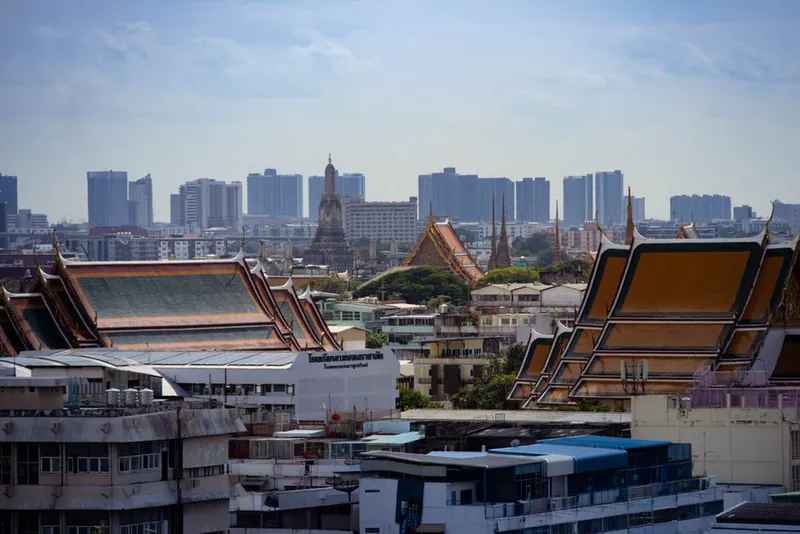
Cover photo by Frank Barning on Pexels.
Want to see how Thailand stacks up?
Are you seriously considering a move? Use our interactive tools to explore Thailand's climate, tax brackets, and nomad visas.
Looking for other options?
See how this visa compares against 55 other countries.
📊 Compare all 56 digital nomad visasHead-to-Head Relocation Comparisons
Compare taxes, safety, and living costs of Thailand against top alternatives.