
Moving to LesothoShare
While living in Lesotho comes with a higher tax burden of 42.0%, expats often benefit from its robust social infrastructure and high quality of life. It hosts a vibrant and diverse expat community, notably drawing a significant number of residents from South Africa.
Lifestyle & Vibe
Lesotho is a landlocked mountain kingdom entirely surrounded by South Africa, with extremely limited infrastructure, very low internet penetration, and no meaningful ecosystem for remote workers or digital nomads. The cost of living is very low, but access to reliable electricity and broadband internet - fundamental requirements for remote work - is inconsistent even in the capital, Maseru. There is no digital nomad visa, no expat remote work community, and the logistical baseline for foreign professionals is challenging. Lesotho is not a viable remote work destination under current infrastructure conditions.
Digital Freedom & Remote Work
Censorship and network interference data is currently being collected for Lesotho.
Society & Demographics
The society in Lesotho exhibits a slight male predominance with 48.72% of the population being male and 51.28% female. With an internet penetration rate of 51.80%, digital connectivity is increasing, though not yet widespread. The country faces significant social inequalities as reflected by its GINI index at 44.90, and only 25% of parliamentarians are women, indicating areas for policy improvement. Lesotho's population is relatively young, with just 3.86% aged over 65, but urbanization stands at 43.68%, suggesting a shift towards city centers. Despite these challenges, the nation invests significantly in education, dedicating 10.37% of its GDP to educational spending.
Gender Distribution
Aging Society
Population over 65 years old
Education Spending
UNESCO Data. Indicates focus on public schooling.
Quality of Life
In Lesotho, the quality of life is significantly influenced by a number of factors. With a life expectancy of 51.4800 years, healthcare access remains a challenge, as indicated by only 1.8400 medical doctors per 10k people and an Universal Health Coverage Index of 55.0000. Economic pressures are evident from the high average working hours of 49.26 per week, coupled with an obesity rate of 22.2200% and a moderate air quality index of 23.4400 µg/m³. Safety concerns also loom large, as suggested by a homicide rate of 38.2400 per 100k people, alongside a happiness score of just 4.3750 out of 10.
Economic Freedom & Business Climate
Lesotho's economy faces significant challenges as indicated by its 6.11% inflation rate and 16.32% unemployment rate, highlighting both monetary pressures and job scarcity. The country scores moderately on overall economic freedom with a score of 54.90 out of 100, influenced by high tax burdens at 76.40%. Lesotho's financial freedom, however, remains comparatively weak at 40.00%, suggesting limited access to financial services and markets for its citizens. Despite these challenges, the business climate is somewhat supportive, with business freedom and monetary freedom scores of 50.60% and 74.80% respectively, offering potential opportunities for growth.
Evaluated across 12 quantitative factors. Scores span 0-100, where higher scores indicate greater economic liberty, lighter tax burdens, and stronger property rights.
Climate Profile (Maseru)
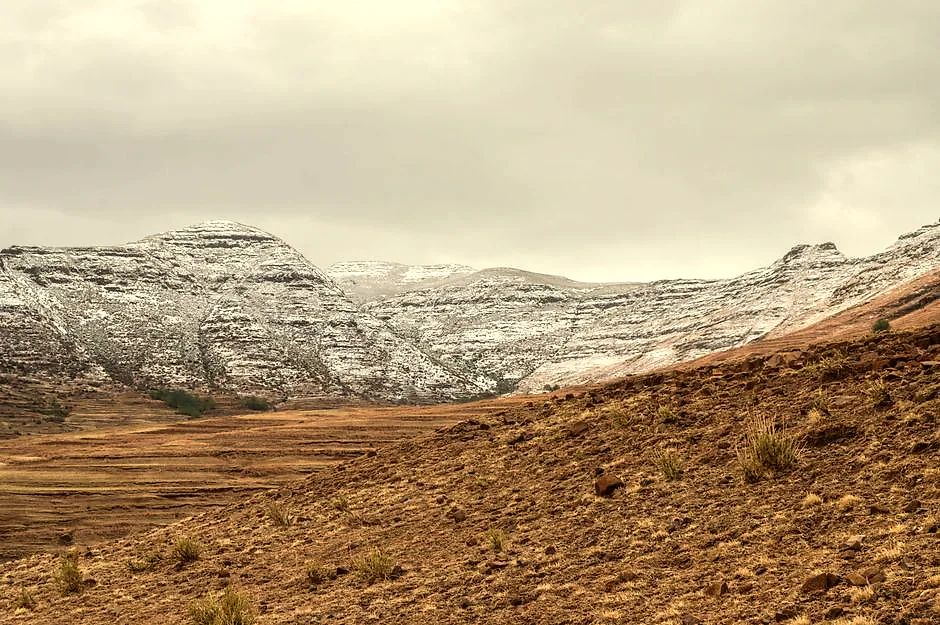
Nestled in the highlands of Southern Africa, Lesotho boasts a cool-temperate climate that offers comfortable weather for expats and digital nomads year-round, with average maximum temperatures rarely exceeding 27°C even during its warmest months. The rainiest periods occur from October to December, where up to 14 rainy days can be expected, while the coldest months of June and July see just two rainy days and plummeting minimum temperatures that dip as low as -0.37°C. For those seeking more favorable weather conditions, relocating or visiting Lesotho between April and May offers a delightful balance of mild temperatures and minimal rainfall, making it an ideal time to explore this scenic country without the chill of winter or the downpours of summer.
Political Stability & Governance
Evaluated across Worldwide Governance Indicators (WGI). Scores span approximately -2.5 to 2.5, where higher scores indicate stronger governance, better stability, and lower corruption.
Relocation Guides & Articles
Frequently Asked Questions
What is the tax burden in Lesotho?
The tax burden in Lesotho is approximately 42.0%, according to World Bank data.
Is Lesotho safe?
The homicide rate in Lesotho is 38.2 per 100,000 people (World Bank).
Are people happy in Lesotho?
The World Happiness Report scores Lesotho at 4.4 out of 10.