Moving to Lesotho in 2026: Rand Peg, Residence Permits, and $300 Maseru Rents
September 13, 2026
ShareA move to Lesotho is a two-country logistics plan. Every commercial route enters through South Africa, the loti is fixed one-for-one to the South African rand, and serious medical cases may still require evacuation across the border. Get those three systems right-South African entry permission, Lesotho residence status and evacuation-grade health insurance-and the rest becomes manageable. Ignore them, and cheap rent will not save the move.[1][2][3]
The Economy: Small, Slow and Tied to South Africa
Lesotho enters 2026 with weak growth and little room for policy mistakes. The World Bank[4] expects growth to average roughly 1.5% between 2026 and 2028, while inflation is projected to reach 5.8% in 2026, driven mainly by food and fuel costs. The IMF[5] had already forecast growth of only 1.4% for FY2025/26 after a modest 2.6% expansion in the prior year.
The country earns from a narrow set of activities: textiles, diamond mining, water exports, construction around the Lesotho Highlands Water Project, government services and transfers from the Southern African Customs Union. The services sector accounts for most output, while textiles remain one of the largest formal private employers. That concentration makes the economy vulnerable to South Africa demand, United States trade policy, aid flows and commodity prices.[6][7]
| 2026 indicator | Current outlook |
|---|---|
| Medium-term GDP growth | About 1.5% a year, 2026-28[4] |
| Inflation | 5.8% in 2026[4] |
| Estimated unemployment | About 16% in the latest World Bank economic update[7] |
| Currency | Lesotho loti, fixed at 1:1 to the South African rand[2] |
| Main export sectors | Textiles, diamonds and water[6] |
This is not an easy local job market for a foreign generalist. The strongest expat cases involve a pre-arranged role in infrastructure, development, education, healthcare, mining or a multinational project. Remote workers bringing foreign income avoid the local salary constraint, but they do not avoid immigration and tax rules.
Currency and Banking: Think in Rand
The loti-plural maloti, currency code LSL-is pegged to the South African rand at 1:1. Both currencies are legal tender in Lesotho, although maloti are not guaranteed to be accepted once you cross back into South Africa. Prices may be written as M500, L500, LSL 500 or R500; inside Lesotho those figures represent the same nominal amount.[2]
Foreigners may open local and foreign-currency bank accounts, but banks normally require in-person identity checks and a residence permit. Expect to provide a passport, local address, permit, tax details and source-of-funds evidence.[8]
Cards work at larger businesses in Maseru, but cash remains useful for taxis, small shops and rural travel. Keep a South African-compatible payment method and some rand for border days. If carrying cash or travellers’ cheques worth M25,000 or more, declare it at the border.[1]
Visas: Solve South Africa First
Every traveller reaches Lesotho through South Africa, whether the final leg is by air or road. That means satisfying two immigration systems on every international journey. Since 1 July 2026, travellers entering or leaving South Africa must also submit its online traveller declaration.[1][9]
Passport rules need extra attention because each crossing consumes space. Current UK guidance says Lesotho requires a passport valid for at least 90 days after arrival and recommends four blank pages for Lesotho and South African stamps. Airlines or consulates may apply stricter six-month validity checks, so six months and four blank pages is the safe working minimum.[1]
Short Visits
Visa treatment depends on nationality. British citizens can visit for up to 90 days without a visa, but that exemption does not apply to every EU passport. Poland ordinary-passport holders should treat Lesotho as visa-required unless the Ministry of Home Affairs confirms otherwise in writing. South Africa currently grants Polish ordinary-passport holders visa-free entry for up to 30 days, which is separate from Lesotho permission and can become the limiting factor on a longer stay.[10][11]
Lesotho's eVisa system is currently suspended. The Ministry of Home Affairs[12] instructs applicants to use [email protected] for online applications. Do not pay an unofficial visa broker before confirming the procedure, fee and accepted payment channel through the ministry or a Lesotho mission.
Residence Permits
Lesotho's immigration department lists four residence durations: a 90-day temporary permit, a two-year residence permit, a four-year study permit and an indefinite permit. Recognised categories include business, employment-linked professions, study, missionary work, volunteering and joining a spouse, parent or relative.[13]
| Route | Core documents | Published fee or duration |
|---|---|---|
| Temporary permit | Application letters, passport and entry-stamp pages, sponsor details where relevant | 90 days; new permit M1,000, renewal M500[14] |
| Business residence | Medical form, police clearance, work permit, tax clearances, trader's licence, contract, qualifications and six-month bank statement | Two-year residence commonly M3,000[14] |
| Study permit | Medical form, police clearance for adults, admission letter, passport and education records | Up to four years[13] |
| Joining spouse or family | Medical form, police clearance, relationship evidence, sponsor's permit and six-month bank statement | Category-specific fees[14] |
| Volunteer | Medical form, police clearance, applicant and sponsor letters, passport and visa evidence | Free under the published service charter[14] |
The document list is old-school: certified passport copies, entry-stamp pages, police clearance, medical forms, bank statements, contracts, qualifications and letters from both applicant and sponsor. Bring apostilled civil records and qualifications from home, then ask whether certified English copies are enough or local certification is required.
Work Permits
A residence permit and a work permit are different documents. A foreign employee needs a work permit supported by the employer, with an employment contract, certified qualifications, company licensing and tax records, job advertisements, a local counterpart and a training plan among the published requirements. The application fee is M500; permits cost M1,500 for six months or less, M2,500 for more than six months, or M3,000 for two years, plus M350 for the card. The government gives an average processing time of two to three weeks.[15]
Do not start local employment while waiting. Make the offer conditional on permit approval, and ask the employer to show who is handling each stage.
No Digital Nomad Visa
Lesotho has no dedicated digital nomad visa in 2026. A tourist entry or temporary permit is not automatically authorisation to work, even if every client is abroad. Remote workers should request written guidance from Home Affairs on the correct residence category and obtain tax advice before crossing the 182-day threshold or establishing a permanent home.[13][16]
Cost of Living: Rent Is Cheap, Expat Infrastructure Is Not
Maseru can be inexpensive if you live locally. It stops looking cheap when you add a secure furnished house, private transport, imported groceries, international school, backup internet and medical evacuation cover.
Public price databases disagree sharply because Lesotho has few listings and small samples.[17] lists a Maseru one-bedroom at about M2,533 in the centre and M1,283 outside, while a 2026 local-market guide puts furnished central one-bedrooms at M3,000-M12,000+ and suburban units at M1,500-M4,000. Use online averages only as a screening tool; inspect the property and price the security, water, electricity, heating and internet setup separately.[18]
Planning Budgets
| Household | Lean local setup | Comfortable expat setup | Main cost drivers |
|---|---|---|---|
| Single person | M12,000-M18,000/month | M20,000-M35,000/month | Furnished rent, car, backup data, imported food |
| Couple | M20,000-M30,000/month | M30,000-M50,000/month | Secure housing, two-person insurance, regional trips |
| Family | M35,000-M55,000/month | M55,000+/month | Larger house, vehicle, medical cover and school fees |
These are planning ranges, not official statistics. They combine current Maseru rental listings and cost databases with the additional services most foreign residents need. A single remote worker's published 2026 estimates range from around USD 672 including rent in one database to more than USD 1,000 in another-a sign that source quality is too weak for false precision.[19][20]
Housing Checklist
- Confirm whether rent includes water, electricity, refuse collection, security and internet.
- Ask about power cuts and whether the property has solar, batteries or a generator.
- Test water pressure and ask about storage tanks.
- Check winter heating; Maseru nights can fall to around freezing.
- Visit after dark and inspect perimeter lighting, locks, gates and parking.
- Verify the landlord or authorised agent before paying a deposit.
- Put the rent, currency, escalation formula, repair obligations and notice period in writing.
A basic flat may be cheap. A house that is secure, warm, connected and usable during service interruptions costs more.
Taxes: The Trigger Is More Than a Day Count
An individual becomes tax resident if they have a normal place of abode in Lesotho and are present during part of the year, or if they spend more than 182 days in any consecutive 12-month period overlapping the tax year. Residents are generally taxed on worldwide income; non-residents are generally taxed only on Lesotho-source income. Special treatment can apply to foreign property income of qualifying expatriate taxpayers, so remote workers and investors should not assume every foreign receipt is taxable-or exempt-without reviewing the facts.[16][21]
Personal Income Tax, 2026/27
| Annual chargeable income | Rate |
|---|---|
| First M77,760 | 20% |
| Amount above M77,760 | 30% |
| Resident personal tax credit | M12,240 per year |
The brackets took effect on 1 April 2026. Lesotho uses a tax credit rather than a conventional zero-rate allowance: tax is calculated at 20% and 30%, then the non-refundable credit is deducted.[22]
Business Taxes
| Tax | 2026 rate |
|---|---|
| Standard corporate income tax | 25% |
| Qualifying manufacturing and commercial farming | 10% |
| Standard VAT | 15% |
| Electricity VAT | 10% |
| Exports and listed basic commodities | 0% |
| Mandatory VAT-registration threshold | M2,000,000 taxable turnover |
The rates come directly from[23] and its current[24]. A company registered abroad can still create Lesotho tax exposure through local management, staff, contracts or a fixed place of business.
Before relocating: map salary, dividends, foreign-company ownership, freelance invoices, investment income and days in Lesotho. The tax year runs from 1 April to 31 March, which may not match your home jurisdiction. Do this before signing a two-year residence application, not after the first filing deadline.
Healthcare: Evacuation Cover Is Not Optional
Lesotho's health system cannot consistently deliver the standard of specialist and emergency care many expats expect. The U.S. State Department's June 2026 advisory states that health infrastructure is inadequate, pharmacies may be poorly stocked and travellers should carry enough prescription medication for the full stay. It specifically recommends insurance that covers medical evacuation to South Africa.[3]
Public capacity has improved, including ICU expansion supported by the World Health Organization and World Bank, but critical patients have historically been transferred to South Africa.[25]
| Need | Practical plan |
|---|---|
| Routine care | Use a reputable private clinic in Maseru and confirm payment rules before treatment |
| Prescriptions | Bring a legal supply plus copies of prescriptions and generic drug names[3] |
| Specialist or complex care | Plan for referral to Bloemfontein or another South African centre |
| Insurance | Require cross-border treatment and medical evacuation, not just local reimbursement |
| Emergency number | 112 for ambulance, fire and police[26] |
Ask the insurer whether it will pay the provider directly, arrange a cross-border ambulance or flight, and cover a companion. “Worldwide excluding USA” is not enough if the policy caps evacuation or requires treatment at the nearest local facility.
Safety: Maseru Changes After Dark
The U.S. advisory places Lesotho at Level 2: Exercise Increased Caution because of crime and health risks. Armed robbery and carjacking occur, while police response may be slow because of limited resources.[3]
The UK government gives blunt advice: do not walk alone in isolated places or after dark, keep vehicle doors locked and windows closed, avoid stopping for people trying to flag down your car, and drive cross-country in daylight. Foreign nationals can be targeted in opportunistic street and vehicle crime.[27]
Practical Rules
- Arrange airport and border transfers before arrival.
- Use accommodation-arranged or trusted taxis rather than poorly maintained informal minibuses.
- Do not display laptops or phones while walking in Maseru.
- Avoid ATMs after dark and do not count cash outside a bank.
- Keep digital and paper copies of the passport photo page, visa, entry stamp and permit.
- Avoid demonstrations; political gatherings can escalate.
- Drive in daylight, especially in the highlands where livestock, weather and damaged roads reduce visibility.
- Do not resist an armed robbery.
Road risk is as important as crime. Lesotho drives on the left, rural roads can deteriorate quickly, and animals frequently enter the carriageway after dark. A four-wheel-drive vehicle is sensible for highland routes, especially in winter.
Language: English Handles Paperwork, Sesotho Handles Life
English and Sesotho are official languages. English is used in government, education and formal business, while Sesotho dominates everyday conversation.[28][29]
You can handle contracts, banking and professional work in English in Maseru. Outside formal settings, basic Sesotho changes the experience immediately.
| Sesotho | English |
|---|---|
| Lumela | Hello |
| Kea leboha | Thank you |
| U phela joang? | How are you? |
| Ke kopa… | I would like / please give me… |
| Ha ke utloisise | I do not understand |
| Sala hantle | Goodbye, said to someone staying |
| Tsamaea hantle | Goodbye, said to someone leaving |
Use a local interpreter for land, immigration and employment documents when the stakes are high, even if the form itself is in English.
Where to Live
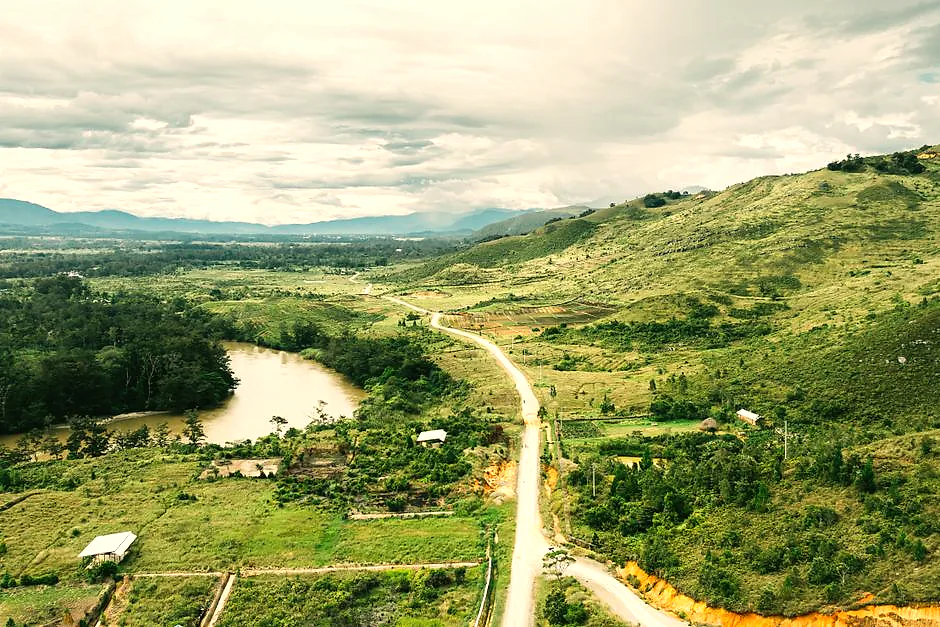
Lesotho does not offer five interchangeable expat cities. For most foreigners, Maseru is the default because it concentrates government offices, private healthcare, international schools, banks, embassies, retailers and better internet. Other towns make sense only when a job, university or project puts you there.
Maseru
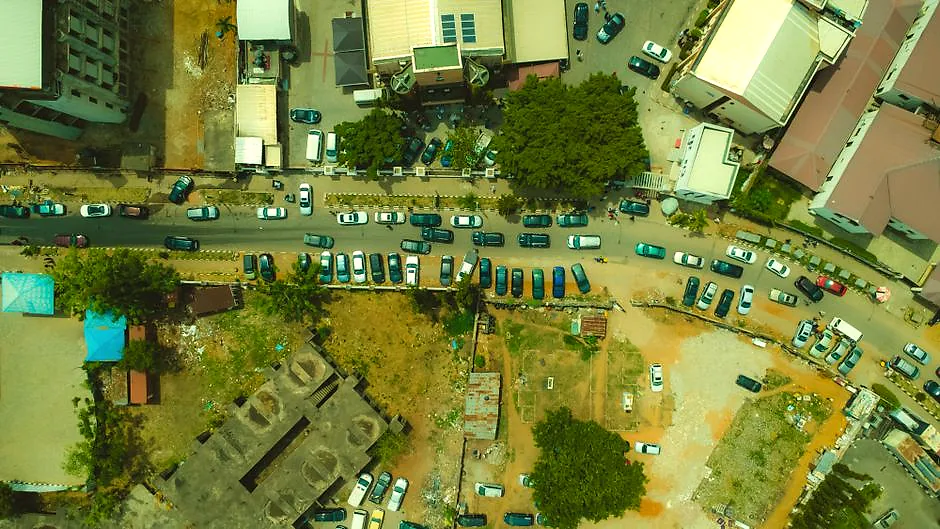
The capital sits on the South African border and offers the country's deepest rental market and services. Secure compounds and furnished homes are available, but listings are fragmented and often arranged through employers or local agents. Access to the border makes Bloemfontein (South Africa) viable for shopping and specialist care, but every crossing still requires immigration formalities.
Best for: diplomats, NGO staff, families, remote workers and anyone without a site-specific job.
Roma
Roma is built around the National University of Lesotho and has a student and academic character. It is quieter than Maseru and roughly 35 kilometres away, but specialist healthcare, major shopping and many administrative tasks still pull residents back to the capital.
Best for: academics, researchers, university staff and people who want a smaller community.
Hlotse / Leribe
Hlotse serves northern Lesotho and provides access to agricultural areas, industrial activity and the highlands. Services are thinner than in Maseru, so verify housing, internet and healthcare before accepting a role.
Best for: agriculture, regional operations and northern project work.
Butha-Buthe
Butha-Buthe is a practical base for northern tourism and routes toward Afriski and the Maloti highlands. It is not a conventional digital-nomad hub; transport and weather matter more than café choice.
Best for: tourism, mountain projects and outdoor-focused residents with their own vehicle.
Mokhotlong
Mokhotlong is remote, high-altitude and logistically demanding. Winter snow, long road journeys and limited medical capacity make it suitable mainly for people attached to a project with employer-provided housing, transport and emergency plans.
Best for: infrastructure, mining, water and development assignments.
| Location | Services | Housing choice | Main advantage | Main limitation |
|---|---|---|---|---|
| Maseru | Best in Lesotho | Widest | Administration, schools, border access | Crime, traffic, higher secure-housing cost |
| Roma | Moderate | Limited | University community | Trips to Maseru for major services |
| Hlotse | Basic to moderate | Limited | Northern regional base | Thin healthcare and expat infrastructure |
| Butha-Buthe | Basic | Limited | Highlands access | Car dependence |
| Mokhotlong | Limited | Very limited | Project and mountain access | Isolation, winter and medical risk |
Climate: Africa, but Bring a Winter Coat
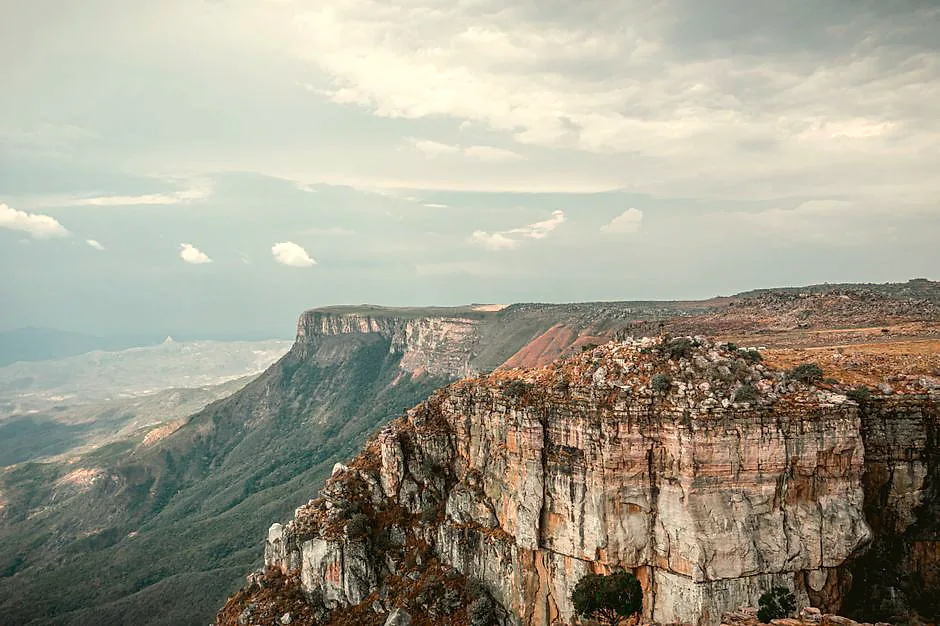
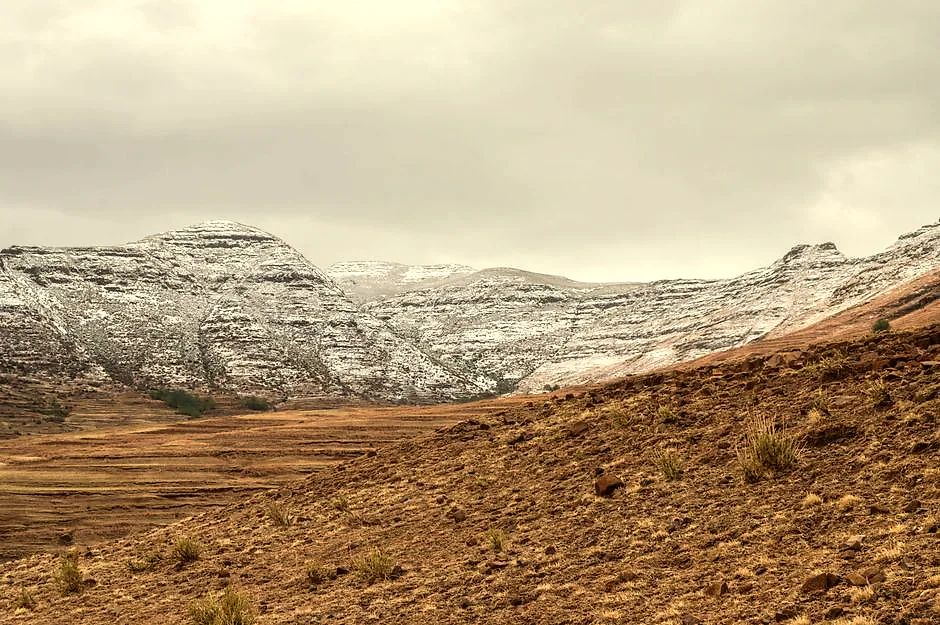
Lesotho's climate follows altitude. Maseru sits around 1,600 metres above sea level; much of the country rises above 2,000 metres. Summers are warm and rainy, while winters are dry, sunny and cold, with regular freezing nights and snow in the highlands.[30]
| Season | Maseru conditions | Highland reality |
|---|---|---|
| Summer, Dec-Feb | Daytime highs around 24-28°C; thunderstorms | Cooler nights, heavy storms and lightning |
| Autumn, Mar-May | Mild days, rapidly colder nights | Frost develops early at altitude |
| Winter, Jun-Aug | Highs around 16-19°C; nights near 0°C | Snow, ice and road closures are possible |
| Spring, Sep-Nov | Dry, windy and warming | Large day-night temperature swings |
Poor insulation matters more than the daytime forecast. Ask how the home is heated and what it costs. Electric heaters are simple until a power interruption; gas and wood require safe ventilation and storage.
Internet: Test the Exact Address
Lesotho has two main terrestrial operators, Vodacom Lesotho and Econet Telecom Lesotho. Mobile service is usable in Maseru, but coverage and performance drop with terrain. A 2026 connectivity dataset reported average mobile download around 18.4 Mbps, 7.8 Mbps upload and 65 ms latency based on late-2024 measurements.[31]
Fixed and LTE offers vary by neighbourhood. Published package comparisons show Econet residential fibre reaching up to 150 Mbps in served areas, while lower-cost wireless plans may be capped around 15 Mbps. Treat provider maximums as marketing until a technician confirms service at the specific house.[32]
Starlink is active in Lesotho and has been deployed for public-safety and disaster-management connectivity. Reported performance ranges from 135-305 Mbps download, with residential service around ZAR 950 per month plus hardware, although current consumer availability and local installation costs must be checked before relying on it.[33]
Remote-Work Setup
- Test Vodacom and Econet SIMs inside the property.
- Confirm fibre by street address, not suburb.
- Use a dual-SIM router or separate mobile hotspot.
- Add a UPS for the router and laptop.
- Consider Starlink outside reliable fixed-network areas.
- Keep enough mobile data for one full workday.
- Run latency and video-call tests before signing the lease.
A stable Maseru setup is achievable. A single untested connection is not a business-continuity plan.
Transport: A Car Changes the Country
Maseru's Moshoeshoe I International Airport is small, and international journeys connect through South Africa. Many residents use road links to Bloemfontein for flights, healthcare and shopping. There is no useful passenger-rail option into Maseru.[34]
Lesotho drives on the left. The government publishes a local licence process requiring identification, two photographs and theory and practical tests, with a light-duty licence fee of M200.[35]
Short-term foreign-licence rules depend on the issuing country. The UK allows its photocard licence holders to drive for up to three months, but other nationals should carry an International Driving Permit with the original licence and confirm recognition before arrival.[27]
For highland driving, choose clearance and tyre condition over prestige. Carry water, warm clothing, a power bank, offline maps and emergency contacts. Tell someone the route and expected arrival time.
Buying Property: This Is a Leasehold System
Lesotho does not operate a simple foreign freehold market. Land rights are governed by the Land Act 2010, and foreign ownership structures require careful legal design. The U.S. investment climate statement says foreign nationals may hold land where a local partner owns at least 20%; foreigners may also hold sublease rights. Maximum terms are generally 90 years for residential and several other uses, 60 years for industrial and hotel use, and 30 years for petroleum-related use.[8]
Foreign-investment restrictions also reserve dozens of small-business activities for Basotho or cap foreign participation. Do not register a local company, buy a business or structure a landholding based on a seller's explanation alone.[8]
Before paying:
- Hire an independent Lesotho lawyer.
- Confirm the lease, sublease and ministerial approvals.
- Search the Deeds Registry for mortgages, disputes and competing rights.
- Check access roads, water, electricity and planning approval.
- Verify the local-partner structure and exit provisions.
- Confirm that the transaction does not violate a Basotho-reserved business rule.
- Treat residence permission and property rights as separate processes.
Buying property does not replace a residence or work permit.
Families: School Can Exceed Rent
International-school costs can dominate a family budget. The American International School of Lesotho published 2025/26 tuition of USD 5,959 for Grades K-8, plus capital and application charges. Fees are payable in U.S. dollars or the local-currency amount specified by the school.[36]
Compare curriculum, accreditation, transport, class size, special-needs support and university pathways before choosing the house. A cheap home on the wrong side of Maseru can create a daily transport problem.
Families also need:
- Evacuation insurance covering every child.
- A written plan for paediatric emergencies in South Africa.
- School transport confirmed before signing a lease.
- Certified birth certificates and consent documents for immigration.
- Winter heating and secure outdoor space.
Your First 30 Days
- Confirm both immigration routes. Check Lesotho permission and the South African transit or visitor rules that apply to your passport.
- Save the Home Affairs contact. The eVisa platform is suspended; current applications use [email protected].[12]
- Check every border stamp. You need exit and entry records for both countries.
- Start the correct residence file. Do not assume a 90-day temporary permit converts automatically into a two-year status.
- Do not work locally without a work permit. Employer paperwork includes advertisements, company tax clearance and a local training plan.[15]
- Register for tax advice. The more-than-182-day test is only one route into Lesotho tax residence.[16]
- Open a bank account after residence documentation is ready. Banks generally require the permit for foreign customers.[8]
- Buy evacuation-grade insurance. Confirm direct payment and transfer to South Africa.
- Test the house systems. Water storage, electricity backup, heating, perimeter security and two internet connections.
- Arrange trusted transport. Avoid routine walking after dark and poorly maintained informal minibuses.
- Save 112. It covers ambulance, fire and police.[26]
- Learn basic Sesotho. English handles the forms; Sesotho handles neighbours, tradespeople and everyday trust.
Key Data at a Glance
| Indicator | 2026 position |
|---|---|
| GDP growth outlook | About 1.5% average in 2026-28[4] |
| Inflation forecast | 5.8% in 2026[4] |
| Currency | Loti/maloti, fixed 1:1 to ZAR; rand also legal tender[2] |
| Main residence permits | 90-day temporary, two-year residence, four-year study, indefinite[13] |
| Digital nomad visa | None[13] |
| eVisa system | Suspended; email applications currently instructed[12] |
| Two-year work permit | M3,000 plus M500 application and M350 card[15] |
| Tax-residence day test | More than 182 days in any consecutive 12 months[16] |
| Personal income tax | 20% and 30%; M12,240 resident credit[22] |
| Standard corporate tax | 25%[23] |
| Standard VAT | 15%[24] |
| Main languages | Sesotho and English[28] |
| Health warning | Limited infrastructure; evacuation insurance recommended[3] |
| Security advisory | Level 2: exercise increased caution[3] |
| Emergency number | 112[26] |
| Foreign land structure | Leasehold/sublease; local ownership conditions apply[8] |
Lesotho rewards people who arrive for a specific job, project or mountain lifestyle-and who budget for the systems the country cannot reliably provide. The final pre-departure purchase should not be furniture or a 4x4. It should be a policy that gets you across the South African border when the local hospital cannot finish the job.
References
[1] Entry requirements - Lesotho travel advice - GOV.UK - FCDO travel advice for Lesotho. Includes safety and security, insurance, entry requirements and legal differences.
[2] IMF
[4] World Bank
[5] IMF
[7] World Bank
[8] U.S. Department of State Investment Climate Statement
[9] Entry requirements - South Africa travel advice - GOV.UK - FCDO travel advice for South Africa. Includes safety and security, insurance, entry requirements and legal differences.
[10] World Travel Guide - Tucked away in the heart of South Africa sits the Kingdom of Lesotho, known to locals as the Kingdom of the Sky and to travellers as the Switzerland o...
[11] South African Embassy Warsaw, Poland
[12] Ministry of Home Affairs - Lesotho
[13] Ministry of Home Affairs - Lesotho
[16] Income Tax Order
[17] Cost of Living in Maseru. Jun 2026. Prices in Maseru
[18] Cost of Living in Lesotho - Prices & Budget 2026 - Africarrieres - Cost of living in Lesotho in 2026: rent, transport, food, average salary and purchasing power.
[19] Cost of Living in Lesotho - Prices & Expenses. Sep 2026 | CityCost - Discover the cost of living in Lesotho - housing, food, transport & more. Compare expenses and plan your budget.
[20] Cost of Living in Maseru, Lesotho in 2026 - This page contains up-to-date cost of living information for Maseru, Lesotho in 2026. Compare prices for rent, food, groceries, utilities, transportat...
[21] Revenue Services Lesotho foreign-national guidance
[24] VAT guidance
[25] New ICUs set to open at hospitals across Lesotho | WHO | Regional Office for Africa - Critical care patients in Lesotho will soon be spared a trip to South Africa to receive treatment. The country is on the verge of opening its first in...
[26] Getting help - Lesotho travel advice - GOV.UK - FCDO travel advice for Lesotho. Includes safety and security, insurance, entry requirements and legal differences.
[27] Safety and security - Lesotho travel advice - GOV.UK - FCDO travel advice for Lesotho. Includes safety and security, insurance, entry requirements and legal differences.
[28] Britannica
[29] UNICEF
[30] Lesotho climate: temperature, rain, when to go - Climates to Travel - Lesotho, complete climate guide. General description, seasons, and climate averages.
[31] Internet in Lesotho - Global Connectivity Index™ - Mobile internet speed and quality data for Lesotho. Download: 18 Mbps, Latency: 65 ms.
[32] Lesotho Internet Packages & Data Plans 2026
[33] Starlink's Reach in Lesotho Extends to Police and Disaster Management - Space in Africa - Starlink is providing connectivity to 25 police stations, traffic systems, and disaster management teams in Lesotho.
[34] How to get to Maseru: flights, bus and driving guide - Discover how to reach Lesotho's capital. Explore transport options including flights to Moshoeshoe airport, bus routes and driving tips for Maser...
[36] Tuition | American International School of Lesotho - AISL Tuition Schedule 2025-2026 Academic Year Note: For families who receive a partial educational allowance for grades K-8, refer to the fee categori...
Frequently Asked Questions
What are the primary residence and permit options for moving to Lesotho in 2026? Lesotho offers 90-day temporary permits (M1,000), two-year renewable residence permits (M3,000 for business), four-year study permits, and indefinite residence permits. Employment requires a separate employer-sponsored work permit (M1,500 to M3,000 depending on duration). Lesotho does not offer a dedicated digital nomad visa.
How does tax residency and personal income tax work in Lesotho? Foreigners become tax residents if they have a permanent abode or spend more than 182 days in any consecutive 12-month period in Lesotho. Chargeable income is taxed across two progressive brackets: 20% on the first M77,760 and 30% on amounts above M77,760, reduced by a resident personal tax credit of M12,240 per year.
What is the realistic cost of living and renting in Maseru in 2026? While basic local housing is very cheap, secure expat housing with backup electricity, water tanks, and heating ranges from M3,000 to M12,000+/month. A comfortable expat budget runs M20,000-M35,000/month (~$1,100-$1,900 USD). The Lesotho loti (LSL) is pegged 1:1 to the South African rand (ZAR), and rand is accepted everywhere.
Is medical evacuation insurance necessary when living in Lesotho? Yes. Local medical infrastructure in Lesotho is limited and lacks advanced specialist and ICU facilities. Both the U.S. Department of State and UK government strongly advise all expatriates to carry comprehensive private health insurance that explicitly covers cross-border medical evacuation to South Africa.
Cover photo by Ts'epo Qhobela on Pexels.
Want to see how Lesotho stacks up?
Are you seriously considering a move? Use our interactive tools to explore Lesotho's climate, tax brackets, and nomad visas.