Moving to Yemen in 2026: Active Conflict, Dual Currencies, and Expat Security
October 12, 2026
ShareIf an employer cannot guarantee your visa, fortified housing, armed movement protocols, international medevac, and an actionable exit strategy prior to departure, do not relocate to Yemen. This is an active-conflict environment where the UK advises against all travel, Canada says “avoid all travel,” the US Embassy has been closed since 2015, and foreign governments may be unable to help you leave.[1][2][3]
Foreigners still work in Yemen-mainly diplomats, UN staff, humanitarian workers, journalists and specialists on controlled assignments. Their lives depend on institutional security systems, not ordinary expat routines.
The Decision: Who Should Move?
A move makes sense only when an embassy, UN agency, established NGO or vetted company controls the logistics.
| Your situation | Recommendation |
|---|---|
| Diplomatic, UN or major NGO posting with full security support | Possible, subject to employer and government clearance |
| Specialist role with secure compound, movement team and medevac | Possible only after independent verification |
| Remote worker or digital nomad | Do not relocate; there is no digital-nomad route and connectivity is weak[4] |
| Independent job seeker | Do not arrive first and search later |
| Family with school-age children | Usually unsuitable without an approved education and evacuation plan |
| Retiree or lifestyle migrant | Not a viable destination in 2026 |
| Tourist considering a longer stay | Official advisories recommend no travel[1][5] |
Demand this package in writing: entry sponsorship, legal work status, secure accommodation, airport transfer, daily movement rules, communications backup, trauma insurance, medical evacuation, crisis relocation, offshore salary payment and dependent evacuation.
The Economy: Two Systems, One Crisis
Yemen does not function as one normal national market. Conflict has divided institutions and created separate monetary conditions in Sana’a and Aden. The World Bank's Yemen Economic Monitor[10] documents two exchange-rate systems: old rial banknotes circulate in Houthi-controlled areas, while newer notes circulate in internationally recognised government areas at a sharply different value.
The International Monetary Fund (IMF 2026 Article IV)[14] reported a 0.5% GDP contraction in 2025 and projected further weakness in 2026, alongside high inflation, exchange-rate pressure and depleted reserves. Oil exports, outside support and regional conflict can move forecasts quickly.
For expats, the rules are simple:
- Confirm the city, banknote series and payment method for every rial price.
- Have salary denominated and paid in a stable foreign currency outside Yemen.
- Never assume cards, ATMs or international transfers will work.
- Expect sudden increases in imported food, medicine, fuel and equipment.
- Make the contract state who absorbs exchange-rate losses.
A national cost-of-living index is almost useless here. Currency fragmentation can create a larger difference than the rent itself.
Visas and Residency
No Visa on Arrival
Yemen requires a visa before travel. The Yemeni Consulate General[6] states that airport visas have not been issued since 2010 and that applicants first need authorisation from Yemen’s Immigration, Nationality and Passport Authority through a partner inside the country.
| Purpose | Expected sponsor | Source |
|---|---|---|
| Business | Yemeni business partner | [6] |
| Organisational visit | Inviting person or organisation | [6] |
| Study | Educational or language institution | [6] |
| Tourism | Travel agent, where processing remains available | [6] |
| Employment | Employer-led authorisation and local processing | Confirm with the relevant mission and employer |
The Frankfurt consulate lists a passport valid for at least six months, an application form, a recent photograph and proof of fee payment. Requirements vary by nationality and territory. Get written confirmation from the mission responsible for your residence before booking travel.
Work and Residence
There is no dependable self-service pathway comparable to Europe or the Gulf. The employer should manage entry authorisation, work approval and residence formalities through the authority controlling the assignment area.
Request copies of:
- Approved entry authorisation.
- Correct visa for the actual purpose of travel.
- Employer registration and operating licence.
- Work or employment approval.
- Residence-registration plan.
- Dependant permissions.
- Exit procedure and any document needed to leave.
Never enter for one stated purpose and work under another. Never surrender your passport to an unofficial intermediary. If the employer says paperwork will be “fixed after arrival,” do not board.
No Nomad Visa
Yemen offers no digital-nomad visa. Ordinary remote work also collides with unreliable power, slow internet, banking restrictions, insurance exclusions and no independent evacuation system. Internet penetration stood at only 17.7% in early 2025, according to[7].
Entry, Transit, and Evacuation Logistics
Commercial access can change with little notice. Airspace restrictions, route suspensions, approvals and border controls can disrupt arrival and departure. The Singapore Ministry of Foreign Affairs (MFA)[5] warns that neighbouring states (across the borders with Saudi Arabia, Oman, and maritime lanes near Somalia) maintain strict border controls and that overland travel carries serious risks.
Your employer must provide:
- Confirmed arrival airport and operating carrier.
- Named meet-and-assist contact.
- Approved transfer vehicle and driver.
- Primary and alternative accommodation.
- Check-in schedule and missed-contact protocol.
- Two independent communications methods.
- Primary evacuation route and an alternative.
- A named person authorised to order relocation.
- A budget for evacuation when commercial tickets fail.
A return ticket is not an evacuation plan.
Cost of Living: The Trap
Nominal rents look cheap because local wages are low. The real expat budget includes secure housing, guarded transport, backup power, water storage, imported supplies, specialist insurance and evacuation capability.
Crowdsourced Sana’a data places a central one-bedroom apartment around YER 45,000-60,000 per month and internet around YER 13,000-24,000. Do not convert these figures into dollars without checking the locally applicable exchange rate and note series.[8][9][10]
| Cost | Acceptable standard |
|---|---|
| Housing | Vetted building or compound, access control, water storage and backup power |
| Transport | Employer-controlled vehicle and driver |
| Power | Generator or solar-battery system, fuel plan and maintenance |
| Water | Storage, filtration or bottled supply plus reserve stock |
| Healthcare | Private stabilisation where available, trauma cover and medevac |
| Communications | Two networks or technologies and charged backup devices |
| Food and medicine | Buffer stock for disruptions |
| Security | Professional risk management, not an informal fixer |
Ask the landlord who owns the property, how water is supplied, how long backup power runs, who buys fuel, whether there is a secondary exit and whether the lease ends immediately after evacuation. Specify whether rent is payable in old rials, new rials or foreign currency.
Do not prepay six or twelve months without independent title checks, legal review and an evacuation clause.
Taxes: Contract First
Published summaries describe resident employment-income rates of 10%-15%, a 20% rate for non-residents and employer/employee social-insurance contributions.[11][12] The headline corporate rate is generally listed at 20%.[13]
Territorial division can affect registration, withholding, filing and enforcement.
| Contract point | Requirement |
|---|---|
| Salary currency | USD, EUR, GBP or another stable currency |
| Payment location | Account outside Yemen |
| Tax withholding | Written authority, rate and filing responsibility |
| Tax equalisation | Employer covers tax above the agreed baseline, if offered |
| Social insurance | Written statement of foreign-worker treatment |
| Home-country filing | Employer-funded cross-border advice |
| Exchange loss | Employer bears forced-conversion losses |
| Proof of payment | Official tax and contribution receipts |
Use an adviser who understands both Yemen and your home jurisdiction. US citizens still file on worldwide income; other nationalities may retain filing obligations too.
Banking and Money
The financial system is fragmented. The[14] highlights reserve pressure and banking weakness; the[10] documents separate Sana’a and Aden exchange rates.
- Keep salary and emergency funds outside Yemen.
- Maintain two international cards, stored separately.
- Carry only locally approved cash amounts.
- Confirm which banknotes work at the destination.
- Get the payroll exchange-rate policy in writing.
- Never use an informal exchanger recommended by a stranger.
- Keep legally held emergency funds for disrupted banking.
Cards and ATMs are conveniences, not infrastructure.
Healthcare: Medevac Is Essential
The UK Foreign, Commonwealth & Development Office (FCDO)[25] says medical facilities are poor, especially outside major cities, and warns that emergency services may not respond. Ambulance and fire use 191; police numbers include 199 and 194, but capacity is severely limited.[15]
The UN reported in September 2026 that only about 60% of health facilities had been fully functional even before renewed escalation, with limited trauma surgery, blood-transfusion and intensive-care capacity.[16]
Your insurance must explicitly cover:
- Yemen by name.
- Work in a conflict-affected country.
- Emergency stabilisation.
- Air medical evacuation to established regional trauma centers in Oman, Saudi Arabia, or Djibouti.
- Repatriation to a named regional centre.
- Pre-existing conditions where needed.
- Pregnancy and neonatal care where needed.
- Security evacuation or crisis response.
Standard travel insurance often excludes destinations under “do not travel” warnings. Get written coverage confirmation.
The US CDC[23] flags malaria in some areas, polio, measles, cholera, rabies and food- and water-borne disease. See a travel-medicine specialist at least eight weeks before departure and carry the full prescription supply plus a contingency reserve.
Safety: The Central Fact
Every part of Yemen is high risk. Government warnings cite armed conflict, terrorism, kidnapping, wrongful detention and limited consular support.[2][1]
The US Embassy suspended Sana’a operations in 2015. The US Department of State[24] says it has extremely limited ability to help and warns of kidnapping, detention and difficulty leaving.
Non-Negotiable Rules
- Follow organisational security rules every time.
- Do not post real-time location data.
- Do not photograph checkpoints, military sites, ports, airports or government buildings.
- Do not travel between cities independently.
- Avoid protests, political events and crowds.
- Never improvise a route after a closure.
- Do not discuss politics, religion or armed groups publicly.
- Keep passport, visa, blood group, insurance and emergency contacts accessible.
- Use scheduled check-ins and an immediate missed-check-in response.
- Keep a go-bag ready.
Go-Bag
- Passport, visa and paper copies.
- Cash in agreed currencies.
- Two communications devices where authorised.
- Power banks and cables.
- Prescription medicine.
- Water and compact food.
- First-aid supplies appropriate to your training.
- Basic clothing, eye protection and sturdy footwear.
- Printed evacuation contacts and routes.
Local Law and Social Rules
Yemen is a conservative Muslim country. Dress, relationships, alcohol, photography and public speech can bring legal and personal consequences. Enforcement varies by territory.
- Dress conservatively.
- Do not bring alcohol, drugs, pornography or political material.
- Carry identification as instructed.
- Ask before photographing anyone.
- Avoid photographing infrastructure and security personnel.
- Keep public behaviour restrained during Ramadan.
- Check whether each prescription medicine is lawful.
- LGBT travellers face severe legal and personal danger.
- Women should demand a written movement, dress, housing and workplace protocol.
Use counsel retained by the sponsoring organisation-not social media, a driver or a landlord.
Language
Arabic is essential for daily life and official interaction. English inside an international organisation does not replace an Arabic-speaking operations team.
Require an Arabic-speaking driver, vetted interpreter, Arabic medical notes, local-language checkpoint cards and basic Yemeni Arabic training. Do not use a translation app during a tense checkpoint interaction.
Regional Security and Territory Breakdown
This is an operational comparison, not a lifestyle ranking.
Sana’a
The political capital sits at roughly 2,200 metres and has a cooler highland climate. It lies in Houthi-controlled territory and uses the northern monetary system. Employers must assess detention exposure, permissions, banking, communications and air access.[17] records daytime temperatures commonly in the low 20s Celsius, with cool nights.
Aden
Aden is the seat of the internationally recognised government and the southern commercial centre. It is hot and humid, often reaching the upper 30s Celsius.[17] It uses the southern currency system. More government and humanitarian operations are based there, but it is not low risk.
Mukalla and Seiyun
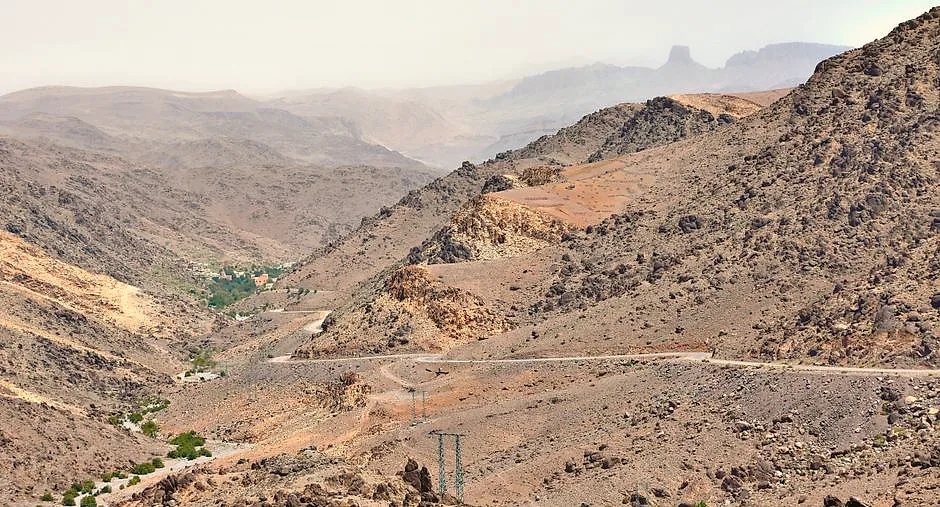
These Hadramawt centres feature in energy, development and humanitarian assignments. Distance from western front lines does not make independent movement safe. Medical evacuation, airport continuity and road movement still need institutional planning.
Taiz and Hodeidah
Both have suffered intense conflict and infrastructure damage. Essential missions require protected movement and a live evacuation plan.
Socotra
Distance from mainland fighting does not turn Socotra into a normal remote-work island. Flights, healthcare, supplies, permissions and evacuation remain constrained; national travel warnings still apply.
| Location | Operating reality | Suitable for |
|---|---|---|
| Sana’a | Northern administration, strict controls, highland climate | Established diplomatic or humanitarian systems |
| Aden | Southern hub, separate currency conditions, hot coast | Government-facing and aid assignments |
| Mukalla | Eastern centre, limited specialist services | Employer-managed Hadramawt roles |
| Seiyun | Interior logistics point, fragile access | Short supported field assignments |
| Taiz / Hodeidah | Conflict exposure and damaged infrastructure | Essential missions only |
| Socotra | Isolation and limited healthcare | Short authorised assignments only |
Climate
Yemen changes sharply with elevation. Sana’a has mild days and cool nights; Aden and the Red Sea coast are hot and humid, often reaching the upper 30s Celsius.[17]
| Area | Conditions | Practical implication |
|---|---|---|
| Sana’a highlands | Mild days, cold winter nights, seasonal rain | Warm layers and rain protection |
| Aden coast | Very hot and humid | Cooling, hydration and backup power |
| Red Sea plain | Extreme heat and humidity | Heat-stress protocol |
| Hadramawt interior | Hot, dry, large day-night range | Water and dust protection |
| Highlands | Seasonal heavy rain and flooding | Check road access before movement |
Internet and Remote Work[7] counted 7.29 million internet users in early 2025-17.7% penetration-and a median fixed download speed of 9.68 Mbps. The Internet Society[4] reports limited provider choice and low resilience.
Expect congestion, power-related outages, territorial differences and difficulty sustaining video calls or large transfers. Require two connections, offline files, backup power and an approved emergency device. Do not install unlicensed satellite equipment without legal and security approval.
Electricity and Water
Frequent power outages are a basic consequence of the conflict, according to the[18]. Buildings often use generators, solar panels and batteries.
Before accepting housing:
- Cut grid power and test the backup under load.
- Check battery age and inverter capacity.
- Confirm fuel storage and resupply.
- Verify pumps, refrigeration, cooling and communications remain active.
- Inspect tanks and filtration.
- Confirm a manual exit if electric gates fail.
If water pumping and communications fail with the grid, the property is not deployment-ready.
Schools and Families
UNICEF reported in 2026 that more than 3.2 million children aged 5-17 were out of school, including 1.2 million primary-age children.[19]
An employer bringing dependants must provide an education plan before departure. Verify curriculum, accreditation, teachers, security transport, lockdown procedures, online-learning resilience, paediatric care, guardian arrangements and refund terms after evacuation.
For most households, an unaccompanied assignment with scheduled rest travel is safer than family relocation.
Buying Property
Law No. 23 of 2009 allows non-Yemenis to own property for housing or licensed activity under conditions and excludes archaeological, religious, border and certain other areas.[20] Yemen’s[21] also permits qualifying investors to buy or lease land and buildings for registered projects.
Legal possibility is not practical safety. Historic[22] notes incomplete records and frequent disputes; today’s territorial fragmentation raises enforcement risk further.
Independent counsel must verify:
- Seller identity and authority.
- Full title chain and correct registry.
- Family, tribal, waqf and state claims.
- Zoning and foreign-ownership eligibility.
- Required territorial approvals.
- Sanctions exposure.
- Lawful payment route.
- Enforceability after a change of political control.
Do not treat property as a residency route. Rent first, use employer-approved housing and keep the lease easy to terminate.
Your First 30 Days
Before Arrival
- Check your government’s current warning:[1][2] or your national equivalent.
- Receive the visa before travel; no routine airport visa is available.[6]
- Secure written conflict-zone and medevac insurance.
- Complete travel-medicine review using[23].
- Receive the airport, housing, movement, communications and evacuation plan.
- Move salary payment offshore.
- Leave document copies and emergency contacts with someone outside Yemen.
First 72 Hours
- Complete the security briefing before personal movement.
- Test every communication system.
- Test backup electricity and water.
- Identify the approved clinic and stabilisation point.
- Set daily check-ins and missed-check-in escalation.
- Prepare the go-bag.
- Confirm accepted banknotes and the local exchange rate.
First Month
- Obtain copies of all residence and work filings.
- Complete hostile-environment and first-aid training.
- Run an evacuation drill.
- Audit the lease and payment records.
- Build a 14-day supply buffer consistent with employer policy.
- Review the assignment weekly. If legal, security, medical or evacuation support stops working, activate the exit plan.
Key Data at a Glance
| Indicator | 2026 reality |
|---|---|
| Travel advice | Against all travel / avoid all travel[1][2] |
| US consular presence | Sana’a embassy operations suspended since 2015[24] |
| Visa on arrival | Not available; prior authorisation required[6] |
| Digital-nomad visa | None |
| Currency | Yemeni rial with distinct Sana’a and Aden rates[10] |
| 2026 inflation forecast | 26.5% in the IMF’s April projection[14] |
| Resident salary tax | Commonly reported at 10%-15%; verify locally[11] |
| Non-resident employment tax | Commonly reported at 20%; verify locally[11] |
| Corporate tax | Headline rate generally 20%[13] |
| Internet penetration | 17.7% in early 2025[7] |
| Median fixed speed | 9.68 Mbps in early 2025[7] |
| Ambulance / fire | 191; response may be unavailable[15] |
| Police | 199 or 194; capacity severely limited[15] |
| Healthcare | Poor outside main cities; medevac essential[25] |
| Children out of school | More than 3.2 million aged 5-17[19] |
| Foreign property ownership | Legally possible under conditions; enforcement risk severe[20][21] |
Yemen is not a country where weak planning can be repaired after arrival. The visa, salary, secure housing, daily movement, medical evacuation and exit trigger must exist before the flight-and each one must still work on the day you land.
References
[1] Yemen travel advice - GOV.UK - FCDO travel advice for Yemen. Includes safety and security, insurance, entry requirements and legal differences.
[4] Country Report for Yemen | ISOC Pulse - Internet Society Pulse Country Report for Yemen
[5] Yemen | Ministry of Foreign Affairs - Use our advice together with your own research from reputable sources to plan your trip.
[6] Visa Information
[7] Digital 2025: Yemen — DataReportal - Global Digital Insights - All the data, insights, and trends you need to help you make sense of the “state of digital” in Yemen in 2025, including detailed statistics for inter...
[8] Cost of Living in Sana (Sanaa). Sep 2026. Prices in Sana
[9] LivingCost
[10] World Bank
[11] Global Expansion
[12] Multiplier
[13] 2025 Corporate Tax Rates by Country | Tax Foundation - How does the US rank on corporate taxes? Is the US corporate tax high? Explore 2025 corporate tax rates by country and around the world.
[14] IMF
[15] Getting help - Yemen travel advice - GOV.UK - FCDO travel advice for Yemen. Includes safety and security, insurance, entry requirements and legal differences.
[16] UN News Today 29 September 2026 | | UN News - Worsening clashes in DR Congo hamper Ebola emergency response; WHO Harsh reality of everyday life on Ukraine’s frontline: OCHAYemen escalation fuels f...
[17] Britannica
[18] Open Knowledge Repository
[19] UNICEF Yemen
[23] Yemen - Traveler view | Travelers' Health | CDC - Official U.S. Government health recommendations for traveling. Provided by the U.S. Centers for Disease Control and Prevention (CDC).
[25] Health - Yemen travel advice - GOV.UK - FCDO travel advice for Yemen. Includes safety and security, insurance, entry requirements and legal differences.
Frequently Asked Questions
Can foreigners travel to Yemen independently or work remotely on a tourist visa in 2026? No. Independent travel, casual relocation, and digital nomadism are not possible in Yemen. The country offers no digital nomad visa, airport visas on arrival were abolished in 2010, and major international governments maintain Level 4 "Do Not Travel" advisories due to ongoing armed conflict, terrorism, and kidnapping risks. Entry requires formal prior authorization and institutional sponsorship (via the UN, diplomatic missions, accredited international NGOs, or vetted corporate contracts), with fortified housing, armed movement coordination, and emergency evacuation fully secured before departure.
How does Yemen's divided monetary and banking system affect expats? Due to prolonged civil conflict, Yemen's financial system is split into two distinct monetary zones: older rial banknotes circulate in northern Houthi-controlled areas (including Sana'a), while newly printed banknote series circulate in internationally recognized government areas (including Aden) at dramatically differing exchange rates. Commercial payment cards and international ATMs do not function reliably. Expats must negotiate employment contracts denominated and paid into offshore accounts in stable foreign currencies (such as USD, EUR, or GBP) to protect against severe exchange losses and local inflation (projected at 26.5% by the IMF).
What are the realistic cost of living and housing requirements in Sana'a and Aden? While baseline nominal rents appear low on paper (between YER 45,000 and 60,000 monthly for a one-bedroom apartment in local currency), living safely as an expat requires specialized institutional infrastructure. Budgeting must account for vetted fortified compounds with perimeter security, dedicated drivers, multi-layered water storage, and independent industrial generators or solar-battery arrays to handle chronic power grid failures. Leases must explicitly specify the payment currency and banknote series, along with immediate lease-termination rights upon an evacuation order.
What healthcare realities and emergency medical evacuation plans are necessary? Yemen's public healthcare infrastructure has suffered catastrophic wartime damage; only about 60% of facilities remain functional, and severe shortages of blood supplies, surgical equipment, and medications persist nationwide. Routine travel or international health policies typically exclude active war zones under Level 4 travel advisories. Expats must obtain specialized conflict-zone medical insurance that explicitly covers emergency trauma stabilization and aeromedical evacuation via dedicated air ambulance to regional medical centers in Oman, Saudi Arabia, or Djibouti.
Cover photo by Tom D'Arby on Pexels.
Want to see how Yemen stacks up?
Are you seriously considering a move? Use our interactive tools to explore Yemen's climate, tax brackets, and nomad visas.