Moving to Ukraine in 2026: 23% Tax, Martial Law Realities, and Expat Security
October 9, 2026
ShareUkraine is not a cheap European relocation with an unusual security footnote. It is a country at war. Missile and drone strikes still reach cities far from the front, civilian airspace is closed, martial law runs at least through 31 October 2026, and several governments tell their citizens not to travel. If your move is not tied to family, humanitarian work, reporting, reconstruction or a job that genuinely requires your presence, postpone it. Smartraveller[1] still says “Do not travel,” while the UK Foreign Office travel guidance[2] distinguishes a handful of western regions but warns that strikes can happen there too.
For people who have a serious reason to relocate, the country still functions: banks process payments, trains cross the country, mobile data is cheap, government services are heavily digitalised, and Kyiv, Lviv and other major cities maintain active professional communities. The trade-off is blunt. You must build shelter access, backup power, evacuation money and wartime insurance into ordinary household planning.
Ukraine in One Minute
| Issue | What an expat needs to know |
|---|---|
| Security | Active war; missile and drone risk nationwide. Check Smartraveller[1] and your own government’s advice before every trip. |
| Martial law | Extended through 31 October 2026 under the latest signed extension reported by UNN[3]. Recheck before moving. |
| Entry | Many Western passport holders receive up to 90 days in any 180 days visa-free; nationality-specific rules apply. Confirm through the State Migration Service of Ukraine[4]. |
| Long stay | Usually requires a Type D visa followed by a temporary residence permit based on employment, study, family or another statutory ground. |
| Arrival route | Civilian airspace remains closed; plan an overland journey through Poland, Slovakia, Hungary, Romania or Moldova. |
| Currency | Ukrainian hryvnia, UAH. Exchange rates and foreign-currency controls can change during martial law; use the National Bank of Ukraine[5] as the reference. |
| Salary tax | Generally 18% personal income tax plus 5% military levy on ordinary employment income, according to PwC[6] and the State Tax Service[7]. |
| Employer payroll charge | Standard Unified Social Contribution: 22%, generally paid by the employer; see PwC corporate tax summaries[8]. |
| Language | Ukrainian is the state language. Ukraine scored 526, a moderate band, in the 2025 EF English Proficiency Index[9]. |
| Emergency | 112 is the single emergency number; traditional numbers include 101 fire, 102 police and 103 ambulance. Verify local guidance after arrival. |
The Economy: Still Wartime
Forget normal emerging-market logic. Ukraine’s economy is shaped by defence spending, international aid, reconstruction, labour shortages, damaged energy assets and the physical risk of another strike. The National Bank’s outlook moved several times during 2026 as energy damage worsened: its April 2026 Inflation Report[10] cut projected real GDP growth to 1.3% and put year-end inflation at 9.4%. Treat any single forecast as a scenario, not a promise.
The practical consequence for expats is more important than the headline GDP number. Imported goods can reprice quickly, skilled staff are scarce in some sectors, electricity constraints can interrupt work, and organisations with foreign funding usually offer more stable packages than purely local employers. Negotiate salary review clauses, medical evacuation cover, backup-power access and relocation support before accepting a contract.
The strongest foreign-facing opportunities sit around humanitarian operations, energy, logistics, defence-adjacent technology, cybersecurity, infrastructure, agriculture, professional services and reconstruction. A cheap apartment does not compensate for a weak employment package if the job leaves you to fund your own security and evacuation.
Visas and Residency
Short Visits
Nationals covered by Ukraine’s visa-free regime may generally stay for up to 90 days in any rolling 180-day period. The official calculation appears on the State Migration Service portal[4]. Other nationalities need a visa, and the rules depend on citizenship and purpose of travel.
Visa-free entry does not authorise local employment and is not a substitute for residence. Border officers may request evidence of accommodation, sufficient funds, onward plans and valid medical cover. Keep digital and paper copies because phone service and electricity can fail at the same time.
Long Stays
For most non-exempt foreigners, the sequence is:
- Secure a legal ground for residence: employment, study, family reunification, participation in a registered project, religious activity or another statutory category.
- Obtain a Type D long-stay visa abroad if your nationality and category require it.
- Enter Ukraine and apply to the territorial office of the State Migration Service for a temporary residence permit.
- Register your place of residence after the permit is issued.
The Ukrainian consular guidance[11] explains that a Type D visa is normally issued for 90 days so the applicant can complete the residence-permit procedure inside Ukraine. A local immigration specialist should check your exact document list before the consular appointment; apostilles, legalisation and notarised Ukrainian translations can become the slowest part of the process.
Work Permits
The Ukrainian employer-not the foreign employee-normally applies for the work permit. A work permit authorises the employment; it does not by itself grant the right to reside. The permit can then support a temporary residence application, as explained by ExpatPro legal experts[12].
Official fees depend on permit length. Published 2026 figures range from UAH 9,984 for an initial permit of up to six months to UAH 33,280 for more than two and up to three years; confirm the amount immediately before filing because the fee is tied to the statutory subsistence minimum. The 2026 schedule is set out by Yurincom[13].
Remote Workers
Ukraine does not offer a conventional digital-nomad residence permit. Working online for a foreign company while physically living in Ukraine does not remove immigration, tax or permanent-establishment questions. Before crossing the 183-day line-or establishing a home and centre of vital interests-get written advice from a Ukrainian tax professional.
Dual Nationals
This issue can change the entire risk calculation. Ukraine may treat a dual Ukrainian national as Ukrainian while that person is in the country. Wartime military-registration and departure rules can therefore apply even if the traveller entered with another passport. Anyone who holds, may hold, or may be considered entitled to Ukrainian citizenship should obtain individual legal advice before entry.
Entering the Country
You cannot plan this like a normal flight relocation. Civilian passenger flights do not operate into Kyiv, Lviv or Odesa. Most expats fly to Warsaw, Kraków, Rzeszów, Budapest, Bucharest or Chișinău, then continue by train, coach or car across a western border.
International rail links connect Ukraine with Polish, Hungarian, Moldovan and Romanian destinations. Book through the official Ukrzaliznytsia booking website[14] or app, not through an unknown reseller. Tickets on popular international routes can disappear quickly, and border delays make tight onward connections a bad bet.
Carry:
- Passport, visa or residence permit
- Health and war-risk insurance documents
- Work invitation or residence paperwork if relevant
- Accommodation address and host contact
- Proof of funds
- Printed emergency contacts
- Medication in original packaging, plus prescriptions
- Cash in UAH and a hard currency reserve
- Power bank, charging cable and offline maps
Never enter through Russia, Belarus or occupied territory. Use an official Ukrainian-controlled border crossing and check the State Border Guard Service[15] before departure.
Cost of Living
Ukraine remains inexpensive by Western European standards, but wartime relocation carries costs that ordinary price indexes miss: insurance exclusions, backup electricity, emergency accommodation, last-minute overland transport and the possibility of paying for two homes during an evacuation.
A realistic comfortable central-Kyiv budget for one person is roughly USD 1,200-1,800 per month, including rent, according to ExpatLife’s 2026 estimate[16]. Treat this as a planning range, not a quotation. Apartment condition, proximity to a real shelter, floor level, heating type and backup power now matter as much as neighbourhood prestige.
Kyiv Monthly Budget
| Item | Planning range | Source or note |
|---|---|---|
| One-bedroom, central Kyiv | USD 400-700 | ExpatLife[16] |
| One-bedroom, outside centre | USD 250-400 | ExpatLife[16] |
| Groceries, one person | USD 150-250 | ExpatLife[16] |
| Basic utilities, 85 m² flat | About UAH 3,790 in a crowdsourced basket | Numbeo basket analysis[17]; winter and outages can change this sharply |
| Home internet | Roughly UAH 228 in the same basket | Numbeo[17] |
| Mobile package | Common 2026 offers roughly UAH 250-420 per four weeks/month | Mezha tariff comparison[18] |
| Kyiv municipal transport | UAH 30 single ride; UAH 60 for a 90-minute transfer ticket | Judicial and Legal Newspaper[19] |
The Wartime Premium
Add a separate emergency reserve rather than hiding it inside the grocery budget. A reasonable household setup may include:
- Two large power banks and battery lights
- A router power supply or mini-UPS
- Drinking-water storage
- Several days of food that needs no cooking
- A first-aid kit and at least a month of essential medication
- A go-bag beside the door
- Funds for an immediate train, coach or private transfer to a western border
- Temporary accommodation outside Ukraine
Do not sign a lease based only on staged photos. Visit the shelter, test the mobile signal, ask how water reaches upper floors during an outage, and find out whether the lift, entry system, heating and internet continue when grid power disappears.
Taxes
Tax Residence
The familiar 183-day test matters, but it is not the only test. Permanent home, centre of vital interests and treaty tie-breakers can determine residence before or despite the day count.[20] outlines the domestic sequence; cross-border workers should obtain treaty-specific advice.
A Ukrainian tax resident can become liable on worldwide income. Foreign salary paid abroad does not automatically stay outside the Ukrainian tax net. Remote workers should settle this before the first local filing deadline, not after receiving a bank compliance question.
Main Rates
| Tax | Standard 2026 treatment |
|---|---|
| Personal income tax | 18% on ordinary salary and most personal income - PwC[6] |
| Military levy | 5% on salary and many other taxable receipts - State Tax Service[7] |
| Combined employee tax on ordinary salary | 23% before any special treatment or treaty relief |
| Employer Unified Social Contribution | Generally 22% of gross remuneration, subject to statutory rules and caps - PwC[8] |
| Standard corporate income tax | 18% - verify current application through PwC Ukraine[6] |
| Standard VAT | 20% - verify exemptions and wartime changes through PwC Ukraine[6] |
The 5% military levy is tied to wartime legislation and can change after martial law ends. Do not reuse a pre-December-2024 payroll calculator.
Entrepreneurs
Ukraine’s individual-entrepreneur system, commonly called FOP, can be attractive for legitimate independent businesses, but the simplified regimes have turnover, activity and client restrictions. A foreigner also needs the correct immigration status, tax number, banking setup and registration. Using FOP to disguise an employment relationship creates labour and tax risk for both sides.
Banking and Money
Ukraine’s banking apps are among the country’s most practical systems. Card and contactless payments are routine in major cities, but cash remains essential when terminals or communications fail. Keep at least two cards from different issuers and do not rely on a single phone for authentication.
A foreigner can generally open an account, but the bank will run identity, tax-residency and source-of-funds checks. Typical documents include a passport, Ukrainian tax identification number, local phone number, Ukrainian address and residence permit where applicable. Banks can request more under their internal compliance rules; the baseline document list is summarised by Contact Ukraine[21].
Before moving a large sum:
- Ask the receiving bank which source-of-funds documents it wants
- Keep employment contracts, sale agreements and foreign tax returns
- Check wartime foreign-exchange and outbound-transfer limits with the National Bank of Ukraine[5]
- Avoid informal exchangers and crypto cash desks with unclear counterparties
- Keep enough cash for several days, but not your entire emergency fund at home
Healthcare
Ukraine has public and private providers, but wartime capacity varies dramatically by region. The system remains under attack. By May 2026, the World Health Organization[22] had verified more than 3,000 attacks on healthcare since the full-scale invasion; about 80% affected facilities such as hospitals and outpatient clinics.
For an expat, ordinary medical insurance is not enough. Read the exclusions. Many travel and international health policies exclude war, terrorism, active hostilities, frontline travel or evacuation from Ukraine. Get written confirmation of what happens after a missile strike, whether treatment in Poland or another neighbouring country is covered, and who pays for the ground transfer.
Before relocating:
- Choose a private clinic near home for routine care
- Identify the nearest emergency hospital and two alternatives
- Carry a digital medical summary and prescriptions
- Bring a buffer supply of essential medication
- Confirm dental, mental-health and chronic-care coverage
- Build a medical evacuation plan that does not depend on commercial flights
Call 112 in an emergency. The legacy numbers are 101 for fire, 102 for police and 103 for ambulance.
Safety: The Non-Negotiables
The main danger is not ordinary street crime. It is war: missiles, drones, falling debris, unexploded ordnance, infrastructure failure and sudden changes in the front or strike pattern. Western Ukraine is generally farther from ground combat, but it is not strike-proof.
Before Signing a Lease
Ask these questions in person:
- Where is the nearest functioning shelter, and how many minutes does it take to reach?
- Is it open at night, heated and accessible during curfew?
- Does the building have two exits?
- Is the apartment near military, energy, transport or industrial infrastructure?
- Does water continue without electricity?
- What powers the router, heating controls, entry system and lift?
- Which mobile networks work indoors?
- Can the landlord show the title and sign a proper written lease?
In Kyiv, use the continuously updated official city shelter map[23] and the Kyiv Digital app. Kyiv’s city administration instructs residents to proceed to shelter when an alert sounds and publishes official alerts through Kyiv Digital[24].
Daily Protocol
- Install the official air-alert app and the local city app
- Learn the alert types before the first siren
- Keep shoes, documents, medication, water and a charged power bank ready
- Follow curfew rules, which vary by region and can change
- Never photograph air-defence activity, checkpoints, troop movements or strike locations
- Avoid debris after an interception or attack
- Do not touch unfamiliar metal objects, ammunition or drones
- Keep an exit route and a second route to a western border
If a shelter is not realistically reachable after an alert begins, the apartment is unsuitable-no matter how attractive the rent.
Which City?
Lviv
Best for: newcomers whose work can be done in western Ukraine, people needing the simplest access to Poland, and families prioritising distance from the front.
Lviv offers the easiest overland connection to the EU and a deep service economy. It also receives missile and drone attacks, rents rise when displacement increases, and weekend tourism can create a false sense of normality. Choose housing for shelter and backup systems, not old-town views.
Kyiv
Best for: diplomats, journalists, senior corporate staff, NGOs, government-facing roles and people who need the country’s largest professional network.
Kyiv has the widest choice of private clinics, international schools, restaurants, banks and employers. It also remains a major target, and winter infrastructure disruption can be severe. The metro doubles as shelter infrastructure in many areas, but distance to an entrance matters.
Uzhhorod
Best for: cross-border access, smaller-city life and work connected to Slovakia or Hungary.
Its far-western location reduces some risks but does not eliminate nationwide strike exposure. Housing supply is smaller than in Kyiv or Lviv, and the professional market is narrower.
Chernivtsi
Best for: remote workers with a lawful residence basis, Romanian access and a slower pace.
Chernivtsi offers lower intensity than the capital and a manageable urban scale. Specialist healthcare, international schooling and high-level corporate work are more limited.
Odesa
Best for: roles that genuinely require a Black Sea presence.
Odesa’s architecture and food scene do not change the security equation. Port and energy infrastructure make it vulnerable to repeated attacks. It should not be selected as a lifestyle relocation while safer workable alternatives exist.
Dnipro, Kharkiv and Frontline Regions
These are not sensible default expat destinations in 2026. Move only for an essential assignment with professional security management, hardened accommodation, medical evacuation and organisational duty-of-care support. Do not self-deploy because rent is low or social media shows cafés operating normally.
| City | Main advantage | Main constraint | Practical fit |
|---|---|---|---|
| Lviv | Poland access; strong services | Strikes still occur; rental pressure | Best first base for many essential relocations |
| Kyiv | Jobs, institutions, clinics, schools | Frequent alerts and strategic-target risk | Employer-backed professionals |
| Uzhhorod | Western border access | Small market and limited housing | Cross-border and remote roles |
| Chernivtsi | Smaller scale; Romania access | Fewer international services | Remote workers and low-complexity households |
| Odesa | Port economy and culture | High strike exposure | Essential Black Sea assignments only |
| Dnipro / Kharkiv | Major industrial and humanitarian hubs | Much higher security risk | Professionally managed essential work only |
Housing
Long-term rentals commonly require the first month plus a deposit; agency fees vary. Insist on a written bilingual lease, an inventory with photos, meter readings and clear rules for early termination if security deteriorates.
Add wartime clauses covering:
- Early departure after evacuation orders or major infrastructure loss
- Who pays for damage to windows, doors or appliances after a strike
- Rent during periods when the apartment is uninhabitable
- Return of deposit when the tenant must leave the country quickly
- Access during curfew and building-lock procedures
- Responsibility for generator fuel, battery systems and repairs
Never transfer a deposit before verifying the owner and property. A polished Telegram listing is not proof of ownership. Ask a Ukrainian lawyer or notary to check the title, encumbrances and the landlord’s authority to sign.
Schools and Children
Several international schools continue to serve families in Kyiv through combinations of in-person, hybrid and online teaching. Availability can change after attacks or infrastructure disruption. A 2026 market overview by International School Advisor[25] puts broad annual international-school tuition at roughly EUR 4,000-14,000, depending on school and year group; confirm fees directly with the school.
Before enrolling, ask for specifics rather than a generic “safety policy”:
- Is the shelter inside the building or reached outdoors?
- How long does the whole school take to shelter?
- Can children remain there through a prolonged alert?
- Is there independent power, heat, water and ventilation?
- What happens to dismissal during an alert or curfew change?
- Is online teaching activated immediately after disruption?
- Who may collect the child if parents cannot cross the city?
- Does the school provide counselling and trauma-informed support?
Families without a compelling reason to be physically present should compare a move to western Ukraine with staying in a neighbouring EU country and travelling in only when necessary.
Language
Ukrainian is the state language and the right default in public life. English works well in many technology companies, NGOs, upscale services and younger professional circles, but it is unreliable in local administration, smaller clinics, building management and emergency situations.
Ukraine scored 526 in the EF English Proficiency Index[9], placing it in the moderate-proficiency band. Learn the Ukrainian alphabet, your address, basic medical vocabulary and phrases used during alerts. Keep a Ukrainian-language emergency card stating allergies, medication, blood type and an in-country contact.
Do not assume Russian is the socially neutral fallback. Many Ukrainians understand it, but the full-scale invasion has changed language choices profoundly. Start in Ukrainian; switch only if the other person does.
Internet and Power
Ukraine’s telecom infrastructure remains strong despite attacks. Ookla data reported by DataReportal[26] put median fixed download speed at 88.01 Mbps and mobile speed at 58.73 Mbps near the end of 2025. By July 2026, reported median speeds had reached 92.81 Mbps fixed and 82.22 Mbps mobile, according to dev.ua[27].
The three main mobile operators are Kyivstar, Vodafone Ukraine and lifecell. Standard packages commonly fall around UAH 250-420 per four weeks or month, depending on data, porting and identification conditions; compare current offers through the operators rather than relying on an old tariff article.
For remote work, the question is not advertised speed. Ask whether the building has fibre that continues during grid failure, how the provider powers local equipment, and whether mobile coverage survives a neighbourhood outage. Use two different mobile networks if connectivity is job-critical.
Minimum setup:
- Fibre connection where available
- Mini-UPS for optical terminal and router
- Power bank capable of charging a laptop
- Second SIM from another operator
- Offline copies of work files and contacts
- Surge protection and safe battery charging
- A coworking fallback with a generator or battery system
Transport
Ukrzaliznytsia is the backbone of long-distance travel and evacuation planning. Install its official app, save passenger details, and keep enough funds available to buy tickets at short notice. International routes connect to cities including Przemyśl, Chełm, Budapest, Chișinău and Bucharest; the network can change, so check Ukrzaliznytsia[14] directly.
Kyiv’s metro, buses, trams and trolleybuses use electronic payment and QR tickets. Since July 2026, a single municipal ride costs UAH 30, while a 90-minute transfer ticket costs UAH 60, according to the published city fare changes reported by the Judicial and Legal Newspaper[19].
Driving adds checkpoint delays, curfews, fuel planning and mine risk near affected territories. Never follow an off-road shortcut suggested by a navigation app in a formerly occupied or combat-affected area. Use established roads and current local guidance.
Buying Property
Foreigners can generally buy apartments, commercial premises and qualifying non-agricultural property. They cannot own agricultural land under current rules. The distinction matters when buying a house: the building and the legal status of the underlying plot must both be checked.
The legal framework is summarised in this foreign-investor real estate guide[28]. Every purchase needs independent title, sanctions, encumbrance, marital-rights and litigation checks. Wartime displacement, damaged archives, destroyed buildings and absent owners create risks that a standard pre-war checklist may miss.
Do not treat property as an immigration product. Buying an apartment does not automatically grant residence. Do not buy solely because the advertised price is far below its pre-war level: physical damage, uninsurable risk, weak rental demand, reconstruction liabilities and proximity to strategic infrastructure can explain the discount.
Owners of larger homes may owe annual real-estate tax. The usual exemption thresholds are 60 m² for apartments, 120 m² for houses and 180 m² for mixed residential holdings; local rates and exemptions apply. A 2026 overview is available from Mayak Real Estate[29].
Your First 30 Days
- Confirm your legal stay. Record the entry date and calculate the 90/180-day limit using the State Migration Service rule[4].
- Finish residence paperwork. If you entered on a Type D visa, file within the applicable window and do not assume an appointment stops the visa clock.
- Register your address. Foreign residence-permit holders may need to apply in person through a CNAP; a fully remote Diia process is not guaranteed.
- Get a Ukrainian tax number. It is routinely needed for banking, employment, contracts and property transactions.
- Open a bank account. Bring your passport, tax number, Ukrainian phone number, address evidence and residence documents.
- Buy two SIMs. Use different operators if your work or safety depends on connectivity.
- Map three shelters. One near home, one near work and one on your normal route. Walk each route.
- Build a 72-hour kit. Water, no-cook food, medication, torch, radio, power banks, cash, copies of documents and warm clothing.
- Check the lease infrastructure. Test water pressure, heating, internet backup and mobile signal during an outage if possible.
- Register with your embassy. Save its emergency number offline, but maintain an evacuation plan that does not depend on consular rescue.
- Choose a clinic. Book a non-urgent first appointment, confirm English support and ask where the clinic sends patients after a major trauma.
- Set an exit trigger. Decide in advance which events-loss of heat, a regional evacuation order, repeated nearby strikes or closure of a preferred border route-mean you leave.
Key Data
| Indicator | September 2026 position |
|---|---|
| National security advice | Australia: Do not travel -[1] |
| Martial law | Extended through 31 October 2026; recheck before travel - UNN[3] |
| Civilian flights | Suspended; enter and leave overland |
| Visa-free stay | Commonly 90 days in 180 for eligible nationalities - State Migration Service[4] |
| Ordinary salary tax | 18% PIT + 5% military levy -[6] and[7] |
| Employer social contribution | Generally 22% -[8] |
| Comfortable central-Kyiv budget | Roughly USD 1,200-1,800/month for one person - ExpatLife[16] |
| Kyiv one-bedroom rent | Roughly USD 400-700 central; USD 250-400 outside -[16] |
| Kyiv municipal ride | UAH 30 -[19] |
| English proficiency | EF score 526, moderate - EF EPI[9] |
| Fixed internet | Median 92.81 Mbps in July 2026 - dev.ua[27] |
| Healthcare attacks | More than 3,000 verified since the full-scale invasion by May 2026 - WHO[22] |
| Emergency number | 112 |
The decisive question is not whether you can afford Ukraine. It is whether your reason for being there justifies a move that requires a shelter plan, medical evacuation plan and land-border exit plan before you collect the keys.
References
[1] Ukraine Travel Advice & Safety | Smartraveller - Australian Government travel advice for Ukraine. Do not travel. Travel advice level RED. Understand the risks, safety, laws and contacts.
[3] Zelenskyy signed the extension of martial law and mobilization for 90 days | УНН - УНН War in Ukraine ✎ The President signed laws No. 15401 and No. 15402 on extending martial law and general mobilization for 90 days. The validity per...
[4] Extending the duration of stay on the territory of Ukraine (calculation of the allowed duration of stay) :: State Migration Service of Ukraine - Extending the duration of stay on the territory of Ukraine (calculation of the allowed duration of stay)
[6] Ukraine - Overview - Overview of business environment/doing business in Ukraine as it pertains to taxation, both individual and corporate
[7] Military levy increased by more than a quarter: budget received 43.5 billion UAH per quarter
[8] Ukraine - Corporate - Other taxes - Detailed description of other taxes impacting corporate entities in Ukraine
[9] 2025 EF English Proficiency Index
[10] Inflation Will Accelerate Temporarily This Year but Will Resume Its Decline in the Next Years - Inflation Report - The NBU's April forecast takes into account the consequences of damage to the energy sector and the impact of the war in the Middle East. Inflat...
[11] Ukrainian consular guidance
[12] Law Blog from Expatpro experts| ExpatPro - Law Blog from Expatpro. Notes, news, legislative updates from the Expatpro team experts. Only current and verified information.
[13] Work Permit in Ukraine - Cost, Documents, Processing Time | Yurincom - We obtain work permits for foreign nationals in Ukraine in 5-7 days. From EUR 90. State fee charged separately. Yurincom since 1992.
[15] State Border Guard Service - Опис
[16] Cost of Living in Kyiv 2026: Rent, Budget & Prices - Kyiv costs $1,200-$1,800/month for a single expat. Rent from $400-$700. Groceries $150-$250. Full breakdown of real expat expenses in 2026.
[17] Basket Analysis for Kiev (Kyiv), Ukraine
[18] What about tariffs at the beginning of 2026: we compare the cost of Kyivstar, Vodafone and lifecell • Межа - In this article, we will consider the current offers of the cost of services of the three largest Ukrainian mobile operators - Kyivstar, Vodafone and ...
[19] In Kyiv, public transport fares increased from July 15: who is entitled to benefits and discounts - sud.ua - From July 15, the fare in Kyiv increased to 30 hryvnias. | News List, In Ukraine - Judicial and Legal Newspaper
[20] Tax residency: determining and changing residency status - 👍 With the introduction of the rules on controlled foreign companies, tax residency status becomes an important issue for ...Read more ➔
[21] Opening a Bank Account in Ukraine for Foreigners - 2017 Guide - A foreigner's guide to opening a personal bank account in Ukraine including account opening requirements, choosing a bank, and currency controls.
[22] 3000 attacks on health care in Ukraine verified by WHO since full-scale invasion - During 1534 days of war, Ukraine’s health-care system has experienced repeated attacks. WHO has verified more than 3000 attacks on health care over th...
[24] Київ Цифровий - Новий етап еволюції міста. Транспортна карта, QR-квитки, паркування, порятунок евакуйованої автівки та інші міські сервіси у вашому смартфоні. Без бюр...
[25] Guide to Choosing an International School in Kyiv 2026
[26] Digital 2026: Ukraine - DataReportal - Global Digital Insights - All the data, insights, and trends you need to help you make sense of the “state of digital” in Ukraine in 2026, including detailed statistics for int...
[27] Kyiv immediately rose 50 positions in the world mobile internet ranking | dev.ua - Ukraine improved its position in the Speedtest Global Index, moving up 5 places as of July 2026. The main driver of this growth was Kyiv, which jumped...
[28] Buy Real Estate in Ukraine: Guide for Foreign Investors - Foreign buyers face complex rules in Ukraine real estate. Learn legal steps, risks, and structures. Get expert help: [email protected]
[29] Property tax in Ukraine in 2026 - Mayak Real Estate Agency - Every year, owners of residential and commercial real estate of a certain size are required to pay tax. The amount of property tax is determined by lo
Frequently Asked Questions
Can foreigners travel to Ukraine visa-free and what are the entry requirements in 2026? Citizens of many Western countries (including EU nations, the UK, the US, and Canada) can enter Ukraine visa-free for up to 90 days within any 180-day period. However, commercial passenger flights are suspended, requiring all arrivals to travel overland via Poland, Slovakia, Hungary, Romania, or Moldova. Visa-free entry prohibits local employment; those relocating for long-term work, reconstruction, or humanitarian projects require a Type D visa followed by a temporary residence permit.
How does personal income tax and the military levy work for expats in Ukraine in 2026? Standard employment income in Ukraine is subject to an 18% Personal Income Tax (PIT) plus a 5% military levy, resulting in a combined individual tax rate of 23% withheld by employers. Additionally, employers pay a 22% Unified Social Contribution (USC). Tax residency is determined by spending more than 183 days in Ukraine, maintaining a permanent home, or establishing a center of vital interests.
What is the realistic cost of living and housing in Kyiv and Lviv? A comfortable monthly budget for a single expat in central Kyiv or Lviv ranges between $1,200 and $1,800 USD, with central one-bedroom apartments costing roughly $400 to $700 monthly. Beyond base rent and groceries, expats face wartime overheads, including mandatory backup power systems (power banks, mini-UPS for optical fibre internet), emergency fuel, and war-risk health coverage.
What safety precautions and medical emergency plans are essential in Ukraine? Due to nationwide missile and drone strike risks under ongoing martial law, residents must verify shelter access, install the Kyiv Digital / air-raid alert apps, and strictly observe regional curfews. Standard international health insurance policies typically exclude active war zones, making specialized war-risk medical insurance with cross-border overland medical evacuation to neighboring EU countries essential.
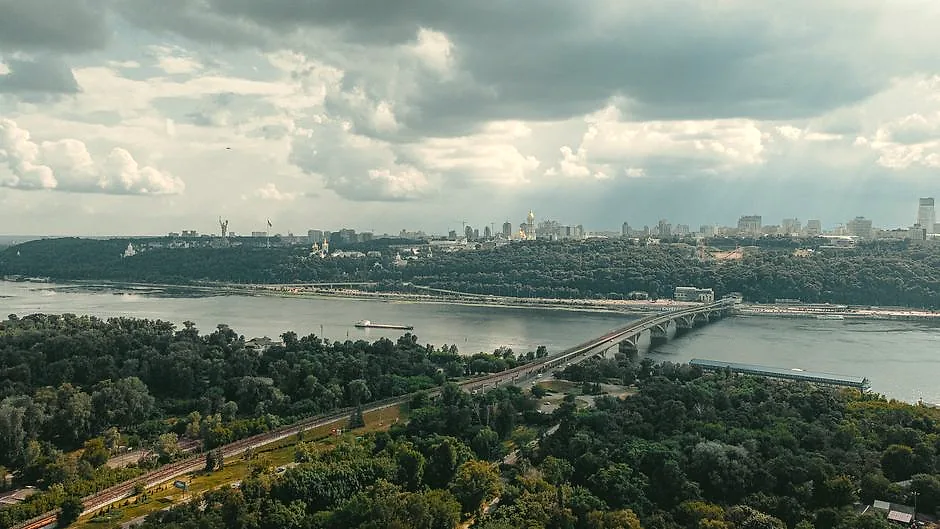
Cover photo by Daniel Eliashevsky on Pexels.
Want to see how Ukraine stacks up?
Are you seriously considering a move? Use our interactive tools to explore Ukraine's climate, tax brackets, and nomad visas.