Moving to Nigeria in 2026: CERPAC Permits, 25% Tax, and Lagos Generator Realities
September 15, 2026
ShareNigeria is not a cheap, easy expat posting once secure housing, reliable power, private healthcare and international schooling enter the budget. It is, however, one of Africa’s largest commercial markets, English is the official business language, and Lagos offers a depth of opportunity that few cities on the continent can match. The trade-off is blunt: daily life works best when your employer or your own income can pay for the infrastructure that the city does not reliably provide.
This guide was checked in September 2026. Immigration fees, exchange rates, rents and security conditions can change quickly, so verify them again before paying a deposit or booking a one-way flight.
Nigeria in 60 Seconds
| Question | Short answer |
|---|---|
| Best city for private-sector careers? | Lagos |
| Best city for government, development and diplomatic work? | Abuja |
| Easiest language for daily life? | English is Nigeria’s official language and widely used in business |
| Can a tourist work legally? | No. Employment requires the correct work/residence route through the Nigeria Immigration Service[1] |
| Is there a digital nomad visa? | No dedicated digital nomad visa was listed by the Nigeria Immigration Service[2] as of September 2026 |
| Main employment route | R2A Employment Visa, expatriate quota and CERPAC residence documentation |
| Personal income tax | Progressive: 0% to 25% under the 2026 rules, according to PwC Nigeria[3] |
| Tax-residency trigger | 183 days is one test, but permanent home, habitual abode, domicile and family or economic ties can also establish residence under PwC’s 2026 summary[4] |
| Currency | Nigerian naira, NGN or ₦ |
| Main health risks | Malaria, yellow fever and variable access to emergency care; check the CDC Yellow Book[5] |
| Emergency number | 112 |
| Biggest practical costs | Secure housing, advance rent, backup electricity, private transport, health cover and school fees |
| Biggest mistake | Choosing a home from a map without testing the commute, power supply, drainage and security after dark |
The Economy: Eyes Open
Nigeria combines scale with volatility. The World Bank forecast economic growth of 4.4% for both 2026 and 2027, the fastest projected pace in more than a decade, supported by services, agriculture and non-oil activity. The same economy still exposes residents to a weak and changeable currency, high food costs and major differences between official statistics and the prices paid in Lagos or Abuja. Check the latest releases from the World Bank’s Nigeria Development Update[6] and the National Bureau of Statistics[7] rather than building a relocation budget from last year’s exchange rate.
Inflation was 15.43% year-on-year in July 2026, while food inflation stood above the headline rate. That matters more to an expat than a GDP forecast: landlords reprice, imported products move with the naira, and school or insurance bills may be quoted in US dollars. Keep at least part of your relocation reserve in a stable currency and convert only what you expect to spend locally.
The strongest international career lanes are concentrated in:
- Financial services and fintech
- Telecommunications and technology
- Oil, gas and power
- Consumer goods and logistics
- Consulting and professional services
- Construction and infrastructure
- International development, embassies and NGOs
- Media, entertainment and the creative industries
Lagos dominates private-sector hiring. Abuja dominates federal government, diplomacy and development work. Port Harcourt remains relevant to oil and gas, but its security profile and weaker international infrastructure make it a specialist choice rather than the default expat base.
Who Nigeria Suits
Nigeria works best for people arriving with a specific reason to be there: a strong employment package, a funded business, a Nigerian spouse or family connection, a defined project, or regional responsibility for West Africa.
It is a poor fit for a first-time nomad hoping to arrive on a tourist visa and “figure things out.” Nigeria has no dedicated remote-work residence category, immigration compliance is employer-driven for most foreign workers, and the cost of reproducing a Western level of reliability can erase the apparent savings on food and services.
A good relocation package should address at least five items in writing:
- Immigration sponsorship, expatriate quota and CERPAC costs
- Secure housing or a realistic housing allowance
- Private medical insurance with evacuation cover
- Transport, ideally a vetted driver or company car
- School fees if children are moving with you
A salary that looks generous in naira can become thin once rent is paid a year in advance and imported costs move against the currency.
Visas and Residency
Short Visits
Nigeria’s short-visit system covers tourism, family visits, business meetings, conferences, negotiations and other temporary activities. The Nigeria Immigration Service visa portal[1] states that short-visit visas generally permit stays of no more than 90 days, and e-visa classes are not extendable. A short-visit visa does not create a right to take local employment.
The tourism F5A category is generally a single-entry visa with a visitor’s permit of up to 90 days. The official F5A tourism visa page[8] should be checked for eligibility, fees and the current application route before travel. Visa policy varies by nationality, and ECOWAS citizens receive different treatment from most other passport holders.
Do not assume visa on arrival is available because an airline employee, agent or old blog says so. Use only the Nigeria Immigration Service[9] and the Nigerian embassy or high commission responsible for your country of residence.
Long-Term Employment
The standard route for a foreign employee is the R2A Employment Visa, tied to an employer’s approved expatriate-quota position. The Nigeria Immigration Service[10] describes R2A as the category for expatriates taking employment in Nigeria based on that quota.
The process is employer-led:
- The Nigerian company secures the necessary business permit and expatriate-quota position.
- The employer issues the offer, contract and acceptance documentation.
- The applicant obtains the R2A entry visa through the relevant Nigerian mission.
- After arrival, the applicant completes residence formalities and obtains a Combined Expatriate Residence Permit and Aliens Card, usually called CERPAC.
- Dependants apply under the relevant spouse, minor, adult dependant or parent category.
The official R2A/CERPAC requirements[11] include a passport valid for at least six months, employment contract or appointment letter, employer sponsorship, expatriate-quota verification, qualifications, CV and police clearance. Senior managers may also need a board resolution. At the time checked, the page listed a CERPAC fee of USD 2,000, insurance of USD 1,000 and a USD 20 delivery charge. Confirm the payable amount directly before filing.
Your employer should pay and manage this process. If a recruiter tells you to enter as a tourist, start working immediately and “convert later,” treat that as a compliance warning.
Temporary Work Permits
The temporary-work route is for invited specialists carrying out defined, short projects: equipment installation, commissioning, repairs, staff training, technical audits and similar assignments. It is not a substitute for ordinary employment.
The R11 Temporary Work Permit page[12] says the host company must first obtain approval from the Comptroller General of Immigration. The visa is valid for 90 days from issuance, is not extendable and restricts the holder to specialist or project-based work. Nigeria also lists an F8A temporary-work category for short specialist assignments; confirm the correct class with Immigration before applying.
Entrepreneurs and Investors
Foreigners can establish companies in Nigeria, but incorporation alone does not provide the right to live or work in the country. A foreign-participation company may need:
- Registration with the Corporate Affairs Commission[13]
- Tax registration
- A business permit
- Expatriate-quota approval for foreign staff
- Sector-specific licences
- Immigration status for each foreign director or employee who will work in Nigeria
The Nigerian Investment Promotion Commission’s One Stop Investment Centre[14] brings together agencies responsible for incorporation, tax, business permits, expatriate quotas, immigration and sector regulation. NIPC states that the expatriate quota is normally granted for an initial three years and can be renewed in two-year periods, subject to a maximum of ten years. Its labour and expatriate-quota guide[15] also lists a minimum share capital of ₦10 million for applicants using that process; verify whether later reforms or sector rules alter the amount for your company.
Nigeria lists permanent-residence investor categories from small enterprise through oil, gas and power on the Immigration Service PRV page[16]. The label “permanent residence” does not remove business-permit, capital, security-clearance or sector-approval requirements. Use a Nigerian immigration lawyer and corporate counsel before transferring capital.
Remote Workers
Nigeria did not have a dedicated digital nomad visa as of September 2026. A tourism or visiting visa prohibits local employment and is not designed as a residence solution. Remote workers should obtain written advice on three separate questions:
- Does the proposed visa permit the intended activity?
- Does the length and pattern of stay create Nigerian tax residence?
- Does working for an overseas company create payroll, permanent-establishment or registration exposure for the employer?
Do not treat “my client is abroad” as an automatic exemption from immigration or tax law.
Dependants
The CERPAC system lists separate categories for spouses, minors, adult dependants and parents aged 65 or over. The official R2A/CERPAC requirements page[11] asks dependants for documents such as passports, marriage or birth certificates, police clearances and sponsorship letters from the principal expatriate or employer.
A dependant permit should not be assumed to include permission to work. A spouse taking employment may need an independent employer-sponsored route.
Cost of Living
Nigeria can be inexpensive at the local end of the market and extremely expensive at the expat end. The difference is not mainly restaurant bills. It is housing with professional security, dependable water, backup electricity, a workable commute and access to private schools and clinics.
Crowd-sourced Numbeo data for Nigeria[17] estimated monthly costs for one person at roughly ₦557,000 before rent in September 2026. The same dataset showed a national average of about ₦709,000 for a central one-bedroom and ₦409,000 outside the centre, but the ranges were enormous. Lagos and Abuja neighbourhoods should be budgeted separately, not from a national average.
Practical Monthly Budgets
These are planning ranges, not official price statistics. They assume a long-term resident rather than a backpacker and exclude international school tuition.
| Lifestyle | Lagos | Abuja | What it usually means |
|---|---|---|---|
| Lean professional | ₦700,000-₦1.3m | ₦750,000-₦1.4m | Shared or modest housing, local food, careful transport spending, limited backup-power costs |
| Comfortable single expat | ₦1.5m-₦3.0m | ₦1.5m-₦3.2m | Good one-bedroom, ride-hailing or driver use, private gym/healthcare, regular dining out |
| Couple | ₦2.2m-₦4.5m | ₦2.3m-₦4.8m | Secure two-bedroom, private transport, stronger power setup, imported groceries |
| Family with children | ₦4m-₦10m+ | ₦4m-₦10m+ | Larger secure home, driver, medical cover and school-related costs; premium tuition sits above this range |
The spread is deliberate. A recent apartment with generator power in Ikoyi, Victoria Island, Lekki Phase 1, Maitama or Asokoro operates in a different market from an older flat in a less central district.
Housing Reality
Nigeria’s rental market often quotes annual rather than monthly rent, and tenants may be asked to pay a year or more upfront. Agency, legal, caution and service charges can add a large amount to the headline rent. The service charge matters: it may cover security, water treatment, waste, common-area power, generator maintenance and estate management, but fuel can still be billed separately.
A September 2026 market review found Lagos Mainland one-bedroom rents ranging from roughly ₦500,000 to ₦3 million annually depending on location and quality, while premium Island addresses can cost far more. Abuja two-bedroom rents ranged from roughly ₦1.5 million to ₦3 million in Gwarinpa, Kubwa and Lugbe, ₦5 million to ₦8 million in Wuse 2 and above ₦10 million in Asokoro. See the underlying ranges in Within Nigeria's Lagos-Abuja cost comparison[18].
Before signing, ask for a written breakdown of:
- Annual rent
- Service charge and what it includes
- Agency and legal fees
- Security deposit or caution fee
- Generator or diesel charges
- Electricity-meter arrangement and tariff band
- Water source and treatment
- Waste collection
- Maintenance responsibilities
- Rent-review clause
Visit at 7:30 a.m., during a heavy rain if possible, and again after 8 p.m. A quiet street on Sunday afternoon may become an unusable traffic corridor on Monday morning.
Household Prices
| Item | Planning figure | Source |
|---|---|---|
| Single person, excluding rent | About ₦557,000/month | Numbeo Nigeria[17] |
| One-bedroom, Nigeria city centre average | About ₦709,000/month | Numbeo Nigeria[17] |
| One-bedroom, outside centre average | About ₦409,000/month | Numbeo Nigeria[17] |
| Fixed broadband median download | 34.47 Mbps in H1 2026 | Ookla findings reported by Nairametrics[19] |
| Premium Lagos international school | Commonly USD 22,000-32,000/year | Global School Guide[20] |
Treat all naira prices as snapshots. Ask for current written quotations and record whether payment is fixed in naira or indexed to dollars.
Taxes
Tax Residence
Under Nigeria’s 2026 framework, the 183-day rule is only one route to residence. PwC’s Nigeria residence summary[4] says an individual may be treated as resident if they are domiciled in Nigeria, maintain a permanent home, have a habitual abode, spend at least 183 days in Nigeria in a 12-month period, or have substantial economic or immediate-family ties in the country.
Residents are generally exposed to Nigerian tax on worldwide income; non-residents are taxed on Nigerian-source income. That makes professional advice worth paying for before the move, especially if you own a foreign company, receive dividends, exercise share options or continue working for an overseas employer.
Personal Income Tax
The personal income tax bands effective in 2026 are progressive:
| Annual taxable income band | Rate | Source |
|---|---|---|
| First ₦800,000 | 0% | PwC Nigeria[3] |
| Next ₦2,200,000 | 15% | PwC Nigeria[3] |
| Next ₦9,000,000 | 18% | PwC Nigeria[3] |
| Next ₦13,000,000 | 21% | PwC Nigeria[3] |
| Next ₦25,000,000 | 23% | PwC Nigeria[3] |
| Income above ₦50,000,000 | 25% | PwC Nigeria[3] |
The old Consolidated Relief Allowance was replaced by capped rent relief under the new rules. Employer PAYE returns are generally due by 31 January, individual returns by 31 March, and monthly PAYE remittances by the tenth day of the following month, according to PwC’s Nigeria overview[21].
Foreign Income and Businesses
Do not invoice foreign clients through a personal overseas account and assume Nigeria cannot tax the income. Residence, source, where work is performed, corporate management and double-tax agreements all matter.
Founders should separate four questions:
- Personal tax residence
- Nigerian company tax and VAT
- Payroll and withholding obligations
- Whether an overseas company creates a taxable Nigerian presence
Nigeria’s tax system changed materially from 1 January 2026. Use a Nigerian adviser who works with cross-border individuals and confirm the position in your home country as well.
Banking and Currency
The naira is a managed but volatile currency. The official rate was around ₦1,326 per US dollar in mid-September 2026, but rates move and bank-card conversion can differ from cash or authorised-dealer pricing. Check the Central Bank of Nigeria[22], your bank and the rate actually offered before converting a large amount.
A foreign resident usually needs a valid passport, immigration documentation, proof of Nigerian address, local phone number and a Bank Verification Number, or BVN, to open a full local account. Banks may also request an employment letter, tax number, references or additional compliance documents. Legal guidance on foreign-resident accounts notes that CERPAC and BVN are central requirements; see Resolution Law Firm's overview[23].
Practical setup:
- Keep your home-country account active.
- Open a naira account for salary and local bills.
- Ask whether you qualify for a domiciliary account in USD, EUR or GBP.
- Test international transfers with a small amount first.
- Keep records showing the source and official importation of investment capital.
- Never use an unlicensed exchanger because the rate is slightly better.
Investors bringing capital into Nigeria should ask their bank about a Certificate of Capital Importation before the money arrives. Without the correct documentation, repatriating capital or profits can become difficult.
Cards work in larger businesses, but transfers are a normal way to pay. Carry a modest amount of cash, not a visible stack of it, and never hand your unlocked phone to someone “helping” with a transfer.
Healthcare
Nigeria has capable doctors and several strong private hospitals, but access is uneven. The US Embassy’s medical-assistance list[24] states that private and nonprofit facilities provide the country’s highest-quality care and lists providers in Lagos and Abuja, including Reddington, Q-Life, Eko, Cedarcrest and Nizamiye.
For serious trauma, complex surgery or a condition requiring highly specialised care, evacuation to South Africa, Europe or another regional centre may be necessary. Buy insurance that explicitly covers medical evacuation; “international” in the product name does not guarantee it.
Before You Fly
Book a travel-medicine appointment well before departure. Nigeria is a yellow-fever-risk country and malaria transmission is a nationwide concern. Use the country-specific table in the CDC Yellow Book[5] and confirm entry requirements with Nigeria’s authorities and your airline.
Discuss these with a clinician:
- Yellow fever vaccination and certificate
- Prescription malaria prophylaxis
- Hepatitis A and B
- Typhoid
- Polio status
- Meningococcal vaccination for relevant regions and seasons
- Rabies for extended stays or likely animal exposure
- Routine vaccines and boosters
Use bottled or properly treated water, keep oral rehydration supplies at home and know which clinic you will use before the first fever. Malaria can deteriorate quickly; do not self-diagnose every fever as “just malaria.”
Everyday Care
Register with a private clinic close to home and another near the office. Store their numbers, your insurer’s approval line and your evacuation provider offline. In Lagos traffic, a theoretically excellent hospital on the other side of the city may not be an emergency option.
Safety
Nigeria’s security risks are regional, change quickly and cannot be reduced to a single countrywide score. As of 15 September 2026, the UK’s Foreign, Commonwealth & Development Office[25] advised against all travel to several states and against all but essential travel to others. The warnings covered terrorism, kidnapping, armed crime and intercommunal violence. The US also maintained a Level 3 “reconsider travel” position in 2026, with stronger warnings for numerous states.
This does not mean every day in Lagos or central Abuja feels like a crisis. It means your routines need more planning than they would in Portugal, Poland or Singapore.
Non-Negotiable Habits
- Arrange airport pickup through your employer, hotel or a known driver.
- Avoid intercity road travel after dark.
- Fly longer domestic routes where practical.
- Do not improvise road trips through states covered by official warnings.
- Keep vehicle doors locked and windows up in slow traffic.
- Avoid protests, political gatherings and large crowds.
- Vary routes if your work or profile creates a specific security risk.
- Share live location and arrival times with a trusted contact.
- Keep a low profile with jewellery, phones and cash.
- Use compounds or estates with documented access control, not just a guard sitting at the gate.
Kidnapping risk extends beyond wealthy foreigners. Your employer should provide a written security briefing and incident plan, not simply tell you that the neighbourhood is “fine.” Check your government’s travel advisory because travelling against it can invalidate insurance.
Laws and Social Risk
Same-sex sexual activity is illegal in Nigeria, and LGBT+ people face serious legal and personal-security risks. Laws and penalties differ between federal law and northern states operating Sharia-based criminal codes. LGBT+ expats should read the legal section of the FCDO travel advice[25] before accepting a posting.
Photographing government buildings, security personnel, airports or sensitive infrastructure can trigger confrontation. Ask before photographing people, and do not argue with armed personnel at checkpoints.
English and Communication
English is the official language and the working language of government, education, corporate life and much of the media. Nigeria ranked 29th globally with a score of 568 in the 2025 EF English Proficiency Index[26], above the global average of 488.
That makes professional integration easier than in many expat destinations, but Nigerian English has its own rhythm, vocabulary and indirect forms of politeness. Pidgin is widely used, particularly in informal conversation. Learning a few phrases helps, but listening matters more than performing slang.
Nigeria is ethnically and linguistically diverse. Yoruba is central in much of the southwest, Hausa across much of the north and Igbo in the southeast, alongside hundreds of other languages. Do not use one region’s customs as a template for the whole country.
Where to Live
Lagos
Lagos is the commercial default: finance, tech, telecoms, consumer brands, entertainment and professional services. It also has punishing traffic, flood-prone roads, high secure-housing costs and a daily geography shaped by bridges and bottlenecks.
Common expat areas include:
- Ikoyi: Premium housing, diplomatic and corporate presence, central to many Island offices; expensive.
- Victoria Island: Close to offices, restaurants and hotels; traffic, drainage and street quality vary block by block.
- Lekki Phase 1: Popular with professionals and families; active social scene, but the commute can deteriorate badly.
- Oniru: Convenient for Victoria Island and Lekki, with modern compounds; investigate flooding and service charges.
- Banana Island: Highly secure and extremely expensive; poor value unless the package covers it.
- Ikeja GRA: Strong Mainland option near the airport and many corporate offices.
- Yaba: Better fit for tech and startup workers, with more local housing stock and Mainland access.
- Gbagada, Maryland and Magodo: Family-oriented options for people whose work does not require a daily Island commute.
The best Lagos neighbourhood is the one on the correct side of your office bottleneck. A cheaper apartment that adds three hours of traffic can cost more in transport, fuel, stress and missed time than a higher rent near work.
Abuja
Abuja is more planned, lower-density and easier to navigate than Lagos, though rents in premium districts can be higher. It is the logical base for embassies, federal agencies, international organisations, government contractors and many NGOs.
Common areas include:
- Maitama: Diplomatic, secure and expensive.
- Asokoro: Senior government, diplomatic and high-end residential market.
- Wuse 2: Central, commercial and convenient, with higher noise and traffic.
- Jabi: Popular with professionals and families; good access to shopping and offices.
- Utako: Central and practical, with mixed housing quality.
- Gwarinpa: Large residential district with better value, but commute times vary.
- Life Camp: Compounds, schools and family housing; popular among long-term foreign residents.
- Kubwa and Lugbe: Lower-cost options, but location and security require closer inspection.
Outer suburbs and road corridors can carry different security risks from central districts. Check the current FCDO regional travel advice[25] and ask employers for route-specific guidance.
Port Harcourt
Port Harcourt is a work-driven move, mainly for energy, engineering and related services. Housing, transport and security should be employer-arranged. The Niger Delta includes areas covered by strong travel warnings, particularly riverine zones, so independent exploration is not sensible.
Ibadan
Ibadan offers lower rents and a slower pace than Lagos, with universities, healthcare, agriculture and a growing service economy. It can work for remote professionals with a specific local network, but flight connections, premium healthcare and international-school choice are thinner.
City Trade-Offs
| City | Best for | Main advantage | Main drawback |
|---|---|---|---|
| Lagos | Private-sector careers, founders, finance, tech | Deepest commercial network | Traffic, flooding, housing and security costs |
| Abuja | Diplomacy, government, development, families | More planned and less congested | Premium rents, car dependence, security concerns outside the core |
| Port Harcourt | Oil, gas and engineering assignments | Direct access to energy-sector work | Higher regional security complexity |
| Ibadan | Academia, agriculture, lower-cost living | Better housing value | Fewer expat services and international connections |
Internet and Power
Nigeria’s fixed broadband improved sharply: median download speed reached 34.47 Mbps in the first half of 2026, up from 13.50 Mbps in 2023, while median upload speed reached 25.17 Mbps. Those Ookla findings reported by Nairametrics[19] describe the national direction, not the connection in a specific building.
For remote work, verify the exact address with the provider before signing a lease. Fibre coverage is street-specific. Mobile performance changes by operator, floor, room and time of day.
Use redundancy:
- Primary fibre connection where available
- Data SIM from a second network
- 4G or 5G router
- UPS for the router and laptop
- Inverter and batteries for longer outages
- Generator or estate backup for air conditioning and heavy loads
Electricity is a housing cost, not just a utility bill. World Bank research estimated that more than 22 million petrol and diesel generators supplied power to about 26% of households. The World Bank’s mini-grid programme report[27] illustrates the scale of investment required beyond the central grid.
Ask each landlord:
- How many grid hours did the property receive yesterday and last week?
- Is the meter prepaid?
- Which tariff band serves the building?
- What powers the lift, water pump, security and common areas during an outage?
- Is generator fuel included in the service charge?
- What is the inverter capacity and battery age?
- Can the system run bedroom air conditioning overnight?
“24-hour power” often means a combination of grid, generator, solar and batteries. Get the operating schedule in writing.
Transport
Nigeria drives on the right. In Lagos and Abuja, most well-funded expats use a company car, trusted driver or established ride-hailing service. Public transport is cheap and extensive but may not meet the safety, comfort or route needs of a newly arrived foreign resident.
Lagos
Traffic controls daily life. A 15-kilometre trip can be short outside peak hours and exhausting during rain or rush hour. Live near work before optimising for restaurants, beach access or apartment size.
The Blue Line and Red Line rail services improve selected journeys, but they do not eliminate the need for road transport. Water transport can save time on specific routes; use regulated operators and wear a life jacket.
Abuja
Roads are wider and commuting is generally more predictable, but the city is car-dependent. Airport transfers and after-dark movements should use known drivers.
Driving Yourself
A foreign licence or international permit may be accepted only temporarily, and long-term residents should expect to obtain a Nigerian licence. Rules and enforcement can differ in practice. Confirm the current position with the Federal Road Safety Corps[28] and your employer’s security team before driving.
After an accident, prioritise personal safety, call your insurer and driver or security contact, photograph the scene only when safe, and avoid escalating roadside arguments.
Climate and Air
Lagos is hot and humid year-round. Abuja is also warm throughout the year but has a more distinct dry season, with higher daytime heat before the rains. The 2026 Nigerian Meteorological Agency forecast[29] projected a longer-than-normal rainy season for Lagos and several other states, plus warmer conditions nationally.
| Location | Wet period | Main discomfort | Housing check |
|---|---|---|---|
| Lagos | Broadly April-October, with heavy rain and local variation | Humidity, flooding, mould | Drainage, roof, ground-floor exposure, dehumidification |
| Abuja | Broadly April-October | Heat, storms, seasonal humidity | Cooling, drainage and road access |
| Northern cities | Shorter wet season, long dry period | Extreme heat and Harmattan dust | Air filtration, sealed windows, backup cooling |
Harmattan carries Saharan dust during the dry season, often from roughly December into February or March. People with asthma or allergies should bring medication and use indoor filtration. In Lagos, inspect wardrobes, walls and air-conditioning units for mould before moving in.
Schools and Childcare
Schooling can be the largest family expense after housing. Lagos and Abuja have American, British, IB and hybrid international options, but fees, waiting lists, transport and security differ sharply.
Premium Lagos schools commonly charge USD 22,000-32,000 per year, according to Global School Guide’s 2026 fee report[20]. The International Schools Database[30] lists individual 2026/27 fees in naira, with wide differences by school and year group.
Ask for the full first-year bill:
- Application and assessment fee
- Capital or development levy
- Tuition
- Transport
- Meals
- Uniform and device costs
- Examination charges
- Learning-support fees
- Currency-conversion policy
- Deposit and refund terms
Choose the school before the house if children will attend daily. A cross-city school run can dominate family life.
Domestic help and nannies are common, but employment should be documented. Verify identity and references, agree hours, leave, duties and notice in writing, and follow Nigerian employment and tax rules.
Renting a Home
Never transfer a holding deposit based only on a WhatsApp video. Property fraud, duplicate listings, unclear title and unauthorised agents are real risks.
Use this sequence:
- Shortlist the neighbourhood based on office or school commute.
- Inspect the property in person during daylight and after dark.
- Test taps, toilets, air conditioners, sockets, internet signal, inverter and generator switching.
- Speak to at least one current resident without the agent present.
- Verify the landlord or authorised representative.
- Have an independent lawyer review the title, lease and payment instructions.
- Get every fee in writing.
- Pay only to the verified contracting party’s account.
- Obtain signed receipts and an inventory with photos.
- Change locks or access codes after handover where permitted.
Clauses worth negotiating include responsibility for generator repairs, air-conditioner servicing, water treatment, structural leaks, pest control, service-charge increases and early termination if immigration or employment ends.
Buying Property
Nigeria does not operate a simple freehold system. The Land Use Act vests land administration in state governors and buyers acquire rights of occupancy rather than absolute ownership in the common Western sense. Transfers normally require title checks, a deed, stamp duty, registration and the governor’s consent.
Foreign ownership is legally complex and state-specific. The Legal 500 Nigeria real-estate guide[31] notes restrictions affecting aliens, the requirement for governor’s consent and the specific Lagos framework. Some foreign buyers use a Nigerian-registered company, but that does not remove the need for due diligence or consent.
Before buying, an independent property lawyer should verify:
- Root of title
- Certificate of Occupancy or other title document
- Governor’s Consent on earlier transfers
- Survey plan and coordinates
- Land Registry record
- Whether the land is under government acquisition
- Planning and building approvals
- Developer’s Corporate Affairs Commission record
- Litigation, charges and mortgages
- Service-charge obligations
Do not rely on a developer’s lawyer. Do not accept “global C of O” as proof that your specific interest is perfected. Do not release the full purchase price before registry and survey checks.
Buying property does not automatically grant a work permit, CERPAC or citizenship.
Work Culture
Nigeria’s corporate environment is relationship-driven and fast-moving. Seniority matters, formal titles are common and decisions may be made through personal networks even when the organisation has a formal procurement process.
Useful habits:
- Confirm meetings on the day.
- Allow for traffic before interpreting lateness as disrespect.
- Put decisions, pricing and deadlines in writing.
- Follow up by phone or WhatsApp after email.
- Do not mistake friendliness for final approval.
- Learn who can actually authorise payment or sign a contract.
- Never pay unofficial “facilitation” money; it creates legal and personal exposure.
Dress remains more formal than in many European tech environments, particularly in banking, law, government and client-facing work. Observe the office before switching to a casual wardrobe.
Food and Daily Life
Nigeria’s food scene is one of the easiest parts of the move to enjoy. Jollof rice, suya, pepper soup, moi moi, egusi, pounded yam, amala, seafood and regional soups are widely available, with large differences in spice, ingredients and preparation.
Food safety still requires judgement. Choose busy vendors with high turnover, be cautious with raw salads and ice, and use sealed bottled or treated water. Imported groceries are expensive and can disappear from shelves when currency or shipping conditions change. Build your routine around good local alternatives rather than reproducing a European supermarket basket item by item.
Alcohol is available in Lagos, Abuja and much of southern Nigeria. Some northern states apply Sharia-based restrictions. Dress and behaviour should reflect the local city, neighbourhood and religious setting.
Your First 30 Days
Before Arrival
- Confirm the correct visa class on the Nigeria Immigration Service portal[1].
- Get every employer immigration commitment in writing.
- Complete a travel-medicine appointment and check the CDC Yellow Book[5].
- Buy health insurance with medical evacuation.
- Arrange a verified airport pickup.
- Book serviced accommodation for at least two to four weeks.
- Keep certified copies of degrees, marriage certificates, birth certificates and police clearances if your visa route needs them.
- Store scans of all documents offline and in encrypted cloud storage.
Week One
- Obtain a Nigerian SIM through an authorised operator outlet.
- Complete employer-led CERPAC or residence steps immediately.
- Register with a private clinic near home or work.
- Save 112, your embassy, insurer, employer security contact and driver.
- Test two mobile networks before choosing your data setup.
- Take normal weekday trips between the office, shortlisted homes and schools.
Weeks Two and Three
- Open a bank account and complete BVN requirements if eligible.
- Shortlist housing only after commute testing.
- Ask internet providers to confirm service at the exact building.
- Request 30 days of power and generator records from managed compounds where available.
- Have a lawyer review the lease and payment account.
- Document all service charges and utility responsibilities.
Week Four
- Confirm tax registration and payroll treatment with your employer or adviser.
- Set up fibre, backup mobile data and power redundancy.
- Build a medical kit and replace any temperature-sensitive medication correctly.
- Run an emergency drill: hospital route, backup driver, evacuation contact and family meeting point.
- Review the latest FCDO Nigeria travel advice[25] for routes outside your city.
Key Data at a Glance
| Indicator | September 2026 position |
|---|---|
| GDP growth forecast | 4.4% for 2026, according to the World Bank via Nairametrics[32] |
| Latest confirmed inflation used in this guide | 15.43% year-on-year in July 2026; verify the newest release at the National Bureau of Statistics[7] |
| Personal income tax | 0%-25% progressive rates under PwC Nigeria[3] |
| Tax residence | 183 days is one test; home, abode, domicile and ties also matter under PwC[4] |
| Main expat work route | R2A visa, expatriate quota and CERPAC through the Nigeria Immigration Service[11] |
| CERPAC charges displayed for R2A | USD 2,000 fee, USD 1,000 insurance and USD 20 delivery at the time checked on NIS e-CERPAC[11] |
| Short-visit stay | Generally up to 90 days; e-visa classes are non-extendable under NIS guidelines[1] |
| Dedicated digital nomad visa | None listed by the Nigeria Immigration Service[2] |
| Fixed broadband median | 34.47 Mbps download in H1 2026, based on Ookla data via Nairametrics[19] |
| English proficiency | 29th globally, score 568, in the EF EPI[26] |
| Single-person costs before rent | About ₦557,000/month in crowd-sourced Numbeo data[17] |
| Premium Lagos school fees | Commonly USD 22,000-32,000/year in Global School Guide[20] |
| Security position | Strong regional warnings remain in force; check the live FCDO travel advice[25] |
| Medical baseline | Private care in Lagos or Abuja plus evacuation cover; see the US Embassy medical list[24] |
| Yellow fever and malaria | Review current country-specific requirements in the CDC Yellow Book[5] |
Nigeria rewards preparation and punishes assumptions. In Lagos especially, the address you choose controls your commute, security, power bill, school run and daily stress - pick the address before you pick the apartment.
References
[1] NIGERIA VISAS - Nigeria Immigration Service
[2] Information Centre - Nigeria Immigration Service
[3] Nigeria - Individual - Taxes on personal income - Detailed description of taxes on individual income in Nigeria
[4] Nigeria - Individual - Residence - Detailed description of individual residence rules in Nigeria
[5] Yellow Fever Vaccine and Malaria Prevention Information, by Country | CDC Yellow Book™ - Find country-specific advice for yellow fever and malaria prevention.
[6] Nigeria Development Update (NDU) - The Nigeria Development Update (NDU) is a World Bank report series produced twice a year around Spring and Fall.
[7] Home | National Bureau of Statistics
[9] Home - Nigeria Immigration Service
[10] Nigeria Immigration Service
[11] NIGERIAN IMMIGRATION e-CERPAC - Nigerian Immigration e-CERPAC Application and Management
[12] R11 Temporary Work Permit page
[13] Corporate Affairs Commission
[14] One Stop Investment Centre | Nigerian Investment Promotion Commission - The One Stop Investment Centre (OSIC) is NIPC's flagship investor facilitation service, located at its Abuja headquarters, that brings 17 Federal...
[15] labour and expatriate-quota guide
[16] Permanent Residence Visa (PRV) Archives - Nigeria Immigration Service
[17] Cost of Living in Nigeria. Prices in Nigeria. Updated Aug 2026 - Average prices of more than 40 products and services in Nigeria. Prices of restaurants, food, transportation, utilities and housing are included.
[18] Cost of Living in Lagos and Abuja 2026: How Rent, Food, Transport and Bills Compare
[19] Nigeria’s broadband speed jumps 155% as fibre connections triple - Nairametrics - Nigeria’s fixed broadband speed has increased by 155%, giving the country the most consistent improvement in broadband performance among leading West ...
[20] International School Fees in Lagos 2026 - The 2026 Lagos international school fee landscape. NGN/USD tiers, BIS, AISL, Grange. USD-billed premium tier and naira realities.
[21] Nigeria - Overview - Overview of business environment/doing business in Nigeria as it pertains to taxation, both individual and corporate
[22] Exchange Rates | Central Bank of Nigeria - Exchange Rates
[23] CAN A FOREIGNER OPEN A BANK ACCOUNT IN NIGERIA? - Top Law Firm in Nigeria - Resolution Law Firm - Yes, a foreigner can open a bank account in Nigeria, but upon fulfilling conditions to operate a bank account in Nigeria.
[24] US Embassy’s medical-assistance list
[25] Nigeria travel advice - GOV.UK - FCDO travel advice for Nigeria. Includes safety and security, insurance, entry requirements and legal differences.
[26] Nigeria | EF English Proficiency Index | EF Global Site (English) - Discover the EF English Proficiency Index score for Nigeria
[27] Expanding Nigeria’s mini grid market - ESMAP’s project support helped 5.5 million people access electricity.
[28] Federal Road Safety Corps
[29] Nigerian Meteorological Agency forecast
[30] International Schools Database
[31] Nigeria: Real Estate – Country Comparative Guides
[32] World Bank says Nigeria growth to hit 4.4% in 2026-2027 - Nairametrics - Nigeria’s economy is projected to expand at its fastest pace in over a decade, supported by ongoing economic reforms - particularly within the tax system.
Frequently Asked Questions
What are the primary visa and residence options for moving to Nigeria in 2026? The standard route for long-term expat employment in Nigeria is the employer-sponsored R2A Employment Visa, tied to an approved expatriate quota position. Upon arrival in Nigeria, the foreign worker completes residence registration to obtain the Combined Expatriate Residence Permit and Aliens Card (CERPAC), which costs USD 2,000 plus statutory insurance and delivery fees. Short visits (such as the F5A tourist visa) allow stays of up to 90 days and strictly prohibit local employment. Nigeria does not offer a dedicated digital nomad visa.
How does personal income tax work for expats in Nigeria in 2026? Starting 1 January 2026, Nigeria applies a progressive personal income tax system ranging from 0% (on the first ₦800,000) up to 25% (on annual taxable income exceeding ₦50,000,000). Tax residence is triggered not only by spending 183 days in Nigeria within a 12-month period, but also by maintaining a permanent home, habitual abode, or substantial economic and family ties in the country. Nigerian tax residents are subject to tax on their worldwide income, while non-residents pay tax solely on Nigerian-sourced income.
What is the realistic cost of living and housing in Lagos and Abuja? Expat living costs are driven primarily by infrastructure redundancy, security, and housing. Central one-bedroom apartments average roughly ₦709,000 per month nationally, while prime Lagos neighborhoods (Ikoyi, Victoria Island) and Abuja districts (Maitama, Wuse 2) command substantial premiums, often requiring 1 to 2 years of rent paid upfront. A comfortable single expat budget ranges from ₦1.5 million to ₦3.2 million monthly ($1,100-$2,400 USD), accounting for mandatory backup diesel generators or inverter setups, estate service charges, and secure private transport.
What healthcare and medical precautions are essential before moving to Nigeria? Nigeria requires private healthcare and robust medical evacuation insurance, as public healthcare infrastructure is uneven and complex trauma or surgery often necessitates evacuation to South Africa or Europe. Prior to entry, expats must obtain a Yellow Fever vaccination (verified via an international yellow card) and secure prescription malaria prophylaxis, as malaria transmission is nationwide. Key private hospitals in Lagos and Abuja include Reddington, Cedarcrest, and Nizamiye.
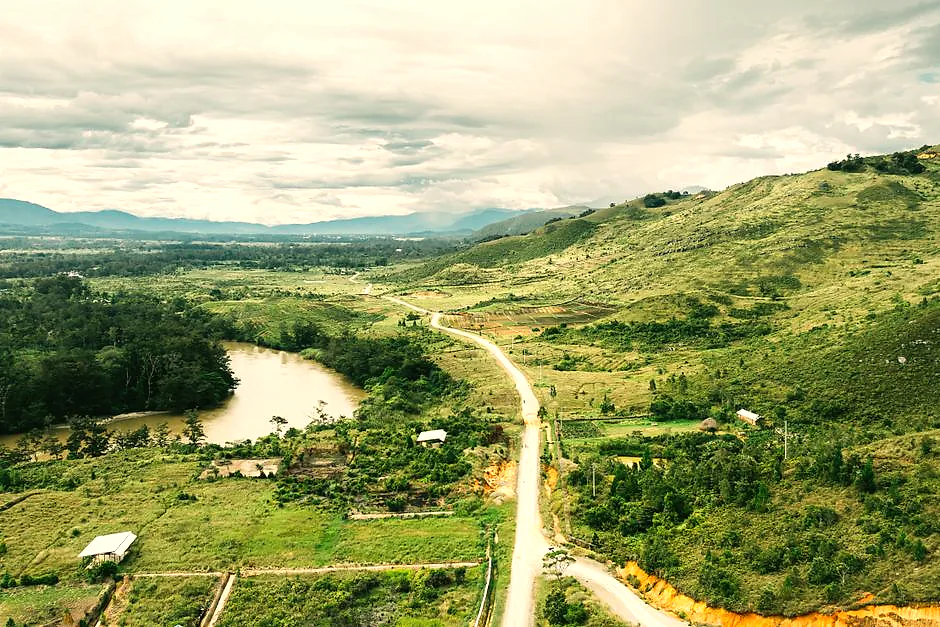
Cover photo by Mukhtar Shuaib Mukhtar on Pexels.
Want to see how Nigeria stacks up?
Are you seriously considering a move? Use our interactive tools to explore Nigeria's climate, tax brackets, and nomad visas.