
Moving to United Arab EmiratesShare
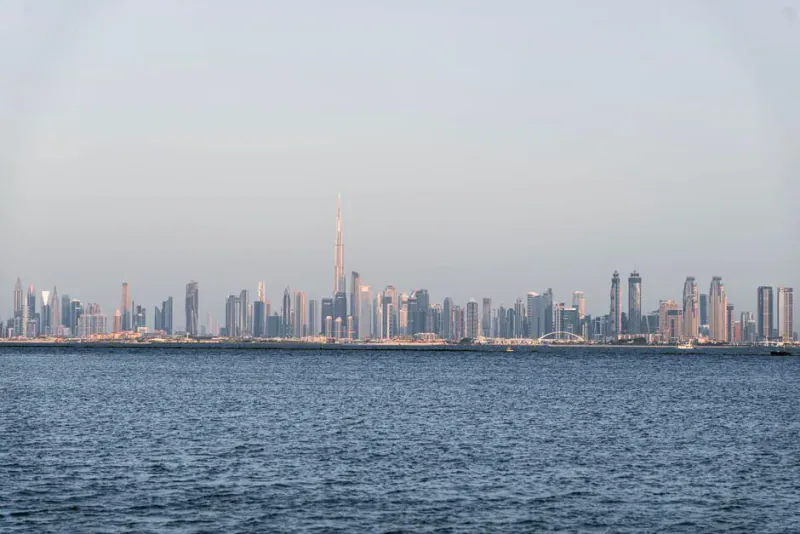
Relocating to United Arab Emirates is highly attractive for expats looking for tax optimization, offering a very competitive tax burden of 3.0%. With a very high English proficiency score of 487, daily communication and business integration are seamless. It hosts a vibrant and diverse expat community, notably drawing a significant number of residents from India.
Lifestyle & Vibe
The UAE - specifically Dubai and Abu Dhabi - ranked second globally in the 2025 Digital Nomad Visa Index, offering zero personal income tax, one of the world's fastest visa processing times, and remote work infrastructure that competes with Singapore for reliability and modernity. The UAE's digital nomad visa requires proof of stable remote income and provides a pathway to 1-year renewable residency, with family inclusion available. Monthly cost of living in Dubai runs $2,500 - $4,000 for a comfortable solo lifestyle - high but justified by the infrastructure, safety, and tax advantages for high earners. The cashless payment ecosystem, English-language dominance, and international expat social scene make day-to-day operations frictionless.
Digital Freedom & Remote Work
Censorship and network interference data is currently being collected for United Arab Emirates.
Society & Demographics
The United Arab Emirates (UAE) presents a diverse demographic with a predominantly male population at 63.9%, which reflects its high levels of international migration. With nearly 100% internet penetration, the UAE showcases a digitally savvy society, while its EF English Proficiency Score of 487 indicates a commendable level of English language skills among its populace. The country also features significant gender equality, with women holding exactly half of parliamentary seats and representing a substantial portion of urban dwellers at 36.1% of the total population.
Gender Distribution
Aging Society
Population over 65 years old
Education Spending
UNESCO Data. Indicates focus on public schooling.
Quality of Life
In the United Arab Emirates (UAE), residents enjoy a high quality of life with an average life expectancy of 78.31 years, reflecting a robust healthcare system that features 29.92 medical doctors per 10,000 people and a Universal Health Coverage Index of 84.00, ensuring widespread access to health services. However, the obesity rate stands at 31.61%, which could be an area for public health improvement. The happiness score is 6.82 out of 10, balancing economic prosperity with well-being concerns. Despite its high average working hours of 50.82 per week, safety remains strong, with only 0.69 homicides per 100,000 people and relatively good air quality measured at 36.31 µg/m³ PM2.5.
Economic Freedom & Business Climate
The United Arab Emirates (UAE) has a robust economic climate with an inflation rate of 1.66%, low unemployment at 2.17%, and a high overall Economic Freedom Score of 71.90, reflecting its commitment to business freedom (84.50), monetary stability (81.20), and fiscal health (97.60). However, the financial sector faces limitations with lower scores in areas like investment freedom (50.00) and financial freedom (60.00). The UAE's strong property rights (62.90) and government integrity (65.30) support a favorable environment for businesses, though judicial effectiveness remains a concern at 34.40.
Evaluated across 12 quantitative factors. Scores span 0-100, where higher scores indicate greater economic liberty, lighter tax burdens, and stronger property rights.
Climate Profile (Abu Dhabi)
The United Arab Emirates has a scorching desert climate, characterized by blistering summers and mild winters, with the hottest period spanning from June to August, where temperatures often soar to sizzling highs of over 40 degrees Celsius, while the rainiest months typically occur from January to March and December, with an average of 4-5 rainy days. The arid landscape is also marked by a distinct dry spell from May to September, with virtually no rainfall, making it an ideal time for outdoor activities, but not necessarily the most comfortable for expats and digital nomads. For a more pleasant experience, the best time to relocate or visit the UAE is from November to April, when the weather is relatively mild, with average temperatures ranging from 23-32 degrees Celsius, making it an ideal season to explore the country's stunning landscapes and vibrant cities.
Political Stability & Governance
Evaluated across Worldwide Governance Indicators (WGI). Scores span approximately -2.5 to 2.5, where higher scores indicate stronger governance, better stability, and lower corruption.
Relocation Guides & Articles

June 14, 2026
Dubai Digital Nomad Visa 2026: Requirements, Costs, Process, and What Nobody Tells You
A complete 2026 guide to Dubai's Virtual Work Residence Permit: minimum income requirements, application steps, hidden costs, and tax realities for remote workers.
June 13, 2026
UAE in 2026: Zero Personal Tax, the World's Safest Cities, and a Citizenship That Virtually Nobody Gets
A comprehensive guide to moving to the UAE in 2026: Dubai vs Abu Dhabi, Golden visas, zero personal tax, healthcare, and cost of living.
Explore Similar Destinations
Frequently Asked Questions
What is the tax burden in United Arab Emirates?
The tax burden in United Arab Emirates is approximately 3.0%, according to World Bank data.
Is United Arab Emirates safe?
The homicide rate in United Arab Emirates is 0.7 per 100,000 people (World Bank).
Are people happy in United Arab Emirates?
The World Happiness Report scores United Arab Emirates at 6.8 out of 10.
Head-to-Head Relocation Comparisons
Compare taxes, safety, and living costs of United Arab Emirates against top alternatives.