
Moving to IrelandShare
Ireland is a solid destination for global professionals, featuring a moderate tax burden of 25.7%. It hosts a vibrant and diverse expat community, notably drawing a significant number of residents from United Kingdom.
Lifestyle & Vibe
Dublin is a high-cost English-speaking city with a mature tech sector and strong professional networking opportunities, making it attractive for remote workers seeking corporate proximity - but the cost of living, particularly housing, is among the highest in the EU and remains a serious barrier to long-term affordability. Ireland has no formal digital nomad visa; non-EU nationals typically rely on standard visa categories or employer sponsorship. Public transport in Dublin is functional but overloaded, and cashless payments are the norm throughout the country. The social scene is welcoming and pub culture drives most informal networking, though making deep social connections beyond professional circles takes time.
Digital Freedom & Remote Work
Censorship and network interference data is currently being collected for Ireland.
Society & Demographics
Ireland's society is characterized by a balanced gender ratio, with females slightly outnumbering males (50.5% female population). The country features high technological engagement with 97.19% internet users, indicating widespread connectivity. Socially, Ireland exhibits moderate economic inequality as measured by the GINI Index at 29.0000 but has a low education spending ratio of 12.33% of GDP despite its urbanized population (64.35%) and a growing elderly demographic (15.89%). The influx of migrants, indicated by a net migration total of 35,417 over five years, contributes to Ireland's dynamic and diverse society.
Gender Distribution
Aging Society
Population over 65 years old
Education Spending
UNESCO Data. Indicates focus on public schooling.
Quality of Life
In Ireland, the quality of life is significantly enhanced by a life expectancy of 81.6000 years, indicating a healthy population. With 39.8900 medical doctors per 10k people and an Universal Health Coverage Index of 82.0000, access to healthcare is robust, contributing to general well-being. While the obesity rate stands at 27.8800%, this figure is balanced by a Happiness Score of 6.9280 on a scale of 0-10, suggesting a generally contented society. Safety metrics, such as a low homicide rate of 0.6500 per 100k, and good air quality with PM2.5 levels at 8.1700 µg/m³ further contribute to a high standard of living.
Economic Freedom & Business Climate
The Irish economy has a strong foundation with an overall Economic Freedom Score of 83.3000, indicating robust business climate and financial freedom. With an inflation rate of 2.1100% and unemployment at 4.6300%, the country maintains stable economic conditions. Ireland's property rights score of 94.4000 and judicial effectiveness score of 95.4000 underscore a reliable legal framework, supporting high levels of financial freedom.
Evaluated across 12 quantitative factors. Scores span 0-100, where higher scores indicate greater economic liberty, lighter tax burdens, and stronger property rights.
Climate Profile (Dublin)
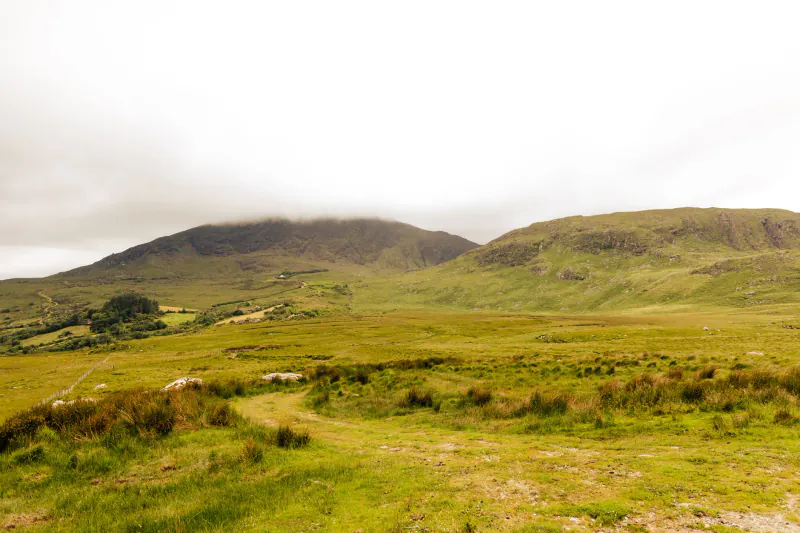
Ireland has a mild oceanic climate, characterized by moderate temperatures and significant rainfall throughout the year, with the hottest period typically occurring in July and August, when average maximum temperatures soar to 19°C, while the rainiest months are August and October, with 15 days of rainfall on average. The country's climate is generally cool and wet, with the winter months being the chilliest and wettest, making spring and early summer the ideal time to relocate or visit, when the weather is mild and pleasant, with average maximum temperatures ranging from 15°C to 18°C. For expats and digital nomads seeking comfortable weather, the best season to visit or relocate to Ireland is from April to June, when the temperatures are gentle, the days are long, and the rainfall is relatively lower, making it perfect for exploring the Emerald Isle's stunning landscapes and vibrant culture.
Political Stability & Governance
Evaluated across Worldwide Governance Indicators (WGI). Scores span approximately -2.5 to 2.5, where higher scores indicate stronger governance, better stability, and lower corruption.
Relocation Guides & Articles
Explore Similar Destinations
Frequently Asked Questions
What is the tax burden in Ireland?
The tax burden in Ireland is approximately 25.7%, according to World Bank data.
Is Ireland safe?
The homicide rate in Ireland is 0.7 per 100,000 people (World Bank).
Are people happy in Ireland?
The World Happiness Report scores Ireland at 6.9 out of 10.
Head-to-Head Relocation Comparisons
Compare taxes, safety, and living costs of Ireland against top alternatives.