Ireland in 2026: The English-Speaking EU Base That Actually Taxes You at 52%
June 6, 2026
ShareIreland is the only English-speaking country in the eurozone, home to the European headquarters of Apple, Google, Meta, Amazon, and Microsoft, and running a government surplus of €9 billion in 2026. The Critical Skills Employment Permit gives you a path to unrestricted work permission in 21 months - the fastest timeline in the English-speaking world. The housing market is brutal. The income tax, for anyone outside the SARP regime, is among the heaviest in Europe. And the weather is real.[1][2][3]
This guide tells you what the tech recruiter slide decks don't.
The Economy: Strong Foundations, Volatile Headlines
Irish GDP numbers are notoriously unreliable. The headline figures swing wildly because of multinational pharmaceutical and intellectual property movements that have little connection to what ordinary residents experience. In 2025, GDP surged 12.3% - driven almost entirely by pharma exports being front-loaded ahead of US tariffs. In 2026, that effect is reversing.[4][5]
The European Commission's May 2026 Spring Forecast predicts Irish GDP will contract by 1.2% this year. Bank of Ireland has revised its own forecast down to 1.6% growth from the earlier 2.8% projection, attributing the downgrade to the unwinding of 2025's export surge and the energy price shock from the Middle East conflict. EY forecasts 1.8% GDP growth and modified domestic demand growth of 2.7%.[6][5][3]
The better measure for expats is modified domestic demand (MDD) - which strips out multinational distortions and reflects actual domestic activity: jobs, wages, construction, consumer spending. MDD is forecast to grow 2.3-2.7% in 2026. Employment is expected to expand 1.8% in 2026, wages are rising roughly 4% annually, and the unemployment rate is forecast to hold at 4.8%. The job market, particularly in tech, pharma, financial services, and life sciences, remains one of the strongest in Europe.[7][3][6]
House prices are forecast to rise 4% in 2026, with residential completions expected to reach 37,500 units. Not enough. The housing shortage is structural and documented.[3]
Visas and Residency: Three Paths That Actually Work
Ireland runs a distinct employment permit system. EU/EEA citizens move freely. Everyone else needs a permit - but Ireland has built faster and cleaner routes than most EU countries.
EU/EEA Citizens
No visa, no permit. You have the right to live and work in Ireland immediately. Register for a PPS number (Personal Public Service number) as your first administrative step - this is your tax and social services ID, required for everything from opening a bank account to registering with a GP. Book the PPS appointment at MyWelfare.ie before you arrive - expats who leave this until after landing typically wait 4+ weeks for an appointment slot.[8][2]
Critical Skills Employment Permit (CSEP)
The flagship route for skilled non-EU professionals. Designed for tech, engineering, healthcare, finance, and other shortage roles.
2026 CSEP requirements (updated March 1, 2026):[1]
| Criteria | Threshold |
|---|---|
| Minimum salary (occupation on Critical Skills List) | €40,904/year |
| Minimum salary (occupation NOT on list) | €68,911/year |
| Minimum contract duration | 2 years |
| Labour market test required | No |
| Processing time | 5-8 weeks (averaging 5-6 weeks as of March 2026) |
| Permit fee | €1,000 (90% refunded if refused) |
| Spouse's right to work | Immediate (Stamp 1G) |
After 21 months on the CSEP, you can apply for Stamp 4 - open work permission not tied to any employer. With Stamp 4 you can work for any Irish employer, go self-employed, or start a company without a new permit. This is effectively permanent residency status for work purposes.[1]
Key occupations on the Critical Skills list: Software developers, data scientists, cybersecurity specialists, DevOps engineers, civil/mechanical/electrical engineers, doctors, nurses, pharmacists, radiographers, financial controllers, quantity surveyors.[1]
General Employment Permit (GEP)
For roles not on the Critical Skills list. Minimum salary: €30,000/year. Requires a labour market test (employer must advertise locally first). More restrictive family reunification rules than CSEP. Valid for 2 years, renewable. Leads to Stamp 4 after 5 years - significantly slower than CSEP's 21 months.[8]
Path to Permanent Residency and Citizenship
- Stamp 4: 21 months from CSEP, or 5 years from GEP[1]
- Long-Term Residency (Stamp 4LTR): After 5 years of legal residence
- Irish citizenship by naturalisation: After 5 years of continuous legal residence (reduced to 3 years for spouses of Irish citizens)[9]
Ireland citizenship is one of the most valuable in the EU - full EU freedom of movement, access to the Common Travel Area (UK, Ireland, Isle of Man, Channel Islands), and one of the world's most useful passports.
New PPS Pre-Registration (2026)
New in 2026: PPS number initiation can now be started before arrival via an EU-focused digital ID verification process. This saves several weeks of post-arrival administration and allows bank account and payroll setup to begin immediately.[10]
Cost of Living: Dublin is Expensive. Everywhere Else is Manageable.
Dublin is the 9th most expensive city in Europe according to ECA International 2026 - above Amsterdam, Berlin, Barcelona, and Milan, but below Paris, Geneva, Copenhagen, Oslo, Vienna, Helsinki, and Frankfurt. The cost gap between Dublin and the rest of Ireland is substantial and is the clearest tactical decision any new expat faces.[11]
A single person in Dublin comfortably spends €2,800-3,800/month including rent. Outside Dublin - Cork, Galway, Limerick - the equivalent runs €1,800-2,500/month.[12][13]
Rent by City (2026)
| City | Studio | 1-Bedroom | 2-Bedroom |
|---|---|---|---|
| Dublin city centre | €1,600-2,200 | €2,200-3,200 | €2,700-3,800[11] |
| Dublin suburbs | €1,200-1,700 | €1,600-2,200 | €2,000-2,800 |
| Cork | €900-1,300 | €1,200-1,800 | €1,500-2,400[14] |
| Galway | €950-1,400 | €1,200-1,900 | €1,600-2,400[14] |
| Limerick | €700-1,100 | €900-1,400 | €1,200-1,800[14] |
| Waterford | €700-1,000 | €850-1,300 | €1,100-1,700 |
Sources: Dublin.ie, Crowdsourced Data, Experts for Expats 2026[14][12][11]
Rent Pressure Zones (RPZs) cap annual rent increases at 2% per year (or the rate of inflation if lower) in designated high-demand areas including Dublin city, Cork city, Galway city, and parts of Kildare, Meath, Wicklow, and Louth. If your landlord attempts to raise rent above this cap, you can challenge it through the Residential Tenancies Board. Knowing your RPZ status before signing is not optional - it determines whether you pay market rate on renewal or a legally capped one.[8]
Daily Expenses (Dublin, 2026)
| Item | Price (EUR) |
|---|---|
| Meal at inexpensive restaurant | €20[12] |
| Monthly public transport pass | €96[12] |
| One-way Luas/bus/DART ticket | €2[12] |
| Cappuccino | €3.50-5[12] |
| Groceries: weekly shop (one person) | €55-80[12] |
| Taxi start (standard tariff) | €4.60[12] |
| Private health insurance (basic adult) | From €87/month[15] |
Taxes: The Honest Breakdown
Ireland has a globally competitive 12.5% corporate tax rate that drew the world's largest tech and pharma companies to Dublin. Personal income tax tells a very different story.
Three-Layer Personal Tax System
Every employee in Ireland pays three separate charges:[16]
1. Income Tax
- 20% on the first €44,000 of net income (single person, 2026)[17]
- 40% on everything above that[17]
- Married couple (one income): 20% on first €53,000, 40% above[17]
- Married couple (two incomes): 20% on first €53,000 + up to €35,000 extra, 40% above[17]
2. Universal Social Charge (USC) - 2026 Bands[18]
| Income Band | Rate |
|---|---|
| €0 - €12,012 | 0.5% |
| €12,013 - €28,700 | 2% |
| €28,701 - €70,044 | 3% |
| €70,045+ | 8% |
| Self-employed income above €100,000 (additional) | +3% surcharge |
No USC if total income is €13,000 or under.[18]
3. PRSI (Pay-Related Social Insurance)
- Employee rate: 4.2375% in 2026, rising to 4.35% from 1 October 2026[19][16]
- Funds the state pension and social welfare
Real-world example from Revenue data (2026): A single person earning €50,000 pays approximately €7,200 income tax + €1,033 USC + €2,100 PRSI = roughly €10,333 total, keeping €39,667 take-home (~79.3% net).[16]
The marginal rate on income above €70,044: 40% income tax + 8% USC + 4.35% PRSI = ~52.35%. This is not a fringe rate for the ultra-wealthy - it kicks in at approximately €70,000/year. On a €100,000 salary, effective rate: roughly 39-41% combined.[16]
Key credits (2026):[17]
- Personal Tax Credit: €2,000
- Employee PAYE Tax Credit: €2,000 (effectively a €4,000 combined credit for all PAYE workers)
- Rent Tax Credit: €1,000/year per single individual (€2,000 for jointly assessed couples)
SARP: The Expat Tax Relief That Changes the Maths
The Special Assignee Relief Programme (SARP) is Ireland's tax incentive for international talent assigned to work in Ireland by a qualifying foreign employer. Significantly updated in Budget 2026:[20][21]
| Feature | Detail |
|---|---|
| Relief amount | 30% of income above threshold exempt from income tax |
| Minimum income threshold (new entrants from Jan 1, 2026) | €125,000/year (raised from €100,000) |
| Those already on SARP before 2026 | Remain on €100,000 threshold |
| Maximum income covered | €1,000,000/year |
| Duration | 5 consecutive tax years |
| Extended until | 31 December 2030 (Budget 2026)[21] |
| USC/PRSI | Not exempted - still apply on full salary |
| Late employer filing (90-180 days) | Now accepted but gives only 4 years relief |
| Employer annual return deadline | Extended to 30 June following tax year |
| Additional benefits | One tax-free return trip/year to country of origin; up to €5,000/year/child for school fees[20] |
SARP example: Salary of €200,000. Exempt portion: 30% à - (€200,000 - €125,000) = 30% à - €75,000 = €22,500 exempt from income tax. Tax saving at 40% rate: €9,000/year. On a €500,000 salary, the saving reaches approximately €45,000/year in income tax relief alone.[20]
Critical deadline: Employer must submit Form SARP 1A via the eSARP portal within 90 days of arrival (or 180 days for 4-year relief). Missing the 180-day window completely disqualifies the claim.[21][20]
Healthcare: Public Access, Private Speed
Public System (HSE)
Ireland's Health Service Executive (HSE) manages the public healthcare network. Expats with a valid PPS number and ordinary residence (12+ months in Ireland) can access the public system. Public care is heavily subsidised but not free:[22]
- GP visit (public rate): €50-70 for non-medical card holders
- A&E (public hospital): €100 (without GP referral)
- Medical Card: Free GP and some hospital services - available to low-income residents; means-tested
The honest limitation: public specialist waiting lists. For routine and non-urgent care, wait times range from weeks to months. For emergencies, the public hospital system is excellent.[22]
Private Health Insurance: Essential, Not Optional for Most Expats
Three major providers dominate the Irish private health insurance market:[23]
| Provider | Entry-Level Monthly Premium (Adult 26+) | Profile |
|---|---|---|
| VHI Healthcare | From €87.21/month (€1,047/year)[15] | Market leader, largest hospital network |
| Laya Healthcare | From ~€85-95/month | Strong day-to-day benefits |
| Irish Life Health | From ~€85-90/month | Competitive tech-forward plans |
Private insurance gives you access to private and semi-private hospital rooms, shorter specialist waiting times, and elective procedure coverage. The Health Insurance Authority (HIA) regulates the market and mandates community rating - meaning insurers cannot charge more based on age at initial sign-up if you enter the Irish market for the first time.[24]
Emergency contacts: Ambulance/police/fire: 999 or 112.
Safety
Ireland's national Crime Index: 52.23 (Moderate). The picture is highly city-specific:[25]
| City | Crime Index | Safety Index |
|---|---|---|
| Galway | 30.6 | 69.4[25] |
| Cork | 36.9 | 63.1[25] |
| Limerick | 43.2 | 56.8[25] |
| Drogheda | 50.5 | 49.5[25] |
| Dublin | 54.1 | 45.9[25] |
Dublin's Crime Index of 54.1 places it alongside Milan and above Barcelona in European rankings - not catastrophic, but a genuine consideration. Street crime (phone theft, pickpocketing) is the primary concern in Dublin city centre, particularly around O'Connell Street and Temple Bar. Violent crime remains relatively rare in international comparison.[26]
Galway and Cork rank significantly safer. For a quality-of-life-first decision, the crime differential between Dublin and these cities is a real factor.
English and Integration
English is the primary language of daily life across all 26 counties. Irish (Gaeilge) is the first official language constitutionally, and Irish-language regions (Gaeltacht) exist mainly in Connaught and Donegal - but you will function perfectly in English everywhere, including in the Gaeltacht.[2]
Cultural integration is among the easiest of any country in Europe. Irish social culture is built around openness, conversation, humour, and the pub as community space - expats from all backgrounds consistently report Ireland as one of the most welcoming countries in the world for newcomers. No language tests, no cultural assimilation bureaucracy. Show up, register for a PPS number, and you are functionally settled within a week.[2]
Which City?
Dublin
The only realistic option for most corporate and tech roles. European HQs of virtually every major US tech company are in Dublin - Google in Barrow Street (Dublin 4), Meta in Grand Canal Dock, Apple in Hollyhill (Cork, but significant Dublin presence), LinkedIn, Airbnb, Stripe in City Centre West. Best neighbourhoods for expats: Ranelagh and Rathmines (south inner city, walkable, strong expat community); Ballsbridge (embassy district, grand Victorian houses, expensive); Drumcondra (north side, cheaper, good transport links); Sandyford/Leopardstown (tech campus proximity, good quality apartment stock).[14][2]
Dublin is expensive, dense, and productive. If you're earning €80,000+ in a corporate role, it works. Below that, it compresses.
Cork
Ireland's second city. Slower, cheaper, and - many expats say - more liveable. Cork has a strong pharmaceutical and tech cluster (Apple's EMEA customer support HQ, Pfizer, Boston Scientific), a vibrant food culture, and a University College Cork student population that keeps the city young. Crime Index: 36.9 - significantly safer than Dublin. 1-BR rent in the city centre: €1,200-1,800/month. Best for: life sciences, pharma, those who want Dublin's job market in a more manageable city.[25][14]
Galway
The west of Ireland's cultural capital. Strong arts, music, and food scene. University of Galway anchors a tech and medtech cluster. Cheapest of the major cities for rent. Crime Index: 30.6 - Ireland's safest major city. Best for: those in medtech, academic research, or anyone prioritising quality of life over maximum career optionality.[27][25]
Limerick
Significantly underrated. The University of Limerick and Technological University of the Shannon create a tech and engineering workforce that's attracting investment from Regeneron, Analog Devices, and Dell. Cheapest rents of any Irish city with an international airport (Shannon, 25 min away - direct transatlantic routes to New York, Boston, Chicago). Best for: value-focused families, manufacturing, engineering, pharma.[27][14]
City Comparison
| City | Crime Index | Avg 1-BR Rent | Best For |
|---|---|---|---|
| Dublin | 54.1[25] | €2,200-3,200 | Tech, finance, corporate HQ |
| Cork | 36.9[25] | €1,200-1,800[14] | Pharma, life sciences, quality of life |
| Galway | 30.6[25] | €1,200-1,900[14] | Culture, medtech, academia |
| Limerick | 43.2[25] | €900-1,400[14] | Value, engineering, US market access |
Climate: It Rains, But Less Than You Think
Ireland has a temperate oceanic climate - mild winters, cool summers, consistent rainfall, and almost no extreme temperatures. The 2026 spring was Ireland's third warmest in 126 years, with a May heat dome pushing Shannon Airport to a record 30.6°C on May 26th. Met à‰ireann's June-August 2026 seasonal forecast signals above-average temperatures (0.2-1.0°C above average) with below-average rainfall through the summer.[28][29][30]
| Season | Months | Typical Temperature Range |
|---|---|---|
| Spring | March - May | 7°C to 14°C (2026: exceptionally warm to 30.6°C in May)[29] |
| Summer | June - August | 12°C to 19°C (above average forecast 2026)[30] |
| Autumn | September - November | 8°C to 15°C |
| Winter | December - February | 3°C to 9°C; frosts common inland[28] |
Rain is spread across the year rather than concentrated in one season. The west coast (Galway, Mayo, Kerry) receives significantly more rainfall than the east (Dublin, Wicklow). Cloud cover is frequent year-round. Investment in good waterproof clothing is not optional - it is infrastructure.
Internet and Infrastructure
Ireland's average broadband speed: 174.3 Mbps - up 14% from the 2025 year-end average, according to SpeedGeo Q1 2026. Virgin Media leads at 287.5 Mbps; Eir at 204.7 Mbps; Sky at 186.6 Mbps. Eir's full-fibre network is committed to covering 84% of Irish homes and businesses by end of 2026, with gigabit-capable infrastructure capable of up to 10 Gbps. The National Broadband Plan (NBI) is rolling out fibre to rural areas, with 5 Gbps services now live in selected rural locations.[31][32][33]
Dublin's public transport is the weakest point of Ireland's infrastructure relative to European peers. The Luas tram connects the city centre to south and southwest Dublin; the DART commuter rail covers the coastal corridor. Expansion of the BusConnects network is ongoing. Cork, Galway, and Limerick are largely car-dependent outside the city centres - a practical consideration for families not living in Dublin. Taxis (Uber and FreeNow both operate) are widely available nationally.
Buying Property
No restrictions on foreign buyers. No nationality requirements, no residency prerequisites, no prior authorisation needed. Any individual, anywhere in the world, can buy Irish residential or commercial property.[34][35]
Stamp duty rates 2026:[36][37]
- 1% on property value up to €1 million
- 2% on value between €1 million and €1.5 million
- 6% on value above €1.5 million
- Non-residential property: 7.5%
Bulk purchases (10+ properties): 15% rate applies
Transaction costs add 3-5% total (stamp duty + legal fees + Land Registry). VAT at 13.5% applies to new builds from developers - stamp duty is calculated on the pre-VAT price.[36]
PPS number required to complete a property purchase - obtainable from the Department of Social Protection.[34]
House prices forecast to rise 4% in 2026, with completions of 37,500 - better than the 20,000-unit years of 2020-2022 but still below the 50,000+ units annually that economists estimate Ireland needs to meet demand.[3]
Average Dublin property price: €500,000 (2026, Dublin.ie) - representing roughly 6x the median Dublin gross salary.[11]
Your First 30 Days: The Checklist
- Book your PPS number appointment BEFORE you fly at MyWelfare.ie - waiting until after arrival adds weeks[8]
- Register your address with the local Intreo office (for non-EU nationals, also register with your local Garda National Immigration Bureau office if required by your permit type)[9]
- Apply for your IRP (Irish Residence Permit) card if non-EU - required within 90 days of arrival; brings your Stamp designation that determines work rights and social entitlements[9]
- Open a bank account - AIB, Bank of Ireland, Revolut, and N26 are the most straightforward for new residents; bring PPS number, IRP card, and proof of address; Revolut and N26 can be opened within 24 hours via app
- Register for private health insurance - enter the market promptly; community rating applies at first entry; VHI, Laya, and Irish Life Health all have online sign-up[15][23]
- Register with a GP (family doctor) - get on a GP's list early; some Dublin practices have closed lists; your VHI/Laya policy will cover a portion of visit fees[22]
- Employer: submit SARP Form 1A within 90 days of your arrival date if you qualify - this is the single most expensive administrative mistake an eligible expat can make, forfeiting up to 5 years of income tax relief worth potentially €45,000+[21][20]
- Non-EU: don't sign a lease before your permit is approved - process first, commit to housing second[8]
- Check your RPZ status at the RTB website after finding a flat - know your annual rent increase cap before you sign[8]
Key Data at a Glance
| Indicator | Value |
|---|---|
| GDP Forecast 2026 (EC) | -1.2%[5] |
| GDP Forecast 2026 (Bank of Ireland) | 1.6%[3] |
| Modified Domestic Demand 2026 | +2.3-2.7%[7][6] |
| CPI Inflation 2026 | 3.3%[3] |
| Employment Growth 2026 | 1.8%[3] |
| Unemployment 2026 | ~4.8%[3] |
| Wage Growth 2026 | ~4%[7] |
| Income Tax Bands | 20% to €44,000; 40% above[17] |
| Top Marginal Rate (Income Tax + USC + PRSI) | ~52.35%[16] |
| SARP Minimum Salary (new 2026 entrants) | €125,000[21] |
| SARP Relief Duration | 5 years (extended to 2030)[21] |
| CSEP Minimum Salary (on list) | €40,904[1] |
| CSEP Processing Time | 5-8 weeks[1] |
| Stamp 4 Timeline (CSEP) | 21 months[1] |
| Irish Citizenship | 5 years continuous residence[9] |
| VHI Health Insurance (entry-level) | From €87/month[15] |
| Dublin Crime Index 2026 | 54.1[25] |
| Galway Crime Index 2026 | 30.6[25] |
| Average Broadband Speed Q1 2026 | 174.3 Mbps[31] |
| Dublin Average Property Price | €500,000[11] |
| Residential Stamp Duty | 1% (under €1M)[36] |
| House Price Inflation 2026 | ~4%[3] |
| Spring 2026 Temperature Record | 30.6°C at Shannon Airport, May 26[29] |
| Summer 2026 Forecast | Above-average temperatures[30] |
The SARP deadline is day one arithmetic. An employer that misses the 90-day Form 1A filing window costs a qualifying executive up to €45,000 in avoidable income tax over five years. The rest of Ireland - the language, the culture, the passport, the 21-month route to unrestricted work rights - is genuinely exceptional. The tax system outside SARP is genuinely not.
References
- Ireland Critical Skills Employment Permit 2026
- Living in Ireland: the ultimate expat guide
- Irish economy well placed to weather Middle East uncertainty
- Ireland Outlook - January 2026
- Irish GDP set to fall by 1.2% this year - Commission
- Economic growth expected for island of Ireland but at slower pace
- Steady growth forecast for Irish economy in 2026
- Moving to Ireland as an expat: the 2026 renter's playbook
- Health Insurance & The...
- Moving to Ireland in 2026 | All you need to know
- The cost of living in Dublin
- Cost of Living in Dublin. Jun 2026. Prices in Dublin
- Cost of Living in Ireland: Housing, Daily Expenses & Budgets 2026
- Choosing where to live in Ireland - Experts for Expats
- Vhi Healthcare | Get a Health Insurance Quote Online Today
- Irish Tax Bands & Rates 2026 (Income Tax, USC, PRSI)
- Tax rates, bands and reliefs - Revenue
- Income tax measures Budget 2026
- EY Income Tax Calculator assumptions - Budget 2026
- Special Assignee Relief Programme (SARP) - Ireland 2026
- Ireland - Key Changes to SARP Enter Into Effect on 1 January 2026
- Expat Health Insurance in Ireland - Coverage & Plans
- Private Health Insurance Ireland: VHI vs Laya vs Irish Life
- Health Insurance in Ireland for Foreigners
- Crime in Ireland
- Europe: Crime Index by City 2026
- 5 Best Student Cities in Ireland 2026 Guide
- Dublin Weather Monthly Guide 2026: Plan Your Trip
- 2026 was Ireland's third hottest spring in 126 years
- Extended Range Forecast - Met à‰ireann
- Virgin Media to lead internet speeds in Ireland at the end of Q1 2026
- eir Broadband, Phone, TV and Mobile
- What is the National Broadband Plan? NBI Fibre Roll-out
- Buying Irish Property from Abroad
- Ireland Property Foreign Ownership: Last Update (2026)
- Stamp Duty Rates in Ireland
- Buying property in Ireland in 2026
Frequently Asked Questions
How much is the processing fee for the Critical Skills Employment Permit? €1,000 (90% refunded if refused).
What is the minimum salary threshold for a non-listed occupation under the 2026 CSEP requirements? €68,911/year.
What is the typical processing time for the 2026 CSEP application as of March 2026? 5-6 weeks.
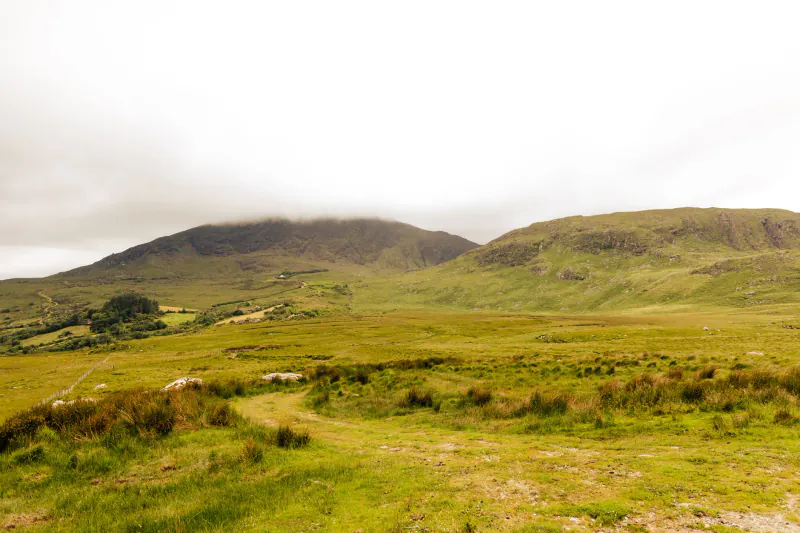
Cover photo by Tanita Lupa on Pexels.
Want to see how Ireland stacks up?
Are you seriously considering a move? Use our interactive tools to explore Ireland's climate, tax brackets, and nomad visas.
Head-to-Head Relocation Comparisons
Compare taxes, safety, and living costs of Ireland against top alternatives.