Moving to Bangladesh in 2026: $150 Dhaka Rents, 30% Tax, and BIDA Work Permits
September 14, 2026
ShareBangladesh can deliver a central Dhaka apartment for under BDT 25,500 a month and fixed broadband above 100 Mbps. It can also deliver gridlock, winter air that regularly turns hazardous, dengue risk and immigration paperwork that does not forgive improvisation. This is not an easy-mode relocation. It can work very well for expats arriving with a sponsored job, an international package, local support and a realistic plan for healthcare, transport and tax.
The Economy: Cheap Does Not Mean Stable
Bangladesh is still growing, but the 2026 picture is weaker than the growth story many expats remember. The World Bank[1] projects GDP growth of 3.9% in FY2026, while the IMF[2] expects 4.7%. The disagreement matters less than the direction: growth has slowed, inflation remains high and the banking system is under pressure.
The World Bank's April 2026 update[3] put FY2026 inflation at 8.5% and reported that non-performing loans had reached 30.6% in December 2025. The IMF[2] forecast average inflation of 8.9% for FY2026. A low nominal rent does not protect you from rising grocery bills, currency volatility or imported goods priced at a premium.
For foreign professionals, the strongest opportunities are tied to sectors that already operate internationally: garments and textiles, development agencies, infrastructure, energy, logistics, manufacturing, telecoms and multinational consumer businesses. Most legal employment routes begin with the employer, not the employee. If a company cannot explain who will secure your visa recommendation, work permit and security clearance, it is not ready to hire you.
Visas and Legal Stay
Bangladesh issued a new visa policy in 2026, but the practical rule remains simple: match the visa to the activity. A tourist or business entry is not a substitute for employment authorization.
Applications for new visas, extensions, No Visa Required endorsements and on-arrival visas can be started through the official Bangladesh Online Visa Application portal[4]. Exact fees, validity and document requirements depend on nationality, purpose and the mission processing the application.
Short Visits and Visa on Arrival
Citizens of EU countries, the United States, Canada, Australia, New Zealand, Japan, South Korea and several other listed states may be eligible for a visa on arrival when travelling for tourism, business, investment or official purposes. The Bangladesh Embassy in Washington[5] publishes the current eligibility wording, while Bangladesh immigration rules[6] list a USD 50 visa-on-arrival fee.
Do not build a relocation plan around airport discretion. Confirm eligibility with the Bangladeshi mission responsible for your passport before departure, carry a return or onward ticket, proof of accommodation and evidence of funds, and keep cash available for the fee.
Employment Visa and Work Permit
Foreign employees normally use an E-category employment visa. Specialists involved in machinery or software installation, inspection and related technical work may use E1, while qualifying private investors use PI. The Bangladesh Investment Development Authority (BIDA)[7] explains the categories and processes visa recommendations through its One Stop Service.
The sequence is employer-led:
- The employer secures the correct visa recommendation.
- You obtain the matching visa and enter Bangladesh.
- The employer files the work-permit application through BIDA's One Stop Service, normally within 15 days of arrival.
- BIDA reviews the corporate, employment, qualification and immigration documents.
- A mandatory security-clearance application follows through the same portal.
For commercial offices, BIDA lists a fee of BDT 5,000 per person per year and a published processing target of 16 working days, subject to inter-ministerial approval. Its work-permit checklist[8] includes the employment agreement, passport and visa copies, qualifications, company tax clearance, staffing details and evidence of qualifying inward remittance where applicable.
Since 1 October 2025, foreign investors and employees must apply for security clearance through the BIDA OSS portal. If no objection is raised within 21 working days after a complete submission, the clearance is treated as granted; missing the filing deadline can invalidate the work permit, according to Invest Bangladesh[9].
Investors
The PI visa is designed for foreign private investors connected to an industrial or commercial enterprise. It is not a pay-and-stay golden visa. Expect corporate incorporation, investment documentation, board resolutions, tax registration, banking records and BIDA involvement.
BIDA's One Stop Service covers company incorporation, tax identification, investment registration, bank-account opening, visa recommendations and expatriate work permits. The service list is available through BIDA[10].
Digital Nomads
Bangladesh has no dedicated digital nomad visa. Tourist status should not be treated as open-ended permission to live in Bangladesh while working online. If your stay involves productive work, local clients, management of a Bangladeshi company or a long-term base, obtain written advice from a Bangladeshi immigration and tax professional before travelling.
A short exploratory trip is one thing. Building a year-long remote-work arrangement on repeated tourist entries is a legal and operational risk.
Family Members
Dependants need visas matched to the principal holder's status. Ask the sponsoring employer to map the full family process before accepting an offer: visa category, extensions, school documentation, medical insurance, right to work for a spouse and required security checks. A dependant visa should never be assumed to include employment rights.
Cost of Living: Two Different Dhakas
Dhaka is inexpensive if you price life like a local. It is much less inexpensive if you require a furnished apartment in Gulshan, imported groceries, a car and driver, international medical cover and private schooling.
Crowdsourced Numbeo data for Dhaka[11] puts a one-bedroom city-centre apartment at roughly BDT 17,795, with a reported range of BDT 10,000-25,500. A three-bedroom city-centre apartment averages about BDT 48,227, but premium compounds and expat-oriented furnished units can sit well above those figures.
Dhaka Prices
| Item | Indicative price | Source |
|---|---|---|
| Inexpensive restaurant meal | BDT 300 | [11] |
| Meal for two, mid-range restaurant | BDT 1,500 | [11] |
| Cappuccino | BDT 288 | [11] |
| Basic utilities, 85 m² apartment | BDT 5,511/month | [11] |
| 1-bedroom, city centre | BDT 17,795/month | [11] |
| 1-bedroom, outside centre | BDT 9,262/month | [11] |
| 3-bedroom, city centre | BDT 48,227/month | [11] |
Treat those figures as a local-market baseline, not a guaranteed expat budget. Add separately for:
- Furnishing, generator or backup power, water filtration and building security.
- Car, driver and fuel if the employer does not provide transport.
- Imported food, alcohol and specialist dietary products.
- International health insurance and emergency evacuation.
- School fees, deposits, transport and capital levies.
- Air purifiers and replacement filters for Dhaka's dry season.
A Practical Monthly Budget
| Profile | Working budget | What it assumes |
|---|---|---|
| Cost-conscious single | BDT 60,000-100,000 | Local apartment, local food, ride-hailing and no dependants |
| Comfortable professional | BDT 120,000-220,000 | Better neighbourhood, regular dining, private healthcare and frequent rides |
| Expat-package single | BDT 250,000+ | Furnished premium housing, driver, imported goods and international insurance |
| Family with children | Highly variable | Schooling and housing dominate; price schools before signing the employment contract |
These bands are planning ranges rather than official statistics. Build your own budget from quoted rent, employer benefits and school invoices; Dhaka's headline cost-of-living averages hide the price gap between local and international standards.
Taxes: The 183-Day Line
You are generally tax resident if you spend 183 days or more in Bangladesh during the relevant year, or at least 90 days in that year and 365 days across the preceding four years. The residence test is set out by PwC's Bangladesh tax summary[12].
Tax residence can bring worldwide income into scope. That is particularly important for remote workers, founders, investors and employees still receiving compensation or equity outside Bangladesh. Do not rely on payroll alone if you have foreign income.
Personal Tax Rates
For FY2026-27, PwC[13] lists progressive rates for resident individuals from 0% to 30%. Foreign non-residents, excluding non-resident Bangladeshi citizens, are generally taxed at the maximum 30% rate on taxable Bangladesh income.
| Tax band for resident individuals | Rate | Source |
|---|---|---|
| Tax-free threshold | 0% | PwC[13] |
| Next BDT 300,000 | 10% | PwC[13] |
| Next BDT 400,000 | 15% | PwC[13] |
| Next BDT 500,000 | 20% | PwC[13] |
| Next BDT 2,000,000 | 25% | PwC[13] |
| Remaining taxable income | 30% | PwC[13] |
Thresholds and special limits can vary by taxpayer category and assessment year. Secure an e-TIN, keep salary and remittance records, and ask a local adviser how your home-country treaty and filing rules interact with Bangladesh.
Business Taxes
The standard VAT rate is 15%, according to PwC[14]. For assessment years 2026-27 through 2030-31, non-publicly traded companies generally face a 27.5% corporate rate, reducible to 25% when the required banking-channel conditions are met; listed-company rates are lower. The full rate table is available from PwC[15].
A foreign founder should budget for incorporation, trade licensing, BIDA registration where relevant, VAT registration, payroll, withholding tax and foreign-exchange compliance. Bangladesh rewards documented banking flows and punishes casual cash-based administration.
Banking and Getting Paid
Foreign workers can open local-currency and foreign-currency accounts, but the bank will usually want a passport, valid visa, work permit or employment confirmation, photographs, address information and an e-TIN where applicable. Standard Chartered Bangladesh[16] lists a work permit or BIDA approval, tax documentation, appointment letter, passport and visa among its expat-remittance requirements.
In August 2026, Bangladesh Bank directed scheduled banks to facilitate accounts for foreign nationals working under A3 and other employment-visa categories, subject to KYC requirements, as reported by The Business Standard[17].
Practical rules:
- Keep every inward-remittance certificate and bank advice.
- Make the employer pay salary through a bank, not in envelopes.
- Maintain a foreign card and emergency cash while the local account is being opened.
- Ask the bank about outbound salary remittance before choosing an account.
- Never assume a fintech account replaces local payroll, tax or foreign-exchange compliance.
Healthcare: Buy the Evacuation Cover
Dhaka has capable private hospitals, but the national system is uneven and serious cases may require evacuation. The UK Foreign Office[18] describes medical facilities as poor overall and warns that routine tests and X-rays may be unreliable. Its advice is blunt: carry appropriate insurance and make sure it can fund unexpected medical evacuation.
Private facilities used by foreigners in Dhaka include Evercare Hospital Dhaka, Square Hospitals, United Hospital and Labaid. The UK government's medical-facility list[19] identifies English-speaking staff and specialties but does not endorse any provider.
Health Risks to Plan For
- Dengue: occurs year-round and becomes more widespread during the May-September rainy season.
- Air pollution: particularly severe from November to March.
- Malaria and other mosquito-borne diseases: risk varies by region and itinerary.
- Heat and dehydration: temperatures and humidity can make outdoor work punishing.
- Food and water illness: use filtered or sealed water and choose food handling carefully.
Check country-specific vaccination advice at least eight weeks before travel. Keep prescription medicines in original packaging, bring medical documentation and confirm that each medication is legal to import.
For a long-term move, your policy should cover private inpatient treatment, outpatient care, chronic conditions where possible, ambulance transport and evacuation to a regional medical hub. A cheap local-only policy is not enough for a complex emergency.
Safety: Plan Around Unrest
Bangladesh is not a place to ignore the news for a week. Political rallies, strikes and demonstrations can disrupt roads and turn violent with little warning. The UK Foreign Office[20] advises against all but essential travel to the Chittagong Hill Tracts districts of Rangamati, Khagrachari and Bandarban and warns about flooding, landslides and transport disruption.
The practical expat protocol is straightforward:
- Avoid demonstrations, political offices and large gatherings, even when they appear peaceful.
- Live close to work or school; distance in kilometres says little about commute time.
- Register for your embassy's alerts and keep copies of passports, visas and permits offline.
- Maintain several days of cash, water, medicines, power banks and basic food.
- Agree a family communication plan for internet shutdowns or road closures.
- Use trusted drivers or established ride-hailing services, especially after dark.
- Do not travel casually into the Chittagong Hill Tracts.
Street crime includes pickpocketing, mugging and theft, particularly in crowded areas. Female travellers can face verbal or physical harassment; the UK safety guidance[21] advises avoiding isolated areas and taking extra care at night.
Local Laws
Bangladesh is socially conservative and legally restrictive in areas that may surprise newcomers.
- Alcohol is tightly controlled. Foreign visitors may drink in licensed venues but may need a permit; unlicensed alcohol creates a real methanol-poisoning risk, according to the UK Foreign Office[21].
- Same-sex sexual activity is illegal. LGBTQ+ expats should read the current Canadian travel advice[22] before considering a move.
- Drug offences carry severe penalties.
- Dress and public behaviour should be conservative, particularly outside expatriate neighbourhoods and during Ramadan.
Air Quality: Budget for It
Air pollution is not a minor lifestyle complaint in Dhaka. IQAir[23] reports that Dhaka's average PM2.5 concentration in 2025 was 68 µg/m³-13.6 times the WHO annual guideline-and that Bangladesh ranked as the world's second-most polluted country that year.
The worst period usually runs through the dry winter months. If you have asthma, cardiovascular disease, young children or pregnancy in the family, include air quality in the decision itself, not only in the packing list.
Buy:
- A properly sized HEPA purifier for each bedroom and main living area.
- Spare filters before the dry season.
- Well-fitting N95 or FFP2 masks.
- An indoor PM2.5 monitor.
- Housing with sealed windows and reliable air conditioning.
Check the live Dhaka AQI[24] before outdoor exercise and school runs.
English and Everyday Communication
Bangla is the national language, but English is common in corporate offices, private hospitals, international schools and upper-end services in Dhaka. Bangladesh ranked 62nd in the 2025 EF English Proficiency Index with a score of 506, above the global average of 488; Dhaka scored 532 and Chattogram 512, according to EF[25].
That does not remove the language gap at markets, with drivers, in lower-level government offices or outside major cities. Learn numbers, addresses, directions and emergency phrases in Bangla. Keep your address written in Bangla on your phone.
Which City?
Dhaka
Dhaka is the default for diplomatic work, multinational employers, development agencies, international schools, specialist healthcare and flight connections. Most expats cluster in Gulshan, Banani, Baridhara and Bashundhara. Uttara can work well for airport access; Dhanmondi has strong local amenities but puts you farther from the diplomatic and corporate north.
Pick the neighbourhood after fixing the workplace and school. A cheaper apartment across the city can cost you three hours a day.
Chattogram
Bangladesh's main port city makes sense for shipping, logistics, manufacturing and industrial roles. Housing can cost less than in Dhaka: Numbeo's city comparison[26] places overall living costs including rent about 7.9% below Dhaka in its current dataset.
Healthcare, international schooling and the foreign community are thinner than in Dhaka. The nearby hill districts also carry specific security restrictions, so do not confuse living in Chattogram city with unrestricted regional travel.
Sylhet
Sylhet has strong links to the Bangladeshi diaspora, more greenery and a slower rhythm than Dhaka. It can suit remote management, education or family-linked moves, but the legal issue for remote workers does not disappear outside the capital. Flooding is a recurring operational risk.
Sylhet recorded the fastest median fixed download speed among Bangladesh's largest cities in the first half of 2026, at 77.23 Mbps, according to Ookla[27].
City Fit
| City | Best for | Main advantage | Main drawback | Source |
|---|---|---|---|---|
| Dhaka | Diplomats, corporate hires, NGO staff, families needing schools | Deepest job, school and private-hospital market | Traffic and air pollution | UK Medical Facility List[19] |
| Chattogram | Shipping, logistics, manufacturing | Port economy and somewhat lower costs | Smaller expat-service ecosystem | Numbeo[26] |
| Sylhet | Diaspora-linked families, education, quieter living | Greener setting and strong fixed broadband | Flood exposure and fewer international services | Ookla[27] |
Climate: Heat, Monsoon, Flooding
Bangladesh is hot, humid and exposed to monsoon flooding, cyclones and landslides. The calendar shapes daily life:
| Period | What to expect | Practical preparation |
|---|---|---|
| November-February | Cooler, drier weather; worst air-pollution season | Purifiers, masks and sealed housing |
| March-May | Rising heat, thunderstorms and pre-monsoon extremes | Reliable AC, hydration and backup power |
| May-September | Main dengue season and heavy monsoon rain | Mosquito control, flexible travel and flood plan |
| October-November | Cyclone risk remains relevant near the coast | Alerts, emergency supplies and employer protocol |
Flash flooding can disrupt transport, electricity and access to services with little warning. The current UK travel advice[20] specifically flags flood and landslide exposure in Sylhet, Cox's Bazar and the Chittagong Hill Tracts.
Inspect a prospective apartment after rain. Ask about street flooding, generator capacity, water supply, lift operation during outages and whether the building's parking level has flooded before.
Internet and Remote Work
Bangladesh's internet is better than its reputation, but reliability depends heavily on provider, building and neighbourhood. In July 2026, Ookla's Speedtest Global Index[28] reported median national speeds of 55.54 Mbps mobile and 108.41 Mbps fixed broadband.
Provider performance varies. During the first half of 2026, Ookla[27] recorded DOT Internet at a median 94.7 Mbps download and 94.45 Mbps upload; Dhaka led the major cities for mobile download speed at 41.93 Mbps.
For professional remote work:
- Install fixed broadband from a reputable ISP before moving in.
- Keep SIMs from two mobile networks.
- Use a UPS for the router and laptop.
- Confirm that the building generator powers the lift and internet equipment, not only corridor lights.
- Keep offline copies of documents and critical contacts.
- Ask the employer how it handles connectivity restrictions during unrest.
Fast broadband does not create immigration permission. Solve legal work status first.
Schools: The Package Breaker
International education can erase Bangladesh's cost advantage. Dhaka has English-medium and international schools offering British, American and IB pathways, but the premium tier charges global prices.
The International School Dhaka fee schedule[29] listed annual tuition above USD 30,000 for several secondary grades, before every possible ancillary cost. Do not accept a family posting until the contract states who pays tuition, registration, capital fees, transport and learning support.
Tour schools before signing a lease. A home close to the office but across Dhaka from the school can turn every weekday into a transport operation.
Renting and Buying Property
Rent first. Bangladesh's land records, title history, mutation and tax documentation require local legal due diligence even for experienced investors.
Foreign nationals generally cannot register land directly in their own names. A common route is ownership through a Bangladesh-incorporated company, supported by BIDA approvals and corporate documentation. A detailed overview from Justice Corner[30] explains the company route, while Legal Circle[31] notes that dual citizens and duly incorporated local companies are treated differently from foreign individuals.
Before paying a deposit on any purchase, have an independent lawyer verify:
- The complete title chain and original deeds.
- CS, SA, RS and BS records or khatiyans.
- Mutation records and current land-tax receipts.
- Mortgages, litigation, government claims and physical possession.
- Planning and building approvals.
- Whether the proposed foreign ownership structure is lawful.
- How purchase funds and eventual sale proceeds can be remitted.
Never put property informally in a friend, spouse, employee or nominee's name as a shortcut. If your name or company is not protected by a legally verified structure, the asset is not under your control.
Transport: Live Close or Lose the Day
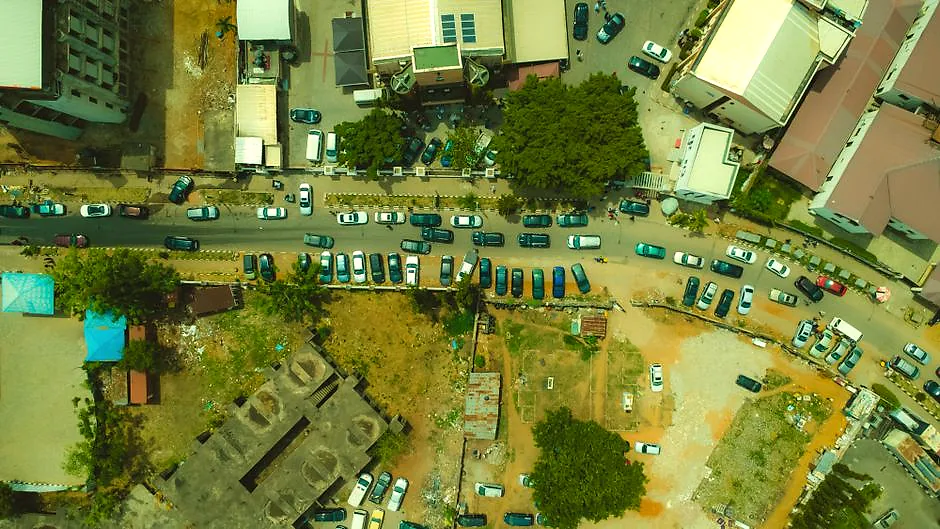
Dhaka's defining logistical problem is not distance but unpredictability. A short route can become a long commute after rain, during a rally, near school opening times or when a major road is restricted.
Before renting:
- Test the commute at 8:00 a.m. and 6:00 p.m.
- Test it again in heavy rain.
- Map a second route.
- Check walking access to groceries, pharmacy and clinic.
- Confirm safe vehicle pickup and drop-off inside the building.
A company car and driver are not luxury extras for many international assignments; they are productivity and safety tools. If driving yourself, obtain current advice on licence recognition and local requirements before using a vehicle.
The First 30 Days
Before Flying
- Confirm the visa category in writing with the employer and Bangladeshi mission.
- Collect legalized or attested degree and employment documents if required.
- Get international medical insurance with evacuation cover.
- Price schools and obtain written employer reimbursement terms.
- Book temporary housing near the office rather than signing remotely.
- Scan passports, visas, prescriptions, qualifications and employment documents.
- Register for government travel alerts.
During Week One
- Check that the employer filed the work-permit application within the required timeline.
- Confirm the security-clearance filing plan through BIDA OSS.
- Obtain a local SIM and a second-network backup.
- Identify the nearest suitable private hospital and save its emergency number.
- Buy drinking-water, mosquito-control and air-quality supplies.
- Test office and school commutes before choosing permanent housing.
During the First Month
- Secure the e-TIN if required and schedule a Bangladesh tax consultation.
- Open local bank and foreign-currency accounts using your employment documents.
- Keep copies of all inward-remittance and payroll records.
- Sign a lease only after checking generator, water, flood and security arrangements.
- Install broadband, router backup power and a secondary mobile connection.
- Verify visa, work-permit and security-clearance expiry dates in a shared calendar.
- Build an emergency plan for unrest, flooding, internet disruption and medical evacuation.
Key Data at a Glance
| Indicator | 2026 position | Source |
|---|---|---|
| FY2026 GDP growth forecast | 3.9% World Bank; 4.7% IMF | World Bank[1], IMF[2] |
| FY2026 inflation forecast | 8.5% World Bank; 8.9% IMF | World Bank[3], IMF[2] |
| Tax-residence trigger | 183 days, or 90 days plus 365 in prior four years | PwC[12] |
| Top personal income-tax rate | 30% | PwC[13] |
| Standard VAT rate | 15% | PwC[14] |
| BIDA work-permit fee, commercial offices | BDT 5,000 per person/year | BIDA[8] |
| Visa on arrival fee | USD 50 | Bangladesh Immigration[6] |
| Digital nomad visa | None | Bangladesh Online MRV Portal[4] |
| Dhaka 1-bedroom city-centre rent | About BDT 17,795; reported range BDT 10,000-25,500 | Numbeo[11] |
| July 2026 median fixed speed | 108.41 Mbps | Speedtest Global Index[28] |
| English proficiency | 62nd; score 506 | EF[25] |
| Dhaka 2025 average PM2.5 | 68 µg/m³ | IQAir[23] |
| Emergency number | 999 | UK Health Guidance[18] |
Bangladesh works best when the employer carries the immigration burden, housing sits close to work, international insurance includes evacuation, and every visa, permit, salary payment and remittance leaves a paper trail.
References
[1] Bangladesh | World Bank - The World Bank partners with Bangladesh on technical, analytical, and financial support that helps Bangladesh achieve upper-middle income status by 20...
[2] IMF
[3] Urgent Reforms Needed to Restore Macro Stability, Sustain Growth, and Create Jobs in Bangladesh - DHAKA, April 8, 2026 - Bangladesh’s economy faces significant challenges with slowing growth and rising poverty for three consecutive years, persisten...
[4] Bangladesh Online MRV Portal
[5] Bangladesh Embassy in Washington
[6] Bangladesh immigration rules
[7] Bangladesh Investment Development Authority
[10] BIDA
[11] Cost of Living in Dhaka. Sep 2026. Prices in Dhaka
[12] Bangladesh - Individual - Residence - Detailed description of individual residence rules in Bangladesh
[13] Bangladesh - Individual - Taxes on personal income - Detailed description of taxes on individual income in Bangladesh
[14] Value-added tax (VAT) rates - Description of Value-added tax VAT rates
[15] Bangladesh - Corporate - Taxes on corporate income - Detailed description of taxes on corporate income in Bangladesh
[16] Standard Chartered Expat Banking – Standard Chartered Bangladesh - Go global with Standard Chartered Expat Banking. Discover a world of banking designed for expatriates in Bangladesh
[17] BB directs banks to open accounts for foreign workers | The Business Standard - Foreign nationals working in Bangladesh under the ‘A3’ visa category, as well as other Employment Visa categories, can receive their salaries and allo...
[18] Health - Bangladesh travel advice - GOV.UK - FCDO travel advice for Bangladesh. Includes safety and security, insurance, entry requirements and legal differences.
[19] Bangladesh: doctors and medical facilities - GOV.UK
[20] Bangladesh travel advice - GOV.UK - FCDO travel advice for Bangladesh. Includes safety and security, insurance, entry requirements and legal differences.
[21] Safety and security - Bangladesh travel advice - GOV.UK - FCDO travel advice for Bangladesh. Includes safety and security, insurance, entry requirements and legal differences.
[22] Travel advice and advisories for Bangladesh - Travel Advice and Advisories from the Government of Canada for Bangladesh
[23] IQAir
[24] live Dhaka AQI
[25] Bangladesh | EF English Proficiency Index | EF Global Site (English) - Discover the EF English Proficiency Index score for Bangladesh
[26] Cost of Living Comparison Between Dhaka, Bangladesh And Chittagong, Bangladesh
[27] Bangladesh Speedtest Connectivity Report H1 2026 | Ookla® - Explore broadband and mobile network performance in Bangladesh. See which providers delivered the best results in our Connectivity Report.
[28] Bangladesh's Mobile and Broadband Internet Speeds - Speedtest Global Index - Bangladesh ranked 90th in the world for mobile speeds and 99th for fixed broadband speeds during July 2026.
[29] International School Dhaka 2025-26 fee schedule
[30] Can Foreigners Buy Land in Bangladesh? Complete 2025 Legal Guide | Justice Corner DB - Whether a foreigner can purchase land in Bangladesh?A foreigner cannot register title in their own name unless the transfer is lawful under both prope...
[31] Legal Circle
Frequently Asked Questions
What are the primary visa and work permit options for moving to Bangladesh in 2026? Foreign professionals normally enter on an employer-sponsored E-category employment visa (or E1 for technical specialists), followed by a BIDA work-permit application (BDT 5,000/person/year) and digital security clearance via the BIDA OSS portal within 15 days of arrival. Qualifying private investors use the PI visa. Bangladesh has no dedicated digital nomad visa.
How does tax residency and personal income tax work in Bangladesh? An expat becomes a tax resident by spending 183 days or more in Bangladesh during a tax year, or 90 days in the current year plus 365 days across the prior four years. Tax residents face progressive tax rates from 0% to 30% on worldwide income, while non-residents pay a flat 30% rate on Bangladesh-source income.
What is the realistic cost of living and rent in Dhaka in 2026? A basic one-bedroom apartment in central Dhaka averages around BDT 17,795/month (~$150 USD), while three-bedroom units average BDT 48,227. A comfortable expat monthly budget in premium areas like Gulshan or Banani ranges from BDT 120,000 to BDT 250,000+ ($1,000-$2,100+ USD), accounting for backup power, private healthcare, drivers, and air filtration.
Is medical evacuation insurance necessary when moving to Bangladesh? Yes. While Dhaka offers capable private hospitals like Evercare, Square, and United Hospital, nationwide medical infrastructure is uneven and specialist emergency facilities are limited. Both the UK Foreign Office and international health advisers strongly urge expatriates to carry comprehensive private health insurance covering emergency cross-border evacuation.
Cover photo by Kabiur Rahman Riyad on Pexels.
Want to see how Bangladesh stacks up?
Are you seriously considering a move? Use our interactive tools to explore Bangladesh's climate, tax brackets, and nomad visas.