Moving to Peru in 2026: $1,000 Passive Income Visa & Lima Living Under $500
July 17, 2026
SharePeru's central bank raised its 2026 growth forecast to 3.2% - the fastest pace it has posted since before the pandemic slowdown - while a one-bedroom apartment in Lima still rents for under $500 a month. The rentista visa asks for just $1,000/month in passive income, and the country's "digital nomad visa" everyone talks about online doesn't actually exist yet in practice. This is everything you need to know before you move.[1][2][3][4]
The Economy: Eyes Open
Peru's growth forecast keeps getting revised upward through 2026. The Banco Central de Reserva (BCR) lifted its projection from 3.0% to 3.2% in March 2026, and reaffirmed the same 3.2% for 2027. That followed an earlier December 2025 revision from 2.9% to 3.0%. Growth is split between a modest 0.2% expansion in the primary sector (mining, fishing, agriculture) and a much stronger 4% in the non-primary sector (manufacturing, construction, trade, services) - meaning the boom is happening in the parts of the economy expats actually interact with.[5][4]
Inflation is well-anchored at 2.0% for both 2026 and 2027, sitting comfortably inside the central bank's target range. The fiscal deficit is projected to improve to 1.9% of GDP in 2026, down from 2.2% in 2025. BBVA Research initially trimmed its 2026 GDP forecast from 3.1% to 2.9% after three negative supply shocks hit the economy, though the figure remains solid by regional standards.[6][5]
Lima has become one of Latin America's most sophisticated capitals, with a culinary scene that regularly places restaurants among the world's best, and a growing high-net-worth expat and startup community. For remote workers and retirees, the appeal isn't complicated: strong growth, low inflation, and one of the cheapest costs of living among major South American capitals.[7][8]
Visas and Residency: What Changed in 2026
Tourist Entry
Most nationalities - including US, Canadian, UK, Australian, and EU citizens - get a tourist stamp on arrival allowing up to 183 days per calendar year. There is no separate visa needed to enter for tourism. Many border officers, however, are now strictly enforcing a 90-days-in-any-180-day-period rule at entry - a stricter practical limit than the 183-day headline figure. Exceed the 183-day annual threshold and you automatically trigger Peruvian tax residency.[2][9][3]
The "Digital Nomad Visa" Doesn't Actually Work Yet
This is the single most important thing to know if you found Peru through nomad-visa listicles: Legislative Decree No. 1582 created a Nómada Digital visa category back in November 2023, restricted to people working remotely for employers based outside Peru. But as of mid-2026, the TUPA (the administrative procedures manual immigration officers actually use) still has not been published for this category. The visa exists in the law books, not in the application portal - you cannot apply for something the system doesn't recognize.[10][2]
Until that changes, remote workers have two practical options: stay as a tourist (183-day annual cap, tax residency risk) or apply under the Independent Worker (Trabajador Independiente) framework, which is fully functional today and the closest real equivalent.[2]
Independent Worker Visa (The Real Digital Nomad Route)
| Requirement | Detail |
|---|---|
| Minimum income | €11,000/year (~€916/month), via bank statements or contracts[2] |
| Proof accepted | 6 months of bank statements or formal client contracts[2] |
| Criminal record | Clean background check, apostilled and translated[2] |
| Health insurance | Proof of international or local private coverage[2] |
| Tax ID | RUC registration with SUNAT strongly recommended for compliance[2] |
| Initial duration | 365 days, renewable in-country[2] |
| Processing time | ~6 weeks[2] |
| Visa fee | S/190-S/700 ($50-$185)[2] |
Every foreign document requires a Hague Apostille plus certified Spanish translation - the US Embassy in Lima cannot substitute for a proper home-country apostille, so gather these before you fly. Under current rules, permanent residency requires 2 years on this status, though Law 32421 (passed 2025) aims to extend this to 5 years - not yet active in the TUPA as of mid-2026, but worth monitoring.[2]
Rentista Visa (Retirees and Passive Income)
Peru's most established long-stay route, aimed at retirees, pensioners, and anyone living on investment income.[3]
| Applicant | Monthly Income Required |
|---|---|
| Single applicant | $1,000 USD[3] |
| Couple | $1,500 USD[3] |
| Family of three | $2,000 USD[3] |
| Family of four | $2,500 USD[3] |
Qualifying income is strictly passive: Social Security, pensions, annuities, rental income, dividends, trust distributions, royalties. Active employment or freelance income does not count, and working while on a rentista visa risks deportation.[3]
Document checklist: valid passport (6+ months validity), proof of passive income (SSA letters, pension statements, 3-6 months of bank statements), a police clearance from your country of residence (FBI check for Americans - state-level checks are not accepted), a health certificate, four passport photos, and proof of a Peruvian address. All foreign documents need apostille plus certified Spanish translation. Legal assistance costs $500-$1,500; the government application fee is roughly $50-100. Processing takes 30-60 business days, and you cannot leave Peru while the application is pending.[3]
Path forward: renewable annually for the first year, eligible for permanent residency after 3 consecutive years, and eligible for citizenship by naturalization after 5 years total - dual citizenship is permitted.[3]
Investor and Employer Routes
For those with a Peruvian job offer, the standard employer-sponsored Worker Resident visa ties status to a registered employment contract. Investor visas exist for business owners establishing Peruvian companies but require formal capital deployment and registered operations - a path best pursued with local legal counsel.[10]
| Route | Duration | Income/Capital Req. | Best For |
|---|---|---|---|
| Tourist | 90-183 days/year | None | Scouting trips only |
| Independent Worker | 365 days, renewable | ~€11,000/year | Remote workers, freelancers |
| Rentista | 1 year, renewable | $1,000+/month passive | Retirees, pensioners |
| Worker Resident | Tied to contract | Employment contract | Local job holders |
Cost of Living: The Real Numbers
A single person in Lima spends $1,131-$1,508/month including rent, according to 2026 cost-of-living trackers - figures that vary depending on lifestyle and neighborhood. Budget-conscious living is achievable around $843-$862/month. A real-world expat vlogger tracking actual bills in mid-2026 reported a monthly total of roughly $1,030 for a comfortable single lifestyle. Peru overall ranks as roughly 1.35 times cheaper than the world average cost of living.[11][12][13][7]
Rent and Monthly Budget (Lima, 2026)
| Item | Cost (USD) |
|---|---|
| 1-BR apartment (average) | $458-$473/month[13][1] |
| 1-BR apartment (range) | $400-$700/month[12] |
| Utilities (electricity, water, gas) | $40-70/month[14] |
| Internet + cable | $30-60/month[14] |
| Groceries (single person) | $55-80/month[12] |
| Lunch menu (set meal) | S/12-20 (~$3-5)[12] |
| Dinner for two (mid-range) | S/80-140 (~$22-38)[12] |
| Public transport (bus fare) | S/3.20 (~$0.85)[12] |
| Monthly transport budget | S/200-300 (~$55-80)[12] |
| Private health insurance | S/317/month (~$85)[12] |
| Doctor visit (with insurance) | S/40 (~$11)[12] |
| Coffee | ~$2.94[13] |
A family of four in Lima spends $2,868-$5,096/month depending on lifestyle tier, including rent. Lima is estimated to be roughly 83% cheaper than New York City on comparable spending.[13][11]
Taxes: What You Actually Pay
The Domicile Rule
Peru taxes individuals based on domicile, not simple day-count residency. Domiciled individuals owe tax on worldwide income; non-domiciled individuals are taxed only on Peru-source income. The 183-day threshold is the primary trigger for becoming domiciled.[15][16]
Income Tax Rates 2026
Peru uses a progressive scale for domiciled (resident) taxpayers, denominated in Tax Units (UIT). For 2026, 1 UIT = S/5,500 (roughly $1,450).[16]
| Bracket (Tax Units) | Rate |
|---|---|
| Up to 5 UIT (~S/27,500) | Exempt (first 7 UIT effectively tax-free with deductions)[16] |
| 5-20 UIT | 14%[16] |
| 20-35 UIT | 17%[16] |
| 35-45 UIT | 20%[16] |
| Above 45 UIT (~S/247,500/year) | 30%[16] |
Non-domiciled individuals pay a flat 30% on Peru-source income only, with no deductions - and crucially, 0% on foreign income regardless of amount. Capital gains from stock sales and rental income for domiciled individuals are both taxed at an effective 5% rate.[15][16]
For Americans
Peru and the United States do not have a tax treaty. US citizens must continue filing US taxes on worldwide income no matter where they live, though the Foreign Earned Income Exclusion and Foreign Tax Credit help offset double taxation - a dual-filer specialist is worth the fee.[3]
Social Contributions
| Contribution | Rate |
|---|---|
| AFP pension (employee) | ~10-13% total[15] |
| EsSalud/EPS health (employer-paid) | 9%[15] |
Certificate of Residence for Treaty Benefits
If you work remotely for a company with Peruvian ties, provide a Certificate of Residence from your home country within 4 months of issuance to claim double-tax-agreement benefits - otherwise the withholding agent must apply the full 30% and cannot correct it retroactively.[2]
Healthcare: Public vs. Private
The Public System (EsSalud)
EsSalud is Peru's national social health insurance, funded through payroll contributions from formal employment. Foreign residents can also join the +Salud Seguro Potestativo (voluntary affiliation), open to any country resident regardless of nationality, particularly aimed at independent professionals not covered through an employer. Coverage begins after a 3-month waiting period from first payment, and excludes elective cosmetic procedures, organ transplants, and certain chronic conditions.[17][18][19]
The honest picture: public facilities are functional but face long wait times and variable quality, and English-speaking staff are rare outside major private networks. Most expats use EsSalud only if formally employed and rely on private care for anything else.[17]
Private Healthcare
Lima's private clinics attract medical tourists from across the region for their modern facilities, English-speaking doctors, and affordable pricing relative to US or European care. Private health insurance for an individual runs roughly S/317/month (~$85) based on real expat billing data, with international/expat-focused plans running $100-250/month. A doctor's visit with insurance costs around S/40 (~$11). European expats should note that EHIC cards do not cover care in Peru - private insurance is mandatory from day one.[12][17][2][3]
Rentista and Independent Worker visa holders have no automatic access to EsSalud unless formally employed and contributing - private insurance is the default for most residency categories.[2]
Safety
Peru's safety picture is sharply divided by city, and Lima carries real risk that shouldn't be minimized. Numbeo rates Lima's Crime Index at 70.15 - categorized as "Very High" - with a corresponding Safety Scale of just 29.85. By contrast, Arequipa scores a Crime Index of 42.87 (Moderate), with a much higher Safety Scale of 57.13.[20]
Lima residents report high worry levels around mugging (77.77), being attacked (61.65), and property crime like vandalism and theft (75.07) - all rated "High" or "Very High." Walking alone at night in Lima scores just 19.46 on Numbeo's safety scale - "Very Low." Arequipa, by comparison, scores 46.65 for night safety - nearly triple Lima's rating.[20]
Areas to Avoid Entirely
The US Department of State maintains a Level 4: Do Not Travel warning for the Colombian border region of Loreto and the VRAEM zone (Apurímac, Ene, and Mantaro River valleys) - areas linked to narco-trafficking and remnant insurgent activity. Traveling there can void travel insurance and makes consular assistance nearly impossible.[2]
City-by-City Safety Snapshot
| City | Crime Index | Safety Level |
|---|---|---|
| Lima | 70.15[20] | Very High risk |
| Arequipa | 42.87[20] | Moderate |
| Cusco | Lower than Lima (tourist-oriented, generally calmer)[21] | Moderate |
Given this split, most long-term expats choose Arequipa, Cusco, or specific safer Lima districts (Miraflores, San Isidro, Barranco) over Lima's average neighborhoods.
English in Everyday Life
English proficiency in Peru is limited outside tourist and expat-facing zones. In Lima's upscale districts - Miraflores, San Isidro, Barranco - English is common in restaurants, hotels, and international businesses catering to remote workers and tourists. Government offices, MIGRACIONES appointments, banking, and most day-to-day transactions require Spanish. Learning functional Spanish substantially eases the residency process, banking setup, and daily negotiation - and is close to essential outside Lima's wealthiest neighborhoods.[8][3][2]
Which City?
Lima
The capital and undisputed economic center - largest job market, best private healthcare, most developed coworking ecosystem, and Peru's culinary capital. Also carries the country's highest crime risk (Numbeo Crime Index 70.15) and worst nighttime safety perception. Best for professionals needing business infrastructure who are willing to pay for secure housing in Miraflores, San Isidro, or Barranco.[8][20]
Best expat neighborhoods: Miraflores (oceanfront, tourist infrastructure, restaurants), San Isidro (business district, embassies, upscale), Barranco (bohemian, artistic, nightlife).
Arequipa
Peru's second city and, by the numbers, dramatically safer than Lima - Crime Index 42.87 versus Lima's 70.15, and more than double the nighttime safety rating. Colonial architecture, dry high-altitude climate, and a lower cost of living than the capital. Best for those prioritizing safety and a slower pace over Lima's business intensity.[20]
Cusco
The gateway to Machu Picchu and a growing slow-travel nomad hub, with ancient Inca stonework and mountain air. High altitude (3,400m) requires acclimatization. Smaller expat and coworking scene than Lima but a genuinely different lifestyle draw for those prioritizing culture and scenery over economic infrastructure.[21]
City Comparison at a Glance
| City | Crime Index | Rent Level | Best For |
|---|---|---|---|
| Lima | 70.15 (Very High)[20] | Higher, $450-700/1BR[12] | Business, healthcare, career |
| Arequipa | 42.87 (Moderate)[20] | Lower than Lima | Safety-focused, retirees |
| Cusco | Lower, tourist-oriented[21] | Variable | Nomads, culture, scenery |
Internet and Remote Work Infrastructure
Lima has an established digital nomad community with a functioning network of coworking spaces, though the country's broadband infrastructure is less developed and less uniformly fast than leading Eastern European or Asian nomad hubs. Coworking and remote-work viability concentrate heavily in Lima and, to a lesser extent, Cusco. Home internet in Lima costs roughly $30-60/month for broadband with cable, per real expat billing data. Outside Lima and the major cities, connectivity drops significantly, and remote workers should test local speeds before committing to a long-term stay.[14][22][21]
Buying Property
Foreigners can legally buy mainstream residential property in Peru in 2026 - apartments, houses, duplexes, beach homes, and titled land - under broadly similar conditions to citizens. The main restriction concerns raw land near international borders, which involves additional government approval processes; this does not affect standard urban apartment purchases in Lima, Arequipa, or Cusco.[23][24]
Nationality can affect the mechanics of a purchase - treaty status, banking compliance (UIF anti-money-laundering checks), and wire transfer requirements vary depending on whether the buyer's home country has relevant agreements with Peru. SUNARP (Peru's public registry) handles title registration, and due diligence before purchase is essential to confirm clean title, particularly for land purchases outside major cities.[24][25]
Important: as in most Latin American jurisdictions, buying property in Peru does not automatically confer residency or citizenship - a separate visa application is always required.
Your First 90 Days: The Checklist
- Enter on your tourist stamp - most nationalities get up to 183 days/year, but treat 90 days as the practical safe limit given stricter enforcement at entry points[9][2]
- Verify your entry record within 24 hours on the Migraciones website - an unstamped or unlogged entry can leave you "legally invisible" and unable to apply for residency or exit the country without a lengthy correction process[2]
- Gather apostilled documents before you fly if possible - FBI background checks alone take 12-16 weeks by mail (3-5 weeks via an approved channeler), and apostilles are far easier to obtain at home than from Peru[3][2]
- Choose your visa route: Rentista if living on $1,000+/month passive income; Independent Worker if earning ~€11,000+/year from remote client work; watch for the still-nonfunctional Digital Nomad category to activate[3][2]
- Hire a Peruvian immigration attorney ($500-$1,500) - not legally required, but standard practice given the document-heavy, apostille-dependent process[3]
- Get your RUC (tax ID) from SUNAT if pursuing Independent Worker status - required for full compliance as an independent professional[2]
- Arrange private health insurance immediately - EsSalud requires formal employment or voluntary affiliation with a 3-month waiting period; EHIC cards from Europe do not work in Peru[19][3]
- Submit your visa application at MIGRACIONES (Breña district in Lima, or regional offices) with all apostilled, translated documents; pay the fee via Banco de la Nación[3]
- Do not leave Peru while your application is pending - this can cancel your application entirely[3]
- Receive your Carné de Extranjería upon approval - required for banking, contracts, and every formal service in Peru[3]
Key Data at a Glance
| Indicator | Value |
|---|---|
| GDP Growth Forecast 2026 | 3.2% (BCR, March 2026)[4] |
| GDP Growth Forecast 2027 | 3.2%[4] |
| Inflation Forecast 2026 | 2.0%[5] |
| Fiscal Deficit 2026 (forecast) | 1.9% of GDP[5] |
| Resident Income Tax (top bracket) | 30% (above 45 UIT)[16] |
| Non-Resident Flat Tax | 30% on Peru-source income; 0% on foreign income[15][16] |
| 1 UIT Value 2026 | S/5,500 (~$1,450)[16] |
| Rentista Visa Minimum Income | $1,000/month (single)[3] |
| Independent Worker Minimum Income | ~€11,000/year[2] |
| Digital Nomad Visa Status | Legal but not implementable (no TUPA published)[2] |
| Lima 1-BR Rent | $458-473/month average[13][1] |
| Single Person Monthly Cost (Lima) | $1,131-$1,508[13][11] |
| Lima Crime Index | 70.15 (Very High)[20] |
| Arequipa Crime Index | 42.87 (Moderate)[20] |
| Path to Permanent Residency (Rentista) | 3 years[3] |
| Path to Citizenship (Rentista) | 5 years total[3] |
| Dual Citizenship | Permitted[3] |
| Tourist Stay Allowance | Up to 183 days/year (90-day enforcement common)[9][2] |
Peru in 2026 rewards patience with paperwork more than almost any other South American destination - the rentista and independent-worker routes work, the digital nomad visa doesn't yet, and the safety gap between Lima and everywhere else is wide enough to shape where serious long-term movers actually settle.
References
Lima Cost of Living 2026: Rent, Food & Real Prices - Lima 1BR rent: $473.00/mo. Big Mac: $3.50. Uber 5km: $2.50. Full breakdown of housing, food, transpo...
Peru Digital Nomad Visa 2026: The Ghost Visa Traps, 90-Day Rule & What Nobody Tells You (Real Costs & Workarounds) | SettleRadar - A comprehensive guide to Peru's Digital Nomad Visa situation in 2026, including the 90-day tourist t...
Peru Rentista Visa Guide 2026: Requirements & Process - Complete guide to Peru's rentista visa in 2026. Learn income requirements ($1,000/mo), document chec...
Peru: BCR raises economic growth forecast from 3% to 3.2 ... - The <a href="https://www.bcrp.gob.pe/en/"target="_blank">Central Reserve Bank (BCR) on Friday ra...
Peru central bank raises 2026 growth forecast to 3.0% - Peru central bank raises 2026 growth forecast to 3.0%
Peru Economic Outlook - March 2026 - BBVA Research - The Peruvian economy keeps showing a solid performance, supported by the dynamism of private spendin...
Cost of Living in Peru: prices in 32 cities compared [2026] - The average cost of living in Peru is $862, which is 1.35 times less expensive than the world's aver...
Living in Peru: The Expat Guide for 2026 - Lima has emerged as one of Latin America's most sophisticated capitals - with a culinary scene rival...
Peruvian Digital Nomad Visa - All income must be earned abroad while residing in Peru. Foreigners can stay in Peru as a tourist fo...
Digital Nomad (Nomada Digital) - Republic of Peru - Visa Atlas - Indicative only - fees have not yet been published for this category; confirm on the official page o...
Cost of Living in Lima, Lima, Peru in 2026 - Living Cost Index - This page contains up-to-date cost of living information for Lima, Lima, Peru in 2026. Compare price...
How Much Does it REALLY Cost to Live in Lima Peru (2025-2026) - Thinking about living in Lima, Peru? In this video, I break down the real cost of living in Lima (20...
Cost of Living in Lima in Jun 2026 - The Cost of Living in Lima is low. A single person costs: $1,131 per month. A family costs: $2,355 p...
Cost of Living in Lima 2026 - Wise - A guide to the average cost of living in Lima. From housing and travel costs, to currency and exchan...
Peru Tax Guide 2026 | 8-30% Progressive Tax, Territorial for Non ... - Peru has progressive income tax from 8% to 30%. Territorial system for non-residents (under 183 days...
Peru - Individual - Taxes on personal income - * For 2026, a tax unit is equivalent to 5,500 Peruvian soles (PEN). The first seven tax units are ex...
Healthcare in Peru for Expats 2026: Insurance, Costs & Hospitals - Peru has a mixed public-private healthcare system. The public EsSalud system covers formal workers b...
Seguro Social de Salud - EsSalud - Somos una entidad administradora de fondos intangibles de la seguridad social, adscrita al sector de...
Afiliarse al Seguro Potestativo de EsSalud (+Salud) .GOB.PE - ESSALUD - Portal del Seguro Social del Perú
Safety comparisons Lima vs Arequipa - Crime - Cost of Living
Cusco, Peru - Digital Nomad Guide (2026) - Inca capital of the world - ancient stones, mountain air, and a growing slow-travel nomad scene
Digital Nomad Peru: Complete Remote Work Guide 2026 - Everything digital nomads need to know about Peru. Best cities, coworking spaces, internet speeds, v...
Buying and owning a property as a foreigner in Peru (2026) - Foreigners can legally buy mainstream residential property in Peru in 2026, including apartments, ho...
Buying Land in Peru as a Foreigner Step by Step Legal Guide 2026 - Learn how foreigners can legally buy land in Peru in 2026. A complete step by step guide to SUNARP r...
Buying Property in Lima as a Spanish, Mexican, Argentine or ... - If you are a foreigner buy property Lima in 2026, your nationality drives treaties, PEFC, wires, UIF...
Frequently Asked Questions
What are the primary visa and residence options for moving to Peru in 2026? 1582 created a Nómada Digital visa category back in November 2023, restricted to people working remotely for employers based outside Peru.
How does personal income tax work for expats in Peru? The 183-day threshold is the primary trigger for becoming domiciled.
What is the average cost of rent and living in Peru? A single person in Lima spends $1,131-$1,508/month including rent, according to 2026 cost-of-living trackers - figures that vary depending on lifestyle and neighborhood.
How many years of residence are required for citizenship or permanent residency in Peru? Path forward: renewable annually for the first year, eligible for permanent residency after 3 consecutive years, and eligible for citizenship by naturalization after 5 years total - dual citizenship is permitted.
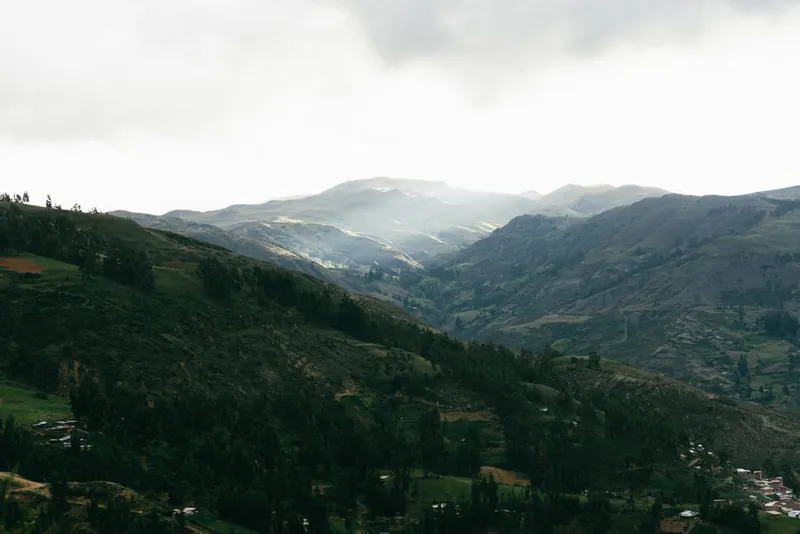
Cover photo by Axel Sandoval on Pexels.
Want to see how Peru stacks up?
Are you seriously considering a move? Use our interactive tools to explore Peru's climate, tax brackets, and nomad visas.
Related Articles

June 25, 2026
Peru Digital Nomad Visa 2026: The Ghost Visa Traps, 90-Day Rule & What Nobody Tells You (Real Costs & Workarounds)
October 12, 2026
Moving to Yemen in 2026: Active Conflict, Dual Currencies, and Expat Security
October 11, 2026