Peru Digital Nomad Visa 2026: The Ghost Visa Traps, 90-Day Rule & What Nobody Tells You (Real Costs & Workarounds)
June 25, 2026
ShareYou are looking at Peru as a potential home base in 2026, but you are stepping into a legal gray zone. While Legislative Decree 1582 officially created the Digital Nomad category, the bureaucratic machinery required to process it-the TUPA administrative regulations-has been missing for over two years. As of June 2026, the Peruvian government still hasn't updated its application portal to include this specific path, leaving you with two practical alternatives: staying as a tourist or applying under the Independent Worker (Trabajador Independiente) framework.
Because the official nomad visa is a "ghost" category, most remote workers currently enter on a tourist status, which is strictly limited. Many immigration officers now enforce a limit of 90 days within a 180-day period, and exceeding the 183-day annual limit triggers mandatory tax residency. If you intend to stay longer, the Independent Worker path is the only functional residency option available to you.
This document breaks down the technical framework of the visa as it exists in law and the gritty, administrative workarounds you must employ to stay in the country legally.
1. What Is Peru's Digital Nomad Visa?
Understanding the legal basis of Decree 1582 is vital for your long-term planning, even if the implementation is currently stalled. The law exists in the books, but the "how-to" manual for officers hasn't been written. Knowing the statute protects you from misinformation and helps you prepare for the moment the gates finally open.
Under Article 29.1(i) of Legislative Decree No. 1582, the Nómada Digital visa is administered by Migraciones. It is legally defined as a status for foreigners who perform remote work for companies located outside of Peru using digital technologies. The core restriction is absolute: this visa allows you to work for foreign entities, but it forbids you from earning a single sol from Peruvian sources. If you take local freelance work, you are in violation of the decree.
As of June 2026, the TUPA (administrative procedures manual) still has not been published for this visa. The "Digital Nomad" option is visible in the law, but it is absent from the application portal. You cannot apply for a visa that the computer system doesn't recognize. Until the TUPA is released, you should treat the Independent Worker residency as your primary fallback.
2. Eligibility Requirements
Since there is no "Nomad" application form yet, your eligibility currently hinges on meeting the active Independent Worker standards. Peruvian authorities are famously pedantic about documentation; they want to see a clear, professional paper trail rather than a casual bank balance.
| Requirement Category | Requirement Detail | 2026 Source/Status |
|---|---|---|
| Minimum Income | €11,000/year (approx. €916/month) | Active Independent Worker standard |
| Accepted Proof | Bank statements (last 6 months) or formal contracts | Required for residency applications |
| Criminal Record | Clean background check from home country | Mandatory for all resident-type visas |
| Health Insurance | Proof of international or local private coverage | Required for the application portal |
Grey Areas and Tax IDs
Peruvian authorities expect "professional activity" to be verifiable via contracts and consistent bank transfers. If you are a crypto trader or a content creator, you should know that officers are judging you under the Independent Worker rubric. This often requires you to obtain a RUC (Registro Único de Contribuyentes), the Peruvian tax ID, to be considered fully compliant. Without a RUC, your status as an independent professional is technically incomplete in the eyes of the tax authority (SUNAT).
Honest Warning: The 90-Day Trap
Do not assume you have a full six months as a tourist. Many officers now strictly enforce the 90 days in a 180-day period rule. If you enter, stay for three months, and leave for a weekend, you may be denied re-entry for another 90 days. Remote workers who assume they can "visa run" frequently are being caught in this trap.
3. Required Documents
A document has zero legal weight in Peru unless it has an Apostille. This is an international certification from your home country that verifies the document's authenticity. Without this stamp, your paperwork is essentially scrap paper to a Peruvian official.
- Passport: Must be valid for at least 6 months beyond your arrival.
- Application Form: Generated through the Migraciones website.
- Income Proof: Bank statements from the last 6 months which must be notarized and carry a formal Apostille and a Certified Translation.
- Criminal Background Check: Issued by your national police (e.g., FBI), requiring an Apostille and a Certified Translation.
- Interpol International Exchange Card (Ficha de Canje): Obtained in person in Peru. Note that the identity documents you present to Interpol may also require a Certified Translation.
Honest Warning: The Notary Fallacy
Authorities will not accept documents notarized by the U.S. Embassy in Lima as a substitute for a home-country Apostille or a formal Peruvian notarization. If you arrive without your Apostille on your background check, the embassy cannot "fix" it for you. You will have to send the documents back home or fly back yourself.
4. Application Process: Step by Step
Everything happens through the "Agencia Digital de Migraciones" portal. Timing is your greatest enemy here; you must be in the country legally when you file, or the system will flag you for an immediate "subsanación" (correction) or rejection.
- Step 1: Document gathering and securing Apostille stamps in your home country before you fly.
- Step 2: Entry as a tourist. Ensure the officer stamps your passport or logs your digital entry record correctly.
- Step 3: Process the "Permiso para firmar contratos" (Permission to sign contracts) via the Migraciones portal so you can legally sign your application.
- Step 4: Online submission of your Apostille documents and Certified Translation files to the Migraciones portal.
- Step 5: The Interpol appointment for your Ficha de Canje. This requires a prior payment of S/ 80.50 to the Banco de la Nación.
- Step 6: Approval and issuance of the Carné de Extranjería (Foreign Resident ID).
Honest Warning: The Entry Stamp Disaster
If you enter through a land border and the officer fails to record your entry or stamp your passport, you are legally invisible. You will be barred from exiting the country or applying for any residency until you complete a "subsanación" process that can take weeks of waiting in Lima. Always verify your entry record on the Migraciones website within 24 hours of arrival.
5. Costs: Complete Fee Breakdown
All government fees are tied to the UIT (Unidad Impositiva Tributaria), which fluctuates annually. For 2026, the UIT value is S/ 5,350.
| Expense | Cost (PEN) | Cost (USD/EUR) |
|---|---|---|
| Overstay Fine (per day) | S/ 5.35 (0.1% of UIT) | ~$1.45 |
| Independent Worker Visa Fee | S/ 190 - S/ 700 | $50 - $185 |
| Interpol Ficha de Canje | S/ 80.50 | ~$22 |
| Private Health Insurance | Varies | $100 - $250 / month |
Honest Warning: Pagalo.pe or No Flight
If you overstay your tourist time, you cannot pay the fine to the gate agent at the airport. You must pay via the "Pagalo.pe" platform or at a physical branch of the Banco de la Nación before attempting to clear customs. If you wait until you are in the terminal, you will likely miss your flight while trying to handle the payment system.
6. Tax Implications
The 183-day rule is the "trigger" for Peruvian tax residency. If you spend more than 183 days in the country within any 12-month period, you are a tax resident. Residents are technically taxed on their worldwide income, while non-residents pay a flat 30% only on Peruvian-source income.
To avoid double taxation, you must provide a Certificate of Residence from your home country to claim benefits under a Double Tax Agreement (DTA). These certificates are only valid for 4 months from the date of issuance.
Honest Warning: The Withholding Penalty
If you work for a company with Peruvian ties and fail to provide a formal Certificate of Residence, the withholding agent is legally bound to charge you the full 30% tax. They cannot apply DTA benefits retroactively without that certificate.
7. What This Visa Does NOT Give You
The Independent status means you lack the protections of the Peruvian labor code. You are a guest, not a local employee.
- No Local Employment: You cannot work for a Peruvian boss unless you switch to a formal Work Visa.
- No Immediate Permanent Residency: You must hold residency for 2 years to apply for permanent status. Law 32421 (passed in 2025) aims to increase this to 5 years. While not active in the TUPA as of April 2026, the change is looming.
- No Public Healthcare: You have no access to EsSalud unless you are a formal worker paying into the system. You are responsible for your own private medical costs.
Honest Warning: Dependency Restrictions
Peru does not recognize same-sex marriages. This complicates residency for dependents in same-sex unions; your partner will likely need to qualify for their own individual visa, as they will not be recognized as a spouse for immigration purposes.
8. Digital Nomad Visa vs. Alternatives
The right path depends on your income type and how long you want to dodge the bureaucracy.
| Feature | Tourist Visa | Independent Worker | Digital Nomad (Paper Only) |
|---|---|---|---|
| Duration | 90-183 days | 365 days | 365 days |
| Income Req. | None | €11,000/year | Expected Remote Only |
| Tax Residency | Non-resident | After 183 days | After 183 days |
| Renewal | Must leave country | Possible in-country | Possible in-country |
Honest Warning: The Rentista and Safety
The Rentista visa is for those with passive income (pensions/rentals) but it strictly forbids any work, even remote. If you are caught working on a Rentista status, you risk deportation. Additionally, be wary of "off-the-beaten-path" travel. The U.S. Department of State maintains "Level 4: Do Not Travel" warnings for the Colombian border in the Loreto region and the VRAEM (Apurímac, Ene, and Mantaro Rivers). Being in these areas can void your insurance and makes consular assistance nearly impossible.
Quick Reference Cheat Sheet
| Category | Information for 2026 |
|---|---|
| Official Portal | Agencia Digital de Migraciones |
| Minimum Income | €11,000/year |
| Initial Duration | 365 days |
| Processing Time | ~6 weeks |
| 2026 UIT Value | S/ 5,350 |
References
- SUNAT: International Taxation - Certificates of Tax Residence.
- SUNAT: Supreme Decree No. 090-2008-EF.
- Legislative Decree No. 1582 (Modification of Foreigner Law, Nov 2023).
- Migraciones Peru: Digital Nomad Visa Status Update (2026).
- Law No. 32421: Naturalization and Residency Amendments (Aug 2025).
- U.S. Department of State: Peru International Travel Information (May 2025).
- INEI: Peru Inflation and Economic Data (Feb 2026).
- Remote People: Peru Payroll and Income Tax Guide (2026).
- LottaLingo: Digital Nomad Checklist for Peru (2026).
- Peru Grand Travel: Documentation Requirements for 2026.
- LimaEasy: Peruvian Digital Nomad Visa Legal Commentary (April 2026).
- Holafly: Peru Digital Nomad Visa Application Guide (May 2026).
- Dos Manos Peru: Tourist Visa and Overstay Fine Regulations (2026).
- Vardanyan & Partners: Comparison of Lima, Arequipa, and Cusco (2026).
- SUNAT: Tax registration (RUC) and Corporate Income Tax (Law 32434).
- Lima Airport Partners: Jorge Chavez International Airport Capacity Report (2026).
- Ministry of Culture: Machu Picchu Visitor Limits and Regulations (2026).
- Ministry of Transport: Chinchero Airport Construction Progress (March 2026).
Looking for more options? Compare all 56 digital nomad visa countries to find the perfect destination for your remote work setup.
Frequently Asked Questions
Does Peru have an official Digital Nomad Visa in 2026? While Peru enacted digital nomad legislation, administrative regulations remain stalled; remote workers currently utilize the 183-day tourist entry or the Rentista (Independent Worker) visa route.
What is the income requirement for Peru's Rentista Visa? The Rentista visa requires proof of permanent, guaranteed passive income of at least USD 1,000 per month from foreign investments, pensions, or remote contracts.
When do you trigger tax residency in Peru? Foreign nationals become Peruvian tax residents after staying in the country for more than 183 days within any 12-month period, incurring tax liability on worldwide income.
What is the cost of rent in Lima in 2026? A 1-bedroom apartment in popular expat districts such as Miraflores, Barranco, or San Isidro rents for between $450 and $700 per month.
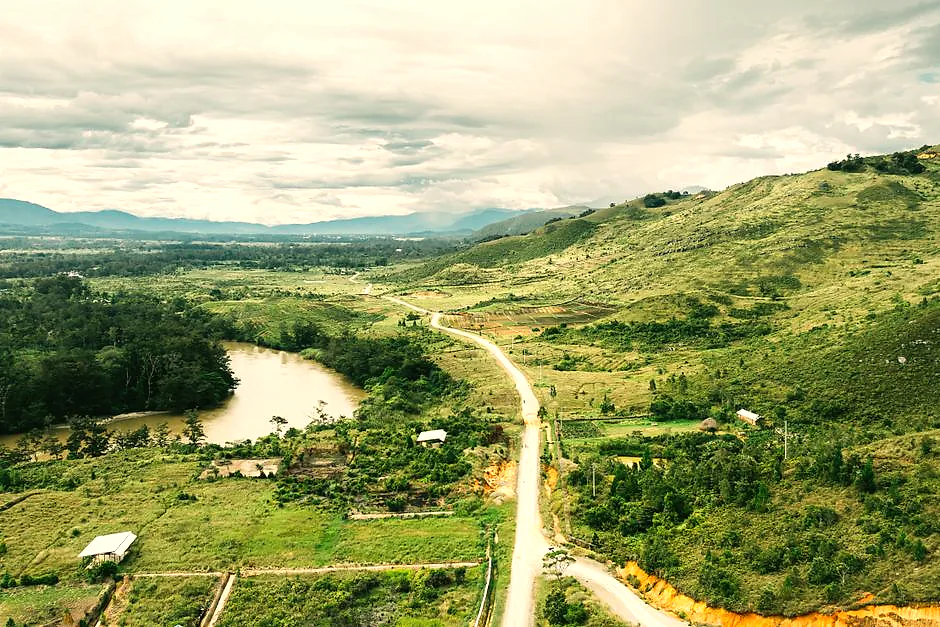
Cover photo by Guille Álvarez on Pexels.
Want to see how Peru stacks up?
Are you seriously considering a move? Use our interactive tools to explore Peru's climate, tax brackets, and nomad visas.
Looking for other options?
See how this visa compares against 55 other countries.
📊 Compare all 56 digital nomad visas