Moving to Ghana in 2026: Right of Abode, 5% Growth, and New Tax Brackets
September 4, 2026
ShareGhana runs a residency program available to no other nationality on Earth by design: the Right of Abode, open exclusively to people of African descent in the diaspora, granting indefinite residence, visa-free entry for life, and full work rights with zero permits - no minimum stay, no age requirement, not even proof of Ghanaian ancestry, just African descent broadly defined. Meanwhile, the country's separate diaspora citizenship pathway got paused in February 2026 for procedural review. Ghana in 2026 is simultaneously one of West Africa's fastest-growing economies, a nation about to overhaul its income tax brackets for the first time under a bill sitting in parliament right now, and a place where corruption perception on Numbeo hits "Very High" even as daylight street safety reads comfortably "High."
The Economy: A Genuine Growth Story, Though the 2026 Number Depends Heavily on Who's Counting
Ghana's 2026 growth forecasts cluster in an unusually specific band for West Africa - nearly every major forecaster lands between 4.8% and 5.9%, all agreeing on the same underlying story: a sharp deceleration from an exceptionally strong 2025, but still comfortably outpacing the Sub-Saharan African average.
The World Bank raised its 2026 forecast to 4.8% in its June 2026 Global Economic Prospects report, a 0.2 percentage point upward revision from its January 2026 estimate, framing this as "a period of stabilisation" even though it represents a real moderation from the 6.0% growth actually recorded in 2025 - "economists view this transition as a shift toward a more sustainable medium-term trajectory rather than a sign of instability"[1]. Ghana's own economy actually grew 6.4% in Q1 2026, exceeding the 6.2% recorded in the same period of 2025, prompting the Bank of Ghana to project roughly 6% growth for the second half of 2026 - genuinely well above the World Bank's full-year estimate, according to the central bank governor's own remarks at a debt capital markets conference[2].
Ghana's own 2026 Budget targets 4.9% growth, with GDP expected to reach GHS 1.5 trillion, driven by services (47% of growth), industry (31%), and agriculture (22%) - the Finance Ministry's own medium-term projection shows growth stabilizing around 5.0% from 2028 onward[3]. External institutions largely track close to this range: the IMF and World Bank both estimated 4.8% as of mid-2026, while the African Development Bank projects a slightly higher 5.0% for 2026, accelerating to 5.4% in 2027, a forecast the AfDB itself frames as "outpacing IMF and World Bank forecasts" and reflecting "stronger-than-expected domestic resilience"[4].
Private-sector forecasters run meaningfully hotter. Standard Bank projects growth of 5.9-6.1% for 2026, citing "structural support from gold mining expansion, critical infrastructure projects, and improved foreign exchange buffers," with potential to reach 6.2-6.3% in 2027[5]. Fitch Solutions revised its own 2026 forecast up from 5.5% to 5.7% in June 2026, following "a stronger-than-expected Q1 outturn of 6.4% y-o-y," though it expects growth to ease to 4.7% in 2027 "due to rising inflation and increasing debt-servicing pressures"[6]. A separate, earlier Fitch estimate from December 2025 had projected an even higher 5.9%[7].
The World Bank's August 2026 update adds a genuinely important fiscal caveat: Ghana cut public debt to 49% of GDP and posted a fiscal surplus, but the Bank explicitly "warns the surplus rests on spending cuts" rather than durable revenue growth - a structural concern worth flagging directly[8]. Inflation forecasts vary by source but consistently point toward single digits: the government targets 8% ± 2% for 2026, the AfDB projects 9%, and Fitch projects 9.7%, all a meaningful improvement from prior years[3][4].
Visas: A Genuinely Unique Diaspora Route, Alongside a Standard, More Restrictive Framework for Everyone Else
Ghana's visa landscape splits sharply along ancestry lines - one of the more distinctive structures found anywhere in this guide series - with a fully open, indefinite-residence pathway reserved exclusively for people of African descent, and a more conventional, employer-driven system for everyone else.
- Standard tourist visa: most non-ECOWAS nationalities require a visa in advance (or e-Visa where available); ECOWAS citizens benefit from regional free movement[9]
- Right of Abode: established under Sections 17-19 of Ghana's Immigration Act, 2000, this is a permanent residence status for people of African descent in the diaspora and for former Ghanaian citizens who lost citizenship by acquiring another nationality - with genuinely no minimum residency clock required beforehand[10][11]
- Eligibility criteria: age 18+, of African descent (established through genealogical records or DNA evidence in practice), of good character (attested in writing by two Ghanaians who are notaries public, lawyers, or senior public officers), no conviction carrying a sentence of 12 months or more, and independent financial means with capacity to contribute to Ghana's development[10]
- What it grants: indefinite residence, visa-free entry for life, and the right to work or run a business with no separate work permit ever required[10][11]
- What it does not grant: the right to vote, a Ghanaian passport, or freehold land title - foreigners hold land on leases of up to 50 years (renewable), which mirrors how land ownership works for non-citizens generally in Ghana[10]
- Fee and duration: approximately GHS 1,500 (~$150), with sources describing the resulting status as either indefinite or formally renewable every 10 years depending on the exact administrative track[9][12]
- Processing time: officially 6 months after the Ghana Immigration Service completes its due-diligence report, though the process is genuinely described elsewhere as potentially lengthy[13][12]
- Revocation is deliberately difficult - it requires a High Court proceeding on narrow legal grounds, not administrative discretion, offering genuine security of status once granted[10]
- Important 2026 update: Ghana's separate, dedicated diaspora citizenship pathway (distinct from Right of Abode) was paused in February 2026 for procedural review, though the registration portal remains open and existing applicants continue to be processed in phases - Right of Abode itself remains fully open and unaffected by this pause[10]
- No dedicated retirement or digital nomad visa exists for non-African-descent applicants - long-term residency for other nationalities typically runs through employer-sponsored work and residence permits, applied for through Ghana Immigration Service[9]
Taxes: A Reform Bill Sitting in Parliament Right Now Would Raise the Tax-Free Threshold and Reshape Brackets
Ghana's income tax system is genuinely in flux as of this writing - Parliament is actively reviewing a bill that would meaningfully change the tax-free threshold and bracket structure, making 2026 a year to watch closely rather than treat as settled.
Ghana's Parliament accepted for consideration the Income Tax (Amendment) Bill, 2026 on July 31, 2026, which would exempt resident taxpayers with individual income not exceeding GHS 7,056 (~$641) and set individual income tax rates ranging from 5% to 35% based on specified income thresholds[14]. The same bill would separately impose a 3% presumptive tax on business turnover exceeding GHS 20,000 and up to GHS 750,000, aligning the presumptive tax turnover threshold with the revised VAT registration threshold[14]. Given this bill's active status in Parliament as of August 2026, anyone planning Ghanaian tax exposure for the year should confirm the final enacted rates directly with the Ghana Revenue Authority rather than relying on either the pre-reform bands or the bill's proposed figures in isolation, since the exact final thresholds were not yet settled at time of writing.
Cost of Living: Accra Reads Cheap by Western Standards, But Genuinely Expensive by African Ones - And Rent Varies Enormously
Accra produces one of the widest rent ranges found anywhere in this guide series - a single one-bedroom apartment "type" can rent for anywhere from GHS 450 to over GHS 16,500 depending purely on neighborhood, a spread of more than 36x that makes location the single most important cost-of-living decision for anyone moving here.
Monthly Budget Estimates (Single Person, 2026)
| Source | Budget |
|---|---|
| GlobalCostData (frugal) | $500/mo[15] |
| OurRoots Journal (modest, outside centre) | $737/mo[16] |
| GlobalCostData (comfortable) | $800/mo[15] |
| LifeIndexed (with rent) | GHS 4,867/mo (~$427)[17] |
| GlobalCostData (Western expat) | $1,300/mo[15] |
| OurRoots Journal (diaspora comfort) | $2,157/mo[16] |
Rent (1-Bedroom, Accra, 2026)
| Neighborhood/Source | Range (USD/month) |
|---|---|
| GlobalCostData, outside centre | $120/mo[15] |
| Africanvestor, affordable periphery | $30-$140/mo[18] |
| GlobalCostData, city centre | $184/mo[15] |
| OurRoots Journal, outside centre (local terms) | $281/mo[16] |
| OurRoots Journal, city centre (local terms) | $683/mo[16] |
| Africanvestor, prime areas (Airport Res., Cantonments, East Legon) | $510-$1,280/mo[18] |
| OurRoots Journal, furnished/diaspora-favoured (dollar-priced) | $800-$2,000+/mo[16] |
A realistic center of gravity given this enormous range sits around $700-1,300/month for a comfortable single-person lifestyle in Accra, with the exact figure depending almost entirely on whether housing is negotiated on local terms or the parallel dollar-priced market that caters to diaspora returnees and expats[16][15]. A genuinely important detail worth flagging: furnished apartments in diaspora-favoured neighborhoods very often require one to two years' rent demanded upfront, a cash-flow reality that catches many newcomers off guard[16]. By global comparison, Accra's Cost of Living Index registers just 26.8 out of 100 relative to New York City, roughly 73% below the New York baseline, making it a genuinely competitive base for anyone earning in USD or EUR[15]. Notably, rent absorbs only about 29% of the average net local salary ($643/month) for a city-centre one-bedroom, leaving solid disposable income for local professionals even before accounting for the diaspora-priced parallel market[15].
Healthcare: Accra's Private Sector Delivers, But Nearly Every Source Warns of a "Pay-First" Model and Real Evacuation Costs
Ghana's healthcare picture is unusually consistent across sources - quality private care exists and is affordable by Western standards, but the public system is genuinely under-resourced outside Accra, and the near-universal warning across every guide consulted is that private facilities typically demand upfront payment even from insured patients.
Ghana runs a mixed system anchored by the National Health Insurance Scheme (NHIS), a functional public tier that most sources describe as insufficient for expat standards due to long wait times and inconsistent drug availability[19][20]. Crucially, public hospitals are not free for non-citizens - the Ghana Health Service mandates out-of-pocket payment unless the patient carries insurance, and even NHIS registration for foreigners (available to those with a work permit, at GHS 30-50/year) excludes chronic conditions, dental, and specialist care[21].
| Facility | Location | Type |
|---|---|---|
| Nyaho Medical Centre | Airport Residential Area, Accra | Private, the most consistently recommended facility across every single source, 50+ years established, US-trained doctors, 24/7 emergency, direct insurance billing[19][22] |
| The Bank Hospital | Ridge, Accra | Private, modern facility, strong diagnostics, dental and eye care departments[19][22] |
| Euracare Advanced Diagnostics | Airport area, Accra | Private, European-standard imaging and lab facilities, popular with the expat community[19] |
| Trust Hospital | Osu, multiple Accra locations | Private, 24/7 emergency care, comprehensive services[21][23] |
| Korle Bu Teaching Hospital | Accra | Public, Ghana's largest hospital, variable quality but has specialist departments unavailable elsewhere[19] |
| 37 Military Hospital | Accra | Public/private hybrid, well-equipped, used by diplomats[23] |
Costs at private facilities remain genuinely affordable relative to Western standards even before insurance: a standard GP consultation runs GHS 200-600 (roughly $20-55), a specialist visit GHS 400-800, and private hospitalization $200-500/night[19][22]. Comprehensive international insurance runs a genuinely wide $100-500/month, or $2,000-4,000/year, depending on age and coverage level, with providers like Cigna Global, Bupa Global, and Allianz Care standing out as the go-to international options, alongside cheaper local plans like Acacia Health Insurance and Enterprise Life[19][20]. Crucially, most private hospitals in Accra operate on a "pay-first" model - even insured patients typically front €200-500 in cash for emergencies, with reimbursement taking 4-8 weeks; one 2026 survey of 150 expats found 68% had paid out-of-pocket for care they assumed was covered, averaging €350 in unexpected costs[21].
Outside Accra, healthcare quality drops significantly, and complex cases - advanced cancer treatment, major cardiac surgery, extensive trauma - genuinely require evacuation to South Africa, Europe, or occasionally Dubai, a consistent theme across nearly every source consulted[19][23]. Medical evacuation costs run $50,000-100,000+, and Western government travel advisories recommend a minimum of $250,000 medical and $500,000 evacuation coverage specifically for Ghana[24]. The WARA (West African Rescue Association) service, in partnership with International SOS, offers 24/7 ambulances and medical evacuations in Accra, Kumasi, and Takoradi, and is particularly favored by well-insured expats[20]. Emergency numbers show minor inconsistency across sources: 112 is the unified national emergency number, alongside 191 (police), 193 or 194 (ambulance/fire depending on source) - public ambulance response times can exceed 15 minutes, and many locals consider a private car or taxi faster[20][25].
Safety: A Genuinely Moderate Profile Overall, With Corruption Perception Standing Out Sharply
Accra's Numbeo data reads as broadly reassuring for daytime safety and only moderately concerning overall - a pattern that places it meaningfully safer than several regional comparators - though, in a now-familiar theme throughout this guide series, corruption perception is by far the harshest single metric in the entire profile.
| Metric | Ghana (National) | Accra (City) |
|---|---|---|
| Crime Index | - | 45.18[26] |
| Safety Index | - | 54.82[26] |
| Level of crime | Moderate 45.51[27] | Moderate 45.60[28] |
| Worries: being mugged or robbed | Moderate 47.06[27] | Moderate 46.50[28] |
| Problem: violent crimes (assault, armed robbery) | Moderate 52.47[27] | Moderate 51.83[28] |
| Problem: corruption and bribery | - | Very High 80.80[28] |
| Worries: physical attack due to skin color/ethnicity/gender/religion | Low 26.92[27] | Low 24.28[28] |
| Safety walking alone, daylight | High 77.71[27] | High 76.11[28] |
| Safety walking alone, nighttime | Moderate 45.00[27] | Moderate 46.94[28] |
Accra's own figures track the national data almost exactly, and daylight walking safety at 76-78, "High," is a genuinely reassuring reading by the standards of this comparison series[28][27]. Fear of being physically attacked due to skin color, ethnicity, gender, or religion registers "Low" at 24.3-26.9, a reassuring figure consistent across both city and national datasets[28]. Corruption and bribery perception, at "Very High" 80.80, is by a very wide margin the single most severe metric in Accra's entire profile - nearly double most other crime readings, echoing the now-consistent pattern seen across nearly every developing economy examined throughout this guide series[28]. In direct regional comparison, Accra reads dramatically safer than Johannesburg, South Africa on virtually every metric - a crime index of 45.18 versus Johannesburg's 80.79, and nighttime walking safety of "Moderate" 46.94 versus Johannesburg's "Very Low" 8.58 - a genuinely stark contrast that positions Ghana favorably against one of the region's most commonly cited comparators[26]. Against a very different comparator, Accra reads as considerably less safe than Riyadh, Saudi Arabia on the raw crime index (45.18 vs. 24.62), though this simply reflects Riyadh's unusually low baseline rather than any acute concern in Ghana specifically[29].
First Moves After Landing
- If you are of African descent, investigate the Right of Abode pathway before considering any other visa route - it is genuinely more generous than most residence statuses covered anywhere else in this guide series, requiring no minimum stay and granting lifetime visa-free entry and full work rights[10]
- Confirm the final enacted rates of the Income Tax (Amendment) Bill, 2026 directly with the Ghana Revenue Authority before assuming either the old bracket structure or the bill's proposed figures apply to your situation[14]
- Budget for potentially one to two years of rent paid upfront if renting a furnished apartment in a diaspora-favoured neighborhood like Cantonments, Airport Residential, or East Legon[16]
- Secure comprehensive international health insurance with explicit medical evacuation coverage before arrival - treat the $50,000-100,000+ evacuation cost band, and the $250,000/$500,000 minimums recommended by Western travel advisories, as the numbers that genuinely matter here[24]
- Identify Nyaho Medical Centre in Accra as your primary healthcare contact - it's the consistently top-recommended private facility across every single source consulted[19]
- Keep cash on hand for private hospital visits even if insured - nearly every private facility in Accra operates on a pay-first, reimburse-later model that can take 4-8 weeks to settle[21]
- Take malaria prophylaxis seriously and get the mandatory Yellow Fever vaccine before or shortly after arrival - malaria remains a genuine, ongoing risk across the country, not just in remote areas[25][21]
Key Data at a Glance
| Indicator | Value |
|---|---|
| GDP Growth 2026 (consensus range) | 4.8%-5.9%[1][5] |
| GDP Growth 2025 (actual) | 6.0%[8] |
| Q1 2026 Growth (actual) | 6.4%[2] |
| Inflation 2026 (target/forecast) | 8%-9.7%[3][7] |
| Public Debt | 49% of GDP (down, fiscal surplus reported)[8] |
| Retirement/Nomad Visa | None (except Right of Abode for African descent)[9] |
| Right of Abode | Indefinite residence, visa-free entry for life, full work rights, ~GHS 1,500 fee[10][9] |
| Diaspora Citizenship Pathway | Paused February 2026 for procedural review; existing applicants processed in phases[10] |
| Top Personal Income Tax Rate | 35% (pending 2026 reform bill; confirm final rate with GRA)[14] |
| Proposed Tax-Free Threshold (2026 bill) | GHS 7,056/year (~$641)[14] |
| Accra Single-Person Budget | $700-1,300/month (comfortable, wide source variance)[16][15] |
| Accra 1BR Rent Range | $30-1,280/month (extreme neighborhood-driven variance)[18] |
| International Health Insurance | $100-500/month[19][20] |
| Medical Evacuation Cost | $50,000-100,000+[24] |
| Primary Evacuation Destinations | South Africa, Europe, occasionally Dubai[23] |
| Accra Crime Level | 45.6, Moderate[28] |
| Accra Daylight Walking Safety | 76.1, High[28] |
| Accra Corruption/Bribery Perception | 80.8, Very High - the sharpest single metric[28] |
| Cost of Living Index (vs. NYC) | 26.8/100 - roughly 73% below New York[15] |
| Official Language | English |
Ghana's honest pitch for 2026 is a genuinely fast-growing West African economy, an unusually generous and fully open residency pathway for the African diaspora that has no real equivalent anywhere else in this guide series, and a capital city where daylight safety reads comfortably "High" - set directly against a tax system currently mid-reform in parliament with real uncertainty about final rates, rental costs that can swing more than 36-fold within the same city depending purely on neighborhood, a healthcare system that delivers solid private care in Accra but assumes evacuation for anything genuinely serious, and corruption perception that, as in nearly every country covered in this series, remains by far the single harshest number in the entire safety profile.
References
[1] World Bank raises Ghana's 2026 growth forecast to 4.8% - The World Bank has adjusted its growth projections for Ghana, signaling a period of stabilisation for the West African nation.
[2] BoG projects 6% economic growth as recovery strengthens - The Bank of Ghana (BoG) expects Ghana’s economy to expand by about 6 percent in the second half of 2026, as the recovery continues to strengthen on th...
[5] Stanbic Bank
[6] Ghana Market Analysis :: Fitch Solutions - Ghana market analysis on Fitch Solutions. Credit and macro intelligence solutions for industry professionals.
[7] MSN/Fitch
[8] Ghana World Bank Update Calls Recovery Incomplete - The Ghana World Bank economic update reports 6 percent growth and debt down to 49 percent of GDP, but warns the surplus rests on spending cuts.
[9] Ghana Visa Types & Requirements 2026 - Tourist, Business, Student & Work | GhanaEmbassyInfo.com - Complete guide to Ghana visa types: tourist, business, transit, student, work permit, Right of Abode. Application process, fees in GHS, required docum...
[10] Moving to Ghana: The 2026 Diaspora Relocation Guide - Moving to Ghana in 2026: Right of Abode, the citizenship pathway's current status, dual citizenship for Ghanaians abroad, and first-year practica...
[11] GIS.gov.gh
[12] Right of Abode (Ghana) - Republic of Ghana (2026 guide) · Visa Atlas - Indicative only - government fees apply; confirm current amounts on the official Ghana Immigration Service page. · Indicative only - the process can b...
[13] Right of Abode | Ministry of the Interior│Republic of Ghana
[14] Ghana Parliament Considers Income Tax (Amendment) Bill 2026 - The Ghanaian Parliament July 31 accepted for consideration Income Tax (Amendment) Bill, 2026, to amend individual income tax rates and the presumptive...
[15] Cost of Living in Accra, Ghana 2026 - $156/mo - Cost of living in Accra, Ghana: rent from $145/mo. CoL Index 30.8 (NYC=100). Compare prices for rent, food, transport & groceries. 2026 data for expat...
[16] Cost of Living in Accra 2026: What You'll Pay - What it costs to live in Accra in 2026 - rent, bills, food and transport - in cedis, dollars and pounds, with named, dated sources.
[17] Cost of Living in Accra, Ghana (2026) | LifeIndexed - Monthly cost of living in Accra (2026): 1-bed rent GHS 2,667, groceries GHS 1,267, transport GHS 160/month.
[19] Ghana Healthcare 2026: $2,000-4,000/yr/mo Insurance & Hospitals - How healthcare works in Ghana for expats. Private insurance from $2,000-4,000/yr/mo. Public vs private costs, best hospitals & emergency care. Updated...
[20] Complete Guide to Moving to Ghana as an Expat: Accra, Cost of Living, Housing, and Paperwork - Discover everything you need to know about moving to Ghana as an expatriate: choosing neighborhoods in Accra, cost of living, visa procedures, healthc...
[21] Accra Healthcare for Expats: Insurance, Public vs Private, Real Costs 2026 - ReloMap Blog - Accra Healthcare for Expats: Insurance, Public vs Private, Real Costs 2026
[22] Ghana: The Expat Guide Updated (2026) - The Africanvestor - Moving to Ghana? Cost of living, monthly budget, schools, hospitals, visas, etc.
[23] Retiring in Accra 2026: Costs, Visa, Healthcare, Community - The Complete Guide - ReloMap Blog - Retiring in Accra 2026: Costs, Visa, Healthcare, Community - The Complete Guide
[24] Ghana Travel Insurance 2026 - Do You Need It? Coverage Guide - Do you need travel insurance for Ghana? Yes. Complete guide to Ghanaian travel insurance: recommended coverage, medical evacuation, adventure sports, ...
[25] Ghana Safety & Relocation Guide for U.S. Citizens (2026) - Planning a move from the U.S. To Ghana? This step-by-step relocation guide covers personal safety, housing, healthcare, banking, and integration tips - ...
[26] Crime Comparison Between Accra, Ghana And Johannesburg, South Africa. Safety Comparison.
[27] Crime in Ghana. Safety in Ghana - Information about crime in Ghana. Shows how much people think the problem in their community are property crimes (home broken, car theft, etc.), viole...
[28] Crime in Accra. Safety in Accra
[29] Crime Comparison Between Accra, Ghana And Riyadh, Saudi Arabia. Safety Comparison.
Frequently Asked Questions
What are the primary visa and residence options for moving to Ghana in 2026? Ghana offers several residence routes for foreigners, including skilled worker permits, business or investor programs, and digital nomad permits.
How does personal income tax work for expats in Ghana? Ghana's income tax system is genuinely in flux as of this writing - Parliament is actively reviewing a bill that would meaningfully change the tax-free threshold and bracket structure, making 2026 a year to watch closely rather than treat as settled.
What is the average cost of rent and living in Ghana? Notably, rent absorbs only about 29% of the average net local salary ($643/month) for a city-centre one-bedroom, leaving solid disposable income for local professionals even before accounting for the diaspora-priced parallel market.
How many years of residence are required for citizenship or permanent residency in Ghana? Foreign residents generally become eligible to apply for permanent residency or citizenship after 3 to 8 years of continuous legal residence and passing integration benchmarks.
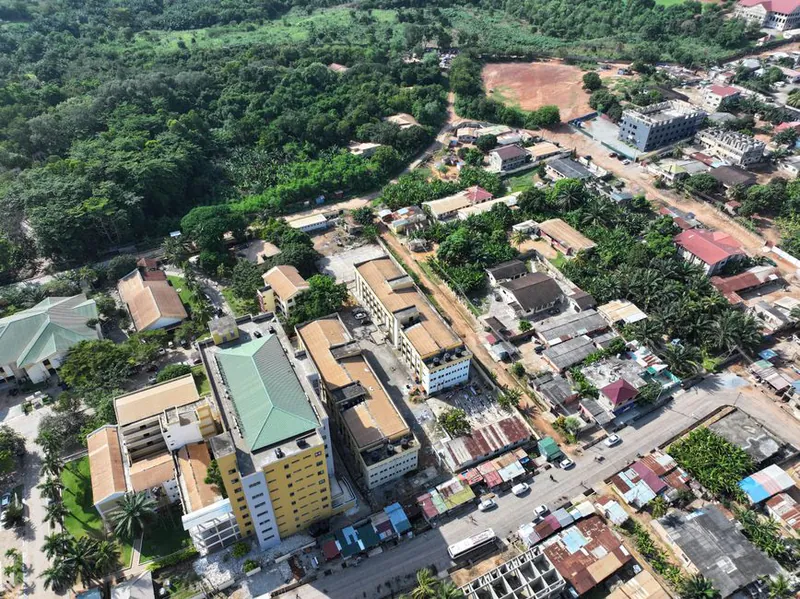
Cover photo by Cephas Phaso on Pexels.
Want to see how Ghana stacks up?
Are you seriously considering a move? Use our interactive tools to explore Ghana's climate, tax brackets, and nomad visas.