Estonia Digital Nomad Visa 2026: The €4,500 Threshold, Tax Truths, and the 548-Day Hard Limit
July 10, 2026
ShareTo obtain the legal right to work remotely from Estonia in 2026, you must clear a gross monthly income threshold of €4,500 (approx. $4,900 USD) [11]. This requirement immediately disqualifies the "backpacker" demographic, repositioning the Digital Nomad Visa (DNV) as a premium residency tool for high-earning professionals and entrepreneurs [4]. While the high entry bar is intended to ensure you contribute to the local economy without competing for domestic jobs, the state views you primarily as a source of tax revenue rather than a future citizen [5].
Unlike a Schengen 90-day tourist stay, the DNV provides a legal basis for a continuous 365-day duration [16]. This status includes the explicit right to perform work duties for foreign employers or clients while physically located in Estonian territory [11]. You are paying a premium to access a system designed for administrative efficiency, but this access comes with a 548-day hard limit that prevents you from staying long enough to establish permanent roots [11].
As you plan your relocation for 2026, you must account for the shift in Estonia’s regulatory environment. The standard Value Added Tax (VAT) is now permanently 24%, and the personal income tax (PIT) system has settled at a flat 22% rate [5]. A new universal tax-free allowance of €700 (approx. $760 USD) per month applies to all residents regardless of income level [5]. This guide strips away the digital nomad marketing to explain the administrative reality of living in the world’s first digital state.
1. What Is Estonia's Digital Nomad Visa?
Estonia’s strategic intent for the DNV is to attract foreign capital and high-spending residents while insulating the local labor market from outside competition [4]. It allows the state to benefit from your international income without the social burden of local job displacement [11]. You are essentially a long-term tourist with a work permit, restricted by the Aliens Act and monitored by the Police and Border Guard Board (PBGB) [11].
The official name is the Digital Nomad Visa, codified under the Aliens Act [11]. It is divided into two tiers: the Type C (short-stay) for up to 90 days and the Type D (long-stay) for up to 365 days [11]. You qualify if you are a location-independent employee of a foreign entity, a business owner with a foreign-registered company, or a freelancer with a majority foreign client base [11]. If you seek local Estonian employment as your primary basis, you are legally ineligible for this specific permit [15].
The DNV is a temporary stay permit and does NOT provide a path to permanent residency (PR) or Estonian citizenship [11]. A nomad cannot reside in the country on a long-stay visa for more than 548 days within any 730-day period [11]. This means that after a 12-month visa and a single 6-month extension, you are legally required to exit the Schengen Area [11].
[!WARNING] Applying for a Type C visa for a 12-month stay is an automatic grounds for rejection; you must select the Type D tier from the start to avoid losing your application fee [11].
2. Eligibility Requirements & Income Thresholds
Estonia maintains one of the highest income bars in the European Union to ensure "economic sufficiency" and to limit the visa to high-earning professionals [7]. The state requires proof that you possess the private means to support your stay without accessing public funds [11].
| Requirement | 2026 Threshold/Criteria | Verification Method |
|---|---|---|
| Minimum Income | €4,500 ($4,900 USD) Gross/Month [11] | 6 months of stamped bank statements [21] |
| Health Insurance | €30,000 ($32,600 USD) min coverage [14] | Valid policy for the total stay duration [14] |
| Work Basis | Foreign contract or shareholding [15] | Signed contracts or corporate certificates [15] |
| Criminal Record | Clean history [11] | Official certificate from home country [11] |
The PBGB prioritizes active work duties over stagnant wealth [11]. Passive income from dividends or rentals is frequently viewed with skepticism if it is not paired with proof of an active professional role [11]. Similarly, crypto-earnings must be converted to fiat and shown as regular, documented transfers; simple wallet balances are insufficient for approval [11].
[!WARNING] Reaching the total average income is insufficient. If your bank statements show even one month where your gross income dipped below the €4,500 ($4,900 USD) threshold in the last 6 months, your application is likely to be denied [11].
3. The Complete Documentary Checklist
Surviving the scrutiny of the PBGB requires bureaucratic perfection. A single missing stamp or signature will result in an immediate rejection with no refund of fees [18].
- Passport: Must possess at least 3 months of validity beyond your planned stay [14].
- Application Form: Must be completed and signed digitally via the official portal [10].
- Proof of Remote Work: Signed employment contracts or a formal letter from your employer confirming your ability to telework [15].
- Financials: Original A4 bank statements with physical stamps and signatures from your bank branch [21].
- Accommodation: Proof of living arrangements, such as a rental agreement or hotel booking [14].
Legalization Protocols
Documents originating outside the EU or the US often require an apostille or certified translation into Estonian or English to be legally recognized by the PBGB [22].
[!WARNING] Digital bank print-outs are routinely rejected. You must secure physical stamps from your bank branch-a requirement that trips up many nomads already abroad and away from their home financial institutions [21].
4. Applying in 2026: The Step-by-Step Submission Path
Despite Estonia's identity as a "digital state," the visa process requires a physical, in-person biometric appointment [11]. You cannot complete this process entirely from your laptop.
- Step 1: Pre-application prep (gathering physical stamps and apostilles) [21].
- Step 2: Submission at an Estonian Embassy, VFS Global center, or PBGB office [11].
- Step 3: Processing (Official 15-30 days window) [14].
- Step 4: Biometric collection (fingerprints and photo) [11].
- Step 5: Decision notification via email [14].
- Step 6: Arrival and mandatory registration in the Population Register [5].
As of May 22, 2026, visa holders can legally continue working while an extension is being processed, provided the application was submitted before the current visa's expiry [23]. If you are already in Estonia legally, you can convert to a DNV in-country at a PBGB office, but you must do so at least 30 days before your current stay expires [11].
[!WARNING] VFS Global appointments in major hubs can be booked out for months [11]. Failing to book your slot before gathering documents may result in your bank statements expiring, forcing a total restart of the paperwork.
5. Total Cost of Relocation: Fee & Expense Breakdown
Relocating to a highly digitized economy involves several non-refundable administrative costs that the state does not return upon rejection [18].
| Expense Category | Cost in EUR | Cost in USD (Approx.) | Frequency |
|---|---|---|---|
| Long-stay (D) Visa Fee | €120 [16] | $130 USD | One-time |
| Short-stay (C) Visa Fee | €90 [11] | $100 USD | One-time |
| VFS Service Charge | ~€20 [11] | $22 USD | One-time |
| Insurance (Annual) | €300-€800 [5] | $325-870 USD | Annual |
| Legalization/Apostille | €150-€300 | $160-325 USD | One-time |
[!WARNING] State fees are non-refundable. If your application is rejected due to a minor clerical error, you lose the €120 ($130 USD) and must pay the full amount again for a re-application [18].
6. Fiscal Architecture: 2026 Tax Rules and Residency Triggers
The "0% tax" headline found in nomad forums is a dangerous oversimplification. While Estonia does not tax retained corporate profits, your personal liability for living in the country is substantial [5].
The 183-Day Trigger
If you spend 183 days or more in Estonia within a 12-month period, you are classified as a tax resident [5]. At this point, Estonia claims the right to tax your worldwide income [5]. For a non-resident e-Resident paying themselves a €1,000 ($1,085 USD) board member fee, the company must withhold 22% PIT (€220 / $240 USD), meaning the nomad takes home only €780 / $845 USD before home-country taxes [5].
2026 Tax Rates
- Personal Income Tax (PIT): Flat 22% [5].
- VAT: 24% [5].
- Universal Exemption: €700 ($760 USD) per month is exempt from PIT for all residents [5].
For US citizens, the US-Estonia tax treaty contains a "Savings Clause" that allows the US to tax its citizens as if the treaty did not exist [8]. You must utilize the Foreign Tax Credit (FTC) to avoid double taxation [8].
[!WARNING] Spending exactly 183 days triggers residency. You must track your "out" days with digital precision; being in the country for even a few hours counts as a full day [5]. Falsifying this data can result in a massive tax bill and legal penalties [5].
7. Operational Constraints: What This Visa Does Not Grant
The DNV is a temporary "right of stay" with strict legal safeguards to protect Estonia's social systems [14].
- No Path to PR or Citizenship: Years spent on a DNV are "dead time" and do not count toward the 5-year residency requirement for a passport [11].
- No Public Healthcare: You are ineligible for national health insurance (Haigekassa) and must maintain private coverage [14].
- No Automatic Dependents: Spouses and children must prove their own income or apply for separate visas [11].
- No Easy Bank Access: Holding a DNV does not guarantee account access at local banks like LHV or Swedbank [10].
- 548-Day Hard Limit: You cannot stay on a long-stay visa for more than 548 days within a 730-day window [11].
[!WARNING] If you spend 5 years in Estonia on various DNV-style permits, you are still at 0 years toward an Estonian passport [11]. To establish a path to PR, you must transition to a standard Temporary Residence Permit (TRP) for Employment or Enterprise [13].
8. DNV vs. E-Residency and Alternatives
You must distinguish between physical presence (DNV) and digital presence (e-Residency). E-Residency allows you to run an EU company online but grants zero travel or residency rights [10].
| Feature | Digital Nomad Visa | e-Residency | Startup Visa |
|---|---|---|---|
| Max Duration | 365 Days [16] | 5 Years (Card) [10] | 1-5 Years [13] |
| Live in Estonia | Yes [11] | No [10] | Yes [13] |
| Income Goal | €4,500/month [11] | N/A [10] | Variable [13] |
| Path to PR | No [11] | No [11] | Yes [13] |
High-earning freelancers choose the DNV for physical access, while those seeking a permanent European base should investigate the Startup Visa or a TRP for Employment [12].
[!WARNING] e-Residency is NOT a visa. Showing up at the border with an e-Residency card and no visa will result in immediate deportation [10].
Quick Reference Cheat Sheet
| Category | Detail |
|---|---|
| Official Name | Digital Nomad Visa (Aliens Act) [11] |
| Administering Body | Police and Border Guard Board (PBGB) [11] |
| Min Income | €4,500 ($4,900 USD) Gross/Month [11] |
| Visa Fee | €120 ($130 USD) (Type D) [16] |
| Processing | 15-30 Days [14] |
| Tax Trigger | 183 Days [5] |
| PR Path | None (Strictly temporary) [11] |
| Primary Portal | politsei.ee |
References
[1] Estonia - Digital Nomad Visas, wfa.team.
[2] NomadVisa.com, Estonia Guide.
[3] Work in Estonia, Digital Nomad Visa Portal.
[4] Remote Work Europe, Europe Digital Nomad Visa Index 2026.
[5] Remote Work Europe, Estonia Tax Guide for Digital Nomads 2026.
[6] e-Residency Blog, Estonia's DNV Launch.
[7] Openvisa Blog, 2026 Visa Comparisons.
[8] Bright!Tax, Estonia DNV for US Remote Workers.
[9] Lincoln Global Partners, Exclusive Model for Remote Workers.
[10] Rozenberg Partners, Guide to Estonian e-Residency 2026.
[11] e-Residency Portal, FAQs about Estonia's Digital Nomad Visa.
[12] e-Residency Portal, DNV vs e-Residency Eligibility.
[13] LottaLingo, Digital Nomad Visa Estonia 2026.
[14] Jobbatical, Digital Nomad Visa Estonia: Complete Guide.
[15] Y-Axis, Estonia DNV Eligibility and Steps.
[16] Estonian Embassy in Washington, Digital Nomad Visa.
[17] VFS Global, Visa Information Estonia.
[18] Estonian Embassy in Washington, State Fees.
[19] Legalabi, Gateway to Remote Work in Europe.
[20] Wise, Estonia Digital Nomad Visa Guide 2026.
[21] Estonian Embassy in Cairo, Documents for Teleworking.
[22] Estonian Embassy in Tbilisi, Documents for D-visa.
[23] Fragomen, Estonia Immigration Reforms 2026.
Frequently Asked Questions
What is the minimum income requirement for the Estonia Digital Nomad Visa? If your bank statements show even one month where your gross income dipped below the €4,500 ($4,900 USD) threshold in the last 6 months, your application is likely to be denied .
How long is the Estonia Digital Nomad Visa valid and can it be extended? a nomad cannot reside in the country on a long-stay visa for more than 548 days within any 730-day period .
Do digital nomads pay local income tax in Estonia? If you spend 183 days or more in Estonia within a 12-month period, you are classified as a tax resident .
Does the Estonia Digital Nomad Visa lead to permanent residency or citizenship? No Path to PR or Citizenship: Years spent on a DNV are "dead time" and do not count toward the 5-year residency requirement for a passport .
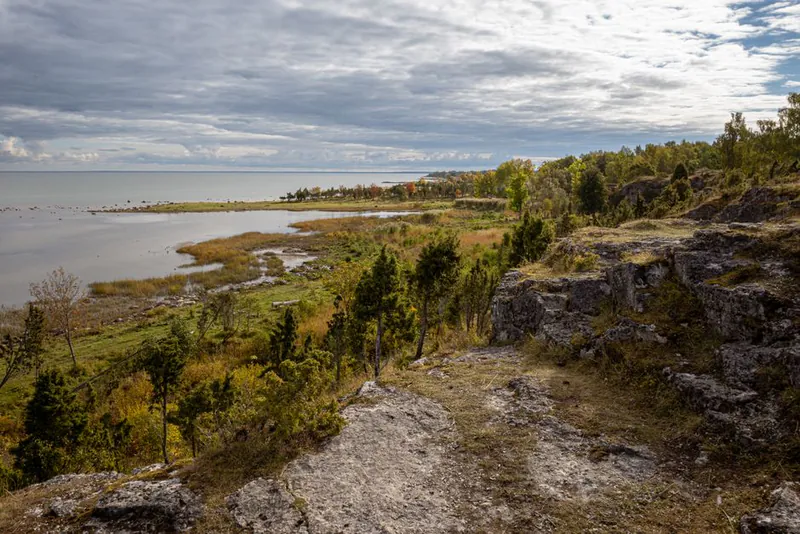
Cover photo by Evelin Magnus on Pexels.
Want to see how Estonia stacks up?
Are you seriously considering a move? Use our interactive tools to explore Estonia's climate, tax brackets, and nomad visas.
Looking for other options?
See how this visa compares against 55 other countries.
📊 Compare all 56 digital nomad visasHead-to-Head Relocation Comparisons
Compare taxes, safety, and living costs of Estonia against top alternatives.