Moving to the Dominican Republic in 2026: $200k Instant Residency, 6-Month Citizenship, and the Crime Reality
August 2, 2026
ShareA $200,000 real estate purchase gets you permanent residency directly, foreigners can own land in their own name with zero restrictions outside a narrow border zone, and the economy just doubled its growth rate in a single quarter - but Santo Domingo carries a "critical" crime threat rating from the US State Department while Punta Cana sits 800 kilometers away in a genuinely different safety universe. GDP expanded 4.1% in Q1 2026 alone, up from 2.2% for all of 2025, and retiree residency requires just $1,500/month in pension income. This is everything you need to know before you move.[1][2][3][4]
The Economy: Eyes Open
The Dominican Republic delivered one of the sharpest quarter-over-quarter accelerations covered in this guide series. GDP growth doubled to 4.1% in Q1 2026, up from just 2.2% for the full 2025 year, driven by tourism, remittances, and a rebound in construction. Forecasts for the full year converge in a reasonably tight band.[1]
| Source | 2026 Forecast |
|---|---|
| IMF | 4.5%[1][5] |
| Central Bank of the Dominican Republic | 4.0-5.0%[1][6] |
| Ministry of Finance and Economy | 3.75%[7] |
| World Bank | 3.6%[8] |
| ECLAC | Up to 4.8%[1] |
| Minister of Finance (Dec 2025 statement) | 4.5-5.0%[9] |
An IMF Western Hemisphere outlook once projected the Dominican Republic as the second fastest-growing economy in the world for 2026, trailing only Argentina - a genuinely striking regional distinction, even if more recent forecasts have settled closer to the 3.6-4.5% range. The IMF's 2025 Article IV consultation projects growth converging toward the country's long-term potential of 5% over the medium term, with inflation targeted around 4% (±1 percentage point).[5][10]
Visas and Residency: The Fast Tracks
The Dominican Republic runs one of the more genuinely accessible residency systems in this guide series, with several categories granting permanent residency immediately rather than requiring years of temporary status first.
The Five Main Categories
| Category | Key Requirement | Residency Granted |
|---|---|---|
| Pensionado (retiree) | Monthly pension of at least $1,500 (+$250 per dependent)[11][2] | Permanent, immediately[11] |
| Rentista (passive income) | Monthly passive income of at least $2,000, sustained 5+ years[11] | Permanent, immediately[11] |
| Investor | Minimum $200,000 in local business, real estate, or financial instruments[11][3] | Permanent, immediately[11] |
| Ordinary temporary | Work contract, family ties, or general relocation purpose[12] | Temporary, 1-year renewable[12] |
| Family reunification | Spouse, child, or parent of a Dominican citizen/legal resident[12] | Varies[12] |
The Real Process, Step by Step
- Apply for a Residency Visa (Visado de Residencia) at a Dominican consulate in your home country - this generally cannot be started from inside the DR[12]
- Gather an apostilled birth certificate, police background check, medical certificate, proof of economic solvency, and passport photos; consular fee runs roughly $90 (verify current amount)[2][12]
- Enter the DR on the approved visa and file the in-country application with the Dirección General de Migración within 60 days of arrival[12]
- Complete a medical exam at a Migración-approved clinic, get fingerprinted and photographed, and provide proof of a Dominican address[12]
- Receive your Residency Card (Carnet de Residencia) - pensionado, rentista, and investor applicants typically get permanent status directly; ordinary temporary residents start with 1-year renewable cards[12]
- Apply for a cédula de identidad para extranjeros at the Junta Central Electoral - required to open most bank accounts, sign long-term leases, or register a vehicle[12]
Realistic Timeline and Renewal Cycle
Plan on six months to a year from first consular appointment to cédula in hand for pensionado/rentista tracks, longer for ordinary temporary residency. Permanent residents renew after the first year, then every four years thereafter - except pensionados and rentistas, who renew every two years. After 10 years of permanent residency, holders receive a definitive residency card not subject to renewal, though an annual residency fee still applies.[11][12]
The Big One: $200,000 Buys Fast-Track Residency
A real estate purchase of at least $200,000 grants permanent residency directly, with citizenship eligibility from six months of subsequent physical presence - a genuinely fast timeline by international standards, and one of the more accessible investment-residency-to-citizenship pipelines covered in this series.[3]
Path to Citizenship
Naturalization becomes available after holding legal residency for a period commonly cited as 2 years of permanent residency, with shorter paths available for spouses of Dominican citizens and for investors, processed through the Ministry of Interior and Police. The Dominican Republic broadly permits dual citizenship, removing the renunciation requirement that complicates naturalization in several other countries covered in this guide series.[12]
Cost of Living: The Real Numbers
Costs vary dramatically by city and lifestyle tier - this is genuinely not a one-price-fits-all country.
Monthly Budget by City and Lifestyle (Single Person, 2026)
| City/Area | Comfortable Expat Budget |
|---|---|
| Santiago, Jarabacoa (budget/local) | $1,000-1,500[13] |
| Santo Domingo | $2,200-3,200[13] |
| Punta Cana | $2,500-3,800[13] |
| Cap Cana | $4,000-6,500[13] |
| General comfortable single-person range | $1,500-2,500[13] |
A basic budget of $1,000/month works only in lower-cost cities like Jarabacoa, Puerto Plata, or Santiago with a genuinely local lifestyle - cooking at home, using public transport, skipping air conditioning. It doesn't stretch in Punta Cana, Cap Cana, or central Santo Domingo, where rent alone often exceeds that figure.[13]
Rent by Neighborhood
| Area | 1-BR Rent (Monthly, USD) |
|---|---|
| Piantini (Santo Domingo, upscale) | $900-1,500[13] |
| Bella Vista / Colonial Zone (Santo Domingo) | $650-1,000[13] |
| Gazcue (Santo Domingo, older buildings) | $500-800[13] |
| Cabarete, Las Terrenas, Bella Vista (mid-tier) | $700-1,200[13] |
| Punta Cana/Bávaro (modern gated condo) | $1,200-2,500[13] |
| Outside city centers, Santiago/Jarabacoa | $350 and up[13] |
| Cap Cana or top Punta Cana developments | $2,500+[13] |
A couple in the comfortable-expat bracket should budget $2,200-3,500/month, with top-tier enclaves like Cap Cana or Piantini running 30-50% higher. Electricity alone runs $40-80/month without air conditioning, but climbs to $150-300/month for a two-bedroom unit running AC most of the day - a genuinely material cost driver given the climate. Groceries carry a 20-30% premium in Punta Cana compared to Santo Domingo, due to the tourism-driven import dependency.[13]
Taxes: What You Actually Pay
The Dominican Republic runs a territorial tax system with a genuinely valuable new-resident carve-out worth understanding precisely.
2026 Progressive Personal Income Tax Brackets
| Annual Taxable Income (DOP) | Rate |
|---|---|
| Up to 416,220 (~$7,115) | Exempt[14][15] |
| 416,220 - 624,329 (~$7,116-10,672) | 15% on excess over 416,220[14] |
| 624,329 - 867,123 (~$10,673-14,821) | DOP 31,216 + 20% on excess over 624,329[14] |
| Above 867,123 (~$14,822+) | DOP 79,776 + 25% on excess over 867,123[14] |
The New-Resident Foreign Income Exemption
This is the standout feature for expats: new Dominican residents enjoy a full exemption on foreign-source income for their first three years of residency - only income earned inside the Dominican Republic is taxed during that window. After the third year, foreign-source income becomes taxable under the standard progressive scale.[15][16]
Retiree-Specific Relief
Retirees under Law 171-07 receive a 50% exemption on Dominican-source income tax, layered on top of the general new-resident foreign-income exemption - a genuinely stacked benefit for pensionado-track applicants.[16]
Effective Rates in Practice
| Annual Income | Effective Tax Rate |
|---|---|
| $30,000 | 11.5%[17] |
| $60,000 | 18.4%[17] |
| $100,000 | 19.1%[17] |
| €90,000 (approx.) | 7.8% (per one independent calculation)[18] |
Other Key Rates
| Tax Category | Rate |
|---|---|
| Employee social security contribution | ~5.74-10%[16][17] |
| VAT (ITBIS) | 18%[19][16] |
| Corporate income tax | 27%[19] |
| Dividend withholding | 10%[20] |
| Interest paid abroad withholding | 10%[20] |
| General payments abroad withholding | 27%[20] |
US Citizens: No Comprehensive Tax Treaty
A genuinely important structural gap: the Dominican Republic and the United States have no comprehensive bilateral income tax treaty - only a 2011 Tax Information Exchange Agreement covering information sharing, not double-taxation relief. Americans must still file worldwide-income US returns regardless of DR residency, claiming Foreign Tax Credits where applicable via Form 1116, alongside standard FBAR and Form 8938 reporting for Dominican bank accounts.[21]
Healthcare: Public vs. Private
The Dominican Republic runs a genuinely two-tier system, and the practical consensus among expats is unambiguous: use private care. Public hospitals under SeNaSa/SNS are free or nearly free but often overcrowded, under-resourced, and Spanish-only. Private hospitals deliver modern facilities, short wait times, bilingual staff, and costs running 50-80% below equivalent US care - a genuine medical tourism draw in its own right.[22][23]
Leading Private Facilities
| Facility | Location | Specialization |
|---|---|---|
| CEDIMAT | Santo Domingo | Cardiac and diagnostic care, MRI, CT, cardiac surgery[23] |
| Hospiten | Santo Domingo, Santiago, Bávaro, Puerto Plata | International hospital chain, bilingual staff[22][23] |
| Hospital General de la Plaza de la Salud | Santo Domingo | General and specialist care[22] |
| HOMS | Santiago | Full-service, JCI accreditation in process[22][23] |
| Centro Médico Punta Cana | Punta Cana | General and emergency care[22] |
| Clínica Abreu | Santo Domingo | Internal medicine, diagnostics[23] |
Insurance Costs
| Insurance Type | Monthly Cost |
|---|---|
| Local Dominican insurance (Humano, Mapfre BHD, ARS Palic) | $40-135[23][22] |
| International expat insurance (Cigna Global, GeoBlue, Aetna, BUPA) | $150-600[23][22] |
| Private GP visit, no insurance | $50-100[22] |
| Private specialist consultation | $40-100[23][22] |
| ER visit | $100-300[23] |
The national emergency line is 911, with English-speaking operators generally available.[22]
Safety: A Genuinely Split Picture
This is the section where the Dominican Republic diverges most sharply by location - treating "DR safety" as one uniform number would be misleading, because the gap between Santo Domingo and Punta Cana is enormous and consistently documented.
The National Baseline
The US State Department maintains a Level 2 "Exercise Increased Caution" advisory, the same level assigned to the UK, France, and Germany. The national homicide rate runs 8-12 per 100,000, higher than the US average (6.3) but lower than Jamaica (52.1), Trinidad (28.2), or Brazil (21.0).[24][4]
The Critical Divergence: Santo Domingo vs. Punta Cana
| Metric | Santo Domingo | Punta Cana |
|---|---|---|
| Numbeo Level of Crime | 66.85-81.41 ("High" to "Very High")[25][26] | 46.35-55.39 ("Moderate")[25][27] |
| Safety walking alone at night | 18.72-31.91 ("Very Low")[25][28] | 47.47 ("Moderate")[25] |
| Violent crime rate (per 100,000) | Elevated, "critical threat" per US State Dept[4] | 4.2 (vs. National average of 11.3)[29] |
| US State Dept threat designation | CRITICAL-threat for crime affecting US government interests[4] | Not separately designated[4] |
| Reported robberies (per 100,000, 2025) | 847[30] | 127 (La Altagracia province)[30] |
Santo Domingo's homicide count declined from roughly 10 per 100,000 in 2024 to about 8 per 100,000 by mid-2025, but the US Embassy still flags it as the number one safety concern for Dominicans and Americans alike, recommending driving rather than walking between destinations, especially at night. By contrast, less than 0.01% of tourists in Punta Cana experience any violent incident, and the tourist-heavy Bávaro-to-Cap Cana resort corridor benefits from a coordinated private security network of roughly 5,000 personnel plus constant CESTUR (tourist police) patrols.[30][4][24]
Neighborhoods to Avoid in Santo Domingo
Los Alcarrizos, Capotillo, Cristo Rey, Villa Juana, Los Guandules, Villa Mella, and Guachupita are consistently flagged across multiple sources as higher-crime residential areas with little reason for tourists or new expats to visit.[30][24]
Neighborhoods and Areas Considered Safe
The Zona Colonial (post-restoration), Piantini, Naco, and Gazcue in Santo Domingo are described as modern, walkable, and comparable to a mid-range US or European city neighborhood. The entire Punta Cana-Bávaro-Cap Cana resort corridor, plus La Romana, rank among the safest destinations in the Caribbean by both official statistics and live traveler-reported scores.[31][29][24]
Practical Precautions
- Use ride-hailing apps (Uber, InDriver) rather than hailing street taxis, especially after dark[24]
- Never ride a motoconcho (motorcycle taxi) at night - motorcycle taxi accidents are the leading cause of tourist injury in the country[24]
- Withdraw cash only from bank-attached ATMs (Banreservas, Popular, BHD León), avoiding standalone street machines[24]
- Carry a passport photocopy, not the original, when out; keep the original in a hotel or apartment safe[24]
- Negotiate taxi fares before entering the vehicle[24]
- Save CESTUR's dedicated tourist police line (1-200-3500, bilingual operators) alongside the national 911 emergency line[24]
English in Everyday Life
English proficiency concentrates heavily in Punta Cana, Bávaro, Cap Cana, and Santo Domingo's upscale Piantini district, reflecting the tourism and international-business orientation of those areas. Spanish remains the practical default everywhere else - government offices, most healthcare outside premium private hospitals, and daily commerce in Santiago, Jarabacoa, and smaller towns.
Which Region?
Punta Cana / Bávaro / Cap Cana
The Dominican Republic's flagship tourism and expat destination, combining the country's strongest documented safety profile with the highest concentration of gated communities, private security, and English-language services - at a genuinely elevated cost premium of $2,500-6,500/month depending on tier.[29][13]
Santo Domingo (Piantini, Zona Colonial, Bella Vista)
The capital offers the deepest healthcare infrastructure, cultural life, and business connectivity in the country, but carries the sharpest safety trade-off in this guide - a "critical" crime designation from the US State Department for government-related risk, alongside genuinely walkable, well-regarded neighborhoods just kilometers from areas best avoided after dark.[4][24]
Las Terrenas, Cabarete, Sosúa (North Coast)
A well-established mid-cost expat and digital-nomad corridor, offering beach-town living at $700-1,200/month for a one-bedroom - a genuine middle ground between Punta Cana's premium pricing and Santiago's inland affordability.[13]
Santiago and Jarabacoa (Interior)
The most budget-friendly options in this guide, with rents starting around $350/month outside city centers - the trade-off being thinner English-language services and a more distinctly local, less tourism-oriented daily life.[13]
Buying Property
The Dominican Republic is genuinely one of the most foreigner-friendly real estate markets in the Caribbean: foreigners can buy condos, apartments, villas, houses, townhouses, and land in their own name, with no foreign-ownership quotas, nationality restrictions, or approval requirements for standard residential purchases.[32][3]
The One Restriction
The sole meaningful exception is land within 60 kilometers of the Haitian border, which carries additional restrictions for foreign buyers. Outside that narrow zone, ownership rules are identical for foreigners and Dominican citizens.[20][32][3]
The Buying Process
- Make an offer and conduct due diligence, specifically requesting the Certificación del Estado Jurídico (certified legal status of the property)[32]
- Sign the purchase-sale agreement[32]
- Pay the 3% transfer tax to DGII (Dirección General de Impuestos Internos)[32]
- File the transfer at the Registro de Títulos (Registry of Titles) under Law 108-05 - only registered ownership is fully enforceable against third parties[32]
Taxes on Property
| Tax | Rate | When It Applies |
|---|---|---|
| Transfer tax (IPDT) | 3% of DGII-assessed value or purchase price, whichever is higher | One-time, at purchase[33] |
| Annual property tax (IPI) | 1% on value above ~$167,000-182,000 threshold (2026, inflation-adjusted) | Yearly, paid in two installments (March 11, September 11)[34][33] |
| Capital gains tax | 27% of net gain | At sale[33] |
| Rental income tax (non-resident) | ~27% on gross income | Ongoing, if renting out[21][32] |
Properties valued below the IPI exemption threshold - roughly $167,000-182,000 depending on the specific source and year-adjustment - pay zero annual property tax. There is no foreign-buyer surcharge anywhere in this structure; foreigners and Dominicans pay identical rates.[34][33][20]
The 65+ Exemption
Property owners aged 65 or older who own only a single property in the Dominican Republic are completely exempt from the annual 1% IPI tax, regardless of residency or immigration status - this benefit applies to foreigners just as it does to citizens.[33]
The CONFOTUR Incentive: A Genuinely Major Lever
Properties purchased within a government-approved, CONFOTUR-certified tourism project (under Law 158-01) are exempt from the most significant property-related taxes for up to 15 years: the 3% transfer tax, the 1% annual IPI tax, and rental income tax entirely. On a $400,000 condo, this exemption is worth roughly $70,000+ over its lifetime - a genuinely material incentive that shifts closing costs from the standard 5-6% down to just 2-3%.[33][3]
The US Tax Side
American buyers should note that a Dominican property purchase is a non-taxable event for US purposes - the buyer's cost basis is simply the USD purchase price plus closing costs. However, given the absence of a comprehensive US-DR tax treaty, rental income and capital gains face taxation on both sides, with Foreign Tax Credits (via Form 1116) as the primary mechanism to avoid double taxation - though DR's 27% rates on rental income and capital gains often exceed US marginal rates, typically producing excess, carryforward-limited foreign tax credits.[21]
Your First Steps: The Checklist
- Choose your residency track deliberately: pensionado ($1,500/month pension) and rentista ($2,000/month passive income) both grant permanent residency immediately, while ordinary temporary residency starts with 1-year renewable cards[11][12]
- Start your consular application from your home country - the Dominican Republic generally does not allow residency applications to begin from inside the country[12]
- Budget the real six-months-to-a-year timeline from first consular appointment to cédula in hand[12]
- Consider the $200,000 real estate route if buying anyway - it grants permanent residency directly and opens citizenship eligibility from six months of physical presence[3]
- Plan your first three years around the foreign-income tax exemption - new residents pay no Dominican tax on foreign-source income during this window, a genuinely valuable but time-limited benefit[15][16]
- Retirees should confirm eligibility for the Law 171-07 50% exemption on Dominican-source income, stacked on top of the general new-resident exemption[16]
- Separate your city choice by genuine safety data, not brand reputation - Santo Domingo and Punta Cana present fundamentally different risk profiles despite both being "the Dominican Republic" on paper[29][4]
- Arrange private health insurance before you need it - local plans run $40-135/month and are widely accepted at major private hospitals; skip the public SeNaSa system for anything beyond baseline emergency coverage[23][22]
- If buying property, ask specifically about CONFOTUR certification - it can cut effective closing costs roughly in half and eliminate the annual 1% property tax for 15 years[33][3]
- Budget realistically by neighborhood, not just by city - a one-bedroom in Piantini runs 2-3x the cost of an equivalent unit in Gazcue just kilometers away[13]
Key Data at a Glance
| Indicator | Value |
|---|---|
| GDP Growth Q1 2026 | 4.1%[1] |
| GDP Growth Forecast 2026 (IMF) | 4.5%[1][5] |
| GDP Growth Forecast 2026 (Central Bank) | 4.0-5.0%[1][6] |
| Pensionado Minimum Monthly Pension | $1,500 (+$250/dependent)[11] |
| Rentista Minimum Monthly Passive Income | $2,000 (5+ years)[11] |
| Investor Residency Minimum | $200,000[11][3] |
| Citizenship Eligibility (investor route) | From 6 months physical presence[3] |
| Naturalization Timeline (general) | ~2 years permanent residency[12] |
| New-Resident Foreign Income Tax Exemption | 3 years[16][15] |
| Top Personal Income Tax Rate | 25% (above DOP 867,123/year)[14] |
| VAT (ITBIS) | 18%[19] |
| Corporate Tax | 27%[19] |
| Property Transfer Tax | 3%[33] |
| Annual Property Tax (IPI) Threshold | ~$167,000-182,000 (2026)[34][33] |
| CONFOTUR Tax Exemption Duration | Up to 15 years[33][3] |
| Capital Gains Tax on Property | 27%[33] |
| Foreign Land Ownership | Permitted, except within 60km of Haitian border[3] |
| US State Department Advisory | Level 2 - Increased Caution[24][4] |
| Santo Domingo Crime Level (Numbeo) | 66.85-81.41, High/Very High[25][26] |
| Punta Cana Crime Level (Numbeo) | 46.35-55.39, Moderate[25][27] |
| National Homicide Rate | 8-12 per 100,000[24][4] |
| Punta Cana Violent Crime Rate | 4.2 per 100,000[29] |
| Comfortable Single Budget Range | $1,500-2,500/month (national), up to $6,500 (Cap Cana)[13] |
The Dominican Republic in 2026 rewards those who treat it as two genuinely different countries under one flag: a fast-growing, tax-friendly, foreigner-open real estate market with one of the region's most accessible residency systems, layered over a safety map where the gap between a Punta Cana beachfront condo and a Santo Domingo city block matters more than almost any other single decision in this relocation.
References
Dominican Republic GDP Growth Doubles in 2026 - Dominican Republic GDP growth of about 4.1% in early 2026 roughly doubles recent years, as a supplem...
Residency Visa for Expats in the Dominican Republic: 2026 ... - Complete 2026 guide to the Dominican Republic residency visa for expats. Learn requirements, costs, ...
Dominican Republic Property for Foreign Buyers 2026 - The Dominican Republic remains the Caribbean's most foreigner-friendly market, 100% ownership, $200K...
Dominican Republic Country Security Report - The U.S. Department of State has assessed the Santo Domingo as being a CRITICAL-threat location for...
Central Bank forecasts growth for DR to be 4 to 4.5 percent - The Central Bank of the Dominican Republic is forecasting a GDP growth for 2026 to be in the range o...
República Dominicana prevé crecimiento económico de ... - La autoridad fiscal estima que el entorno internacional desafiante, marcado por conflictos internaci...
Minister Forecasts 4.5-5% GDP Expansion in 2026 - December 30, 2025 When taking stock of the country’s main macroeconomic indicators, the Minister of ...
Dominican Republic Set to Soar in 2026, Says IMF. - The IMF projects the Dominican Republic will become the second fastest-growing economy in the world ...
Obtaining Residency Status in the Dominican Republic ... - Beginning June 1, 2012, residency status in the Dominican Republic is governed by Immigration Law No...
How to Get Dominican Residency in 2026: Consular Visa to ... - How to get Dominican residency in 2026: the full consular visa to cédula process, required documents...
Cost of Living in the Dominican Republic 2026 - 2026 cost of living in the Dominican Republic by city: rent, utilities, food, and healthcare. Single...
Dominican Republic: DGII updates 2026 tax parameters, - The Dominican Republic’s General Directorate of Internal Taxes (DGII), under the Ministry of Finance...
Dominican Republic - Individual - Taxes on personal income - In the case of individuals who become residents, this foreign-source income is taxed only after the ...
Dominican Republic Tax Guide 2026 | 0-25% DGII Income Tax ... - Dominican Republic has progressive income tax from 0% to 25% via DGII. New residents enjoy 3-year fo...
Dominican Republic Tax Guide Hub 2026: Income Tax, Rates ... - Dominican Republic income tax guide hub 2026. Progressive tax brackets 15-25% on Dominican-sourced i...
Tax System in Dominican Republic 2026 - WhereToEmigrate.io - Understanding Dominican Republic's tax system as an expat in 2026: income tax brackets, VAT, special...
Dominican Republic Tax Rates 2026: Income, Corporate, VAT - TaxGlass - Dominican Republic: 25% top income tax, 27% corporate, 18% VAT. Sources and brackets, updated 2026.
US Taxes on Dominican Republic Property: American Buyer's Guide - American buyers in DR: 27% rental tax, Confotur 15-yr ITBI/IPI exemption, no US-DR treaty, FBAR, Sec...
Healthcare for Expats in the Dominican Republic: Complete ... - Comprehensive 2026 guide to healthcare for expats in the Dominican Republic. Compare hospitals, insu...
Healthcare in Dominican Republic for Expats 2026 - ExpatLife.Ai - The Dominican Republic has a dual healthcare system - public (SENASA) for basic coverage, and a grow...
Is the Dominican Republic Safe? An Honest 2026 Safety Guide - An honest, area-by-area safety breakdown for the Dominican Republic. Crime stats, CESTUR tourist pol...
Crime Comparison Between Punta Cana, Dominican ... - Punta Cana Santo Domingo Crime Index: 46.35 66.85 Safety Scale: 53.65. High 79.81 Crime increasing i...
6 Most Dangerous Cities in the Dominican Republic (2026 Updated) - If you're planning a trip to the Dominican Republic, take care to avoid some of the most dangerous c...
Crime Comparison Between Las Vegas, NV, United States ... - Punta Cana Crime Index: 55.39 46.35 Safety Scale: 44.61. High 65.39 Moderate 48.60 Crime. Problem vi...
Crime Comparison Between Montreal, Canada And Santo ... - Crime Comparison Between Montreal and Santo Domingo ; Level of crime. Low 31.10. High 79.81 ; Crime ...
Is Punta Cana Safe? 2026 Safety Guide | Crime Stats & Tips - Is Punta Cana safe? Our 2026 guide covers crime stats, solo travel, resort safety, common scams, and...
Dominican Republic Travel Advisory Warning 2026 - Dominican Republic travel advisory warning 2026: live travel warning check - safety score, current t...
Tourist Area Breakdown - Consumer goods and lifestyle choices-from farm boy foods to oilring components-require a balance of ...
Property Foreign Ownership The Dominican Republic (2026) - What can foreigners own and buy in the Dominican Republic? We study property rights, visas, buying p...
DR Property Taxes for Foreigners (2026): The Complete Guide ... - Your expert guide to Dominican Republic property taxes for foreign buyers. Learn about transfer tax,...
Dominican Republic Property Taxes: 2026 Owner's Guide - Property tax in the Dominican Republic explained - IPI, the 3% transfer tax, rental income tax, and ...
Frequently Asked Questions
What are the primary visa and residence options for moving to Dominican Republic in 2026? Apply for a Residency Visa (Visado de Residencia) at a Dominican consulate in your home country - this generally cannot be started from inside the DR 2.
How does personal income tax work for expats in Dominican Republic? Retirees under Law 171-07 receive a 50% exemption on Dominican-source income tax, layered on top of the general new-resident foreign-income exemption - a genuinely stacked benefit for pensionado-track applicants.
What is the average cost of rent and living in Dominican Republic? A basic budget of $1,000/month works only in lower-cost cities like Jarabacoa, Puerto Plata, or Santiago with a genuinely local lifestyle - cooking at home, using public transport, skipping air conditioning.
How many years of residence are required for citizenship or permanent residency in Dominican Republic? The Dominican Republic runs one of the more genuinely accessible residency systems in this guide series, with several categories granting permanent residency immediately rather than requiring years of temporary status first.
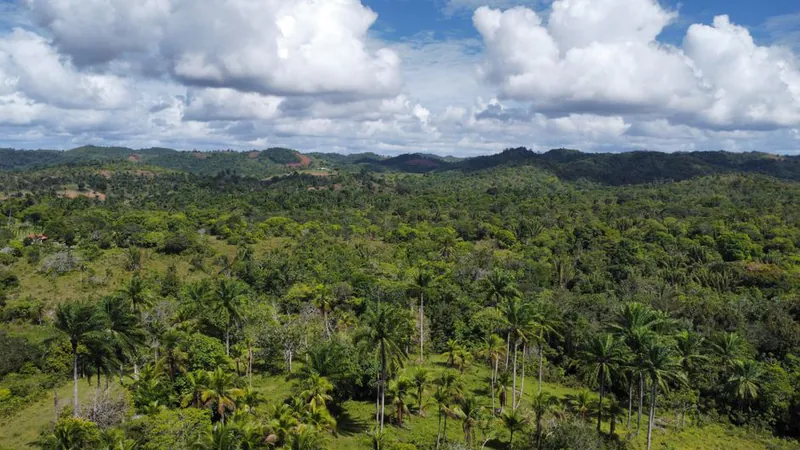
Cover photo by joenai vilas boas on Pexels.
Want to see how Dominican Republic stacks up?
Are you seriously considering a move? Use our interactive tools to explore Dominican Republic's climate, tax brackets, and nomad visas.