Costa Rica Digital Nomad Visa 2026: The Brutal Truth About the $3,000 Loophole
July 12, 2026
ShareTo legally live and work in Costa Rica for a full year, individuals must demonstrate a stable monthly income of $3,000 USD [1], while families must show a combined monthly income of $4,000 USD [1]. Entering the mid-point of June 2026, the administrative reality has shifted significantly from the law's 2022 implementation. Current backlogs involve approximately 38,000 pending applications, a volume that has tested the bureaucratic promises of "rapid processing" originally advertised by the government [14].
For the remote professional, the primary strategic advantage of this visa over a standard tourist entry is the elimination of "border runs." Under a tourist stamp, you are forced to exit the country every 90 or 180 days to reset stay privileges and maintain the validity of a foreign driver’s license [10] [15]. The digital nomad visa formalizes your presence, allowing for a continuous stay without the logistical fatigue of periodic trips to the Nicaraguan or Panamanian borders.
This visa should be viewed as a professional "test-drive" of the country rather than a residency shortcut. It provides a low-friction entry point for location-independent workers to experience the local infrastructure and climate before committing to the more rigorous and expensive permanent residency pathways. However, as of 2026, the gap between the official 15-day target and the real-world wait times of 2 to 8 weeks remains a major friction point for applicants [11] [14].
1. What Is Costa Rica's Digital Nomad Visa?
Officially designated as the Estancia para Trabajadores y Prestadores Remotos de Servicios (Stay for Remote Workers and Service Providers), this category was established by Law 10008 to attract global talent and provide a post-pandemic economic boost [1] [11]. Unlike a residency permit, which implies an intent to settle permanently, an "Estancia" is a temporary stay permit specifically designed for those who remain employed by foreign entities. The administering body, the General Directorate of Migration and Foreign Affairs (DGME), oversees this framework.
To qualify, you must be a remote employee of a foreign firm, an international freelancer, or a business owner whose clients and legal entities are situated outside Costa Rica [10] [11]. The core legal constraint is clear: you are strictly prohibited from seeking a local Costa Rican salary or entering into employment contracts with Costa Rican companies [11] [15]. The visa is granted for an initial duration of 1 year, allowing for a single 1-year extension provided you spent at least 180 days within the national territory during the first year [2] [11].
WARNING: This permit is a "Stay," not a "Residency." The time spent on this visa does not count toward the 3-year or 7-year requirements for permanent residency or citizenship; you have zero path to a passport through this specific category [4] [11].
While this visa offers a legal shield for remote work, it remains a temporary bridge rather than a permanent immigration solution.
2. Eligibility Requirements
The eligibility criteria for 2026 are rigid. Costa Rican immigration authorities have moved away from flexible interpretations of "average income," favoring a strict month-by-month verification process that has led to a rise in application rejections.
| Category | Requirement | Verification Method |
|---|---|---|
| Minimum Individual Income | $3,000 USD per month [1] | 12 months of bank statements + Sworn Affidavit [9] [15] |
| Minimum Family Income | $4,000 USD per month [1] | 12 months of bank statements + Sworn Affidavit [9] [15] |
| Health Insurance | $50,000 USD minimum coverage [9] [15] | Policy certificate stating coverage for full 365 days [11] |
| Employment Source | 100% Foreign-sourced income [10] | Employer letter or client contracts [11] |
The "stable income" requirement is the most frequent point of failure. Immigration officials examine the last 12 months of bank records to ensure the threshold is met every single month [9] [15]. If your income is $10,000 one month but dips to $2,900 the next, your application will likely be denied, regardless of your annual total. For crypto-earners, passive income holders, and content creators, the "grey area" is narrowing. For the 2026 applicant, the "paper trail" for these incomes often requires a CPA or Notary certification that must be Apostilled - a logistical hurdle that many overlook until their file is rejected [2] [15].
WARNING: Rejections frequently occur because an applicant’s income "averaged" above the limit but dipped below the $3,000 threshold in a single month of the previous year [9] [15].
Meeting the financial bar is only the first hurdle; the second is the physical documentation dossier.
3. Required Documents
Costa Rican bureaucracy operates on the "Apostille or Bust" principle. Any document issued outside of Costa Rica must carry an Apostille from the issuing country or undergo consular legalization; otherwise, it will be discarded immediately [2] [9] [11].
- Passport: A complete copy of the biographical page and the page containing the entry stamp if you are already in-country [9] [11].
- Bank Statements: 12 consecutive months of records proving the income threshold [9] [15].
- Sworn Affidavit: A notarized declaration stating the income is stable and foreign-sourced [9] [11].
- Health Insurance: A policy valid for the entire 1-year stay with at least $50,000 in medical coverage [9] [15].
- Proof of Payment: A receipt for the $100 government filing fee [9] [11].
For those bringing dependents, you must provide marriage certificates (for spouses) or birth certificates (for children under 25) [4] [11]. These civil documents must be issued within 6 months of the application date to be considered valid by the DGME [11]. Additionally, any document not in Spanish must be translated by a translator registered with the Costa Rican Ministry of Foreign Affairs [2] [9] [11].
WARNING: Most "International" health insurance policies are rejected because they do not explicitly state coverage for the "full duration" of the 365-day stay in a single, consolidated document [15].
Once your dossier is apostilled and translated, you are ready to engage the digital submission system.
4. Application Process: Step by Step
The shift to the Trámite Ya digital platform was intended to modernize the process, but the 2026 reality is one of digital bottlenecks. While the interface is accessible, the volume of data being uploaded has led to intermittent system delays.
- Step 1: Financial Pre-prep: Pay the $100 government fee to the Banco de Costa Rica (BCR). You must include an additional $15 to cover bank receiving fees to ensure the full $100 reaches the Ministry of Finance [9] [11].
- Step 2: Digital Submission: Create a profile on the Trámite Ya platform (tramiteya.go.cr/dgme/) and upload your scanned, apostilled, and translated dossier [11].
- Step 3: The Wait Time: While the official target is 15 days, the actual processing time in 2026 typically ranges from 2 to 8 weeks, though some cases in the 38,000 backlog have waited significantly longer [11] [14].
- Step 4: In-Country Finalization: Once approved, you must visit the immigration office in San José for biometric registration, including fingerprints and official photographs [4] [11].
- Step 5: The DIMEX: After biometrics, you will be issued a DIMEX (Documento de Identidad Migratorio para Extranjeros) card. You have a 90-day window to finalize this registration after your visa is approved [4] [14].
WARNING: If you apply while in Costa Rica and your original 90-day tourist stamp expires while the application is pending, you enter a "legal limbo" where you are allowed to stay but lose the right to drive [15].
The administrative effort is matched by the cumulative financial cost of the first year.
5. Costs: Complete Fee Breakdown
The "Pura Vida" lifestyle comes with a high price of entry. Beyond basic government fees, applicants must budget for "soft costs" like translations and legalizations that can double the initial estimate.
| Item | Cost (USD) | Cost (CRC Equivalent) |
|---|---|---|
| Application Fee | $100 [9] | ₡51,250 |
| DIMEX Card Fee | $90 [4] | ₡46,125 |
| Security Deposit | 75% of return ticket [4] | Variable |
| Health Insurance | $500-$1,000 [15] | ₡256,000 - ₡512,500 |
| Translation Fees | $3.75 per page [4] | ₡1,920 |
| Bank Fees | $15 [11] | ₡7,680 |
| Residency Fee | $50 [9] | ₡25,625 |
For a single applicant, the first-year administrative costs typically range from $815 to $1,515. The security deposit is calculated as 75% of a return flight to your specific home country, a figure that penalizes those traveling from outside North America [4] [11]. For example, a traveler from London may see a $900 surcharge based on 2026 flight data, while a Miami-based applicant pays less than $300. This deposit is held by the government, and retrieval remains notoriously difficult.
WARNING: The "Security Deposit" is not a fixed fee; it is based on 75% of a return flight to your specific home country, which can be a significant unexpected expense for those from outside North America [4].
The primary financial incentive to offset these costs lies in the specific tax advantages granted to nomads.
6. Tax Implications
Costa Rica operates a territorial tax system, which is the foundational pillar of the digital nomad program. This means the country only taxes income generated within its borders [11] [15].
- The Exemption Rule: Digital nomad visa holders are granted a total exemption from local income tax on all foreign-sourced earnings for the entire duration of the visa [2] [9] [11].
- Import Duties: You are exempt from paying import taxes on work equipment, such as computers, tablets, and cameras. You are legally prohibited from selling these items within Costa Rica during your stay [2] [4].
- Service Fees: Note that restaurants in Costa Rica include a 13% sales tax and a 10% service charge on your bill [11].
- The 183-Day Trigger: To renew the visa for a second year, you must demonstrate you resided in the country for at least 183 days during the previous year [9] [11].
WARNING: Exemption from Costa Rican tax does not mean you are exempt from your home country’s tax obligations; U.S. Citizens still face global taxation and must coordinate a cross-border strategy [15].
Understanding these benefits is as important as recognizing what the visa does not provide.
7. What This Visa Does NOT Give You
Mistaking the digital nomad visa for a "Golden Visa" or a residency shortcut is a frequent error. This permit is highly specific and carries significant limitations.
- No Local Employment: You cannot work for a Costa Rican company or take a local job. If you do, your visa is subject to immediate revocation [9] [10].
- No CAJA Access: You do not have access to the public healthcare system (CAJA). You are required to maintain private insurance at all times [9] [10].
- No Permanent Residency Credit: Years spent as a digital nomad do not count toward the time needed for permanent residency or a passport [4] [11].
- No Local Business Contracts: You cannot sign service contracts with local Costa Rican clients or entities [9] [10].
Banking remains a secondary hurdle. While the law states nomads can open bank accounts, many private institutions still view nomads with skepticism under Law 8204/KYC (Know Your Customer) rules, often requiring more documentation than the visa itself provides [11] [15].
WARNING: You cannot "convert" this visa into a work permit if you find a local job; you are required to exit the country and begin a completely new application process from scratch [11].
8. Digital Nomad Visa vs. Alternatives
Choosing the right pathway requires matching your financial profile to the specific requirements of Costa Rica's various residency programs.
| Feature | Nomad Visa | Rentista | Pensionado | Inversionista |
|---|---|---|---|---|
| Income Required | $3,000/$4,000 [1] | $2,500/mo [3] | $1,000/mo [3] | $150k+ Invest [9] |
| Max Duration | 2 Years [2] | 2 Years+ [3] | 2 Years+ [3] | 2 Years+ [9] |
| Path to PR | None [4] | Yes (3 yrs) [3] | Yes (3 yrs) [3] | Yes (3 yrs) [9] |
| Local Work | No [11] | Self-employed [3] | No [9] | Self-employed [9] |
| Income Tax | Exempt [2] | Subject to CR [3] | Exempt [9] | Subject to CR [9] |
The Nomad Visa is the choice for active freelancers and remote employees who want to avoid local income tax. The Rentista visa is better suited for those with significant savings ($60,000 deposit) who want a path to permanent residency. The Pensionado program is the gold standard for retirees with a guaranteed lifetime pension of at least $1,000 [3] [9] [10].
WARNING: The Rentista visa requires a $60,000 deposit or $2,500/month and grants 2 years, but unlike the Nomad visa, it does require you to pay local income tax [3] [9].
Quick Reference Cheat Sheet
| Category | Detail |
|---|---|
| Official Name | Stay for Remote Workers and Service Providers |
| Admin Portal | tramiteya.go.cr/dgme/ |
| Min Income | $3,000 (Indiv) / $4,000 (Family) |
| Initial Stay | 1 Year |
| Max Renewal | 1 Year (Total 2 Years) |
| Processing Time | 15-60 Days |
| Total Fees | $205+ (App + Card + $15 Bank Fee) |
| Tax Trigger | 183 Days (Stay for renewal) |
| PR Path | None |
| Dependents | Spouse / Children < 25 |
References
- 8 things to know about the Costa Rica digital nomad visa - Biz Latin Hub [1]
- Costa Rica Digital Nomad Visa Guide 2025 - Pumble [2]
- Costa Rica - Relocate.World [3]
- Digital Nomad Visa for Costa Rica - Costa Rica Guide [4]
- Costa Rica Digital Nomad Visa Guide: How to Apply & Benefits - Altery [9]
- Costa Rica Digital Nomad Visa Requirements: Checklist - Coastal Realty [10]
- Costa Rica Digital Nomad Visa: 2026 Guide - Coastal Realty [11]
- Costa Rica Residency Delays in 2026 - The Tico Times [14]
- Americans Moving to Costa Rica: First Year Reality - Coastal Realty [15]
Frequently Asked Questions
What is the minimum income requirement for the Costa Rica Digital Nomad Visa? If your income is $10,000 one month but dips to $2,900 the next, your application will likely be denied, regardless of your annual total.
How long is the Costa Rica Digital Nomad Visa valid and can it be extended? The visa is granted for an initial duration of 1 year, allowing for a single 1-year extension provided you spent at least 180 days within the national territory during the first year .
Do digital nomads pay local income tax in Costa Rica? Costa Rica operates a territorial tax system, which is the foundational pillar of the digital nomad program.
Does the Costa Rica Digital Nomad Visa lead to permanent residency or citizenship? No Permanent Residency Credit: Years spent as a digital nomad do not count toward the time needed for permanent residency or a passport .
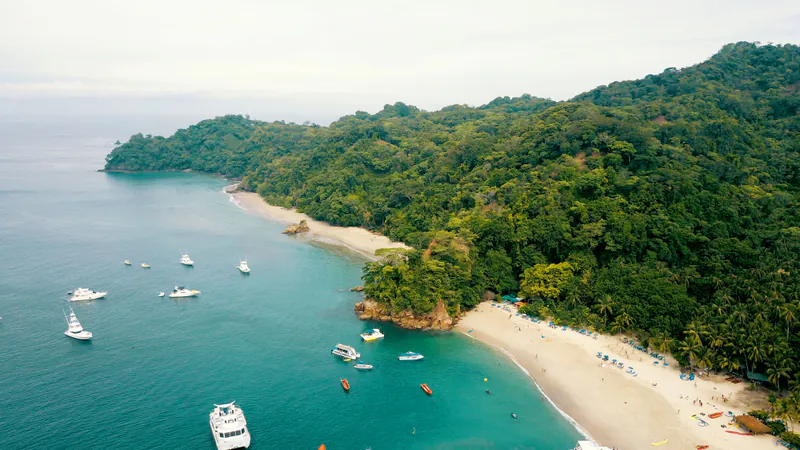
Cover photo by Diego Madrigal on Pexels.
Want to see how Costa Rica stacks up?
Are you seriously considering a move? Use our interactive tools to explore Costa Rica's climate, tax brackets, and nomad visas.
Looking for other options?
See how this visa compares against 55 other countries.
📊 Compare all 56 digital nomad visasHead-to-Head Relocation Comparisons
Compare taxes, safety, and living costs of Costa Rica against top alternatives.