Moving to MoroccoShare
Morocco is a solid destination for global professionals, featuring a moderate tax burden of 26.1%. With a very high English proficiency score of 492, daily communication and business integration are seamless. It hosts a vibrant and diverse expat community, notably drawing a significant number of residents from France.
Lifestyle & Vibe
Morocco has been actively developing a digital nomad visa framework, and cities like Casablanca, design-forward Marrakech, and surf-hub Taghazout have already attracted a consistent stream of European and international remote workers well ahead of formal visa infrastructure. The cost of living is low - Marrakech and Agadir offer some of the best value-for-lifestyle ratios accessible within a three-hour flight of Europe. Internet infrastructure in major cities is generally reliable, though consistency outside urban centers varies, and cashless payments are functional but cash remains important in local commerce. The social environment is welcoming and French-Arabic bilingual, meaning English-only speakers face more friction than in English-first destinations, but the density of European expats in key hubs creates a self-sustaining nomad social ecosystem.
Digital Freedom & Remote Work
Censorship and network interference data is currently being collected for Morocco.
Society & Demographics
Morocco exhibits a balanced gender ratio with 50.42% of the population being male and 49.58% female. The country has achieved high internet penetration at 91.20%, indicating widespread digital connectivity. With an EF English Proficiency Score of 492, there is room for improvement in language skills, reflecting a mix of traditional and modern influences. Urbanization stands at 62.80%, with a significant portion of the population living in cities, while educational spending comprises 23.28% of GDP, highlighting the government's commitment to education.
Gender Distribution
Aging Society
Population over 65 years old
Education Spending
UNESCO Data. Indicates focus on public schooling.
Quality of Life
In Morocco, the quality of life is reflected through a life expectancy of 72.62 years, indicating an average lifespan longer than the global average. With 7.93 medical doctors per 10,000 people and a Universal Health Coverage Index of 65, healthcare access is relatively good but could be improved. The obesity rate stands at 21.56%, suggesting a moderate health concern that needs attention. While the happiness score of 4.646 on a scale of 0 to 10 reflects areas for improvement in overall well-being, factors like air quality (21.32 µg/m³) and safety metrics such as low homicide rates at 1.71 per 100,000 contribute positively to the general environment.
Economic Freedom & Business Climate
The Moroccan economy operates within an environment characterized by moderate economic freedom, as reflected by its Overall Economic Freedom Score of 61.8000 out of 100. However, several factors such as high government spending (67.5000), tax burden (65.5000), and fiscal health concerns (57.5000) present challenges. The business climate is relatively favorable with a Business Freedom score of 72.1000 and strong financial freedom at 80.000, yet areas like property rights (55.2000) and judicial effectiveness (32.5000) need improvement to foster long-term growth. Additionally, while the inflation rate stands at a low 0.9900%, unemployment remains a concern at 9.0000%, impacting financial stability for many Moroccans.
Evaluated across 12 quantitative factors. Scores span 0-100, where higher scores indicate greater economic liberty, lighter tax burdens, and stronger property rights.
Climate Profile (Rabat)
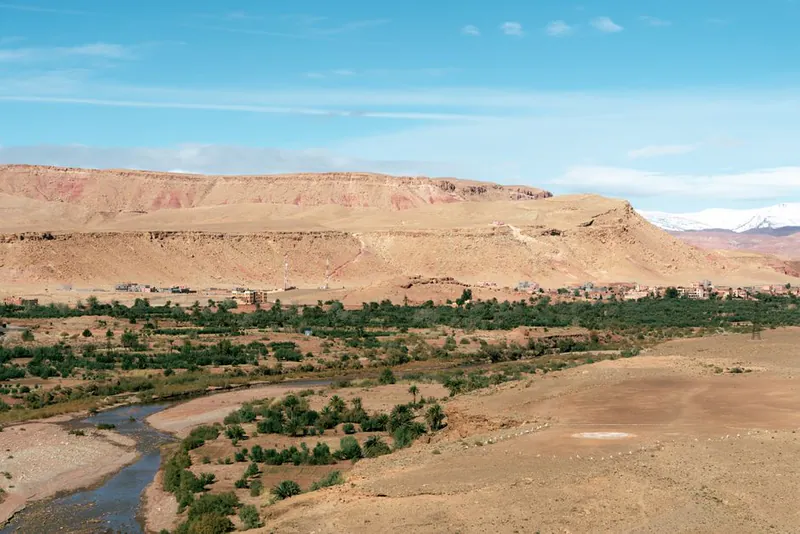
Morocco has a Mediterranean climate, characterized by mild winters and scorching summers, with the hottest period typically occurring between July and August, when temperatures soar to a sweltering 26.51°C to 27.44°C, while the rainiest months are March and December, with an average of 12 and 9 rainy days respectively. The spring and autumn seasons, from April to May and September to October, offer the most pleasant weather, with average temperatures ranging from 20.62°C to 22.92°C, making them the ideal time for expats and digital nomads to relocate or visit. For those seeking a comfortable and sunny climate, the best season to visit or relocate to Morocco is during the spring, from April to May, when the temperatures are warm but not scorching, and the rainfall is minimal, allowing for a seamless transition to the country's vibrant culture and impressive landscapes.
Political Stability & Governance
Evaluated across Worldwide Governance Indicators (WGI). Scores span approximately -2.5 to 2.5, where higher scores indicate stronger governance, better stability, and lower corruption.
Relocation Guides & Articles
Explore Similar Destinations
Frequently Asked Questions
What is the tax burden in Morocco?
The tax burden in Morocco is approximately 26.1%, according to World Bank data.
Is Morocco safe?
The homicide rate in Morocco is 1.7 per 100,000 people (World Bank).
Are people happy in Morocco?
The World Happiness Report scores Morocco at 4.6 out of 10.
Head-to-Head Relocation Comparisons
Compare taxes, safety, and living costs of Morocco against top alternatives.