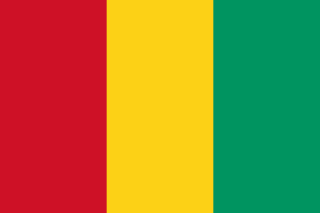
Moving to GuineaShare
It hosts a vibrant and diverse expat community, notably drawing a significant number of residents from Mali.
Lifestyle & Vibe
Guinea (Conakry) has experienced recurring political instability, including a military coup in September 2021 that ousted President Alpha Condé, and the country remains under military transitional governance with uncertain timelines for civilian rule - it is not suitable for remote worker relocation. Internet infrastructure is extremely limited, power supply is unreliable even in the capital, and the cost of living for expats requiring international-standard accommodation is disproportionately high relative to service quality. There is no digital nomad ecosystem, no co-working culture, and daily logistics present significant challenges for independent workers. Guinea is exclusively territory for NGO, mining industry, and diplomatic personnel with institutional support structures.
Digital Freedom & Remote Work
Censorship and network interference data is currently being collected for Guinea.
Society & Demographics
Guinea displays a gender-balanced population with slightly more females (50.52%) than males (49.48%). The country shows moderate urbanization at 38.07%, with internet penetration reaching 33.30%. Economic inequality is relatively low, as indicated by the GINI Index of 29.60, suggesting a more equitable distribution of income compared to many other nations. Additionally, women's representation in parliament stands at 29.6296%, reflecting a gradual but ongoing effort towards gender equality.
Gender Distribution
Aging Society
Population over 65 years old
Education Spending
UNESCO Data. Indicates focus on public schooling.
Quality of Life
In Guinea, the quality of life is modest with a life expectancy of 61.2600 years, reflecting challenges in healthcare and general well-being. Access to medical care is limited, as indicated by only 1.1500 doctors per 10,000 people, and the Universal Health Coverage Index stands at 43.0000, suggesting significant gaps in health services. Additionally, while the obesity rate of 10.6100% and an average happiness score of 4.6090 on a scale of 0 to 10 suggest room for improvement, air quality (PM2.5 levels at 43.7700 µg/m³) poses another health concern, affecting overall well-being.
Economic Freedom & Business Climate
The economy of Guinea faces significant challenges with an overall Economic Freedom Score of 53.1000, indicating limited economic freedom. The country struggles with high government spending at 90.1000, a low Property Rights score of 21.3000, and weak judicial effectiveness at 26.0000, which can deter foreign investment. While business freedom is relatively better at 44.8000 and trade freedom at 61.8000, the financial sector remains underdeveloped with a Financial Freedom score of only 40.0000.
Evaluated across 12 quantitative factors. Scores span 0-100, where higher scores indicate greater economic liberty, lighter tax burdens, and stronger property rights.
Climate Profile (Conakry)
Guinea enjoys a tropical climate with warm temperatures year-round, but the months of May through July bring the highest heat and most rainfall, making these wettest months from June to August. For those seeking comfortable weather, the shoulder seasons - April and October - are ideal for relocation or visitation, offering milder temperatures and fewer rainy days while still retaining the lush greenery that Guinea is known for.
Political Stability & Governance
Evaluated across Worldwide Governance Indicators (WGI). Scores span approximately -2.5 to 2.5, where higher scores indicate stronger governance, better stability, and lower corruption.
Relocation Guides & Articles
We're currently working on an in-depth expat guide for Guinea.
Browse all 98 expat guidesFrequently Asked Questions
Are people happy in Guinea?
The World Happiness Report scores Guinea at 4.6 out of 10.