Moving to Tonga in 2026: 0% Personal Tax, No Visas, and Nuku'alofa Reality
August 30, 2026
ShareTonga has no personal income tax whatsoever - zero percent, for residents and non-residents alike - and it also has no retirement visa, no digital nomad visa, and no formal long-stay program of any kind. That combination alone tells you most of what you need to know about the Kingdom of Tonga in 2026: a country that taxes almost nothing but also promises almost nothing on paper, where every long-term stay is negotiated case-by-case with an immigration officer rather than checked off against a published list of requirements.
The Economy: Modest Growth, and a Genuinely Wide Range of Forecasts
Tonga's 2026 growth outlook produces one of the widest forecast spreads in this entire guide series - from under 1.5% up to nearly 3% - reflecting a small, volatile, aid- and remittance-dependent economy still recovering from a volcanic eruption and tsunami just a few years prior.
The IMF's most recent Article IV assessment projects growth moderating to 2.3% in FY2026 (Tonga runs a July-June fiscal year), down from 2.7% in FY2025, "as reconstruction outlays normalize and supply-side constraints persist," while cautioning that medium-term potential growth is estimated at just 1.2%, reflecting "Tonga's high vulnerability to natural disasters, persistent outward migration, and limited economies of scale due to geographical barriers"[1][2]. Tonga's own Ministry of Finance Budget Statement for FY2026 projects 2.4% growth, with medium-term growth averaging 2.8% through FY2028, driven partly by financial-sector credit expansion[3]. A subsequent Half Year Report actually downgraded that figure to 2.3%, explicitly citing "delays in the delivery and implementation of large infrastructure development projects" relative to the earlier 2.6% budget estimate[4].
Private forecasters diverge more sharply. ANZ Research projects a notably more subdued 2.1% for FY2026-27, explicitly warning that "income from overseas employment and private remittances, key drivers of consumer demand, are showing signs of peaking and stabilizing"[5]. Fitch Solutions/BMI is the most pessimistic voice in this comparison, forecasting a slowdown to just 1.6% in FY2025/26 and 1.4% in FY2026/27, warning that "a strengthening El Niño increases the risk that Tonga's growth in FY2026/27 underperforms" even that reduced forecast, given the import-dependent economy's exposure to energy price shocks from the US-Iran conflict[6]. At the other end, the Asian Development Bank's April 2025 outlook was notably more optimistic at 2.9% for FY2026[7], and Oxford Economics revised its own FY2025 forecast up to 2.57%, "considering significant national accounts revisions pointing towards a stronger-than-expected rebound after Covid and the 2022 volcanic eruption and tsunami"[8]. Inflation is projected in the 2.2-3.1% range for 2026 across most sources, with the IMF specifically flagging a temporary spike driven by higher energy and core prices[1][9]. GDP per capita sits around $5,975-7,238 depending on source, with total GDP a very small $0.6-0.7 billion[10][11].
Visas: No Retirement Visa, No Nomad Visa - Everything Runs Through Case-by-Case Extensions
Tonga is genuinely unusual among the destinations covered in this guide series: there is no formal long-stay, retirement, or digital nomad visa program at all, and every source consulted converges on the same blunt conclusion.
- No dedicated retirement visa exists. Tonga "welcomes foreign retirees under a renewable visitor's permit framework rather than a formal retirement visa program," and immigration officials generally expect evidence of financial self-sufficiency, though "exact thresholds vary and should be verified with the Tongan immigration authority" directly[12]
- No digital nomad visa exists, and one source explicitly notes that longer stays "require a residence permit or remote-worker visa" that must be verified directly with Tonga's official immigration site, rather than pointing to any named program[13]
- Standard entry: EU passport holders receive 90 days visa-free; US passport holders receive 31 days visa-free[13]
- Most retirees follow the same informal path: enter on a standard visitor's permit (typically 30-31 days), then apply in-country at the Immigration Department in Nuku'alofa to extend the permit or transition toward a longer-stay status - a process described as taking weeks and requiring "patience and clear communication with officials" more than speed[12]
- Required documentation for extension/transition typically includes: recent bank statements or pension letters proving financial self-sufficiency, a passport valid at least six months, a police clearance certificate, and a medical certificate if requested[12]
- Long-term residence is granted case-by-case through the Ministry of Internal Affairs, typically for reasons such as family ties, business investment, or demonstrated financial stability - there is no published points system or fixed income threshold[12]
- Many retirees and long-stay expats work with local agents or sponsors to navigate the process, a detail flagged consistently as more important than any specific paperwork[12]
Taxes: Genuinely Zero Personal Income Tax - For Everyone
Tonga is one of a small handful of countries in this guide series with no personal income tax at all, and the sourcing here is unusually consistent and unambiguous.
Tonga does not impose a personal income tax on individuals - there is no tax on wages, salaries, or personal investment income, and this applies to both residents and non-residents equally[14]. The government instead relies on a Consumption Tax (CT) and corporate income tax for revenue, rather than taxing individuals directly[14]. Since there's no personal income tax, residency status carries no direct income tax implications for individuals - a genuinely simple structure compared to nearly every other country in this series[14].
One notable discrepancy worth flagging directly: the Heritage Foundation's 2026 Index of Economic Freedom states Tonga's "top individual income tax rate is 20 percent," with a total tax burden equal to 20.5% of GDP - directly contradicting the 0% figure from TaxAtlas[15]. A separate database, TheGlobalEconomy.com, shows no available data for Tonga's personal income tax rate at all[16]. Given this genuine conflict between sources, prospective expats with any Tonga-source income should verify the current rate directly with the Tongan Ministry of Revenue and Customs before assuming either figure applies to their situation.
Cost of Living: A Genuinely Enormous Spread of Nuku'alofa Estimates
Nuku'alofa produces one of the widest ranges of single-person cost-of-living figures found anywhere in this guide series - from roughly $686/month up to $1,557/month for broadly comparable "single person, comfortable" descriptions - making it worth treating any single number with real caution.
Monthly Budget Estimates (Single Person, 2026)
| Source | Budget |
|---|---|
| CostLens.blog | $686/mo (national average)[17] |
| CityLivingCosts | $880/mo (excluding rent, ~$1,260-1,320 with rent)[18] |
| CityCost.org | $1,013/mo (with rent)[19] |
| LivingCost.org | $1,032/mo (with rent)[20] |
| GlobalCostData (Western expat) | $1,300/mo[21] |
| ExpatWhy | $1,474/mo[13] |
| Rewire Abroad | $1,557/mo (with rent)[22] |
Rent (1-Bedroom, Nuku'alofa, 2026)
| Zone | Range (USD/month) | Sources |
|---|---|---|
| City centre | $346-623/mo | [17][22][20] |
| Outside centre | $203-260/mo | [22][21] |
| Sopu/Kolomotu'a (standard expat picks) | $625-1,000/mo | [13] |
A realistic center of gravity given this spread sits around $1,000-1,500/month for a comfortable single-person lifestyle, with GlobalCostData placing Nuku'alofa's overall cost index at 52.0 on a 100-point NYC-baseline scale - roughly 48% cheaper than New York, while CityLivingCosts places it lower still at 46/100[21][18]. Housing is described as a dominant budget item, with a city-centre 1-bedroom absorbing an estimated 57% of the average local net salary[21]. Within the region, Nuku'alofa sits comfortably below the Oceania average - roughly 49% cheaper than the regional norm by one measure - making it, alongside Samoa, one of the most affordable Pacific entry points[19][13]. Secondary towns outside the capital run 20-40% cheaper still[21].
Healthcare: Basic, Cheap for Routine Care, and Built Entirely Around the Assumption You'll Need Evacuation
Tonga's healthcare system generates the single most consistent message of any country covered in this guide series: routine care is inexpensive and accessible, but anything beyond basic treatment means an air ambulance to New Zealand or Australia, and every source treats comprehensive evacuation insurance as an absolute non-negotiable rather than a nice-to-have.
Tonga's system centers on Vaiola Hospital in Nuku'alofa, the national referral hospital, supplemented by 3 district hospitals on outer islands, 14 health centers, and 34 maternal and child health clinics - over 90% of care is delivered in hospitals rather than clinics, making proximity to the capital genuinely important[23]. Vaiola runs a 24/7 emergency department, three operating theaters, a small intensive care unit, and a modest imaging department (X-ray, ultrasound, CT scan, mammography), but suffers from cramped facilities and a chronic lack of modern equipment[24]. Roughly 47% of healthcare funding comes from government, 38% from donors and development partners, and just 15% out-of-pocket from patients[25].
| Facility | Location | Type |
|---|---|---|
| Vaiola Hospital | Nuku'alofa (Tongatapu) | Main national referral hospital, technically private, few specialists[25][26] |
| German Clinic | Nuku'alofa (Tongatapu) | Private, popular with expats and tourists, higher standard of care[26] |
| Village Mission Clinic | Nuku'alofa | The country's only dedicated GP clinic - staffed by rotating visiting international doctors[27] |
| District hospitals | Neiafu (Vava'u), Pangai (Ha'apai), 'Eua | Small facilities, basic care only[28] |
Foreigners are never eligible for Tonga's public healthcare subsidy - Tongans and naturalized citizens receive free treatment, while every expat pays out of pocket at every visit, in both public and private facilities[25]. Routine costs remain genuinely cheap: a private GP visit runs $20-50, an ER visit $50-150, an overnight hospital stay $80-200, and an ambulance $50-100[26]. But the real risk sits entirely in evacuation: a medical flight to New Zealand typically costs $20,000-60,000, with extreme cases reaching as much as $250,000 depending on distance and complexity of care - figures that don't even include hospitalization at the destination or any further repatriation home[24][25][26]. International health insurance with a robust medical evacuation clause runs $100-300/month depending on age, or roughly $1,200-3,600/year all-in with a deductible, through providers like Cigna Global, Allianz Care, Bupa Global, AXA, or William Russell[28][23]. Notably, there are no recompression chambers anywhere in Tonga - divers requiring decompression treatment must be evacuated to New Zealand, a genuinely important detail for anyone drawn to Tonga's renowned diving[27]. The UK government states plainly that "medical evacuation from Tonga is required for most non-basic medical problems"[29], and one source adds that evacuation from outer islands first requires boat or small-plane transfer to Tongatapu before any air evacuation can even begin, with delays common due to weather and limited flight availability[26].
Safety: A Genuinely Sharp Contrast Between the National Numbers and Nuku'alofa Itself
Tonga's overall country-level crime data reads considerably worse than the capital city's own specific figures - a distinction worth understanding clearly before assuming the national numbers describe daily life in Nuku'alofa.
| Metric | Tonga (National) | Nuku'alofa (City) |
|---|---|---|
| Crime Index | 60.98-61.0, High[30] | - |
| Safety Index/Scale | 39.02[31] | - |
| Level of crime | 64.06, High[30] | 55.56, Moderate[32] |
| Crime increasing (past 3-5 years) | 78.12, High[31] | 72.22, High[32] |
| Safety walking alone, daylight | 53.12, Moderate[30] | 52.78, Moderate[32] |
| Safety walking alone, nighttime | 37.50, Low[30] | 44.44, Moderate[32] |
| Problem: corruption and bribery | 70.31, High[30] | 61.11, High[32] |
Nuku'alofa's own crime level (55.56, "Moderate") reads meaningfully better than the country-wide figure (64.06, "High") - a distinction consistent across nearly every category, and specifically the capital's nighttime walking safety (44.44, "Moderate") clears the national figure (37.50, "Low") by a real margin, suggesting the country-level statistics may be weighted by conditions in smaller, less-monitored outer-island communities rather than reflecting daily life in the capital itself[30][32]. Corruption and bribery perception stands out as the single most consistently "High" category at both the national and city level - a thread shared with several other Pacific and developing economies covered elsewhere in this guide series[30][32]. Property crime concerns - home break-ins, mugging worries - register "Moderate to High" at the national level but noticeably calmer within Nuku'alofa specifically, reinforcing that the capital genuinely outperforms the country's aggregate reputation[30][32].
Which Island?
Tongatapu (Nuku'alofa) - the capital and only realistic choice for anyone needing regular access to Vaiola Hospital, international flights, or the country's one dedicated GP clinic; also the location with the best-documented, most reassuring safety data in the entire kingdom.
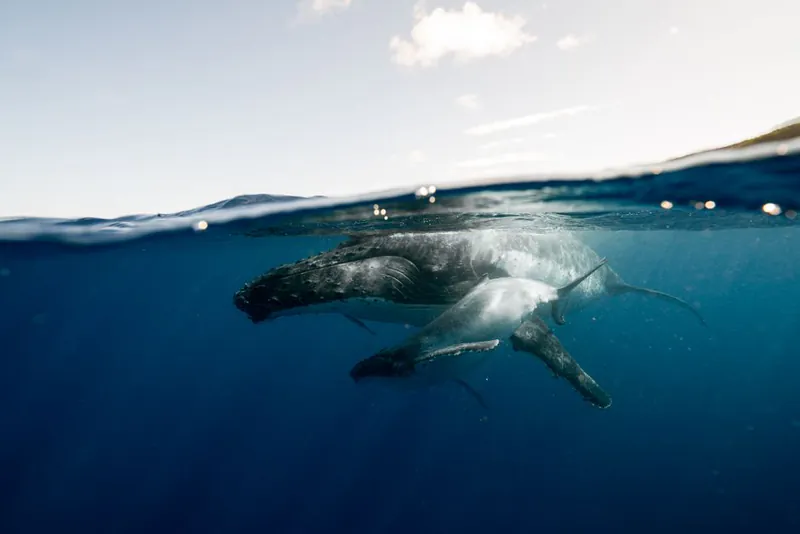
Vava'u (Neiafu) - the renowned whale-watching and sailing hub, with a small district hospital offering basic care only, appealing for those who accept genuinely thinner infrastructure in exchange for a quieter island lifestyle.
Ha'apai and 'Eua - the most remote options, each with a single small district hospital, realistic only for expats who fully accept that any serious medical event means a multi-leg evacuation starting with a boat or small plane just to reach Tongatapu.
First Moves After Landing
- Enter on your standard visitor's permit (90 days for EU passports, 31 days for US passports), and start the extension or long-stay conversation with the Nuku'alofa Immigration Department well before it expires - there's no formal program to apply for from abroad[13][12]
- Consider engaging a local agent or sponsor for the residency conversation - this is described as more determinative of success than any specific document[12]
- Secure international health insurance with a genuinely high-limit medical evacuation clause (ideally $250,000+) before you need it - this is treated as absolutely non-negotiable by every source consulted[26][24]
- Bring a full supply of any prescription medications - local stock is limited and unreliable, even with a valid prescription[23]
- Verify the current personal income tax rate directly with Tonga's Ministry of Revenue and Customs if you'll have any local-source income - sources genuinely conflict between 0% and 20%[14][15]
- If diving, confirm your insurance covers decompression-related evacuation specifically - Tonga has no recompression chamber, and treatment means a flight to New Zealand[27]
- Base yourself on Tongatapu near Nuku'alofa unless you're fully prepared for the added evacuation complexity of the outer islands[26]
Key Data at a Glance
| Indicator | Value |
|---|---|
| GDP Growth 2026 (FY, wide forecast range) | 1.4%-2.9%[6][7] |
| IMF/Government Consensus | 2.3%-2.4%[1][3] |
| Medium-Term Potential Growth | 1.2%[2] |
| Inflation 2026 | 2.2%-3.1%[1] |
| GDP per Capita | $5,975-7,238[10][11] |
| Retirement Visa | None - case-by-case visitor permit extension only[12] |
| Digital Nomad Visa | None[13] |
| Visa-Free Entry | 90 days (EU), 31 days (US)[13] |
| Personal Income Tax Rate | 0% per most sources; one source states 20% (verify directly)[14][15] |
| Corporate Tax / Consumption Tax | 25% / 15%[14] |
| Nuku'alofa Single-Person Budget | $1,000-1,500/month (comfortable)[21][22] |
| Public Health Access for Expats | None - pay per visit even at public facilities[25] |
| International Health Insurance (with evacuation) | $100-300/month[28] |
| Medical Evacuation Cost (to New Zealand) | $20,000-60,000, up to $250,000 in extreme cases[24] |
| Nuku'alofa Crime Level | 55.56, Moderate (better than national 64.06 "High")[32] |
| Nuku'alofa Nighttime Walking Safety | 44.44, Moderate (better than national 37.50 "Low")[32] |
| Official Languages | Tongan, English |
Tonga's honest pitch for 2026 is a genuinely tax-free personal income regime layered onto one of the cheapest capital cities in the Pacific, a capital-city crime profile that reads noticeably better than the country's own national statistics, and a growth outlook forecasters can't agree on within even a full percentage point - all wrapped around the single hardest fact in this entire guide series to soften: there is no formal path to staying long-term, no dedicated visa of any kind, and every extension is a conversation, not a checklist.
References
[1] IMF Article IV
[3] Tonga Ministry of Finance Budget
[5] Tonga Economic Outlook: Growth Prospects | ANZ Research 2026 | Finvaulta - Read ANZ's latest economic report on Tonga. Discover analysis on GDP growth constraints, remittance dependence, and long-term potential. Access t...
[6] Page Not Found :: Fitch Solutions - We're sorry, but the page you're looking for isn't available. It may have been moved, deleted, or the URL might be incorrect. Please ch...
[7] ADB South Pacific Economies
[8] MarketResearch.com/Oxford Economics
[10] Economic Outline of Tonga - International Trade Portal - Discover the economic context of Tonga through the key figures of the economy, various economic indicators and useful sources of information.
[11] Tonga GDP: $716.0M | Population: 103,742 (2026) | Statistics of the World - Tonga · GDP: $716.0M · Population: 103,742. 334 indicators with interactive charts and historical data. Ranked across 218 countries. Source: IMF World...
[12] Retire in Tonga: Cost of Living, Visa & Healthcare (2026) - Tonga offers a quiet, warm-climate retirement in the South Pacific with a modest cost of living and a stable, English-speaking community. Life expecta...
[13] Nuku'alofa, Tonga, $1474/mo · nomad score 6.5 · ExpatWhy - cost of living, internet speed, climate and air quality, visa rules for Nuku'alofa, Tonga, from public primary sources. Free, no paywall.
[14] Tonga Tax Rates & System (2026) - TaxAtlas - Tonga tax guide: zero income tax, no capital gains tax, no crypto tax. 0% income tax, 25% corporate, 15% VAT. Rates & brackets for 2026.
[15] Heritage Foundation
[16] TheGlobalEconomy.com
[17] Cost of Living in TO (2026) - Prices, Rent & Salaries in 2 Cities - Complete cost of living guide for TO: average monthly budget $686 for a single person, $1,619 for a family. Compare rent, food, transport and salaries...
[18] Cost of Living in Nukuʻalofa, Tonga (2026) | CityLivingCosts - How much does it cost to live in Nukuʻalofa, Tonga? Around $880/month for one person (cost index 46/100). See real prices for rent, food and transport...
[19] Cost of Living in Nuku'alofa - Prices & Expenses. Aug 2026 | CityCost - Discover the cost of living in Nuku'alofa - housing, food, transport & more. Compare expenses and plan your budget.
[20] Cost of Living & Prices in Nukualofa: rent, food, transport - The average cost of living in Nukualofa is $1032, which is close to the world's average cost of living, ranked 5328th out of 9294 in our global list a...
[21] Cost of Living in Nuku'alofa, Tonga 2026 - $500/mo - Cost of living in Nuku
[22] Living in Nuku'alofa, Tonga (2026): Cost of Living & Expat Guide | Rewire Abroad | Rewire Abroad - Nuku'alofa, Tonga: government-dependent economy, $623/mo rent, tropical cyclone risk, tiny expat community. Remote work only.
[23] Emigranto
[24] Jarnias Cyril
[25] Pacific Prime
[26] Tonga Travel Health Guide - Meds, Hospitals, Insurance | tabiji.ai - Health guide for traveling to Tonga. Emergency numbers, Vaiola Hospital info, water safety, vaccinations, and medical evacuation to New Zealand.
[27] Worldsupporter
[28] Versicherungen in Tonga: Expat-Schutz im Südsee-Königreich | Versicherungen im Ausland | Wohnsitz Ausland - Versicherungen in Tonga: Warum Expats 2026 ohne Evakuierungsdeckung nach Neuseeland nicht auskommen und wie du Gesundheit, Haus und Alltag absicherst.
[29] Health - Tonga travel advice - GOV.UK - FCDO travel advice for Tonga. Includes safety and security, insurance, entry requirements and legal differences.
[30] Numbeo Tonga
[32] Numbeo Nuku'alofa
Frequently Asked Questions
What are the primary visa and residence options for moving to Tonga in 2026? Tonga is genuinely unusual among the destinations covered in this guide series: there is no formal long-stay, retirement, or digital nomad visa program at all, and every source consulted converges on the same blunt conclusion.
How does personal income tax work for expats in Tonga? Tonga does not impose a personal income tax on individuals - there is no tax on wages, salaries, or personal investment income, and this applies to both residents and non-residents equally.
What is the average cost of rent and living in Tonga? Housing is described as a dominant budget item, with a city-centre 1-bedroom absorbing an estimated 57% of the average local net salary.
How many years of residence are required for citizenship or permanent residency in Tonga? Foreign residents generally become eligible to apply for permanent residency or citizenship after 3 to 8 years of continuous legal residence and passing integration benchmarks.
Cover photo by Elianne Dipp on Pexels.
Want to see how Tonga stacks up?
Are you seriously considering a move? Use our interactive tools to explore Tonga's climate, tax brackets, and nomad visas.