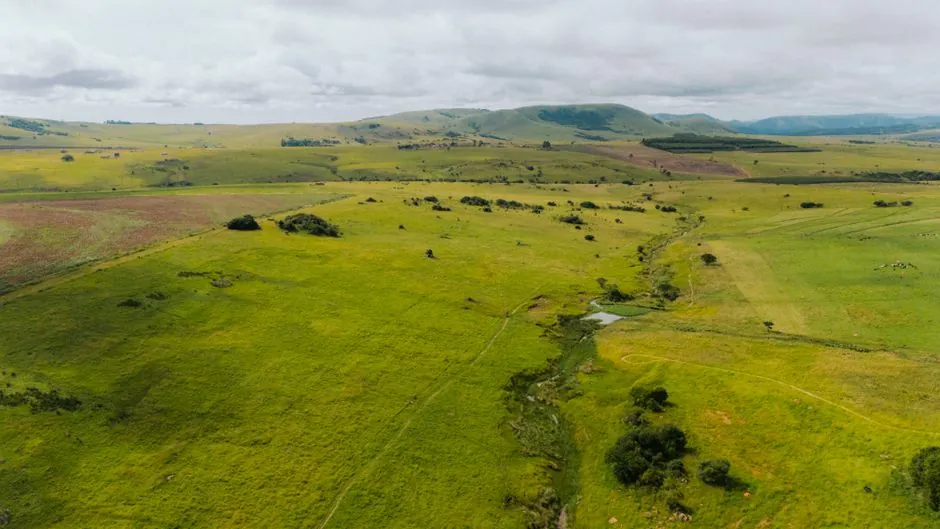
South Africa Digital Nomad Visa 2026: R650,796 Threshold, SARS Taxes & 3-Year Rules
June 20, 2026
ShareFor years, the South African Department of Home Affairs (DHA) operated in a state of high-concept ambiguity regarding remote work. By 2026, that ambiguity has been replaced by a rigid, high-threshold framework that offers unparalleled lifestyle arbitrage but demands meticulous bureaucratic compliance. If you are looking to trade your current cubicle for a view of Table Mountain or the Highveld, you must navigate the specialized Section 11(1)(b)(iv) Remote Work Visitor Visa. This is not a "lite" version of a work permit; it is a specialized longevity tourism play designed for high-intellectual-property individuals who inject foreign-sourced currency into the local economy.
The critical update for the 2026 cycle is the finalized annual income requirement of ZAR 650,796. However, a word of caution for the uninitiated: while the gazetted law specifies this amount, localized VFS Global checklists frequently round this up to ZAR 650,976 to account for exchange rate volatility. In the eyes of a DHA adjudicator, being short by even ZAR 180 is grounds for a summary rejection. Furthermore, under Immigration Directive No. 7 of 2026, the South African government has issued a sweeping concession to manage a legacy backlog that stretches back to late 2024. This directive extends the legal status of applicants with pending long-term visas until June 30, 2027, provided you hold a verifiable VFS Global receipt.
You must not confuse this with a standard 90-day tourist visa. The 2026 regulatory environment has shifted the remote work framework from the generic Section 11(1) visitor status to a formalized sub-category. While South Africa remains one of the most attractive global destinations for digital nomads-ranking 17th on the Savills Executive Nomad Index-the gap between the "official" marketing and the "ground-level" reality of Home Affairs is a chasm that only data-driven preparation can bridge [1][2][3].
1. What Is South Africa's Digital Nomad Visa?
Officially dubbed the Remote Work Visitor Visa, this permit was born out of a strategic necessity to address South Africa's skills crisis and stagnant economic growth. By formalizing a remote work category, the government aims to capture the "longevity tourism" market-professionals who stay for years rather than weeks, spending foreign-earned salaries at South African restaurants, retailers, and rental markets without competing for local jobs [5][6].
The Legal Basis
Codified under Section 11(1)(b)(iv) of the Immigration Act, the visa is administered by the Department of Home Affairs. It effectively allows a foreign national to reside in South Africa while performing work for a foreign employer or foreign-based clients. Unlike a General Work Visa, it does not require a local Department of Employment and Labour (DEL) certification, nor does it require the employer to prove they couldn't find a South African citizen for the role.
Who Qualifies (and Who Is Excluded)
The visa is broad in its definition of "worker" but narrow in its definition of "source":
- Remote Employees: You are on a foreign payroll with a company that has no legal or taxable presence in South Africa.
- Freelancers/Contractors: You have a diverse portfolio of international clients, none of whom are South African entities.
- Digital Entrepreneurs: You own a business registered outside the Republic that operates entirely online.
- Strict Exclusion: If you accept a single Rand from a South African company for services rendered within South African borders, you are in breach of your visa conditions. This is a "Visitor" visa; it strictly prohibits local labor market entry [11][12].
Duration and the "Dead End" to Residency
The visa is issued for an initial period of up to 36 months. While it is renewable, it is vital to understand that the Remote Work Visa provides no direct path to Permanent Residency (PR). Time spent on this visa does not count toward the five-year residency requirement for a South African Green Card. If your long-term goal is to settle in South Africa permanently, this visa is a strategic stall, not a stepping stone.
The Honest Warning: Do not trust "official" embassy websites to have the most current information. The DHA is currently migrating to an Electronic Travel Authorisation (ETA) system, but the transition is messy. Many consulates still demand documents that were technically waived by national directives (like the chest X-ray). In the world of South African immigration, the "local mission's checklist" is the law, even if it contradicts the Minister's latest gazette. Argue at your own peril [8][30].
2. South Africa Digital Nomad Visa Requirements
In the 2026 regulatory landscape, the Remote Work Visa occupies a unique niche. While Critical Skills and General Work visas are now subject to a rigorous Points-Based System (introduced via Immigration Directive 10 of 2024) requiring a minimum of 100 points, the Digital Nomad Visa is currently exempt from this points threshold. It is a "check-the-box" visa: if you meet the financial and documentary requirements, the DHA has little grounds for a discretionary denial [9][17].
Eligibility Checklist 2026
Requirement Statutory Threshold Accepted Proof Minimum Income ZAR 650,796 (DHA) / ZAR 650,976 (VFS) 3 months of stamped, original bank statements [1] USD Equivalent ~$37,000 - $38,500 (depending on FX) Verifiable deposits matching the ZAR threshold [19] EUR Equivalent ~€34,700 - €35,500 Verifiable deposits matching the ZAR threshold [2] Source of Funds 100% Foreign-Sourced Contracts, foreign business registration, or pay slips [11] Remote Status Explicit employer approval Signed letter on company letterhead (black ink only) [21]
The "Grey Areas": Crypto-Earners and Content Creators
The DHA remains deeply skeptical of "volatile" income. If your earnings arrive via crypto-exchanges or irregular freelance deposits, you cannot simply show a high balance. You must provide a 12-month earning history to prove that your average monthly income consistently exceeds the ZAR threshold. A notarized portfolio of contracts is often required to bridge the gap between "irregular deposits" and "verifiable income" [13][24].
The Honest Warning: South Africa has a zero-tolerance policy for digital-only PDF bank statements. To pass the vetting process, your bank statements must be stamped and signed in person by your financial institution. Submitting "flat" PDFs downloaded from a mobile app is the single most common cause for rejection in the 2026 cycle. Adjudicators view unstamped PDFs as high-risk for forgery [1][21].
3. Required Documents for South Africa Digital Nomad Visa
The documentation dossier for a South African visa is an exercise in meticulous paper-trailing. Following the reforms of 2024 and 2025, several legacy requirements have been modernized, but the burden of proof remains high.
The 15+ Essential Documents
- Form DHA-1738 (Form 8): The main Temporary Residence Visa application. Ensure it is completed in black ink.
- Valid Passport: Must be machine-readable and valid for at least 30 days after your departure from South Africa.
- Two Passport Photos: Biometric standard, taken within the last 6 months.
- Medical Report (DHA-811): Must be signed and stamped by a registered practitioner within 6 months of submission.
- Police Clearance Certificate (PCC): Required from every country where you lived for 12+ months in the last 5 years.
- Proof of Employment: A valid contract with a foreign-based employer.
- Remote Work Authorization: A signed letter from your employer explicitly authorizing you to work from South Africa.
- 3 Months Bank Statements: Stamped, original, and proving the ZAR 650,796 income threshold.
- Accommodation Proof: Hotel bookings, rental agreements, or a budget allocation letter.
- Onward Travel Proof: Provisional flight bookings (3-year tickets aren't required; a budget proof is often sufficient).
- Comprehensive Health Insurance: Valid for the entire duration of stay.
- Apostilled Birth Certificate: Required for you and all dependents.
- Marriage Certificate: (If applicable) Must be Apostilled or officially translated.
- Yellow Fever Certificate: Only if you are traveling from or through a yellow fever endemic zone.
- Proof of Payment: Non-refundable DHA and VFS service fees.
Pro-Tips for High-Stakes Documents
- The 30-Day Passport Rule: If your passport expires on January 30th and your intended flight out of South Africa is January 5th, your application will be rejected. You must have a 30-day "buffer" past the departure date.
- Police Clearance: These must be issued within six months of your application date. If you are from the USA, you need the FBI Channeler report; state-level checks are often insufficient.
- Medical Report (DHA-811): Under Immigration Directive No. 5 of 2023, the invasive chest X-ray (Radiological Report) has been waived. However, if a doctor suspects TB during your physical, they may still order a skin test or sputum diagnostic [4][25].
- Unabridged Certificates: All birth and marriage certificates must be the "unabridged" (long-form) versions showing parental details, as mandated by the 2024 amendments [13].
The Honest Warning: Do not underestimate the "Apostille" requirement. In many jurisdictions, getting a PCC or birth certificate Apostilled by the state or federal government can take 8-12 weeks. If your Apostille is dated more than six months before your submission, the DHA may deem it "stale" and reject the entire dossier [11][13].
4. Application Process: Step by Step
In 2026, South Africa is in the middle of a digital migration to the Electronic Travel Authorisation (ETA) system. However, for the Remote Work category, the process remains a hybrid of digital aspiration and biometric reality.
Step 1: Pre-application Preparation
Download Form DHA-1738. If you are applying from within a country that uses VFS Global (like the UK, USA, or Germany), you must create an online profile to book your appointment. Ensure your employer letter explicitly mentions your salary in the currency of payment and that it exceeds the ZAR threshold.
Step 2: In-Person Biometric Submission
You cannot apply for this visa via proxy or mail in the 2026 cycle. You must physically visit a VFS Global center or a South African mission to have your fingerprints and digital photo taken. Biometrics are the "anchor" of your digital file [1][3].
Step 3: The Processing "Black Hole"
- Official Window: 4-8 weeks.
- Reality Check: 12-16 weeks.
- Investigative Insight: The DHA is currently clearing a backlog of over 90,000 files from the 2024-2025 transition. Your application is a drop in a very large ocean. Do not book non-refundable flights until the visa is in your hand [31][32].
Step 4: Leveraging the 2026 Concession
If you are already in South Africa and your renewal or initial long-term application is pending, Immigration Directive No. 7 of 2026 is your legal shield. Your VFS receipt allows you to maintain legal status and even travel internationally until June 30, 2027. You must carry the physical receipt and your expired visa/passport when crossing the border [33][34].
Step 5: Arrival and Border Protocol
Present your visa at the port of entry. Be prepared for border officials to be unfamiliar with the 11(1)(b)(iv) sub-category. Carry a copy of the October 2024 Gazette and your stamped bank statements. Presentation of your private medical aid certificate is often required here to prove you won't burden the public health system [13][29].
Step 6: Renewal
You must apply for renewal 60 days before your current visa expires. You will have to re-submit fresh, stamped bank statements and an updated letter from your employer [1].
The Honest Warning: You cannot enter South Africa on a 90-day tourist visa and then "convert" to a Remote Work Visa in-country. This is a hard-coded prohibition. You must apply from your country of citizenship or permanent residence. The only exceptions are for spouses of South African citizens or those facing emergency life-saving medical treatment [1][35].
5. South Africa Digital Nomad Visa Cost: Complete Fee Breakdown
How much is the South Africa nomad visa? While the government's base fee is surprisingly low, the "compliance tax"-the cost of preparing a legal dossier-is where the real investment lies.
Complete Fee Breakdown 2026
Expense Category ZAR (Approx) USD (Approx) EUR (Approx) DHA Base Application Fee ZAR 425 $23 €21 VFS Service Fee ZAR 1,550 $84 €78 Medical Exam (Private) ZAR 1,200 $65 €60 Apostille Services (per doc) ZAR 800 - 2,500 $43 - $135 €40 - €125 PCC (FBI/Channeler) ZAR 1,000 $54 €50 Private Medical Aid (Monthly) ZAR 1,050+ $56+ €52+ Total Minimum Setup Cost ZAR 6,500+ $350+ €325+
Note on Health Insurance: While the DHA baseline checklist does not strictly list "medical aid," almost every consulate enforces it. Expect to pay at least €56/month for a residency-grade "Essential" plan like those from Feather, as standard travel insurance is routinely rejected [27][28].
The Honest Warning: "Hidden" costs like notarized copies of every single page of your passport (including blank ones) and certified translations for any document not in English can easily add another $200 to your budget. The DHA will reject an application for a single un-notarized page [11].
6. South Africa Digital Nomad Visa Tax Implications
Is the South Africa nomad visa worth it? The answer is dictated by your tax residency status. South Africa operates a residency-based tax system, which means if you are deemed a "resident," SARS (South African Revenue Service) wants a cut of your worldwide income [10][35].
The 183-Day Magic Number
If you are physically present in South Africa for more than 183 days in any 12-month period, you are legally required to register with SARS. If your home country has a Double Taxation Agreement (DTA) with South Africa, you may be exempt from paying local tax, but you are not exempt from the administrative burden of registration and filing [10][36].
The Physical Presence Test (91/91/915 Rule)
You are deemed a tax resident if you meet three criteria:
- 91+ days in South Africa in the current tax year.
- 91+ days in each of the preceding five tax years.
- 915+ days in aggregate across those preceding five years [35].
Corporate "Permanent Establishment" (PE) Risk
This is the "silent killer" of remote work approvals. If your company allows you to work in South Africa, your presence could trigger a Permanent Establishment for them. This means your employer would have to register as a South African taxpayer and pay 27% corporate tax on profits attributable to your work. SARS evaluates PE risk across three dimensions:
- Fixed Place PE: Your home office is deemed a "fixed base" for the company.
- Agency PE: You have the authority to sign contracts or negotiate on the company's behalf while in the Republic.
- Service PE: You perform services in South Africa for more than 183 days ^36][38][41].
The Honest Warning: If you are a Director or a C-suite executive, the PE risk is massive. Your presence in Cape Town could legally be interpreted as the company "conducting business" in South Africa. Most corporate legal departments will veto a nomad visa for senior management for this reason alone [36].
7. What This Visa Does NOT Give You
The Remote Work Visa is a "Visitor" category (Section 11), which carries significant limitations compared to a standard residence permit.
- No Local Freelancing: Taking a single ZAR-denominated invoice from a local South African company is a deportable offense. Your income must remain 100% foreign-sourced.
- No Path to PR: Five years on a nomad visa equals zero progress toward Permanent Residency. You would need to restart your clock on a Critical Skills or Business visa.
- No Public UIF/Healthcare: You do not contribute to or benefit from the Unemployment Insurance Fund. In public hospitals, you are a "full-paying patient" charged at private rates [29].
- No Automatic Banking: Most banks (Standard Bank, Capitec) will refuse to open an account for a "Visitor." FNB is the only major bank with a proven track record of opening non-resident accounts for nomad visa holders [24].
- Dependents Cannot Work: Your spouse can accompany you, but they are strictly "accompanying." If they want to work remotely, they must apply for their own separate Nomad Visa and meet the ZAR 650,796 threshold independently [11][27].
8. Digital Nomad Visa vs. Alternatives
If the financial threshold or the "dead end" residency path doesn't work for you, consider the regional and local alternatives.
2026 Global Mobility Comparison
Feature SA Remote Work Visa Namibia Nomad Visa South Korea (F-1-D) Turkey (Digital Nomad) Min Income (USD) ~$37,000 $24,000 $65,000 $36,000 Max Stay 3 Years 6 Months 2 Years 1 Year Tax Trigger 183 Days Variable 183 Days 183 Days PR Path None None No No Fee (USD) ~$86 + VFS ~$62 ~$200 ~$190
Local South African Alternatives
- Section 11(2) Short-Term Work: Best for specific projects at a South African host site. Max 180 days per year.
- Critical Skills Visa: Best for those in tech, engineering, or specialized medicine. Requires a local job offer and 100 points, but offers a direct path to PR.
- Spousal Visa: If your partner is a South African citizen, this is significantly better than the Nomad Visa. It allows for local work rights (with authorization) and counts toward PR.
Quick Reference Cheat Sheet
Category Detail Official Name Remote Work Visitor Visa (Section 11(1)(b)(iv)) [1] Income Requirement ZAR 650,796 / year (gross) [17] Processing Time 8 - 12 Weeks (Reality Check) [31] Bank Requirement Stamped, original 3-month statements [1] Tax Registration Mandatory after 183 days [10] Renewal Rule Must apply 60 days before expiry [1] 2026 Concession Pending status extended to June 30, 2027 [33]
Cover photo by Lukas Faust on Pexels.
References
- DHA Remote Work Visa Official Checklist (October 9, 2024).
- Immigration Act, 2002 (Act No. 13 of 2002) - Section 11(1)(b)(iv).
- Third Amendment of the Immigration Regulations, 2014 (Gazetted Oct 2024).
- Immigration Directive No. 05 of 2023 (PCC and Radiological Waivers).
- Immigration Directive No. 7 of 2026 (Automatic Visa Extensions).
- President Cyril Ramaphosa: State of the Nation Address (SONA) 2022.
- VFS Global South Africa: Remote Work Visa Requirements Portal.
- Savills Executive Nomad Index 2024/2025.
- Immigration Directive No. 10 of 2024 (Points-Based System Framework).
- SARS (South African Revenue Service): Guide on Residency-Based Taxation.
- Intergate Immigration: Digital Nomad Visa South Africa 2025/2026 Guide.
- IMCOSA Immigration Specialists: Remote Work Visa Legal Analysis.
- Reddit r/digitalnomad: "Successful DN Visa Submission Experience" (2025).
- RSM South Africa: "Go Digital, Go Global: Nomad Visa Launch" (Oct 2024).
- Deloitte Tax@Hand: "Overview of Proposed Amendments to Immigration Regulations."
- TechCentral: "Digital Nomad Visas in Africa - South Africa Lags Behind."
- Baker McKenzie: "Important Changes to Radiological Reports and PCCs."
- Envoy Global: "South Africa Extends Temporary Concessions for Pending Visas."
- KPMG South Africa: "GMS Flash Alert 2026-097: Temporary Extension Concessions."
- Feather South Africa: "Health Insurance for Expats and Digital Nomads."
- WFA.team: "Remote Hiring Policy HR Guide for South Africa."
- Netto Invest: "Remote Work in South Africa: Financial and Tax Implications."
- South African Department of Home Affairs (DHA) Form DHA-1738.
- OECD Model Tax Convention 2025 (Permanent Establishment Guidance).
- Erickson Immigration Group: "Pending Visa Appeal Applications - June 2027."
Frequently Asked Questions
What is the minimum income for the South Africa Remote Work Visa? Applicants must prove gross annual income of at least ZAR 650,796 (approx. USD 35,500/year or roughly USD 3,000/month).
Do digital nomads have to pay tax to SARS in South Africa? If your stay is under 183 days within a 12-month period, your foreign income is exempt. Stays exceeding 183 days require compulsory registration with SARS and local tax filing.
How long is the South Africa Digital Nomad Visa valid? It can be granted for up to 3 years, tied to the validity of your foreign employment contracts and passport.
Does this visa offer a pathway to South African permanent residency? No. Time accrued on a Section 11(1)(b)(iv) visa is classified as extended tourism and cannot be converted into permanent residency or citizenship.
Cover photo by Lukas Faust on Pexels.
Want to see how South-africa stacks up?
Are you seriously considering a move? Use our interactive tools to explore South-africa's climate, tax brackets, and nomad visas.
Looking for other options?
See how this visa compares against 55 other countries.
📊 Compare all 56 digital nomad visasHead-to-Head Relocation Comparisons
Compare taxes, safety, and living costs of South-africa against top alternatives.