Slovakia in 2026: An EU Passport for USD 0, Eurozone Stability, and a Bratislava That's 39% Cheaper Than Vienna
July 8, 2026
ShareA full Slovak citizenship - which carries Schengen freedom of movement, EU permanent residency rights, and visa-free access to 187 countries - costs nothing through the citizenship-by-descent programme, and the residency requirement was abolished by Parliament as of 15 July 2026. If you don't qualify by descent, natural residents can apply after 8 years, pay no citizenship application fee, and the government does not require you to renounce your prior citizenship at the point you acquire the Slovak one.[1][2]
A comfortable single expat life in Bratislava costs €1,250-1,800/month total. Income tax has been 19% for incomes up to ~€48,000 since 2012; from January 2026, a new four-bracket reform introduces 25% above that threshold and two new higher rates of 30% and 35% for very high earners. Slovakia uses the euro - no currency risk, no exchange fees for Eurozone residents. And it sits 60 km from Vienna with a direct commuter train running every two hours.[3][4][5]
The economy grew only 0.8% in 2025 - the slowest in a decade - squeezed by US auto tariffs, German industrial weakness, and fiscal consolidation measures. The structural challenge is real: 80% of Slovakia's exports are concentrated in automotive manufacturing, and tariff headwinds from the US directly pressure supply chains linked to German and Slovakian car production. The government's response is an EU funds absorption push from the Recovery and Resilience Plan, which will fund most of the 1.3% growth expected in 2026.[6][7]
The Economy: Automotive Powerhouse in a Difficult Trade Environment
Slovakia's GDP is approximately USD 169 billion (2026 estimate), produced by a population of 5.4 million. Per capita, it sits at the lower end of Western European levels but comfortably above its central European peers in terms of industrial output per worker.[8][9]
| Source | 2026 GDP Forecast |
|---|---|
| Slovak Finance Ministry (IFP, September 2025) | 1.3%[7] |
| National Bank of Slovakia (NBS Spring 2025) | 1.9%[6] |
| IMF (2025 Article IV, GDP in current prices) | ~USD 169 billion[9] |
| 2025 actual | 0.8%[10] |
What drives this economy:
- Automotive and manufacturing (dominant): Slovakia is the world's largest car producer per capita. Volkswagen Bratislava (VW Group), Stellantis Trnava (Citroën, Peugeot), Jaguar Land Rover Nitra, Kia Žilina, and BMW's upcoming battery plant make the country a critical node in the European automotive supply chain. This dominance is also the structural vulnerability: US tariffs on European cars in 2025-2026 directly hit Slovak exports, and Germany's industrial slowdown - Slovakia's largest trading partner - compounds the pressure[6]
- Electronics and engineering: Sony, Samsung SDI, Foxconn, and Siemens all operate manufacturing facilities. The Košice region has an aerospace cluster. Electronics and machinery exports are the second pillar after automotive
- Shared Services Centres (SSCs): Bratislava and Košice host the Eastern European back offices of major multinationals - IBM, AT&T, Johnson Controls, Accenture, Dell, Cisco. The combination of educated, multilingual workforce, competitive salaries, and Eurozone stability makes Slovakia a core SSC destination for Western European corporations. This is where most English-speaking professional expats find employment
- Tourism: Castle tourism (Bojnice, Spiš, Bratislava Castle), mountain tourism (High and Low Tatras), spa and wellness tourism (Piešťany, Dudince). Growing but still underdeveloped relative to neighbouring Austria and Czech Republic
- EU funds: Slovakia has absorbed significant EU Structural Funds and Cohesion funding, which finance infrastructure, broadband, and regional development. The 2026 RRP drawdown is the explicit driver of this year's growth projection[7]
The tariff risk in real numbers: The National Bank of Slovakia estimates that US tariff escalation could reduce cumulative GDP growth by up to 3% by end-2027, representing over €3 billion in lost output and approximately 20,000 jobs lost over three years - concentrated in manufacturing. For expats working in SSCs or the services sector, this is background risk rather than immediate job threat. For those in manufacturing supply chains or logistics, it is live.[6]
Slovakia's competitive advantage that doesn't go away: Labour costs remain ~30-40% below Austria and Germany, English proficiency among university graduates is high, the legal system is EU-standard, and the tax system is clear. These fundamentals sustain the SSC and manufacturing investment story regardless of cyclical headwinds.
Visas and Residency: Two Completely Different Systems (EU vs. Non-EU)
Slovakia's immigration framework is bifurcated. The EU/EEA experience is frictionless to the point of being barely noticeable. The non-EU experience is structured, rules-based, and manageable with preparation.
EU/EEA and Swiss Citizens: Register, Don't Apply
EU, EEA, and Swiss nationals exercise the right of free movement under EU law. There is no work permit, no visa, no application quota.[11]
The process:
- Arrive in Slovakia. No entry visa required - just a valid ID card or passport
- If staying beyond 90 days, register for a Residence Certificate at the Foreign Police Department within 10 working days of establishing residency[12]
- Documents required: proof of identity (passport/ID), proof of activity (employment contract, business certificate, study enrolment, or proof of sufficient financial resources), proof of accommodation (lease agreement)
- After 5 years of continuous legal residence: apply for Permanent Residency Certificate (5 years)[13]
- After 8 years of continuous legal residence (with permanent residency included): eligible for citizenship application[8]
Fee: The Residence Certificate itself costs a nominal administrative fee of approximately €5. No annual renewal for EU citizens - register once, update address changes.
EU citizens who want to freelance: Register a Živnosť (trade licence) - cost €7 for an unregulated free trade, €22 for craft/regulated trades, issued within 3 working days. This is the standard route for EU-citizen freelancers, digital nomads, and self-employed professionals in Slovakia.[14]
Non-EU Citizens: Five Routes
1. Employee Card (Single Permit - the standard employment route)
The combined work and residency permit for non-EU nationals employed by a Slovak company.[11]
- Application filed at the Slovak consulate in your home country (not in Slovakia)
- Employer submits vacancy to the labour office; 20-day notification period (waived for shortage occupations listed by the Ministry of Labour)[11]
- Documents: employer's invitation letter, employment contract, proof of qualifications, clean criminal record (apostilled + official Slovak translation), medical report, proof of accommodation
- Processing time: up to 90 days from application receipt
- Validity: duration of the employment contract, up to 2 years; renewable in-country
- Important - quota system: From July 2025, business residence permits are limited to 700 per year nationwide. Employee Cards for employment (not self-employment) are not included in this quota - only Business Permits are. Confirm which category applies to your specific situation with your employer and immigration counsel[11]
2. EU Blue Card (Highly Qualified Employment)
For non-EU nationals in roles requiring university-level qualifications.[15]
- Salary threshold: At least 1.2× the average monthly wage in Slovakia for the preceding year. In 2026, the average monthly wage is approximately €1,680, meaning the threshold is approximately €2,016/month gross[5]
- No labour market test (abolished 15 July 2024)[15]
- Valid for 60 months (5 years) - longest initial validity of any permit type[15]
- Fee: €250[15]
- Particularly useful for IT professionals, engineers, financial analysts, and senior managers - where Slovak salary levels above the threshold are standard
- Fast-track to permanent residency: EU Blue Card holders can apply after 33 months (reduced from 5 years), or 21 months if they demonstrate B1 proficiency in Slovak[12]
3. Business/Entrepreneur Residence Permit
For non-EU nationals establishing or managing a business in Slovakia.[11]
- Register a živnosť (trade licence) or s.r.o. (limited liability company)
- Apply for a temporary residence permit for business purposes at the Slovak consulate
- Documents: business plan, registered trade licence, proof of accommodation, criminal record, medical certificate, financial means (3× minimum subsistence level per month of intended stay)
- Note the 700/year national quota from July 2025 - apply early in the calendar year; consulates are reporting increased wait times due to quota pressure[11]
- Validity: 1 year initially, renewable for up to 3 years at a time
- Quota exemptions: Applications from nationals of certain "white list" countries, and specific industries (IT, RD, manufacturing) may benefit from quota exceptions - confirm current status with a Slovak immigration specialist
4. Temporary Residence for Family Reunification
For spouses and dependent children of Slovak citizens or valid permit holders.[12]
- Spouse of Slovak citizen: entitled to temporary residency without meeting economic conditions independently
- Documents: certified marriage certificate, proof of family relationship, accommodation, sponsor's income proof
5. Long-term / Permanent Residency (5-Year Permit)
Available after 5 years of continuous legal temporary residence.[13]
- Application at the Foreign Police Department of the District Office at your place of residence in Slovakia
- Documents: valid passport, proof of continuous legal residence (chain of previous permits), proof of financial means, proof of accommodation, health insurance, Slovak language test results (typically A2-B1 depending on category), integration test (basic Slovak history/culture)[13]
- Processing time: up to 90 days
- Once granted, valid for 5 years and renewable; holders have near-citizen employment rights and full access to public healthcare
Citizenship: The Descent Programme, the 8-Year Standard Route, and the Dual Citizenship Nuance
Slovakia's citizenship law contains one of the most significant under-the-radar opportunities for certain expats in Europe: the citizenship-by-descent programme, now fundamentally restructured by the July 2026 amendment.
Citizenship by Descent - The July 2026 Amendment
Eligibility: You have a parent, grandparent, or great-grandparent (within the third generation) who was a Czechoslovak citizen born in the territory of present-day Slovakia.[1]
What changed on 15 July 2026 (amendment signed by the President):[1]
- Residency requirement eliminated: Previously, applicants had to first obtain a Slovak residence permit before applying. This requirement is removed. You can now apply for citizenship directly from abroad - relevant for the vast majority of applicants who have no plans to live in Slovakia
- Evidentiary standard formalised: The Ministry of Interior now formally requires documentary proof that the ancestor held Czechoslovak citizenship. Direct lineage alone is no longer sufficient - you must provide supporting archival documents establishing citizenship status. This is a clarification of what was already expected in practice, but it now has explicit legal weight[1]
- Processing: Applications go directly to the Ministry of Interior - the Immigration Police are no longer involved[1]
- Cost: No CBI-style donation required. The citizenship application fee is a nominal administrative charge of approximately €50
The critical Slovak passport advantages:
- Schengen Area free movement (26 countries)
- EU citizenship - right to live and work in all 27 EU member states permanently
- Visa-free access to 187 countries
- Access to Slovak public healthcare, education, and social benefits as a citizen
- Can be obtained without ever living in Slovakia (post-amendment)
The dual citizenship nuance:[2] Slovak law on dual citizenship is asymmetric and requires careful planning:
- If you already hold another citizenship before acquiring Slovak citizenship, Slovak law does not prevent you from keeping both. You can hold Slovak plus your prior citizenship simultaneously with no issue
- If you become a Slovak citizen first and then later voluntarily acquire a new foreign citizenship by naturalisation, this can trigger loss of Slovak citizenship (subject to exceptions)
- Strategy: If you are pursuing Slovak citizenship by descent and also want citizenship in another country, acquire the Slovak citizenship last. Apply for other citizenships first. Slovak citizenship-by-descent is fully compatible with prior multiple citizenships[2]
Citizenship by Naturalisation (Standard Residency Route)
Requirements:[8]
- Permanent residency permit held for at least 8 years
- Alternatively: 5 years of permanent residency for those who have made significant contributions to Slovakia's economy, science, technology, culture, or sport
- Slovak language knowledge (interview in Slovak - questions on history, geography, and social/political development of Slovakia; no formal written exam)[8]
- Clean criminal record
- No history of illegal residence
Processing time: Up to 2 years from application submission to issuance of citizenship certificate and passport.[8]
Marriage to a Slovak citizen: The 8-year residency requirement is waived; the marriage pathway proceeds after sustained cohabitation.[8]
Other accelerated pathways:[8]
- Asylum holders: eligible after 4 years
- Born on Slovak territory + 3 years' residence
- Stateless persons with 3 years' residence
- Minors whose parents have been resident for 2+ years
Taxes: The New Four-Bracket System From January 2026
Slovakia's tax landscape changed materially on 1 January 2026. The long-standing near-flat rate structure has been replaced with a more progressive system - the most significant reform since Slovakia abandoned its famous flat tax in 2012.
Personal Income Tax (PIT) - From 1 January 2026
| Annual Taxable Income (EUR) | Rate |
|---|---|
| Up to ~€48,441 (≤176.8× subsistence level) - Note: as of 1 Jan 2026, the 25% threshold drops to 154.8× subsistence, approximately €42,400 | 19% |
| ~€42,400 to ~€77,600 (≤212.4× subsistence level) | 25%[4] |
| ~€77,600 to ~€96,500 (≤264.0× subsistence level) | 30%[4] |
| Above ~€96,500 | 35%[4] |
The exact thresholds are indexed to the Slovak subsistence minimum (životné minimum), published annually. All 2026 figures are approximate; verify the exact bracket boundaries with BURS/tax counsel for precision.
The important practical point for most expats: The overwhelming majority of foreign professionals in Bratislava and Košice earn between €20,000-€60,000/year - squarely in the 19-25% band. The 30% and 35% rates affect genuinely high earners in senior roles.[4]
Non-taxable allowance: The basic non-taxable portion of the tax base is approximately €5,000/year (subject to annual indexation), reducing the effective rate for lower earners.[4]
Dividends:
- Dividends from profits generated in 2025 onwards: 7% withholding tax (reduced from 10%)[4]
- Dividends from 2024 profits: 10%[4]
- This makes dividend extraction from a Slovak s.r.o. One of the more tax-efficient structures in the EU for founders and self-employed professionals
Social Insurance Contributions (Employee)
Total employee contribution: ~13.4% of gross salary[5]
| Contribution | Employee Rate |
|---|---|
| Pension insurance | 4% |
| Disability insurance | 3% |
| Unemployment insurance | 1% |
| Health insurance | 4% |
| Sickness insurance | 1.4% |
| Reserve solidarity fund | 0% (employee) |
| Total employee | ~13.4% |
Total employer contribution: ~34.6% of gross salary - the cost-of-employment multiplier that makes Bratislava salaries look lower than Vienna equivalents on paper but are still cheaper for employers.[5]
Social contributions cap: There is an assessment base cap - contributions are only levied up to a multiple of the average monthly wage. Very high earners effectively pay a lower percentage in social contributions.
Self-employed (živnostník/SZČO): Pay both employee and employer contributions on a flat declared income base. Many freelancers minimise contributions by declaring minimum income - common practice but involves accepting lower pension accumulation.
Corporate Tax
| Entity Type | Rate |
|---|---|
| s.r.o. / corporate income tax | 21%[5] |
| Micro-enterprises (revenue ≤€100,000) | 15%[5] |
| VAT (standard rate) | 23% (increased from 20% in January 2025) |
| VAT (reduced rate, food/medical) | 5%-19% |
| Property transfer tax | 0% (abolished 2019)[16] |
| Capital gains on property held >5 years | 0%[16] |
| Capital gains on property held <5 years | 19-25% (included in income tax)[16] |
| Annual property tax | €0.033/m² per year (negligible)[17] |
The živnosť (sole trader) flat-rate expense option: Self-employed individuals can elect to use a 60% flat-rate expense deduction against income instead of tracking actual expenses. On €30,000 of revenue, you declare €12,000 as taxable income and pay 19% on that - effective rate of 7.6% of turnover, plus social and health contributions. This is widely used by freelancers, IT contractors, and creative professionals.[5]
Tax Residency and Worldwide Income
Tax residency is triggered by 183+ days in Slovakia in a calendar year, or by having a permanent home (centre of vital interests) in Slovakia. Tax residents pay Slovak income tax on worldwide income. Non-residents pay only on Slovak-source income. Slovakia has a double taxation agreement network of 70+ countries including all EU states, the US, UK, Canada, Australia, India, Japan, and most key jurisdictions - check the MFSR (Ministry of Finance) treaty list for your specific country before planning cross-border income flows.[4]
Cost of Living: 39% Cheaper Than Vienna, 20% Cheaper Than Prague
Slovakia is one of the EU's best-value Eurozone countries for expats earning foreign currency or remote incomes above local salary levels. The euro means no exchange friction; Bratislava's proximity to Vienna is an operational advantage (commuter train, direct airport access) without the Austrian cost burden.
Monthly budgets (Bratislava, 2026):[18][19][3]
| Lifestyle | Monthly Cost (EUR) | What It Covers |
|---|---|---|
| Frugal single | ~€700-900 | Shared housing, local food, transit |
| Comfortable single expat | ~€1,250-1,800[3] | Private 1-BR, mix of dining in/out, gym, car |
| Western lifestyle | ~€2,000-2,500 | Premium apartment, frequent dining, regular travel |
| Family of four (excluding school fees) | ~€3,200-4,000[20] | 3-BR, car, activities, domestic costs |
Rent in Bratislava and Other Cities (2026)
| Property Type / Location | Monthly Rent (EUR) |
|---|---|
| 1-BR (Bratislava Old Town / Staré Mesto) | €750-950[18] |
| 1-BR (Bratislava Nové Mesto) | €600-800[18] |
| 1-BR (Bratislava Ružinov) | €600-800[18] |
| 1-BR (Bratislava Petržalka) | €450-600[18] |
| 1-BR (city centre, general) | €740[20] |
| 3-BR apartment (Bratislava centre) | €1,200-1,800[17] |
| 1-BR (Košice, city centre) | €400-600[21] |
| 1-BR (Žilina / Trnava) | €350-500 |
Bratislava neighbourhood guide:[22][21][18]
- Staré Mesto (Old Town) - the most expensive district; walking distance to everything; historic; tourist-facing; suitable for those who want maximum city convenience; slightly noisier
- Nové Mesto - residential, quieter, excellent tram links to centre; good value for quality; popular with young professionals and expat families
- Ružinov - east of centre; large parks; family-friendly; close to Bratislava Airport; the most popular expat family district for space-to-price ratio
- Palisády / Horský park - upmarket residential above Old Town; embassies and senior expat management; the prestige address; higher rents (€900-1,400 for 1-BR)
- Petržalka - south of the Danube; large communist-era housing blocks; very cheap; improving infrastructure; not typical for first-arrival expats but increasingly popular for budget-conscious long-termers
- Dúbravka / Lamač - north-western suburbs; detached houses; good schools nearby; popular with families; requires a car
Daily Expenses (Bratislava, 2026)
| Item | Price (EUR) |
|---|---|
| Meal at local reštaurácia | €8-12[18] |
| Lunch menu (polievka + main + drink) | €5-9 |
| Mid-range restaurant (per person) | €18-28[18] |
| Half-litre draft Slovak beer (Zlatý Bažant, Šariš) | €2.00[18] |
| Coffee (cappuccino / flat white) | €2.50-3.50[18] |
| Monthly transit pass (BHD tram/bus/trolley) | €26.90[3] |
| Monthly gym membership | €25-45[18] |
| Unlimited fibre internet (home) | €20-25[18] |
| Monthly mobile plan (data + calls) | €10-20[3] |
| Weekly grocery shop (single person) | €50-80[18] |
| Cinema ticket | €8-12 |
| Taxi (10 km) | €8-14 |
The Vienna comparison: Vienna's equivalent comfortable expat monthly budget is approximately €1,550-2,200. At Bratislava's €1,250-1,800, you save 20-35% while living 60 km away with direct rail access. Vienna Schwechat airport is 60 km from Bratislava - many Bratislava expats use Vienna for international flight connections, where flight options are significantly more extensive than Bratislava's own Milan Rastislav Štefánik Airport.[18]
Healthcare: Mandatory Public Insurance for Residents, Strong Private Supplement
Slovakia's healthcare model is a compulsory social health insurance system - all legal residents (employed, self-employed, or registered as jobseekers) are enrolled in one of three competing insurance companies: VšZP (state-owned, largest), Dôvera, or Union.[23]
Coverage: GP visits, specialist consultations (with referral), hospitalisation, emergency care, and subsidised prescriptions are all included under public insurance. Employer pays 10% of gross salary; employee pays 4%.[23][5]
The expat reality: Public hospitals outside Bratislava can be underfunded, waiting times for specialist appointments in the public sector can be 2-6 months, and English-language capability is inconsistent. Most expats in Bratislava use private clinics for faster access, English-speaking doctors, and better diagnostic equipment - and supplement their public insurance with a private top-up policy costing approximately €80-150/month.[3]
Private Healthcare Providers (Bratislava)
- Svet Zdravia Private Clinics (multiple Bratislava locations) - the largest private network; GPs, specialists, diagnostics; English available[23]
- Euro-Clinic (Antolská, Petržalka) - full outpatient specialist services; popular with expats in the southern districts[23]
- Mediklínika - occupational medicine and GP services; favoured by corporate expat packages[23]
- Capio Poliklinika / Poliklinika Ružinov - strong general medicine and dental; English-speaking staff[23]
- Naskúr - dental surgery and specialist private services
- Neopharma pharmacies - extensive network across all Bratislava districts; most common medications available; staff often English-speaking at central locations
Healthcare Costs (Private, Bratislava, 2026)
| Service | Cost (EUR) |
|---|---|
| GP visit (private clinic) | €30-60[23] |
| Specialist consultation (private, no referral) | €50-150[23] |
| Dental check-up and clean | €40-90[23] |
| X-ray / basic diagnostics | €25-80[23] |
| Private health supplement insurance | €80-150/month[3] |
| Emergency (Záchranná služba) | 155 (free)[23] |
For complex or serious care: Slovakia's public teaching hospitals - Nemocnica sv. Michala (central Bratislava), Kramáre University Hospital (northern Bratislava), L. Dérer University Hospital - are well-equipped for most conditions. For extremely specialised care (certain oncology, complex cardiac surgery, bone marrow transplant), Vienna - 60 km away and fully accessible with EU EHIC in an emergency - is the backup system. This is the practical reality: Slovak public healthcare for most health events, Vienna as the top-up for the edge cases.
EHIC (European Health Insurance Card): EU nationals living in Slovakia are entitled to an EHIC, providing access to public healthcare across all EU member states at local resident rates. Get one from your home country health authority before moving.
Emergency numbers: 155 (Záchranná zdravotná služba - medical emergency), 158 (Police), 150 (Fire), 112 (universal EU emergency).
Safety: One of the EU's Safest Capitals
Bratislava is genuinely safe by any European benchmark - safer than Paris, Vienna, or Berlin on violent crime metrics.
| Indicator | Value | Level |
|---|---|---|
| Crime Index (Numbeo 2026) | 30.5[24] | Low |
| Safety Index (Numbeo 2026) | 69.5[25] | High (81st safest city globally) |
| Safety walking alone (daylight) | 87.0[26] | Very High |
| Safety walking alone (night) | 64.2[26] | High |
| Violent crime problem | 19.4 | Very Low |
| Home break-in worry | 19.4 | Very Low |
| Corruption perception | 72.0 | High |
The corruption figure is the only genuine concern. Slovakia consistently scores poorly on institutional corruption perception - Transparency International ranks it in the mid-50s globally, below its Visegrad peers (Czechia, Poland). This is bureaucratic and political corruption, not street-level crime or crime affecting expats' daily safety. It is relevant if you are establishing a business and dealing with licencing or procurement processes involving public authorities.[26]
Practical street safety: Bratislava Old Town at 2 AM on a Friday is safer than most Western European capitals. There is no no-go area for an expat living in a standard residential neighbourhood. Petty theft (pocket picking near tourist areas, car break-ins) is the only realistic crime concern, and it is categorised as low.[26]
Against Paris specifically: Paris's crime index is 56, and its property crime score (vandalism and theft) is 67.8. Bratislava's equivalent is 40.7. For any expat moving from a Western European city, Bratislava is a safety upgrade.[27][26]
Property: No Transfer Tax, No Restrictions on Foreigners
Slovakia has one of the cleanest foreign property ownership frameworks in the EU.
Foreign ownership rules:[28][16]
- EU citizens and non-EU foreigners: full equal rights to buy, sell, and rent residential and commercial property
- No restrictions on apartments, houses, or commercial buildings for any foreigner
- Restrictions only on: agricultural land (non-EU citizens; EU citizens now have equal rights since Slovakia's transitional period ended); forests; properties of national cultural heritage[28]
- Owning property does not grant residency - the Slovak "Golden Visa" route does not exist[16]
Transaction Costs (Buying)
| Cost | Rate / Amount |
|---|---|
| Property transfer tax | 0% (abolished 2019)[16] |
| Notary and registration fee | 0.01-1.5% of purchase price[17] |
| Legal fees | ~1% of purchase price[28] |
| Agent commission (paid by seller) | 2-4%[28] |
| VAT (new-build within 5 years of completion) | 23% (on new construction only)[28] |
| Total buyer costs | ~1.01-2.5% of purchase price |
There is no transfer tax. The buyer cost of only 1-2.5% (notary + legal) makes Slovakia one of the cheapest countries in Europe to acquire property as a foreign buyer. Compare: Spain 10-11%, Italy 9-10%, France 7-8%, Malta 5%, Portugal 6-8%.
Property Market Overview (Bratislava, 2026)
| Property Type / Area | Approximate Price (EUR) |
|---|---|
| 1-BR apartment (Bratislava Old Town) | €180,000-280,000[17] |
| 2-BR apartment (Bratislava centre) | €250,000-400,000[17] |
| 3-BR apartment (Bratislava centre) | €400,000-550,000+[17] |
| 3-BR apartment (Ružinov / Nové Mesto) | €280,000-380,000[17] |
| Average price/m² (Slovakia national) | €3,800/m²[17] |
| Average 3-BR apartment (Bratislava centre) | ~€500,000[17] |
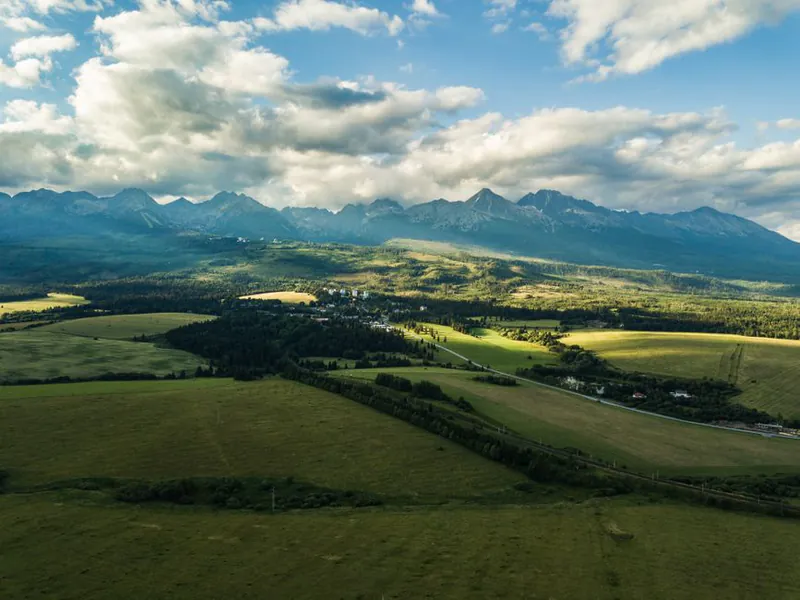
Tatra Mountain region (second homes and remote workers): Liptovský Mikuláš, Poprad, and the High Tatras resort areas offer skiing and hiking. Apartments of 50-70 m² in Poprad or Tatranská Lomnica: €120,000-200,000. Rising demand from Bratislava residents and Czech buyers has compressed yields, but the lifestyle product is genuine.[22]
Bratislava second district (Ružinov / Vrakuňa) new-build market: The most active construction zone. Developers including Corwin, YIT, and Penta Real Estate are delivering large-scale residential projects. Pre-completion prices are typically 5-10% below completed market price. VAT applies to new-build purchases within 5 years of completion - factor this into the purchase budget.[28]
Capital Gains on Property
| Holding Period | Capital Gains Treatment |
|---|---|
| Over 5 years | 0% - fully exempt[16] |
| Under 5 years | 19-25% (included in personal income tax base)[16] |
| Primary residence (only property owned) | Exempt regardless of holding period[16] |
Rental income: 19% personal income tax, with the option to use the 60% flat-rate expense deduction (effective tax on turnover: ~7.6%).[17]
Mortgage availability for foreigners: Slovak banks (Slovenská sporiteľňa, VÚB, Tatra banka, UniCredit) offer mortgages to non-residents with documented income. LTV typically 70-80% for residents; non-residents may need 30-40% down payment. Rates in 2026: approximately 3-4% fixed for 3-5 years.[16]
Climate: Continental Central Europe. Winters Are Actual Winters.
Bratislava sits at 48° north latitude - the same as Paris. The climate is continental, meaning summer heat is real and winters are genuinely cold. This is not the mild maritime climate of Western Europe.
| Season | Period | Temperature (Bratislava) | Conditions |
|---|---|---|---|
| Winter | December-February | -5 to +5°C | Snow; icy; grey; occasionally bitterly cold; ~6-8 hours daylight |
| Spring | March-May | 8-20°C | Variable; transitions fast; blossoms by mid-April |
| Summer | June-August | 22-35°C | Hot; occasional heat waves (35°C+); long days; excellent for outdoor activities |
| Autumn | September-November | 5-20°C | Beautiful; wine harvest season in the Malé Karpaty; cooling fast by October |
The practical note on Slovak winters: The grey, cold period from late November to early March is genuinely challenging for people not accustomed to it. Daylight in December: 7-8 hours. Average cloud cover: high. Slovak expats describe the social life moving indoors - wine bars, thermal spas, skiing (Jasná, Chopok, and other Slovak resorts are 2-3 hours from Bratislava), and the vibrant Christmas market culture. The Tatras in February are extraordinary if you ski.
Summers: Bratislava summers are the compensation. June-August brings long evenings, a terrace café culture that rivals Vienna's, the Bratislava Jazz Festival, and easy access to Austrian lakes and Croatian coast (both reachable in 5-6 hours by car).
Wine country: The Malé Karpaty ridge above Bratislava is one of Slovakia's primary wine regions. Autumn harvest season (September-October) combines excellent walking with regional wine. Pálava and Tokaj wine regions are within easy drive.
Where to Live: Bratislava, Košice, the Tatras, or a Remote Town
Bratislava - The Only Realistic First-Base Choice
Population approximately 480,000 in the city, 700,000+ in the metro area. All infrastructure, all job opportunities in services and professional functions, all international schools, and 90% of the expat community are in Bratislava. Its position on the Danube at the Austrian and Hungarian borders makes it the most internationally connected small capital in the EU.[21]
The historical old town is genuinely beautiful - UNESCO-protected parts, a functioning medieval centre that hasn't been over-touristified. The restaurant and café scene is excellent and cheap by Western European standards. Vienna is 60 minutes by EC train (hourly, €20-30 one-way).
Košice - The Eastern Alternative
Slovakia's second city. Population 230,000. EU Capital of Culture 2013 alumni. Strong aerospace, IT (IBM, U.S. Steel, T-Systems), and university sector. The centre is a beautifully preserved baroque main street (Hlavná ulica). Materially cheaper than Bratislava: 1-BR city centre €400-600, daily restaurant lunch €5-7. The TUKE (Technical University) and UPJŠ attract international students.[21]
The Košice case for expats: IT professionals working remotely or for local tech employers, families willing to be 5 hours from Bratislava by train (direct bus 6 hours; air 1 hour), and those who want a genuine Central European urban experience without Bratislava's tourist pricing and proximity to the Vienna orbit. The main missing piece: fewer English-language international school options.[29]
The High Tatras - For Remote Workers and Lifestyle Movers
Poprad, Liptovský Mikuláš, Tatranská Lomnica, Štrbské Pleso. Not practical bases for corporate employment. Excellent for fully remote workers, retirees, or seasonal residents. World-class skiing (Jasná resort: longest ski run in the Carpathians, 6 km), summer trekking, thermal spas at every turn (Aquapark Tatralandia in Liptovský Mikuláš is Europe's largest). Property significantly cheaper than Bratislava - 2-BR apartment in Poprad: €120,000-180,000.[21]
The practicality constraint: the nearest international school is in Bratislava. Internet in newer buildings is fast (fibre is well-deployed in Slovak towns); remote work is operationally viable. Medical care for routine needs: district hospitals in Poprad and Liptovský Mikuláš; complex care requires Košice or Bratislava.
City Comparison
| Bratislava | Košice | Poprad / Tatras | |
|---|---|---|---|
| International airport | Yes (BTS, + Vienna 60 km) | Yes (KSC, regional) | None (Poprad small airfield) |
| Public hospital | Yes (teaching hospitals) | Yes (FNLP Košice) | District only |
| International school | Yes (BISB, EISB, QSI etc.) | Limited English options | None |
| Expat community | Large (SSC, diplomatic, EU) | Medium (IT, industrial) | Small (remote, seasonal) |
| 1-BR rent (centre) | €740-950[20] | €400-600[21] | €350-500 |
| Best for | All expat profiles | IT/tech, budget, culture seekers | Remote workers, lifestyle |
International Schools: IB, British, American - Full Range in Bratislava
Bratislava has one of the most complete international school landscapes of any Central European capital relative to its size.[30]
| School | Curriculum | Annual Fees (EUR) |
|---|---|---|
| British International School Bratislava (BISB) | British NC, IGCSE, IB Diploma | €12,640-27,530[30] |
| Cambridge International School | British, IGCSE, A-Levels | €15,400-21,500[31] |
| English International School Bratislava (EISB) | IB PYP, MYP, Diploma | €8,280-18,300[32] |
| QSI International School of Bratislava | IB Diploma, American, SAT, AP | €11,960-26,588[31] |
| LEAF Academy | American, AP, SAT; boarding available | €8,900 (day)[31] |
| American Academy | American, AP | €15,000-17,000[31] |
| Lycée Franco-Slovaque | French, Baccalauréat | €5,550-6,930[31] |
| King Schools International | British, IGCSE, A-Levels | €10,080-16,050[31] |
| Brilliant Stars International | British | €8,440-11,440[31] |
The EISB pricing in detail: Year 1 (primary): €8,280/year; Year 11-13 (IB Diploma): €18,300/year. Registration fee: €590 (one-time, non-refundable). Sibling discounts: 5% second child, 10% third child and beyond.[32]
General range: €7,000-27,000/year. This is 30-50% cheaper than equivalent international schools in Dubai or Singapore, and comparable to or below Kuala Lumpur's tier-1 international schools.[30]
Application fees: €300-1,000, non-refundable. Apply 6-12 months in advance for BISB and EISB - both are typically at or near capacity for IB years. Mid-year entry is possible but space-limited in the most popular programmes.[30]
Slovak public schools: Free from age 6, instruction entirely in Slovak. Many expat children who arrive young (3-7 years old) integrate successfully into Slovak public kindergartens and elementary schools - Slovak language acquisition is fast at that age and the curriculum is strong in STEM. This is increasingly popular among long-term expat families who want full cultural integration and are willing to commit to the language.
Working in Slovakia: The SSC Economy and What It Pays
The Slovak labour market for English-speaking professionals is structured around a specific employment ecosystem.
Where expats are employed:[6][21]
- Shared Services Centres (SSCs): The biggest employer of foreign professionals. IBM, AT&T, Dell, Cisco, Johnson Controls, Accenture, Henkel, Walmart Global Tech, and dozens of others run their European back-office operations from Bratislava. Roles: finance and accounting (AP/AR/GL), HR operations, IT helpdesk (multi-lingual), supply chain management, legal operations. Languages other than English are a premium - French, German, Dutch, Spanish, Italian speakers are in strong demand
- IT and tech startups: A growing startup ecosystem; Vacuumlabs, ESET (antivirus software), GoodRequest, and numerous fintech companies are headquartered in Bratislava. Competitive for senior engineers and product managers
- Automotive industry (for engineers): VW Slovakia, Stellantis, JLR, Kia - need specialised manufacturing engineers, quality management professionals, and logistics managers. Based in Bratislava, Trnava, Nitra, and Žilina respectively
- Financial services: Tatra banka, VÚB Banka, Slovenská sporiteľňa, and international insurers (Allianz, Generali) hire internationally for senior and specialist roles
- Diplomacy and international organisations: The embassies of all major countries are in Bratislava; the OECD Forum on Tax Administration, OSCE institutions, and various EU agencies maintain presences
Gross monthly salary benchmarks (Bratislava, 2026):[21][5]
| Role | Gross Monthly (EUR) |
|---|---|
| SSC analyst (finance, junior) | €1,200-1,600 |
| SSC team lead / senior analyst | €1,800-2,800 |
| IT developer (mid-level) | €2,500-4,000 |
| Senior software engineer | €3,500-6,000+ |
| Finance manager / controller | €2,500-4,500 |
| Country manager / senior director | €4,000-8,000+ |
The real-wage advantage: At €1,680 average gross monthly wage and €1,250-1,800/month cost of living for comfortable expat lifestyle, a mid-level professional earning €2,500-3,000/month gross has meaningful disposable income after tax and social contributions. This is the fundamental arithmetic that makes Slovakia - particularly for expats relocating from higher-cost EU countries - a serious quality-of-life upgrade.[3][5]
Your First 30 Days: The Practical Checklist
Register your residency at the Foreign Police (for non-EU nationals) or District Office (for EU citizens) - Do this within the first 10 working days of establishing residence. EU citizens: District Office (Obvodný úrad), registration section; bring passport/ID, lease, employment contract or proof of income. Non-EU: Foreign Police Department (Cudzinecká polícia) for the Temporary Residency Permit. The Bratislava Foreign Police is at Riaditeľstvo hraničnej a cudzineckej políce, Pribinova 2, Bratislava. Book your appointment online via minv.sk - walk-in appointments are not available
Get a Slovak SIM or port your EU number - Orange, Telekom Slovakia, and O2 are the three main networks. Coverage is excellent nationwide including in the Tatras. A monthly plan with unlimited data and calls: €10-20. Buy with passport at any network shop or major mall. EU roaming means most EU residents can use their home country SIM in Slovakia without extra cost - but a local SIM simplifies banking registrations
Open a Slovak bank account - Tatra banka, VÚB, and Slovenská sporiteľňa (Erste Group) are expat-friendly. ČSOB has good digital banking. Required documents: passport, residence registration confirmation, employer letter or proof of income. For EU citizens: same-day or next-day account opening at most branches. For non-EU: may require the Temporary Residency permit. Online-only banks (Revolut, N26) are operational in Slovakia but insufficient for payroll deposits - get a Slovak IBAN account for that
Register with your health insurance company - As soon as you have a Slovak residence and employment, you must register with one of the three insurance companies: VšZP (www.vszp.sk), Dôvera (www.dovera.sk), or Union (www.union.sk). Your employer typically handles this for employed workers. Self-employed persons must register independently within 8 days of commencing business activity. Choose Dôvera or Union for better access to English-speaking private clinics - both have preferred provider networks that include central Bratislava private practices[23]
Get your Živnostenský list if self-employed - File your trade licence application at the District Trade Licensing Office (Živnostenský úrad) or online at slovensko.sk. For EU citizens, the process takes 3 working days, costs €7 for a free trade. Non-EU nationals need the Business Residence Permit first - the živnosť follows once the permit is approved. Register with the Tax Authority (Finančná správa SR) for your Slovak Tax ID (DIČ) within 30 days of commencing activity[14]
Set up public transport - Bratislava's tram, trolleybus, and bus network is comprehensive and cheap. Monthly pass: €26.90. Buy the BHD pass online or at any Dopravný podnik Bratislava (DPB) point. The Bratislava City Card (tourist/temporary resident version) also covers the airport bus. If commuting from Vienna: RegioJet and CD/ÖBB rail tickets Bratislava-Wien HBF are bookable at regiojet.com; EC trains run hourly, ~55 minutes, €15-25[3]
Get a GP (obvodný lekár / praktický lekár) - Under public health insurance, register with a GP in your district. Your insurance card (Preukaz poistenca) is issued by your insurance company - this is your identity document for all healthcare interactions. For English-speaking GP care in the interim: Mediklínika, Svet Zdravia, and Euro-Clinic all take patients without prior registration. Walk-in private GP visit: €30-60[23]
Begin Slovak language basics - Unlike English-medium expat environments like Dubai, Singapore, or Botswana, Slovakia requires working Slovak for anything beyond Bratislava's core city centre. Immigration procedures, banking outside the main branches, municipal services, healthcare outside premium private clinics - all are significantly easier with basic Slovak. Apps: Duolingo has a Slovak course; HelloTalk and Tandem connect you with language exchange partners; the IOM Migration Information Centre (mic.iom.sk) offers free Slovak language courses for third-country nationals[14]
Assess citizenship by descent early - If you have Central European or Slovak family history, check whether your grandparents or great-grandparents were born in present-day Slovak territory. The July 2026 amendment removes the residency requirement - you can now apply from abroad. Contact FALATH & PARTNERS or another Bratislava-based citizenship-by-descent specialist for a free preliminary assessment. This is one of the most underused and highest-value pathways to EU citizenship available[1]
Sort your car (if needed outside the centre) - Bratislava city centre is manageable without a car. Anywhere outside - particularly if commuting from the suburbs or wanting weekend access to Tatras, Piešťany, or Vienna - requires a vehicle. Slovak traffic is on the right side (continental European standard). A Slovak driving licence is required for long-term residents; most Western licences convert without a test at the District Traffic Inspectorate. International Vehicle Motorway Sticker (diaľničná nálepka): €10 for 10 days, €50/year - required on Slovak motorways; purchased at petrol stations and post offices
Key Data at a Glance
| Indicator | Value |
|---|---|
| GDP (current prices, 2026) | ~USD 169 billion[9] |
| GDP growth 2026 (Finance Ministry) | 1.3%[7] |
| GDP growth 2026 (NBS Spring) | 1.9%[6] |
| GDP growth 2025 actual | 0.8%[10] |
| Population | ~5.4 million[8] |
| Currency | Euro (€) - Eurozone member since 2009[5] |
| Personal income tax - rate structure (from 1 Jan 2026) | 19% / 25% / 30% / 35% (four brackets)[4] |
| Employee social contributions | ~13.4% of gross salary[5] |
| Employer social contributions | ~34.6% of gross salary[5] |
| Corporate tax (standard s.r.o.) | 21%[5] |
| Micro-enterprise rate (≤€100,000 revenue) | 15%[5] |
| VAT (standard) | 23%[5] |
| Dividend withholding tax (2025+ profits) | 7%[4] |
| Capital gains (property >5 years) | 0%[16] |
| Property transfer tax | 0%[16] |
| Annual property tax | ~€0.033/m² (negligible)[17] |
| Tax residency trigger | 183 days in calendar year[4] |
| Income taxation basis | Worldwide for residents[4] |
| EU/EEA citizens | Free movement; register within 10 days of 90-day stay[11] |
| Non-EU work permit (Employee Card) | Up to 90 days processing; valid up to 2 years[11] |
| EU Blue Card salary threshold | 1.2× average monthly wage (~€2,016/month gross in 2026)[15] |
| EU Blue Card validity | 60 months[15] |
| Permanent residency | 5 years continuous residence[13] |
| Citizenship (standard naturalisation) | 8 years total (including ≥5 years PR)[8] |
| Citizenship by descent (2026 amendment) | No residency required; apply from abroad; effective 15 July 2026[1] |
| Dual citizenship for prior holders | Permitted - keep all prior citizenships[2] |
| Živnosť (trade licence) for EU citizens | €7, issued in 3 working days[14] |
| Business permit quota (non-EU) | 700/year nationwide (from July 2025)[11] |
| Bratislava 1-BR rent (city centre) | €740-950/month[20][18] |
| Comfortable single expat budget | €1,250-1,800/month[3] |
| Vienna comparison | 39% cheaper than Vienna[18] |
| Monthly transit pass (Bratislava) | €26.90[3] |
| International school (top range) | BISB: €12,640-27,530/year[30] |
| Private GP visit | €30-60[23] |
| Public health insurance (employee) | 4% of gross (employee) + 10% (employer)[5] |
| Crime Index (Numbeo 2026) | 30.5 - Low[24] |
| Safety walking alone at night | 64.2 - High[26] |
| Drive side | Right (continental European) |
| Language | Slovak - Slavic language; English spoken widely in Bratislava business environment |
| Emergency | 112 (universal), 155 (medical), 158 (police), 150 (fire) |
The July 2026 citizenship-by-descent amendment is the headline development: an EU passport achievable from abroad, at administrative cost, with no residency requirement. For anyone with Slovak or Czechoslovak ancestry within three generations, that calculation is straightforward. For everyone else, Bratislava's combination of Eurozone stability, 39% lower costs than Vienna, Central European connectivity, and a functioning EU legal framework still makes it one of the most underrated expat bases in Europe.
References
2026 Citizenship Act Amendments - FALATH & PARTNERS, based in Bratislava, is recognized as a leading Slovak law firm specializing in c...
Cost of Living in Bratislava 2026 - Monthly expenses breakdown for expats living in Bratislava, Slovakia.
Slovak Republic - Individual - Taxes on personal income - Detailed description of taxes on individual income in Slovak Republic
Cost of Living in Slovakia 2026: Monthly Budget & Rent - Slovakia adopted the euro in 2009, making it one of the few Central European EU members in the Euroz...
Macroeconomic Outlook - AmCham Slovakia - As part of the “Future Ready Slovakia: Let’s Talk Competitiveness” conference, we created a special ...
FinMin Lowers GDP Growth Forecast for 2025 - Slovakia's GDP growth should decelerate to 0.8 percent under the influence of weaker net exports, wh...
Procedure to obtain citizenship... - If you want to apply for citizenship in Slovakia, our lawyers are your guide throughout the applicat...
Economic Outline - Lloyds Bank Trade Portal - description_atlas__doing-business__2-introduction_contexte.html
Slovak Republic's 2026 IMF Review Highlights Fiscal Strategy and ... - The IMF has completed its 2026 Article IV review of the Slovak Republic. With growth at 0.8% in 2025...
Slovakia Visa Options for Expats 2026: Requirements, Costs & How to Apply - Slovakia is a Schengen Zone and EU member, allowing visa-free entry for US, UK, Canadian, Australian...
Obtaining Slovak Residence Permit in 2026: Essential Guide - Discover how to apply for a residence permit in Slovakia in 2026. Learn about the requirements, appl...
Permanent residence permit for 5 years in Slovakia (2026) | AKMV - In the article you can find information about permanent residence permit for 5 years (citizen of a t...
Obtaining a trade license - We provide free services to non-EU nationals: Legal advice, Labour and social counselling, Support o...
EU Blue card in Slovakia - Migration and Home Affairs - Slovakia requires that the salary is agreed at least in the amount of 1.2 multiple of the average mo...
Slovakia Real Estate 2025: Foreign Buyer Rules, Yields & Where to ... - A 2025 guide to purchasing real estate in Slovakia-covering foreign buyer rights, taxes, rental yiel...
Property Investment in Slovakia as a Foreigner - Buyers of real estate in Slovakia pay a mandatory notary and registration fee. When buying a new apa...
Cost of Living in Bratislava 2026 - Expat Guide | WhatLifeCosts - Cost of living in Bratislava 2026 - rent €700/month, beer €2, transport €35/month. Full expat guide ...
Cost of Living in Bratislava, Slovakia in 2026 - This page contains up-to-date cost of living information for Bratislava, Slovakia in 2026. Compare p...
Slovakia Cost of Living 2026 - Expat Data | WTE - Detailed cost of living comparison across 1 cities in Slovakia. Rent, monthly budgets for singles an...
Top Expat Neighborhoods in Slovakia: Bratislava, Košice & Beyond - Discover the most sought-after neighborhoods for expats in Slovakia, focusing on Bratislava, Košice,...
Best Areas to Buy Property in Bratislava (2026) - Investropa - The latest update about best neighborhoods in Bratislava. Rents, rental income, vacancy, yields, occ...
Healthcare in Slovakia for Expats 2026: Insurance, Costs & Hospitals - Slovakia's healthcare system is based on universal coverage through mandatory social health insuranc...
Crime Comparison Between Copenhagen, Denmark And Bratislava ... - Crime Comparison Between Copenhagen and Bratislava ; Crime Index: 26.31, 30.31 ; Safety Scale: 73.69...
Safety Index by City 2026 - Cost of Living - Safety Index by City2026 ; 81, Bratislava, Slovakia, 69.5 ; 82, Ottawa, Canada, 69.0 ; 83, Malaga, S...
Crime in Bratislava, Slovakia - Cost of Living - Crime rates in Bratislava, Slovakia ; Problem people using or dealing drugs. 33.98 ; Problem propert...
Crime Comparison Between Paris, France And Bratislava, Slovakia ... - Crime Comparison Between Paris and Bratislava ; Problem property crimes such as vandalism and theft....
How to Buy Property in Slovakia as a Foreigner - Property and house buying guide to Slovak Republic. What costs are involved? How complex is the buyi...
Schools in Slovakia for Expat Families 2026: Costs & Options - Slovakia offers both public and private education options for expat families. The public school syst...
Best International Schools in Bratislava - The yearly tuition fees for International Schools in Bratislava generally range from $7,000 to $15,0...
Best International School in Bratislava | Full Overview and Fees - Best International School in Bratislava | Full Overview and Fees Looking for the best international ...
Frequently Asked Questions
What is the cost of living in Bratislava compared to Vienna? Bratislava is approximately 39% cheaper than neighboring Vienna (just 60 km away) in rent and consumer prices, while sharing the same Euro currency and Schengen border-free travel.
What are the personal income tax brackets in Slovakia in 2026? Slovakia taxes employment income under progressive brackets: 19% up to €47,537 annually, and 25% on income exceeding that threshold.
How does Slovakia's Citizenship by Descent program work? Individuals with a Slovak or Czechoslovak parent, grandparent, or great-grandparent who was born on Slovak territory can qualify for citizenship by descent without an upfront language exam.
Do foreigners face restrictions when buying property in Slovakia? No. Foreign nationals (both EU and non-EU) can buy residential and commercial property in Slovakia with full freehold ownership and zero transfer tax.
Cover photo by Michal Vaško on Pexels.
Want to see how Slovakia stacks up?
Are you seriously considering a move? Use our interactive tools to explore Slovakia's climate, tax brackets, and nomad visas.