Moving to Serbia in 2026: The 10% Freelancer Tax Haven You're Probably Ignoring
July 22, 2026
ShareSerbia has no branded "digital nomad visa" - and doesn't need one, because its flat-rate freelancer tax system already delivers one of the lowest effective tax burdens in Europe, often under 10%. Belgrade also happens to be a genuine EU-adjacent capital where mass anti-government protests have run continuously since November 2024, and where a one-bedroom apartment still costs less than $930 a month. This is everything you need to know before you move.[1][2][3]
The Economy: Eyes Open
Serbia's 2026 growth story has been genuinely volatile, and any guide claiming otherwise isn't reading the IMF's own revisions carefully. The Fund's October 2025 forecast pegged 2026 growth at 3.6%. By January 2026 that had already been trimmed to 3.0%, and by April 2026 - citing the Middle East conflict's impact on energy prices - the IMF cut it further to just 2.8%, alongside a sharply higher inflation forecast of 5.2%, well above the National Bank of Serbia's 3% ± 1.5 percentage point target. Then, in a striking reversal at the IMF's May 2026 Spring Meetings, the Fund's mission projected Serbia's growth at 3.9% for 2026, rising to 4.1% in 2027 - a jump domestic economists attribute to resilient consumption and a good agricultural year offsetting the earlier energy-price shock.[4][5][6][7]
The whiplash across three consecutive IMF revisions in six months (3.6% → 2.8% → 3.9%) reflects genuine uncertainty tied to the Middle East conflict's spillover into energy and food prices, not domestic mismanagement. Public debt remains comfortably below 50% of GDP, though the fiscal deficit is expected to widen slightly to around 3% of GDP in 2026 due to high public investment. Unemployment sits at a projected 8.8%, edging down to 8.7% in 2027. For a prospective mover, the honest takeaway is that Serbia's macro picture is stable but currently reactive to external shocks well beyond its control - worth monitoring rather than assuming static.[6][8][7]
Visas and Residency: What Changed in 2026
No Branded Digital Nomad Visa - And Arguably No Need for One
Serbia has never created a dedicated "digital nomad visa" category in law. Instead, the government routes remote workers through the self-employment temporary residence pathway, formalized and fully digitalized since 1 February 2024 as the Unified Residence and Work Permit. This single-permit system merges what used to be two separate applications (residence, then work) into one process submitted through the official portal, eforeigner.welcometoserbia.gov.rs.[9][10][11]
The Core Routes
| Route | Requirement | Duration | Best For |
|---|---|---|---|
| Self-Employment (Entrepreneur/Preduzetnik) | Registration with APR + proof of financial means | Up to 3 years, renewable | Freelancers, remote workers, most expats[9] |
| Independent Professional (Single Permit) | €3,500/month income, 3+ years experience in field | 3 years, renewable | High-earning remote professionals[9] |
| Other Grounds (Passive Income/Retirement) | ~€450-500/month proof of subsistence | Up to 3 years, renewable | Retirees, pensioners[9] |
| Property Ownership | Own qualifying Serbian real estate | Tied to residence permit basis | Property buyers[10] |
| Company Formation (d.o.o.) | Register a Serbian limited liability company | Up to 3 years, renewable | Entrepreneurs building a local business[10] |
| Family Reunification | Marriage/family tie to a Serbian citizen | Up to 3 years, renewable | Spouses/family of citizens[10] |
The 90-Day Reset Trick - And Why It's Risky Long-Term
Most Western passport holders (US, UK, EU, Canada, Australia, and 100+ other nationalities) enter Serbia visa-free for 90 days within any rolling 180-day period - critically, this allowance is entirely separate from the Schengen 90/180 limit, effectively doubling the usable time available to someone splitting life between Serbia and the EU. Some remote workers simply exit and re-enter to reset the clock, and it's technically legal, but border officers can refuse entry if they suspect the pattern is being gamed - not a reliable long-term strategy for anyone planning to actually settle.[10]
The White Card: Non-Negotiable Registration
Every person entering Serbia - tourist or resident - must register their address within 24 hours of arrival, known as the White Card (Beli Karton). Hotels and Airbnbs handle this automatically; private apartment stays require the landlord or tenant to register at the local police station. Since 1 January 2026, private-sector registration must go through mandatory online registration via the Serbian Ministry of Interior's portal. Skipping this is a legal violation and creates real problems if anything goes wrong - an accident, hospital visit, or police check.[3][10]
Processing and Costs
| Step | Time/Cost |
|---|---|
| Self-employment registration (APR) | 2-5 days via lawyer[10] |
| Temporary residence application | 15-30 days[9] |
| Government fee | Under €30 (a few thousand RSD)[10] |
| Typical lawyer fee (full service) | €300-500[10] |
| Biometric card issuance | Included in processing[10] |
Path to Permanent Residency and Citizenship
Since Serbia's 2023-2024 reforms, permits are now granted for up to 3 years at a time (up from the previous 1-year cycle), and permanent residency becomes available after 3 continuous years on a temporary permit - down from the previous 5-year requirement. From permanent residency, Serbian citizenship is the logical next step, though naturalization itself remains subject to separate language and integration requirements. This 3-year track to permanent status is genuinely fast by regional standards.[12][10]
The Frilenseri Tax Portal and 90-Day Exemption
Since 1 January 2023, Serbia's Tax Administration operates a dedicated self-assessment portal for freelancers called Frilenseri, and non-resident remote workers who stay 90 days or less within a rolling 12-month period and work exclusively for non-resident clients are fully exempt from Serbian personal income tax - a genuinely useful short-stay carve-out for nomads not seeking full residency.[11]
Cost of Living: The Real Numbers
Belgrade delivers genuine European-capital living at a fraction of Western European cost. A single person spends $1,411-$1,637/month including rent, or roughly $800-$987/month excluding rent, according to 2026 trackers. Budget-conscious singles can get by on $882-$1,153/month including rent, while comfortable-to-luxury living reaches $3,109/month.[13][1]
Rent by Area (Belgrade, 2026)
| Housing Type | City Center | Outside Center |
|---|---|---|
| 1-Bedroom | $928/month[1] | $606/month[1] |
| 3-Bedroom | $1,788/month[1] | $1,214/month[1] |
Monthly Expenses (Belgrade, 2026)
| Item | Cost (USD) |
|---|---|
| Basic utilities (electricity, water, heating, cooling) | $225.59/month[1] |
| Mobile phone plan | $21.60/month[1] |
| Broadband internet | $35.90/month[1] |
| Average monthly net salary | $1,110-$1,206[13][1] |
| Family of four (excl. Rent) | $2,800.50/month[1] |
Belgrade's average monthly salary of roughly $1,110-$1,206 runs meaningfully below the average expat cost of living, underscoring that this is a market where local wages and expat purchasing power diverge sharply - good news for anyone earning in euros or dollars. Since 1 January 2025, all city public transport (trams, trolleybuses, and buses within Belgrade's urban limits) is free, a small but genuinely useful daily-cost reduction.[13][1][3]
Taxes: What You Actually Pay
Serbia's standard personal income tax rate sits at 10-15%, but the real story for most remote workers is the paušalac (flat-rate/lump-sum) entrepreneur regime, which can push effective tax rates below 10% for qualifying freelancers.[2][9]
| Tax Category | Rate |
|---|---|
| Standard personal income tax | 10-15%[9] |
| Flat-rate (paušalac) entrepreneur tax | Fixed lump-sum, often <10% effective[2] |
| Corporate income tax | 15%[9] |
| VAT (standard rate) | 20% |
| Non-resident remote worker exemption (≤90 days, foreign clients only) | 0%[11] |
| Tax residency trigger | 183+ days, or earlier via "intent to reside"[9] |
Resident taxpayers (183+ days) are taxed on worldwide income; non-residents are taxed only on Serbian-sourced income. The paušalac system works by having the Serbian Tax Administration calculate a fixed annual lump-sum tax and mandatory social security contribution based on your registered business category, rather than actual invoiced income - meaning income above the assumed threshold is effectively tax-free at the margin, a structure that genuinely rewards higher-earning freelancers. Annual paušalac tax decisions are delivered electronically via the ePorezi portal, with monthly advance payments due through the year.[14][9]
Healthcare: Public vs. Private
Serbia requires proof of health insurance valid in Serbia as a condition of most residence permit categories, with a typical minimum coverage requirement around €20,000 for long-stay visa and residence permit applications. Public healthcare access for foreigners on a temporary residence permit varies by category and is generally more limited than what citizens receive automatically.[3]
Most expats maintain private international health insurance covering both local Serbian treatment and repatriation, given that specialist capacity for complex procedures can be more limited outside Belgrade's major hospitals. Belgrade's private clinics and hospitals are generally well-regarded regionally, with English-speaking staff common in private facilities serving the international business and diplomatic community - though public system wait times and language barriers can be real friction points for anyone relying solely on the state system.
Safety
Serbia earns a genuinely solid safety reputation on conventional crime metrics: Numbeo's 2026 Southern Europe rankings put Serbia's Crime Index at 37.0 and Safety Index at 63.0 - safer than Spain and Bosnia and Herzegovina, though slightly behind Montenegro. Belgrade specifically scores a Crime Index of 37.8 / Safety Index of 62.2 as of 2026, with violent crime rated "low" and safety walking alone during daylight rated "very high." The homicide rate sits at approximately 1.4 per 100,000, low by international standards and stable year-over-year.[15][16][17][3]
The Genuine 2026 Caveat: Ongoing Political Unrest
This is the detail every current guide needs to flag honestly: Serbia has experienced continuous anti-government protests since November 2024, triggered by a railway station canopy collapse in Novi Sad that killed 16 people. Through summer 2026, these protests have not subsided - a 20 June 2026 rally in Novi Sad drew roughly 4,000 demonstrators, while a pro-government counter-rally in Belgrade on 27 June 2026 drew an estimated 200,000 people. President Aleksandar Vučić announced in May 2026 that early parliamentary elections would be held between late September and mid-November 2026. Isolated clashes involving tear gas and projectiles have occurred, concentrated in Belgrade and Novi Sad, though nothing on the scale of the peak unrest in autumn 2025.[3]
The one area where corruption registers as a genuine problem: Numbeo consistently rates "corruption and bribery" as very high in Belgrade (83+ out of 100), a notable outlier against otherwise low personal-crime scores - relevant context for anyone dealing with bureaucracy, permits, or local business dealings.[15]
Practical Safety Guidance for 2026
- Avoid protest and demonstration areas in Belgrade and Novi Sad, particularly around anniversary dates and announced rally days[3]
- Standard urban precautions apply: don't display large sums of cash, watch belongings on public transport, avoid poorly lit streets at night[3]
- Register your address (White Card) within 24 hours of arrival without exception - this becomes especially relevant if you need police or hospital assistance during any period of unrest[3]
- The primary risks to ordinary residents remain pickpocketing and minor fraud, not violent crime[3]
English in Everyday Life
English is widely spoken among younger Serbians, in Belgrade's business and expat-facing sectors, and throughout the freelancer/remote-work community - genuinely easier than most of Western Europe for day-to-day expat life without Serbian. Government bureaucracy, however, still runs predominantly in Serbian, which is precisely why most expats use a local lawyer for the residence permit and business registration process rather than attempting either alone.[10]
Which City?
Belgrade
The capital and overwhelming center of expat and remote-worker life, offering the country's largest job market, best international connectivity, and the widest range of coworking spaces and international schools. Home to the majority of Serbia's freelancer and startup community, and the location where most self-employment residence permits get processed.[9][10]
Novi Sad
Serbia's second city, roughly 90 minutes north of Belgrade, offering a genuinely lower cost of living, a large student population from the University of Novi Sad, and - since November 2024 - the epicenter of the country's protest movement, a factor worth weighing for anyone particularly averse to political unrest.[3]
Niš
A smaller, significantly cheaper southern city with a growing but still nascent expat and remote-worker presence, appealing primarily to those prioritizing cost over amenities and English-speaking community density.
Buying Property
Serbia allows foreign nationals to acquire residential property - apartments and residential buildings - under the principle of reciprocity: Serbian citizens must be able to acquire equivalent property in the buyer's home country under similarly non-restrictive conditions. In practice, this is treated as "factual reciprocity" rather than requiring formal bilateral treaties, and the US, UK, Netherlands, and Japan hold explicit contractual reciprocity arrangements dating to early-20th-century treaties.[18]
Key Restrictions
| Property Type | Foreign Ownership Status |
|---|---|
| Apartments / residential buildings | Permitted under reciprocity, same conditions as Serbian citizens[18] |
| Land beneath/around the residence (for regular use) | Permitted as part of the residential purchase[18] |
| Other undeveloped land | Restricted - generally not permitted for non-business purposes[18] |
| Agricultural land | Prohibited for foreign individuals/entities, with narrow EU-treaty exceptions[18] |
| Business-use property | Permitted under reciprocity if property is necessary for business activity[18] |
Owning qualifying Serbian real estate is itself a valid, standalone basis for applying for a temporary residence permit - a genuinely direct property-to-residency link that doesn't exist in most European markets. Given the reciprocity complexity and agricultural-land restrictions, working with an experienced local property lawyer before any purchase is standard, non-optional practice.[19][10]
Your First Steps: The Checklist
- Choose your residence basis before anything else - self-employment (paušalac) suits most remote workers, while the €3,500/month Independent Professional route suits high earners wanting a faster, cleaner classification[9]
- Register as a sole trader (preduzetnik) with the APR if pursuing the self-employment route - most lawyers handle this in 2-5 days[10]
- Register your address (White Card) within 24 hours of arrival, without exception, using the mandatory online portal if renting privately[10][3]
- Confirm your paušalac tax category and expected lump-sum liability with a Serbian accountant before assuming any specific effective tax rate - the fixed-sum structure varies by registered business activity[14]
- Budget realistically: Belgrade running $1,400-$1,650/month for a comfortable single lifestyle, with a city-center one-bedroom at roughly $930/month[1][13]
- Arrange private international health insurance meeting the ~€20,000 minimum coverage threshold before applying for any long-stay visa or residence permit[3]
- Track the 2026 election calendar and protest activity if timing a move to Belgrade or Novi Sad - elections are expected between late September and mid-November 2026[3]
- Verify property reciprocity status for your specific nationality with a Serbian real estate lawyer before making any purchase offer[18]
- Never rely on the 90-day exit-and-re-entry trick as a long-term strategy - apply for a proper temporary residence permit if planning to stay beyond a few cycles[10]
- Use a local immigration lawyer for the full permit process - most charge €300-500 flat and handle the Serbian-language government portals entirely[10]
Key Data at a Glance
| Indicator | Value |
|---|---|
| GDP Growth 2026 (IMF, May 2026 Spring Meetings) | 3.9%[6] |
| GDP Growth 2026 (IMF, April 2026, prior revision) | 2.8%[7] |
| GDP Growth 2027 (IMF) | 3.5-4.1%[5][6] |
| Inflation Forecast 2026 | 5.2% (April estimate)[7] |
| Public Debt | Below 50% of GDP[8] |
| Unemployment 2026 | 8.8%[7] |
| Standard Personal Income Tax | 10-15%[9] |
| Flat-Rate (Paušalac) Effective Tax | Often <10%[2] |
| VAT | 20% |
| Path to Permanent Residency | 3 continuous years (reduced from 5)[12] |
| Residence Permit Duration | Up to 3 years, renewable[9] |
| Visa-Free Stay (most Western passports) | 90 days per rolling 180-day period[10] |
| Numbeo Crime Index (Serbia, 2026) | 37.0[17] |
| Numbeo Safety Index (Serbia, 2026) | 63.0[17] |
| Homicide Rate | ~1.4 per 100,000[3] |
| Single Person Monthly Cost (Belgrade, incl. Rent) | $1,411-$1,637[1][13] |
| 1-BR Rent, City Center (Belgrade) | $928/month[1] |
| Average Monthly Salary (Belgrade) | $1,110-$1,206[13][1] |
| Health Insurance Minimum (visa requirement) | ~€20,000 coverage[3] |
| Ongoing Protests Since | November 2024, continuing through mid-2026[3] |
| Expected Early Elections | Late September - mid-November 2026[3] |
Serbia in 2026 rewards a specific, genuinely underserved profile: remote workers and freelancers who want low effective taxation, a fast 3-year path to permanent residency, and genuine European-capital living at Balkan prices - provided they're comfortable navigating a country mid-way through its longest sustained period of political unrest in over a decade.
References
Belgrade Cost of Living (2026) - Rent, Prices & Safety - Voyica - Belgrade, Serbia: ~$1,411/mo cost of living, $928 1BR rent, 104 Mbps internet, safety 65/100. Compar...
Serbia Digital Nomad Visa 2026: The Truth + Flat-Tax Route - Enomads - No branded DN visa - but Serbia's flat-tax entrepreneur route gives low fixed tax, fast setup, and a...
Опасно ли в Сербии: актуальная обстановка и рекомендации для ... -
Обновлено 2 июля 2026 года. В Сербии продолжаются массовые протесты, начавшиеся ...
IMF downgrades 2026 growth projection for Serbia to 2.8 pct ...
The IMF has announced that Serbia is expected to experience ... - B92 - Serbia is expected to see economic growth of 2.8% in 2026, with an acceleration to 3.5% in both 2027...
IMF: Serbia GDP growth 3.9 percent in 2026, inflation 3 to 3.6 ... - Serbia real GDP growth 3.9 percent in 2026, projects real GDP growth of 3.9 percent for Serbia in 20...
IMF lowers Serbia's growth forecast for 2026 - The International Monetary Fund (IMF) has revised down its forecast for Serbia's economic growth to ...
The IMF Forecasts 3% Economic Growth, Stronger ... - NALED - During the past year, Serbia recorded a slowdown in economic growth - GDP increased by only
Serbia Digital Nomad Visa for British Passport Holders (2026) - Serbia digital nomad temporary residence 2026: requirements, income threshold, eligible nationalitie...
How to Stay in Serbia Legally - Simple Guide 2026 - How long can you stay in Serbia? Do you need a visa? What's the White Card? Everything explained in ...
Serbia digital nomad visa & residency (2026) - Anurag Verma - Digital Nomad & Residency in Serbia: current status, key rules, and a dated, official-source timelin...
Cost of Living in Belgrade, Serbia in 2026 - This page contains up-to-date cost of living information for Belgrade, Serbia in 2026. Compare price...
Delivery of tax decisions for 2026 to flat-rate entrepreneurs ...
The right of a foreigner to acquire real estate in ... - Foreign nationals can acquire property in Serbia if their home country allows Serbian nationals to a...
Foreign Property in Serbia: Rules, Restrictions, and Buying ... - Complete guide to Serbia real estate purchase regulations for foreigners: reciprocity policies, agri...
Frequently Asked Questions
What are the primary visa and residence options for moving to Serbia in 2026? Instead, the government routes remote workers through the self-employment temporary residence pathway, formalized and fully digitalized since 1 February 2024 as the Unified Residence and Work Permit.
How does personal income tax work for expats in Serbia? Serbia's standard personal income tax rate sits at 10-15%, but the real story for most remote workers is the paušalac (flat-rate/lump-sum) entrepreneur regime, which can push effective tax rates below 10% for qualifying freelancers.
What is the average cost of rent and living in Serbia? A single person spends $1,411-$1,637/month including rent, or roughly $800-$987/month excluding rent, according to 2026 trackers.
How many years of residence are required for citizenship or permanent residency in Serbia? From permanent residency, Serbian citizenship is the logical next step, though naturalization itself remains subject to separate language and integration requirements.
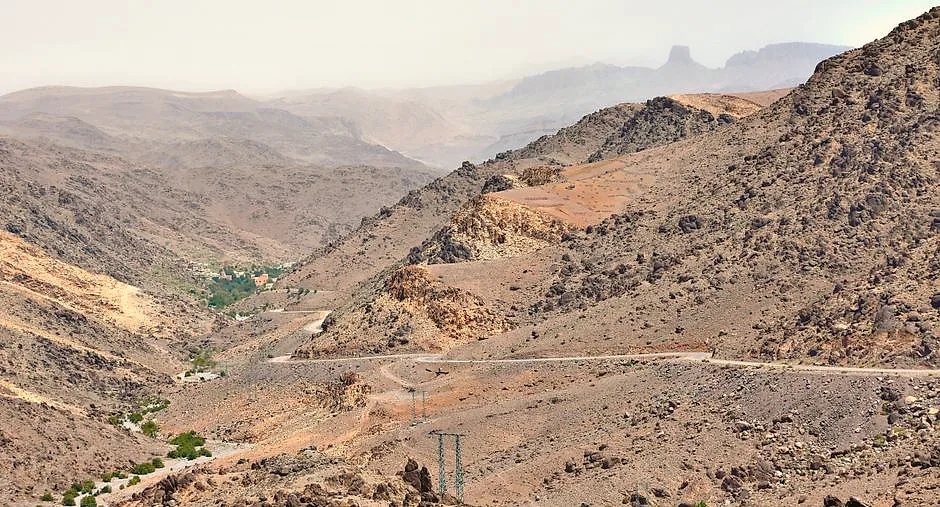
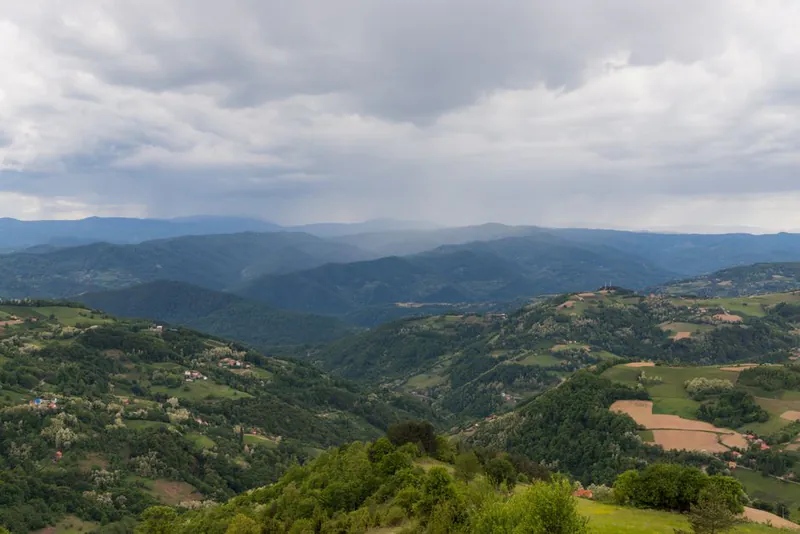
Cover photo by Jovan Vasiljević on Pexels.
Want to see how Serbia stacks up?
Are you seriously considering a move? Use our interactive tools to explore Serbia's climate, tax brackets, and nomad visas.
Head-to-Head Relocation Comparisons
Compare taxes, safety, and living costs of Serbia against top alternatives.