Namibia Digital Nomad Visa 2026: Requirements, Costs, Process, and What Nobody Tells You
June 30, 2026
ShareNamibia’s Digital Nomad Visa (DNV) currently stands as one of the most accessible entry points to the African continent for remote workers, distinguished by a minimum income requirement of only $2,000 per month [1][2]. However, the program’s low financial barrier is offset by a rigid temporal structure: the permit is granted for a maximum of 6 months and is strictly non-renewable [2]. For the strategic traveler, this is not a path to residency, but a high-utility short-term permit.
The visa is a specialized legal category administered by the Namibia Investment Promotion and Development Board (NIPDB) and the Ministry of Home Affairs, Immigration, Safety, and Security (MHAISS) [2]. While the standard 90-day tourist visa is available to many nationalities, the DNV is the only mechanism that explicitly authorizes remote work for foreign employers [3]. Navigating this distinction is critical for practitioners, as working on a tourist stamp remains technically illegal and can lead to deportation.
Entering its fourth year since the 2022 launch [3], the program’s 2026 operational reality is defined by heavy procedural friction. Applicants are subject to intensive medical screenings and a non-negotiable "apply-from-abroad-only" rule [2][4]. Attempting to apply while physically within Namibia’s borders results in an automatic rejection, leaving the applicant with no choice but to exit and restart the process from scratch.
1. What Is Namibia's Digital Nomad Visa?
The Namibian government designed this visa as a tactical economic revitalization tool. By targeting high-earning Western remote workers, the state aims to inject foreign currency into the local economy following the pandemic-induced tourism slump [5]. It positions Namibia as a safe, politically stable, and low-cost hub for those seeking a six-month adventure rather than a permanent relocation.
The program is strictly governed by the NIPDB and MHAISS [2]. The legal framework allows for the following:
- Qualifying Applicants: Freelancers, remote employees, and business owners who derive 100% of their income from foreign sources [3].
- Excluded Activities: Any form of local employment or contract work for Namibian entities is strictly prohibited [2][3].
- Temporal Limit: The visa is issued for a fixed 6-month window [2].
The "One-and-Done" nature of this visa is a common procedural trap. Because the permit cannot be extended and requires a mandatory 12-month wait period before an individual can re-apply, it serves as a finite stay [2]. It does not provide a route to permanent residency; it is an adventure permit with an expiration date that is enforced with administrative precision. Practitioners must also be aware that applying from within the country will trigger a summary rejection [4].
2. Eligibility Requirements
Namibia employs financial and medical "filters" to ensure that nomads are entirely self-sufficient and do not place a strain on the national public health system.
The income floor is tiered based on the presence of dependents:
| Applicant Category | Monthly Income Requirement (USD) |
|---|---|
| Main Applicant | $2,000 [1][2] |
| Accompanying Spouse | $1,000 [2] |
| Per Accompanying Child | $500 [2] |
In addition to the income threshold, applicants must provide:
- Health Coverage: Valid international health or travel insurance covering the entire six-month duration [2].
- Passport Integrity: Minimum 6 months validity remaining at the time of entry [2].
- Background Check: A clean police clearance certificate from the country of origin [2].
For those with non-traditional income streams-such as crypto-traders or variable-rate freelancers-the Motivation Letter is the pivot point of the application. Bank statements must reflect a consistent monthly transfer or balance over the preceding 6 months [2][4]. "Lumpy" income or sudden, unexplained deposits often trigger requests for additional proof, which can freeze an application for weeks.
3. Required Documents
The logistical burden of Namibian bureaucracy should not be underestimated. "Certified" copies are not merely photocopies; they must be notarized or apostilled in the country of origin to be accepted by the MHAISS.
The following documentation is mandatory:
- Visa Application Form (3-1/0033): The primary filing document [2].
- Medical Certificate (3-1/0003): A general health clearance from a physician [2].
- Radiological Report (31/0004): A chest X-ray specifically for Tuberculosis (TB) screening [2][8].
- Police Clearance: Original or notarized document, translated into English if necessary [2].
- Financial Proof: 6 months of bank statements and an active employment contract or service agreement [2][4].
- Motivation Letter: A formal declaration from the employer or the applicant (if self-employed) explaining the remote nature of the work [2].
- Professional Credentials: Certified copies of academic or professional qualifications [2].
The Radiological Report is a significant logistical hurdle. This chest X-ray for TB screening is mandatory for every applicant 12 years of age and over [7]. In Western nations with overstretched medical systems, securing this report can take weeks, often becoming the primary bottleneck in gathering the dossier [8].
Furthermore, administrative precision is required for Form 3-1/0033. Under official directives, a "mere dash" or any incomplete field is considered unacceptable and will result in "unnecessary delay" or rejection [9].
4. Application Process: Step by Step
There is a documented discrepancy between the official 7-10 day turnaround and the real-world experience of applicants, which can stretch to 3 months [4].
- Step 1: Preparation: Gather, translate to English, and notarize all documents. Digitize the final package [4].
- Step 2: Submission: Email the complete dossier to [email protected] [2][4].
- Step 3: Preliminary Review: NIPDB confirms receipt and performs an initial audit before forwarding the package to MHAISS [4].
- Step 4: Ministerial Processing: MHAISS reviews the legal and medical data. Real-world timelines suggest budgeting 60 to 90 days for this phase [4].
- Step 5: Approval & Payment: Upon approval, a fee of NAD 3,300 (~$124 USD) is required [2][4].
- Step 6: Final Issuance: Once payment is confirmed, MHAISS issues a "loose entry visa" for presentation at the border [2].
The payment phase is a critical bottleneck. Bank transfers from abroad can take up to 20 workdays to clear the Namibian system. However, if an applicant has a local representative or friend in Windhoek pay the Ministry in person, the clearance time is slashed to 7 workdays [4].
Warning: The dates provided on the application are fixed. Once written, they cannot be modified. Because of the potential for a 3-month processing delay, applicants should refrain from booking non-refundable flights until the "loose entry visa" is physically in hand [4].
5. Costs: Complete Fee Breakdown
While the government fee is low, the hidden costs of setup (medical reports, notarizations, and translations) can easily exceed the visa fee itself.
| Item | Cost in NAD | Cost in USD (Approx.) |
|---|---|---|
| Main Visa Fee | 3,300 [2][5] | $124 |
| Appeal Fee (if rejected) | 200 [4] | $11 |
| Medical/Radiology | Varies | Applicant-specific |
| Notarization/Apostille | Varies | Origin-country specific |
Namibia represents a "mid-tier" price option in Africa. It is more expensive than Mauritius, which offers a free "Premium Visa," but significantly cheaper than Kenya, where the total yearly permit issuance and processing fees reach approximately $1,200 [10][11]. Note that the NAD 3,300 fee is legally fixed in Namibian Dollars; the USD conversion is subject to exchange rate volatility and is only payable after approval is granted [2].
6. Tax Implications
Namibia utilizes a source-based tax system rather than a residence-based one [12]. In this regime, the state primarily taxes income that originates from a source within Namibia.
Remote workers are generally not taxed locally on their earnings because the "source" of the income is considered to be foreign [3]. This tax-neutral position is reinforced by the NIPDB requirement for a declaration of foreign-only income.
A critical factor is the 183-day threshold. In many countries, staying beyond 183 days triggers a transition to tax residency. Because the Namibia DNV is capped at exactly 6 months (roughly 180-183 days), most nomads naturally avoid falling into the local tax net [3][12]. However, exceeding this stay-even by a few days through other visa types-could technically trigger local tax liabilities on foreign-sourced income [3][5].
7. What This Visa Does NOT Give You
The DNV is a work-authorized stay, not a path to local integration or residency.
- No Local Employment: You are legally barred from working for a Namibian firm [3].
- No PR or Citizenship Path: Time spent on the DNV does not count toward the residency requirements for permanent residency or naturalization [2][4].
- Single Entry Limitations: Officially, this visa does not support multiple entries. Leaving Namibia for a side trip to Botswana or Victoria Falls effectively voids the visa, and you may be denied re-entry on the same permit [8][4].
- Banking Barriers: Holders do not receive a standard residence card. Consequently, opening local bank accounts or securing long-term contracts is exceedingly difficult for DNV holders [3][14].
A significant post-expiry trap exists: Nomads cannot return to Namibia on a tourist visa within the same calendar year once their Digital Nomad Visa has expired [8]. Furthermore, attempting a "change of condition" to switch to another visa type while inside the country is explicitly disallowed [2].
8. Digital Nomad Visa vs. Alternatives
For some, the standard tourist visa remains more flexible, though it leaves the worker in a legal grey area.
| Feature | Digital Nomad Visa | Tourist Visa | SA Remote Work Visa |
|---|---|---|---|
| Duration | 6 months [3] | 90 days [8] | 1-3 years [11] |
| Work Rights | Legal Remote Work [2] | Prohibited | Legal Remote Work [11] |
| Income Req. | $2,000/mo [1] | None | ~$3,000/mo [11] |
| Re-entry | Single Entry [4] | Yes (via border run) [8] | Yes [8] |
The "border run" strategy (leaving for Botswana to reset a 90-day tourist stamp) is common but risky [8]. Border officers have the discretion to deny entry if they suspect you are living in the country on tourist stamps or working illegally.
Quick Reference Cheat Sheet
| Category | Detail |
|---|---|
| Official Name | Namibia Digital Nomad Visa |
| Administering Body | NIPDB & MHAISS |
| Portal Email | [email protected] |
| Min. Income | $2,000 USD/month |
| Duration | 6 Months (Non-renewable) |
| Wait Period | 12 months after expiry to re-apply |
| Government Fee | NAD 3,300 (~$124 USD) |
| Key Hurdle | Chest X-ray (TB) for ages 12+ |
| Rule #1 | Apply from abroad only |
References
[1] WeeTracker. (2025). "How To Apply For A Digital Nomad Visa In Five African Countries."
[2] Namibia Investment Promotion and Development Board (NIPDB). (2026). "Namibia Digital Nomad Visa Official Portal."
[3] Work From Anywhere. (2025). "Namibia Digital Nomad Visa Guide."
[4] WildWifi. (2024). "How to apply for the Digital Nomad Visa Namibia - A Step-by-Step Guide."
[5] IMI Daily. (2026). "15 Digital Nomad Visas That Don't Make You a Tax Resident."
[6] Nomads Embassy. (2024). "Namibia Digital Nomad Visa: How to Apply in 3 Steps."
[7] Republic of Namibia Ministry of Home Affairs. (2026). "Radiological Report 31/0004 - Directives."
[8] Reddit. (2022). "For those interested in working in Namibia for 6 months."
[9] Republic of Namibia Ministry of Home Affairs. (2026). "Form 3-1/0033 Directives."
[10] A Way Abroad. (2026). "6 Digital Nomad Visas in Africa (2026)."
[11] WeeTracker. (2025). "South Africa Remote Work Visa Requirements."
[12] PwC. (2025). "Namibia, Republic of - Individual - Residence - Worldwide Tax Summaries."
[13] Holafly. (2026). "Namibia Digital Nomad Visa: How to Get It-
[14] Nomads Embassy. (2024). "Digital Nomad Banking and Residence."
[15] EY. (2026). "EY Global Immigration Index: Remote Work and Digital Nomads."
Frequently Asked Questions
What is the minimum income requirement for the Namibia Digital Nomad Visa? The income floor is tiered based on the presence of dependents: In addition to the income threshold, applicants must provide: Health Coverage: Valid international health or travel insurance covering the entire six-month duration .
How long is the Namibia Digital Nomad Visa valid and can it be extended? Because the permit cannot be extended and requires a mandatory 12-month wait period before an individual can re-apply, it serves as a finite stay .
Do digital nomads pay local income tax in Namibia? A critical factor is the 183-day threshold.
Does the Namibia Digital Nomad Visa lead to permanent residency or citizenship? No PR or Citizenship Path: Time spent on the DNV does not count toward the residency requirements for permanent residency or naturalization .
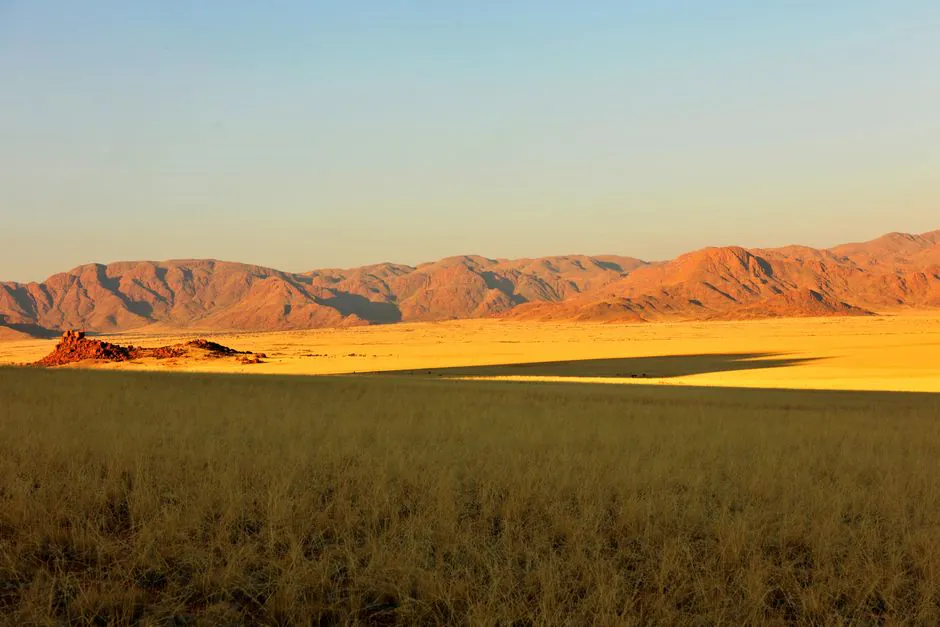
Cover photo by MINEIA MARTINS on Pexels.
Want to see how Namibia stacks up?
Are you seriously considering a move? Use our interactive tools to explore Namibia's climate, tax brackets, and nomad visas.
Looking for other options?
See how this visa compares against 55 other countries.
📊 Compare all 56 digital nomad visasRelated Articles
August 21, 2026
Moving to Namibia in 2026: 0% Tax on Foreign Income, N$4M Retirement Rule, and Windhoek Realities
September 21, 2026
Moving to Papua New Guinea in 2026: 42% Tax, Work Permits, and Compound Realities
September 19, 2026