Moving to Poland in 2026: Low B2B Tax Rates, HSBC Top 15 & Living Costs
June 30, 2026
SharePoland ranked 13th in the world as the best place to live and work in the 2026 HSBC Expat Survey - ahead of France, Sweden, Hong Kong, and the United States. GDP grew 3.6% in 2025 and is set for 3.7-3.9% in 2026, unemployment sits at 3.1%, and real wages rose 7.6%. It's the largest economy in Central Eastern Europe, a full Schengen and EU member, and still 35-40% cheaper than Western Europe for daily life. The strongest expat job markets - Warsaw, Kraków, Wrocław - run on English.[1][2][3][4]
The Economy: Eyes Open
Poland's macroeconomic story in 2026 is one of the most compelling in the EU. GDP grew 3.6% in 2025 - the third consecutive year of above-EU-average growth - and forecasts for 2026 converge between 3.5% (European Commission), 3.7% (EBRD), 3.9% (National Bank of Poland), and the government's own 3.6% projection. The acceleration is broad-based: private consumption driven by real wage gains, a record level of EU-funded infrastructure investment, and resilient industrial output.[5][3][6][1]
The honest caveats: the general government deficit stands at 7.3% of GDP in 2025, narrowing to 6.5% in 2026 - one of the highest in the EU and driven by the defence spending surge (Poland now spends 4.12% of GDP on defence, the highest in NATO) and social transfer programmes. Public debt is climbing from 59.7% to an estimated 65.1% of GDP in 2026. Inflation eased to 3.3% in 2025 and is forecast at 3.6% in 2026, pushed by energy price increases.[6][1]
What keeps Poland at the top of the CEE expat list? Three structural anchors: the largest EU fund absorption pipeline outside France and Germany, a tight labour market (3.1% unemployment - one of the lowest in the EU), and a cost base that makes Warsaw feel like Amsterdam at half the price. The job market is strongest in IT, financial services, business process outsourcing, shared service centres, and manufacturing - all sectors where English is the working language.[1]
Visas and Residency: What Changed in 2026
EU Citizens
No visa. No work permit. You can stay for up to 90 days without meeting any conditions. After 90 days, register your residence with the Voivode's office (voivodeship office competent for your place of residence).[7]
Registration must be done in person, submitting an application in Polish no later than the day after your first 90 days in Poland expire.[8][7]
Required documents:[7]
- Application form (filled in Polish)
- 4 biometric photographs (35×45 mm, taken within the last 6 months)
- Valid passport or national ID (original for inspection)
- Proof of activity: employment contract, business registration, university enrollment certificate, or written declaration of sufficient funds plus private health insurance
Result: EU citizen residence registration certificate, valid for 10 years. Issued without undue delay. Fee: free.[7]
Important 2026 deadline: EU citizens living in Poland who have an older-format residence certificate must register or replace it by 3 August 2026 under a revised administrative process. If you've been here for years and never updated your documents, do it now.[9]
Personal number (PESEL): This is Poland's national identification number - essential for banking, healthcare registration, tax filing, and every government service. EU citizens register for a PESEL at the local municipal office (Urząd Gminy) simultaneously or shortly after residence registration.
Non-EU Citizens
From 2026, all residence permit applications must be filed exclusively online through the MOS portal (mos.cudzoziemcy.gov.pl). Paper applications are legally considered "not filed" and will be automatically rejected. Applicants need a Trusted Profile (Profil Zaufany) or qualified electronic signature to access the system.[10]
Processing fees increased significantly from December 2025:[11][10]
- Standard temporary residence permit: PLN 400 (up from PLN 100)
- Long-term EU resident card: PLN 400
- Work permit (over 3 months): PLN 400 (up from PLN 100)
- Posted worker / intra-company transfer: PLN 800 (up from PLN 100)
- Fees are non-refundable if a permit is not issued
Main routes for non-EU nationals:[12][13]
- Type A Work Permit + Temporary Residence ("Single Permit") - standard route for employed workers; employer files the permit application; minimum wage PLN 4,806/month (from Jan 2026); permit valid up to 3 years
- EU Blue Card - for highly qualified workers (see below)
- Business Activity Permit - for self-employed expats running a Polish company (JDG or sp. Z o.o.); income must demonstrate benefit to the Polish economy
- National Type D Visa - long-stay visa for up to 1 year; used as a bridge before converting to a residence permit
No dedicated digital nomad visa exists in Poland. EU/EEA citizens work freely. Non-EU remote workers must either use the 90-day Schengen tourist window, register a Polish sole proprietorship (JDG), or obtain a business activity permit.[13]
No Golden Visa / Passive Investment Visa. Poland has no residency-by-investment pathway. Residence for investors runs through the business activity permit route.[13]
EU Blue Card (Non-EU Highly Skilled Workers)
The EU Blue Card is Poland's premium route for non-EU professionals - faster, with better rights than a standard work permit, and a clear path to permanent residence.[14]
2026 Salary Threshold (updated 9 February 2026):[15][14]
| Year | GUS Average Salary | Blue Card Threshold (150%) |
|---|---|---|
| 2025 | PLN 8,181.72/month | PLN 12,272.58/month gross |
| 2026 | PLN 8,903.56/month | PLN 13,355.34/month gross |
Key requirements:[14]
- Higher education diploma (minimum bachelor's, 3+ years) or 5 years of professional experience at equivalent level
- Employment contract for minimum 6 months (reduced from 12 under the 2025 EU Blue Card Directive recast)
- Labour market test abolished as of June 2025 - a major simplification
- Salary paid entirely in PLN through a Polish payroll
Benefits: EU mobility after 12 months, family reunification, accelerated permanent residence after 33 months (or 21 months with B1 Polish).[14]
Permanent Residence
After 5 years of continuous legal residence in Poland, EU citizens can apply for permanent residence. Non-EU citizens holding an EU Blue Card qualify after 33 months (or 21 months with Polish language certification). Standard employment permit holders qualify after 5 years.[16][14]
Cost of Living: The Real Numbers
A single professional living comfortably in Warsaw spends PLN 6,000-9,000/month (€1,350-€2,000), including rent. In Kraków, that drops to PLN 5,000-7,500/month (€1,100-€1,680). In Wrocław, Poznań, or Gdańsk, you're looking at PLN 4,500-6,500/month (~€1,000-€1,460).[17]
Note: 1 EUR ≈ 4.25-4.45 PLN (mid-2026). Poland is not in the Eurozone and has no immediate timeline for adoption - the zloty remains the national currency.
Rent by City (2026)
| City | Studio (PLN/mo) | 1-Bedroom Central (PLN/mo) | 2-Bedroom (PLN/mo) |
|---|---|---|---|
| Warsaw (centre) | 3,000-4,000 | 4,000-6,500 | 5,500-9,000 |
| Warsaw (outer) | 2,200-3,000 | 3,000-4,500 | 4,000-6,000 |
| Kraków (centre) | 2,500-3,500 | 3,000-5,000 | 4,500-7,000 |
| Wrocław | 2,200-3,200 | 2,800-4,500 | 4,000-6,500 |
| Gdańsk / Tri-City | 2,200-3,000 | 2,500-4,000 | 3,800-5,500 |
| Poznań | 2,000-2,800 | 2,500-3,800 | 3,500-5,200 |
| Łódź | 1,500-2,200 | 1,800-3,000 | 2,800-4,500 |
Sources: RelocationToPoland.com, Numbeo 2026, Investropa 2026
Moving 2-3 metro stops from the city centre reduces Warsaw rents by 20-30% with no meaningful loss of convenience. Warsaw and Kraków secondary market prices fell 4.5% and 3.9% q/q in Q1 2026 - the first annual decline since 2013 - meaning rents are stabilising after the 2022-2024 spike.[18][19][17]
Daily Expenses
| Item | Price (PLN) |
|---|---|
| Restaurant meal (inexpensive) | 30-60 PLN[17] |
| Monthly public transport pass (Warsaw) | 110 PLN[17] |
| Monthly transport pass (other cities) | 70-100 PLN[17] |
| Home internet (fibre 300-600 Mbps, monthly) | 40-70 PLN[20] |
| Weekly grocery shop (1 person) | 250-400 PLN[17] |
| Private health insurance (monthly, basic) | 100-140 PLN[21] |
| Private health insurance (monthly, comprehensive) | 200-300 PLN[17] |
| Private GP consultation (walk-in) | 150-250 PLN[21] |
| Coffee (espresso, café) | 10-18 PLN |
Taxes: What You Actually Pay
Residency Trigger
You become a Polish tax resident - and owe Polish tax on worldwide income - if you spend more than 183 days in Poland in a calendar year, or if Poland is your centre of vital personal or economic interests.[22]
Income Tax Rates 2026
Poland uses a progressive PIT system - not a flat tax. There is a generous tax-free allowance.
| Annual Taxable Income (PLN) | Rate |
|---|---|
| Up to PLN 30,000 | 0% (tax-free allowance)[23] |
| PLN 30,001 - PLN 120,000 | 12% of income minus PLN 3,600 decreasing amount[23][22] |
| Over PLN 120,000 | PLN 10,800 + 32% of excess over PLN 120,000[23] |
Source: PwC Tax Summaries Poland 2026, Accace Tax Guideline Poland 2026
Alternative Tax Regimes for Business Owners and Self-Employed
| Option | Rate | Notes |
|---|---|---|
| Flat tax (podatek liniowy) | 19% | Available to JDG sole traders; applied to net profit after costs; better above ~PLN 120k/year[23][24] |
| Lump-sum (ryczałt) | 12% on IT services; 14% for medicine/engineering; 15% for other services | Applied to gross revenue; no cost deductions allowed[23][25] |
| Standard progressive scale | 12% / 32% | As per table above |
| Sp. Z o.o. (LLC) corporate tax | 19% standard; 9% for small companies under €2M revenue | Dividends taxed at additional 19%[26] |
The lump-sum at 12% has become the default choice for IT professionals running a JDG - it applies to revenue, requires no cost accounting, and with ZUS contribution optimization, delivers among the lowest effective rates in Central Europe for software developers.[24]
Social Security (ZUS)
Employees pay approximately 13.71% of gross salary in social contributions. Employers contribute ~21.21% on top. The combined tax wedge is significant - Polish gross-to-net ratios require careful calculation.[27]
Self-employed (JDG) workers face a choice between the full ZUS basis (~PLN 1,800-2,200/month) or Mały ZUS Plus (reduced contributions for small businesses, income-based).[24]
Ulga na Start: New business owners can skip ZUS social contributions entirely for the first 6 months. A significant advantage for expats starting a Polish company.[24]
Rental Income
Private rental income is taxed by lump-sum: 8.5% on revenues up to PLN 100,000/year, then 12.5% on the excess.[23]
US Expats
Poland has a tax treaty with the United States. Americans can use Foreign Tax Credits against US obligations. FBAR and FATCA reporting still apply. The 183-day residency trigger and progressive rates mean careful planning is required - consult a dual-filer specialist.
Healthcare: Public vs. Private
The Public System (NFZ)
Poland's national health insurance - the NFZ (Narodowy Fundusz Zdrowia) - is funded through a 9% health contribution deducted via ZUS payroll. EU/EEA citizens can use their EHIC card for medically necessary care in NFZ facilities.[28][29]
How it works:[28]
- Employed expats are registered automatically via employer ZUS enrollment
- Self-employed register directly with ZUS and pay their own contributions
- Economically inactive EU citizens can sign a voluntary NFZ contract for PLN 835/month (~€185) - the direct enrollment option for digital nomads and remote workers[21]
- GP is your access point; referrals needed for specialists and imaging in the public system
The honest picture: NFZ waiting times for specialists range from 2 weeks to 6+ months depending on speciality and city. Public hospitals in major cities are functional and EU-standard for emergencies. Many expats use public coverage as emergency backup and go private for routine care.[21]
Emergency: 112 (universal); 999 (ambulance); 998 (fire).[28]
Private Healthcare
Private clinics in Warsaw, Kraków, Wrocław, and Gdańsk are modern, English-speaking, and offer same-day or next-day appointments. Poland is often cited as delivering EU-standard care at roughly one-third of comparable US prices.[21]
| Provider | Clinics in Poland | Plan from (PLN/month) | Specialist Wait |
|---|---|---|---|
| LUX MED (Bupa Group) | 270+ | PLN 130 | 1-7 days[21] |
| Medicover | 130+ | PLN 120 | 1-7 days[21] |
| Enel-Med (Warsaw-heavy) | 40+ | PLN 100 | 1-7 days[21] |
| NFZ public (voluntary) | National | PLN 835 | 2 weeks-6+ months[21] |
Private GP walk-in: PLN 150-250. Specialist visit: PLN 200-350.[21]
Safety
Poland has one of the lowest violent crime rates in the EU. Numbeo's nationwide data shows a Crime Index of 24.5 and a Safety Index of 75.5. Safety walking alone during daylight: 83.8 (Very High); at night: 62.5 (High).[30]
City-Level Safety (Numbeo 2026)
| City | Crime Index | Safety Index |
|---|---|---|
| Kraków | 24.8 | 75.2[31] |
| Wrocław | 25.3 | 74.7[31] |
| Warsaw | 25.4 | 74.6[31] |
| Poznań | 27.7 | 72.3[31] |
| Gdańsk | 31.3 | 68.7[31] |
| Łódź | 37.7 | 62.3[31] |
Violent crime in Poland is rated Very Low (17.9). Property crime (vandalism, petty theft) is Low. The main acknowledged issue is corruption perception (rated Low but present), and some degree of xenophobia in less cosmopolitan areas - rarely an issue in the major expat cities.[30]
English in Everyday Life
Poland ranked 15th globally on the EF English Proficiency Index 2025, with a score of 600 - placing it in the "Very High Proficiency" tier. In professional settings - IT, finance, BPO, academia - English is frequently the working language. Customer service teams (score: 630) and IT professionals (score: 621) score the highest of any occupational groups surveyed.[32][33]
English is entirely sufficient for day-to-day life in Warsaw, Kraków, Wrocław, and Gdańsk. The gap appears at government offices (Voivode residency applications must be filed in Polish), older generations in smaller towns, and some public health settings. Polish is not required for professional or social comfort in major expat cities - but Cyrillic isn't involved here; the Latin script makes picking up basic vocabulary faster than most expect.
Which City?
Warsaw
The capital. Population 1.85 million, the deepest job market in Central Europe, every major multinational present, direct flights to 60+ cities. Warsaw is the obvious first destination for corporate professionals, banking, tech, and anyone targeting global firms. The city has three metro lines, an excellent tram and bus network, and a rapidly gentrifying centre.[17]
Best expat neighbourhoods: Śródmieście (central, walkable, cosmopolitan, priciest); Mokotów (professional class, embassy quarter, metro access, excellent infrastructure); Żoliborz (leafy, intellectual, quieter, metro access); Ursynów (families, more affordable, metro terminus); Praga Południe (up-and-coming, artists, warehouse culture, 30% cheaper than centre).
Kraków
Poland's second city and cultural capital. Population ~800,000. The favourite city of expat surveys for livability - highest safety index of major Polish cities, a compact walkable Old Town (UNESCO World Heritage), the country's second-largest IT sector after Warsaw, and a price point 15-25% below the capital. Universities produce a continuous stream of English-speaking graduates. Tourism is the main downside: the Old Town is overwhelmed in summer, which drives up short-term rental prices and noise.[34]
Best for: digital nomads, remote workers, younger professionals, academics, and expats who prioritise lifestyle over salary maximisation.
Wrocław
Ranked #1 best city to live in Poland for expats in 2026 according to Wage Centre's expat survey. Capital of Lower Silesia, population ~640,000. Strong tech sector (second-largest IT market in Poland after Warsaw), German-influenced architecture and canal network, significantly more affordable than Warsaw and Kraków, and historically the most diverse and internationally minded of Polish cities. Average salary: €1,600-€1,700/month for employed professionals.[4]
Gdańsk / Tri-City
Baltic coast - technically three cities (Gdańsk, Gdynia, Sopot) connected by a commuter rail into one metro area of ~1.5 million. The strongest Q1 2026 property price growth of any Polish market (+5.1% q/q), driven by investment demand and short-term rental returns. Sopot has the most expensive rents outside Warsaw. Best for outdoor lifestyle expats, maritime sector workers, tech (Amazon, Intel, Nordea offices here), and anyone who values beach access.[19][34]
Poznań
Western Poland, 2.5 hours from Berlin by train. Population ~530,000. Ranked #2 in Wage Centre's best expat cities list. Excellent transport connections to Germany and Western Europe, strong trade fair and manufacturing economy, lower rents than Warsaw and Kraków, and a particularly business-focused professional culture. Best for: cross-border workers, expats with German-side connections, and families seeking value.[4]
Łódź
Poland's fourth city - and the bargain capital. Population ~650,000. Rents are the lowest of any major Polish city. A post-industrial city reinventing itself through a massive cultural district (Manufaktura), growing tech presence, and gentrification of its 19th-century factory architecture. Property per sqm costs roughly half of Warsaw. Best for: budget-conscious expats, creatives, and investors targeting gross rental yields above 7%.[35][18]
City Snapshot
| City | Monthly Budget (Single) | 1-BR Rent (Centre) | Best For |
|---|---|---|---|
| Warsaw | PLN 6,000-9,000[17] | PLN 4,000-6,500[17] | Corporate, finance, tech |
| Kraków | PLN 5,000-7,500[17] | PLN 3,000-5,000[17] | Nomads, culture, lifestyle |
| Wrocław | PLN 4,500-7,000[17] | PLN 2,800-4,500[17] | Tech, families, expat community |
| Gdańsk | PLN 4,000-6,500[17] | PLN 2,500-4,000[17] | Coastal lifestyle, tech, investment |
| Poznań | PLN 4,000-6,000[17] | PLN 2,500-3,800[17] | Business, Germany-adjacent |
| Łódź | PLN 3,500-5,000[17] | PLN 1,800-3,000[17] | Budget, creatives, investors |
Climate: Four Real Seasons
Poland has a temperate transitional climate - somewhere between maritime (west) and continental (east). Four distinct seasons, but increasingly affected by climate anomalies: March 2026 recorded a national average 3.3°C above the 1991-2020 normal, and the country is warming faster than the EU average in spring and summer.[36]
| Season | Months | Temp Range | Notes |
|---|---|---|---|
| Spring | March-May | 5°C to 18°C | Warming fast; April/May beautiful; March can still snow[37] |
| Summer | June-August | 18°C to 30°C (heatwaves to 35°C+) | July warmest; long days; thunderstorms common[37] |
| Autumn | September-November | 0°C to 18°C | September/October "golden autumn" is stunning; November grey[37] |
| Winter | December-February | -10°C to +5°C (cold snaps to -20°C) | Short days (sunset ~3:30 PM in January); snow variable by region[37] |
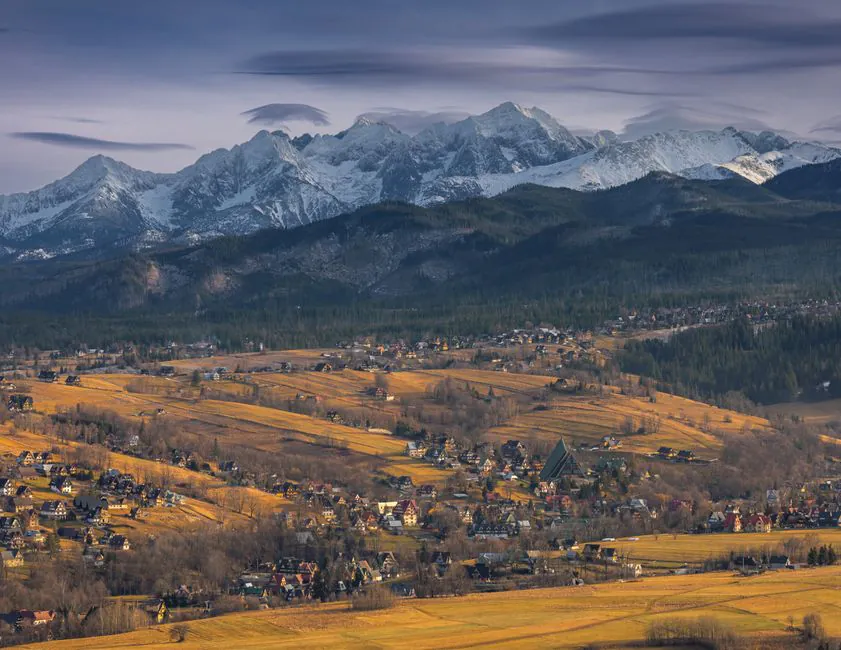
The Baltic coast (Gdańsk, Tri-City) is milder in winter due to the sea moderating effect. Southern mountain regions (Zakopane area) are colder and snowier. Central Poland (Warsaw, Łódź) gets the most continental extremes.[38][36]
Best months to visit before committing: May-June and September-October - warm, manageable, and the cities look their absolute best.
Internet and Remote Work Infrastructure
Poland ranked #1 in Europe for mobile download speeds between January-April 2026, with an average of 109.9 Mbps - ahead of Germany (106.7 Mbps) and the UK (105.8 Mbps). Fixed broadband ranked 29th globally (May 2026 Speedtest data), with leading providers reaching 260-280 Mbps.[20][39][40]
Home fibre internet runs PLN 40-70/month (~€9-€16) for 300-600 Mbps - one of the cheapest in Europe for fibre quality. Coverage is near-universal in all major cities.[20]
Coworking ecosystems are well-developed. Warsaw has the most mature market, with international operators (WeWork, Regus, Spaces) plus dozens of independent coworking spaces concentrated in Śródmieście and Mokotów. Kraków, Wrocław, and Gdańsk all have growing ecosystems tailored to the large tech sector worker communities.[41]
Buying Property
EU/EEA citizens can buy property in Poland - including land - under the same conditions as Polish citizens. Non-EU citizens face some restrictions on purchasing agricultural and forestry land (permit required from the Minister of Interior), but can buy apartments and buildings freely.[42]
Poland's housing market experienced its first annual price decline since 2013 in Q4 2025 - secondary market prices fell 0.4% year-on-year nationally, while new builds fell 0.8%. In Q1 2026, prices stabilised - Warsaw secondary market averaged PLN 15,397/sqm, Kraków PLN 13,383/sqm, Wrocław PLN 12,311/sqm, and Łódź PLN 7,747/sqm. The correction followed a sharp 14.4% rise over 2024.[43][18][19]
Property Prices by City (Q1 2026)
| City | Secondary Market (PLN/sqm) | Primary Market (PLN/sqm) |
|---|---|---|
| Warsaw | 15,397-16,750[19][18] | ~16,583[18] |
| Kraków | 13,383-15,277+[19][43] | 15,000-20,000[43] |
| Wrocław | 12,311-13,400[19][43] | 13,500-15,000[43] |
| Gdańsk | 13,420[19] | 13,000-15,000 |
| Łódź | 7,747-8,038[19][18] | ~9,700[18] |
Mortgage rates for PLN-denominated loans: approximately 6.5-8.5% in 2026, elevated by NBP interest rate policy.
Rental yields across Poland average 6.6% gross / 5.1% net. The highest gross yields are found in Łódź Śródmieście (studio, 7.4% gross) and Wrocław Krzyki. Warsaw net yields in best-performing districts: 4.0-4.4% (Ochota, Targówek, Mokotów). Gdańsk benefits from strong short-term rental demand from tourism.[44][19][35]
Buying costs: notary fee (0.5-3% of transaction value, sliding scale), property transfer tax (PCC, 2% of purchase price on secondary market - new builds are exempt), court registration fee (PLN 200), agent commission (2-3%).[42]
Important: buying property in Poland does not grant residency or citizenship.
Your First 30 Days: The Checklist
- EU citizens: register at the Voivode's office no later than the day after your first 90 days in Poland; bring 4 photos, application form in Polish, and proof of employment/funds/insurance[8][7]
- Get your PESEL number - 11-digit national ID number obtained at the municipal office (Urząd Gminy); required for banking, tax filing, healthcare, and everything else
- Open a Polish bank account - bring PESEL and passport; PKO BP, mBank, ING, Millennium, and Revolut (immediately available) are expat-friendly; most offer English-language interfaces
- Non-EU: all residence permit applications go through the MOS portal (mos.cudzoziemcy.gov.pl) - paper applications rejected; have your Trusted Profile (Profil Zaufany) ready; fees now PLN 400[11][10]
- EU Blue Card holders: confirm your 2026 salary meets PLN 13,355.34/month - updated threshold from February 9, 2026[14]
- Sort your healthcare - if employed, you're enrolled in NFZ automatically through ZUS; if self-employed, register ZUS yourself; economically inactive expats pay PLN 835/month voluntary NFZ or get private insurance (LUX MED/Medicover from PLN 120/month)[28][21]
- Register your rental contract - required as proof of address for PESEL and residence registration; confirm with your landlord before signing
- Self-employed / company owners: decide your tax regime - lump-sum (ryczałt) at 12% is the standard IT/tech route; flat tax at 19% beats progressive scale above ~PLN 120k/year income; use Ulga na Start to skip ZUS for the first 6 months[23][24]
- EU citizens: check if your old residence certificate needs replacing before 3 August 2026[9]
Key Data at a Glance
| Indicator | Value |
|---|---|
| GDP Growth (2025) | 3.6%[1][3] |
| GDP Forecast 2026 | 3.7-3.9% (NBP/EBRD)[3][5] |
| Unemployment (2026) | 3.1% - one of the lowest in EU[1] |
| Inflation (2026) | 3.6% (EC forecast)[1] |
| Average Gross Salary (2025) | PLN 8,903.56/month (~€2,000)[14] |
| Minimum Wage (2026) | PLN 4,806/month (~€1,080)[45] |
| Personal Income Tax | 0% (up to PLN 30k) / 12% / 32%[23] |
| Flat Tax (JDG) | 19% on net profit[23] |
| Lump-sum Tax (IT/tech JDG) | 12% on revenue[23][24] |
| NFZ Voluntary (inactive expats) | PLN 835/month[21] |
| Private Health Insurance (from) | PLN 100-120/month[21] |
| EU Blue Card Min. Salary (2026) | PLN 13,355.34/month gross[14][15] |
| MOS Residence Permit Fee | PLN 400 (from Dec 2025)[10] |
| EF English Proficiency Rank | 15th globally (Very High)[32][33] |
| Numbeo Crime Index (national) | 24.5 (Low)[30] |
| Safety Walking Alone (Day) | Very High (83.8)[30] |
| Mobile Internet Rank | #1 in Europe (Jan-Apr 2026)[39] |
| Fixed Broadband Global Rank | 29th (May 2026)[40] |
| Warsaw 1-BR Rent (centre) | PLN 4,000-6,500/month[17] |
| Warsaw Apt. Price/sqm (secondary) | PLN 15,397 avg.[19] |
| Average Gross Rental Yield | 6.6% nationally[35] |
| Net Rental Yield (Warsaw, best) | 4.0-4.4%[44] |
| HSBC Expat Survey Global Rank | 13th worldwide (2026)[4] |
| Schengen Member | Yes (since 2007) |
| Eurozone | No - PLN currency, no adoption timeline |
| Digital Nomad Visa | Not available (no dedicated programme)[13] |
| Golden Visa | Not available[13] |
Poland's 2026 case isn't a hidden gem story - it's a well-documented best-in-class story for European mobility. Fastest mobile internet in Europe. Lowest unemployment in a generation. Fifteenth in the world for English proficiency. A cost base that gives you a Warsaw lifestyle for less than a Munich suburb. The trade-offs are real: progressive tax rates that bite hard above PLN 120k/year, a deficit that won't disappear soon, a climate that sends November through January into grey and dark, and a residency bureaucracy that has moved online but hasn't moved fast. None of that changes the structural case.
References
Economic forecast for Poland - The latest macroeconomic forecast for Poland. The European Commission publishes a full set of macroe...
Poland targets 3.5% GDP growth, 3.8% inflation in 2026 - Poland's economy is expected to grow 3.5 percent next year, with inflation projected to average 3.8 ...
EBRD expects Polish economy to grow by 3.7 per cent this year - Bank upgrades forecast as investment and consumption strengthen
The best cities to live in Poland in 2026 - Wage Centre - THE BEST CITIES TO LIVE IN POLAND Ranking of the TOP-5 of the best cities for immigration and reside...
Polish GDP to grow 3.9% in 2026, 2.9% in 2027: central bank - Poland’s central bank has updated its GDP growth forecasts for the country, saying it now expects th...
Poland forecasts GDP growth of 3.6% in 2026 By Investing.com - Poland forecasts GDP growth of 3.6% in 2026
Registration of residence - Ministry of the Interior and Administration
EU Citizens in Poland: Register or Replace Your Certificate ... - Senior Manager Magdalena Dymbel, Manager Zaur Gasimov and Senior Immigration Consultant Maciej Sieli...
Poland Electronic Residence Permits 2026: Full Digital Switch ... - Poland's residence permits are now digital-only via MOSv2.0 portal. Applications require e-signature...
Changes to procedures for migrants in Poland - In Poland, procedures for legalisation of stay will be fully digitalised in 2026. A significant incr...
Poland Visa & Work Permit Guide for Non-EU Citizens 2026 - Navigate Poland's visa and work permit system in 2026. Complete guide for non-EU citizens: visa type...
Poland digital nomad visa & residency (2026) - Can remote workers get a visa or residency in Poland? Poland's current status, the key rules and nam...
EU Blue Card in Poland in 2026 - ATL Law - From February 9, 2026, a new salary threshold applies - PLN 13,355.34 gross per month (an increase o...
EU Blue Card - New Salary Threshold for 2026 Important ... - 5 likes, 0 comments - oneplus.pl on February 18, 2026: "📊 EU Blue Card - New Salary Threshold for 20...
Cost of Living in Poland in 2026: The Complete Guide for Expats - How much does it cost to live in Poland in 2026? Rent, food, transport and healthcare costs broken d...
Buyers Return, Prices Stabilize: Poland's Housing Market in Q1 2026 - The latest preliminary transaction data from the Metrohouse and Credipass Barometer report indicates...
Internet Speed in Poland - Check the fastest broadband and mobile Internet Providers in Poland. Take a speed test and compare d...
Healthcare in Poland for Expat Retirees: Complete 2026 Guide
Mastering Taxes in Poland 2026: Complete Expat Guide - This guide explains how the Polish tax system works for expats in 2026, including tax residency rule...
Poland - Individual - Taxes on personal income - 2026 Polish tax residents pay PIT on their worldwide income. Opt for a flat 19% income tax rate, the...
Actual taxes in Poland for JDG 2026 - WoBorders - How to choose the taxation regime for a JDG in Poland? PIT (progressive, 19%, ryczałt), ZUS, health ...
2026 Tax Guideline for Poland - Accace - Certain types of income are not aggregated but are subject to a flat rate tax of 19%. *32% of the ex...
Poland Income Tax Calculator 2026 | PIT 12-32% & ZUS Rates - Calculate your Polish PIT with 12%/32% progressive brackets and ZUS social contributions. 30000 PLN ...
Healthcare System in Poland: 7 Essential Facts to Avoid ... - Start with Healthcare system in Poland. Essential 2026 overview for expats: NFZ vs private care, fre...
What is the EHIC? - NFZ - What is the EHIC? The EHIC, or European Health Insurance Card, is an EU document. It confirms your r...
Crime in Poland - Information about crime in Poland. Shows how much people think the problem in their community are pr...
EF EPI | EF English Proficiency Index - EF Polska - The 2025 edition of the EF English Proficiency Index ranks 123 countries and regions by their Englis...
Best Cities in Poland for Expats 2026: Ranked by Cost, Jobs & Lifestyle - Discover the best Polish cities for expats in 2026. Compare Warsaw, Krakow, Wroclaw, Gdansk, and mor...
Poland Latest Rental Yields Data (2026) - The latest update about rental yields in Poland. Rents, rental income, vacancy, occupancy rate, etc.
Poland's Seasonal Climate Patterns: What the Data Actually Shows - Temperature anomalies, precipitation trends and the growing divergence between the Tatras and the Ba...
Weather in Poland - IBB Welcome Center - ✿ Spring (March-May). Typical temperatures: 5-18°C ; ✹ Summer (June-August). Typical temperatures: 1...
Poland climate: temperature, rain, when to go - In Poland, the climate is continental, with very cold winters, often below freezing (0 °C or 32 °F),...
Data: Poland tops mobile download speeds - Between January and the end of April 2026, Poland displays the fastest average mobile download speed...
Poland's Mobile and Broadband Internet Speeds - Poland ranked 38th in the world for mobile speeds and 29th for fixed broadband speeds during May 202...
Digital Nomad Guide to Poland 2026 - Domkaspot - Poland's rules for remote workers depend on your citizenship and how long you plan to stay. EU/EEA C...
Poland: The Expat Guide Updated (2026) - Moving to Poland? Cost of living, monthly budget, schools, hospitals, visas, etc.
Poland property prices 2026 predictions? (Sept 2025) - Authored by the expert who managed and guided the team behind the Poland Property Pack Everything yo...
Warsaw Latest Rental Yields Data (2026) - Investropa - The latest update about rental yields in Warsaw. Rents, rental income, vacancy, occupancy rate, etc.
Poland Raises 2026 Minimum-Salary Thresholds for Work & Single Permits - From 1 January 2026 Poland’s minimum wage rises to PLN 4,806 per month and PLN 31.40 per hour, autom...
Frequently Asked Questions
What are the primary visa and residence options for moving to Poland in 2026? From 2026, all residence permit applications must be filed exclusively online through the MOS portal (mos.cudzoziemcy.gov.pl).
How does personal income tax work for expats in Poland? You become a Polish tax resident - and owe Polish tax on worldwide income - if you spend more than 183 days in Poland in a calendar year, or if Poland is your centre of vital personal or economic interests.
What is the average cost of rent and living in Poland? A single professional living comfortably in Warsaw spends PLN 6,000-9,000/month (~€1,350-€2,000), including rent.
How many years of residence are required for citizenship or permanent residency in Poland? After 5 years of continuous legal residence in Poland, EU citizens can apply for permanent residence.
Cover photo by Sergey Guk on Pexels.
Want to see how Poland stacks up?
Are you seriously considering a move? Use our interactive tools to explore Poland's climate, tax brackets, and nomad visas.
Head-to-Head Relocation Comparisons
Compare taxes, safety, and living costs of Poland against top alternatives.