Moving to Malta in 2026: The Expat Field Guide
July 3, 2026
ShareMalta has five separate residency programmes, a Nomad Residence Permit with a 10% flat tax (first year exempt), and a Global Residence Programme that caps foreign income tax at 15%. GDP is growing at 3.7% in 2026 - among the fastest in the EU - unemployment is at 3.0%, English is an official language spoken by the entire population, and the country has 300 days of sun per year. It is fully Schengen and Eurozone. It is also, frankly, very small (316 km²), increasingly overcrowded, and one of the EU's most expensive island housing markets per square metre relative to income.[1][2][3]
This guide gives you every number you need to evaluate whether Malta's specific package makes sense for you.
The Economy: Eyes Open
Malta's economy has outperformed the EU average for five consecutive years. GDP grew 4.0% in 2025 and is forecast at 3.7% in 2026 and 3.6% in 2027 - consistent with the Central Bank of Malta's June 2026 medium-term projections. Growth is driven by private consumption (real wages rising), tourism, and a services export sector dominated by iGaming, financial services, aviation, and maritime industries.[4][5][2][1]
The fiscal position is one of Malta's strongest arguments. The government deficit stands at 2.2% of GDP in 2026 - well below the EU's 3% threshold and significantly better than Poland (7.3%) or France (5.5%). Public debt is stabilising at approximately 47% of GDP. Unemployment: 3.0%, near a historic low.[1][4]
The honest caveats: Malta's growth model faces structural constraints - land scarcity, infrastructure bottlenecks, labour shortages, and a tourism and services economy that is acutely sensitive to external demand shocks. Housing supply cannot keep up with population growth (Malta's population rose 25% over the past decade through immigration), which pushes rents relentlessly upward. Corruption perception ranks high on Numbeo - at 66.95, the single most cited concern after crime trending upward. The country has had repeated EU rule-of-law scrutiny. None of this destabilises the economy, but it creates friction for bureaucratic and business dealings that expats consistently flag.[5][6][7]
Residency Options: Malta's Five Routes
Malta offers the most diverse menu of residency programmes of any country in this series. The right choice depends entirely on your nationality (EU vs. Non-EU), income type (employment, freelance, passive), and wealth level.
Route 1: EU/EEA Ordinary Residence (Free Movement)
EU and EEA citizens exercise their right of free movement. No investment, no income threshold, no government contribution.
- Arrive in Malta
- Register with the Identity Malta Agency (MITA) within 3 months of arrival
- Provide proof of: employment, self-employment, sufficient financial means + health insurance, or enrollment in a study programme
- Receive an EU Registration Certificate (white card) - valid indefinitely while conditions are met
Processing: 8-10 weeks for the formal certificate (you can work and live legally while it is processed). No fee beyond administrative costs.[3]
Path to permanent residence: After 5 years of continuous legal residence, apply for a Permanent Residence Card. After 5 years of permanent residence: citizenship by naturalisation is theoretically possible but Malta sets strict conditions and discretionary assessment.
Important: EU citizens with fewer than 5 years' continuous residence in Malta need an AIP permit to buy residential property (one property limit). EU citizens with 5+ years buy freely.[9]
Route 2: Nomad Residence Permit (Non-EU Remote Workers)
Malta's dedicated digital nomad route - open only to non-EU/EEA/Swiss nationals working remotely for employers or clients outside Malta.[10][11]
Key parameters (2026):[12][13][10][3]
| Criterion | Requirement |
|---|---|
| Nationality | Non-EU/EEA/Swiss nationals only |
| Work type | Remote - employed or freelance - for entities outside Malta |
| Minimum gross income | €42,000/year (€3,500/month gross) |
| Health insurance | Valid policy covering Malta + EU for the full permit period |
| Accommodation | Rental contract or property ownership document |
| Background check | Police clearance certificate required |
| Application fee | €300 per applicant (non-refundable); €300 per family member |
- Year 1: 0% income tax (fully exempt)
- Year 2-4: 10% flat tax on Malta-sourced and remitted income
- Foreign-source income not remitted to Malta: untaxed
Permit validity and renewal:[11][12]
- Issued for 1 year, renewable
- Maximum total duration: 4 years (1 initial + 3 renewals)
- After 4 years, applicants must transition to another residency category or leave
Important limitation: The NRP does not grant a path to permanent residence or citizenship by itself. It is a temporary working permit, not a stepping stone to long-term status. After 4 years, you either qualify under another route (e.g., MPRP, GRP, or employment) or must reset.[3]
Route 3: Global Residence Programme / The Residence Programme (Non-EU and EU Nationals, Passive Income)
Two parallel programmes - functionally almost identical - for economically self-sufficient individuals:
- Global Residence Programme (GRP): For non-EU/EEA/Swiss nationals
- The Residence Programme (TRP): For EU/EEA/Swiss nationals
Both grant special tax status with a 15% flat tax on foreign income remitted to Malta, minimum annual tax of €15,000.[15][16][3]
What is taxed:[15]
- Foreign-source income remitted to Malta: 15% flat
- Foreign-source income not remitted: 0%
- Foreign-source capital gains (whether remitted or not): 0%
- Malta-source income (e.g., local employment): taxed at standard Malta rates
Property requirements (GRP):[15]
| Option | Malta/Northern Region | Gozo / Southern Region |
|---|---|---|
| Purchase | ≥ €275,000 | ≥ €220,000 |
| Annual rent | ≥ €9,600/year | ≥ €8,750/year |
Key conditions:[15]
- Cannot reside in another country for more than 183 days/year
- Must maintain valid health insurance covering all EU risks
- No minimum days required in Malta - this is a base, not a habitual residence programme
- Applied for via an Authorised Registered Mandatary (ARM) - a licensed Maltese law or accountancy firm
GRP/TRP vs. NRP: The GRP suits retirees, investors, and passive income earners who do not work remotely. The NRP suits active remote workers earning employment or freelance income. They cannot be combined.
Route 4: Malta Permanent Residence Programme (MPRP) - Investment
The MPRP is Malta's residency by investment route - permanent residence (not citizenship) in exchange for a capital contribution, government donation, and qualifying property commitment.[17][18]
Costs under Legal Notice 146/2025 (updated 2026):[19][20][21]
| Item | Amount |
|---|---|
| Government administrative fee (main applicant) | €60,000 |
| Government non-refundable contribution | €37,000 |
| Philanthropic donation to a Maltese NGO | €2,000 |
| Spouse and minor children | Included (no additional fee) |
| Adult dependent (over 18) | €7,500 each |
| Property - purchase | ≥ €375,000 (hold ≥ 5 years) |
| Property - rental | ≥ €14,000/year (lease ≥ 5 years) |
Total commitment (property purchase path): €60,000 + €37,000 + €2,000 + €375,000 = ≈ €474,000 minimum, excluding professional fees and stamp duty.[20]
Total commitment (rental path): €60,000 + €37,000 + €2,000 + (€14,000 × 5 years) = ≈ €169,000 + ongoing rent.[20]
- Permanent residence for the main applicant, spouse, and dependent children
- Schengen Area travel (90 days in any 180 without visa in other Schengen states)
- No requirement to live in Malta for any minimum days
- Right to work in Malta (following a work permit - MPRP alone does not grant work rights without a separate permit)
- No path to Maltese citizenship under this programme
Route 5: Malta Retirement Programme
Designed for retirees living primarily on a pension. Essentially a variant of the GRP with property requirements and the same 15% flat tax rate on pension income remitted. Applications through licensed authorised mandataries.[3]
Cost of Living: The Real Numbers
Malta costs approximately 32% less than New York City and roughly 20-25% less than London. A single professional living comfortably in Sliema or St Julian's spends €2,200-€2,800/month including rent. In inland towns or Gozo, that drops to €1,200-€1,800/month.[6][22][23]
Currency: Malta is Eurozone - the euro (€) is the only currency. No exchange rate risk for European expats.
Rent by Area (2026)
| Area | Studio / 1-BR (€/mo) | 2-BR (€/mo) |
|---|---|---|
| Sliema (seafront/prime) | €1,200-€1,800[6] | €1,800-€2,800[6] |
| Sliema (residential, non-seafront) | €900-€1,200[6] | €1,400-€2,000 |
| St Julian's (Paceville / Spinola) | €1,300-€2,000[6] | €1,900-€3,000 |
| Gzira | €800-€1,200[24] | €1,200-€1,800 |
| Valletta | €800-€1,300[24] | €1,400-€2,000 |
| Msida / Ta' Xbiex | €700-€1,100[24] | €1,100-€1,600 |
| St Paul's Bay / Bugibba | €800-€1,200[6] | €1,200-€1,800 |
| Gozo (rural) | €600-€1,000[6] | €900-€1,500 |
Long-term lease discounts (12+ months): up to 10%. Modern complexes with pools/gyms charge 10-20% premium.[6]
Daily Expenses
| Item | Price (€) |
|---|---|
| Meal at an inexpensive restaurant | €10-€15[23] |
| Three-course meal for two, mid-range | €45-€60[23] |
| Monthly public transport pass | €26 (government-subsidised to near-zero in recent years)[23] |
| Home internet (fibre, monthly) | €25-€45[25] |
| Monthly grocery bill (1 person) | €250-€350[23] |
| Private GP consultation | €25-€60[8][26] |
| Annual private health insurance (individual) | €275-€900[27][26] |
| Coffee/espresso (café) | €2-€2.50[23] |
| Utilities, 85m² apartment (excl. Internet) | €80-€120/month[23] |
Public transport is nearly free - successive Maltese governments have subsidised routes aggressively, with resident passes available for essentially nominal cost. This offsets the absence of a domestic rail system. The bus network covers the whole island; distances are short (the island is 27 km long).[23]
Taxes: What You Actually Pay
Standard Malta Income Tax (2026)
Malta updated its income tax brackets in the 2026 Budget to reduce the burden on middle incomes:[28]
| Annual Income (€) | Rate (Single) |
|---|---|
| Up to €9,100 | 0% |
| €9,101 - €14,500 | 15% |
| €14,501 - €19,500 | 25% |
| Over €19,500 | 35% |
Social Security Contributions (SSC): employees contribute ~10% of gross salary; employers contribute ~10% on top. The SSC unlocks access to Malta's public healthcare and pension system.[27]
No capital gains tax on property sold after 3+ years of ownership as a primary residence. Capital gains on other assets are generally not taxed in Malta under the territorial system for non-Maltese-source gains.[29]
No annual property/land taxes.[29]
Special Tax Regimes for Expats
| Programme | Rate | Basis | Who |
|---|---|---|---|
| Nomad Residence Permit | 10% (Year 2-4); 0% (Year 1) | Malta and remitted income | Non-EU remote workers, €42k+ income |
| Global Residence Programme | 15% minimum €15,000/yr | Foreign income remitted to Malta | Non-EU passive income / self-sufficient |
| The Residence Programme | 15% minimum €15,000/yr | Foreign income remitted to Malta | EU passive income / self-sufficient |
| Malta Retirement Programme | 15% | Foreign pension remitted | Retirees |
| Standard progressive | 0-35% | All Malta-source income | Employed locally |
The key principle across GRP/TRP: Foreign income not remitted to Malta is not taxed at all. Capital gains on foreign assets are fully exempt regardless of remittance. This makes Malta strongly attractive for investors with offshore portfolios or foreign property income who spend less than 183 days per year in any single other country.[15]
VAT: 18% (standard rate). Malta's VAT is one of the lowest standard rates in the EU.
Healthcare: World-Class Public, Efficient Private
Malta's healthcare quality index is 82/100 - among the highest in the world. Life expectancy: 82.3 years. The WHO ranked Malta's system 5th globally in its landmark 2000 report, and standards have continued improving since.[30][27]
Public Healthcare
The system is tax-funded and free at the point of use for entitled residents. Mater Dei Hospital in Msida - 1,000+ beds, opened 2007 - is the central acute care facility, covering all tertiary care, ICU, oncology, and emergency surgery. A network of health centres (polyclinics) across the island handles GP, basic diagnostics, and referrals. You walk in - no mandatory GP registration as in the UK.[8][27]
Who gets public access:[26][31][8]
- EU/EEA residents paying Maltese social security contributions: full coverage, free
- Non-EU residents on employment permits (paying SSC): full coverage, free
- NRP holders, GRP/TRP holders, self-sufficient visa holders: private insurance required - not entitled to public healthcare
- EU/EEA visitors with EHIC: emergency and medically necessary treatment only
- Non-residents/tourists without EHIC: treated in emergency but may be billed
Private Healthcare
Private healthcare in Malta is significantly cheaper than comparable services in the UK, Germany, or France:[26][27]
| Service | Cost (€) |
|---|---|
| Private GP consultation | €25-€60 |
| Specialist consultation | €50-€120 |
| Blood test panel | €40-€90 |
| Private MRI | €150-€200 |
| Annual private insurance (individual) | €275-€900 |
| Annual private insurance (family of 4) | €1,400-€2,400 |
Key private hospitals: St James Hospital (largest private hospital in Malta; three Immediate Medical Care Units functioning as walk-in A&E equivalents; full inpatient capability); Saint Thomas Hospital (Gzira); Eden Clinics (St Julian's). All English-speaking; medical records in English.[27]
Local insurers: Laferla Insurance, Elmo Insurance, Atlas Insurance - basic plans from €275-€300/year (~€25/month). International plans from Cigna, Bupa, or Allianz recommended for non-EU holders requiring worldwide coverage.[26][27]
Emergency: 112 (universal - police, ambulance, fire).[30]
Safety
Malta's overall safety picture is broadly positive but has two specific problem areas that expats consistently flag.
Numbeo data (2025/26):[7]
- Crime Index: 43.09 (Moderate overall)
- Safety Index: 56.91
- Safety walking alone during daylight: 71.55 (High)
- Safety walking alone at night: 54.44 (Moderate)
- Violent crime (assault, armed robbery): 36.53 (Low)
- Corruption and bribery: 66.95 (High) - the most prominent concern
- Crime increasing over past 5 years: 71.76 (High)
US State Department: Level 1 - Exercise Normal Precautions (lowest advisory level).[32]
The crime trend concern reflects Malta's rapid population growth outpacing institutional capacity. Drug trafficking and related crime have increased in the past decade. Physical violence against expats is rare - the concern is primarily property crime, petty theft in tourist areas (Paceville/St Julian's nightlife zone), and motorcycle theft.
The corruption rating is the most operationally relevant issue for business expats. Permitting, planning, and business licensing in Malta moves through a small, well-connected establishment. Expats report that relationships and local knowledge matter significantly more than formal process. Budget delays of 2-6 months for any permit that passes through planning or licensing authorities.
LGBTQ+: Malta scores 9.0/10 on the LGBTQ+ safety index - one of the most progressive EU member states, with full marriage equality since 2017, strong anti-discrimination protections, and wide social acceptance.[32]
English in Everyday Life
Both Maltese and English are official languages of Malta. English is used in all government documents, court proceedings, business contracts, education, and medical records. The entire population is functionally bilingual - you will never need Maltese to navigate the island as an expat.[33]
This is the single most under-appreciated structural advantage of Malta. Unlike every other non-Anglophone EU member, you land in Malta and operate fully in English - with the government, your landlord, the tax authority, the healthcare system, your bank, and your children's school - from day one.
Maltese (a Semitic language written in Latin script - the only Semitic language with official EU status) is the first language of most Maltese citizens in informal contexts. Learning even basic Maltese earns enormous goodwill and is significantly easier for English speakers than learning Polish or Bulgarian - but it is entirely optional for expat life.
Which City / Area?
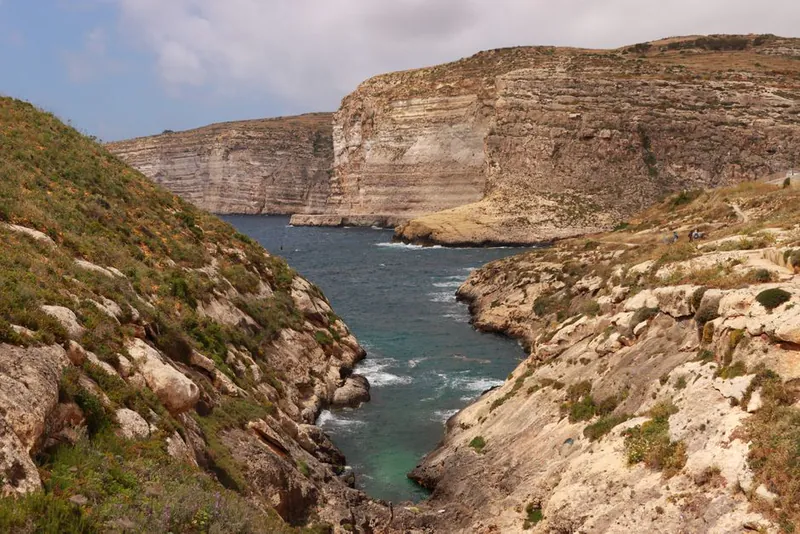
Malta is 27 km by 14 km. "City" is a relative term - the entire island is a continuous built environment along the coast, with quieter inland villages and the separate island of Gozo (67 km²) connected by a 25-minute ferry.[34]
Sliema
The de facto expat capital. Dense, walkable, entirely bilingual, with the best retail and restaurant density, the famous seafront promenade (Il-Frontera), and the largest concentration of English-speaking expats. Sliema is connected to Valletta by ferry (10 minutes) and to St Julian's on foot. Highest rents on the island outside some seafront SDA developments.[35]
Best for: First-arrival expats, finance and tech professionals, anyone prioritising walkability and services over quiet or character.
St Julian's
Younger energy, denser nightlife (Paceville), and the highest concentration of iGaming and fintech companies - making it the preferred zone for tech-sector workers. Spinola Bay is charming; Paceville is loud on weekends. Rents slightly lower than Sliema prime but comparable overall.[36]
Best for: iGaming, tech, and fintech workers; younger professionals; those who want proximity to both the business district and nightlife.
Gzira
The best-value location within walking distance of both Sliema and Msida (University area). Growing rapidly as an expat alternative to Sliema - rents run €200-€400/month cheaper for equivalent space. Calmer atmosphere, good local supermarkets, and excellent fibre coverage.[24]
Best for: Cost-conscious professionals who want Sliema proximity without Sliema pricing.
Valletta
The UNESCO World Heritage capital. Population only 5,000 - the smallest EU capital by population. Housing stock is limited (mostly renovated 16th-18th century townhouses and flats), but the atmosphere is unrivalled: Baroque architecture, the Grand Harbour, café culture, and the best arts and food scene on the island. Government jobs and diplomatic postings are concentrated here.[36]
Best for: Culture-seekers, government/diplomatic workers, academics, and anyone who prizes character over convenience.
St Paul's Bay / Mellieħa / Northern Malta
More affordable, quieter, and family-oriented. The northern coast has longer sandy beaches (Mellieħa Bay, Golden Bay). Commuting to Sliema or St Julian's takes 30-45 minutes by bus. Property to buy in this corridor is the best value on the main island.
Best for: Families with children, retirees, anyone prioritising outdoor lifestyle and space over urban proximity.
Gozo
Malta's sister island - 25 minutes by ferry from Ċirkewwa in the north. Population ~30,000, predominantly Maltese with a growing expat community (particularly British, German, and Dutch retirees). Rents are 30-40% lower than equivalent Sliema properties. The pace of life is dramatically different - agriculture, stone villages, azure bays, and a 6-day-a-week ferry connection that takes on psychological significance once you've crossed it a dozen times in winter.[6]
Internet: improving rapidly but still below mainland Malta in coverage and speed. Working remotely from Gozo is feasible but requires checking your specific location.
Best for: Retirees, remote workers who mean it about lifestyle, artists, and budget-conscious families.
Area Snapshot
| Area | 1-BR Rent (€/mo) | Best For |
|---|---|---|
| Sliema | €1,200-€1,800[6] | Expat hub, all services, finance |
| St Julian's | €1,300-€2,000[6] | iGaming, tech, younger professionals |
| Gzira | €800-€1,200[24] | Value near Sliema, remote workers |
| Valletta | €800-€1,300[24] | Culture, government, diplomatic |
| Northern Malta | €700-€1,000[24] | Families, retirees, outdoor lifestyle |
| Gozo | €600-€1,000[6] | Retirees, lifestyle-first remote workers |
Climate: 300 Days of Sun
Malta has a Mediterranean climate - warm, dry summers and mild, wet winters. It records approximately 300 sunny days per year and averages 5.2 hours of sunshine even in January - more than most of Northern Europe gets in July.[37]
| Season | Months | Temperature | Notes |
|---|---|---|---|
| Spring | March-May | 14-23°C | Increasing warmth; wildflowers; ideal for exploring[37] |
| Summer | June-September | 27-33°C (occasionally 36°C+) | Dry, very little rain; sea 26-28°C; sirocco (hot African wind) possible in July[37] |
| Autumn | October-November | 20-26°C | Best swimming months; mild; occasional storms from October[37] |
| Winter | December-February | 11-18°C | Mild by Northern European standards; rain concentrated here; can be windy[37] |
No air conditioning is needed from November through May. August is the hottest month - coastal breezes make it manageable but heatwaves to 38°C+ are becoming more frequent. The sea stays swimmable (20°C+) from May through November.[37]
Malta has no mountains, no rivers, no forests, and no countryside in the traditional sense - the entire island is densely urbanised coastline and limestone plateau. Expats from Northern Europe love the sun and the sea. Those expecting alpine scenery or rural space will be disappointed.
Internet and Remote Work Infrastructure
Malta ranks 37th globally for fixed broadband (Speedtest/Ookla, May 2026). The two main providers - GO and Melita - deliver reliable fibre across the main island: GO averages 105.6 Mbps download; Melita averages 98.9 Mbps.[38][25]
Home internet costs €25-€45/month for fibre packages. Coverage is near-universal in all towns and most villages on the main island. Gozo has improving coverage but some rural areas remain below mainland speeds.[25]
Malta has an established coworking ecosystem concentrated in Sliema, St Julian's, and Ta' Xbiex, with international operators (WeWork, Regus) and several independent spaces popular with the iGaming and tech community. Day passes run €15-€25; monthly hot desks €150-€300.
iGaming hub: Malta hosts licences for more online gambling companies than any other EU jurisdiction - making it the dominant employment market for compliance, legal, and product roles in that sector. If your background intersects with iGaming, fintech, or financial services, the Malta job market is disproportionately strong for your profile.
Buying Property
Foreign buyers can purchase property in Malta - with conditions depending on nationality and residency status.[9][29]
AIP Permit: Who Needs It
Most non-residents need an Acquisition of Immovable Property (AIP) permit issued by the Capital Transfer Duty Department. Processing: 4-12 weeks, fee ~€230.[9]
| Buyer Profile | AIP Required? |
|---|---|
| EU citizen, 5+ years continuous Malta residence | No |
| EU citizen, under 5 years residence | Yes (first property only; one-property limit) |
| Non-EU national | Yes - unless buying in an SDA |
| Any buyer in a Special Designated Area (SDA) | No - free to buy without restriction |
Special Designated Areas (SDAs): High-end developments (Portomaso, Tigne Point, Fort Cambridge, Pendergardens, Cottonera Waterfront) where any buyer - EU or non-EU - can purchase without an AIP permit, with no limit on the number of units or restrictions on rental. SDA properties are premium-priced but are the most internationally liquid part of the Maltese market.[29][9]
Property Prices 2026
| Area | New Build (€/m²) | Second-Hand (€/m²) |
|---|---|---|
| Sliema / St Julian's | €3,500-€4,500[6] | €2,500-€3,500[6] |
| Valletta | €4,000-€5,500[6] | €3,000-€4,000[6] |
| Northern coast (St Paul's Bay, Mellieħa) | €2,000-€2,800[6] | €1,500-€2,200 |
| Gozo | €1,400-€2,000 | €1,000-€1,800 |
Purchase Costs
| Cost | Rate |
|---|---|
| Stamp duty | 5% of purchase price[9] |
| Notary fee | 1-2% of purchase price[9] |
| AIP permit (if required) | ~€230[9] |
| Land Registry fee | €50-€500+[9] |
| Estate agent (usually vendor) | 1-5%[9] |
No annual property tax or council tax. This is a meaningful advantage - owning a Maltese property generates zero recurring tax liability beyond any rental income.[29]
Capital gains on property: A final withholding tax of approximately 8% of transfer value applies on resale, with full exemption for a primary residence owned long enough.[29]
Your First 30 Days: The Checklist
- EU citizens: register with Identity Malta within 3 months - do it immediately at identitymalta.com; bring proof of employment/self-employment/sufficient means + insurance; don't wait for the 90-day limit[3]
- Nomad Residence Permit applicants: apply before arrival or immediately on arrival via residencymalta.gov.mt - submit: passport (12+ months validity), employment/freelance contract, proof of €42,000+ annual income, health insurance policy, and police clearance certificate; fee €300 per person[10][12]
- MPRP / GRP applicants: appoint an Authorised Registered Mandatary (ARM) - these programmes cannot be applied for directly; you must go through a licensed Maltese law firm or consultancy[17][15]
- Open a Maltese bank account - Bank of Valletta (BOV) and HSBC Malta are the main retail banks; bring your residence certificate/permit, passport, proof of address, and source of funds documentation; allow 2-4 weeks for non-resident applications
- Get a Maltese SIM card - GO and Melita are the main providers; available at airport; fibre-grade 5G coverage in all major towns[25]
- Sort health insurance - if employed locally (paying SSC), you are entitled to public healthcare; if on NRP/GRP/MPRP, private insurance is mandatory; Laferla and Atlas offer local plans from €275/year; Cigna/Bupa for international coverage[27][26]
- Get your Maltese tax number (TIN) from the Commissioner for Revenue - required for any bank account, property contract, or employment; applied for at cfr.gov.mt; processing: 1-2 weeks
- Property buyers: appoint an independent notary before signing anything - the Maltese notary handles all conveyancing, title verification, and AIP permit management; never use only the vendor's agent[9][29]
- NRP holders in Year 1: confirm your 0% tax status with your tax number upon registration - the 10% rate kicks in from Year 2; confirm the transition timing with a Maltese CPA
- Register with your embassy or high commission - US: step.state.gov; UK: FCDO registration at gov.uk; most embassies are in Valletta or Ta' Xbiex
Key Data at a Glance
| Indicator | Value |
|---|---|
| GDP Growth (2025) | 4.0%[1] |
| GDP Forecast 2026 | 3.7%[1][4][2] |
| GDP Forecast 2027-28 | 3.6-3.8%[2] |
| Unemployment (2026) | 3.0%[1] |
| Inflation (2026) | 2.5-2.7%[1][2] |
| Government Deficit (2026) | 2.2% of GDP[1] |
| Public Debt | ~47% of GDP[4] |
| Currency | Euro (€) - full Eurozone member |
| Schengen | Yes |
| Official Languages | Maltese and English |
| Standard Income Tax | 0-35% (four brackets)[28] |
| VAT | 18% |
| Nomad Permit Tax (Year 1) | 0%[3] |
| Nomad Permit Tax (Year 2-4) | 10% flat[3] |
| Nomad Permit Income Threshold | €42,000/year gross (€3,500/month)[10] |
| Nomad Permit Application Fee | €300 per person[12] |
| Nomad Permit Max Duration | 4 years total[3] |
| GRP/TRP Tax Rate | 15% flat on remitted foreign income; min €15,000/yr[15] |
| MPRP Total Min. Commitment (purchase) | ~€474,000[20][39] |
| MPRP Total Min. Commitment (rental) | ~€169,000 + €14,000/yr[20] |
| Healthcare Quality Index | 82/100[30] |
| Life Expectancy | 82.3 years[30] |
| Public Healthcare Access (EU residents, SSC payer) | Free[8] |
| Private Insurance Annual (individual) | €275-€900[26][27] |
| Private GP (walk-in) | €25-€60[8] |
| Emergency Number | 112[30] |
| US Travel Advisory | Level 1 - Normal Precautions[32] |
| Numbeo Crime Index | 43.09 (Moderate)[7] |
| Safety (day, walking alone) | High (71.55)[7] |
| Corruption Index (Numbeo) | High (66.95) - main concern[7] |
| LGBTQ+ Safety Score | 9.0/10 - among best in EU[32] |
| Fixed Broadband Global Rank | 37th (May 2026)[38] |
| GO Broadband Speed | 105.6 Mbps download[25] |
| Home Internet Cost | €25-€45/month[25] |
| Sliema 1-BR Rent | €1,200-€1,800/month[6] |
| Gozo 1-BR Rent | €600-€1,000/month[6] |
| Sliema Property Price/m² (new) | €3,500-€4,500[6] |
| Stamp Duty (purchase) | 5%[9] |
| Annual Property Tax | None[29] |
| Sunny Days/Year | ~300[37] |
| Golden Visa / Investor Residency | MPRP - yes[17][18] |
Malta's 2026 proposition is unusually legible: a small, English-speaking, EU-member Mediterranean island with five distinct residency routes calibrated to almost every expat profile. The Nomad Permit's year-one tax exemption and 10% rate is the sharpest deal in Europe for non-EU remote workers earning above €42,000. The GRP's 15% cap on remitted foreign income beats most competitors for passive-income retirees. The MPRP delivers EU permanent residence for under €500,000 total commitment. Weigh that against the structural constraints - 316 km², relentless density, property markets rising ahead of income, and a corruption index that will surface itself the moment you need a planning permit - and the picture is complete.
References
[1] Economic forecast for Malta - Economy and Finance - Following a 4.0% expansion in 2025, real GDP is expected to grow by 3.7% in 2026, despite heightened...
[2] Central Bank forecasts Malta's economy to remain resilient despite ... - It also forecasts a continued improvement in Malta's public finances over the coming years
[3] Malta Visa Options for Expats 2026: Requirements, Costs & How to Apply - Malta offers one of Europe's most diverse residency menus: the Nomad Residence Permit for remote wor...
[4] Central Bank forecasts Gdp growth at 3.7% between 2026 and 2028 - Malta: Central Bank forecasts Gdp growth at 3.7% between 2026 and 2028
[5] [PDF] 10135/26 ADD 1 ECOFIN 1A/LIFE 4 Council of the European ... - Data
[6] The Cost of Living in Malta: What Expats Need to Know - A single expat should budget €1,500-€2,000 per month excluding rent. Couples can expect €2,500-€3,50...
[7] Crime in Malta - Cost of Living - Crime Index: 43.02 Safety Index: 56.98 Crime. Crime rates in Malta Level of crime 39.33 Low ・ 45.77 ...
[8] Healthcare in Malta for Expats: Public, Private, and Insurance 2026 - Public vs private healthcare, GP registration, EHIC rights, and private health insurance options for...
[9] Buying Property in Malta as a Foreigner: 2026 Guide | MaltaPathway - AIP permit, stamp duty, notary process, and total purchase costs for foreign buyers in Malta.
[10] Eligibility - Nomad Residence Permit - An applicant must have a minimum gross yearly income of €42,000. Applicants who submitted ...
[11] Nomad Residence Permit - Residency Malta Agency - The permit will be issued for one year and can be renewed upon application at the discretion of Resi...
[12] Malta Nomad Residence Permit: Requirements, Process & Costs 2026 - Income threshold €2,700/month, documents, application process, and renewal for Malta's Nomad Residen...
[13] Malta Digital Nomad Visa 2026 - Immigrant Invest - The Malta Digital Nomad Visa allows people to relocate to the country and work remotely from Malta f...
[14] Malta Digital Nomad 2026 | NRP - Zunapro - Complete 2026 Malta NRP guide: 2021 launched, €3,500/mo income, non-EU only, 1yr+3yr renewals, Schen...
[15] Malta Global Residence Programme 2026 - Overview of the Malta Global Residence Programme in 2026, outlining residence rights, special tax st...
[16] Malta Global Residence Programme (GRP) 2026 - A Tax Residence Programme for non-EU, non- EEA and non- Swiss nationals. The Global Residence Progra...
[17] What's New in Malta's Permanent Residence Programme - Learn more about the new Malta Permanent Residence Programme 2026 (MPRP), including new requirements...
[18] Malta Residency By Investment (MPRP): 2026 Guide - Malta attracts investors with Malta Permanent Residence Programme. It's based on property investment...
[19] Malta MPRP 2026: Explicación de la Reestructuración de Tarifas LN - Malta MPRP bajo Legal Notice 146/2025: contribución fija de €37,000, cónyuge e hijos menores gratis,...
[20] Malta Permanent Residence Programme (MPRP) 2026 Guide | - Introduction In a geopolitical landscape characterized by rapid shifts and increasing unpredictabili...
[21] Malta MPRP 2026: Spiegazione Ristrutturazione Tariffe LN 146/2025 - Malta MPRP secondo LN 146/2025: contributo fisso €37,000, coniuge e figli minori gratuiti, proprietà...
[22] Cost of Living in Malta 2026: Real Numbers from Sliema ... - Practical cost of living in Malta for 2026. Housing, utilities, food, transport, healthcare, educati...
[23] Malta Cost of Living 2026 - Cost of living in Malta 2026: CoL Index 68.0 (NYC=100). Budget $1,800-$3,000/month. Rent, food, tran...
[24] Best Areas in Malta for Digital Nomads 2026 - Sliema, St Julian's, Valletta, Gzira, and Gozo compared for nomads - rent, internet, community, and ...
[25] Internet Speed in Malta - Check the fastest broadband and mobile Internet Providers in Malta. Take a speed test and compare do...
[26] Healthcare in Malta for expats: public vs private (2026) - Malta has a universal, tax-funded public healthcare system centred on Mater Dei Hospital and a netwo...
[27] Healthcare in Malta for Expats 2026: Insurance, Costs & Hospitals - Malta's healthcare system is genuinely world-class - the WHO ranked it 5th globally in 2000 and qual...
[28] Malta Budget 2026 - PwC - Hon. Clyde Caruana, the Minister for Finance, announced the Malta Budget for 2026. What impact will ...
[29] How to Buy Property in Malta as a Foreigner: 2026 Guide - A practical 2026 guide to buying property in Malta as a foreigner: AIP permits, Special Designated A...
[30] Healthcare in Malta 2026 - whereTOemigrate.io - Complete guide to healthcare in Malta for expats in 2026: system type, insurance, costs, emergency n...
[31] Healthcare in Malta - How healthcare works in Malta for a nomad: can you use the public system on a temporary visa, what e...
[32] Is Malta Safe? Generally Yes - 7.7/10 (2026) | Tripbase - Malta is generally safe to visit with a 7.7/10 safety score, though normal precautions apply. US adv...
[33] Daily Life in Jamaica: What It's Really Like (2026) - Daily life in Jamaica blends Caribbean warmth with urban hustle - from jerk chicken at roadside cook...
[34] Malta cost of living 2026: real monthly budgets by neighbourhood - A neighbourhood-by-neighbourhood breakdown of real costs in Malta: rent, groceries, dining, utilitie...
[35] Best Areas to Live in Malta for Expats (2026 Edition) - Sliema is the default choice for most new arrivals, and for good reason. Seafront promenade, hundred...
[36] Best Areas for Expats in Malta 2026 - Where to Live | djar.ai - Guide to the best neighbourhoods for expats in Malta in 2026 - by budget, lifestyle, family situatio...
[37] Malta Weather 2026: Month-by-Month Temperature, Sea & Climate - Complete malta weather guide: temperatures by month, sea temperatures, rainfall and the sirocco wind...
[38] Malta's Mobile and Broadband Internet Speeds - Speedtest Global ... - Malta ranked undefinedth in the world for mobile speeds and 37th for fixed broadband speeds during M...
[39] MPRP - Fees & Property Thresholds (2026) - Clear breakdown of MPRP fees, donation, and qualifying property thresholds (purchase or rental) with...
Frequently Asked Questions
What are the primary visa and residence options for moving to Malta in 2026? Malta's dedicated digital nomad route - open only to non-EU/EEA/Swiss nationals working remotely for employers or clients outside Malta.
How does personal income tax work for expats in Malta? This makes Malta strongly attractive for investors with offshore portfolios or foreign property income who spend less than 183 days per year in any single other country.
What is the average cost of rent and living in Malta? A single professional living comfortably in Sliema or St Julian's spends €2,200-€2,800/month including rent.
How many years of residence are required for citizenship or permanent residency in Malta? Path to permanent residence: After 5 years of continuous legal residence, apply for a Permanent Residence Card.
Cover photo by Efrem Efre on Pexels.
Want to see how Malta stacks up?
Are you seriously considering a move? Use our interactive tools to explore Malta's climate, tax brackets, and nomad visas.
Head-to-Head Relocation Comparisons
Compare taxes, safety, and living costs of Malta against top alternatives.