Malta Digital Nomad Visa 2026: Requirements, Costs, Process, and What Nobody Tells You
July 18, 2026
ShareTo secure residency on the Maltese archipelago in 2026, you must cross a minimum gross annual income floor of €42,000 [8]. This permit is a temporary mobility tool rather than a guaranteed path to citizenship or permanent settlement [11]. Unlike a standard tourist visa, this state-sanctioned scheme provides a formal legal basis for third-country nationals to reside in Malta while remaining exclusively employed by entities located outside the country [14].
Malta has transitioned to a highly formalized residency framework to ensure incoming residents are self-sufficient and contribute to the local economy without straining public infrastructure [^9, 21]. For those planning a 2026 relocation, you must account for the updated eco-contribution tax, which increased on July 1, 2026, to €1.50 per night, capped at €22.50 per stay [^26, 27]. This shift signals a strategic preference for high-value professionals who can support the island's 5G infrastructure and English-speaking business ecosystem [30].
The first step to a successful application is understanding the strict legal identity and limitations of this permit.
1. What Is Malta's Digital Nomad Visa?
The official name for this program is the Nomad Residence Permit, managed by the Residency Malta Agency [^1, 2]. The program operates under the statutory authority of the Immigration Act, Chapter 217 of the Laws of Malta [4].
The legal character of the permit is structured as "temporary mobility" for short-to-medium-term stays [^9, 10]. It does not lead to permanent residency, and you are granted the right to live in Malta and travel within the Schengen Area for up to 90 days in any 180-day period, provided Malta remains your primary base.
Essential Parameters:
- Target Group: Strictly for third-country nationals (Non-EU/EEA/Swiss) [7].
- Duration: Initially issued for one year; it can be renewed a maximum of three times for a total stay of four years [^1, 29].
- Honest Warning: Malta enforces a strict "Dual Residency Ban." Holding a Nomad Residence Permit automatically revokes any other Maltese residence or work permits you may currently hold [7].
Once you understand the permit's legal nature, you must verify your specific eligibility.
2. Eligibility Requirements
The Residency Malta Agency applies rigorous standards to protect the integrity of the local labor market.
| Criteria | Requirement |
|---|---|
| Minimum Income | €42,000 Gross Annually (€3,500/month) [8] |
| Income Type | Active professional income only; Passive income excluded [^9, 10] |
| Nationality | Third-Country Nationals (Non-EU/EEA/Swiss) [7] |
| Remote Proof | Must use telecommunications technology to perform work [14] |
Malta excludes passive revenue-such as rental income, investment dividends, or interest-from the minimum threshold calculation [24]. This ensures residency is tied to an active career less susceptible to market fluctuations [9].
Banned Nationalities: You are ineligible to apply if you are a citizen of (or have close ties to) the following jurisdictions: Afghanistan, Belarus, Democratic Republic of Congo, Iran, North Korea, Russia, Somalia, South Sudan, Sudan, Syria, Venezuela, and Yemen [^8, 14]. This list is not static and may be revised periodically at the Agency's discretion [^8, 14].
Honest Warning: You must satisfy the "5-Month Rule," providing evidence that your source of income is contractually secured for at least five months after your application submission date [^9, 10, 22].
After confirming eligibility, the burden of proof shifts to your dossier.
3. Required Documents
The Residency Malta Agency requires high-resolution, specific documentation to prevent fraud.
- Passport with a minimum of 6 months validity remaining [8].
- Completed Application Forms (N1 for the main applicant, N2 for dependents).
- Proof of Income: Bank statements for the last 3 months and tax returns or payslips for the last 12 months [^1, 11, 18].
- Health Insurance: You must hold a policy covering at least €100,000 in medical benefits, including the EU and UK, fully pre-paid for one year [^8, 18].
Financial documents are scrutinized heavily. You cannot submit screenshots or masked/redacted statements; only official PDFs downloaded directly from your banking portal are accepted [^9, 18].
Apostille and Translations: All non-English documents require certified English translations. Official state documents, such as police conduct certificates and birth certificates, must carry an Apostille or consular legalization [^1, 9, 18].
Honest Warning: Standard travel insurance is explicitly rejected. You must submit a policy that aligns with the official "Health Coverage Table of Minimum Benefits" [18].
With your documents in hand, you must manage a six-stage administrative gauntlet.
4. Application Process: Step by Step
The process moves from digital submission to physical biometric collection in Malta.
- Step 1: Initial Online Submission and payment of the €300 administrative fee via bank transfer [^8, 11].
- Step 2: Processing period, typically 30 working days for background and security checks [^10, 18].
- Step 3: Receipt of the "Letter of Approval in Principle." This triggers a 30-day window to submit proof of local accommodation and insurance [^8, 11].
- Step 4: Receipt of the "Letter of Final Approval" and travel to Malta.
- Step 5: Biometric capture at the agency in Qormi and payment of the €100 residence card fee [^1, 7, 13].
- Step 6: Card collection, usually ready 3 to 4 weeks after biometrics [^11, 23].
The Investigative Reality: The Residency Malta Agency operates with absolute statutory discretion; their decisions are final, and the legal framework provides no pathway for appeal [^13, 18]. Additionally, the 30-day window in Step 3 is a logistical nightmare. If you have not pre-vetted apartments, finding a lease registered with the Housing Authority-complete with an ARMS utility bill in the landlord's name-within thirty days is nearly impossible.
Honest Warning: If you overstay your permit and miss the renewal window, you are barred from reapplying for 12 months and must exit the Schengen Area immediately [^8, 13, 18].
5. Costs: Complete Fee Breakdown
The total cost of relocation includes government fees and compliance expenses. (USD calculated at 1.08 rate).
| Expense | EUR | USD (approx.) |
|---|---|---|
| Admin Fee (per person) | €300 | $324 |
| Residence Card Fee | €100 | $108 |
| Eco-Contribution (max) | €22.50 | $24.30 |
| Health Insurance | €400 - €1,200 | $432 - $1,296 |
Strategic Planning: For those seeking to mitigate the financial pressure of the €42,000 income floor, the island of Gozo offers a "slowmad" environment with rental costs typically 40% lower than prime hubs like Sliema or St. Julian's [^9, 29].
Honest Warning: The €100 residence card fee must be paid by card only during your biometrics appointment; cash is not accepted [^13, 21]. The eco-contribution is the capped maximum per stay [26].
6. Tax Implications
Malta offers a "Dual-Phase" tax framework for nomads, codified under Subsidiary Legislation 123.210 [^4, 5].
- Year 1: 0% income tax exemption for the first 12 months of residency on income from "Authorized Work" [^5, 16].
- Year 2+: Your income from authorized work is taxed at a flat rate of 10% [^4, 5, 32].
Obtaining the card triggers "Automatic Registration" with the Malta Tax and Customs Administration (MTCA) [^5, 37].
The Performance Rule: Regardless of whether you move your funds to a Maltese bank, remote services are legally "deemed performed in Malta," making you liable for the 10% rate once the exemption expires [^33, 34, 35]. If you spend more than 183 days in Malta, you are a tax resident [36]. To avoid double taxation, you must provide proof of at least 10% tax paid abroad to the Agency by 31 March of the following year [4].
Honest Warning: To renew your permit for a second or third year, you must submit a Local Practitioner Tax Declaration [18]. This official document, signed by a licensed Maltese tax professional, confirms you have settled all local liabilities and filed all mandatory returns [18]. Local rentals or investments are taxed at standard progressive rates up to 35% [^4, 16].
7. What This Visa Does NOT Give You
The Nomad Residence Permit is a restrictive license that prioritizes the protection of the local labor force [^11, 20].
- No Local Employment: You are strictly prohibited from working for Maltese companies [^8, 10, 20].
- No PR Path: Time spent on this permit does not count toward the five years required for Permanent Residency or Citizenship [^7, 9].
- No Public Benefits: You have no access to public healthcare, free education, or the national pension system [^8, 15].
Honest Warning: Providing services to a foreign employer's Maltese subsidiary is grounds for immediate permit revocation [^8, 10].
8. Digital Nomad Visa vs. Alternatives
Your choice of permit depends on whether you seek short-term access or a permanent relocation.
| Feature | Nomad Visa | Work Permit | MPRP |
|---|---|---|---|
| Leads to PR? | No [7] | Yes | Yes |
| Local Work? | No [8] | Yes | Yes |
| Initial Cost | €300 [11] | High | Very High |
The MPRP (Malta Permanent Residence Programme) is better for those seeking a lifelong base, while the Nomad Permit is the most efficient route for Mediterranean access without local market entanglement.
Quick Reference Cheat Sheet
References
[1] Residency Malta Agency: Nomad Residence Permit Brochure.
[2] Residency Malta Agency: Program Administration Guidelines.
[4] Immigration Act, Chapter 217 of the Laws of Malta.
[5] Nomad Residence Permits (Income Tax) Rules, Subsidiary Legislation 123.210.
[7] Residency Malta Agency: Dual Residency and TCN Regulations.
[8] Residency Malta Agency: Nomad Residence Permit FAQs (Revised 2026).
[9] Analytical Assessment of the Malta Nomad Residence Permit Framework: 2026 Paradigm.
[10] Malta Institute of Taxation: Global Mobility Guidelines.
[11] IMI Daily: Malta Digital Nomad Visa Program Overview.
[13] Residency Malta Agency: Operational Protocols and Biometric Fees.
[14] Immigration Act: Remote Work Definitions.
[15] Residency Malta Agency: Social Benefits and Healthcare Exclusions.
[16] EY Global: Malta Enhances Residence Programmes Tax Alert.
[17] Residency Malta Agency: Employment Profile Requirements.
[18] Residency Malta Agency: New Application Checklist & Evidentiary Standards.
[20] Residency Malta Agency: Domestic Market Restriction Guidelines.
[21] Residency Malta Agency: Financial Stability and Consumption Impact.
[22] Residency Malta Agency: Contract Duration and Guaranteed Income Rules.
[23] Identità: Residence Card Issuance and Collection Timelines.
[24] Residency Malta Agency: Income Calculation Methodology.
[25] Citizen Remote: Malta Digital Nomad Visa 2026 Update.
[26] Budget Measures Implementation Act 2026.
[27] Malta Tax and Customs Administration: Eco-Contribution Adjustments 2026.
[29] Cost of Living Index: Malta Prime Hubs (2026).
[30] Residency Malta Agency: Internet Infrastructure and Connectivity Report.
[31] Malta Institute of Taxation: Direct Tax News (March 2026).
[32] Malta Tax and Customs Administration: Operational Tax Guidelines for Nomads.
[33] MTCA: Remittance-Based Taxation Analysis.
[34] MTCA: Deemed Performance of Services Under SL 123.210.
[35] Malta Institute of Taxation: Authorized Work Income Classifications.
[36] Malta Institute of Taxation: 183-day Tax Residency Threshold.
[37] MTCA: Automatic Income Tax Registration Protocols.
📊 Compare all 56 digital nomad visa countries
Frequently Asked Questions
What is the minimum income requirement for the Malta Digital Nomad Visa? Malta excludes passive revenue-such as rental income, investment dividends, or interest-from the minimum threshold calculation .
How long is the Malta Digital Nomad Visa valid and can it be extended? Duration: Initially issued for one year; it can be renewed a maximum of three times for a total stay of four years .
Do digital nomads pay local income tax in Malta? Year 1: 0% income tax exemption for the first 12 months of residency on income from "Authorized Work" .
Does the Malta Digital Nomad Visa lead to permanent residency or citizenship? No PR Path: Time spent on this permit does not count toward the five years required for Permanent Residency or Citizenship .
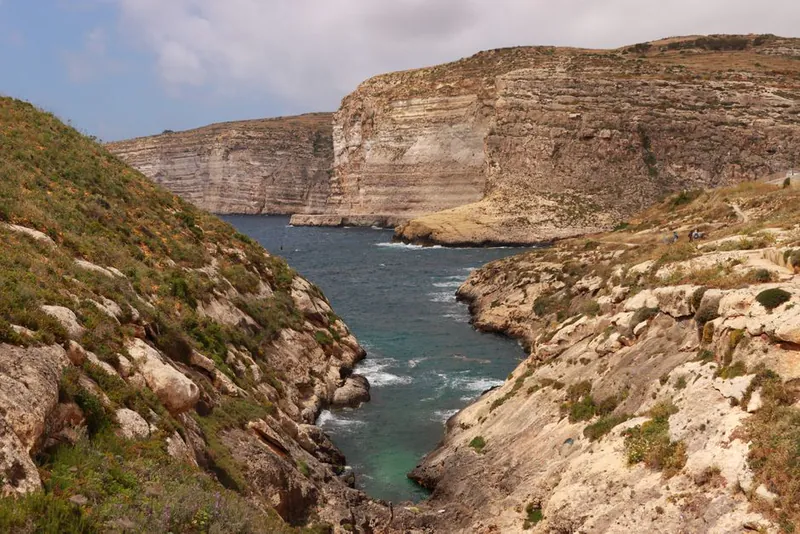
Cover photo by Efrem Efre on Pexels.
Want to see how Malta stacks up?
Are you seriously considering a move? Use our interactive tools to explore Malta's climate, tax brackets, and nomad visas.
Looking for other options?
See how this visa compares against 55 other countries.
📊 Compare all 56 digital nomad visasHead-to-Head Relocation Comparisons
Compare taxes, safety, and living costs of Malta against top alternatives.