Moving to Guyana in 2026: 16% Oil Boom Growth, Georgetown Safety, and Tax Rates
August 31, 2026
ShareGuyana's economy is projected to grow 16.2% in 2026 - not a typo, and not even the country's fastest year this decade, since 2024 alone saw 43.8% growth. It is, by a wide margin, the fastest-growing economy on Earth, built entirely on offshore oil that didn't exist a decade ago. Guyana in 2026 is a country running the most explosive GDP growth story in this entire guide series, a genuinely simple retirement pathway with a clear published income floor, and a capital city that Numbeo consistently ranks among the highest crime levels in the Western Hemisphere - a combination unlike anything else covered here.
The Economy: The World's Fastest-Growing, By an Enormous Margin
Guyana's growth numbers are so far outside the normal range for any economy that they require real context - this isn't a boom, it's arguably the fastest sustained national economic expansion in modern history, and virtually every major institution now agrees on the broad trajectory.
Guyana's own Finance Minister Ashni Singh projected 16.2% growth for 2026 in the January budget presentation, down from 19.3% in 2025, driven by a 17.9% expansion in the oil sector and a still-robust 10.8% non-oil economy, with oil output averaging 840,000 barrels per day[1][2]. PwC's own budget insights confirm the 16.2% figure, breaking it down further: construction projected to grow 25.4%, mining and quarrying 17.6%, oil and gas 13.5%, and agriculture 7.6%[3]. The World Bank's April 2026 Latin America and Caribbean Economic Update projects an even higher 16.3% for 2026, accelerating to 23.5% in 2027, explicitly calling Guyana "the standout performer in the region" against a Latin America/Caribbean average of just 2.1%[4]. A separate, earlier World Bank Macro Poverty Outlook projected growth as high as 20.3% averaged over 2026-2028, with non-oil GDP expanding 9.4%[5].
The IMF's August 2026 Article IV mission described the outlook as "highly favourable," noting real GDP grew over 19% in 2025 following average growth of nearly 40% during 2023-24, with oil production surpassing 900,000 barrels per day by the end of 2025 - a 35% increase in a single year - and projecting the non-oil economy to grow roughly 7% annually over the medium term[6]. Independent trade data corroborates the scale: GDP is projected to reach $33.96 billion in 2026, up from $27.10 billion in 2025, with GDP per capita climbing to roughly $33,167, and the economy expected to grow an average of 14% annually over the next five years[7]. Wikipedia's aggregated figures place Guyana's 2025 growth at 10.3% by one measure and describe it as "the second fastest growing economy in the world" - a genuinely notable downgrade in language from "the fastest," worth flagging given some inconsistency in exactly how growth is being measured and compared across sources[8]. Inflation is forecast in the 3.3-5.0% range for 2026, and debt-to-GDP is expected to rise modestly to roughly 28.6-29.2%[7].
Visas: No Formal Retirement Visa Program - But a Discretionary Path With a Real Income Number
Guyana's residency system for retirees runs on informal, discretionary approval rather than a codified visa category, but unlike Tonga or Tanzania, at least one source gives a concrete income figure to work from.
- Guyana has no dedicated retirement visa. Foreign nationals from the US, UK, Canada, and most EU countries enter visa-free for up to 90 days, then apply for a residence permit through the Ministry of Home Affairs[9]
- A long-stay residence program exists for older adults with financial independence, but "approval is discretionary and not guaranteed"[10]
- Income requirement: applicants are typically asked to demonstrate stable foreign income of roughly USD 1,500-2,500 per month, though this figure should be verified directly with the immigration authority since it isn't a published statutory minimum[10]
- Permits are typically valid for 1-3 years and renewable[9]
- Guyanese nationals by birth or descent may return and reside without restriction - a meaningful advantage for the sizable global Guyanese diaspora[9]
- Clean background credentials are required alongside proof of income, per every source describing the process[10]
Taxes: A Recent Rate Cut, and a Genuine 2026 Threshold Increase
Guyana's personal income tax system underwent real, favorable changes both in the 2025 budget and again via a 2026 amendment act - worth understanding in sequence since sources reflect different points in that timeline.
| Taxable Income (Annual, GYD) | Marginal Rate (2026, post-amendment) |
|---|---|
| First GYD 1,680,000 (personal allowance) | 0% |
| GYD 1,680,001 - 3,360,000 | 25% |
| Above GYD 3,360,000 | 35% (top rate) |
Effective January 1, 2026, the Income Tax (Amendment) Act No. 3 of 2026 raised the annual personal deduction from GYD 1,560,000 to GYD 1,680,000 (or one-third of income, whichever is greater), and raised the chargeable-income ceiling for the 25% bracket from GYD 3,120,000 to GYD 3,360,000[11]. This follows an earlier, larger cut: rates were reduced from 28%/40% to 25%/35% effective January 2025, described directly as producing "more take-home pay for all employed and self-employed taxpayers"[13]. Residents (183+ days present in a calendar year) are taxed on worldwide income; non-residents pay a flat 20% on Guyana-source income only, and a temporary resident is not liable to tax on income arising abroad even if received in Guyana - a genuinely favorable structure for anyone spending part of the year elsewhere[14][12]. Note that one source (TaxAtlas) cites an older 28%/40% structure with different bracket thresholds - the GRA's own January 2026 notice and KPMG's July 2026 fact sheet are the more current and authoritative figures[15][11].
Cost of Living: Georgetown Produces a Genuinely Enormous Spread of Estimates
Georgetown generates one of the widest ranges of single-person budget figures anywhere in this guide series - from $543/month up to $1,919/month for broadly comparable descriptions - a spread wide enough that the oil boom's rapid effect on prices is likely part of the explanation.
Monthly Budget Estimates (Single Person, 2026)
| Source | Budget |
|---|---|
| NomadRanker (comfortable nomad) | $543/mo[16] |
| Rewire Abroad (mid-range) | $1,550/mo[17] |
| CityCost.org (Georgetown, with rent) | $1,316/mo[18] |
| CityCost.org (Guyana national avg.) | $1,142/mo[19] |
| ExpatLife.ai (comfortable) | $1,200-1,800/mo[20] |
| Wise.com (with rent) | $1,919/mo[21] |
Rent (1-Bedroom, Georgetown, 2026)
| Zone | Range (USD/month) | Sources |
|---|---|---|
| Central Georgetown (Bel Air, Prashad Nagar) | $400-700/mo | [22] |
| Providence/Diamond/Eccles suburbs | $300-500/mo | [22] |
| Premium (near Marriott, Pegasus) | $1,000-2,000/mo | [22] |
| Wise.com average, city centre | $960/mo | [21] |
A realistic center of gravity given this wide spread sits around $1,200-1,800/month for a comfortable single-person lifestyle, consistent across ExpatLife.ai's detailed breakdown and CityCost.org's independent figure[20][18]. Critically, Georgetown housing costs have risen 30-50% since 2020, driven directly by oil-sector demand, returning diaspora, and international organizations moving in - a genuinely rapid price shift that helps explain the wide range of estimates depending on when each source's data was collected[23][22]. One source flags that the average local net salary ($526/month) sits well below typical single-person living costs, meaning "most locals rely on shared housing or dual incomes," while remote workers earning in USD will find considerably stronger purchasing power[18].
Healthcare: Free Public Care, a Real Transformation Underway, and Evacuation Still the Backstop
Guyana's healthcare story in 2026 is genuinely more dynamic than most countries in this guide series - a major five-year partnership and six new hospitals are actively reshaping the system - but every source still treats private insurance and evacuation planning as essential for anything beyond routine care.
Guyana operates a universal public healthcare system, free at the point of use for citizens, permanent residents, and expats with appropriate visas, delivered through five tiers: health posts, health centers, district hospitals, regional hospitals, and referral hospitals[24][25]. The Georgetown Public Hospital Corporation (GPHC) is the country's main referral hospital and largest public facility[26]. A genuinely significant development: six new regional hospitals were commissioned in 2025 with 24-hour A&E and advanced imaging services, alongside a Mount Sinai Health System partnership extended through 2030 modernizing training and facilities, plus a national cancer center under construction[26].
| Facility | Location | Type |
|---|---|---|
| Georgetown Public Hospital Corporation (GPHC) | Georgetown | Public, main national referral hospital, free at point of use[26] |
| St. Joseph Mercy Hospital | Georgetown | Private, leading facility - cardiology, surgery, pediatrics[26] |
| Balwant Singh's Hospital | Georgetown | Private[24] |
| Medical Arts Centre | Georgetown | Private, general medicine, orthopedics, specialized surgery[26] |
| Six new regional hospitals (2025) | Various regions | Public, 24-hour A&E, advanced imaging[26] |
Public care is free for basic services, but complex procedures - MRI, CT scans, surgeries, private rooms - are not covered, and the government/hospital may only partially subsidize costs for patients in financial difficulty[25]. Private GP consultations run $20-50, and basic private clinic visits run roughly GYD 5,000-15,000 (£20-60)[26][24]. Health insurance is not legally mandatory for expats, but every source recommends it strongly, since public care "often doesn't meet the expectations of many expats, particularly for specialist care or emergencies"[24]. International health insurance with medevac coverage runs $150-300/month, or £1,000-4,000/year for comprehensive cover, while basic Guyana-only private insurance runs $80-150/month[26][24]. The nearest advanced care for complex procedures sits in Trinidad (1-hour flight) or Miami (4-hour flight), and medevac insurance is described as "strongly recommended" for exactly this reason[26]. Ambulance services are only reliably available in and around Georgetown itself - the rest of the country depends on local health centers, unequipped Land Cruisers, or medevac flights coordinated by the Ministry of Health[25]. Malaria and dengue remain present given the climate, and precautionary vaccination is recommended before travel; expats are also advised to bring their own supply of prescription medications, as availability can be inconsistent[27]. Emergency numbers: 911 police, 912 fire/ambulance (per one source) or 913 medical (per another) - sources genuinely disagree on the exact ambulance line, so confirming the current number locally on arrival is worthwhile[24][25].
Safety: Among the Highest Crime Levels Documented Anywhere in This Guide Series
Guyana's Numbeo data is unambiguous and consistent across every measurement: Georgetown specifically, and the country generally, registers some of the most severe crime perception figures covered in this entire series, and the US State Department backs this up with an official Level 3 advisory.
| Metric | Guyana (National) | Georgetown (City) |
|---|---|---|
| Crime Index | 66.27-66.93[28] | 70.51-70.99, one of the highest in this guide series[29][30] |
| Safety Index/Scale | 33.07-33.73[28] | 29.01-29.49[30] |
| Level of crime | High 75.39-76.27[28] | Very High 81.43-81.86[29] |
| Worries: being mugged or robbed | High 72.02-73.57[28] | Very High 80.37-80.70[29][31] |
| Problem: violent crimes (assault, armed robbery) | High 74.9-75.37[28] | Very High 80.84-81.28[29][30] |
| Problem: corruption and bribery | Very High 83.82[28] | Very High 87.18[30] |
| Safety walking alone, daylight | Moderate 47.23-48.02[28] | Moderate 45.91-46.98[29][30] |
| Safety walking alone, nighttime | Low 29.23-29.91[28] | Low 25.48-27.21[29][30] |
Georgetown's own crime level (81.43-81.86, "Very High") reads meaningfully worse than the country-wide figure (75.39-76.27, "High") - the opposite pattern from several other countries in this guide series, where the capital typically outperforms national statistics[29][28]. By one measure, Guyana ranked #11 in the world for highest crime rates as of mid-2025, compared with the United States at #58[32]. The US State Department maintains a Level 3 (of 4) travel advisory, singling out Georgetown specifically and citing "increased reports of robberies, sexual assaults, and homicides"[32]. Crucially, that same advisory notes crime is heavily concentrated in specific neighborhoods - Agricola, Tiger Bay, Albouystown, and Stabroek Market, all on the western side of Georgetown - with academic research confirming crime clusters west of Vlissengen Road, meaning careful neighborhood selection genuinely changes personal risk exposure[32]. The advisory "bluntly states: avoid walking in Georgetown after dark," specifically flagging the seawall east of Vlissengen Road, the National Park, and Bourda Market as high-risk after dark[32]. In regional context, Guyana's national crime index (66.27-66.93) sits notably better than Trinidad and Tobago (70.98) and dramatically better than Venezuela (80.65), though still worse than Jamaica by a narrow margin on some sub-measures[33][34]. Outlying communities like Buxton register even worse than Georgetown itself - a "Very High" crime level of 100.0 and daylight safety of just 8.33 ("Very Low") - underscoring that conditions vary sharply even within a small country[35].
First Moves After Landing
- Enter on the standard 90-day visa-free window (US, UK, Canada, most EU), then begin the residence permit application through the Ministry of Home Affairs well before it expires[9]
- Prepare documentation showing stable foreign income in the $1,500-2,500/month range, and confirm the current informal threshold directly with immigration, since it isn't a published statutory figure[10]
- Choose your Georgetown neighborhood carefully - avoid Agricola, Tiger Bay, Albouystown, and Stabroek Market specifically, per the US State Department advisory, and favor established expat areas like Bel Air Park or Prashad Nagar instead[36][20]
- Avoid walking anywhere in Georgetown after dark, and specifically steer clear of the seawall east of Vlissengen Road, the National Park, and Bourda Market at night[32]
- Secure international health insurance with medevac coverage to Trinidad or Miami before you need it - public care is free but limited for complex procedures[26]
- Bring a stocked supply of prescription medications, since local availability can be inconsistent, and seek precautionary vaccination given the presence of malaria and dengue[27]
- Expect and budget for rapid price increases in housing specifically - Georgetown rents have risen 30-50% since 2020 and show no clear sign of stabilizing given continued oil-sector inflows[22]
Key Data at a Glance
| Indicator | Value |
|---|---|
| GDP Growth 2026 (consensus) | 16.2%-16.3% - the fastest in the world[1][4] |
| Non-Oil GDP Growth 2026 | 10.8%[2] |
| GDP 2026 | $33.96 billion[7] |
| GDP per Capita 2026 | ~$33,167[7] |
| Oil Output 2026 | 840,000+ bpd[1] |
| Inflation 2026 | 3.3%-5.0%[7] |
| Retirement Visa | None formal - discretionary long-stay permit, ~$1,500-2,500/mo income[10] |
| Visa-Free Entry | 90 days (US, UK, Canada, most EU)[9] |
| Top Personal Income Tax Rate | 35% (residents, worldwide income, effective 2026); 20% flat (non-residents)[11][14] |
| Personal Allowance (2026) | GYD 1,680,000/year[11] |
| VAT | 14%[15] |
| Georgetown Single-Person Budget | $1,200-1,800/month (comfortable)[20][18] |
| Georgetown Rent Rise Since 2020 | 30%-50%[22] |
| International Health Insurance | $150-300/month (with medevac)[26] |
| New Regional Hospitals (2025) | 6, with 24-hour A&E[26] |
| Georgetown Crime Level | 81.4-81.9, Very High[29] |
| Georgetown Nighttime Walking Safety | 25.5-27.2, Low[29] |
| Global Crime Rank | #11 highest worldwide (mid-2025)[32] |
| US State Dept. Travel Advisory | Level 3 of 4[32] |
| Official Language | English (only English-speaking country in South America) |
Guyana's honest pitch for 2026 is unmatched anywhere else in this guide series: the single fastest-growing economy on the planet, a genuinely usable discretionary retirement pathway with an actual income figure to target, favorable and recently-improved tax brackets, and a cost of living still well below Western norms despite rapid oil-driven inflation - set directly against a capital city carrying some of the most severe crime statistics documented in this entire comparison, an official US Level 3 travel advisory, and a blunt warning to simply stay off Georgetown's streets after dark.
References
[1] Reuters
[2] Oil to remain dominant driver of Guyana's 16.2% growth in 2026 - Finance Minister | OilNOW - Guyana’s economy is projected to grow by 16.2% in 2026, with the oil and gas sector continuing to be the dominant driver of expansion, Finance Ministe...
[4] Guyana Chronicle/World Bank April
[7] Economic Outline of Guyana - Bank of Scotland - Discover the economic context of Guyana through the key figures of the economy, various economic indicators and useful sources of information.
[8] Economy of Guyana - Wikipedia
[9] Retiring in Guyana 2026: Honest Cost & Residency Guide | 592Hub - Retire in Guyana for $1,300-2,100/month. Real costs, residency paths, hospitals, neighborhoods, banking - and the honest trade-offs. Verified August 2...
[10] Retire in Guyana: Cost of Living, Visa & Healthcare (2026) - Guyana offers a notably low cost of living - roughly one-third that of the US - paired with warm, consistent tropical weather and English as the official…
[11] GRA Notice, effective January 1, 2026
[12] KPMG Guyana Tax Fact Sheet
[13] Income Tax Guide Guyana 2026 | 592Hub - Guyana income tax guide 2026. Tax rates (25%/35%), PAYE system, personal allowance, filing deadlines, deductions, and GRA eServices.
[14] Guyana - Individual - Taxes on personal income - Detailed description of taxes on individual income in Guyana
[15] Guyana Tax Rates & System (2026) - TaxAtlas - Guyana tax guide: no crypto tax. 40% income tax, 25% corporate, 14% VAT. Rates & brackets for 2026.
[16] Cost of Living in Georgetown (2026): Digital Nomad Budget Guide | RemoteScore - Georgetown costs $543/mo (54% below avg). Rent: $308. Meals: $4. Full cost breakdown.
[17] Living in Georgetown, Guyana (2026): Cost of Living & Expat Guide | Rewire Abroad | Rewire Abroad - Georgetown, Guyana expat guide: $550 rent, government jobs, flooding issues, tiny expat community. Honest review of living costs and lifestyle realiti...
[18] Cost of Living in Georgetown - Prices & Expenses. Aug 2026 | CityCost - Discover the cost of living in Georgetown - housing, food, transport & more. Compare expenses and plan your budget.
[19] Cost of Living in Guyana - Prices & Expenses. Aug 2026 | CityCost - Discover the cost of living in Guyana - housing, food, transport & more. Compare expenses and plan your budget.
[20] Living in Georgetown, Guyana 2026: Cost of Living, Neighborhoods & Expat Tips - Expat guide to Georgetown from $400-$700/mo. 5 neighborhoods compared, coworking spaces, pros & cons, and getting around. Updated 2026.
[21] Wise.com
[22] Renting in Guyana 2026: From $1,200-$2,400/mo Best Areas - Where to live in Guyana as an expat. Rent from $1,200-$2,400/mo. Best neighborhoods, lease tips & areas for families, couples and remote workers.
[23] Guyana Cost of Living 2026: $1,200-$1,800/mo Breakdown - Expat costs in Guyana: $1,200-$1,800/mo, rent $1,200-$2,400/mo, 25-35% tax. Groceries, transport, dining & full budget breakdown. Updated 2026.
[24] Health Insurance in Guyana | Healthcare & Cover for Expats - Health insurance in Guyana is not mandatory for expats, but is recommended. Explore hospitals, health risks and costs here, then secure your policy wi...
[25] Exploring the Key Components of Guyana healthcare system - Discover the key components of Guyana healthcare system in this comprehensive guide. From hospitals to healthcare policies, we cover it all!
[26] Guyana Healthcare 2026: $80-$200/mo Insurance & Hospitals - How healthcare works in Guyana for expats. Private insurance from $80-$200/mo. Public vs private costs, best hospitals & emergency care. Updated 2026.
[27] ExpatWoman
[29] Numbeo Georgetown
[30] Kriminalität in Georgetown
[32] Tourists May Want To Avoid This English Speaking Hub Of Colonial Beauty On Their Next Caribbean Getaway - Planning a Caribbean getaway to Guyana? Before heading to Georgetown, read about the crime risks and travel warnings every tourist should consider.
[33] Numbeo Trinidad vs Guyana
[34] Numbeo Venezuela vs Guyana
[35] Numbeo Georgetown vs Buxton
[36] Tourists May Want To Avoid This English Speaking Hub Of Colonial Beauty On Their Next Caribbean Getaway - Planning a Caribbean getaway to Guyana? Before heading to Georgetown, read about the crime risks and travel warnings every tourist should consider.
Frequently Asked Questions
What are the primary visa and residence options for moving to Guyana in 2026? Guyana's residency system for retirees runs on informal, discretionary approval rather than a codified visa category, but unlike Tonga or Tanzania, at least one source gives a concrete income figure to work from.
How does personal income tax work for expats in Guyana? 3 of 2026 raised the annual personal deduction from GYD 1,560,000 to GYD 1,680,000 (or one-third of income, whichever is greater), and raised the chargeable-income ceiling for the 25% bracket from GYD 3,120,000 to GYD 3,360,000.
What is the average cost of rent and living in Guyana? A realistic center of gravity given this wide spread sits around $1,200-1,800/month for a comfortable single-person lifestyle, consistent across ExpatLife.ai's detailed breakdown and CityCost.org's independent figure.
How many years of residence are required for citizenship or permanent residency in Guyana? Foreign residents generally become eligible to apply for permanent residency or citizenship after 3 to 8 years of continuous legal residence and passing integration benchmarks.
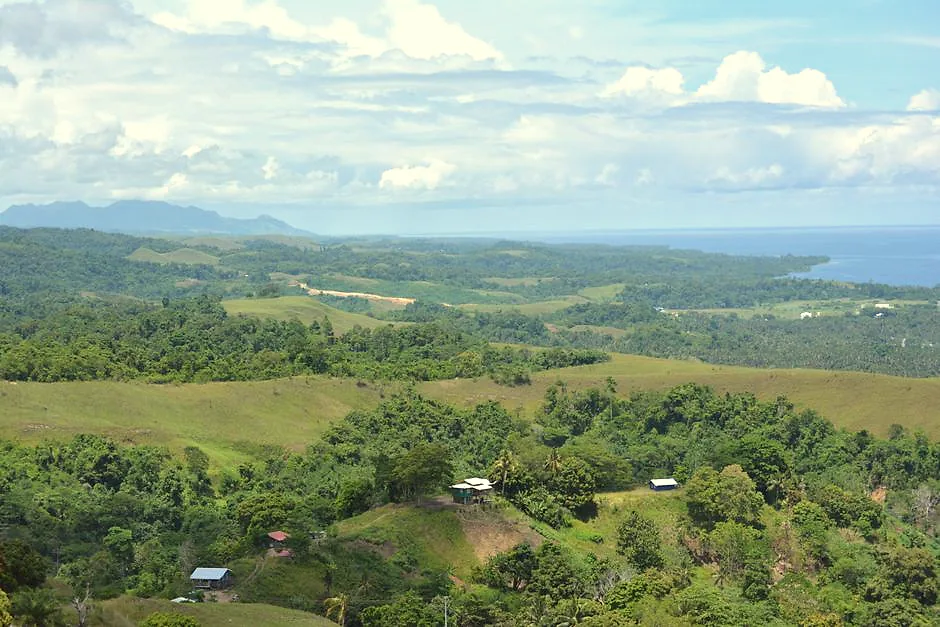
Cover photo by Alan Rojo Pinedo on Pexels.
Want to see how Guyana stacks up?
Are you seriously considering a move? Use our interactive tools to explore Guyana's climate, tax brackets, and nomad visas.