Moving to Guatemala in 2026: 0% Foreign Tax, $1k Visa, and the Level 4 Security Reality
August 4, 2026
ShareGuatemala just guaranteed minimum-wage earners pay zero income tax while foreign income stays completely untaxed regardless of income level, and GDP jumped 4.5% in Q1 2026 on a construction boom - but the US State Department maintains a Level 3 "Reconsider Travel" advisory, with parts of Guatemala City and two full departments rated Level 4 "Do Not Travel." A comfortable single life in colonial Antigua runs $1,200-2,000/month, foreigners can own land including agricultural plots almost everywhere in the country, and the top personal tax rate sits at just 7%. This is everything you need to know before you move.[1][2][3][4]
The Economy: Eyes Open
Guatemala delivered a genuinely strong start to 2026, with GDP growing 4.5% in Q1 on a construction surge and record remittances - though the IMF explicitly frames this as the likely peak for the year rather than a sustained pace. Forecasts for the full year cluster meaningfully, but with real institutional disagreement on the exact number.[1]
| Source | 2026 Forecast |
|---|---|
| Banco de Guatemala (Central Bank) | 4.1%[1][5] |
| IMF (trimmed, June 2026 review) | 3.5-3.75%[1][6] |
| World Bank | 3.7%[6] |
| CEPAL/ECLAC | 3.8%[6] |
| Allianz Trade (most optimistic) | 4.0%[6] |
Guatemala closed 2025 with 4.1% GDP growth, record remittances of $25.53 billion, and inflation of just 1.65% - a genuinely strong combination by regional standards. The Central Bank's more optimistic 2026 outlook specifically credits falling international fuel prices following the US-Iran understanding, which improved the external environment and reduced prior risks tied to potential Strait of Hormuz disruption. Guatemala's growth trajectory positions it clearly above the regional Central American average.[6][5]
Visas and Residency: What You Need to Know
Guatemala runs a genuinely straightforward, low-friction residency system by regional standards, with no dedicated "digital nomad" or "golden visa" fast-track - but a workable set of standard categories.
The 90-Day Tourist Baseline
Guatemalan law authorizes tourist entry for 90 days; overstaying without authorization triggers a fine of GTQ 15/day, payable in cash upon departure. To stay longer, travelers must either exit and re-enter for a fresh 90-day period or apply for one of the formal temporary residence categories.[7]
The Main Temporary Residence Categories
| Category | Cost | Key Requirement |
|---|---|---|
| Worker | $200 (1yr) / $300 (2yr) / $500 (3-5yr) | Job offer letter, Guatemalan guarantor's sworn declaration[7] |
| Student | $100/year (up to 5 years) | School enrollment/acceptance, proof of financial solvency[7] |
| Investor | Case-by-case | Investment documentation[7] |
| Retiree/pensionado (Rentista) | $1,000/month income requirement | Proof of stable passive income[8] |
| Religious workers, artists, athletes, researchers/scientists | Category-specific | Category-specific documentation[7] |
The Application Basics
Every application carries a flat $25 fee, and all foreign documents submitted must be apostilled per the Hague Convention and Guatemalan law. The standard document package includes a certified passport copy, criminal history record, immigration movement record, and - depending on category - proof of financial solvency or an employment offer. Applications process through the Instituto Guatemalteco de Migración (IGM), with work permits from the Labor Ministry typically granted within 15-20 business days once complete documentation is submitted.[7]
The Rentista/Retiree Income Threshold
Guatemala's passive-income residency category requires just $1,000/month in demonstrated income - a genuinely accessible bar compared to many Latin American peers, and one that comfortably covers a modest lifestyle in most of the country given local cost of living.[8]
Path to Citizenship
Naturalization in Guatemala generally becomes available after several years of continuous legal residence, though the country's system is less commonly used by Western expats compared to its residency-first structure. Guatemala broadly permits dual citizenship, removing the renunciation hurdle present in several other countries covered in this guide series.
Cost of Living: The Real Numbers
Guatemala offers genuinely wide cost variation by city, and - a genuine caveat worth flagging upfront - the range of published figures for the same city is unusually broad across sources, so treat any single number as an estimate rather than gospel.
Single-Person Monthly Budget by City (Comfortable Tier)
| City/Area | Comfortable Budget |
|---|---|
| Lake Atitlán (cheapest) | $800-1,200[9][8] |
| Antigua Guatemala | $1,200-2,000[10][9][11] |
| Quetzaltenango (Xela) | $1,000-1,500[9] |
| Guatemala City, outer zones | $1,200-1,800[9] |
| Guatemala City, Zona 10/14/16 (upscale) | $2,350-3,250[9] |
The Antigua Rent Spread
Antigua's own sources show meaningful variation depending on whether "central" is defined narrowly or broadly - a furnished one-bedroom in the historic centro runs anywhere from $400 to $874/month, while options in nearby Jocotenango or San Pedro Las Huertas drop to $250-500/month. A restored colonial three-bedroom with a courtyard commands $1,000-2,500/month, reflecting genuinely premium historic-property pricing.[12][10][11][13]
Household Budget Comparison (Antigua, 2026)
| Household | Monthly Cost |
|---|---|
| Single person | $1,068-1,910[14][11] |
| Couple | $1,495-2,800[14][8][9] |
| Family of four | $2,180-4,500[14][9] |
Everyday Costs (Antigua)
| Item | Monthly Cost |
|---|---|
| Groceries (single person) | $150-350[11][14] |
| Utilities (electricity, water, gas) | $30-100[11][13] |
| Internet | $30-50[11][13] |
| Private health insurance | $50-100[13] |
| Menu del día (local lunch special) | $2.60-4.55[15] |
Taxes: What You Actually Pay
Guatemala runs a genuinely favorable territorial tax system paired with one of the lowest top personal rates covered anywhere in this guide series.
2026 Progressive ISR Brackets (Employment Income, Annual)
| Annual Taxable Income (GTQ) | Rate |
|---|---|
| Up to 300,000 (~$38,700) | 5%[16][2][4] |
| Above 300,000 | GTQ 15,000 + 7% on the excess[16][2][4] |
The 2026 Reform: Decree 13-2026
A genuinely current legislative change worth flagging directly: Decree 13-2026 adds an extraordinary GTQ 3,024 deduction on top of the standard GTQ 48,000 personal deduction, bringing the total 2026 tax-free threshold to GTQ 51,024 (~$6,600) - and, notably, guarantees minimum-wage earners pay zero ISR from 2026 onward.[4]
The Territorial Principle: The Real Draw for Expats
This is the section that matters most for foreign residents: Guatemala taxes only Guatemala-source income. Remote work salary paid by a foreign employer, rental income from property abroad, foreign investment dividends, and foreign pension payments are all 100% exempt from Guatemalan taxation, regardless of how long the recipient has lived in the country. This differs meaningfully from countries in this series with time-limited new-resident exemptions (like the Dominican Republic's 3-year window) - Guatemala's territorial exemption on foreign income has no expiration.[2][17]
Self-Employed / Simplified Regime
| Monthly Gross Receipts | Rate |
|---|---|
| Up to GTQ 30,000 | 5% of gross receipts[2] |
| Above GTQ 30,000 | 7% of gross receipts[2] |
Freelancers and independent professionals can alternatively opt into the general regime with deductions, though the simplified flat-rate option is generally simpler for those without significant deductible business expenses.[17]
Tax Residency Threshold
A foreign individual becomes a Guatemalan tax resident if present in the country for more than 183 days within a calendar year, or if their fixed place of business is in Guatemala - unless they can demonstrate tax residency elsewhere via a foreign tax certificate.[17]
Other Key Rates
| Tax Category | Rate |
|---|---|
| Corporate income tax | 25%[18][19] |
| VAT | 12%[18][19] |
| Capital gains tax | 10%[2] |
| Employee IGSS social security contribution | 4.83%[16] |
| Rental income tax on foreign property owners | ~25% (on net rental income)[20] |
Healthcare: Public vs. Private
Guatemala runs a genuinely two-tier system where the practical advice is unambiguous: use private care for anything beyond the most basic needs. The public IGSS network is overcrowded and not recommended for serious care, while private hospitals in Guatemala City and Antigua provide internationally trained, frequently English-speaking doctors at a genuine fraction of US prices. Numbeo's crowd-sourced Health Care Index sits at 67/100 (medium confidence) - a reasonable, if unspectacular, score reflecting the private-sector strength offsetting public-sector weakness.[3]
Private health insurance in Antigua runs a modest $50-100/month, and private healthcare costs more broadly stay well below US equivalents across the country.[11][13]
Safety: The Section That Demands Real Nuance
This is genuinely the most important section of this guide, because Guatemala's safety picture varies dramatically by specific location - treating the country as a single risk category would be misleading.
The Official US Advisory Picture
The US State Department maintains a Level 3 "Reconsider Travel" advisory (reissued March 12, 2026), citing crime and terrorism concerns nationally. Within that broader advisory, specific areas carry the more severe Level 4 "Do Not Travel" designation: San Marcos and Huehuetenango departments, along with Zone 18 and Villa Nueva within Guatemala City specifically.[3]
The Crowd-Sourced Data
| Metric | Score |
|---|---|
| Numbeo Safety Index (April 2026) | 43.8 (medium confidence)[3] |
| Numbeo Crime Index (April 2026) | 56.2 (medium confidence)[3] |
| Global Peace Index 2024 Rank | 103rd of 163 countries[3] |
| Numbeo Health Care Index | 67.2 (medium confidence)[3] |
The Genuinely Important Distinction: Where Expats Actually Live
Living in Guatemala's specific expat hubs - Antigua and Lake Atitlán in particular - presents a meaningfully different risk profile than the national averages or the flagged Level 4 zones suggest. Antigua's own local safety data puts the town at 52/100, a moderate score reflecting its status as a well-patrolled, tourism-dependent colonial town rather than a high-crime zone. Guatemala City's Zone 1 (historic center) is explicitly flagged as not recommended for expats, while Zones 10, 14, and 15 are considered residential, modern, and comparatively safe.[12][8]
Practical Neighborhood Guidance
| Location | Assessment |
|---|---|
| Antigua Guatemala (general) | Moderate risk, well-patrolled tourist town[12] |
| Lake Atitlán towns (Panajachel, San Pedro) | Generally calmer, popular expat/backpacker circuit[9] |
| Guatemala City Zones 10, 14, 15 | Residential, modern, comparatively safe[8] |
| Guatemala City Zone 1 (historic center) | Not recommended for expats[8] |
| Guatemala City Zone 18, Villa Nueva | US State Dept Level 4 "Do Not Travel"[3] |
| San Marcos, Huehuetenango departments | US State Dept Level 4 "Do Not Travel"[3] |
Practical Precautions
- Choose your neighborhood as carefully as your city - Guatemala City's safety varies enormously block by block between zones[8][3]
- Avoid Zone 1 in Guatemala City and steer clear entirely of San Marcos, Huehuetenango, Zone 18, and Villa Nueva[8][3]
- Favor established expat circuits (Antigua, Lake Atitlán towns, GC Zonas 10/14/16) where local infrastructure and community familiarity reduce practical risk[9][8]
- Use registered taxis or ride-hailing apps rather than informal transport, particularly after dark[3]
- Keep valuables minimal and low-profile when moving through markets or historic centers[3]
English in Everyday Life
English proficiency concentrates in Antigua's tourist and expat-heavy core and in Guatemala City's upscale Zona Viva (Zone 10) business district, reflecting the country's substantial language-school and tourism economy. Spanish remains the practical default virtually everywhere else - government offices, most healthcare outside premium private clinics, and daily commerce nationwide.
Which Region?
Antigua Guatemala
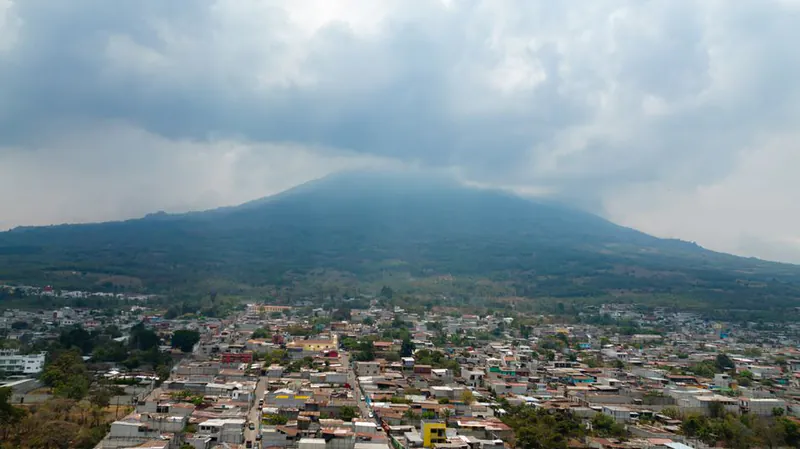
The country's flagship expat destination - a UNESCO-listed colonial town with three volcanoes as a backdrop, walkable cobblestone streets, and the deepest concentration of English-speaking services, restaurants, and language schools in the country. Costs run $1,200-2,000/month for a comfortable single life, with rent varying substantially by specific block.[10][11]
Lake Atitlán (Panajachel, San Pedro La Laguna)
Guatemala's most budget-friendly major expat draw, at $800-1,200/month comfortable, popular with a mix of retirees, digital nomads, and a long-established international backpacker-turned-resident community.[9][8]
Guatemala City, Zonas 10/14/16
The country's most expensive tier at $2,350-3,250/month comfortable, but offering the deepest job market, healthcare infrastructure, and modern residential development - genuinely the choice for those needing proximity to international business or specialized medical care.[9][8]
Quetzaltenango (Xela)
A genuine middle ground in the western highlands, at $1,000-1,500/month, offering a more distinctly local, less tourist-saturated experience than Antigua at a meaningfully lower cost.[9]
Buying Property
Guatemala is genuinely one of the most foreigner-friendly real estate markets in Central America: the Constitution and the Foreign Investment Law (Decree 9-98) guarantee foreigners rights equivalent to Guatemalan citizens for property ownership, with no residency requirement, no surface area limit, no local-partner requirement, and - notably - no minimum investment amount imposed by the state.[21][22]
What Foreigners Can Buy Outright
Foreigners can acquire houses, apartments, condominiums, commercial buildings, residential plots, and even agricultural land in their own name outside restricted zones, registered directly through the Registro General de la Propiedad. Non-residents and tourist-visa holders can purchase property without first obtaining residency - a genuinely accessible feature relative to many peer countries.[22][21]
The Restricted Zones
| Zone | Restriction Distance | Rule |
|---|---|---|
| International borders (Mexico, Belize, Honduras, El Salvador) | 15 km (some sources cite 3 km) | Reserved for native-born Guatemalans or their wholly-owned companies[21][22] |
| Ocean coastline | 3 km (some sources cite up to 50 km) | State property; foreign use only via OCRET administrative lease[22][20] |
| Lake shores (including Lake Atitlán) | 200 m | State property; use via OCRET lease[21][22] |
| Navigable rivers | 100 m | State property; use via OCRET lease[21][22] |
| El Petén reserve zones | Case-by-case per specific decrees | Access reserved for qualifying native-born Guatemalans[22] |
An Important Exception Within the Border Zone
Foreign nationals can own or possess urban real estate within the 15km border strip, and real estate for which rights were registered before March 1, 1956, even within that restricted zone - a genuinely useful carve-out for buyers considering established towns near a border.[23]
The OCRET Lease Mechanism
Along ocean, lake, and river reserve strips, no one - not even Guatemalan citizens - can hold full freehold ownership; the land belongs to the state, and both foreigners and nationals access it only through an administrative lease (arrendamiento) managed by OCRET (Oficina de Control de Áreas de Reserva del Estado). This lease grants a transferable, assignable right of enjoyment, though the underlying land remains state property.[20][22]
The Buying Process
- Hire a notary - who also functions as the transaction's lawyer under Guatemalan practice - and complete due diligence[21]
- Obtain a Guatemalan tax identification number (NIT)[21]
- Execute the purchase deed before the notary[21]
- Pay applicable transfer taxes[21]
- Inscribe the title at the Registro General de la Propiedad - typically 4-8 weeks when documentation is in order[21]
Property Taxes
| Tax | Rate | When |
|---|---|---|
| VAT on first sale/transfer | 12% | First sale only[24] |
| Stamp tax on second+ sale | 3% | Subsequent resales[24] |
| Quarterly real estate tax | 0-9 per thousand of registered value | Ongoing, quarterly[24] |
| Rental income tax (foreign owner) | ~25% on net rental income | Ongoing, if renting[20] |
Important Caveat
Buying property in Guatemala does not automatically grant residency or citizenship - the two processes remain entirely separate, and a property purchase alone does not shortcut the standard temporary residence categories.[22]
Your First Steps: The Checklist
- Track your 90-day tourist window carefully - overstaying triggers a GTQ 15/day cash fine payable at departure[7]
- Choose your residence category based on your actual situation: workers need employer sponsorship, rentistas need $1,000/month in passive income, students need enrollment proof - there's no one-size-fits-all path[8][7]
- Apostille every foreign document before submission - this is a non-negotiable requirement under Hague Convention rules as applied by Guatemalan law[7]
- Understand the territorial tax exemption has no expiration - unlike several peer countries in this series, foreign-source income stays untaxed indefinitely, not just for an initial residency window[2][17]
- Budget realistically by neighborhood, not just city - Antigua rent estimates alone range from $400 to $874 for a "central" one-bedroom depending on the specific source and block[13][12]
- Take the safety advisory seriously and specifically: avoid Zone 1, Zone 18, and Villa Nueva in Guatemala City entirely, and steer clear of San Marcos and Huehuetenango departments[8][3]
- Favor established expat circuits (Antigua, Lake Atitlán, GC Zonas 10/14/16) where community infrastructure and local familiarity genuinely reduce practical risk[9][8]
- Arrange private health insurance immediately - $50-100/month in Antigua - and plan to use private hospitals for anything beyond routine care[13][3]
- If buying property, confirm your target zone isn't within the 15km border strip, 3km coastal strip, or 200m lake-shore band - including around Lake Atitlán itself[22][21]
- Remember property purchase and residency are entirely separate processes - buying a house does not grant any immigration status automatically[22]
Key Data at a Glance
| Indicator | Value |
|---|---|
| GDP Growth Q1 2026 | 4.5%[1] |
| GDP Growth Forecast 2026 (Central Bank) | 4.1%[1][5] |
| GDP Growth Forecast 2026 (IMF) | 3.5-3.75%[1][6] |
| 2025 Inflation | 1.65%[6] |
| 2025 Remittances | $25.53 billion[6] |
| Tourist Stay Limit | 90 days[7] |
| Rentista/Retiree Monthly Income Requirement | $1,000[8] |
| Residence Application Fee | $25 (flat, all categories)[7] |
| Top Personal Income Tax Rate | 7% (above GTQ 300,000/year)[16][2] |
| 2026 Tax-Free Threshold (Decree 13-2026) | GTQ 51,024 (~$6,600)[4] |
| Foreign-Source Income Tax | 0% (territorial system, no expiration)[2][17] |
| Corporate Tax | 25%[18] |
| VAT | 12%[18] |
| Foreign Land/Agricultural Ownership | Permitted outside restricted zones[22][21] |
| Border Zone Restriction | 15 km (some sources: 3 km)[21][22] |
| Coastal Restriction | 3 km (state land, OCRET lease only)[22] |
| Lake Shore Restriction (incl. Atitlán) | 200 m (state land, OCRET lease only)[21] |
| Comfortable Single Budget (Antigua) | $1,200-2,000/month[10][11] |
| Comfortable Single Budget (Lake Atitlán) | $800-1,200/month[9][8] |
| US State Department Advisory | Level 3, Reconsider Travel[3] |
| Level 4 "Do Not Travel" Zones | San Marcos, Huehuetenango, GC Zone 18, Villa Nueva[3] |
| Numbeo Safety Index | 43.8[3] |
| Global Peace Index Rank 2024 | 103rd of 163[3] |
Guatemala in 2026 rewards those willing to do genuine location-specific homework: the territorial tax system and unrestricted land ownership make it one of the most financially accessible countries in this guide series, but the safety picture demands treating "Guatemala" not as one country but as a patchwork of distinctly different risk zones, where the established expat hubs of Antigua and Lake Atitlán look nothing like the areas the US State Department flags as off-limits.
References
Guatemala GDP Jumps 4.5% in Q1 on Construction Boom - Guatemala GDP grew 4.5% in Q1 2026, driven by a construction surge and strong remittances. The IMF s...
Tax Rates in Guatemala 2026 - Guatemala tax rates 2026: income tax 5-7%, corporate 25%, VAT 12%, CGT 10%. Worldwide taxation. Comp...
Living in Guatemala: Cost, Safety & Visas for Expats | Liberty Routes - American expat guide to Guatemala: ~35% cheaper than the US, $1,250/mo residency visa, Level 3 advis...
Guatemala Income Tax (ISR) Calculator 2026: Annual + Monthly ... - Calculate your Guatemala ISR (income tax) for salaried workers under the 2026 reform (Decree 13-2026...
Guatemala prevé un crecimiento económico del 4.1% en 2026 - La estimación del banco central atribuye el repunte a la caída internacional de los combustibles tra...
INFORME DE PERSPECTIVAS DE LA ECONOMÍA DE GUATEMALA: Análisis ... - Guatemala cerró 2025 con un PIB de 4.1%, remesas récord de US$25,530 millones e inflación de apenas ...
Guatemalan Residence and Work Permits - U.S. Embassy in Guatemala
Cost of Living in Guatemala: What Expats Actually Pay (2026) - Cost of living in Guatemala in 2026: real expat budgets for Antigua from $1050 to $1850/month, plus ...
Cost of Living in Guatemala 2026: All 5 Cities Compared ... - Cost of living in Guatemala 2026: $600-$1,000/mo budget, $1,200-$1,800 comfortable, $2,500+ premium....
Cost of Living in Antigua Guatemala 2026 - Real 2026 Antigua Guatemala costs ($1,200-1,700/mo) compared side-by-side with Guatemala City, Lake ...
Living in Antigua Guatemala 2026: The Complete Hub - Everything about Antigua Guatemala in one place - where to live, restaurants, safety, healthcare, fe...
Antigua Guatemala Cost of Living (2026) - Rent, Prices & Safety - Antigua Guatemala, Guatemala: ~$849/mo cost of living, $874 1BR rent, 62 Mbps internet, safety 52/10...
Cost of Living in Antigua Guatemala 2026 - Monthly expenses breakdown for expats living in Antigua Guatemala, Guatemala.
Cost of Living in Antigua Guatemala (2026): $1,068/mo - A single person spends about $1,068/month in Antigua Guatemala. Rent is $550, with full 2026 cost br...
Cost of Living Research - Guatemala by Area - Cost of Living Research - Guatemala by Area Research date: February 22, 2026 Exchange rate: 1 USD = ...
Guatemala Tax Calculator 2026: 5%/7% Income Tax - Guatemala 2026: ISR income tax 5% on first GTQ 300,000/year (~$38,700), 7% above. Annual deduction G...
2026 nach Guatemala auswandern: 0% Steuer auf ... - Wer 2025 nach Guatemala auswandert, profitiert von echter Territorialbesteuerung - Auslandseinkommen...
Guatemala Tax Rates 2026: Income, Corporate, VAT - TaxGlass - Guatemala: 7% top income tax, 25% corporate, 12% VAT. Sources and brackets, updated 2026.
Guatemala Tax Rates and Residency Information - Tax Map - Guatemala features a territorial tax system. Top personal income tax is 7%, corporate tax is 25%, an...
Propriété étrangère au Guatemala : Règles, restrictions et conseils ... - Guide complet sur les réglementations de propriété étrangère au Guatemala : zones interdites, fiscal...
Are Foreigners Protected By... - The latest update about what foreigners can and can't own in Guatemala. Freehold, leashold, residenc...
Foreign Property Ownership in Guatemala - Complete guide to foreign property regulations in Guatemala: restricted areas, taxation, transaction...
Guatemala - KPMG agentic corporate services - must be paid quarterly on the real estate property ownership, depending on the registered value of t...
Frequently Asked Questions
What are the primary visa and residence options for moving to Guatemala in 2026? Applications process through the Instituto Guatemalteco de Migración (IGM), with work permits from the Labor Ministry typically granted within 15-20 business days once complete documentation is submitted.
How does personal income tax work for expats in Guatemala? This is the section that matters most for foreign residents: Guatemala taxes only Guatemala-source income.
What is the average cost of rent and living in Guatemala? Guatemala offers genuinely wide cost variation by city, and - a genuine caveat worth flagging upfront - the range of published figures for the same city is unusually broad across sources, so treat any single number as an estimate rather than gospel.
How many years of residence are required for citizenship or permanent residency in Guatemala? Naturalization in Guatemala generally becomes available after several years of continuous legal residence, though the country's system is less commonly used by Western expats compared to its residency-first structure.
Want to see how Guatemala stacks up?
Are you seriously considering a move? Use our interactive tools to explore Guatemala's climate, tax brackets, and nomad visas.