Moving to Eswatini in 2026: $150 Mbabane Rents, Frozen 2013 Tax Code, and Visa Realities
September 2, 2026
ShareEswatini's finance minister told parliament in early 2025 that growth would hit 8.3% for the fiscal year - then revised it to 7.9%, and the IMF's own numbers for calendar 2026 now sit at roughly half that. That gap between political optimism and institutional caution defines Africa's last absolute monarchy in 2026: a small, landlocked kingdom squeezed between South Africa and Mozambique, growing faster than its ten-year average on the back of dams and roads, taxing residents on a bracket system frozen since 2013, and offering not a single dedicated visa route for retirees or remote workers despite genuinely startling affordability - a one-bedroom apartment in the capital can run as little as $150 a month.
The Economy: A Real Boom, Though the Size of It Depends Entirely on Who's Counting
Eswatini's 2026 growth numbers span an unusually wide range for a single small economy - from a domestic government projection near 4.7% down to an IMF April revision of exactly 4.0%, with a jaw-dropping outlier of 7.9% from the finance minister himself just last year.
The IMF's April 2026 Regional Economic Outlook trimmed its Eswatini growth forecast to 4.0% for 2026, down from 4.3% in its October 2025 outlook, and cut the 2027 figure even more sharply - from 4.6% down to 3.5% - "signalling a more pronounced slowdown over the medium term"[1]. This followed an earlier and more optimistic IMF Article IV Consultation (from the 2025 review cycle) projecting 4.6% growth for 2026, "supported by domestically financed investments" in roads, dams, and energy infrastructure, before tapering to 2.8% over the medium term absent structural reform[2][3].
The IMF's most recent update, following its August 2026 Article IV mission, reports that growth accelerated to 4.9% in 2025 but is "expected to moderate in 2026, reflecting higher fuel costs, weaker global demand, tighter financing conditions, weather-related disruptions, and easing of investment activity" - critically, this same mission flags that unemployment remains extremely high at 33.5% despite the strong headline growth[4]. The World Bank corroborates a similar 4% figure for 2025, "a marked increase from 3% in 2024 and well above the ten-year average of about 2.5%," with GDP growth projected to remain firm at 4% in 2026, driven by manufacturing, services, and infrastructure investment including the Mpakeni Dam[5]. Eswatini's own government produces the most volatile numbers in this comparison: the Ministry of Finance's medium-term projection document forecasts 4.72% for 2026, while the Finance Minister publicly announced a fiscal-year 2025/2026 figure revised to 7.9%, down from an initial budget-speech projection of 8.3% - a genuinely enormous gap against every external institution's estimate[6][7]. A separate private-sector economic analysis published on LinkedIn in early 2026 cites yet another figure - 5.2% for 2026, revised down from an earlier 5.6%, citing delays in major construction projects and a Foot and Mouth Disease outbreak affecting agricultural output[8].
On the fiscal side, public debt is expected to reach roughly 50% of GDP by the end of FY26/27, with the budgeted deficit narrowing slightly to 5.9% of GDP as higher public wages and interest payments offset other savings[4]. Inflation forecasts also diverge modestly: the Central Bank of Eswatini projects 2026 inflation at 3.97%, while the IMF's own Article IV report projects 2025 inflation falling to 3.5% before edging up in 2026 due to negotiated electricity tariff increases, and the August 2026 mission update reports inflation actually rose to 2.6% by June 2026 after an earlier decline[9][2][4]. Eswatini's total nominal GDP stands at $5.79 billion in 2026, ranked 172nd globally, with per-capita GDP of $4,927[10].
Visas: No Retirement or Nomad Visa at All - Just a Bureaucratic, Employer-Sponsored Path
Eswatini stands out in this entire guide series for having genuinely the least developed visa infrastructure for financially independent foreigners - there is no retirement visa, no digital nomad visa, and the standard long-stay route runs almost entirely through employer sponsorship.
- Visa-free entry: citizens of the USA, UK, Canada, Australia, most EU nations, and South Africa can enter without a pre-arranged visa for 30 to 90 days, though the exact duration is "often at the discretion of the immigration officer at the border"[11]
- Visa-on-arrival has been suspended - travelers requiring a visa must obtain the physical visa sticker before arrival, either via the official eVisa portal or an Eswatini diplomatic mission; showing up without one at a border post like Ngwenya results in "a quick turnaround back into South Africa"[11]
- No dedicated retirement visa exists - Eswatini "does not have a formal, named retirement visa program like some regional neighbors," and foreign nationals instead apply for a Temporary Residence Permit (TRP) through business investment, employment sponsorship, or family ties[12]
- No digital nomad visa exists either - the TRP "is not designed for independent remote workers," and working for yourself or a foreign entity "doesn't currently check the boxes for this permit" as normally issued[11]
- The standard TRP route requires a local employer to sponsor the applicant and prove that no Eswatini citizen could fill the specific role - a genuinely restrictive requirement for self-employed or remote applicants[11][13]
- Retirees can, in practice, use the standard TRP by demonstrating a consistent pension or investment income plus comprehensive health insurance, without seeking local employment - StampedNomad describes the government as "generally welcoming to self-sufficient retirees looking for a quiet, scenic lifestyle" on this basis, even without a formal named category[11]
- TRPs are typically issued for up to 2 years and are renewable, requiring proof of financial means, a police clearance certificate, a medical certificate, and a formal letter explaining the purpose of stay[11]
- Permanent residency eligibility arrives after 5 years of continuous temporary permits[11]
- Naturalization can be applied for after 5 years of residence, but the process is discretionary and the King has the final say - critically, Eswatini generally does not permit dual citizenship, so an applicant typically must renounce their previous nationality entirely[13]
- Dependent permits for spouses and children are tied to the primary applicant's status and valid for up to 2 years, but do not grant the right to work - a spouse seeking employment must apply for a separate work permit[11]
- The overall system is described directly as "complex" and administered by the Ministry of Home Affairs, "known for its bureaucracy"[13]
Taxes: A Progressive Scale Frozen in Place Since 2013
Eswatini runs a standard progressive personal income tax system, and a genuinely notable detail here is just how long the underlying bracket thresholds have stayed completely unchanged - over a decade with no adjustment for inflation.
| Taxable Income (SZL, per annum) | Tax Rate |
|---|---|
| 0 - 100,000 | 20% |
| 100,000 - 150,000 | 25% (plus SZL 20,000) |
| 150,000 - 200,000 | 30% (plus SZL 32,500) |
| Above 200,000 | 33% (plus SZL 47,500) |
A personal rebate of SZL 8,200 per year applies to all resident taxpayers, rising to SZL 10,900 for those over age 60, and because 20% of SZL 41,000 equals exactly SZL 8,200, the practical tax-free threshold works out to SZL 41,000 per year[16][14]. Crucially, the underlying four tax bands have not changed since July 1, 2013 - the Income Tax (Amendment) Act of 2023 simply re-enacted the identical bracket structure rather than adjusting it, a genuinely rare case of over a decade of bracket freeze found in this analysis[16]. Income tax applies to all income derived from a source within or deemed to be within Eswatini, regardless of whether the recipient is actually resident in the country - a broad source-based rule that captures non-residents earning locally as well[14]. Every taxpayer also owes a fixed, nominal graded (poll) tax of just SZL 18 per year, on top of the standard income tax calculation[15]. Separately, the country's standard corporate tax rate is 27.5%, and VAT sits at 15%[17].
Cost of Living: Genuinely Among the Cheapest Capitals Covered in This Series, Though Estimates Vary Widely
Mbabane produces one of the widest single-person monthly budget ranges anywhere in this guide series - from $531/month at the frugal end to over $2,200/month for a luxury lifestyle - but nearly every source agrees the capital sits comfortably 40-60% below global averages.
Monthly Budget Estimates (Single Person, 2026)
| Source | Budget |
|---|---|
| CityLivingCosts (excluding rent) | $600/mo[18] |
| CityCost.org (with rent) | $747/mo[19] |
| LivingCost.org (with rent) | $607/mo[20] |
| WhereToEmigrate (single total) | €595/mo (~$645)[21] |
| GlobalCostData (comfortable) | $800-1,600/mo[22] |
| LivingCostIndex (with rent, average) | $1,063/mo[23] |
Rent (1-Bedroom, Mbabane, 2026)
| Source | City Centre | Outside Centre |
|---|---|---|
| GlobalCostData (Mbabane) | $260/mo[24] | $169/mo[24] |
| CityCost.org | $256/mo[19] | $183/mo[19] |
| CityLivingCosts | $250/mo[18] | $150/mo[18] |
| WhereToEmigrate | €180/mo (~$195)[21] | €120/mo (~$130)[21] |
| Wise.com (converted from GBP) | ~$264/mo[25] | ~$178/mo[25] |
| Abrova | $335/mo[26] | - |
A realistic center of gravity given this genuinely wide spread sits around $600-1,000/month for a comfortable single-person lifestyle in Mbabane, with rent for a central one-bedroom running roughly $150-335/month depending on exact location and building quality[18][26]. Mbabane's cost of living index registers 32-40 out of 100 relative to New York City, placing it 60-68% below the New York baseline and roughly 26-44% below the global median[18][19]. Notably, the average local monthly salary of $530 sits below the average cost of living for a single person, a genuinely important detail for anyone comparing expat budgets against local wage realities[23].
Healthcare: A Genuinely Under-Resourced Public System, With South Africa as the Universal Answer for Anything Serious
Eswatini's healthcare picture is one of the most consistent found anywhere in this guide series: virtually every source, from government travel advisories to insurance providers, converges on the identical conclusion - the public system is stretched thin, the small private sector concentrated in Mbabane and Manzini fills the gap adequately for routine care, and evacuation to South Africa is treated as simply routine for anything beyond that.
Eswatini runs a mixed public-private system, with the public sector generally under-resourced - six government hospitals including Mbabane Government Hospital, two mission hospitals, and roughly 200 smaller clinics, many struggling with "shortages in staff, medicine, and medical supplies"[27][28].
| Facility | Location | Type |
|---|---|---|
| Mbabane Clinic (The Clinic Group) | Mbabane | Private, 24/7, the most consistently recommended facility for foreigners across every source[29][27] |
| Manzini Clinic (The Clinic Group) | Manzini | Private, 24/7, outpatient and inpatient services[30] |
| Matsapha Healthcare Clinic | Matsapha | Private, specialist day clinic, weekdays only[30] |
| Royal Swazi Spa Hospital | Manzini | Private[28] |
| Mbabane Government Hospital | Mbabane | Public, main national referral facility[31] |
| Raleigh Fitkin Memorial Hospital | Manzini | Mission hospital, handles routine issues for tourists[29] |
| Medisun Clinic | Ezulwini | Private[31] |
Costs are genuinely low for routine private care: the average GP visit runs around $15, though specific pricing for more complex procedures is scarce and "costs can be substantial" for anything beyond a basic consultation[27]. Private hospitals typically require advance payment or proof of adequate insurance before admitting a patient - a near-universal theme across every source consulted[27][32]. International health insurance runs €100-500/month (roughly E2,000-10,000/month), with local options including EswatiniMed and Oracle Health Eswatini, and short-term travelers can access ESRIC Travel Health Insurance covering emergencies up to €30,000[27].
Medical evacuation to South Africa - typically Nelspruit or Johannesburg - is described as "frequently necessary" and "a common and often necessary pathway" for anything beyond routine care, with costs consistently cited in the $50,000-100,000 range across multiple independent sources[29][27][28]. The UK's own Foreign, Commonwealth & Development Office states plainly that "for serious accidents and emergencies or specialised treatment, it's likely you would need to go to South Africa"[33]. Emergency numbers show some genuine inconsistency across sources - 977 is the most consistently cited number for ambulance/emergency medical services, alongside 999 (police), 933 (fire), and a universal toll-free line of 112; one source additionally lists 911 for a private "ASSIST" emergency response service[27][31].
Safety: A Genuinely Reassuring Daytime Profile, Undercut Sharply by Corruption Perception
Eswatini's Numbeo data reads as broadly moderate and, on several specific metrics, notably reassuring by the standards of this entire guide series - though corruption perception again stands out as the clear outlier, a now-familiar pattern across nearly every developing economy covered so far.
| Metric | Eswatini (National) |
|---|---|
| Crime Index | 42.30[34] |
| Safety Index | 57.70[34] |
| Level of crime | Moderate 45.00-47.22[34] |
| Worries: being mugged or robbed | Low 36.36[34] |
| Problem: violent crimes (assault, armed robbery) | Moderate 47.73[34] |
| Problem: corruption and bribery | High 65.91[34] |
| Problem: people using or dealing drugs | Moderate 52.27[34] |
| Safety walking alone, daylight | Very High 81.82[34] |
| Safety walking alone, nighttime | Moderate 45.83[34] |
Eswatini's daylight walking-safety score of 81.82, "Very High," is one of the more reassuring readings on this specific metric found anywhere in this comparison series, and worry about being physically attacked due to skin color, ethnicity, gender, or religion registers "Low" at just 27.27[34]. Fear of being insulted also reads low at 27.27, and fear of car theft is "Low" at 29.55 - a genuinely consistent, moderate-to-reassuring overall profile[34]. Corruption and bribery perception registers "High" at 65.91 - by a meaningful margin the single most severe metric in the country's entire profile, echoing the now-familiar pattern seen repeatedly across nearly every developing economy covered in this guide series, though notably less extreme than the "Very High" 80+ readings recorded in several other countries examined earlier[34]. Perceived crime has also been "increasing in the past 5 years" according to respondents, registering a "Moderate" 59.09 on that specific trend metric[34]. Independent travel-safety guides corroborate the broad picture, though they flag a genuinely different set of risks entirely - wildlife encounters, mountain hiking precautions, and malaria exposure in lowveld areas including game reserves, rather than urban crime as the primary concern for visitors[29].
First Moves After Landing
- Confirm your exact visa-free entry window (30-90 days, at border officer discretion) before booking travel, and remember visa-on-arrival has been suspended entirely - non-exempt nationalities must secure an eVisa in advance[11]
- If planning to stay long-term without local employment, budget significant time and paperwork for the Temporary Residence Permit process, including a police clearance certificate, medical certificate, and proof of financial means - there is no formal retirement or nomad category to fall back on[11][12]
- Secure comprehensive international health insurance with explicit medical evacuation coverage to South Africa before arrival - treat the $50,000-100,000 evacuation cost band as the real number to insure against[28][29]
- Identify Mbabane Clinic as your primary healthcare contact - it's the consistently top-recommended private facility for foreigners across every source[29]
- Bring cash or a credit card for private clinic admission, and confirm your insurer's pre-authorization process in advance - nearly every private facility requires upfront payment or proof of coverage before treatment[27]
- Budget realistically around $600-1,000/month for a comfortable single-person lifestyle in Mbabane, with central one-bedroom rent running as low as $150-335/month depending on the building[18][26]
- If considering naturalization down the line, understand upfront that Eswatini generally does not permit dual citizenship - you would need to renounce your existing nationality entirely[13]
Key Data at a Glance
| Indicator | Value |
|---|---|
| GDP Growth 2026 (consensus range) | 4.0%-5.2%[1][8] |
| Government's Own FY2025/26 Estimate | 7.9% (down from 8.3%)[7] |
| GDP 2026 (nominal) | $5.79 billion, ranked #172 globally[10] |
| Unemployment | 33.5%[4] |
| Public Debt (end FY26/27) | ~50% of GDP[4] |
| Retirement/Nomad Visa | None - Temporary Residence Permit only, typically employer-sponsored[11] |
| Visa-Free Entry (US/UK/EU/AU/SA) | 30-90 days (border officer discretion)[11] |
| Permanent Residence Eligibility | 5 years of continuous temporary permits[11] |
| Dual Citizenship | Generally not permitted[13] |
| Top Personal Income Tax Rate | 33% (above SZL 200,000/year, unchanged since 2013)[14][16] |
| Practical Tax-Free Threshold | SZL 41,000/year[16] |
| Corporate Tax Rate | 27.5%[17] |
| Mbabane Single-Person Budget | $600-1,000/month (comfortable)[18][19] |
| Mbabane 1BR Rent, City Centre | $150-335/month (wide source variance)[18][26] |
| International Health Insurance | €100-500/month[27] |
| Medical Evacuation Cost | $50,000-100,000 (to South Africa)[29][28] |
| Primary Evacuation Destinations | Nelspruit or Johannesburg, South Africa[29] |
| Eswatini Crime Level | 45.0-47.2, Moderate[34] |
| Eswatini Daylight Walking Safety | 81.82, Very High[34] |
| Eswatini Corruption/Bribery Perception | 65.91, High - the sharpest single metric[34] |
| Official Languages | English, siSwati |
Eswatini's honest pitch for 2026 is a genuinely small, walkable capital where daytime safety scores hit "Very High," rent can run as low as $150 a month, and hydropower and infrastructure spending are driving growth meaningfully above the country's own ten-year average - set directly against a visa system with no pathway at all for retirees or remote workers outside employer sponsorship, a tax bracket structure frozen since 2013, a public healthcare system so under-resourced that private facilities and, ultimately, evacuation to South Africa are simply assumed as the default plan, and growth forecasts that swing by nearly a factor of two depending purely on whether you ask the IMF or the finance minister.
References
[1] IMF trims Eswatini growth outlook amid rising risks - The International Monetary Fund (IMF) has downgraded Eswatini’s economic growth outlook, with projections for both 2026 and 2027 revised downward in i...
[3] AfricaOne
[5] Eswatin | World Bank Group - The World Bank provides support to the government in three key areas: improving human capital formation, budget management and governance, and increas...
[6] Gov.sz Medium-Term Projection
[8] Eswatini GDP growth forecasts revised down for 2025 and 2026 | Thokozani Sifakazelo Sibiya posted on the topic | LinkedIn - Eswatini
[10] Eswatini GDP (2026) - Worldometer - Current and historical Gross Domestic Product (GDP) of Eswatini in nominal and real US dollar values. GDP growth rates and charts
[11] Eswatini Digital Nomad Guide 2026: Visas, Costs and Safety | Stamped Nomad - Review Eswatini visa entry requirements, safety, local infrastructure, and monthly expenses before planning a digital-nomad stay.
[12] Retire in Eswatini: Cost of Living, Visa & Healthcare (2026) - Eswatini offers a notably affordable lifestyle - costs are roughly one-third of US levels - with mild, stable year-round temperatures and English widely s...
[13] Living in Eswatini 2026: Cost, Visas & Expat Reality | Rewire Abroad - Eswatini costs $482/mo (excl. Rent) with limited healthcare & small expat community. Visa-free 30 days for Americans. Full guide inside.
[14] Eswatini - Individual - Taxes on personal income - Detailed description of taxes on individual income in Swaziland
[15] Eswatini Tax Calculator (2026) | Income Tax Rates & Take-Home Pay - Eswatini income tax calculator for 2026. 4 tax brackets with a top rate of 33.0%. Calculate your take-home pay after all taxes and deductions.
[16] Eswatini income tax rates 2026 - Personal income tax bands - Eswatini Personal income tax bands: no single figure applies. Cited to The Income Tax (Amendment) Act, 2023 (Act No. 20 of 2023), section 39.
[17] Eswatini: taxes, personal and corporate income tax - FiscaWorld - Eswatini: personal income tax 20% to 33%, corporate income tax 27.5%. VAT 15%. Standard-regime rates, official sources and comparison with the world a...
[18] Cost of Living in Mbabane, Eswatini (2026) | CityLivingCosts - How much does it cost to live in Mbabane, Eswatini? Around $600/month for one person (cost index 32/100). See real prices for rent, food and transport...
[19] Cost of Living in Mbabane - Prices & Expenses. Aug 2026 | CityCost - Discover the cost of living in Mbabane - housing, food, transport & more. Compare expenses and plan your budget.
[20] Mbabane: Cost of Living, Salaries, Prices for Rent & food - The average cost of living in Mbabane is $607, which is in the top 15% of the least expensive cities in the world, ranked 7924th out of 9294 in our gl...
[21] Eswatini: 17 Immigration Routes & Visa Pathways - whereTOemigrate - Every published immigration route to Eswatini: 17 pathways across 12 categories, each citing an official government source. Free verdict; full report.
[22] Cost of Living in Eswatini 2026-66% Cheaper ($485/mo) - Cost of living in Eswatini: CoL index 33.8 (NYC=100), 66% cheaper than New York. Monthly budget from $485. Rent, food & transport guide for expats 202...
[23] Cost of Living in Mbabane, Hhohho, Eswatini in 2026 - This page contains up-to-date cost of living information for Mbabane, Hhohho, Eswatini in 2026. Compare prices for rent, food, groceries, utilities, t...
[24] Cost of Living in Mbabane, Eswatini 2026 - $239/mo - Cost of living in Mbabane, Eswatini: rent from $210/mo, CoL Index 50.0 (NYC=100). Compare prices for rent, food, transport & groceries. 2026 data for ...
[25] Cost of Living in Mbabane 2026 | Mbabane Living Costs - Wise - A guide to the average cost of living in Mbabane. From housing and travel costs, to currency and exchange rates. Use our calculator to see what the li...
[26] Rent in Eswatini | AbroVa - House prices and rent in Eswatini: city-by-city comparison, price forecasts, and practical tips for finding affordable housing.
[27] Healthcare in Eswatini | NestFainder - How the healthcare system works, insurance, and access for residents and expats in Eswatini.
[29] Is Eswatini Safe? (2026) - Safety Guide for Travelers - Is Eswatini safe for travelers? Get essential safety tips, crime insights, and emergency contacts to stay secure while visiting Eswatini.
[30] The Clinic Group
[31] Eda.admin.ch
[32] Eswatini Travel Vaccinations | Malaria & Health Information | Travel Doctor Network - Complete Travel Health Advice For Eswatini | Swaziland. Your One-stop Source For Travel Vaccination Recommendations, Health Information, And Trusted D...
[33] Health - Eswatini travel advice - GOV.UK - FCDO travel advice for Eswatini. Includes safety and security, insurance, entry requirements and legal differences.
[34] Crime in Eswatini. Safety in Eswatini - Information about crime in Eswatini. Shows how much people think the problem in their community are property crimes (home broken, car theft, etc.), vi...
Frequently Asked Questions
What are the primary visa and residence options for moving to Eswatini in 2026? Eswatini offers several residence routes for foreigners, including skilled worker permits, business or investor programs, and digital nomad permits.
How does personal income tax work for expats in Eswatini? Eswatini runs a standard progressive personal income tax system, and a genuinely notable detail here is just how long the underlying bracket thresholds have stayed completely unchanged - over a decade with no adjustment for inflation.
What is the average cost of rent and living in Eswatini? Notably, the average local monthly salary of $530 sits below the average cost of living for a single person, a genuinely important detail for anyone comparing expat budgets against local wage realities.
How many years of residence are required for citizenship or permanent residency in Eswatini? Foreign residents generally become eligible to apply for permanent residency or citizenship after 3 to 8 years of continuous legal residence and passing integration benchmarks.
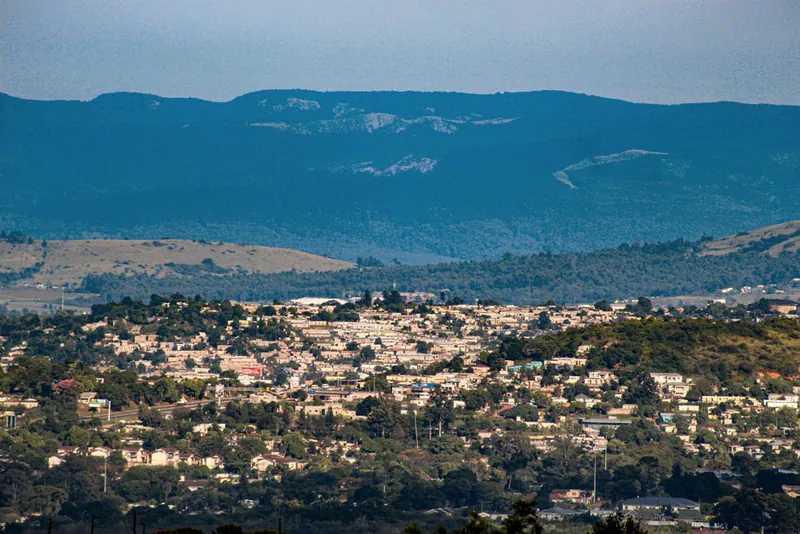
Cover photo by Khaya Motsa on Pexels.
Want to see how Eswatini stacks up?
Are you seriously considering a move? Use our interactive tools to explore Eswatini's climate, tax brackets, and nomad visas.