Curaçao Digital Nomad Visa 2026: The 14-Day Tax-Free Loophole Nobody Tells You About
July 12, 2026
ShareWhile most Caribbean nations drown remote workers in months of bureaucratic mud, Curaçao’s 14-day "fast-pass" system remains the region’s most efficient legal loophole. The "@Home in Curaçao" program is a strategic masterstroke, requiring only a $2,500 monthly income threshold[2] - a figure significantly lower than European counterparts. For the professional seeker, this permit is the superior tactical choice over a standard 90-day tourist visa, providing a legal bridge to a 6-month initial stay with a streamlined renewal for another 6 months[3].
This is not merely an extended vacation; it is a specific legal status that balances accessibility with a firewall against local tax liabilities. Transitioning from a tourist to an official resident allows for a 12-month continuous presence[2], whereas "border hopping" on a tourist visa remains a high-risk violation of local immigration law[7]. Understanding the legal mechanics of this program is the only way to avoid the administrative rejections that plague unprepared applicants.
The legal framework of the "@Home" program is designed to prevent common entry errors by strictly separating the foreign nomad from the local labor market.
1. What Is Curaçao's Digital Nomad Visa?
Legally, this is a "Temporary Stay Permit for Digital Nomads"[2] rather than a traditional work visa. This distinction is a massive strategic advantage for foreign companies; because the permit holder is not part of the local workforce, it presents a low risk for "Permanent Establishment" or corporate tax triggers for the employer[3][14].
The program, launched in 2021[2], is administered by the Curaçao Ministry of Justice through the Admission Office (Toelatingsorganisatie)[10].
- Eligibility: Open to remote employees, freelancers with clients outside Curaçao, and entrepreneurs[2].
- Duration: 6 months initial stay, with a 6-month renewal option[2].
- Residency Path: Explicitly state that this permit does NOT lead to permanent residency or Dutch citizenship[4].
- Restrictions: Local business activity or serving Curaçaoan clients is strictly forbidden. Any local commercial interaction requires a separate business license and an Investor Permit (minimum ANG 500,000)[11].
2. Eligibility Requirements
Curaçao has positioned its barrier to entry below other high-end Caribbean islands to capture mid-tier knowledge workers. The primary focus is "subsistence proof" - the island wants to ensure you bring capital in without drawing on local social services.
Eligibility Checklist
| Requirement | Exact Threshold | Mandatory Proof |
|---|---|---|
| Income | $2,500 USD/month (Standard)[5] | Certified contract or bank statements[10] |
| Work Source | Entities based outside Curaçao[3] | Employer declaration or business registration[9] |
| Health Policy | Includes COVID-19 & Psychiatric care[1][19] | Full policy document (not just a card)[19] |
| Clean Record | No criminal history[1] | Original certificate < 3 months old[10] |
| Nationality | All nationalities are eligible[4] | Valid passport copy[10] |
Grey Area Analysis: While the official law mentions "means of support" without a fixed number, the Admission Office typically uses $2,500 as the "safe" approval benchmark[5]. Content creators or those with passive income (crypto/dividends) must show a consistent flow of funds from foreign sources to satisfy the investigator’s audit[3].
WARNING: Do not apply if you have a local contract. Any agreement with a Curaçao-based employer renders you ineligible for the nomad scheme and requires a standard labor permit (LAV)[11].
3. Required Documents: The Journalist’s Insight
Document "readiness" is the difference between a 2-week approval and the 4-month delay seen in standard short-stay applications[10].
- Passport: Copy of the photo page; must be valid for 6 months minimum[10].
- Application Form: Online via the official portal[8].
- Photos: 4 passport-sized photos[1].
- Income Proof: Certified copy of an employment contract or assignment statement[10].
- Insurance: Full policy document explicitly naming "Curaçao" and covering psychiatric care[1][19].
- Background Check: Original certificate from your last place of domicile[1].
- Address Proof: A residential lease or hotel booking (e.g., in the historic Pietermaai District)[1].
Format Specs: The Admission Office uses high-sensitivity scanning software. Your PDFs must be scanned from the original, straight, and have a 2 cm margin of space around the document image. Most importantly, ensure no fingers are visible in the scan and there are no translucent backgrounds[10].
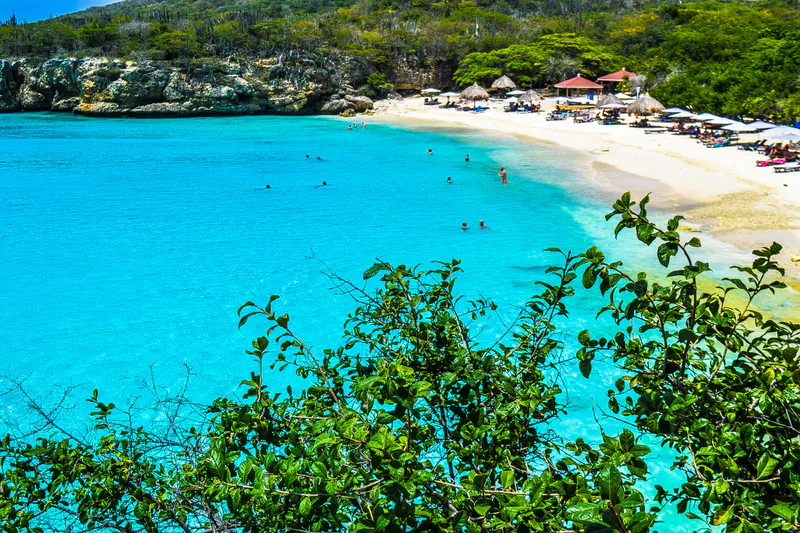
The Pietermaai Logistical Trap: Many nomads book in Pietermaai - the "SoHo of the Caribbean" - for its UNESCO architecture and jazz bars[6]. However, Pietermaai is not a beach district. To reach swimmable paradise beaches like Cas Abou or Playa Kenepa, you will need to drive 30-45 minutes west[16]. Factor a car rental into your budget immediately, as beach taxis cost $60-$80 each way[16].
4. Application Process: Step-by-Step
The process is entirely digital, allowing you to secure your status before leaving your home country.
- Step 1: Digitization of documents to the 2 cm margin PDF specs[10].
- Step 2: Payment of the ANG 535 (approx. $300) fee via Maduro & Curiel's Bank[10][13].
- Step 3: Online submission via the Curaçao Entry Portal[12].
- Step 4: Wait 2 weeks for a decision[1].
- Step 5: Collect your permit card at the Admission Office in Willemstad once you arrive[10].
- Step 6: Complete the Digital Immigration Card (DI Card) and Passenger Locator Card (PLC) 48 hours before flying[10].
WARNING: You cannot apply while in Curaçao. Law requires you to wait for the positive decision email while abroad[10].
5. Costs: Complete Fee Breakdown
The nomad visa is the most cost-effective long-stay option, far below the ANG 500,000 ($281,000) required for the Investor Permit[11].
| Item | Cost (Local - ANG) | Cost (USD Approx.) |
|---|---|---|
| Application Fee | 535 ANG[10] | $300[5] |
| Security Deposit | Varies by nationality[11] | Check with Embassy |
| Pietermaai Rent (Boutique) | 1,990 ANG[5] | $1,105 |
| Standard Apartment | 960 ANG[5] | $533 |
| 4G Mobile Plan | 135 ANG[5] | $75 |
WARNING: Bank transfer fees for the 535 ANG are NOT included. You must cover these separately. If the Ministry receives even $1 less than the full fee, they will issue a "partial payment" rejection[5].
6. Tax Implications
Curaçao offers a strategic "Tax Shield" for nomads. Unlike European visas that trigger tax residency after 183 days, the "@Home" program is legally insulated.
- Local Income Tax: Zero. Foreign income is explicitly exempt[1].
- Social Security: None. You are not required to pay into the local national insurance system[2].
- Corporate Risk: High-speed fiber internet (100 Mbps for $60) supports remote roles without creating employer liability[5].
WARNING: You remain a tax resident of your home country; Curaçao won't tax you, but the IRS or HMRC still will[2].
7. What This Visa Does NOT Give You
Manage your expectations: this is a temporary permit, not a lifestyle change.
- Local Employment: Forbidden without a separate labor permit[11].
- Permanent Residency: Time spent on this visa does not count toward the 5-year requirement for PR[4].
- Public Healthcare: No access; you must use private clinics like the Curaçao Medical Center[5][19].
- Dependents: A separate application and fee (535 ANG) must be submitted for each family member[9].
WARNING: If you are on a dependent permit and your marriage/partnership dissolves, your legal right to stay in Curaçao expires immediately[11].
8. Digital Nomad Visa vs. Alternatives
Curaçao’s 2-week turnaround is its greatest weapon against competitors like Croatia or Estonia, which can take 30-90 days[7].
| Category | Nomad Visa (@Home) | Investor Permit | Tourist Visa |
|---|---|---|---|
| Max Duration | 12 months[2] | Indefinite[11] | 90 days[3] |
| Cost | $300[5] | $281,000+[11] | Free |
| Work Permitted | Remote only[3] | Local/Business allowed[11] | None[7] |
Quick Reference Cheat Sheet
- Official Name: @Home in Curaçao.
- Portal Link: athomeincuracao.com.
- Min Income: $2,500/month (Benchmark).
- Initial Stay: 6 months.
- Application Fee: 535 ANG (~$300).
- Processing Time: ~2 weeks.
References
- Maduro & Curiel's Bank (Official Payment Partner) [13]
- Centuroglobal.com (Compliance Guide 2026) [14]
- UNESCO.org (Willemstad Heritage Data) [15]
- Dushicars.com (Curaçao Beach Logistics & Car Rental Advice) [16]
- Curacao.com (Official Tourism Board Measures) [17]
- Grant Thornton (Curaçao Tax Guidelines for Investors) [18]
- Immigrationcur.org (Health Insurance & Psychiatric Care Requirements) [19]
- Athomeincuracao.com (Remote Worker Application Form) [20]
Frequently Asked Questions
What is the minimum income requirement for the Curaçao Digital Nomad Visa? Grey Area Analysis: While the official law mentions "means of support" without a fixed number, the Admission Office typically uses $2,500 as the "safe" approval benchmark.
How long is the Curaçao Digital Nomad Visa valid and can it be extended? Duration: 6 months initial stay, with a 6-month renewal option.
Do digital nomads pay local income tax in Curaçao? Unlike European visas that trigger tax residency after 183 days, the "@Home" program is legally insulated.
Does the Curaçao Digital Nomad Visa lead to permanent residency or citizenship? Permanent Residency: Time spent on this visa does not count toward the 5-year requirement for PR.
Cover photo by thiago japyassu on Pexels.
Want to see how Curaçao stacks up?
Are you seriously considering a move? Use our interactive tools to explore Curaçao's climate, tax brackets, and nomad visas.
Looking for other options?
See how this visa compares against 55 other countries.
📊 Compare all 56 digital nomad visas