Moving to Croatia in 2026: Digital Nomad Visa, Eurozone Reality & Coastal Rent
July 10, 2026
ShareCroatia ranked 14th globally on the EF English Proficiency Index - an EU and Schengen member since 2023 with a euro-denominated economy, a 0% income tax digital nomad visa, and a 1,777 km Adriatic coastline. Cost of living runs 20-40% below Western Mediterranean countries, and a one-bedroom in Zagreb costs less than half of what you'd pay in Lisbon. This is everything you need to know before you move.[1][2][3]
The Economy: Eyes Open
Croatia is one of the EU's better-performing economies in 2026 - not a wild growth story, but solid and stable. GDP expanded by 3.4% in 2025, and the European Commission forecasts a moderation to 2.7% in 2026 and 2.5% in 2027, still above the EU average. The IMF's April 2026 update put the figure slightly lower at 2.6%, citing headwinds from Middle East tensions pushing energy costs higher.[4][5][6]
Inflation is the main watch item. The EC projects 4.6% inflation in 2026, up from 4.4% in 2025, driven by energy and services price pressure. This is manageable but real - prices in some categories rose 20-50% following euro adoption in 2023, though wages have been catching up. The good news: unemployment is stabilising just below 5%, the government deficit is narrowing to around 2.9% of GDP, and debt-to-GDP is on a downward path.[6][1][4]
The job market is strongest in tourism, IT, and EU-funded sectors. Zagreb has produced genuine tech unicorns - Infobip, Rimac Automobili (now partnered with Porsche and Bugatti), and Photomath (acquired by Google) were all founded here. For expats earning in euros or dollars from outside Croatia, the economic turbulence barely registers - you're getting a Mediterranean lifestyle at a price that Western Europe abandoned decades ago.[3]
Visas and Residency: Your Options in 2026
EU Citizens
No visa, no work permit. Free movement applies from day one. If you plan to stay longer than 90 days, register with the local police station (Ministarstvo unutarnjih poslova - MUP) and apply for a temporary residence certificate (potvrda o prijavi privremenog boravka). It's administrative only - no approval needed, just registration. After five years of continuous legal residence, you can apply for permanent residence. Citizenship by naturalisation requires eight years.[7][8][3]
Get your OIB (Osobni identifikacijski broj - Croatia's personal identification number) at the Tax Administration office. It's the key to banking, signing a lease, and every Croatian administrative interaction.[8][1]
Digital Nomad Visa (Temporary Residence for Digital Nomads)
Croatia launched its digital nomad permit in January 2021 - one of the first in the EU - and overhauled it in March 2025. The revised rules apply for all 2026 applications.[9][10]
- Non-EU/EEA/Swiss citizens only (EU citizens use free movement)
- Work remotely for a company not registered in Croatia - no Croatian clients, no exceptions
- Income of at least €3,622.50/month (2.5× Croatia's average net monthly salary, updated annually)
- Six months of bank statements or payslips proving that income
- Or a lump-sum savings alternative: €43,470 for a 12-month stay; €65,205 for 18 months
- Health insurance covering Croatia for the full duration (standard travel insurance is not accepted)
- Clean criminal record, apostilled, with certified translation
- A Croatian address (a hotel booking is acceptable for initial applications)
- Passport valid at least three months beyond your intended stay
What changed in 2025 (still in effect 2026):[9]
- Maximum stay is now 18 months in one grant (previously 12 + 6 months extension)
- Income threshold jumped from ~€3,295 (2025) to €3,622.50 (2026)
- Documentation now requires 6 months of statements, up from 3
- You cannot switch to a family reunification permit or other status in-country - you must leave Croatia first
- The 6-month cooling-off period before reapplying is strictly enforced
The tax headline: Digital nomad permit holders pay 0% Croatian income tax on foreign-sourced income - even if they stay more than 183 days, which would normally trigger full tax residency. This is enshrined in Article 9.1.26 of the Croatian Personal Income Tax Act.[11][10][9]
Important limits: The 18-month cap is absolute - there are no extensions. There is no pathway from the digital nomad permit to permanent residence. Treat it as a temporary arrangement.[7][9]
Application fees (at a Croatian police station):[9]
- Granting of temporary stay: €46.45
- Biometric residence card: €31.85 (standard) / €59.73 (accelerated)
- Administrative fee: €9.29
Processing time: 4-8 weeks. Apply in spring or autumn to avoid summer backlogs.[10][9]
Temporary Residence Permit (Non-DN Route)
For non-EU citizens who don't qualify for the DN visa or want to stay long-term:[3]
- Employment: Requires a work permit and a Croatian employer initiating the process
- Self-employment/Business: For those operating a Croatian-registered company (d.o.o.)
- Family reunification: For spouses, children, or dependents of Croatian residents
- Independent means: No fixed minimum, but €1,500+/month is practical guidance; requires health insurance
Temporary permits are issued for one year and renewable annually. They count toward the five-year permanent residence requirement.
Cost of Living: The Real Numbers
Croatia sits between Eastern and Western Europe on price. Since euro adoption in 2023, some categories have risen 20-50%. For expats earning outside Croatia, it remains excellent value - Zagreb undercuts Lisbon, Lisbon undercuts Barcelona. Numbers below reflect July 2026 Numbeo data.[2][1]
Rent by City (2026)
| City | Studio / 1-BR (Center) | 1-BR (Outside Center) | Monthly Budget (Single) |
|---|---|---|---|
| Zagreb | €600-€1,000 | €400-€650 | €1,100-€1,600 |
| Split | €650-€900 | €450-€650 | €1,400-€2,000 |
| Zadar | €500-€750 | €350-€550 | €1,200-€1,800 |
| Rijeka | €350-€550 | €250-€450 | €1,000-€1,500 |
| Dubrovnik | €700-€1,100 | €500-€750 | €1,800-€2,500 |
Sources: Numbeo Jul 2026, WhereNext, ExpatLife.ai[1][2][3]
Split's rental market has an important caveat: short-term tourism has consumed much of the housing stock. Finding a proper long-term apartment in Split requires persistence and local contacts.[3]
Daily Expenses
| Item | Price |
|---|---|
| Restaurant meal (inexpensive) | €12 [2] |
| Meal for two (mid-range, no drinks) | €60 [2] |
| Coffee (café) | €1.50-€2.50 [1] |
| Monthly public transport (Zagreb) | €46 [3] |
| Grocery week (single person) | €50-€70 [3] |
| Home fiber internet (monthly) | €25-€35 [1] |
| Utilities, 1-BR apartment | €130-€220 [1] |
| Private health insurance (monthly) | €60-€150 [3] |
| Dental crown (vs. €1,000+ in the West) | €250-€450 [3] |
Taxes: What You Actually Pay
Tax Residency Trigger
Croatia follows the standard 183-day rule - spend more than 183 days in a calendar year and you're a tax resident, liable for worldwide income. Exception: Digital nomad permit holders are explicitly carved out and treated as non-residents for tax purposes regardless of length of stay.[12][10][1][9]
Income Tax Rates 2026
| Tax Component | Rate |
|---|---|
| Personal income tax (up to €60,000/year) | 20%[1] |
| Personal income tax (above €60,000/year) | 30%[1] |
| Municipal surtax - Zagreb | +18% of tax amount[1] |
| Municipal surtax - Split | +15% of tax amount[1] |
| Municipal surtax - smaller cities | 0-15%[1] |
| Employee social security contributions | 20% of gross (pension)[1] |
| Employer contributions (health) | 16.5% of gross[1] |
| VAT (standard rate) | 25%[3] |
| Corporate tax (revenue under €1M/year) | 10%[3] |
| Corporate tax (revenue above €1M/year) | 18%[3] |
| Capital gains (assets held < 2 years) | 10%[3] |
| Capital gains (assets held > 2 years) | 0%[3] |
| Digital nomad visa holders - foreign income | 0%[9][11] |
Effective rate on €90,000 gross: approximately 19.7%, net monthly ~€5,357[12]
Personal Allowance
The €600/month personal allowance (€7,200/year) reduces your taxable base - a meaningful deduction for lower-income earners.[13][1]
For Business Owners
Register a Croatian d.o.o. (limited liability company, equivalent to an LLC) with revenues under €1 million/year and the company pays 10% corporate tax. Combined with EU market access and Croatia's strategic geographic position, this is a competitive structure for small businesses and entrepreneurs who want an EU base.[3]
US Expats
Croatia has a double taxation treaty with the United States. Americans can use Foreign Tax Credits to offset Croatian taxes paid. US citizens still have FBAR and FATCA reporting obligations regardless of residency - consult a dual-filer specialist.[12]
Healthcare: Public vs. Private
The Public System (HZZO)
Croatia's national health insurance - HZZO (Hrvatski zavod za zdravstveno osiguranje, the Croatian Health Insurance Fund) - is compulsory for all legal residents. If you are employed in Croatia or hold a residence permit, you must enroll. EU/EEA citizens can use their EHIC card for temporary access.[14][3]
How it works:[14]
- Register with a family doctor - the gateway to specialists and non-emergency care
- Specialists, hospital care, and prescriptions are covered with co-payments (minimum €1.32 per invoice, capped at €530.88)
- Supplementary insurance (dopunsko) is available through HZZO to cover co-payments
- Emergency number: 112
The honest picture: public hospitals in Zagreb (KBC Zagreb, KB Dubrava) are competent and comparable to Western European standards. Smaller regional facilities vary. Wait times for non-emergency specialists can stretch to weeks. Most expats use HZZO for emergencies and register for supplementary dopunsko coverage, then pay out-of-pocket at private clinics for speed and English-speaking care.[15][3]
Non-employed foreign residents (including digital nomad visa holders) who enroll voluntarily pay approximately €90-€100/month in HZZO contributions.[15]
Private Healthcare
Private insurance costs €60-€150/month depending on coverage and age. Major private providers include Sunce Poliklinika, Medikol, and Aviva in Zagreb; private clinic networks operate in all major cities with English-speaking doctors and same-day appointments.[16][3]
Dental tourism is one of Croatia's least-publicised advantages. A dental crown runs €250-€450 - compared to €1,000-€1,500 in the US or UK. Clinics in Rijeka and Zagreb explicitly target international dental patients.[3]
Digital nomad visa holders must submit proof of private health insurance valid in Croatia as part of their application. SafetyWing, Cigna Global, and Allianz Care are widely used and accepted.[9][3]
Safety
Croatia's 2026 Crime Index is 24.3 - giving it a Safety Index of 75.7 and placing it among the safest countries in Southern Europe, behind only Slovenia and Andorra in the region. For comparison: Spain sits at 37.6, Portugal at 33.0, Italy at 47.3.[17]
Walking alone at night rates High (77.2/100); during the day, Very High (89.1/100). Violent crime is extremely rare - Croatia's homicide rate is approximately 0.6 per 100,000 people, lower than Germany, France, or the UK.[18][3]
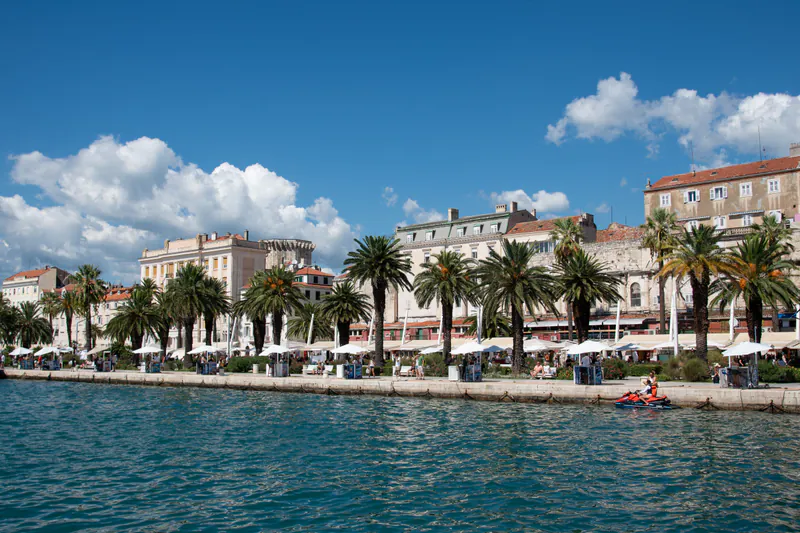
The only real watch item is petty theft in tourist-heavy zones during peak summer - Dubrovnik's Old Town, Split's Riva waterfront, and crowded island ferries. Standard urban awareness applies. Outside peak season and tourist hotspots, Croatia feels genuinely safe.[3]
English in Everyday Life
Croatia ranked 14th globally on the EF English Proficiency Index - ahead of Germany (17th), France (22nd), and Spain (27th). In Zagreb, Split, Zadar, and Dubrovnik, English is spoken reliably by anyone under 50 and universally in IT, finance, and tourism sectors.[3]
The gap shows at government offices (MUP appointments sometimes require Croatian or a translator) and with older service staff in smaller towns. Learning basic Croatian earns genuine goodwill - hvala (thank you), molim (please), dobar dan (good day), živjeli! (cheers).[3]
For permanent residence (5-year mark), A2 Croatian language proficiency is required.[7]
Which City?
Zagreb
The capital and tech hub. Most affordable major Croatian city. Home to Croatia's strongest internet infrastructure, the deepest job market, and the most coworking spaces. The Upper Town (Gornji Grad) has medieval character; the Lower Town (Donji Grad) is Austro-Hungarian commercial core with parks and café terraces.[3]
Best for: remote workers, tech professionals, long-term settlers who want year-round community. Tkalčićeva Street bar district is one of Central Europe's best. 90 minutes by car to the Dalmatian coast.[3]
Best expat neighbourhoods: Donji Grad, Gornji Grad, Trnje (city core); Trešnjevka, Maksimir for value.
Split
Built in and around the ruins of a 4th-century Roman Emperor's palace - still inhabited after 1,700 years. The digital nomad community has grown substantially since 2021. September through May is the sweet spot: perfect weather, lower rents, locals outnumber tourists.[3]
Challenge: the rental market. Short-term vacation rentals have absorbed much of the housing stock. Long-term apartment hunting requires local connections and patience.[3]
Best for: Dalmatian lifestyle, digital nomads, those who want Mediterranean living without Dubrovnik prices.
Dubrovnik
UNESCO World Heritage Site, arguably Europe's most visually striking city. Also Croatia's most expensive and most tourist-saturated. Don't live in the Old Town - it's become a living museum. Look at Lapad (green, residential), Gruž (near the ferry port), or Mokošica (suburban, cheapest).[3]
Best for: retirees, higher earners who prioritise beauty over budget, or anyone who wants the most dramatic setting in the Adriatic.
Rijeka
Croatia's third-largest city and main port. Former European Capital of Culture (2020). Gritty, authentic, genuinely underrated. Has a university bringing young energy. Proximity to the Kvarner islands (Cres, Lošinj, Krk, Rab) and Ljubljana (90 min by car).[19][3]
Best for: expats who want coastal Croatia without coastal prices. Lowest rents of any Croatian city with sea access.
Zadar
Mid-size Dalmatian city on a peninsula jutting into the Adriatic. Roman ruins, Venetian architecture, Alfred Hitchcock's "most beautiful sunset in the world." A university city with a genuine year-round community rather than a purely seasonal tourist economy.[3]
Best for: balance of coast and affordability, year-round community, families.
City Comparison
| City | Approx. 1-BR Rent (Center) | Monthly Budget | Best For |
|---|---|---|---|
| Zagreb | €600-€1,000 [3] | €1,100-€1,600 | Tech workers, long-term settlers |
| Split | €650-€900 [3] | €1,400-€2,000 | Coast, digital nomads |
| Zadar | €500-€750 [3] | €1,200-€1,800 | Balanced lifestyle |
| Rijeka | €350-€550 [3] | €1,000-€1,500 | Budget coastal living |
| Dubrovnik | €700-€1,100 [3] | €1,800-€2,500 | Retirees, high earners |
Climate: Two Countries in One
Croatia's climate splits sharply between the coast and the interior - understanding which you're choosing matters as much as the city itself.
Mediterranean Coast (Split, Dubrovnik, Zadar, Islands)
| Season | Months | Temperature |
|---|---|---|
| Spring | March-May | 10-20°C |
| Summer | June-September | 28-35°C (sea: 24-26°C) |
| Autumn | October-November | 10-20°C |
| Winter | December-February | 5-12°C |
Over 2,600 hours of sunshine per year in Split - comparable to southern Spain. Rain concentrated in November-January. The bura (cold northeastern wind) can be fierce in winter, occasionally disrupting ferries.[3]
Continental Interior (Zagreb, Slavonia)
Proper four seasons: hot summers (25-32°C), cold winters (0-5°C, snow possible). Zagreb gets ~1,900 sunshine hours per year - similar to Munich or Vienna. Spring (April-May) and autumn (September-October) are the best seasons.[3]
Kvarner Region (Rijeka, Opatija)
Milder winters than Zagreb, more rain than Dalmatia (Rijeka is one of Europe's rainiest cities). January averages 6-8°C - rarely drops below freezing.[3]
Internet and Remote Work Infrastructure
Croatia's broadband is mid-tier by EU standards - solid for urban work, inconsistent on smaller islands. Market average broadband speed: ~150 Mbps nationally. The fastest provider (A1) delivers average download speeds of ~102-110 Mbps; Hrvatski Telekom averages ~80 Mbps.[20][21][22][23]
On Speedtest's Global Index (May 2026), Croatia ranks 52nd in the world for fixed broadband - adequate, not exceptional. Internet costs: €25-€40/month for home fiber in urban areas.[24][3]
Island living caveat: Connectivity on Hvar, Vis, Korčula, and smaller islands can be unreliable. Always test before committing to a long-term island stay. Keep a mobile hotspot as backup.[3]
Coworking: Zagreb has the most developed DN infrastructure - ZICER Innovation Center (from €100/month), Impact Hub Zagreb (from €120/month), Wespa Spaces (from €130/month). Split: Smartspace Split (from €120/month), Cowork Split (from €100/month).[3]
Buying Property
EU and EEA citizens can buy property in Croatia under the same conditions as Croatian nationals - no special permits required for residential property in designated building zones.[26]
Non-EU citizens (including US, UK, Canadian nationals) generally require approval from the Croatian Ministry of Justice before ownership registration. Many non-EU buyers opt to establish a Croatian d.o.o. (limited liability company) to simplify the process. Agricultural land is restricted for foreign buyers.[27][26]
Average Property Prices 2026
| Location | Price per m² |
|---|---|
| Dubrovnik | €5,000-€8,000 [26] |
| Istria | €3,827 (+3.8% YoY) [28] |
| Split | €3,500-€6,500 [26] |
| Zagreb | €2,200-€4,000 [26] |
| Zadar | €2,500-€4,500 [26] |
| Dalmatia region (avg.) | €4,124 (+9.2% YoY) [28] |
| Slavonia / inland | €1,692 (+13% YoY) [28] |
National average prices hit €2,830-€2,834/m² in 2026; coastal areas grew up to 13% year-on-year in Q1 2025.[29][30]
Taxes and Costs
| Cost | Rate |
|---|---|
| Property transfer tax (resale) | 3% of market value [26] |
| VAT on new builds | 25% (typically included in price) [27] |
| Annual property tax (introduced 2025) | €0.60-€8/m²/year [30] |
| Notary/legal fees | 1-2% [26] |
| Agency fees | 2-3% + VAT [26] |
| Capital gains tax (sold < 2 years) | 24% [27] |
| Capital gains tax (sold > 2 years) | Exempt [26] |
| Rental income tax | 10-20% [26] |
Total acquisition costs beyond purchase price: 5-9%.[26]
Mortgage interest rates (2026): 3.77% average (20-year fixed). Most foreign buyers purchase in cash; non-residents face stricter mortgage conditions with 30-50% down payments required.[2][26]
Property ownership does not automatically grant residency.[26]
Banking and Financial Setup
The OIB (Osobni identifikacijski broj) is required for all financial transactions in Croatia - apply at the Tax Administration office, ideally within the first days of arrival.[1]
Major banks: Erste Bank, PBZ (Privredna banka Zagreb, part of Intesa Sanpaolo), Raiffeisen Bank, Zagrebačka banka (UniCredit group). To open an account: bring your OIB, passport, and residence permit. Some banks accept DN visa documentation.[1]
Most expats combine a Croatian bank account with Wise or Revolut for multi-currency transfers and day-to-day spending - contactless payments are near-universal even at markets and small shops.[1]
Your First 30 Days: The Checklist
- EU citizens: register with local police within 30 days to get your temporary residence certificate - required proof for banking and lease agreements[8]
- Get your OIB at the Tax Administration office - the key to everything[8][1]
- Open a Croatian bank account - bring OIB and residence documents; Erste, PBZ, Raiffeisen, and Revolut are expat-friendly[1]
- Arrange health insurance - EU citizens can use EHIC while sorting HZZO enrollment; DN visa holders need private insurance covering Croatia (minimum coverage as per MUP requirements)[14][15]
- Non-EU citizens: apply for DN visa before arrival via the MUP portal or Croatian embassy; process in country at the local police station once in Croatia; budget 4-8 weeks[10][9]
- Register your rental contract - required as proof of address for residency registration; confirm with your landlord before signing[8]
- Check DN visa income eligibility - 2026 threshold is €3,622.50/month; bring 6 months of bank statements or payslips[9]
- Note the 6-month cooling-off rule - if you've held a DN permit before, you must have waited 6 months before reapplying[9]
Key Data at a Glance
| Indicator | Value |
|---|---|
| GDP Growth (2025) | 3.4% [4] |
| GDP Forecast 2026 | 2.7% (EC) / 2.6% (IMF) [4][5] |
| GDP Forecast 2027 | 2.5% [4] |
| Unemployment (2026) | ~4.8% [4] |
| Inflation (2026) | ~4.6% (EC forecast) [4] |
| Currency | Euro (since Jan 2023) [1] |
| Income Tax Rate | 20% / 30% (progressive) [1] |
| DN Visa Tax on Foreign Income | 0% [9] |
| DN Visa Min. Income (2026) | €3,622.50/month [9] |
| DN Visa Max. Stay | 18 months (hard ceiling) [9] |
| Corporate Tax (under €1M revenue) | 10% [3] |
| EF English Proficiency Rank | 14th globally [3] |
| Numbeo Crime Index (2026) | 24.3 [17] |
| Numbeo Safety Index (2026) | 75.7 [17] |
| Fixed Broadband Global Rank | 52nd (May 2026) [24] |
| Average National Property Price | ~€2,830/m² [29] |
| EU/Schengen Membership | Since Jan 2023 [3] |
| Path to Permanent Residence | 5 years continuous [3] |
| Path to Citizenship | 8 years continuous [3] |
Croatia's economy is growing above the EU average with a stable labour market - this is not a turnaround story, it's a mature bet on a Mediterranean EU member that most Western Europeans still treat as a holiday destination rather than a place to live. The digital nomad visa's 0% foreign-income tax, the 10% small-business corporate rate, and a cost base 20-40% below Western Mediterranean rivals are structural advantages that inflation and euro adoption haven't erased. The expats moving here in 2026 are getting quality of life that most of Western Europe prices out of reach.
References
Cost of Living in Croatia 2026: Monthly Budget & Rent - Croatia adopted the euro in January 2023, eliminating currency risk for European expats. The cost of...
Cost of Living in Croatia. Prices in Croatia. Updated Jul 2026 - The estimated monthly costs for a family of four are $3,096.4 (€2,708.9), excluding rent. · The esti...
Complete Guide to Moving to Croatia in 2026 - WhereNext Blog - Everything you need to know about relocating to Croatia - EU member with digital nomad visa, $1,400-...
Economic forecast for Croatia - Economy and Finance - The latest macroeconomic forecast for Croatia. The European Commission publishes a full set of macro...
IMF downgrades Croatia's economic forecast and raises ... - HRT - The International Monetary Fund has lowered its forecast for Croatian economic growth in 2026 by ten...
Croatia Visa Guide 2026 - Digital Nomad Temporary Stay - LottaLingo
Croatia Digital Nomad Visa 2026: 18-Month Stay & New Rules - Croatia's digital nomad visa allows an 18-month stay with zero Croatian income tax. 2026 income thre...
Croatia Digital Nomad Visa 2026: What the System Actually Requires - Croatia's Digital Nomad Visa was extended to 18 months in 2025 and the income threshold raised to €3...
Croatia Digital Nomad Visa: 2026 Guide - The Croatia digital nomad visa is very popular with digital nomads. Are you also looking at an exten...
Tax System in Croatia 2026 - whereTOemigrate.io - Understanding Croatia's tax system as an expat in 2026: income tax brackets, VAT, special regimes, f...
Croatia Income Tax 2026: Rates, Deductions & Expat Benefits - How much income tax will you pay in Croatia in 2026? Progressive rates 20-30% plus local surtax, €60...
Health insurance in the Republic of Croatia | HZZO - Healthcare in the Republic of Croatia - Introduction Health insurance is compulsory Health insurance...
Croatia Healthcare and HZZO: How It Works for Foreign Residents - Croatia's HZZO system is mandatory for all legal residents and operates through three layers: obliga...
Croatia Healthcare Guide (2026) | ExpatLife.Ai - Croatia's healthcare system combines mandatory public insurance (HZZO) with affordable supplementary...
The 8 Best Places To Live In Croatia For Expats - The diversity offered by Croatia’s cities means there is a place for everyone, and this guide will h...
Internet Outage Frequency and Usage Statistics in Croatia (2026) - An overview of Croatia's internet outage frequency and usage statistics projected for 2026, highligh...
Internet Penetration Rate and Usage Statistics in Croatia (2026) - An overview of Croatia's internet penetration and usage statistics projected for 2026, highlighting ...
Internet Speed in Croatia - For the period from 01.07.2025 to 30.06.2026, the fastest broadband internet in Croatia was provided...
Croatia's Mobile and Broadband Internet Speeds - Croatia ranked 28th in the world for mobile speeds and 58th for fixed broadband speeds during May 20...
Croatia Speed Test - Research the fastest cities for Internet Speed in Croatia.
Croatia Real Estate 2026: Buying Guide, Taxes & Costs - Propertiso - Find real estate agents & agencies worldwide. Explore profiles and connect with professionals with P...
Croatia Real Estate Investment for Foreigners 2026 - Immigrant Invest - Detailed guide to investing in apartments & houses in Zagreb, Opatija and other cities in Croatia. H...
Real estate market: property quotations in Croatia in 2026 - Prices of the houses and trend of the real estate quotations in Croatia. Find out the prices of the ...
Is Croatia property still affordable in 2026? (Sept 2025) - Authored by the expert who managed and guided the team behind the Croatia Property Pack Everything y...
Property prices in Croatia 2025 and trends for 2026 - It is expected that property prices in Croatia will continue to rise slightly, especially in tourist...
Frequently Asked Questions
What is the income requirement for the Croatia Digital Nomad Visa in 2026? Applicants must demonstrate regular monthly income equal to at least 2.5 times the average Croatian net salary, setting the 2026 requirement at approximately €2,539 per month (or €30,470 in savings).
Do digital nomads pay income tax in Croatia? No. Under Croatian law, income earned by verified digital nomads from foreign employers or non-Croatian clients is 100% exempt from Croatian personal income tax.
How long is Croatia's digital nomad permit valid? The permit is issued for up to 1 year and cannot be directly renewed back-to-back; applicants must exit the country or wait 6 months before applying for another nomad permit.
Does the Croatia nomad visa lead to permanent residency? No. Time spent on a temporary digital nomad stay does not count toward the five-year residency requirement for Croatian permanent residency.
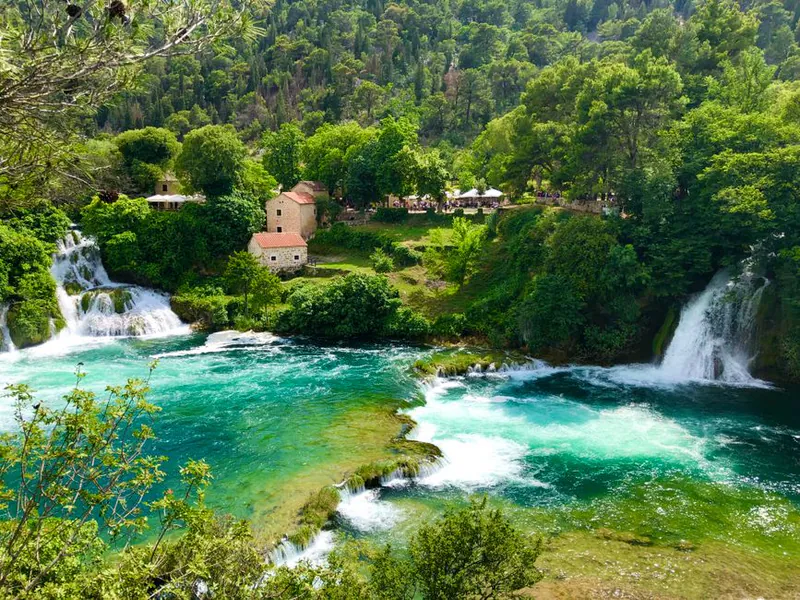
Cover photo by Sebastian Droll on Pexels.
Want to see how Croatia stacks up?
Are you seriously considering a move? Use our interactive tools to explore Croatia's climate, tax brackets, and nomad visas.
Head-to-Head Relocation Comparisons
Compare taxes, safety, and living costs of Croatia against top alternatives.