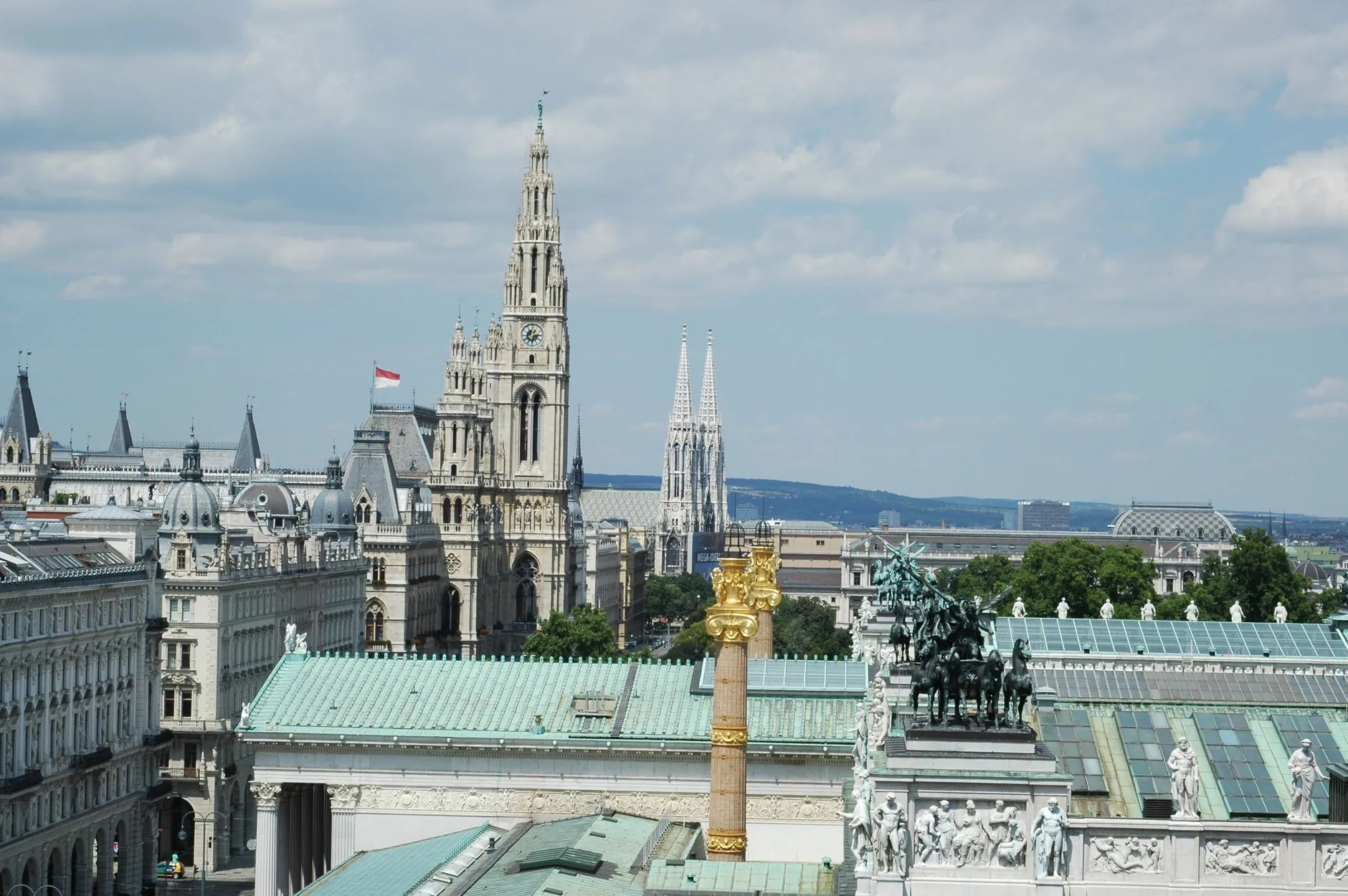
Austria in 2026: Progressive Tax Up to 55%, the World's #1 Liveable City, and a Citizenship That Demands a Decade
June 21, 2026
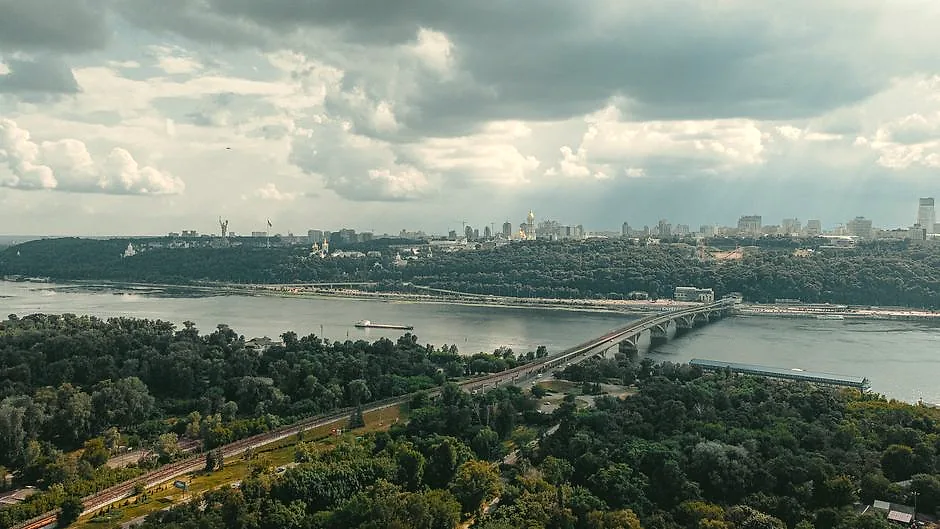
ShareVienna has ranked #1 on the Economist Intelligence Unit's Global Liveability Ranking for four consecutive years, and second on Mercer's Quality of Living survey in 2024 - trailing only Zurich. On Numbeo's 2026 data, Vienna records a Safety Index of 71.74 and a Crime Index of just 28.26, with 82.67% of residents reporting they feel safe walking alone during daylight. No EU capital matches that combination of safety, public infrastructure, and culture.[1][2]
What the relocation brochures skim over: Austria taxes personal income at progressive rates up to 55%, social security contributions add another 18.12% employee-side, and the economy grew by just 0.6% in 2026. The German language requirement is mandatory - not optional - before most residence permits are issued. And Austrian citizenship, while technically achievable after 10 years, demands near-perfect integration, German at B1 or higher, stable income across 6 of the last 7 years, and the renunciation of your previous passport in almost every case.[3][4][5][6][7][8]
Austria is one of Europe's finest places to live. Going in with accurate numbers is the only way to make the decision well.
The Economy: Stable, High-Wage, Slow-Growth
Austria's economy is not a growth story. Real GDP contracted by 1.3% in 2024 - a second consecutive year of recession - and recovered modestly to 0.6% growth in 2025, with the same rate forecast for 2026 by the European Commission. The IMF is marginally more optimistic at 0.7-0.8%.[9][5][10]
That's the macro picture. For an individual expat, it matters less than it sounds. Austria is a high-productivity, high-wage economy with a very low unemployment rate, strong worker protections, and mandatory minimum salaries tied to collective agreements across almost every sector. The economy runs on export-focused SMEs, financial services, tourism, life sciences, and a large public sector.[11]
Sectors actively hiring internationally in 2026:[12][13]
- Healthcare and nursing: Austria's most acute shortage sector - registered nurses, doctors, medical technicians, care workers. Applies both to hospitals and to private clinics
- IT and software development: Software engineers, data engineers, cloud architects, cybersecurity specialists - across Vienna's growing tech cluster and international firms
- Engineering: Electrical engineers, mechanical engineers, civil engineers, mechatronics - driven by industrial plant upgrades and infrastructure projects
- Renewable energy: Austria's climate targets are generating consistent demand for energy engineers and sustainability professionals
- Construction and skilled trades: Electricians, plumbers, construction workers - officially on the shortage occupation list
- Tourism and hospitality: Vienna, Salzburg, Innsbruck, and alpine resorts are perpetual employers - hotel management, F&B, multilingual staff
- Education: International schools and bilingual school programmes hire English-speaking staff regularly; German skills help significantly
The AMS (Arbeitsmarktservice) - Austria's public employment service - publishes an annual shortage occupation list (Mangelberufsliste) that directly maps to simplified Red-White-Red Card applications. If your profession appears on it, your application bypasses the general points competition and goes through a separate, faster track.[14]
Visas and Residency: The Three Routes That Actually Matter
Austria has no Golden Visa. No passive investor residence programme. No digital nomad visa in the conventional sense. The system is merit- and employment-based, with a quota-controlled track for financially independent non-workers.[15]
For EU/EEA Citizens
Free movement applies. EU and EEA citizens can live and work in Austria without a visa. If you stay beyond 90 days, you must register your residence at your local Magistrat or Gemeindeamt - a routine administrative step that establishes your legal presence and entitles you to public services. There is no employment test, no points system, no minimum salary requirement. Bring your passport, proof of accommodation, and proof of income or employment.[16]
EU citizens are treated identically to Austrians for property purchases, banking, and business registration.[15]
Red-White-Red Card (Non-EU/EEA nationals - the main work permit)
The Rot-WeiàŸ-Rot Karte is Austria's points-based skilled worker permit. It is issued for 24 months and gives the holder the right to live and work in Austria - tied to a specific employer initially, then portable after the first two years via the RWR+ card (settlement permit).[17][18]
There are multiple sub-categories; the three most relevant for professional expats are:
1. Very Highly Qualified Workers (Besonders Hochqualifizierte)
- Points-based: need 70 points from qualifications, experience, language skills, age
- No job offer required at application stage - the permit is issued to search for work
- Once employed, must earn the collective agreement minimum for the role[14]
2. Skilled Workers in Shortage Occupations (Fachkrà¤fte in Mangelberufen)
- Job offer required from Austrian employer
- Profession must appear on the official AMS shortage occupation list
- Need at least 55 points from criteria (qualifications, German/English skills, experience, age)
- Salary: minimum gross matching the applicable collective agreement[14]
3. Key Workers (Schlüsselarbeitskrà¤fte)
- Job offer required
- Minimum gross salary: €3,465/month in 2026 (up from €3,225 in 2025)[19][20]
- Points threshold: varies by sub-category; around 50-55 points
2026 salary thresholds at a glance:[21][20][19]
| Permit Category | 2026 Minimum (Gross) |
|---|---|
| Key Worker (RWR Card) | €3,465/month |
| Shortage Occupation | Collective agreement rate (no fixed floor) |
| EU Blue Card | €55,678/year |
| Executive/Senior Manager exemption | €8,316/month |
Processing time: 8-16 weeks from complete application. Vienna applications run longer than provincial ones due to volume. Submit at the Austrian embassy or consulate in your home country - the permit is not issued inside Austria on a tourist entry.[17]
Document attestation: Academic degrees must be recognised or evaluated by Austrian authorities (the WU Vienna or OeAD recognition process for non-EU qualifications). For regulated professions - medicine, dentistry, law, architecture - formal equivalency recognition is mandatory before the visa is issued. This takes additional weeks or months; start before you resign from your current position.
EU Blue Card
The EU Blue Card is the high-earner alternative to the RWR Card, offering slightly stronger EU mobility rights (after 18 months, Blue Card holders can move between EU member states more easily).[22][23]
- University degree of minimum 3 years duration (or 3 years of comparable IT/tech professional experience within the last 7 years)
- Job offer for at least 6 months, with the job corresponding to the degree
- Minimum gross annual salary: €55,678 in 2026
- Labour market test (AMS must confirm no equally qualified registered Austrian/EU jobseeker is available)
For IT professionals specifically, the degree requirement can be waived if 3 years of comparable professional experience can be documented.[22]
Residence Permit Without Gainful Employment (Quota-Based)
Austria maintains a quota-controlled annual allocation of residence permits for financially self-sufficient non-EU nationals who do not intend to work in Austria - retirees, remote workers earning abroad, individuals with passive income.[25]
2026 income thresholds (from 11 January 2026):[26]
- Single applicant: €1,274 net/month minimum disposable income after fixed costs
- Married couple: €2,010 net/month
- Each dependent child: €197 additional/month
The quota is fixed annually, released in December for the following year, and fills within a single week of booking windows opening. Missing the window means waiting a full calendar year. The Austrian Foreign Ministry typically opens the booking period in late November/early December - watch the consular announcement page of your nearest Austrian embassy if this route applies to you.[25]
Self-Employment / Freelance (for Non-EU nationals)
Austria does not have a standalone freelance visa. Self-employed third-country nationals must apply under the RWR Card for Self-Employed Key Workers (minimum €100,000 investment transfer to Austria, or verifiable job creation) or the RWR Card for Start-up Founders (minimum €50,000 company capital, minimum 50% equity stake, points-based assessment, business plan required).[27][28]
SVS (Sozialversicherungsanstalt der Selbstà¤ndigen) contributions for the self-employed run approximately 26-28% of net income, with a minimum floor of approximately €170/month. For freelancers accustomed to the simplicity of UAE or Eastern European self-employment structures, Austria's Gewerbe registration, WKO chamber membership fees, and SVS obligations represent a materially more complex setup.[27]
For EU citizens, self-employment in Austria is straightforward - register a Gewerbe (trade licence) with the WKO, obtain a tax number from the Finanzamt, and you are operational. No minimum capital, no business plan review, no economic benefit test.
German Language: Non-Negotiable
Non-EU third-country nationals must prove German A1 level before entry for most residence permit applications - and this requirement applies at the Austrian embassy abroad before you arrive. This is not a formality. You need a recognised language certificate (à - SD, Goethe-Institut, telc) that is not more than one year old at the time of submission.[7]
Once resident, the Integration Agreement (Integrationsvereinbarung) requires:[29][30]
- A2 level within 2 years of arrival (Module 1 of the ÖIF Integration Course)
- B1 level for permanent residence (Module 2)
- B1 for citizenship after 10 years (currently - a reform proposing B2 as the new citizenship requirement is advancing in the Austrian parliament as of 2026)[31]
EU citizens are exempt from the compulsory German requirements, but in practical terms: without at least A2 German, daily life outside Vienna's international centre is genuinely difficult. Most Austrian employers, even in tech and finance, expect at least conversational German from local hires.
Citizenship: 10 Years, B1 German, and Almost Always Renounce Your Passport
Austrian citizenship by naturalisation is achievable. It is not reserved for the exceptional. But the conditions are strict, the timeline is long, and the dual nationality issue is one of the most important variables to evaluate before committing.
- 10 years of legal, continuous residence (at least 5 of those years in "settled" (niedergelassen) status - i.e., not on a student or temporary visa)
- Stable, documented income for at least 36 months within the last 6 years immediately before application (the last 6 months must be continuous)
- German language proficiency at B1 level (via Module 2 of the ÖIF Integration Agreement, or recognised equivalent)
- Written exam on Austrian civics, constitutional principles, and history
- Clean criminal record in Austria and abroad
- No pending deportation or residence termination proceedings
- Positive attitude toward the Republic of Austria
Early naturalisation after 6 years is possible in cases of exceptional integration achievement - defined as demonstrating particularly strong civic and social integration, B2 German, voluntary community engagement, and other qualifying factors.[34][33]
Further special routes include 15-year and 30-year pathways with reduced requirements under specific circumstances.[34]
Dual Nationality: The Operational Reality
Austria generally does not permit dual citizenship. When a non-Austrian acquires Austrian citizenship through naturalisation, the law requires renunciation of the previous nationality before the Austrian passport is issued. This is strictly enforced in almost all cases.[8][35]
Exceptions exist but are narrow:[36]
- Children who acquired dual citizenship at birth by descent (no requirement to choose)
- Individuals whose home country does not allow voluntary renunciation of their citizenship
- Exceptional cases approved on individual merit - academics who become professors at Austrian universities, individuals whose dual citizenship is deemed specifically in Austria's national interest
If your home country does not allow renunciation (e.g., Iran, Cuba - a short list), Austria may accept documented proof of impossibility and grant citizenship while nominally maintaining the requirement.
The practical consequence: if you hold a valuable second passport (US, UK, Canadian, Australian), evaluate carefully whether surrendering it for an Austrian passport makes sense for your situation. The Austrian passport is excellent - Henley Passport Index ranks it among the world's most powerful - but the trade-off is real and permanent unless one of the exceptions applies.
Taxes: Up to 55%, But the Effective Rate Is Lower Than the Headline
Austria has a progressive personal income tax system. The 55% headline rate exists but applies only to income above €1,000,000/year. For most professional expats, the operative brackets are:[37][3]
2026 Income Tax Brackets[38][3][37]
| Annual Taxable Income (EUR) | Marginal Rate |
|---|---|
| Up to 13,539 | 0% |
| 13,540 - 21,992 | 20% |
| 21,993 - 36,458 | 30% |
| 36,459 - 70,365 | 40% |
| 70,366 - 104,859 | 48% |
| 104,860 - 1,000,000 | 50% |
| Above 1,000,000 | 55% (temporary, through 2029) |
The first €13,539 is entirely tax-free in 2026 - adjusted upward from €13,308 in 2025 under Austria's annual inflation indexation mechanism (2026 adjustment: +1.733%).[3]
A practical example: a Vienna professional earning the €4,200 median gross monthly salary takes home approximately €3,367/month after tax and social security - an effective total deduction rate of about 31%.[3]
Social Security Contributions
Social security in Austria is mandatory for all employees and covers health insurance, pension, unemployment insurance, and accident insurance.[6][39]
| Contribution | Employee Rate | Employer Rate |
|---|---|---|
| Pension insurance | 10.25% | 12.55% |
| Health insurance | 3.87% | 3.78% |
| Unemployment insurance | 2.95% | 2.95% |
| Accident insurance | 0% | 1.10% |
| Other (housing, chamber fees) | ~1.05% | ~0.60% |
| Total | ~18.12% | ~21% |
The maximum contribution ceiling is €6,930 gross/month in 2026 (€83,160/year) - income above this threshold is not subject to social security deductions.[40][41]
For employers: total labour cost on a €4,000 gross salary is approximately €4,840 once employer social security is included - a factor relevant for any expat considering hiring staff or structuring their own employment.
What Is and Isn't Taxed
- Salaries and wages (worldwide income for Austrian tax residents)
- Self-employment income
- Rental income from Austrian property
- Capital gains on shares held for less than 1 year
Taxed at flat rate of 27.5%:
- Dividends
- Interest income
- Capital gains on shares (Austrian and foreign, generally subject to 27.5% KESt withholding)
Exempt or reduced:
- Some foreign-source pension income (treaty-dependent)
- Certain research and innovation tax credits for qualifying activities
VAT: Standard rate is 20%, with a reduced rate of 10% on essential goods (food, books, pharmaceuticals, accommodation) and a 13% intermediate rate on cultural events and some hotel services.[42]
No wealth tax. No inheritance tax between direct family members (though some gift tax provisions apply to business assets above certain thresholds).
Your home-country obligations: Austrian residency does not eliminate obligations to your home country's tax authority in all cases. US citizens file US returns regardless of where they live; UK residents who leave mid-year must file a split-year return; Germans moving to Austria must formally notify the Finanzamt and may have a one-year German tax tail. Get cross-border advice from a Steuerberater (Austrian tax adviser) with home-country expertise before you move - not after.
Healthcare: Universal, Public, and Genuinely Good
Austria's healthcare system covers 99%+ of residents through mandatory social insurance - one of the most universal systems in Europe. If you are employed in Austria and registered for social insurance, you are automatically enrolled in the public system. You do not need to separately purchase private health insurance as an employee.[44][45]
How the System Works
The ÖGK (Österreichische Gesundheitskasse) - the Austrian Health Insurance Fund - is the primary insurer for private-sector employees, covering:
- Outpatient GP and specialist visits at contracted doctors (Kassenarzt)
- Hospital treatment at public facilities
- Prescriptions at heavily subsidised co-pays
- Dental basic care (some limitations apply)
- Maternity and parental benefits
Employee contributions to health insurance: 3.87% of gross salary. Employer contribution: 3.78%. Combined, the health insurance component is approximately 7.65% of gross, shared between employer and employee.[6]
E-Card: Every Austrian health insurance member receives an E-Card (social insurance card) which functions as proof of entitlement at any contracted Austrian healthcare provider. Since February 2026, Austria's e-prescriptions can be redeemed cross-border in participating EU countries via the MyHealth@EU "EU-Rezept" system - useful for expats who travel frequently or have family abroad.[46]
Self-Insured Residents (Quota Permit Holders, EU Citizens Not in Employment)
If you are in Austria on the quota residence permit or are an EU citizen not working in Austria, you are not automatically enrolled in the public system. You must either:
- Voluntarily self-insure through ÖGK Selbstversicherung at approximately €565/month in 2026[47]
- Hold approved private or international health insurance with coverage equivalent to the Austrian statutory minimum
For residence permit applications, the health insurance requirement is strict - many standard travel insurance policies are not accepted. Comprehensive international health insurance (IMG, Cigna, Allianz Care, MAWISTA) policies that explicitly cover Austrian statutory benefit equivalents are required.[47]
Quality of Care
Austria's public hospitals - the AKH Wien (Allgemeines Krankenhaus, one of Europe's largest teaching hospitals), LKH Graz, LKH Innsbruck - operate at Western European clinical standards. Waiting times at contracted Kassenarzt doctors are manageable but can run 2-6 weeks for non-urgent specialist appointments. Same-day access is realistic for GPs.
Private health supplemental insurance (Zusatzversicherung) - available from UNIQA, Generali, Wiener Stà¤dtische, and others at roughly €80-250/month depending on age and coverage - buys access to Wahlarzt doctors (private specialists who do not hold public contracts), private hospital rooms, and reduced waiting times. For senior executives accustomed to immediate private care, a Zusatzversicherung is worth considering.
Emergency numbers: 144 (Ambulance), 133 (Police), 122 (Fire), 141 (Medical duty service, non-emergency).
Safety and Quality of Life
Vienna ranked #1 globally on the Economist Intelligence Unit's Global Liveability Ranking for the fourth consecutive year, then placed second in 2025 behind Copenhagen. On Mercer's 2024 Quality of Living survey, Vienna ranked second worldwide, behind Zurich.[48][49][50]
Vienna's Numbeo Safety Index in 2026 stands at 71.74, with a Crime Index of 28.26 - comparable to Munich (Crime Index ~26) and significantly safer than London (Crime Index ~55) or Paris (Crime Index ~57). Safety walking alone at night: 65.2% rate this "High" - the main nuance relative to Abu Dhabi or Singapore, where night safety ratings exceed 80%.[2][1]
Practical safety: Vienna has petty theft in tourist-heavy areas (Naschmarkt, U-Bahn stations, the first district on summer weekends), but violent crime against expats is genuinely rare. The biggest risk most expats report is bicycle theft - buy a good lock.
Quality of Life factors that consistently rank Austria at the top:[51][52][53]
- Public transport: Vienna's U-Bahn, tram (StraàŸenbahn), and bus network covers the city comprehensively; the annual Jahreskarte costs just €365 (€1/day) for unlimited travel on all city transport
- Green space: Vienna has one of the highest urban park ratios in Europe - the Prater, Lainzer Tiergarten, and the Wienerwald forest belt surround the city
- Cultural infrastructure: world-class opera, museums, concert halls, and a café culture that functions as the city's informal community space
- Alpine access: ski resorts are 1-2 hours from Vienna by car; summer hiking in Lower Austria and the Salzkammergut starts within 90 minutes
Cost of Living
Austria is expensive by Eastern European standards and mid-range by Western European ones. Vienna is materially cheaper than London, Zurich, or Oslo - but more expensive than Warsaw, Prague, or Budapest. The healthcare and education savings versus the UK or US are significant for families.
Single professional monthly budget (Vienna):[54][55]
- Total: approximately €1,550-€1,800/month - including rent for a 1-BR outside the centre, utilities, groceries, transport, and leisure
Family of four monthly budget (Vienna, including international school fees):
- Rent (2-3 BR): €1,500-€2,200/month
- School fees (two children, mid-tier): €2,000-€3,500/month
- Utilities, groceries, transport, leisure: €1,200-€1,600/month
- Total: approximately €4,700-€7,300/month
Rent by District (Vienna, 2026)[56][57][58]
| Area | Studio (€/mo) | 1-BR (€/mo) | 2-BR (€/mo) | 3-BR (€/mo) |
|---|---|---|---|---|
| 1st District (Innere Stadt) | 1,100-1,600 | 1,500-2,200 | 2,200-3,500+ | 3,500-6,000+ |
| 4th-9th (Wieden, Mariahilf, Neubau, Alsergrund) | 850-1,200 | 1,100-1,600 | 1,500-2,200 | 2,200-3,200 |
| 10th-12th (Favoriten, Simmering, Meidling) | 600-850 | 800-1,100 | 1,100-1,500 | 1,500-2,100 |
| 16th-17th (Ottakring, Hernals) | 700-900 | 780-1,010 | 1,060-1,340 | 1,380-1,760 |
| 21st-22nd (Floridsdorf, Donaustadt) | 600-800 | 800-1,050 | 1,100-1,450 | 1,500-2,000 |
Vienna has a dual rental market: a large social housing sector (Gemeindebau, covering approximately 60% of all rental stock) keeps average "paid rent" near €10/m² across the city, while the private market for expats and newcomers starts at approximately €15-22/m². Gemeindebau apartments are not immediately accessible to new arrivals - they have long waiting lists, income thresholds, and residency requirements.[59][60]
Rent regulation: The Mietrechtsgesetz (MRG) provides strong tenant protections in most older (pre-1945 construction) apartments - landlords are constrained in how much they can charge and how often they can increase rent. New-build apartments and single-family homes operate under less regulated terms. From April 2026, rent increases on regulated tenancies are limited to 5% of actual inflation, with the portion above 5% halved.[56]
Standard lease terms: 1-month deposit (2-3 months in private market), leases typically 3-year fixed with notice periods, though shorter market-rate furnished apartments exist in Vienna for expat arrivals.
Daily Expenses (Vienna, 2026)[61][54]
| Item | Price (€) |
|---|---|
| Meal at inexpensive restaurant | €12-18 |
| Three-course meal for two (mid-range) | €60-100 |
| Coffee (Melange or cappuccino) | €3.50-5 |
| Domestic beer (restaurant) | €4-6 |
| Bottle of wine (restaurant) | €25-55 |
| Monthly transport (Jahreskarte, Vienna) | €30.4 (€365/year) |
| Grocery (weekly, single person) | €60-90 |
| Gym membership (mid-range) | €30-60/month |
| Petrol (per litre) | €1.50-1.70 |
Taxes on the Real Picture: What You Actually Take Home
A gross annual salary of €60,000 in Vienna produces approximately:
- Income tax: ~€16,900 (effective rate ~28% on total)
- Employee social security: ~€8,700 (~14.5% on capped base)
- Net take-home: approximately €34,400/year (~€2,867/month)[3]
The 14-month salary structure (Urlaubs- and Weihnachtsgeld - obligatory holiday and Christmas bonuses, each equal to one month's salary) is standard across Austrian employment. These two extra monthly payments are taxed at a flat 6% rate up to a ceiling - a meaningful benefit that reduces the effective annual tax burden versus a 12-month structure.[42][3]
In practice: a €60,000 gross with the 14-month structure means 12 regular payments taxed at progressive rates and 2 bonuses taxed at 6%. Net advantage versus a flat 12-month equivalent: approximately €1,500-2,500/year depending on the bracket.
International Schools: Excellent and Significantly Cheaper Than London
Vienna has fewer international schools than Dubai or Singapore, but the ones that exist are consistently high quality and meaningfully cheaper than equivalent schools in Western Europe's most expensive cities.[62][63]
Vienna Annual School Fees (2026/27)[64][65][62]
| Tier | Annual Fees (€) | Examples |
|---|---|---|
| Premium IB/American | €20,000-€30,000 | American International School Vienna (AIS), Danube International School |
| Upper IB and bilingual | €18,000-€27,000 | Vienna International School (VIS - heavily subsidised for UN/IO staff) |
| Mid-range IB/international | €12,000-€20,000 | AMADEUS International School, various |
| Austrian public bilingual | €0-€5,000 | Bilingual Gymnasium sections (German-English track) |
Add on top: enrolment fee (€1,500-€4,000 one-off), school bus (€1,800-€3,200/year), lunch (€1,100-€1,800/year), materials (€300-€600/year).[63]
For a family with two school-age children at mid-tier international schools: approximately €30,000-€45,000/year in school fees - roughly half what comparable schools cost in London or Singapore. Public Austrian Gymnasium (secondary) with a bilingual track is free and academically rigorous; children who integrate sufficiently in language and curriculum typically receive a strong academic foundation.
Admission timing: Start international school applications as soon as your own visa process begins - not after accommodation is secured. Some schools in Vienna have waitlists of 6-12 months for popular year groups.
Buying Property
Any EU/EEA citizen can buy property in Austria under the same conditions as an Austrian national. Non-EU nationals need approval from the provincial land transfer authority (Grundverkehrsbehà¶rde in Vienna: Grundverkehrskommission) and must demonstrate that the property will serve as a primary residence - not a holiday home. The application costs approximately €1,000 and takes 4-8 weeks.[66][15]
Critical fact: Buying property in Austria does NOT grant residency. There is no Golden Visa in Austria. Property ownership and immigration rights are entirely separate. A non-EU buyer without a residence permit remains bound by Schengen's 90-day rule regardless of how much property they own.[15]
Alpine regions (Tyrol, Salzburg, Vorarlberg) operate strict second-home restriction laws (Freizeitwohnsitz). Even EU citizens face limitations on using purchased properties as holiday homes in the most sought-after ski areas. Enforcement in Kitzbühel, St. Anton, and Lech is active and penalties exist.[67]
Property Transaction Costs (Austria, 2026)[68][69][70]
| Cost Item | Rate |
|---|---|
| Real estate transfer tax (Grunderwerbsteuer) | 3.5% of purchase price |
| Land registry fee (Grundbuchseintragungsgebühr) | 1.1% (waived until June 2026 for primary residences on first €500,000) |
| Notary/lawyer fees | 1-3% of purchase price |
| Buyer's agent commission | 3% + 20% VAT (= 3.6%) |
| Total buyer-side costs | ~9-12% of purchase price |
The land registry fee waiver (on primary residences up to €500,000) expires June 30, 2026 - if you are in the late stages of a purchase, timing matters.[71][69]
Mortgage rates for foreigners in 2026: 3.2-4.2%, with well-documented applicants securing 3.4-3.8%. Austrian banks require 25-35% down payment from foreign borrowers, even since the KIM (Kreditinstitute-ImmobilienfinanzierungsmaàŸnahmen) lending regulation expired in June 2025.[66]
Annual property tax (Grundsteuer): Exceptionally low by European standards - calculated on an old assessed value (Einheitswert) that significantly lags market prices. Most apartment owners in Vienna pay under €500/year in property tax. No annual property wealth tax.[66]
Which City?
Vienna
Vienna is where most professional expats land, and for good reason. It concentrates Austria's international job market, the diplomatic corps (UN Vienna, IAEA, UNIDO, OPEC headquarters), multinational headquarters, law firms, banks, and the country's entire international school ecosystem. Over 43% of Vienna's residents are international - the city's cultural mix has created an English-speaking professional environment that is accessible without German from day one, even if German is required for long-term integration.[53][51]
Best districts for professional expats:[72]
- 4th-9th districts (Wieden, Mariahilf, Neubau, Josefstadt, Alsergrund): The inner suburbs - central, walkable, café-dense, U-Bahn connected. Neubau (7th) is Vienna's Kreuzberg equivalent: boutique shops, independent restaurants, young professional crowd
- 1st district (Innere Stadt): Central; beautiful but expensive and tourist-heavy; best for short-term furnished rentals on corporate packages
- 13th (Hietzing) and 18th-19th (Wà¤hring, Dà¶bling): Upscale residential; villas, family-appropriate, Kaffeehaus culture, proximity to the Wienerwald; popular with senior executives and diplomats
- 21st-22nd (Floridsdorf, Donaustadt): New residential developments on the Danube, modern apartments, lower prices, U1/U6 metro access; good for families with school-age children if near the Danube City schools
- 10th (Favoriten): Most affordable; large immigrant community; significant gentrification since 2020; best value near the U1 metro line
Graz
Austria's second city (300,000 people) and the best option for expats prioritising affordability alongside high quality of life. Rent is 30-40% below Vienna. The Graz University of Technology and Karl-Franzens-Università¤t anchor a strong tech and life sciences ecosystem. Graz's old city is a UNESCO World Heritage Site. The pace is slower, the summers warmer (Styrian wine country is 30 minutes away), and the Alps are an hour's drive south.[73][51]
Salzburg
The best Austrian city for families. Strong international schools, proximity to Munich (75 minutes by rail), excellent cultural life, alpine access minutes from the city. Rents are comparable to Graz or slightly higher. The main limitation: the job market is almost entirely in tourism, hospitality, arts, and the university - if you need a large corporate employer base, Vienna is your city.[73]
Innsbruck
The capital of Tyrol. Surrounded by the Alps - ski lifts accessible from within the city. Strong university presence (University of Innsbruck). Smaller international community than Vienna or Graz; the job market is tourism, construction, and the university sector. For remote workers with a Vienna-equivalent salary who want to ski five months of the year, Innsbruck is genuinely exceptional.
Linz
Austria's industrial and tech city - home to voestalpine, Fabasoft, and the Johannes Kepler University. Lower costs than Vienna. Less international community; stronger German requirement for daily life. Good option for engineers in manufacturing, steel, and automation sectors.
City Comparison
| City | 1-BR Rent (€/mo) | Key Sectors | Safety | Best For |
|---|---|---|---|---|
| Vienna | €900-1,400 | All sectors, UN, finance, tech | 71.7 (Numbeo) | Career expats, UN/IO, all |
| Graz | €700-950 | Tech, life sciences, engineering | High | Affordability, families |
| Salzburg | €800-1,100 | Tourism, education, culture | High | Families, alpine lifestyle |
| Innsbruck | €750-1,050 | Tourism, university, construction | High | Mountain lifestyle, remote workers |
| Linz | €650-900 | Manufacturing, industrial, tech | High | Engineers, affordability |
Climate: Four Distinct Seasons, One Cold Reality
Austria has true four-season continental climate, with the Vienna lowlands running warmer and drier than the alpine west.[74][75]
| Season | Months | Vienna Temperature | Conditions |
|---|---|---|---|
| Spring | Mar-May | 8-20°C | Variable; warm spells and late frost; beautiful city energy |
| Summer | Jun-Aug | 22-30°C (peaks to 35°C) | Warm to hot; thunderstorms common; best season |
| Autumn | Sep-Nov | 8-20°C | Misty, cooler; Heuriger wine culture in full swing |
| Winter | Dec-Feb | -4 to 4°C in Vienna | Cold; grey; short days (sunset ~4:30 PM in December) |
The climate is the sharpest lifestyle adjustment for expats coming from the Middle East, Southeast Asia, or Southern Europe. Vienna winters are grey, frequently overcast, and dark - not brutally cold by Central European standards, but psychologically demanding. Invest in good lighting for your apartment and plan outdoor activities deliberately. The alpine regions - Salzburg, Innsbruck, Tyrol - get substantially more snow and clear sky days in winter, which many find more manageable psychologically than the flat fog of the Vienna basin.[76]
Summer upside: Vienna at 25°C with no humidity, the Prater open-air pools, Heurigen (wine taverns) in Grinzing and Stammersdorf, Danube island picnics - it is genuinely excellent. The Viennese cultural obsession with summer outdoors is one of the city's best qualities.
Your First 30 Days: The Checklist
- Register your address (Meldezettel) - mandatory within 3 business days of moving into permanent accommodation in Austria; go to the Magistrat (Vienna: the relevant Magistratisches Bezirksamt for your district) with your passport and signed landlord form; the Meldezettel is the foundational document for opening a bank account, registering for health insurance, and applying for further permits[77][42]
- Register for social security / health insurance - employees are automatically registered by their employer; self-employed or quota residents must register directly with ÖGK or SVS; you will receive your E-Card (social insurance card) by post within 2-4 weeks[45][44]
- Apply for a tax number (Steuernummer) - at the relevant Finanzamt for your district; bring Meldezettel and passport; required for filing annual tax returns; employees whose only income is from a single employer may be entitled to automatic annual adjustment without filing
- Open a bank account - bring passport, Meldezettel, and employment contract or income proof; Erste Bank, Raiffeisen, Bank Austria (UniCredit), Bawag, and N26 (fully digital) are the main options; accounts opened same or next day; ask for a Girokonto (current account); IBAN format is AT followed by 18 digits - register it with your employer immediately for payroll
- Register your EU/EEA residence certificate if applicable - EU citizens staying beyond 90 days must register at the MA35 (in Vienna) or equivalent provincial authority; bring passport, proof of health insurance or employment, proof of accommodation; the Anmeldebescheinigung is issued same day
- Start German language study immediately - A1 is the entry requirement; A2 must be demonstrated within 2 years; B1 is needed for permanent residence and citizenship; the ÖIF (Österreichischer Integrationsfonds) offers subsidised Integration Courses; Goethe-Institut Vienna and private schools like Berlitz and Sprachcafé à - sterreich are alternatives[30][29]
- Understand the tenancy registration (Hauptwohnsitz vs. Nebenwohnsitz) - your primary registered address in Austria determines many administrative assignments; if you have registered multiple residences, the Hauptwohnsitz must match where you actually primarily live; landlords are familiar with the Meldezettel process
- Register children in school - public schools are assigned by district of residence; for international schools, contact admissions directly and begin the process before the September intake deadline (applications typically due February-April for the following school year)[64][63]
- Obtain an e-card and understand the health system - identify a contracted Hausarzt (GP) near your address who accepts ÖGK patients; some popular GPs have limited new-patient capacity - register early; for specialists, you can either obtain a referral from your GP (àœberweisung) or self-refer to a Wahlarzt and claim partial reimbursement from ÖGK
- Know the pharmacy system - the Apotheke network is tightly regulated and excellent; all medications require a prescription (Rezept) from a contracted doctor; for chronic medications, ensure you bring an adequate supply and a written prescription from your home country doctor to show an Austrian GP for re-prescription; the ÖGK co-pay on prescriptions is the Rezeptgebühr of €7.10 per item[46]
Key Data at a Glance
| Indicator | Value |
|---|---|
| GDP Growth 2026 (European Commission) | 0.6%[5] |
| GDP Growth 2026 (IMF estimate) | 0.7-0.8%[9] |
| Personal Income Tax - top rate (€1M+) | 55% (temporary, through 2029)[3][37] |
| Personal Income Tax - effective rate (€60K gross) | ~28%[3] |
| Employee social security contribution | ~18.12% of gross (capped at €6,930/mo)[6][40] |
| Tax-free threshold 2026 | €13,539/year[3][38] |
| 14-month salary bonus tax rate | 6% flat (up to ceiling)[3] |
| VAT (standard) | 20%[42] |
| VAT (food, books, pharmaceuticals) | 10%[42] |
| RWR Card - Key Worker minimum salary | €3,465 gross/month (2026)[19][20] |
| EU Blue Card minimum salary | €55,678 gross/year (2026)[22][24] |
| Quota Permit (no work) minimum income | €1,274 net/month (from Jan 2026)[26] |
| German language - entry requirement | A1 (before first residence permit)[7] |
| German language - permanent residence | B1 (Module 2 ÖIF)[29][30] |
| German language - citizenship | B1 minimum (B2 reform pending)[31][4] |
| Citizenship - standard waiting period | 10 years continuous residence[4][33] |
| Citizenship - early pathway | 6 years (exceptional integration)[34][33] |
| Dual nationality permitted? | Generally NO - renunciation required[8][35] |
| Vienna Safety Index (Numbeo 2026) | 71.74 - Low crime[1] |
| Vienna Quality of Life (EIU 2025) | #2 globally (behind Copenhagen)[49] |
| Vienna Quality of Life (Mercer 2024) | #2 globally (behind Zurich)[48] |
| ÖGK voluntary self-insurance (2026) | €565.25/month[47] |
| Vienna 1-BR rent (city centre, 2026) | €1,100-€1,600/month[58][55] |
| Vienna 1-BR rent (outer districts) | €800-€1,050/month[56][57] |
| Property transfer tax (Grunderwerbsteuer) | 3.5% of purchase price[68][69] |
| Total buyer transaction costs | ~9-12% of purchase price[69] |
| Annual property tax | Very low - based on outdated assessed values[66] |
| International school fees (mid-tier, Vienna) | €12,000-€25,000/year per child[64][63] |
| Emergency numbers | 144 (Ambulance) / 133 (Police) / 122 (Fire) |
The residency-without-gainful-employment quota is Austria's least-discussed but most time-sensitive visa track. It fills in a single week each December. If your plan is to live in Austria without local employment - whether you are a remote worker, an early retiree, or a career-break professional - the only correct strategy is to calendar the embassy announcement date, have your documents ready in October, and submit the moment the window opens. Missing it costs you one year, not just a few months.
References
Crime Comparison Between Vienna, Austria And Berlin, Germany ...
Austria Tax for Expats 2026: What You Actually Take Home - Austria's top rate is 55%, but a single earner on Vienna's €4,200 median keeps about €3,367/month - ...
Economic forecast for Austria - Economy and Finance - The latest macroeconomic forecast for Austria. The European Commission publishes a full set of macro...
Social Security Contributions - Austria 2026 - TaxRavens - Austria's comprehensive social security system covers health insurance, pension, unemployment, and a...
Proof of knowledge of German ("German before immigration") - Proof of knowledge of German may be provided by means of : a generally recognised language diploma f...
Dual citizenship - Generally speaking, Austrian citizenship law does not allow dual or multiple citizenships. This prin...
How will the world's biggest economies fare in 2026? - Revealing the IMF's updated GDP growth forecasts for 30 selected countries.
Austria: 2025 Article IV Consultation-Press Release; and Staff Report - 1. The economy experienced a second successive year of recession in 2024. Real GDP (SWDA) fell by 1....
Economic and political overview in Austria - Austria: The Austrian economy is deemed one of the most stable in Europe. The country relies on a ve...
Satyendra Kumar's Post - 🇦🇹 Austria 2026 Outlook: Top 10 In-Demand Job Titles Eligible for Red-White-Red Card (Based on Offic...
Explore Jobs in Austria with Faruse - Discover English-speaking jobs in Austria. Use Faruse for job vacancies, career guidance, and applic...
News on the Red-White-Red - Card: Shortage occupations in 2026 - Explore the list of Mangelberufe (in-demand professions) in Austria for 2023 and how they benefit im...
Buy Property in Vienna as a Foreigner: 2026 Costs, Permits & Rules - EU and non-EU rules, permits (€1K, 4-8 weeks), total costs 9-11%, mortgage rates 3%. Everything you ...
Austria for Expats: All You Need to Know in 2026 - Acvian - "The Red-White-Red Card: This is the most common work visa in Austria, offering a residence permit f...
Austria: The Expat Guide Updated (2026) - Investropa - Official government resource for visa and residence permit rules. We used it to describe Red-White-R...
Other Key Workers - Migration.gv - The Red-White-Red Card is generally issued for a period of 24 months. You can also work self-employe...
Austria Lifts 2026 Salary Thresholds for Red-White ... - Effective 1 January 2026 Austria has raised minimum salaries for its main work-permit schemes. Key-e...
Austria increases minimum salary requirements for various categories ...
Austria | Immigration 2026 update - Vialto Partners - Red-White-Red Card (key workers): minimum gross monthly salary of EUR 3,977, plus special payments. ...
EU Blue Card - Migration.gv - will earn at least the average gross annual income of full-time employees (in 2026: at least € 55,67...
EU Blue Card - Migration and Home Affairs - European Commission - You must prove that you have: a valid work contract or a binding job offer for highly qualified empl...
EU Blue Card Residence Permit - Learn everything about the EU Blue Card for highly skilled workers in Austria. Get details on requir...
Austrian embassies open one-week booking window for 2026 quota ... - The Foreign Ministry has allotted just 1-8 December 2025 for quota applicants to book consular appoi...
Austria tightens income proof for 'non-work' residence permits - Effective 11 January 2026, Austria has raised the net-income floor for its "Residence Permit - Witho...
Self-Employment Visa for Austria - Freelancers & Entrepreneurs - The ultimate expat guide to Austria. Practical advice on visas, banking, insurance, taxes, and daily...
Self-employed worker in Austria - Migration and Home Affairs - Are you a non-EU citizen wishing to work as a self-employed worker in Austria? You can find informat...
Integration Agreement - Migration.gv - A basic knowledge of German for fundamental language use is required before entry for the granting o...
Learning German in Austria - Language Guide for Expats - The ultimate expat guide to Austria. Practical advice on visas, banking, insurance, taxes, and daily...
Austria - Residency to Citizenship Pathways - Compare countries, rankings, and citizenship pathways for long-term relocation and future citizenshi...
How to Get Austrian Citizenship in 2025: Full Criteria and Checklist - Austrian citizenship 2025: eligibility, documents, tests, renunciation rules, and special routes lik...
Can I keep my current citizenship when acquiring Austrian ... - Can I keep my current citizenship when acquiring Austrian citizenship?
Austria's Dual Citizenship Policy: What's Allowed? - Austria allows dual citizenship but with restrictions. Learn about the conditions under which dual c...
Tariff levels - Income tax - USP.gv.at - Unternehmensserviceportal
Social security in the case of employment in several countries
Payment of social security contributions - Contributions only need to be paid up to the maximum contribution base, which is 6,930 Euro per mont...
Social security and wage garnishment values for 2026 - Für die unternehmerische Planung ist die frühzeitige Berücksichtigung der Sozialversicherungswerte f...
Taxes in Austria - Complete Expat Guide - The ultimate expat guide to Austria. Practical advice on visas, banking, insurance, taxes, and daily...
Austria taxes for US expats: 2026 rates, residency, treaty & ... - Learn everything about taxes in Austria for American expats, including tax filing, residency rules, ...
Austria Healthcare System & Insurance Options for Expats - Learn About the Healthcare & Insurance Options for Expats in Austria Austria is an East Alpine count...
Healthcare for Expats in Austria: Complete Guide to the System ... - Complete guide to healthcare for expats in Austria: how the public system works, mandatory health in...
Austrian e-Prescriptions Go Cross-Border: EU-Recipe Service ... - Since 25 February 2026 Austrians can redeem digital prescriptions in other EU/EEA states through the...
What Health Insurance policies are approved for Residency - IntroductionThere have been many posts regarding Health Insurance products that are approved for imm...
Mercer study 2024 confirms top quality of life in Vienna - The international consulting agency Mercer has accorded Vienna the second highest score in its 2024 ...
Vienna is the most liveable city - The Economist ranks Vienna 1st in the world for quality of life again in 2024.
Mercer 2024: Vienna holds its own as one of the top cities - In 2024, Vienna was ranked second overall and continues to be a global benchmark for quality of life...
The best cities to live in Austria in 2025 - THE BEST CITIES TO LIVE IN AUSTRIA Ranking of the TOP-5 of the best cities for immigration and resid...
Best Cities To Live and Work in Austria: Relocation Guide - Discover the best cities to live and work in Austria with our guide. Find ideal locations for your c...
The best places to live in Austria - HousingAnywhere - Discover the best cities in Austria to live in based on their internationality, quality of life, aff...
Cost of Living in Vienna 2026 - Complete Expat Guide | WhatLifeCosts - How much does it cost to live in Vienna? Rent €1,100/month. Weather, best neighbourhoods, quality of...
Cost of Living in Vienna, Austria 2026 - Monthly Budget Breakdown - Monthly expenses breakdown for expats living in Vienna, Austria.
Rent Indexation in Vienna: Price Increases, Laws, and Advice for 2026 - Current rent information in Vienna in 2026: average prices, reasons for increases and legal framewor...
Ottakring in Vienna 2026: Rent Prices & Expat Guide - Ottakring, Vienna: 1BR rent from €780-€1,010/mo. 18 min U-Bahn to center. Vibe: affordable, diverse,...
Finding Housing in Austria - Renting Guide for Expats - The ultimate expat guide to Austria. Practical advice on visas, banking, insurance, taxes, and daily...
The best areas to rent and rent out property in Vienna in 2026 - A comprehensive guide to renting and investing in Vienna real estate: choosing a neighborhood, analy...
Updated Rents in Vienna (2026) - Investropa - The latest update about rents in Vienna. Rents, rental income, rental yields, vacancy, occupancy rat...
Cost of Living in Austria 2026: Complete Breakdown for Expats - Real costs of living in Austria 2026: rent, groceries, utilities, transport. Monthly budgets for Vie...
Most Expensive International Schools in Vienna 2026 - Tutopiya - For private applicants: annual fees are approximately €12,000-€20,000 - significantly lower than equ...
How to Choose an International School in Vienna: A 2026 ... - Practical 2026 guide for expat families choosing an international school in Vienna. Curricula, distr...
International Schools in Vienna | 2026 Family Guide - Compare top international schools in Vienna for 2026: IB, British, American and bilingual options, f...
Property Foreign Ownership Austria (2026) - Investropa - What can foreigners own and buy in Austria? We study property rights, visas, buying process, taxes, ...
Property Foreign Ownership Tyrol (2026) - Investropa - Closing costs in Tyrol typically run between 8% and 12% of the purchase price, but a temporary fee e...
Ancillary costs when purchasing apartments and property - In principle, real estate transfer tax amounts to 3.5 % of the purchase price. In certain cases, the...
Property Taxes and Notary Fees for Real Estate Purchases - Austria Handbook - Finding your dream apartment in Vienna or a chalet in Tyrol is an exhilarating milestone, but many e...
Costs and Taxes - Austria Property Purchase - The key costs tend to be roughly as follows: Property transfer tax ("Grunderwerbsteuer") - 3,5% Land...
The Most Sought-After Neighborhoods for Expats in Austria - 1 Vienna, the epicenter for expats and a mosaic of neighborhoods · 2 Salzburg: Baroque charm and sou...
12 Best Places To Live In Austria - Quality of life is one of the most important factors to consider when deciding to relocate. Resident...
Climate & Weather Guide for Expats in Austria - nestfainder.ai - Seasons, temperatures, rainfall and what to pack - climate guide for Austria.
Spring in Austria - The climate in Austria can be very temperamental, so you will want to understand what to expect in e...
Adapting to the Austrian Climate: A Practical Guide for Expats - Discover how to live in Austria as an expat: tips for handling the climate, navigating the rental ma...
Visa & Immigration Guide for Austria - The ultimate expat guide to Austria. Practical advice on visas, banking, insurance, taxes, and daily...
Cover photo by Alfred Franz on Pexels.
Frequently Asked Questions
What is the minimum salary required for the Austrian Red-White-Red Card Key Worker visa in 2026? In 2026, the minimum gross salary required for the Key Worker sub-category under the Red-White-Red Card is €3,465 per month.
Does Austria permit dual citizenship for naturalized citizens? No, Austria generally does not permit dual citizenship. When acquiring Austrian citizenship through naturalization, you are strictly required to renounce your previous nationality in almost all cases.
How does the 14-month salary structure affect taxes in Austria? Under Austrian collective agreements, the holiday and Christmas bonuses (the 13th and 14th month salaries) are taxed at a flat rate of 6% up to a certain ceiling, which reduces the overall effective tax burden compared to a standard 12-month salary structure.
Want to see how Austria stacks up?
Are you seriously considering a move? Use our interactive tools to explore Austria's climate, tax brackets, and nomad visas.
Head-to-Head Relocation Comparisons
Compare taxes, safety, and living costs of Austria against top alternatives.