Qatar Expat Field Guide 2026: Zero Tax & Safe Living
June 20, 2026
ShareQatar has no personal income tax. Not a low rate - zero. No capital gains tax for individuals, no inheritance tax, no VAT, no wealth tax. Your salary is your take-home pay, in full. Every riyal you earn goes into your account. For a professional earning QAR 25,000/month (≈ US$6,850), the annual tax saving versus a UK or German equivalent income runs to US$30,000-$45,000 depending on your home country's rate. This one fact is why approximately 90% of Qatar's population are expats - and why the country has built one of the highest per-capita income levels on earth.[1][2][3][4][5]
The other headline: Numbeo's 2026 Safety Index ranks Qatar second globally, with a national Safety Index of 84.8 and a Crime Index of 15.2 - behind only the UAE among countries, and ahead of Switzerland, Japan, and Singapore. Doha's Numbeo Crime Index is 9.89, classified as "Very Low" across every crime category. The combination of zero personal tax and near-zero crime is the foundation of Qatar's expat proposition.[6][7]
The limits are real. Citizenship is effectively inaccessible for most foreigners - 25 consecutive years of legal residence, Arabic language proficiency, Emiri decree required, annual cap of a tiny number of approvals. Permanent residency is capped at 100 permits per year under the standard route. The work visa is tied to your employer - if you lose your job, your residency status is linked to your employment, and you typically have 30-90 days to find a new sponsor or leave. And Qatar is small: Doha is one city, summer temperatures reach 45°C+, and outdoor life for roughly five months per year is genuinely limited by the heat.[8][9][10][11][12][13][14]
The Economy: The Gulf's Fastest-Growing Major Economy in 2026
Qatar's IMF-forecast GDP growth for 2026 is 6.1% - the highest among GCC members and one of the strongest in the developed world. The World Bank projects 5.4% for 2026 and 7.6% for 2027, calling Qatar the "best-performing GCC economy" for this period. The driver is the North Field Expansion - the world's largest LNG project, which is lifting Qatar's natural gas output capacity and triggering a multi-year wave of engineering, technical, and professional hiring.[15][16][17][18][5][19][20]
Qatar's GDP per capita (PPP) is among the top five globally, anchored by QatarEnergy's sovereign LNG revenues. The country is actively diversifying under Qatar National Vision 2030 and National Development Strategy 3 (NDS3) - targeting growth in financial services (Qatar Financial Centre is the regional hub), technology (Lusail City's tech zone), healthcare, education, and tourism. The unemployment rate in Qatar is approximately 0.1% - functionally zero. The job market is a demand market; employers recruit internationally because the domestic workforce is insufficient to staff the economy.[2][21][5][19]
Sectors actively hiring internationally in 2026:[21][17][5][22]
- Energy and LNG: QatarEnergy is the dominant employer; the North Field Expansion (NFE-North and NFE-South phases) drives sustained demand for petroleum engineers, drilling engineers, facilities engineers, production engineers, safety managers, project managers, and procurement professionals; Shell, TotalEnergies, and ExxonMobil all have significant Doha offices with regular hiring cycles; senior oil and gas roles pay QAR 30,000-45,000+/month
- Construction and infrastructure: the build-out of Lusail City (Qatar's new second city north of Doha), stadium and venue legacy conversion projects, and the ongoing urban development programme drive demand for civil, MEP, structural, and project management professionals; an estimated QAR 200B+ in projects remain active
- Finance and banking: Qatar National Bank (QNB), Qatar Islamic Bank, and the Qatar Financial Centre (QFC) - which licenses international financial institutions to operate in Qatar - are the main employers; demand for relationship managers, risk analysts, compliance officers, auditors, and investment professionals; mid-level finance salaries QAR 12,000-28,000/month[17]
- Technology: QatarEnergy's digital transformation programme, Ooredoo's network expansion, and tech infrastructure for Lusail City create demand for software engineers, cloud architects, data scientists, cybersecurity specialists, and AI researchers[5]
- Healthcare: Hamad Medical Corporation (HMC), Qatar's public hospital network, and expanding private hospital groups are critically understaffed - nurses, specialist physicians, pharmacists, and allied health professionals are in continuous demand; clinical roles require licensing with the Qatar Council for Healthcare Practitioners (QCHP)[22][5]
- Education: International schools employ foreign teachers on full packages; Hamad bin Khalifa University and Education City (hosts branch campuses of Georgetown, UCL, Northwestern, CMU, Texas A&M, and others) recruit internationally; primary and secondary teaching; Qatari national curriculum schools; English-medium demand is the strongest
- Hospitality and tourism: Qatar's ambition to become a year-round tourism destination (post-FIFA 2022 infrastructure) drives hospitality hiring; multilingual service professionals, hotel management, F&B, and event management roles
Visas: How to Get and Keep a Qatar Residence Permit
Qatar has no employer-independent skilled worker visa, no digital nomad visa, and no passive income residency for most nationalities. The residence permit (RP) is the foundational document - without it, you cannot legally work, open a bank account, sign a lease, or enrol children in school.[23][24][9][8]
Route 1 - Work Residence Permit (Standard Employment)
The primary visa for employed expats - covering the vast majority of foreign professionals in Qatar.[25][9][23][8]
- You receive a job offer from a Qatar-based employer
- The employer (sponsor) applies for a Work Entry Permit at the Ministry of Interior (MOI) on your behalf - you do not apply independently
- Once the entry permit is issued, you travel to Qatar on a tourist or visit visa or on the entry permit depending on nationality
- On arrival, you complete medical screening (blood test and chest X-ray - mandatory for all newcomers; tests for HIV, hepatitis, and TB; a positive result for certain conditions results in deportation; this is a condition of entry, not discrimination by your employer)
- You register your biometrics and receive your Qatar ID card (QID) - this IS your residence permit; it is the single most important document in Qatar; everything else connects to it
- The work RP is linked to your employer; it expires or must be transferred if you change jobs
Duration: typically 1 or 2 years, renewable as long as employment continues
Key documents required:[24][23][8]
- Valid passport (minimum 6 months' validity)
- Signed employment contract
- Educational certificates (attested - see below)
- Police clearance certificate from your home country
- Medical examination results
- Passport photos
Certificate attestation: Qatar requires your educational certificates to be attested through a specific chain - typically: original university → national foreign ministry or apostille → Qatar embassy/consulate in your country → Qatar Ministry of Foreign Affairs in Doha → Qatar Ministry of Education (for teaching) or relevant professional body. This process takes 3-8 weeks and costs US$200-600 depending on how many documents require attestation. Start it before you sign the job offer if possible.
The kafala reform - what changed: Qatar formally abolished the kafala (employer sponsorship) system in stages from 2016 to 2020. The critical changes:[26][27][28][29][30]
- No-Objection Certificate (NOC) abolished: workers can change employers without requiring their previous employer's permission - nearly 350,000 workers changed jobs without NOC since the reform; in practice, some employers still try to withhold, and enforcement varies; if your employer is obstructing a job change, the Workers' Support and Insurance Fund (WSIF) is the enforcement mechanism
- Exit permit abolished: you no longer need your employer's permission to leave Qatar; you can leave on your own decision at any time (unless there is an active legal dispute or Ministry of Interior travel ban)
- Minimum wage established: QAR 1,000/month base + QAR 500 accommodation + QAR 300 food allowances = QAR 1,800/month minimum - primarily relevant to blue-collar workers; professional expats earn far above this floor
Salary benchmarks by sector (2026):[17][22]
| Sector | Entry Level (QAR/month) | Mid-Level (QAR/month) | Senior Level (QAR/month) |
|---|---|---|---|
| Oil and Gas | 10,000 - 15,000 | 18,000 - 25,000 | 30,000 - 45,000+ |
| Finance and Banking | 7,000 - 10,000 | 12,000 - 18,000 | 20,000 - 30,000 |
| Technology and IT | 8,000 - 13,000 | 15,000 - 22,000 | 25,000 - 35,000 |
| Healthcare (clinical) | 8,000 - 12,000 | 14,000 - 20,000 | 22,000 - 35,000 |
| Education (teaching) | 7,000 - 10,000 | 10,000 - 15,000 | 15,000 - 22,000 |
| Construction/Engineering | 6,000 - 10,000 | 12,000 - 20,000 | 20,000 - 40,000+ |
The expat package structure: many established employers in Qatar (particularly energy companies, major banks, and international organisations) offer packages rather than pure salary:
- Housing allowance: QAR 3,000-8,000/month (or employer-provided accommodation)
- Transport allowance: QAR 1,500-3,000/month
- School allowance: QAR 30,000-80,000/year per child (for families with children)
- Annual flight allowance: one or two return tickets to home country per year
- Annual leave: typically 30 working days
When negotiating, the total package value matters more than the base salary line. A QAR 18,000/month base with a housing allowance of QAR 6,000, school fees for two children (QAR 60,000/year), and annual flights is worth substantially more than QAR 22,000/month with no allowances.
Route 2 - Investor Residency and Freelance Permit
Qatar has introduced two non-employment residency tracks for those who do not require an employer sponsor:[29][24][8]
Investor Residence Permit:
- Available to those who establish a licensed business in Qatar (requires a minimum capital investment; the Business Manager equivalent - a Qatari-owned company or a Qatar Financial Centre-licensed entity)
- Available to QFC (Qatar Financial Centre) license holders - QFC operates under English common law, allows 100% foreign ownership, and covers financial services, professional services, and technology companies; QFC licensing is approximately QAR 25,000/year and does not require a Qatari partner or local sponsor for the QFC-registered entity
- Business establishment residency requires the business to be genuinely operational (similar to the post-2025 Qatar Business Manager tightening)
Freelance Permit:
- Qatar introduced a formal freelance permit in 2022; expanded in scope under the labour reform programme[29]
- Available for qualified professionals in designated categories (primarily media, technology, consulting, and creative industries)
- Allows self-employed residency without a corporate employer; requires professional qualifications documentation and proof of income capacity
- Not yet a major immigration channel by volume - enforcement and employer compliance with the freelance residency status is variable
Route 3 - Real Estate Residency (Property Investment)
The most significant new immigration access point for independent expats:[31][32][33][34][35]
Two tiers - introduced in 2025, fully operational in 2026:
| Tier | Minimum Investment | Residency Type | Key Features |
|---|---|---|---|
| Second Class | QAR 730,000 (~US$200,000) | Temporary, renewable, tied to property ownership | Sponsor-free; includes spouse and children; renewable as long as property is owned; issued within days of property registration; eligible zones include The Pearl, Lusail, West Bay Lagoon, Msheireb, Fox Hills |
| First Class | QAR 3,650,000 (~US$1,000,000) | Permanent Residency | Access to healthcare and education in government institutions; 100/year annual cap |
Eligible zones for foreign ownership (freehold): The Pearl-Qatar, Lusail (all districts), West Bay Lagoon, Fox Hills, Msheireb Downtown Doha, Al Kheesa, Al Jebailat, Arwa, Al Rayyan, and approximately 25 designated areas. Outside designated zones, foreigners can lease property long-term (50+ years) but cannot hold outright freehold title.[36][31]
Process for QAR 730,000 tier: identify and purchase an eligible property → register title deed at RERA (Real Estate Regulatory Authority, known as Aqarat) → apply for residency permit through the one-stop digital platform; title deed and residence permit are issued within days of a qualifying RERA-registered property purchase. No Arabic language requirement. No long-term residency prerequisite. No Qatari sponsor required.[34][35]
Route 4 - Family and Dependant Residency
Sponsored by the primary work RP holder (the main expat employee):[23][25]
- Spouse (husband or wife) and unmarried children up to 25 years old (for daughters) and 18 years old (for sons - extendable to 25 if enrolled in university)
- Parents under specific conditions (sponsor must demonstrate sufficient income)
- Minimum salary required to sponsor family: no officially published absolute minimum, but in practice the Ministry of Interior requires sponsors to demonstrate sufficient income; QAR 10,000-15,000/month is the practical floor to sponsor a spouse; QAR 15,000+ to sponsor children and parents comfortably
- Dependant RP holders can enter the Qatari workforce by obtaining their own work RP through a separate employer - spouses can work independently once their work RP is issued
Permanent Residency: 100 Permits Per Year
Qatar's Permanent Residency (PR) system is established under Law No. 10 of 2018 - one of the most restrictive in the world by design.[10][37][38][11]
Standard route:[37][39][38][11][10]
- 20 consecutive years of legal residence for those born outside Qatar
- 10 consecutive years for those born in Qatar
- No absence exceeding 60 days per year throughout the qualifying period
- Income sufficient to support yourself and dependants (minimum QAR 20,000/month for government employees; QAR 30,000/month for private sector)[39]
- Arabic language proficiency (tested - functional level minimum)
- Knowledge of Qatari culture and Islam - formally required
- Clean criminal record; no charges against honour or honesty
- Comprehensive medical clearance
- All previous residence cards must be presented (proof of continuous legal residence)
- Annual cap: maximum 100 PR permits issued per year nationwide[38][11][10]
Expedited categories (exempt from residency duration requirement):[10][37][39]
- Children of Qatari women married to foreign nationals
- Foreign spouse (wife) of a Qatari man (after a qualifying marriage period)
- Children of Qatari citizens who have acquired citizenship
- Individuals with rare specialist skills in science, medicine, athletics, or creative fields - granted by committee based on contribution to Qatar
- Major investors (QAR 3,650,000+ property investment - the First Class real estate tier effectively functions as a fast-track PR)
Benefits of Qatar PR card:[11][37][39][38][10]
- Sponsor-free residency - no employer needed to maintain status
- Access to healthcare in government (HMC) facilities at rates equivalent to Qataris (heavily subsidised)
- Children can enrol in government schools
- Right to own a business without a Qatari partner (in most business categories)
- Right to own real estate outside the designated freehold zones (same as Qataris - the PR card unlocks property rights not available to regular RP holders)
- Freedom of movement - no exit permit, no sponsor approval required
The practical reality: the 100-permit annual cap and the 20-year residence requirement mean that for the overwhelming majority of working expats in Qatar, PR is not a realistic near-term goal. The real-estate-linked First Class residency (QAR 3,650,000 investment) is effectively the fast-track "premium residency" route - not subject to the 20-year standard but still capped at 100 annual approvals. For most expats, the standard work RP with annual or biannual renewals is the practical long-term status for as long as employment continues.
Citizenship: Structurally Inaccessible for Almost Everyone
Qatari citizenship is among the most restrictive in the world. Understanding the framework prevents years of misplaced expectation.[12][40][13][14]
Who actually gets Qatari citizenship:[40][13][14][12]
- Children born to a Qatari father - automatic citizenship regardless of birth location
- Children of Qatari mothers and foreign fathers - only by Emiri decree, not automatic
- Foreign women married to Qatari men - may apply after 10 years of marriage (must renounce original nationality); approved selectively, not automatically
- Foreign men married to Qatari women - no pathway to citizenship through marriage
- Naturalisation after 25 consecutive years of legal residence (15 years for Arab nationals) - by Emiri decree; financial stability, Arabic fluency, good character, clean record; no annual quota published but approvals are extremely rare in practice
Dual nationality: Qatar does not permit dual citizenship. Acquiring a foreign nationality after Qatari citizenship is granted results in automatic loss of Qatari citizenship unless the Emir grants special permission. Conversely, obtaining Qatari citizenship requires renouncing your existing passport.[13]
Realistic assessment: for Western professionals, the 25-year naturalisation route and the Emiri decree requirement make citizenship effectively unattainable. The rare skilled specialist pathway (scientists, athletes, artists of exceptional contribution) accounts for a handful of approvals per year nationally. The Permanent Residency Card is the practical long-term status target for serious long-term Qatar residents - and even that is structurally capped.
Taxes: The Cleanest Tax Environment in the World
Qatar operates the most straightforward tax regime an individual can encounter:[41][3][4][1][2]
Personal Income Tax: 0% Capital Gains Tax (individuals): 0% Inheritance Tax: 0% VAT: 0% (no VAT regime enacted; GCC-wide VAT framework exists but Qatar has not implemented it) Wealth Tax: 0% Social Insurance Contributions (non-Qataris): 0% - Qataris contribute to the General Retirement Authority; expats are entirely exempt from social insurance contributions
What you actually pay as an employed expat:
- Nothing. Your gross salary equals your net take-home pay. There is no payroll deduction, no tax withholding, no annual tax filing requirement for salaried employees.
Corporate tax (relevant for business owners):
- 10% Corporate Income Tax on foreign companies' Qatar-source income[1][2]
- Qatari-owned and GCC-owned companies: exempt from CIT
- Companies operating in the Qatar Financial Centre (QFC): 10% QFC Business Activity Tax on net profit
- Free zone companies (Qatar Science and Technology Park, Qatar Free Zone Authority): 0% for up to 20 years from incorporation
Excise tax: Qatar introduced excise duties on specific goods (tobacco, energy drinks, fizzy drinks) in 2019 - these are already embedded in retail prices and not filed by individuals.
US and UK citizen note: the US taxes its citizens on worldwide income regardless of where they live - US expats in Qatar still file US tax returns (Form 1040 + FBAR if foreign bank balances exceed $10,000); the US-Qatar tax treaty does not fully eliminate double taxation in all categories; Qualified Foreign Earned Income Exclusion (FEIE - up to US$130,000 in 2026) covers most employment income; consult a US expat tax specialist. UK non-domiciled residents who retain UK residency face UK tax on UK-source income regardless of Qatar tax savings.
Healthcare: Mandatory Insurance, JCI-Accredited Hospitals
Qatar's healthcare system operates under mandatory health insurance - all residents must have health insurance coverage under Law No. 22 of 2021, which is fully enforced across all sectors as of 2026.[42][43][44][45]
How the system works:[43][44][45][42]
- Most employed expats have health insurance provided by their employer as a condition of the work RP - if your employer does not provide it, this is a breach of Qatar labour law; confirm insurance coverage in your employment contract before arrival
- Healthcare is delivered through two main bodies: Hamad Medical Corporation (HMC) (12 public hospitals, all JCI-accredited - the international gold standard) and the Primary Health Care Corporation (PHCC) (community health centres)
The Qatar Health Card (QID access from June 2026):[45][46][43]
- From Circular No. (10) of 2026 (June 2026), the separate health card is being phased out - your QID (Qatar ID card) is used instead at all HMC and PHCC facilities; the system verifies your health number via your QID number; the card fee (QAR 100) is still collected through the registration process but no physical separate card is printed[46]
- Access to subsidised GP consultations (approximately QAR 50 per visit), emergency services, vaccinations, and some specialist referrals via PHCC
| Plan Type | Monthly Cost (QAR) | What It Covers |
|---|---|---|
| Basic mandatory employer plan | QAR 50 - 150 (employer-paid) | Inpatient, emergency, some outpatient; HMC network |
| Mid-range employer plan | QAR 200 - 500 | Outpatient, specialist, dental, optical; private hospitals |
| Premium (individual or top-up) | QAR 600 - 1,500 | Full private hospital network, international coverage, maternity |
| Family of four (comprehensive) | QAR 2,000 - 3,500/month | $6,000 - $11,000/year[42] |
Hamad Medical Corporation quality: HMC holds Joint Commission International (JCI) accreditation across all its facilities - a standard achieved by fewer than 1,500 hospitals worldwide. Qatar healthcare spending exceeds QAR 20 billion annually, with the government subsidising the majority of public healthcare. Emergency care at HMC is available to all residents regardless of insurance status.[44]
Private hospital network: The private sector includes Sidra Medicine (world-class children's and women's hospital), Aster Medical Centre, Al Ahli Hospital, and the facilities of the major hotel groups' medical services. Sidra Medicine, opened in 2019, is one of the most technologically advanced hospitals in the world - all children's specialist care in Qatar is routed through Sidra.
Mental health: Qatar's mental health services are delivered primarily through Hamad's Psychiatry Hospital and community mental health centres; English-language private therapy is available through several private practices in Doha; the expat community is served by multiple international counsellors and psychologists; mental health awareness and access has improved significantly in Qatar over the last decade.
Emergency: 999 (police, fire, ambulance)[43]
Safety: Second Safest Country in the World
Qatar ranked second globally in Numbeo's 2026 Safety Index, with a Safety Index of 84.8 and a Crime Index of 15.2. Doha's Numbeo data shows a Crime Level of 9.89 - Very Low across every single category:[7][6]
| Safety Indicator | Doha Score | Classification |
|---|---|---|
| Level of crime | 9.89 | Very Low |
| Problem property crimes | 14.12 | Very Low |
| Problem violent crimes | 11.84 | Very Low |
| Problem drug use/dealing | 14.75 | Very Low |
| Safety walking alone during daylight | 86.67 | Very High |
| Safety walking alone at night | 81.85 | Very High |
Qatar vs Doha vs comparable cities:
What makes Qatar this safe: an extremely high police presence, one of the world's most sophisticated surveillance systems, severe penalties for criminal behaviour, strong social controls (the country is a constitutional monarchy with Islamic law as the basis of legislation), a largely transient expat population with strong economic incentive to stay law-abiding, and very limited alcohol availability (alcohol is restricted to licensed hotel bars and the Qatar Distribution Company - the sole licensed alcohol retailer; public intoxication is a criminal offence).
Practical safety notes for expats:
- Theft, mugging, and street crime are virtually non-existent in Doha by global standards - you can leave your phone on a restaurant table without a second thought
- Traffic accidents are the primary safety concern - Doha's roads are wide, fast, and local driving culture can be aggressive; pedestrian safety in areas outside The Pearl and West Bay requires attention; using taxis and Uber is safer than cycling or walking along main roads
- The LGBTQ+ note: same-sex relationships are illegal in Qatar under Qatari law; same-sex couples should not publicly display affection; the practical enforcement reality is one of generally not prosecuting private behaviour, but the legal risk is real and must be understood; this is a firm legal constraint, not merely a cultural sensitivity
Cost of Living: Tax-Free Offsets Premium Rent
Living Cost Index data shows the average monthly cost in Doha at $3,430 for a single person including rent, or $1,480 excluding rent. Wise estimates £2,270/month for a single person including rent. At QAR 1 = approximately US$0.275, the key metric is rent - all other daily costs in Qatar are modest to low.[49][50][51]
Rent by Area (Doha, 2026)
| Area | 1-BR (QAR/month) | 2-BR (QAR/month) | Profile |
|---|---|---|---|
| The Pearl-Qatar | 7,500 - 12,000 | 12,000 - 18,000[52] | Luxury waterfront; best expat infrastructure; walkable |
| West Bay (Lusail Road) | 7,000 - 11,000 | 10,000 - 16,000[52] | Business district; high-rises; QNB, QFC headquarters |
| Lusail City | 6,500 - 10,000 | 10,000 - 15,000[52] | New development; modern; north of Doha; Light Rail Metro |
| Al Sadd | 5,000 - 7,500[52] | 7,000 - 11,000 | Central; practical; good value; retail access |
| Madinat Khalifa | 4,500 - 7,000 | 7,000 - 10,000 | Family area; villas; good schools nearby |
| Old Airport / Al Aziziyah | 3,000 - 5,500 | 5,000 - 8,000[52] | Budget option; less infrastructure; local commercial |
| Family compounds (suburban) | N/A | 8,000 - 15,000+[53] | Villa compounds; pools; popular with families; Mesaieed Rd, Al Wakra |
| City average 1-BR (Wise) | 5,618 (£1,541)[49] | - | - |
Key rental facts for Doha:
- Most leases are annual, paid upfront - 12 post-dated cheques at month-end, or increasingly a single cheque or bank transfer for the full year; this means having 12 months' rent in cash or a local bank account before signing is the practical requirement
- Many premium apartment developments (The Pearl, Lusail) accept monthly payments; older Doha landlords still commonly demand upfront payment
- Housing allowance provided by many employers removes this as a personal cash-flow problem - a QAR 6,000-8,000/month housing allowance covers a reasonable 1-BR outside the premium zones
Daily costs (Doha, 2026):
| Item | Cost (QAR) |
|---|---|
| Restaurant meal (mid-range) | QAR 35 - 80 |
| Coffee (international chain) | QAR 15 - 25 |
| Grocery bill, one person (monthly) | QAR 800 - 1,200 |
| Petrol (per litre) | QAR 1.85 - 2.10 (heavily subsidised) |
| Uber (5km central Doha) | QAR 12 - 20 |
| Doha Metro (per trip) | QAR 2 - 4 |
| Gym membership (good chain) | QAR 200 - 400/month |
| Electricity + cooling (1-BR apt, summer) | QAR 300 - 700/month (AC-intensive; peak Jul-Sep) |
| Broadband internet | QAR 180 - 350/month |
| Alcohol (bottle of wine from QDC) | QAR 110 - 200 |
The summer heat factor: From approximately June to September, outdoor temperatures routinely reach 40-45°C with 80%+ humidity. The country effectively moves indoors during these months. Air conditioning costs spike (budgeting QAR 600-700/month for utility bills in summer for a 1-BR apartment is realistic). Social life, exercise, and outdoor activities are concentrated in the October-May window. Families with children and professionals who value outdoor life should price this genuinely into their Qatar calculation.
Which Area of Doha?
The Pearl-Qatar
The reference expat destination in Doha. Built on a reclaimed island, it contains Portucalis, Porto Arabia, Viva Bahriya, and Medina Centrale - waterfront promenades, restaurants, international retail, and some of the best-designed residential buildings in the Gulf. The concentration of Western expat families here means English is functioning, international supermarkets (Monoprix, Carrefour, LuLu) are accessible on foot, and the community infrastructure is dense. Rent is the highest in Qatar. For families, it is often the first choice. For single professionals on tight budgets, it can be financially strained.
Lusail City
Qatar's new planned city, 23km north of central Doha. The Lusail Metro Light Rail connects it to Doha. Lusail City is where most of the current development spend is concentrated; the architecture is modern; many new residential towers offer competitive rents vs The Pearl; Al Ersal (the main commercial strip) has a growing F&B and retail scene. The FIFA 2022 Lusail Stadium is here. It is less walkable than The Pearl in the summer but one of the most liveable new city developments in the Gulf.
West Bay / Diplomatic Area
The central business district. Glass towers, QNB headquarters, Marriott, Sheraton, Grand Hyatt - the city's financial and governmental core. Excellent for professionals working in finance or government-adjacent roles. Mainly apartment towers; the Corniche waterfront is nearby. Al Bidda Park is the green space anchor. Higher rents; mostly singles and couples rather than families.
Al Sadd and Madinat Khalifa
The practical family residential areas of Doha. Lower rents, villa compounds with pools, proximity to several of the city's best schools, and a more embedded Qatar lifestyle. Less English-language visible retail than The Pearl, but good local commercial infrastructure. Madinat Khalifa is consistently ranked by long-term expat families as the best value-to-quality residential area in Doha.
Schools: Expensive International Sector, No Free State Option
There is no free state school education available to expat children in Qatar - government schools teach in Arabic and are reserved for Qatari nationals. Every expat child attends a private or international school at full fee. This is one of the most significant financial considerations for families relocating to Qatar - and the main reason school allowances are standard in expat packages.[39][38]
International school fee tiers in Doha (2026/27):[54][55][56][57][58]
| Tier | Annual Fees (QAR) | Annual Fees (USD approx.) | Typical Schools |
|---|---|---|---|
| Premium American / IB | QAR 85,000 - 125,000 | $23,300 - $34,300 | American School of Doha (ASD), Qatar Academy (QA) campuses |
| Premium British | QAR 70,000 - 110,000 | $19,200 - $30,200 | Doha British School, Doha College, Sherborne Qatar |
| Upper-mid IB / British | QAR 50,000 - 80,000 | $13,700 - $22,000 | Newton British Academy, Compass International, Park House English |
| Mid-tier | QAR 35,000 - 60,000 | $9,600 - $16,500 | Various Cambridge schools, smaller IB schools |
| Value / curriculum-specific | QAR 10,000 - 35,000 | $2,750 - $9,600 | Indian curriculum (CBSE/ICSE), Arabic-medium international |
Market average across all schools: QAR 48,750/year - placing Doha in the mid-to-upper range for Gulf education costs, more affordable than Dubai's top tier but higher than most Asian alternatives.[58]
True first-year cost at premium schools: add a non-refundable application fee (QAR 500-2,000 per child), registration fee (QAR 5,000-15,000 once a place is confirmed), school bus (QAR 8,000-12,000/year), uniforms, and school materials - first-year true cost at ASD or Qatar Academy: approximately QAR 100,000-130,000 per child in the first year (≈ US$27,500-$35,700).[55][54]
School fees and employer packages: most competitive-market employers in Qatar - energy, finance, major multinationals - include a school allowance of QAR 30,000-80,000/year per child. Negotiate this explicitly before accepting a Qatar role with children. Without a school allowance, two children at a premium school represent QAR 170,000-250,000/year in costs (≈ US$46,500-$68,500) - a material component of a household budget even on a senior Qatar salary.
Admissions timelines: ASD and Qatar Academy are the most popular and oversubscribed; apply 12-18 months ahead; waitlists are common at the IB Diploma level; sibling preference helps but does not guarantee admission.
Buying Property
Qatar allows foreign nationals to buy freehold property in 25 designated zones with no residency requirement. Outside designated zones, foreigners may lease for long terms but cannot hold freehold title.[32][35][31][34]
Main freehold zones: The Pearl-Qatar, Lusail (all districts), West Bay Lagoon, Fox Hills, Msheireb Downtown Doha, Jareer, Al Kheesa, Al Jebailat, Arwa, and others. The Pearl and Lusail together account for the large majority of foreign-buyer activity.[31]
Property Prices (2026)
| Location | 1-BR (QAR) | 2-BR (QAR) | 3-BR (QAR) |
|---|---|---|---|
| The Pearl | 1,000,000 - 1,600,000 | 1,500,000 - 2,500,000 | 2,200,000 - 4,000,000 |
| Lusail | 750,000 - 1,200,000 | 1,100,000 - 1,900,000 | 1,600,000 - 3,000,000 |
| West Bay | 900,000 - 1,400,000 | 1,300,000 - 2,200,000 | 1,900,000 - 3,500,000 |
A QAR 730,000 entry-level unit - qualifying for the Temporary Residency real estate permit - exists primarily in Lusail's outer districts and smaller developments within the free zone perimeter.
Transaction Costs
| Component | Amount |
|---|---|
| Transfer registration fee | 0.25% of sale price (paid to RERA/Aqarat) - among the world's lowest transfer taxes |
| Agency commission | 2-3% of purchase price (buyer-paid in most cases) |
| Legal/contract fees | QAR 3,000-8,000 |
| Notarisation and deed registration | QAR 1,500-3,000 |
| Total buyer transaction costs | ~3-4% of purchase price |
No property transfer tax above the RERA 0.25% fee. No capital gains tax on sale. No annual property tax (no wealth or property tax in Qatar). The carrying costs of Qatar property are structurally among the lowest in the world.
Annual ownership costs:
- Service charge / maintenance fee (managed building): QAR 8-15/sqm/year (Pearl and Lusail managed towers: typically QAR 15,000-35,000/year for a 1-BR)
- Electricity and cooling: QAR 200-700/month depending on season and unit size (cooling is metered separately in most new developments via district cooling)
- Buildings insurance: not mandatorily required but available; approximately QAR 1,500-3,000/year for standard apartment coverage
Mortgages: Qatar's central bank allows local banks to lend to non-Qatari residents for property in freehold zones. In practice:
- Residents with work RP and minimum 2 years in Qatar: eligible at LTV up to 70-75% (30-25% down payment required)
- Non-residents / new arrivals: eligible for some bank products but typically restricted to 60% LTV (40% cash down payment)
- Key lenders: QNB, Masraf Al Rayan, Qatar Islamic Bank, Commercial Bank of Qatar - all offer expat mortgage products
- Mortgage rates (mid-2026): approximately 6.5-8.0% fixed or floating rate (Qatar Interbank Offered Rate / QIBOR-linked); Islamic home finance (murabaha) available through Masraf Al Rayan, QIBK, and Barwa Bank
Rental yields: gross yields on Pearl and Lusail apartments running approximately 5-8% for well-located 1-2BR units in 2026, underpinned by the strong rental demand from the continuously rotating expat population.
Your First 30 Days: The Qatar Checklist
Qatar's process is employer-driven for employed expats. Your company's PRO (Public Relations Officer - the role every Qatari company maintains to handle government paperwork) handles most steps. Your primary task is providing the right documents on the right timeline and not leaving Qatar during the process.
Do not leave Qatar once your work RP process has started - your employer submits your entry permit; if you depart before the RP is finalised, your application may be cancelled and you must restart from abroad; confirm with your employer's PRO exactly when it is safe to travel[25]
Get your medical screening done immediately on arrival - the medical test (blood and chest X-ray for HIV, hepatitis B, TB, and other communicable diseases) is mandatory for all non-GCC workers; your employer schedules this; results typically take 3-7 working days; a positive result for certain conditions results in deportation; this is a condition of the visa, not an employment decision
Receive your Qatar ID card (QID) - this is the most important document in Qatar; keep it on your person at all times; it is your residence permit, national identity document, health access card, and basis for all official transactions; as of June 2026 your QID also functions as your health card for all HMC/PHCC facilities; losing it requires an immediate police report and replacement application[46]
Open a Qatar bank account - required for salary receipt; bring: QID, passport, employment contract or salary letter from your employer; major banks for expats: Qatar National Bank (QNB - largest bank in the Middle East and Africa; full English-language service), Commercial Bank of Qatar, HSBC Qatar (excellent for expats receiving salary in foreign currencies and for international transfers), Masraf Al Rayan (Islamic banking, no interest products); most accounts open within 5 working days
Get a local SIM card - two operators: Ooredoo and Vodafone Qatar; bring QID; both have English-language service; expat-targeted plans (SIM + data bundles from QAR 45-150/month) available at all airport counters, malls, and operator stores; your QID number is required for registration; a local number is immediately required for bank account SMS authentication and employer communications
Register your vehicle or arrange transport - owning a car in Doha is practical; public transport (the Doha Metro, which covers the key zones - Lusail, West Bay, Al Sadd, Old Airport Road, Education City) is functional but limited by coverage outside central zones; buy a used car from the extensive expat-to-expat market (Facebook Marketplace and Qatar Living are the primary platforms) or new through a dealership; petrol is approximately QAR 2/litre (subsidised - among the world's cheapest); no road tax, no annual vehicle tax beyond registration fees; insurance is mandatory (third-party) and approximately QAR 1,500-2,500/year for standard cover
Driving licence exchange - nationals of approximately 30 designated countries (including UK, US, most EU countries, Canada, Australia, Japan, South Korea) can exchange their licence without a test; bring: QID, passport, original foreign licence, attested translation (if not in Arabic or English), two photos, fee of approximately QAR 100-200; process at the Traffic Department in Al Dafna; nationals of non-designated countries must take the Qatar driving test (practical and written)
Register children in school - contact your chosen school immediately on arrival (before if possible); bring: QID, children's passports, attested birth certificates (embassy-attested), vaccination records, previous school records with official transcripts; premium schools (ASD, Qatar Academy, Doha College) may have waitlists; have a second-choice school lined up; most schools can admit mid-year but premium schools with IB Diploma (Grades 11-12) have limited mid-year availability
Understand the QDC alcohol system - Qatar Distribution Company (QDC) is the single licensed alcohol retailer; located in Salwa Road industrial area; requires a QDC card for purchases; the QDC card is issued after 1-2 months of RP status being active; bring your QID, employer letter, and complete the application online or in person; a small monthly purchase allocation applies (approximately QAR 700-1,000/month equivalent); hotel bars and licensed restaurants (the only other legal alcohol venues) do not require a QDC card; many expats use hotel bars for social drinking until the QDC card is issued
Enrol in a private health insurance top-up if your employer plan is basic - mandatory employer-provided health insurance varies significantly in scope; many standard plans cover inpatient and emergency care only; a personal top-up plan (QAR 200-500/month) adding outpatient, dental, optical, and international coverage is available from Daman Health, Allianz Care, or AXA Gulf through approved brokers; compare your employer plan's schedule of benefits carefully; dental and optical are almost never included in the minimum employer mandatory plan
Handle attestation of any pending documents - if you will be sponsoring family members, enrolling in professional licensing (QCHP for healthcare, Qatar Engineering Registration, Qatar Bar for lawyers), or renewing contracts, attested copies of educational certificates are required at every step; Qatar requires full attestation chains; the process from foreign country typically takes 4-8 weeks; if documents are not yet attested, start immediately on arrival - do not wait for a deadline to appear
Understand the exit and return rules with your RP status - since kafala reform, no exit permit is required; you can leave Qatar freely; however: if your work RP is expired or in the renewal process, you may face complications re-entering; confirm RP status with your company PRO before any international trip; a valid QID with sufficient remaining validity (at least 6 months is recommended) is required for smooth re-entry; your employer can provide a company letter confirming employment status if the QID is close to renewal
Key Data at a Glance
| Indicator | Value |
|---|---|
| GDP Growth 2026 (IMF forecast) | 6.1% - highest in GCC[15][19][20] |
| GDP Growth 2026 (World Bank forecast) | 5.4%[16][18] |
| GDP Growth 2027 (World Bank forecast) | 7.6%[16] |
| Currency | Qatari Riyal (QAR) |
| Exchange rate (pegged, fixed) | QAR 3.64 = US$1.00 (fixed peg since 1980; extremely stable) |
| Official language | Arabic (English widely spoken in business and expat life) |
| Personal income tax | 0%[1][2][3][4] |
| Capital gains tax (individuals) | 0%[1][2] |
| VAT | 0% (not implemented in Qatar)[2][4] |
| Inheritance tax | 0%[2] |
| Social insurance for expats | 0% (exempt)[4] |
| Corporate Income Tax (foreign companies) | 10%[1][2] |
| Numbeo 2026 Safety Index - Qatar (national) | 84.8 - 2nd globally[7] |
| Numbeo 2026 Crime Index - Doha | 9.89 - Very Low[6] |
| Qatar unemployment rate | ~0.1%[21] |
| Work Residence Permit - sponsor required | Yes - employer sponsor needed for standard route[23][25][8] |
| No-Objection Certificate for job change | Abolished - free job mobility since 2020[29][30] |
| Exit permit required | Abolished - leave freely at any time[29] |
| Real estate residency - minimum investment (temporary) | QAR 730,000 (~US$200,000)[31][32][33][34] |
| Real estate residency - minimum investment (permanent) | QAR 3,650,000 (~US$1,000,000)[31][32][33] |
| Standard PR - residency requirement | 20 years continuous (10 years if born in Qatar)[10][37][39][38] |
| Standard PR - annual cap | 100 permits/year nationwide[10][38][11] |
| Standard PR - Arabic language | Required (tested)[37][39] |
| Standard PR - minimum income (private sector) | QAR 30,000/month[39] |
| Standard PR - max annual absence | 60 days/year[39][38][11] |
| Citizenship - standard residency requirement | 25 years (15 for Arab nationals)[12][40][13][14] |
| Citizenship - granted by | Emiri decree; extremely rare[12][13][14] |
| Citizenship - dual nationality | Not permitted[13] |
| Mandatory health insurance | Yes - Law No. 22 of 2021, fully enforced 2026[42][44] |
| Basic employer health plan cost | QAR 50-150/month (employer-paid)[42] |
| Qatar Health Card replaced by | QID (from June 2026 Circular No. 10)[46] |
| Emergency number | 999[43] |
| Doha 1-BR rent (The Pearl) | QAR 7,500-12,000/month[52] |
| Doha 1-BR rent (Al Sadd) | QAR 5,000-7,500/month[52] |
| Doha average 1-BR (Wise) | QAR 5,618/month (~£1,541)[49] |
| Monthly budget single professional (incl. Rent) | QAR 12,000-16,000/month (~US$3,300-$4,400)[50] |
| International school fees - premium (ASD, QA) | QAR 85,000-125,000/year[55][56] |
| International school fees - mid-tier | QAR 35,000-60,000/year[55][57][58] |
| International school market average | QAR 48,750/year[58] |
| True first-year cost at premium school | QAR 100,000-130,000/child[54][55] |
| Property transaction costs (buyer) | ~3-4% - 0.25% RERA fee + agent + legal[31] |
| Annual property tax | 0%[2] |
| Capital gains tax on property sale | 0%[2] |
| Foreign freehold property ownership | Yes - 25 designated zones[31][34] |
| Mortgage LTV for resident expats | Up to 70-75%[31] |
| Petrol price (per litre) | QAR 1.85-2.10 (heavily subsidised) |
| Summer temperature range | 40-45°C with high humidity, June-September |
Qatar gives you something almost no other country offers at scale: the full salary, the world-class safety, the immaculate infrastructure - all in a compact, English-functional, expat-built city where the logistics of daily life are simpler than in almost any Western capital. The price is the heat, the alcohol restrictions, the legal framework governing social conduct, and the hard reality that the country is not building a pathway to citizenship for you. Know those terms going in. On those terms, for the right professional profile and the right life stage, it remains one of the most financially rational relocation decisions in the world.
References
Tax Rates in Qatar for Expats 2026 - Income, Corporate & VAT - Qatar tax rates 2026: no income tax, corporate 10%, VAT 0%, no CGT. Territorial system. Complete exp...
Tax-Free Residency in Qatar: Complete 2026 Guide - Qatar is a 0% personal income tax jurisdiction with one of the highest GDP-per-capita figures in the...
Qatar Income Tax Calculator 2026 | Tax Rates & Brackets - Calculate your Qatar income tax for 2026. No state income tax! Free tax calculator with brackets and...
Qatar Tax Guide 2026 | 0% Income Tax, No VAT, World's Highest Income Per Capita - Qatar has 0% personal income tax, no VAT, and no capital gains tax. Expats (around 90% of the popula...
Part-Time Jobs & Job Vacancies in Qatar 2026, Full Guide - Dr.Job Pro Blog - Find job vacancies in Qatar 2026 (22,000+ monthly searches) and part-time jobs (QAR 1.5K-10K/mo). Ka...
Crime in Doha, Qatar - Cost of Living - Crime rates in Doha, Qatar ; Level of crime. 9.57, Very Low ; Crime increasing in the past 5 years. ...
Qatar has ranked second globally in Numbeo's 2026 Safety ... - 31 likes, 1 comments - gulftimes on January 20, 2026: "Qatar has ranked second globally in Numbeo's ...
Work permits and visas in Qatar: An employer's guide - Remote - Yes for most foreigners: To live and work in Qatar, non-GCC nationals must be sponsored by a Qatari ...
Getting a work visa in Qatar: a guide for expats - Expatica - Discover how the process of getting a work permit in Qatar as an expat works, including sponsorships...
Qatar: Law No. 10 of 2018 Regarding Permanent Residence - 1. Having legally resided in Qatar for twenty years if born outside of Qatar and ten years if born i...
Law No. (10) of 2018 On Permanent Residency | PDF - Scribd - This law establishes the conditions for non-Qataris to obtain permanent residency in Qatar. It speci...
Citizenship & Naturalization | Qatar - Commoner Law - Qatari citizenship is virtually impossible for foreigners - granted only by Emir's decree. Learn abo...
Get Qatar Dual Citizenship - Eligibility & Application Process - Step-by-step guide to Qatari citizenship. Understand your options through birth, descent, or residen...
Immigration Law at Qatar - Here's a comprehensive and current overview of immigration law in Qatar, covering entry, work/reside...
Qatar GDP to grow by over 6% in 2026: IMF forecast - Doha, Qatar: Qatar s real GDP growth is projected to be 2.9% this year and 6.1% in 2026, the Interna...
Qatar to be 'best performing' GCC economy in 2026, 2027 - Qatar's economy will clock a real GDP growth of 2.4% this year, 5.4% in 2026 and 7.6% in 2027, the W...
How to Find a Job in Qatar in 2026 Your Complete Step by Step ... - Learn how to find jobs in Qatar in 2026 with CV tips, visa guidance, top hiring sectors, salaries, a...
World Bank projects Qatar's economy to grow at an average of 6.5% in 2026-2027 - The hydrocarbon sector is expected to growth timidly in 2025 (0.9%), before undergoing a significant...
Qatar's economy to grow 6.1% in 2026, says IMF - Qatar's economy is set for robust expansion, with the IMF forecasting a 6.1% GDP growth in 2026 - dr...
Qatar's GDP growth forecast by IMF for 2024 and 2026 - Qatar's real GDP is expected to grow by 2.9% in 2024 and 6.1% in 2026, according to the IMF's World ...
How to Easily Get a Job in Qatar in 2026: A Simple Guide for ... - How to Easily Get a Job in Qatar in 2026 with simple steps. Learn top sectors, visa tips, CV strateg...
Qatar Jobs 2026 for Foreigners: Salaries, In-Demand Sectors - Qatar Jobs 2026 for Foreigners: Salaries, In Demand Sectors, and How to Apply from Abroad Qatar jobs...
Moving to Qatar: A Guide for Expats and Digital Nomads - Deel - Residence permit: Required for long-term stays, this permit is necessary if you plan to live in Qata...
Residence Permit in Qatar - Updated Guide for 2026 - Interested in Qatar permanent residency? We invite you to contact our specialists and solicit inform...
Living in Qatar - GOV.UK - To work in Qatar, you need a work residence permit. To get a work residence permit, you must have an...
Qatar abolishes controversial 'kafala' labour system - Qatar is ending its labour sponsorship system for foreign workers, described as modern-day slavery.
Qatar abolishes 'kafala' labor system - Get the latest breaking news and headlines from the largest Arab News website. Get world news, sport...
Qatar dismantles kafala system of modern slavery - Check out this page via the Business and Human Rights Centre
Labour Reform | Government Communications Office - Explore Qatar's transformative labour reforms, including wage protection, minimum wage and enhanced ...
Qatar's labour reforms: Progress or missed promises for migrant workers? - Middle East News: Explore Qatar's ambitious labour reforms aimed at improving conditions for migrant...
Qatar Residency by Investment 2026: The Complete Legal Guide - Secure your Qatar residency in 2026. Expert legal guide on real estate investment limits ($200k), el...
Ricardo Veloso's Post - LinkedIn - LEGAL APPROACH - Dubai Desk Qatar Launches New Real Estate-Linked Residency Option at US$200,000 Thr...
Qatar Premium Residency 2026: Check Fees, Benefits & How ... - Qatar Premium Residency 2026: Check Fees, Benefits & How to Apply. Foreign investors can now enjoy a...
Qatar to provide residency visa and title deed within days to property buyers investing $200,000 | World News - The Times of India - Middle East News: Qatar launches a new residency-by-investment scheme offering quick visa and proper...
Aqarat (RERA) has confirmed that individuals purchasing property in ... - economymiddleeast on October 12, 2025: "The Real Estate Regulatory Authority - Aqarat (RERA) has con...
Buying Land as a Foreigner in Japan (2026) - Bamboo Routes - The latest update about buying land as a foreigner in Japan. Conditions, eligibility, zones, restric...
Qatar Permanent Residency 2026 - Conditions, Pathways, and Benefits - Everything you need to know about Qatari permanent residency: who qualifies, conditions, procedures,...
Qatar: New Law to Create Permanent Residency System Adopted - (Nov. 19, 2018) On September 4, 2018, the amir of Qatar signed Law No. 10 of 2018, creating a new re...
How to get permanent residency in Qatar (2025): Eligibility, application steps, and key benefits explained - Middle East News: Discover everything you need to know about obtaining permanent residency in Qatar ...
Qatari Nationality Law - قانون رقم 2 لسنة 1961 (قانون الجنسية القطرية لسنة 1961) وتعديلاته Qatari Nationality Law
Tax System in Qatar 2026 - WhereToEmigrate.io - Understanding Qatar's tax system as an expat in 2026: income tax brackets, VAT, special regimes, fil...
Health Insurance for Expats in Qatar 2026 - Health insurance guide for expats in Qatar 2026: mandatory requirements, Hamad Medical, coverage, co...
Health Insurance in Qatar - Expat Guide (2026) | QareMap - Mandatory coverage, employer plans, what's covered, and how to use your insurance at private clinics...
Healthcare in Qatar: Complete Guide for Residents & Expats [2026] - Everything you need to know about Qatar's healthcare system - from the MOPH and Hamad Medical Corpor...
The healthcare system in Qatar - Qatar Guide - Expat.com - Explore the healthcare system in Qatar and discover how to subscribe for health insurance and benefi...
Health ministry announces use of Qatari national ID for residents ... - Qatar's health ministry allows residents to use their Qatari national ID for healthcare services, re...
Crime Comparison Between Doha, Qatar And Abu Dhabi, United ... - Problem people using or dealing drugs. Very Low 14.75 ; Problem property crimes such as vandalism an...
Cost of Living in Qatar 2026 - Wise - Cost of living breakdown for Qatar ; Housing. £1,541Average rent per month in Qatar. £3,420Price per...
Cost of Living in Doha, Qatar in 2026 - This page contains up-to-date cost of living information for Doha, Qatar in 2026. Compare prices for...
Cost of living in Doha, Qatar in 2025 - A guide to the average cost of living in Doha. From housing and travel costs, to currency and exchan...
Living in Doha: The 2026 Expat Guide to Life in Qatar | Hub of Gulf - Is Doha a good place for expats in 2026? Discover the best areas to live, 2026 cost of living, trans...
Living in Doha, Qatar (2026): Cost of Living, Expat Guide & Safety - Doha, Qatar expat guide: $1,900+ rent, tax-free salaries, excellent metro, extreme summer heat. Real...
2026 Cost Guide for Expat Families - International School Fees in Doha - Full 2026 cost breakdown for international schools in Doha: tuition, registration, transport, and ex...
International School Fees in Doha 2026 - GlobalSchoolGuide - The 2026 Doha international school fee landscape across all tiers.
Best International Schools in Doha 2026: Fees, Curricula, and Ratings - Comprehensive guide to the best international schools in Doha 2026: tuition fees, curricula, compari...
International School Fees in Doha: 2026 Tuition and Cost ... - 2026 international school fees in Doha in QAR: tuition by year, capital levies, extras, plus tips to...
School Fees in Doha 2026 | SchoolVita - Doha school fees range from QAR 10,000 to QAR 101,900. Compare costs by curriculum, learn about empl...
Frequently Asked Questions
What are the primary visa and residence options for moving to Qatar in 2026? The residence permit (RP) is the foundational document - without it, you cannot legally work, open a bank account, sign a lease, or enrol children in school.
How does personal income tax work for expats in Qatar? UK non-domiciled residents who retain UK residency face UK tax on UK-source income regardless of Qatar tax savings.
What is the average cost of rent and living in Qatar? Living Cost Index data shows the average monthly cost in Doha at $3,430 for a single person including rent, or $1,480 excluding rent.
How many years of residence are required for citizenship or permanent residency in Qatar? Qatar's Permanent Residency (PR) system is established under Law No.
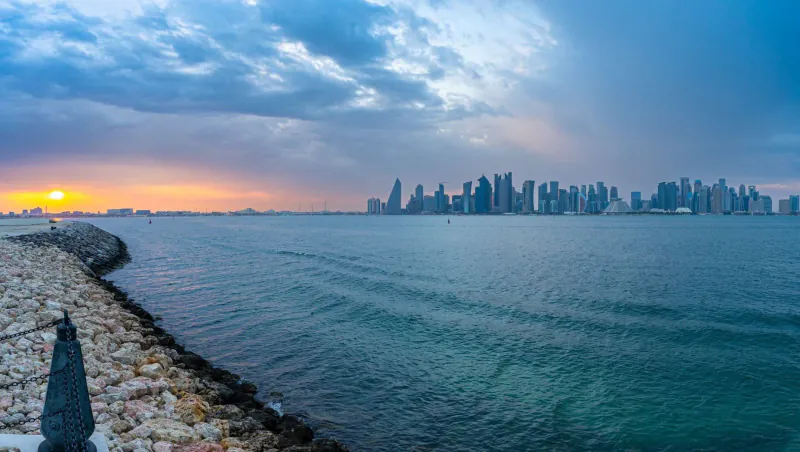
Cover photo by Mohamed Akram on Pexels.
Want to see how Qatar stacks up?
Are you seriously considering a move? Use our interactive tools to explore Qatar's climate, tax brackets, and nomad visas.
Head-to-Head Relocation Comparisons
Compare taxes, safety, and living costs of Qatar against top alternatives.