Taiwan Digital Nomad Visa 2026: Requirements, Costs, Process, and What Nobody Tells You
June 17, 2026
ShareThe landscape of remote work in East Asia underwent a seismic shift on January 1, 2026, with the legislative overhaul of the Act for the Recruitment and Employment of Foreign Professionals [2]. The most aggressive change in the 2026 policy is the extension of the maximum cumulative stay for digital nomads to 2 years [1][2][3]. This stands in stark contrast to the 2025 launch phase, which restricted stays to a mere six months.
Prospective applicants must understand that this is a "DN" annotation visitor visa [4][5] and not a resident permit like the Employment Gold Card. While the barriers to entry are lower, the financial hurdles remain firm: you must demonstrate an annual income of USD 20,000 (for those under 30) or USD 40,000 (for those 30 and older) [4][6]. Crucially, crossing the 183-day threshold in a calendar year will trigger full tax residency under Taiwan's territorial rules [14][16].
1. What Is Taiwan's Digital Nomad Visa?
As of January 1, 2026, Taiwan shifted its policy architecture to more aggressively attract foreign intellectual capital [1][2]. By extending the stay duration, the government has positioned this visa as a mid-tier bridge: it offers more stability than a standard tourist stay but lacks the permanent residency path and social benefits of the high-end Gold Card [11][13].
Core Specifications
- Official Name: Digital Nomad Visitor Visa (Visa Annotation: DN) [4][5].
- Administering Body: National Development Council (NDC) in coordination with the Bureau of Consular Affairs (BOCA) [3][4].
- Legal Basis: Act for the Recruitment and Employment of Foreign Professionals (2026 Amendment) [2][5].
- Duration: Granted for 6 months initially; renewable in 6-month increments for a total cumulative stay of 2 years [1][4][5].
Qualified vs. Disqualified
- Qualified: Only citizens of countries eligible for Taiwan's visa-exemption program may apply [6][7].
- Disqualified:
"So What- Layer: While the 2-year duration is a massive improvement, time spent on a DN visa does not count toward the 5-year requirement for an Alien Permanent Resident Certificate (APRC) [11][13]. This is a high-mobility tool, not an immigration route. If your goal is settlement, the DN visa is a dead end.
Honest Warning: BOCA's discretionary power is the ultimate application killer. If you apply in-country and are denied, you must exit immediately if your original visa-free stay expires during the review. Furthermore, citizens of the Philippines, Thailand, and Brunei must provide proof of accommodation bookings and sufficient travel funds to even be considered [6].
2. Eligibility Requirements
The 2026 strategy for attracting "Young Nomads" relies on age-stratified income requirements [4][21]. However, the administrative gatekeeper is not just your salary; it is the USD 10,000 liquidity requirement, designed to ensure nomads never become a burden on the state [3][6].
Eligibility Checklist
| Criterion | Requirement | Acceptable Proof |
|---|---|---|
| Income (Ages 20-29) | USD 20,000 annual income [4][6]. | Tax certificates (W-2, P60, T4, etc.) or salary certificates [3][5][6]. |
| Income (Ages 30+) | USD 40,000 annual income [4][6]. | Tax returns or employer-issued salary certificates [3][6]. |
| Savings | USD 10,000 average monthly balance for the last 6 months [3][6]. | Consecutive bank statements [3][6]. |
| Health Insurance | Full hospitalization and emergency coverage for the intended stay [3][5][6]. | International insurance policy [3][6]. |
Grey Areas
Applicants who have already held a valid Digital Nomad Visa from another sovereign nation (such as Japan or South Korea) can use that status to bypass the specific income thresholds [4][5].
"So What- Layer: The "6-month average balance" rule is a hard filter against "wealth-stuffing." If you dump USD 10,000 into an account in month five to meet the threshold, your average monthly balance will fail the test and trigger an automatic rejection. This requires half a year of financial discipline before you even file [3].
Honest Warning: Passive income, such as dividends or rental returns, is scrutinized with extreme skepticism. Freelancers should expect to provide a full dossier of active project contracts to prove their income is "stable" and "remote" rather than just a collection of one-off windfalls [3].
3. Required Documents
Taiwan's administrative rigor still demands a traditional "paper dossier" verified at overseas missions [3][4]. Precision in this documentation is the difference between an approval and a summary dismissal.
Numbered Checklist
- Passport: Original plus one photocopy; must have 6 months validity and blank pages. Emergency or temporary passports are strictly excluded [3][6].
- Application Form: Printed from the BOCA portal with a visible barcode and original signature [3][6].
- Photos: Two identical color photos (45mm x 35mm), white background, taken within the last 6 months [3][4][6].
- Work Proof: A detailed resume/portfolio plus an active Employment Contract (for employees) or Project Contracts (for freelancers) [3][6].
- Activity Plan: The "Description of Intended Activities" form, detailing specific cities, work nature, and estimated weekly hours [6][8].
- Health Policy: Proof of international insurance covering the entire duration of the intended stay [3][6].
Special Requirements
Applicants who have spent 4 weeks or more in high-risk polio countries within the last year must provide proof of vaccination (OPV or IPV) administered between 4 weeks and 1 year prior to submission [6]. This list currently includes: Afghanistan, Pakistan, DR Congo, Guinea, Algeria, Djibouti, Cameroon, and Chad [6].
"So What- Layer: Beware the "3-day rule." If BOCA requests additional documentation, you have exactly 3 working days to provide it, regardless of your time zone or the difficulty of obtaining the document. If you miss this window, the application is terminated [6].
4. Application Process: Step by Step
The most critical strategic decision is choosing between an Overseas or In-Country submission [3][4].
- Step 1: Preparation: Complete the online form. Once filed, you have 30 days to submit the physical dossier [3].
- Step 2: Submission:
- Step 3: NDC Review: The National Development Council verifies your professional credentials and financial statements [4][5].
- Step 4: Decision: Standard processing is 15 working days; express service is 7 working days [2].
- Step 5: Collection: You must collect the visa at the mission where you applied. No cross-border collection is permitted [3].
- Step 6: Extensions: Apply at the National Immigration Agency (NIA) before your current 6-month period expires [3][5].
"So What- Layer: Do not trust the "15-day" window. Multi-agency friction between BOCA, the NDC, and the NIA often pushes the "real-world" timeline to 4-6 weeks [20].
Honest Warning: You cannot convert to a DN visa if you entered on a "non-extendable" visitor visa. You must exit Taiwan and re-apply from an overseas mission, incurring the cost of flights and potential delays [3][4].
5. Costs: Complete Fee Breakdown
Taiwan's tiered pricing model ensures that US citizens and those opting for "Express Service" face significantly higher entry costs [8][10].
Fee Comparison Table
| Category | TWD | GBP | USD |
|---|---|---|---|
| Single Entry | 1,700 | £41 | $50 [8] |
| Multiple Entry | 3,400 | £82 | $100 [8][12] |
| US Citizen (In-Country) | 7,090 | £170 | $220 [13] |
| Express Surcharge | 2,500-5,000 | £61-£122 | $75-150 [8] |
"So What- Layer: All fees are non-refundable. If the NDC determines your work does not qualify as "remote" or your documentation is insufficient, your money is forfeited to the state treasury [6][7].
Honest Warning: Payment systems are surprisingly restrictive. Do not use American Express or UnionPay for online payments; only VISA, MasterCard, and JCB are accepted [19].
6. Tax Implications: The Article 8 Trap
Under Article 8 of the Taiwan Income Tax Act, any work physically performed within Taiwan is considered R.O.C.-sourced income. This applies even if your employer is in London or San Francisco and your salary is paid into a foreign account [14][15].
The Kaohsiung Case Study: A software engineer working for a Silicon Valley startup resided in Taiwan in 2024. Despite his salary being paid into a US account, the National Taxation Bureau of Kaohsiung ruled that because the services were performed on Taiwan soil, the income was R.O.C.-sourced and subject to local tax [15].
Resident Tax Table (2026 Progressive Brackets)
| Taxable Income (TWD) | Tax Rate | Progressive Difference (TWD) |
|---|---|---|
| 0 - 560,000 | 5% | 0 [14] |
| 560,001 - 1,260,000 | 12% | 39,200 [14] |
| 1,260,001 - 2,520,000 | 20% | 140,000 [14] |
| 2,520,001 - 4,720,000 | 30% | 392,000 [14] |
| 4,720,001+ | 40% | 864,000 [14] |
"So What- Layer: Beware the Controlled Foreign Corporation (CFC) rules. If you run an LLC in a tax haven like the BVI or Cayman Islands and stay over 183 days, Taiwan may tax your company's undistributed earnings directly if you are deemed to control the entity [17].
Honest Warning: Tax authorities are increasingly sophisticated. Your social media check-ins and travel records are now used as evidence to reconstruct your physical presence and count your days in-country [14].
7. What This Visa Does NOT Give You
The DN visa is a Visitor status, a major legal distinction that excludes you from the benefits enjoyed by "Residents" [11][13].
The Banned List
- Dependents: Sponsoring a spouse or children is impossible. They must qualify for their own visas independently [1][8][9].
- Local Employment: Strictly prohibited. Taking even a part-time gig for a local firm will result in visa revocation [1][4].
- NHI Access: You are excluded from the National Health Insurance system and must pay all medical costs out-of-pocket [6][11].
- Permanent Residency: The 2 years spent on this visa do not count toward the 5-year residency requirement for an APRC [11][13].
"So What- Layer: Without an Alien Resident Certificate (ARC), you do not exist in the local banking or telecommunications infrastructure. Opening a local bank account or signing a long-term mobile contract is nearly impossible [11].
Honest Warning: You are personally liable for all isolation and medical costs if diagnosed with a communicable disease during your stay [6].
8. Digital Nomad Visa vs. Alternatives
The DN visa is a mid-tier play for those who cannot meet the USD 5,700/month income requirement of the Gold Card [11][21].
Comparison Matrix
| Feature | Taiwan DN Visa | Japan DN Visa | South Korea (F-1-D) | Thailand DTV |
|---|---|---|---|---|
| Max Stay | 2 years [11] | 6 months [21] | 2 years [11] | 5 years [21] |
| Income Req. | USD 40k [11] | USD 67k [21] | USD 65k [22] | Savings based [21] |
| Renewable? | Yes [1][3] | No [21] | Yes [22] | Yes [21] |
| Dependents | No [9] | Yes [11] | Yes [11] | Yes [21] |
"So What- Layer: The "Journalist Scoop" for 2026 is that Taiwan's DNV is vastly superior to Japan's. While Japan enforces a strict 6-month non-renewable cap and a mandatory 6-month cooling-off period before you can return, Taiwan allows 6-month renewals for up to 2 years with no cooling-off requirement [21].
Quick Reference Cheat Sheet
- Official Name: Digital Nomad Visitor Visa [4].
- Initial Stay: 180 Days [4].
- Max Renewal: 2 Years [1][3].
- Min. Income: USD 20k (under 30) / USD 40k (30+) [4][6].
- Processing Time: 15 Working Days [2].
- Tax Trigger: 183 Days [14].
- Local Work: Banned [4].
References
- IMI - Taiwan Extends Digital Nomad Visa Validity to Two Years.
- Erickson Immigration Group - Taiwan Introduces New Rules for Foreign Professionals.
- Taiwan Digital Nomad Visa Application Q&A - NDC.
- Talent Taiwan - Digital Nomad Visa Portal.
- Act for the Recruitment and Employment of Foreign Professionals - NDC.
- Bureau of Consular Affairs (BOCA) - Digital Nomad Visitor Visa Regulations.
- TECO Philippines - Digital Nomad Visitor Visa Notice.
- Wise - Taiwan Digital Nomad Visa Guide 2026.
- Vialto Partners - Taiwan Digital Nomad Immigration Alert.
- wfa.team - Remote Work Policy HR Guide for Taiwan.
- LocalNomad Blog - Taiwan Gold Card 2026 vs. Digital Nomad Visa.
- Global Wealth Protection - Philippines vs. Taiwan Visa Comparison.
- Taiwan Travel Blog - Digital Nomad Visa Guide and FAQ.
- Digital Nomad Press - Guide to Taiwan's Income Tax Rules for Foreigners.
- Ministry of Finance (MOF) - Cross-border Salary Taxation Statement.
- Greenback Expat Tax Services - U.S. Taxes in Taiwan Guide.
- Taiwan Immigrants' Global News Network - Tax-Related Q&A.
- The Digital Nomad Asia - Taiwan Visa Detailed Information.
- Holafly - Taiwan Digital Nomad Visa Requirements.
- Citizen Remote - Taiwan Digital Nomad Visa Guide.
- Shareuhack - Asia Digital Nomad Visa Comparison 2026.
- wfa.team - Compliance and Visa Guide Taiwan.
- Digital Nomad World - Taiwan Digital Nomad Visa Overview.
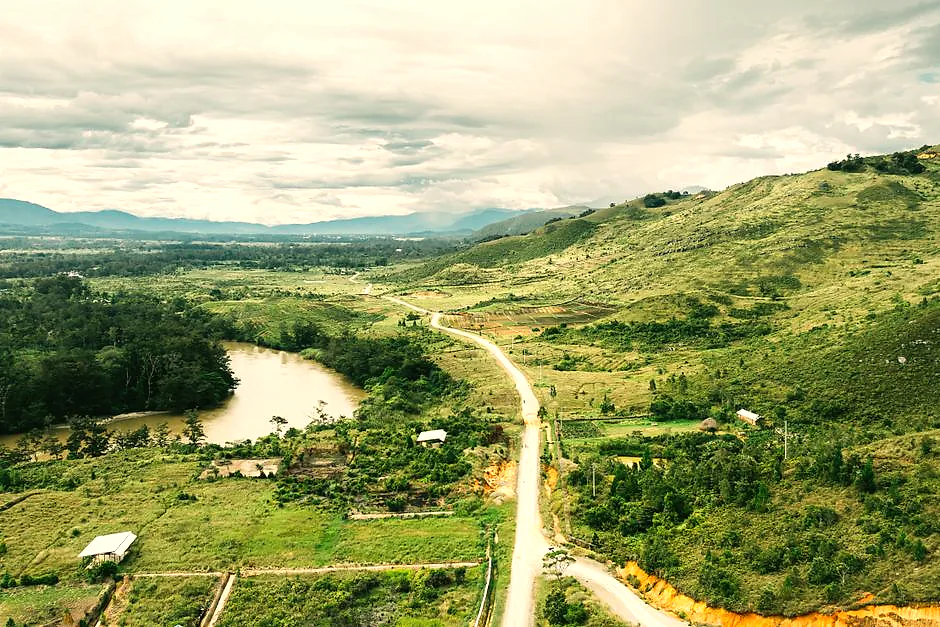
Cover photo by Jerry LIANG on Pexels.
Looking for more options? Compare all 56 digital nomad visa countries to find the perfect destination for your remote work setup.
Frequently Asked Questions
What is the minimum income requirement for the Taiwan Digital Nomad Visa? However, the administrative gatekeeper is not just your salary; it is the USD 10,000 liquidity requirement, designed to ensure nomads never become a burden on the state .
How long is the Taiwan Digital Nomad Visa valid and can it be extended? Duration: Granted for 6 months initially; renewable in 6-month increments for a total cumulative stay of 2 years .
Do digital nomads pay local income tax in Taiwan? If you run an LLC in a tax haven like the BVI or Cayman Islands and stay over 183 days, Taiwan may tax your company's undistributed earnings directly if you are deemed to control the entity .
Does the Taiwan Digital Nomad Visa lead to permanent residency or citizenship? Permanent Residency: The 2 years spent on this visa do not count toward the 5-year residency requirement for an APRC .
Want to see how Taiwan stacks up?
Are you seriously considering a move? Use our interactive tools to explore Taiwan's climate, tax brackets, and nomad visas.
Looking for other options?
See how this visa compares against 55 other countries.
📊 Compare all 56 digital nomad visas