Taiwan in 2026: The World's Best-Value First-World Country
June 7, 2026
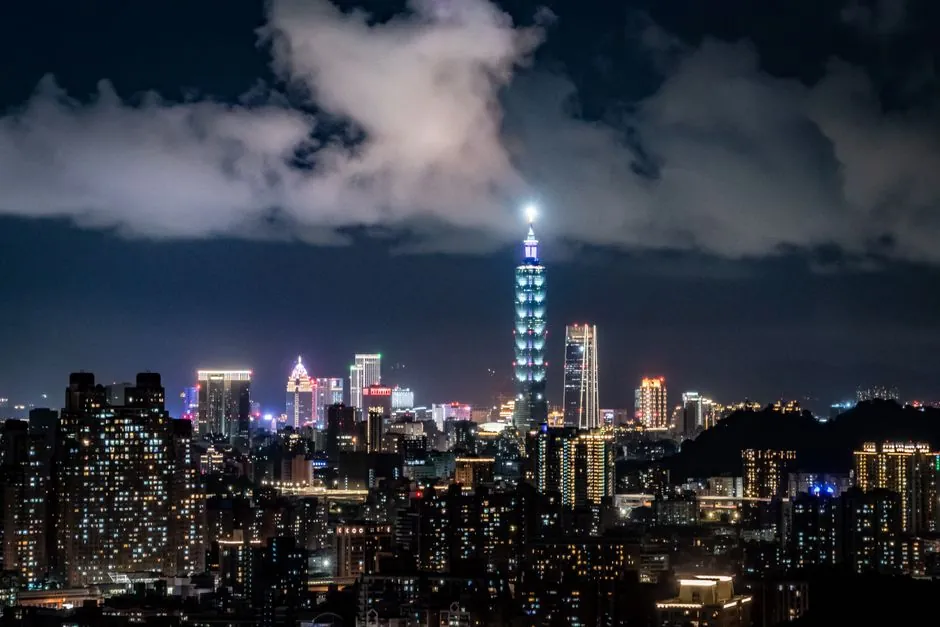
ShareTaiwan's economy grew 8.68% in 2025 - the fastest in 15 years - and DGBAS raised its 2026 GDP forecast to 7.71% in February, with ING upgrading it further to above 8% after March exports surged 61.8% year-on-year. The driver is AI: TSMC, NVIDIA's supply chain, and every server rack on the planet runs through this island. Taipei ranks as the 4th safest city in the world. A doctor visit on the National Health Insurance costs the equivalent of $5. A 1-bedroom apartment in the centre of Taipei runs $900/month. Fibre internet averages 264 Mbps - second in Asia behind Singapore.[1][2][3][4]
The geopolitical tension with the PRC is real. It is also not what determines daily life here, and any expat guide that treats these two facts as contradictory has already misled you.
The Economy: AI Boom, Taiwan at the Centre
Taiwan's economic dominance in the AI era is structural, not cyclical. TSMC produces more than 90% of the world's most advanced semiconductors. When hyperscalers - NVIDIA, Google, Amazon, Microsoft - need chips for large language models, they need TSMC. When demand for AI infrastructure surges, Taiwan's exports surge. That is exactly what happened: exports grew 22.22% in 2026 on the DGBAS forecast, revised sharply up from a prior projection of 6.32%.[2]
The DGBAS official 2026 growth forecast is 7.71%, with the statistics office explicitly flagging a higher likelihood of further upside revisions. ING's April 2026 forecast places full-year growth at over 8% after the March export print. Unemployment is structurally low at around 3.5%.[3][5][2]
The labour market consequence for expats: companies in Hsinchu Science Park (TSMC, ASML, Applied Materials), Taipei's tech sector, and increasingly AI software and biotech, actively recruit internationally - and pay at international rates for engineers, researchers, and specialist roles.
Visas and Residency: Four Real Paths
Taiwan does not have a single unified immigration system. It has multiple overlapping permits governed by different ministries. The four that matter to most expats:
Standard Work Permit (Employment Service Act)
The baseline for employer-sponsored professionals. Taiwan issues 50,000-60,000 white-collar work permits per year under Article 46 of the Employment Service Act.[6]
Requirements for the general professional category:[6]
- Minimum monthly salary: NT$47,971 (~USD $1,500)
- Bachelor's degree + 2 years' relevant work experience, OR 5 years' relevant work experience (no degree)
- Employer files on your behalf with the Ministry of Labor
Processing time: 2 weeks to 2 months depending on occupation and document quality. The permit is tied to your employer - changing jobs requires a new permit application. Once employed, you apply for your Alien Resident Certificate (ARC) - the blue card that is your resident ID for banking, phone contracts, and daily services.[6]
Employment Gold Card
Taiwan's premium talent visa. A single card combining a work permit + ARC + re-entry permit, valid for 1-3 years and renewable. No employer required. Open work authorisation - work for any company, be self-employed, or consult freely.[7][8]
Eight qualifying fields: Science and Technology, Economics, Education, Culture and Art, Sport, Finance, Law, Architecture.[9][8]
Two routes to qualification:[8][7][9]
Route A - Salary: Most recent monthly salary of NT$160,000+ (~USD $5,000+/month, ~USD $60,000/year). Documents required: most recent year's tax certificate or employer withholding statement showing salary above threshold.
Route B - Professional Achievement: Field-specific excellence criteria - patents, published research, major awards, senior management roles at qualifying companies. No income threshold required for Route B - skills and credentials alone can qualify.[9]
Gold Card special tax benefit (high earners): Foreign professionals with annual income from Taiwan exceeding NT$3 million (~USD $94,000) in their first year are eligible for a 50% deduction on income above NT$3 million for the first five years of residence. On an NT$6 million salary, this saves approximately NT$450,000/year in income tax (~USD $14,000/year) for five years.[10]
Apply at goldcard.nat.gov.tw - fully online. Processing time: approximately 8 weeks (can be faster for clear-cut applications).[7]
Digital Nomad Visitor Visa (DNV)
Launched January 2, 2025 - the newest path for remote workers. Stays up to 6 months, renewable up to a total of 2 years.[11][12]
| Requirement | Detail |
|---|---|
| Eligibility | Visa-exempt nationals only[13] |
| Age 30+ income requirement | USD $40,000/year in one of the last 2 years[12][14] |
| Age 20-29 income requirement | USD $20,000/year in one of the last 2 years[11] |
| Bank balance requirement | Average USD $10,000/month over past 6 months[13] |
| Can work for Taiwanese clients? | No - for overseas employers only[14] |
| Health insurance | International health insurance required for full stay[13] |
| Tax on foreign income | None if under 183 days in a calendar year[10] |
| Fee | USD $100-$310 (nationality-dependent)[10] |
Fast track: If you already hold a digital nomad visa from another country, the Ministry of Interior review is waived and MOFA issues directly.[14]
APRC (Alien Permanent Resident Certificate) - Taiwan's PR
The Taiwan Talent Act amendments that took effect on January 1, 2026 significantly overhauled the APRC pathway:[15]
| Route | Residence Required | Key Conditions |
|---|---|---|
| Standard | 5 years, average 183 days/year (previously strict 183 days each year) | Income ≥ double minimum wage in preceding year (~NT$57,000/month)[16] |
| Foreign Professional (Gold Card/work permit holders) | 3 years, average 183 days/year[15][17] | Field-specific professional status |
| High-Income Fast Track | 1 year, 183 days | Annual Taiwan income ≥ NT$6 million (~USD $188,000)[15][18] |
| Academic Credit Deduction | - | PhD: 3 years credited; Master's: 2 years; Bachelor's/Associate: 1 year[15][18] |
The 2026 amendments also replaced the strict year-by-year 183-day rule with an average of 183 days per year - meaning a year with 120 days can be offset by a year with 246 days. The APRC grants indefinite residence, the right to work freely without a permit, and access to NHI immediately upon grant.[15]
Citizenship: Taiwan requires renouncing your original citizenship - a significant barrier for most Western expats and a reason the APRC is the realistic long-term goal for most.[1]
Cost of Living: Where the Numbers Get Interesting
Taipei is one of the cheapest developed-world capitals on Earth. Non-rent monthly costs for a single person: approximately USD $838/month (NT$26,604). Including a central 1-BR apartment: approximately USD $1,930/month total.[19][20]
A comfortable single expat lifestyle with dining out regularly, a gym membership, and occasional travel: USD $1,600-1,800/month in Taipei. A couple: USD $2,200-2,800/month. These are Taipei numbers - the most expensive city. Taichung, Tainan, and Kaohsiung run 20-30% cheaper.[21][22]
Rent by City (2026)
| City | Studio | 1-Bedroom (Centre) | 2-Bedroom (Centre) |
|---|---|---|---|
| Taipei | NT$12,000-18,000 | NT$22,000-32,000[23] | NT$40,000-65,000[23] |
| New Taipei | NT$9,000-14,000 | NT$15,000-22,000 | NT$25,000-38,000 |
| Hsinchu | NT$8,000-13,000 | NT$14,000-20,000 | NT$20,000-30,000 |
| Taichung | NT$7,000-11,000 | NT$11,000-16,000 | NT$16,000-25,000[21] |
| Tainan | NT$6,000-10,000 | NT$9,000-14,000 | NT$14,000-22,000[21] |
| Kaohsiung | NT$6,000-11,000 | NT$10,000-15,000 | NT$15,000-23,000[21] |
1 USD ≈ NT$31.5 as of June 2026. A NT$22,000 Taipei 1-BR ≈ USD $698/month.
Daily Expenses (Taipei, 2026)
| Item | Price (NT$ / USD equiv.) |
|---|---|
| Night market meal (full dinner) | NT$60-120 (~$2-4)[22] |
| Meal at local restaurant | NT$170 (~$5)[20] |
| Three-course dinner for two (mid-range) | NT$1,500 (~$48)[20] |
| Monthly MRT/bus pass | NT$1,280 ($41)[19] |
| Single metro ride | NT$20-35 (~$0.63-1.10)[20] |
| Cappuccino (café) | NT$130-160 (~$4)[20] |
| Utilities (single person, 85 sqm) | NT$3,100 ($100)/month[23] |
| Broadband internet (unlimited, monthly) | NT$1,200 (~$38)/month[19] |
| NHI health insurance (employee, monthly) | NT$826 ($26)/month[24] |
The food value proposition is the headline that every expat mentions first. Taipei's night markets (Shilin, Raohe, Ningxia, Tonghua) serve full dinners for USD $2-4. A Michelin Guide has been published for Taiwan every year since 2018. Taiwan has 15 Michelin-starred restaurants; it also has $1 pork chop rice. The gap between quality and price is unlike any other developed Asian city.[22]
Taxes: Competitive Rates, 183-Day Residency Threshold
Taiwan taxes residents on worldwide income once they exceed 183 days in a calendar year. Below 183 days: only Taiwan-sourced income is taxed, at a flat withholding rate.[25]
2026 Progressive Tax Rates (Taiwan-sourced income, residents)[26]
| Net Taxable Income (TWD) | Tax Rate |
|---|---|
| 0 - 610,000 | 5% |
| 610,001 - 1,380,000 | 12% |
| 1,380,001 - 2,770,000 | 20% |
| 2,770,001 - 5,190,000 | 30% |
| 5,190,001 and above | 40% |
Note: The 2026 tax year brackets were widened from 2024-25 levels (610k from 590k at the first band), representing a real tax cut for most earners.[27][26]
Non-residents (under 90 days): Flat 18% withholding on Taiwan-sourced salary.[28] Non-residents (91-183 days): Flat 18% withholding on Taiwan-sourced income regardless of where payment originates.[25]
Income Basic Tax (IBT) - The Foreign Income Trap
If you are a tax resident (183+ days) with foreign-sourced income of NT$1 million or more AND your total basic income exceeds NT$7.5 million, you owe IBT at 20% on the excess above NT$7.5 million. IBT is compared to regular income tax - you pay whichever is higher. For most expats earning under NT$7.5 million total, IBT is irrelevant.[28][25]
Gold Card High-Earner Relief
Gold Card holders with Taiwan annual income exceeding NT$3 million are eligible for a 50% income deduction on the portion above NT$3 million for their first 5 years of residence. This brings the effective tax rate on high earners materially closer to Singapore or Hong Kong levels.[10]
Real-World Example
A resident earning NT$2,400,000/year (~USD $76,000):
- Tax: 5% à - NT$610,000 = NT$30,500 + 12% à - NT$770,000 = NT$92,400 + 20% à - NT$1,020,000 = NT$204,000 - NT$153,100 (progressive difference) = NT$173,800 total tax (~7.2% effective).[26]
The standard deduction (NT$131,000 for 2026) and personal exemption reduce taxable income before applying these rates.[27]
Healthcare: The Best Value System in the World
Taiwan's National Health Insurance (NHI) is ranked #1 in Asia and top 5 globally for coverage quality and cost-effectiveness. The system covers 99.9% of Taiwan's population.[29][1]
How Expats Access NHI
Employed expats: Enrolled automatically from the first day of employment - no 6-month wait. Your employer handles registration. Monthly premium contribution from the employee side: approximately NT$826/month (~USD $26). Employers contribute a larger share.[24][30][31]
Non-working residents (ARC holders): Enroll after 6 months of continuous residence in Taiwan. Before enrollment, you need international health insurance.[24]
Gold Card holders: Same rules as employed expats if working; same as non-working residents if not employed.
What NT$826/Month Gets You
After NHI enrollment:[1]
- GP visit co-pay: **NT$150 ($5)**
- Specialist consultation co-pay: NT$240-440 (~$8-14)
- Inpatient hospital room: NT$160-2,500/day depending on ward type
- Prescription medicine: NT$50-200 per prescription
- Emergency room treatment: NT$750 (~$24)
- Dental: partially covered (basic treatments included)
- Traditional Chinese medicine: included
Private clinic access - outside the NHI system - is available for faster appointments. A private GP consultation runs NT$300-800 (~$10-25). Most expats use NHI for the vast majority of care and top up with voluntary supplemental private insurance for private ward hospitalisation (~NT$1,000-2,000/month for comprehensive private cover).
Emergency: 119 (ambulance/fire) / 110 (police).[1]
Safety
Taipei's Crime Index: 11.25 - classified as "Very Low". Safety walking alone at night: 85.18% of residents rate it "Very High." During the day: 92.79% "Very High." Violent crime is exceptionally rare. Petty theft (phone theft on MRT, occasional scooter theft) represents the primary risk category.[32]
For context: Paris's Crime Index is 57.71 versus Taipei's 11.25 - Taipei is approximately five times safer by this measure.[33]
The political context: the Taiwan Strait situation is a constant backdrop. Military exercises occur periodically. The Taiwanese government runs civil defence drills (the most recent national drill was January 2026). Taiwan's domestic civil life, social trust, and rule of law operate entirely normally - this is not a conflict zone, it is a functioning democracy with some unusual geopolitical neighbours. Expats consistently report zero day-to-day impact on daily life from cross-strait tensions.
English in Everyday Life
Taiwan is not an English-first country. Mandarin Chinese is the primary language; Taiwanese Hokkien (Taiwanese) is widely spoken in older populations and southern cities; Hakka in certain regions.[34]
In practice: Taipei is highly navigable in English - all MRT signs are bilingual, international restaurants and cafés speak English, younger professionals in tech have very good English, and the Gold Card community and expat networks are active and welcoming. Hsinchu's tech park functions largely in English at the professional level due to the high concentration of international engineers.
Outside Taipei, Taichung, and Hsinchu: English drops off sharply. Kaohsiung and Tainan have growing expat communities but daily life - supermarkets, government offices, landlord conversations - requires basic Mandarin for smooth functioning.
For long-term residents: Mandarin proficiency is required for the APRC (government-administered TOCFL test at minimum B1/A2 level or 3 years' proof of Mandarin instruction). The language barrier is the most consistent challenge reported by long-term expats - and the most consistently rewarded skill to develop.[35][7]
Which City?
Taipei
The default for most expats. Corporate headquarters, tech startups, the Gold Card community, international schools, and the full range of Western amenities. Best-connected internationally (Taoyuan International Airport, 40 min by Taoyuan MRT). The MRT network is clean, punctual, and covers the whole city and extends to New Taipei. Monthly living cost: NT$30,000-40,000 (~USD $950-1,270) excluding rent; with central 1-BR: ~NT$50,000-65,000/month (~USD $1,600-2,100). Best for: tech, finance, international organisations, first-time expats.[21]
Hsinchu
Taiwan's Silicon Valley. TSMC headquarters, dozens of semiconductor and advanced manufacturing companies. ASML, Micron, Qualcomm all have major presences. Significantly cheaper than Taipei - 1-BR: NT$14,000-20,000/month. Weaker public transport (car or scooter recommended). Best for: semiconductor and hardware engineers, applied physicists, supply chain professionals.[21]
Taichung
Taiwan's second-largest city by population. Cultural capital of central Taiwan - strong arts scene, the National Museum of Natural Science, high-quality coffee culture (Taichung has more independent cafés per capita than anywhere in Asia). Monthly cost: NT$24,000-32,000 (~USD $760-1,015) including rent. No MRT (planned but under construction) - scooter or bus. Growing tech employer base. Best for: those wanting a calmer pace, lower rent, strong food and culture.[21]
Tainan
Taiwan's historical capital. Temples, history, and unanimously considered to have the best street food on the island. Very affordable (NT$20,000-28,000/month including rent). Less international job market. Best for: remote workers, freelancers, academics, those on DNV or Gold Card with location independence.[21]
Kaohsiung
Southern Taiwan's port city. Fastest-improving expat infrastructure on the island - Light Rail along the waterfront, significant public art investment, the Pier-2 Arts District. Warm year-round, more beach lifestyle than Taipei. Monthly cost: NT$22,000-30,000/month. Growing semiconductor cluster (TSMC fab expansion). Best for: outdoor-focused expats, remote workers, those who want Taiwan without Taipei's density.[21]
City Comparison
| City | Monthly Budget (incl. Rent) | Key Sector | Transport | Best For |
|---|---|---|---|---|
| Taipei | NT$50,000-65,000[21][19] | Tech/Finance/Corporate | MRT, bus | All-round, first expats |
| Hsinchu | NT$35,000-50,000[21] | Semiconductors/Hardware | Scooter/Car | Engineers, TSMC supply chain |
| Taichung | NT$24,000-32,000[21] | Manufacturing/Culture | Bus/Scooter | Balance, lower cost, culture |
| Kaohsiung | NT$22,000-30,000[21] | Industry/Port/Growing tech | MRT/Scooter | Outdoor, remote workers |
| Tainan | NT$20,000-28,000[21] | History/Food/Academic | Scooter | DNV/Gold Card/remote |
Climate: Subtropical, With a Typhoon Season and a Wet Winter
Taiwan straddles the Tropic of Cancer. The north (Taipei) is subtropical with cool, rainy winters; the south (Tainan, Kaohsiung) is tropical, with dry, warm winters and humid, hot summers.[36]
| Season | Months | Conditions (Taipei) |
|---|---|---|
| Spring | March - May | 18-26°C; humid; "plum rain" season starts late May[37] |
| Summer | June - September | 28-35°C; very humid; typhoon season[38] |
| Autumn | October - November | 20-28°C; the best weather of the year - dry, warm, clear |
| Winter | December - February | 12-19°C; persistent drizzle and cloud in Taipei[36] |
Plum Rain (梅雨季): Late May through mid-June - persistent heavy rain, high humidity. The Central Weather Administration May 2026 forecast flags broad rain pattern through June across Taiwan. Normal.[39]
Typhoon season: June-October, with peak risk in August-September. Taiwan averages 3-4 typhoons making landfall or close approach per year. Typhoon warnings trigger school and office closures. Infrastructure and buildings are typhoon-engineered - buildings here are built for it. The practical preparation: follow CWA alerts, have supplies for 2-3 days indoors.[38]
Taipei winters are grey. November through February, Taipei averages 10-13 rainy days per month with persistent cloud. Southern Taiwan (Kaohsiung, Tainan) is sunny and warm in winter - this is a genuine quality-of-life differentiator for those working remotely.
October and November are the consensus best months to visit Taiwan before committing to a move - dry, warm, clear, no typhoon risk.
Internet and Infrastructure
Taiwan's average fixed broadband speed in 2025: 264 Mbps - second in Asia behind Singapore (410 Mbps), ahead of South Korea and Hong Kong. Speedtest Global Index April 2026: Taiwan ranks 36th globally for fixed broadband and 42nd for mobile. Home fibre plans (1 Gbps) available through Chunghwa Telecom, kbro, FarEasTone, and Taiwan Mobile for approximately NT$1,200-1,600/month (~USD $38-50).[40][4][41][19]
5G: all major carriers (Chunghwa, Taiwan Mobile, FarEasTone) have nationwide 5G coverage across all major cities. Taiwan's National Communications Commission reported 95%+ internet penetration in 2023 - effectively universal.[41]
The Taiwan High Speed Rail (THSR) connects Taipei to Kaohsiung in 96 minutes - making it practical to live in Taichung and work in Taipei part-time. The MRT systems in Taipei, Kaohsiung, and Taoyuan are clean, punctual, and inexpensive. Scooters (125cc or electric) are the dominant short-range transport outside Taipei - renting or buying one is standard practice for most expats outside the Taipei metro area.
Buying Property
Foreigners from most countries can legally buy property in Taiwan - subject to the reciprocity principle: your home country must allow Taiwanese citizens to buy property on equal terms. Most Western countries qualify; check the Ministry of Interior's maintained reciprocal country list before proceeding.[42][43][44]
What you can buy:[43]
- Residential apartments (condominiums) - with ARC, minimal restrictions
- Commercial and industrial properties
- Land designated for business or residential use (Ministry of Interior approval required)
What you cannot buy (for foreigners):
- Forest land, fishing grounds, hunting grounds, salt fields, mining land, water source land, military and border areas[42]
Transaction costs and fees:[43]
- Deed tax: 1-4% of purchase price
- Stamp duty: approximately 0.1% (very low)
- Land Value Tax (annual): approximately 1% of assessed land value
- House Tax (annual): 1.2-2% of assessed value depending on use
Property prices - Taipei 2026:
The mortgage market for foreigners is notably restrictive. Banks are cautious about lending to non-APRC holders. Without permanent residency or APRC status, securing a local mortgage is difficult - expect to need a substantial cash deposit or work with specialist lenders. The pragmatic advice: reach APRC status before buying.[44]
Your First 30 Days: The Checklist
- Apply for your ARC (Alien Resident Certificate) within 15 days of arrival if you have a work permit or Gold Card - go to your local National Immigration Agency (NIA) office with passport, employment contract or Gold Card, and two passport photos[34]
- Gold Card applicants: apply online before arriving at goldcard.nat.gov.tw - cards can be processed before you land[8][7]
- Register for NHI if employed - your employer handles this from day one; if non-working, mark your 6-month ARC anniversary on the calendar and enroll immediately[30][24]
- Get a local SIM - Chunghwa Telecom, Taiwan Mobile, and FarEasTone all offer expat-friendly prepaid plans at convenience stores (7-Eleven, FamilyMart, Hi-Life); bring passport and ARC
- Open a bank account - bring ARC, passport, and proof of address; CTBC, Cathay United, and E.SUN are most expat-friendly; line at branches can be slow, so go with extra time
- Get an EasyCard (æ‚ éŠå¡) immediately - the tap-to-pay transit card works on MRT, buses, Taiwan Railway, convenience store purchases, and bike share (YouBike); available at any MRT station
- DNV holders: watch the 183-day clock carefully - crossing it makes you a tax resident and subjects global income to Taiwan's progressive rates; plan exits if your foreign income is significant[25][10]
- Gold Card high earners: apply for the 50% income deduction in year one - file with the National Taxation Bureau during the May filing window; the relief is not automatic and must be claimed[10]
- Start Mandarin from month one - Taiwan has subsidised Mandarin courses at National Taiwan Normal University (NTNU's MTC, widely regarded as Asia's best Mandarin language school), National Taiwan University, and through community centres; 3 months of classes will transform daily life
Key Data at a Glance
| Indicator | Value |
|---|---|
| GDP Growth 2025 (actual) | 8.68% (fastest in 15 years)[2] |
| GDP Forecast 2026 (DGBAS Feb 2026) | 7.71%[2] |
| ING GDP Forecast 2026 (post-March trade) | 8%+[3] |
| Export Growth 2026 forecast (DGBAS) | +22.22%[2] |
| Unemployment | ~3.5%[5] |
| Gold Card Minimum Salary Route | NT$160,000/month (~USD $60k/year)[7] |
| Gold Card Open Work Permit | Yes - any employer[9] |
| DNV Income Requirement (30+) | USD $40,000/year[12] |
| DNV Max Stay | 6 months, renewable to 2 years[12] |
| Standard Work Permit Min. Salary | NT$47,971/month[6] |
| APRC Standard Route | 5 years, avg 183 days/year[15] |
| APRC Professional Route (2026) | 3 years, avg 183 days/year[15] |
| APRC High-Income Route | 1 year, NT$6M+ annual income[15][18] |
| Top Income Tax Rate | 40% (residents, above NT$5.19M)[26] |
| Tax Residency Threshold | 183 days/year[25] |
| Gold Card 50% Deduction Threshold | NT$3 million Taiwan income[10] |
| NHI Monthly Premium (employee) | ~NT$826 (~USD $26)[24] |
| NHI Doctor Visit Co-pay | ~NT$150 (~USD $5)[1] |
| Taipei Crime Index | 11.25 (Very Low)[32] |
| Night Safety Rating | 85.18% "Very High"[32] |
| Fixed Broadband Speed | 264 Mbps average (2025)[4] |
| Speedtest Global Rank (Apr 2026) | 36th fixed broadband, 42nd mobile[40] |
| Taipei 1-BR Centre Rent | NT$22,000-32,000/month[23] |
| Property Price (Taipei centre) | ~USD $7,600/sqm[45] |
| Emergency | 119 (ambulance/fire), 110 (police)[1] |
Taiwan runs one of the most productive economies in the world, charges one of the lowest personal income tax rates in Asia, delivers first-world healthcare for USD $26/month after 6 months, and prices a full dinner at USD $3. The APRC reform that took effect January 1, 2026 - cutting the Gold Card holder's PR timeline from 5 years to 3 years - is the most significant immigration change in a decade. The expat community that knows about it is not yet large. That window tends to close.[15]
References
- Living in Taiwan as an Expat (2026 Guide) | ExpatLife.Ai
- Taiwan hikes 2026 economic growth forecast on AI demand
- Taiwan's trade growth smashes all forecasts, lifting the 2026 growth ...
- Fixed broadband internet speed. Data by Countries from 2022 to 2025
- National Statistics, Republic of China (Taiwan)-Economic Growth Rate
- Work Permit Taiwan 2026: A Complete Employer Guide - Employsome
- Employment Gold Card - Taiwan Visa Guide 2026 | LottaLingo
- Everything You Need To Know - Taiwan's Employment Gold Card
- Do I qualify? | Taiwan Gold Card
- Taiwan - Digital Nomad Visas - wfa.team
- Taiwan Digital Nomad Visa | Envoy Global, Inc
- Taiwan digital nomad visa: Complete guide (2026)
- Digital nomad visitor visa
- Taiwan | New digital nomad visitor visa | BAL Immigration News
- Key Immigration Changes from Taiwan Talent Act 2026
- Should I Apply for a 2-Year or 3-Year Taiwan Gold Card? - Reddit
- ARC and APRC Q&A
- Explanation of Regulations for Residence and Permanent ...
- Cost of Living in Taipei, Taiwan in 2026
- Cost of Living in Taipei. Feb 2026. Prices in Taipei
- Where to Live in Taiwan: A Practical 2026 Guide ...
- Complete Guide to Moving to Taiwan in 2026 - WhereNext
- 2026 Cost of Living in Taipei (Full Breakdown)
- National Health Insurance (NHI) - [email protected]
- How to Calculate Taiwan Income Tax (2025 Income, 2026 ...
- Rate Applicable-National Taxation Bureau of Taipei
- Progressive Tax Rate (For resident use only.)
- Taiwan - Individual - Taxes on personal income
- Taiwan's National Health Insurance 2025-2026(全民å¥ä¿英文簡介)
- FAQs-National Health Insurance Administration Ministry of ...
- National Health Insurance Taiwan foreigners | Know Your Benefit
- Crime in Taipei, Taiwan
- Crime Comparison Between Paris and Taipei
- Living in Taiwan: the ultimate expat guide - Expat.com
- Taiwan: Changes to the Conditions for APRC and ARC Issuances
- Climate of Taiwan - Wikipedia
- Taiwan Weather Guide - Best Time to Visit in 2026
- 2026 Pacific typhoon season - Wikipedia
- [PDF] Central Weather Administration One-Month Outlook
- Taiwan's Mobile and Broadband Internet Speeds - Speedtest Global ...
- Internet in Taiwan - Wikipedia
- A Comprehensive Guide for Foreigners to Buying Property in Taiwan
- Can foreigners own property in Taiwan?
- Buying property as a foreigner : r/taiwan - Reddit
- Taipei Cost of Living 2026: Rent, Food & Real Prices
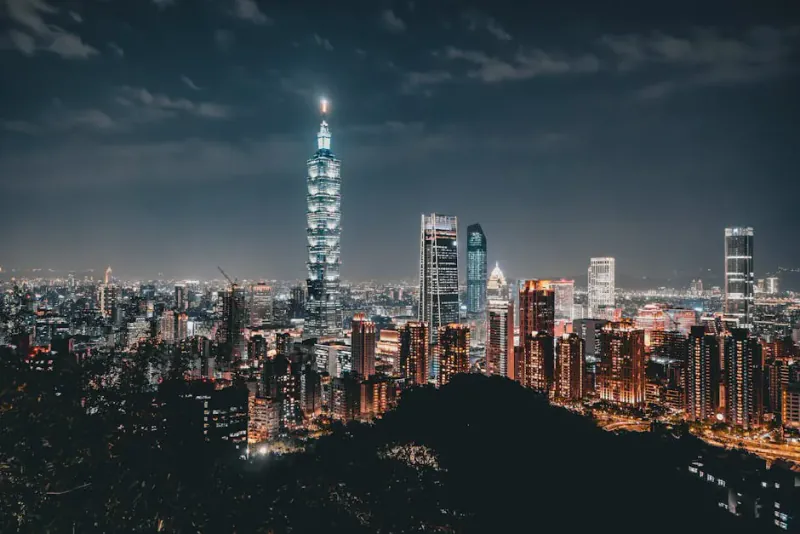
Cover photo by Ehsan Haque on Pexels.
Frequently Asked Questions
How many work permits does Taiwan issue annually? Taiwan issues 50,000-60,000 white-collar work permits per year under Article 46 of the Employment Service Act.
What are the requirements for obtaining a Standard Work Permit in Taiwan? Requirements for the general professional category include:
- Minimum monthly salary: NT$47,971 (~USD $1,500)
- Bachelor's degree + 2 years' relevant work experience, OR 5 years' relevant work experience (no degree)
- Employer files on your behalf with the Ministry of Labor
Want to see how Taiwan stacks up?
Are you seriously considering a move? Use our interactive tools to explore Taiwan's climate, tax brackets, and nomad visas.