Moving to Saudi Arabia in 2026: 0% Tax, $213k Lifetime Visas, and the Brutal Truth
July 19, 2026
ShareSaudi Arabia's Premium Residency programme now offers a lifetime "green card" for SAR 800,000, its economy is growing faster than almost any G20 nation at an IMF-projected 4.5% in 2026 - and yet the US State Department has issued a Level 3 "Reconsider Travel" advisory because of an active Iran conflict that started firing missiles at Saudi territory in February 2026. Zero income tax, world-class infrastructure, and genuine geopolitical risk all coexist here right now. This is everything you need to know before you move.[1][2]
The Economy: Eyes Open
The macro story is genuinely strong. The IMF raised its Saudi growth forecast for the third time in six months in January 2026, lifting the 2026 projection to 4.5% - a 0.5 percentage point upgrade from October, driven by higher oil output, resilient domestic demand, and continued Vision 2030 reforms. The Fund put 2025 growth at 4.3%, with 2027 expected to ease slightly to 3.6%. The World Bank independently forecasts 4.3% for 2026 and 4.4% for 2027. Fitch Ratings affirmed Saudi Arabia's sovereign credit rating at A+ with a stable outlook in January 2026, citing strong fiscal metrics and reform momentum.[3][1]
Non-oil sectors are the real driver: the government's target is for non-hydrocarbon activity to reach roughly 90% of GDP by 2030, and the resilience shown through 2025 reflects genuine progress in reducing oil-price exposure. Every one of the 2026 residency reforms - fee cuts, threshold reductions, faster processing - is a deliberate capital-attraction lever tied to Vision 2030's $3.3 trillion transformation agenda, not passive immigration policy.[4][3]
The complication is the regional security picture. A US-Iran military conflict began on 28 February 2026, and while Saudi Arabia is not a primary belligerent, Iranian missile and drone attacks - plus intensified Houthi strikes from Yemen - have hit Saudi cities, airports, energy facilities, and diplomatic compounds. Riyadh's Patriot and THAAD air defence intercepted the vast majority of incoming projectiles, but interception isn't a safety guarantee, and commercial flights have been "significantly disrupted." This is the single biggest variable to watch before committing to a move in 2026.[2]
Visas and Residency: What Changed in 2026
The Kafala System Is Optional Now
Since 2019, the Premium Residency (Iqama Mumayazah) programme has let qualified foreigners live, work, own property, and run businesses in Saudi Arabia without the traditional kafeel (sponsor) that has governed expatriate life for decades. It now spans seven categories, each engineered for a different applicant profile.[5]
The Two Core Tiers
| Tier | Cost | Duration | Best For |
|---|---|---|---|
| Limited Duration | SAR 100,000/year (~$27,000) | 1-5 years, renewable | Testing the market, multi-year assignments |
| Unlimited Duration (Permanent) | SAR 800,000 one-time (~$213,000) | Lifetime, no renewal | Families putting down roots long-term |
The Permanent fee was cut 20% from SAR 1 million to SAR 800,000 in late January 2026 - applicants who'd already paid the old fee were offered a SAR 200,000 refund. Both tiers carry identical rights: no sponsor, full property ownership, business formation.[4][5]
The Five Specialized Categories
| Category | Requirement | Outcome |
|---|---|---|
| Investor | SAR 7,000,000 own capital + 10 Saudi jobs in 2 years | Permanent residency |
| Entrepreneur (Category A) | SAR 400,000, 20%+ stake | 5 years, renewable once |
| Entrepreneur (Category B) | SAR 15,000,000, 10%+ stake, 20 jobs | Permanent residency |
| Real Estate Owner | SAR 4,000,000 mortgage-free residential property | Valid while property is held |
| Special Talent | Salary-based (SAR 14,000-80,000/month by profession) | 5 years; permanent after 30 months' presence |
| Gifted | No cost - international/national recognition | 5 years; permanent after 30 months' presence |
The Real Estate Owner threshold - the route most Western expats actually use - dropped 20% from SAR 5 million to SAR 4 million in March 2026, and off-plan property became eligible for the first time in April 2026, provided the developer holds a current REGA licence and the buyer's payment is at least 60% complete. Eligible cities expanded to a full unrestricted set across Riyadh, Jeddah, Dammam, Khobar, NEOM, and the Red Sea Project zone - Mecca and Medina retain non-Muslim ownership restrictions inside the Haram zones.[5][4]
The Seven-Year Conversion Path
The most underused feature of the 2026 framework: Investor-tier holders who keep a qualifying property for 7 consecutive years can convert to Permanent status without ever paying the SAR 800,000 fee - a free upgrade for anyone planning to hold the property long-term regardless.[4]
Processing and Costs
| Step | Duration (2026) |
|---|---|
| Property identification + contract | 1-2 weeks |
| REGA registration + ownership verification | 3-5 weeks |
| RETT payment (5% of property value) | Concurrent |
| MISA portal Premium Residency application | 2-3 weeks |
| Medical + biometrics | 1 week |
| Card issuance | 2 weeks |
| Total end-to-end | 8-14 weeks (down from 12-20 weeks in 2024-2025)[4] |
A separate SAR 4,000 (~$1,000) government processing fee applies regardless of category. All non-Arabic documents require certified translation and Saudi embassy/consulate attestation.[5]
Family Inclusion
Spouse, unmarried children under 25 who are financially dependent, and dependent parents can all be included - a notably broader scope than some competing Gulf programmes, though the Investor-route sub-variant restricts children to under 18. Premium Residency families are exempt from the SAR 4,800/year expatriate dependent levy that ordinary foreign residents pay per dependent.[5]
Path to Citizenship
Naturalization is theoretically possible after 10+ consecutive years of residency, a clean record, Arabic proficiency, proven income, and demonstrated contribution to Saudi society - but grants remain entirely discretionary and are rare in practice. For nearly all practical and lifestyle purposes, Permanent Premium Residency is the realistic ceiling.[5]
Saudi vs. UAE Golden Visa
| Feature | Saudi Premium Residency | UAE Golden Visa |
|---|---|---|
| Minimum property investment | SAR 4M (~$1.067M) | AED 2M (~$545,000) |
| One-time fee to permanent | SAR 800,000 | None - no formal permanent tier |
| Duration | Permanent or 5-yr renewable | 10 years, renewable |
| Children age limit | Under 25 (dependent) | No age limit |
| Parents included | Yes | Yes |
| Processing time | 8-14 weeks | 4-8 weeks |
| Income tax | 0% | 0% |
Saudi wins on the genuine lifetime-permanent option and the 7-year conversion path; the UAE wins on lower capital requirements and faster processing.[4][5]
Cost of Living: The Real Numbers
A single person in Riyadh spends $2,463/month including rent on average, or $1,363/month excluding rent, according to 2026 cost trackers. Budget-conscious living runs closer to $1,153/month including rent, while a comfortable-to-luxury lifestyle reaches $5,084/month. Average monthly salary in Riyadh sits around $4,500, comfortably outpacing the typical budget-living cost.[6]
Rent by Neighborhood (Riyadh, 2026)
| Area | 1-BR Rent (USD) |
|---|---|
| KAFD / Diplomatic Quarter / Hittin (premium) | $1,600-$2,900[7] |
| Al Olaya / Sulaymaniyah (mid-range) | $930-$1,600[7] |
| City-center average | $1,100[6] |
Monthly Expenses (Riyadh, 2026)
| Item | Cost (USD) |
|---|---|
| Groceries | $250-$400/month[7] |
| Transport (metro + taxi/car) | $100-$350/month[7] |
| Utilities + internet | $100-$180/month[7] |
| Health insurance (employer-typical) | $0-$150/month[7] |
| Dining out (3-4x/week) | $200-$400/month[7] |
| Broadband internet + cable | $55-$130/month[6] |
| Electricity | $19-$77/month[6] |
Riyadh's newly opened metro (2024) has materially improved transport costs and convenience for expats who don't want to drive.[2]
Taxes: What You Actually Pay
Saudi Arabia levies zero personal income tax - one of the most tax-attractive jurisdictions globally, and identical to the UAE on this metric. There is no capital gains tax on individuals either.[5]
| Tax/Contribution | Rate |
|---|---|
| Personal income tax | 0% |
| Capital gains tax (individuals) | 0% |
| Corporate tax (non-Saudi-owned entities) | 20%, varies by structure |
| VAT (standard rate) | 15% |
| Real Estate Transaction Tax (RETT) | 5% of property value |
| White Land Tax (undeveloped urban plots over 5,000m²) | 10% annually |
The 5% RETT is paid on any qualifying property purchase under the Real Estate Owner residency route - on a SAR 4 million purchase, that's SAR 200,000, paid to ZATCA and non-refundable even if the sale later falls through. Buyers considering undeveloped land for residency purposes should note the White Land Tax makes raw land economically unworkable for this route - the Investor route is designed for built or off-plan stock, not empty plots.[4]
Healthcare: Public vs. Private
Saudi Arabia operates 380 government hospitals and 160 private hospitals, with major urban facilities staffed by internationally trained, English-speaking physicians. Health insurance is mandatory for all expats - employers are legally required to provide coverage for employed expats, and Premium Residency holders must arrange comprehensive private insurance with a minimum sum insured of SAR 500,000 per person before their permit activates.[8][2][4]
Bupa Arabia and Tawuniya are the dominant insurers, with the Premium Residency Center publishing an approved-insurer list updated twice yearly. Top facilities cited by expats and residency guides include King Faisal Specialist Hospital and Research Centre, Saudi German Hospital Group, and US-aligned private chains including Cleveland Clinic Riyadh and Mayo Clinic-affiliated centers.[4]
Emergency treatment is provided regardless of insurance status, but follow-up and specialist care requires payment or coverage - and medical evacuation flights from Saudi Arabia to Europe typically cost $50,000 to $100,000, making comprehensive travel/health insurance with repatriation coverage a genuine necessity, not an optional extra.[2]
Since 2025, meningococcal vaccination (ACYW135) is mandatory for entry regardless of travel purpose, and the international vaccination certificate must be carried at all times.[2]
Safety
This is the section where Saudi Arabia's 2026 story genuinely bifurcates. On conventional crime metrics, Saudi Arabia ranks 14th globally on the Numbeo Safety Index - ahead of every other G20 nation. The homicide rate sits at just 0.64 per 100,000 (World Bank), roughly one-tenth the US figure and lower than most of Western Europe. The 2025 Global Peace Index saw Saudi Arabia surge from 102nd to 22nd place, reflecting genuine stability gains.[2]
But that peacetime picture has been overtaken by an active regional conflict. As of March 2026, every major Western government has escalated its travel advisory:[2]
| Government | Advisory Level | Key Concern |
|---|---|---|
| United States | Level 3 - Reconsider Travel | Missile/drone strikes, exit bans, social media prosecutions |
| United Kingdom | Advise against all but essential travel (Eastern/Riyadh provinces) | Shrapnel risk from intercepted missiles |
| Canada | Exercise a high degree of caution | Terrorism, regional instability |
| Australia | Reconsider your need to travel | Military conflict |
The US State Department ordered non-emergency government employees and their families to leave Saudi Arabia on 8 March 2026. Before the conflict, Saudi Arabia sat at the standard "Exercise Increased Caution" level shared with countries like France and Belgium - this is a genuinely elevated, conflict-driven risk profile, not a permanent feature of the country.[2]
Legal Risks That Catch Expats Off Guard
Saudi Arabia's Sharia-based legal system criminalizes behaviors that are unremarkable elsewhere, and expats - not just tourists - are exposed:[2]
- Alcohol: completely illegal with no exceptions; can trigger arrest just for arriving with alcohol on your breath
- Social media criticism of the government or royal family: up to 45 years imprisonment, applies even to posts made before arriving in Saudi Arabia
- Exit bans: authorities can bar anyone - including long-term residents - from leaving, often triggered by unpaid fees or commercial/family disputes; embassies have limited power to intervene
- Extramarital relationships: illegal, with imprisonment and flogging as possible penalties
- LGBTQ+ status: same-sex activity is illegal, with the death penalty a legally available punishment - no safe way to be openly LGBTQ+ exists in the Kingdom
Road Safety Is the Bigger Everyday Risk
Road fatalities run at 18 per 100,000 - roughly seven times the UK rate - making traffic the single greatest physical danger for residents, ahead of crime or terrorism. Rates have fallen 35% since 2016 thanks to speed cameras and seatbelt enforcement, but defensive driving and use of ride-hailing apps (Uber, Careem) over self-driving is standard expat practice.[2]
English in Everyday Life
English functions widely in international business, finance, healthcare, and education sectors that employ most Western expats, and it's realistic to work and live day-to-day without Arabic in Riyadh's business districts and expat-heavy compounds. Arabic remains essential for government interactions, most retail outside premium malls, and any genuine social integration - Premium Residency's own naturalization pathway explicitly requires Arabic proficiency after 10 years.[5]
Which City?
Riyadh
The capital, financial center, and primary destination for Premium Residency Investor-route buyers. Home to the King Abdullah Financial District (KAFD), Diriyah Gate, the new metro system, and the bulk of Vision 2030 giga-project activity. Highest concentration of premium property, international schools, and private healthcare. Best for finance, consulting, and Vision 2030-aligned business professionals.[4]
Jeddah
Saudi Arabia's commercial gateway on the Red Sea coast, with full Premium Residency property eligibility across the city, including the Corniche, North Obhur, and As Salamah districts. Coastal humidity is high but temperatures run somewhat cooler than Riyadh's interior desert heat. Best for those wanting coastal access and marginally less extreme summer conditions.[4]
NEOM and the Red Sea Project
Saudi Arabia's flagship giga-projects - The Line, Sindalah Island, Trojena, Oxagon, plus Red Sea Global's Coral Bloom and AMAALA developments - carry full Premium Residency eligibility for both completed and off-plan property. Entry-level qualifying units run SAR 6-8 million, well above the standard threshold, reflecting a genuinely premium positioning. Best for long-horizon investors betting on the giga-project ecosystem rather than immediate lifestyle needs.[4]
Dammam and Khobar (Eastern Province)
Full Premium Residency eligibility with material 2026 price appreciation in the corniche and freehold-tower segments following the reform-driven buyer inflow. The Eastern Province is also one of the two regions the UK FCDO specifically flags for elevated conflict-related risk in 2026, alongside Riyadh Province.[4][2]
Climate: Extreme Desert Heat
Riyadh has a hot desert climate (Köppen BWh) - dry, comfortable winters and genuinely dangerous summer heat.[9][10]
| Season | Months | Avg High (°C) | Risk Level |
|---|---|---|---|
| Winter | December - February | 20-22°C | Comfortable[2] |
| Spring | March - April | 28-35°C | Warm but manageable[2] |
| Summer | May - September | 42-45°C | Dangerous for outdoor activity[2] |
| Autumn | October - November | 33-38°C | Hot but declining[2] |
Peak summer temperatures regularly exceed 45°C in Riyadh and the interior, with recorded highs as extreme as 47°C. Rainfall is minimal - roughly 52mm annually across just 9 rainy days. The 2024 Hajj heat disaster, where Mecca temperatures reached 51.8°C and over 1,300 pilgrims died, underscores that this isn't hyperbole - heat is a genuine health hazard, not just a discomfort, for anyone spending extended time outdoors between May and September.[9][2]
Best months to relocate or scout: November through February, when temperatures sit in a genuinely comfortable 20-22°C range.[2]
Buying Property
Foreigners holding Premium Residency status may purchase residential, commercial, and industrial real estate throughout the Kingdom, with restrictions limited to Mecca/Medina (usufruct rights up to 99 years apply instead of freehold) and designated border zones. The Real Estate Owner category ties residency directly to holding a completed, mortgage-free residential property worth at least SAR 4,000,000 with independent professional valuation - selling the property causes residency to lapse unless a replacement qualifying asset is acquired.[5]
The Full Cost Stack (Investor Route + Permanent Overlay)
| Cost Line | Amount (SAR) | USD Equivalent |
|---|---|---|
| Property purchase (minimum) | 4,000,000 | $1,067,000 |
| RETT (5%) | 200,000 | $53,400 |
| Legal fees | 30,000-100,000 | $8,000-$26,700 |
| Premium Residency Permanent fee (optional) | 800,000 | $213,400 |
| Government/notary fees | 4,500 | $1,200 |
| Health insurance (family of 4, annual) | 48,000-160,000 | $12,800-$42,700 |
| First-year all-in (with Permanent tier) | ~5,090,000 | ~$1,358,000 |
Rental yield materially offsets running costs - Riyadh prime residential currently yields 6-8% net of fees, meaning a SAR 4 million property generates roughly SAR 280,000 (~$74,700) in gross annual rental income, more than covering annual fee obligations under any tier.[4]
Mortgage financing for foreign buyers expanded materially in early 2026 - SNB and Al Rajhi both now offer up to 60% loan-to-value on Investor-route purchases at rates around SAIBOR + 250-400 bps.[4]
Important: as with most Gulf residency programmes, buying property does not automatically grant citizenship - it grants residency under the specific Real Estate Owner or Investor category, contingent on continued ownership.[5]
Your First Steps: The Checklist
- Choose your Premium Residency tier based on horizon: Limited if 1-3 years, Permanent (SAR 800,000) if indefinite, Investor (SAR 4M+ property) if you're deploying capital anyway[4]
- Run the eligibility self-check on the official Premium Residency Center portal (pr.gov.sa) before committing to any category[5]
- Assemble documentation in parallel: passport with 6+ months validity, police clearance from your home country (and any country of 1+ year residence in the past 5 years), recent bank statements, medical report issued within 6 months[5][4]
- If pursuing the property route: engage a Saudi-licensed real-estate brokerage experienced with foreign buyers, and hire independent Saudi legal counsel for contract review - sole reliance on broker documentation is the most common failure mode reported in 2026 transactions[4]
- Arrange mandatory health insurance meeting the SAR 500,000 minimum sum-insured threshold before activating any Premium Residency permit[4]
- Scrub social media accounts of anything that could be construed as critical of the Saudi government, royal family, or Islam - this applies to non-residents and residents alike and carries penalties up to 45 years imprisonment[2]
- Check current government travel advisories for your nationality before booking flights - the conflict-driven Level 3 US advisory and equivalent UK/Canada/Australia warnings are genuinely current as of 2026, not historical artifacts[2]
- Settle all financial and commercial obligations proactively - exit bans can be triggered by unpaid debts or disputes and are extremely difficult to lift once imposed[2]
- Plan around summer heat: outdoor activity is genuinely dangerous May through September; schedule your move and any property viewing trips for November-February where possible[2]
- Understand the legal environment fully before arrival: alcohol is completely illegal, extramarital relationships are criminalized, and LGBTQ+ individuals face severe legal risk - these are not enforcement quirks but core features of the legal system[2]
Key Data at a Glance
| Indicator | Value |
|---|---|
| GDP Growth Forecast 2026 (IMF, Jan 2026) | 4.5%[1] |
| GDP Growth 2025 (IMF) | 4.3%[1] |
| GDP Growth Forecast 2027 (IMF) | 3.6%[1] |
| Sovereign Credit Rating | A+ (Fitch, stable outlook)[3] |
| Personal Income Tax | 0%[5] |
| VAT | 15% |
| Real Estate Transaction Tax | 5% of property value[4] |
| Premium Residency Permanent Fee | SAR 800,000 (~$213,000)[4] |
| Premium Residency Limited (annual) | SAR 100,000/year (~$27,000)[5] |
| Real Estate Owner Threshold | SAR 4,000,000 (~$1.067M)[4] |
| Processing Time (2026) | 8-14 weeks[4] |
| Path to Citizenship | 10+ years, discretionary[5] |
| Numbeo Safety Index Rank | 14th globally, 1st among G20[2] |
| Homicide Rate | 0.64 per 100,000[2] |
| Road Fatality Rate | 18 per 100,000 (7x UK rate)[2] |
| US Travel Advisory (March 2026) | Level 3 - Reconsider Travel[2] |
| Riyadh Single-Person Monthly Cost | $2,463 incl. Rent; $1,363 excl. Rent[6] |
| Average Riyadh Salary | ~$4,500/month[6] |
| Summer Peak Temperature | 42-47°C[2][9] |
| Winter Temperature Range | 20-22°C[2] |
Saudi Arabia in 2026 presents perhaps the starkest split of any major relocation destination this year: a residency and tax framework engineered to be genuinely world-class for high-net-worth movers, layered directly underneath an active regional conflict and a legal system with zero tolerance for the personal freedoms most Western expats take for granted elsewhere.
References
IMF raises Saudi Arabia's 2026 growth forecast to 4.5% - Arab News - Get the latest breaking news and headlines from the largest Arab News website. Get world news, sport...
Is Saudi Arabia Safe? Honest 2026 Travel Safety Guide - Is Saudi Arabia safe to visit in 2026? Crime rates, travel advisories, Iran conflict risks, laws tha...
IMF Raises Saudi Arabia’s Growth Forecast to 4.5% in 2026 - For the third time in six months, the International Monetary Fund (IMF) has raised its forecast for ...
Saudi Premium Residency 2026: Updated Property Path - Saudi Premium Residency May 2026: SAR 800K property route updated, fees, processing 4-12 weeks, vs G...
Saudi Arabia Golden Visa (Premium Residency): Complete Guide (2026) - Complete 2026 guide to Saudi Arabia Premium Residency (golden visa). All 7 categories, costs from SA...
Cost of Living in Riyadh, Saudi Arabia in 2026 - This page contains up-to-date cost of living information for Riyadh, Saudi Arabia in 2026. Compare p...
Cost of Living in Riyadh 2026 - Saudi Arabia - ExpatLife.Ai - Monthly expenses breakdown for expats living in Riyadh, Saudi Arabia.
Health Insurance in Saudi Arabia 2026 - Health insurance is mandatory for all expats in Saudi Arabia. Your employer must provide it. Learn a...
Monthly climate in Riyadh, Saudi Arabia - Temperatures typically range between 15 °C (60 °F) and 38 °C (100 °F) through the year, but rarely c...
Riyadh, Ar Riyāḑ, Saudi Arabia Climate - Located at an elevation of 630.89 meters (2069.85 feet) above sea level, Riyadh has a Subtropical de...
Frequently Asked Questions
What are the primary visa and residence options for moving to Saudi Arabia in 2026? Spouse, unmarried children under 25 who are financially dependent, and dependent parents can all be included - a notably broader scope than some competing Gulf programmes, though the Investor-route sub-variant restricts children to under 18.
How does personal income tax work for expats in Saudi Arabia? Saudi Arabia levies zero personal income tax - one of the most tax-attractive jurisdictions globally, and identical to the UAE on this metric.
What is the average cost of rent and living in Saudi Arabia? A single person in Riyadh spends $2,463/month including rent on average, or $1,363/month excluding rent, according to 2026 cost trackers.
How many years of residence are required for citizenship or permanent residency in Saudi Arabia? Naturalization is theoretically possible after 10+ consecutive years of residency, a clean record, Arabic proficiency, proven income, and demonstrated contribution to Saudi society - but grants remain entirely discretionary and are rare in practice.
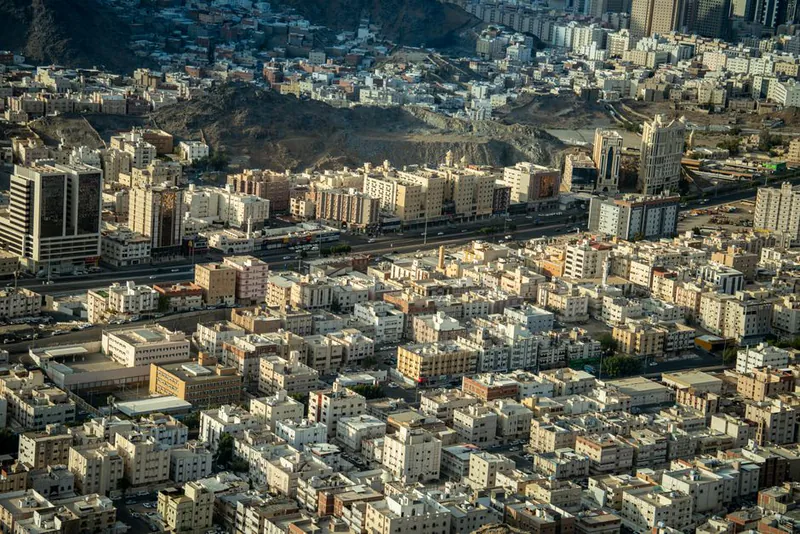
Cover photo by Musaddek Sayek on Pexels.
Want to see how Saudi Arabia stacks up?
Are you seriously considering a move? Use our interactive tools to explore Saudi Arabia's climate, tax brackets, and nomad visas.
Head-to-Head Relocation Comparisons
Compare taxes, safety, and living costs of Saudi Arabia against top alternatives.