Moving to Panama in 2026: 0% Tax, the $200k Visa, and the End of Cheap Residency
July 23, 2026
SharePanama's economy grew 4.8% in the first quarter of 2026 alone - outpacing nearly all of Latin America - but the once-legendary Friendly Nations Visa, which used to require just a $5,000 bank deposit, now demands $200,000 and takes 2.5 years to reach permanent status. The territorial tax system remains genuinely favorable and the dollarized economy removes currency risk entirely. This is everything you need to know before you move, without the retirement-brochure gloss.[1][2]
The Economy: Eyes Open
Panama's 2026 economic story is one of clear regional leadership. National statistics agency INEC confirmed 4.8% year-over-year growth in Q1 2026, driven substantially by recovering Panama Canal toll revenues. Forecasts diverge by institution but all point the same direction: the IMF's April 2026 World Economic Outlook projects 3.8% growth for 2026 - the fourth-highest rate among 19 Latin American and Caribbean economies tracked, running 65% above the regional average of 2.3%. The World Bank sits slightly higher at 4.1%, while Citi's July 2026 revision, citing strong investor appetite and continued infrastructure interest, projects 4.4-4.6%.[3][2][4]
A meaningful tailwind: Panama's 2026 removal from international financial "grey lists" has directly supported continued foreign investment in logistics and financial services. Inflation remains genuinely benign, projected around 2.0% for 2026 - a sharp contrast to inflation spikes elsewhere in the region. The fiscal balance sits at roughly -3.5% of GDP, a level analysts consider manageable but worth monitoring given Panama's post-Cobre Panamá mine closure fiscal adjustment since 2023.[5][6][3]
The one structural note worth flagging honestly: Panama's medium-term growth trajectory, while strong regionally, remains below pre-pandemic and pre-mine-closure levels - the 2023 closure of the $10 billion Cobre Panamá copper mine (roughly 5% of GDP) left a lasting dent that recovering Canal revenues and infrastructure investment are only gradually offsetting.[6]
Visas and Residency: What Changed in 2026
The Friendly Nations Visa Isn't What It Used to Be
Panama's flagship residency programme, launched in 2012, was once famous for its simplicity: a loose economic tie and a $5,000 bank deposit. A 2021 decree ended that era permanently, and the 2026 version demands genuine capital commitment through one of three formal channels.[1]
The Three Qualifying Paths
| Path | Minimum Requirement | Total Initial Outlay |
|---|---|---|
| Real Estate Investment | $200,000 registered property value | ~$215,000+[1] |
| Fixed-Term Bank Deposit | $200,000, locked 3+ years, general-license bank | ~$206,000+[1] |
| Formal Employment | Panamanian job contract + MITRADEL work permit | ~$6,000+[1] |
The 50 qualifying "Friendly Nations" include the United States, Canada, the UK, most of the EU, Australia, New Zealand, Japan, South Korea, Israel, Singapore, Mexico, Brazil, and Argentina, among others. Only the principal applicant needs Friendly Nation citizenship - spouse, children under 25 (single, studying), and parents can all be included regardless of their own nationality.[7][8]
The Two-Stage Structure
Applicants now go through a mandatory two-step process: an initial 2-year provisional residency card, followed by permanent residency application only after that period concludes. Realistic timeline breakdown for 2026:[1]
| Stage | Duration |
|---|---|
| Document gathering (apostilled criminal record, health certificate, proof of investment) | 1-3 months[1] |
| Initial filing in Panama (physical presence required) | 1-2 weeks[1] |
| Provisional residency card issuance | 3-6 months[1] |
| Provisional residency period (mandatory hold) | 2 years[1] |
| Permanent residency conversion | 2-4 months[1] |
| Total realistic timeline to permanent residency | ~2.5 years[1] |
Government and Legal Costs
Beyond the qualifying investment itself, applicants pay approximately $1,050 in government fees (a $250 check to the National Treasury and an $800 check to National Migration Services), plus $5,000-$10,000 in legal and filing fees for the investment routes, or $4,000-$8,000 for the employment route (largely employer-borne). Real estate purchasers additionally face 2-5% in property closing costs on top of the $200,000 minimum.[8][1]
The Absence Rule
Provisional residents face no strict minimum-presence requirement, but once holding permanent residency, absences exceeding two consecutive years can jeopardize status - a genuinely flexible arrangement compared to many competing programmes, with some current guides even citing a light "visit once every two years for at least one day" maintenance standard.[9][7]
Path to Citizenship
After five years of continuous permanent residency, naturalization becomes available - a separate, discretionary process requiring Spanish-language proficiency, knowledge of Panamanian history and civics, and a formal interview. Panamanian law technically requires renouncing prior citizenship, but this is inconsistently enforced in practice, and many naturalized Panamanians effectively retain dual nationality.[1]
Cost of Living: The Real Numbers
Panama City delivers genuinely mid-range Latin American costs with first-world infrastructure in the right neighborhoods. A single person's average monthly cost runs $2,223 including rent, or $1,323 excluding rent, according to 2026 trackers. Budget-conscious singles can manage on roughly $1,082/month including rent, while comfortable-to-luxury living reaches $4,577/month.[10]
Rent by Neighborhood (Panama City, 2026)
| Area | 1-BR Rent (USD) |
|---|---|
| City-center average | $900-$945/month[11][10] |
| Range (low to high-end) | $500-$1,600/month[10] |
| San Francisco / Costa del Este / Punta Pacífica (premium expat zones) | Rising notably 2023-2026, driven by demand[12] |
Monthly Expenses (Panama City, 2026)
| Item | Cost (USD) |
|---|---|
| Average monthly salary | $2,100[10] |
| Family of four, comfortable living (incl. rent) | $4,245-$8,846/month[10] |
| Couple, budget living (incl. rent) | $1,461/month[10] |
| Big Mac | $4.30[11] |
| Uber (5km ride) | $3.50[11] |
Panama City's average monthly salary of $2,100 exceeds the average single-person cost of living by roughly 59%, a genuinely healthier local-wage-to-cost ratio than many popular expat destinations, though this benefits local earners more than newly arrived expats who don't yet have Panamanian income.[10]
Taxes: What You Actually Pay
Panama's core tax advantage is a territorial tax system: residents are generally taxed only on Panama-sourced income, with foreign-earned income - salaries, investments, business profits generated outside Panama - falling entirely outside the Panamanian tax net.[1]
| Tax Category | Rate |
|---|---|
| Personal income tax (Panama-sourced income) | Progressive, up to 25%[1] |
| Foreign-sourced income | 0% - territorial exemption[1] |
| Capital gains tax (Panama-sourced real estate) | 10% (fixed rate)[13] |
| Corporate income tax | 25%[13] |
| VAT (ITBMS) | 7%[7] |
| Property transfer tax | 2% of registered value (or higher market value)[13] |
The 2026 Economic Substance Law
A significant new development: Law 526 of 2026, addressing economic substance requirements, took effect in 2026 and specifically targets holding companies, private interest foundations (FIPs), and special purpose vehicles - a genuinely relevant development for anyone planning to route Panamanian residency or property through a corporate structure, effective ahead of the 2027 fiscal period. Anyone structuring assets through a Panamanian entity should get current legal guidance on Law 526 compliance rather than relying on pre-2026 structuring advice.[14]
US Citizens
Panama's territorial system doesn't exempt Americans from US tax obligations - the US taxes citizens on worldwide income regardless of residence. The Foreign Earned Income Exclusion and Foreign Tax Credit remain the primary tools for reducing double taxation, identical to the situation in every other country in this guide series.
Healthcare: Public vs. Private
Panama offers a genuinely well-regarded private healthcare system by regional standards, with Panama City's major private hospitals - Hospital Punta Pacífica (a Johns Hopkins affiliate) and Hospital Nacional among the most cited - providing internationally accredited care at a fraction of US costs. Most expats rely on private international or local insurance rather than the public Caja de Seguro Social system, which is generally reserved for those formally employed and contributing locally.[15][16]
Healthcare costs for private treatment run substantially below US equivalents - a genuine draw for retirees and anyone managing chronic conditions on a fixed income, though costs have risen alongside broader inflation and demand from the growing expat community through 2025-2026.[15]
Safety
Panama's safety picture in 2026 is a genuine case of "the average number lies" - and understanding the geography matters more here than in almost any other country in this guide series. Panama ranks #4 of 20 in one composite Latin America safety index (score 72/100), behind only Uruguay, Chile, and Costa Rica, and ahead of the rest of Central America.[17]
The Real Numbers by Zone
| Area | Homicide Rate (per 100,000) |
|---|---|
| Panama City overall (excl. Colón & Darién) | 12.4[18] |
| Punta Pacífica / Costa del Este (gated, expat-heavy) | 0.8-1.2[18] |
| US national average (comparison) | 6.2[18] |
| Chicago high-crime areas (comparison) | 24.1[18] |
| National homicide rate cited by other trackers | 6.0[19] |
The honest read: Panama City's citywide average sits above the US national average, but the specific neighborhoods where expats actually concentrate - Punta Pacífica, Costa del Este, and increasingly El Cangrejo - post crime rates comparable to affluent US suburbs, not the citywide headline figure. The US State Department maintains Panama at Level 1 - Exercise Normal Precautions, its lowest advisory tier, reflecting genuine underlying stability.[18][17]
Standard Precautions That Matter
- Avoid displaying jewelry, watches, or electronics visibly in public spaces[18]
- Use registered taxis or ride-share apps (Uber, DiDi) rather than street-hailed cabs, especially after dark[18]
- Use ATMs inside malls or supermarkets, never on the street[18]
- Register with your embassy's safety alert programme on arrival[18]
- The Colón and Darién provinces carry materially elevated risk and are generally excluded from mainstream expat safety statistics for good reason - exercise significantly greater caution if travel there is required[18]
English in Everyday Life
English functions reasonably well in Panama City's international business districts, banking sector, and expat-dense neighborhoods - a legacy partly of the US-Panama Canal Zone relationship and Panama's role as a regional financial hub. Spanish remains essential for government interactions, most local commerce, and genuine community integration outside Panama City's most international pockets, particularly in Boquete, Coronado, and the interior provinces.
Which Neighborhood or Region?
Punta Pacífica
The gold standard for expat safety and luxury, a gated high-rise peninsula with crime rates comparable to the safest US suburbs and roughly 45% expat population share. Highest cost of living within Panama City, home to Hospital Punta Pacífica.[18]
Costa del Este
A newer, professional-class development popular with families, offering strong safety metrics (0.8-1.2 homicides per 100,000) at somewhat lower cost than Punta Pacífica. Roughly 35% expat population.[12][18]
El Cangrejo
The historic heart of Panama's expat community - dense, walkable, and central, with restaurants, banks, and cultural institutions, though closer to average citywide crime levels than the two premium zones above. Best for those prioritizing community and walkability over maximum security.[18]
Casco Viejo
Panama City's UNESCO-listed historic quarter, increasingly gentrified with boutique hotels, restaurants, and a genuine old-world atmosphere - a standard expat and tourist zone with typical petty-theft risk in crowded areas rather than serious crime concerns.[17]
Boquete
A mountain highland town in Chiriquí province, popular with retirees for its cooler climate (a genuine relief from Panama City's tropical heat and humidity) and slower pace, at meaningfully lower cost than the capital.[17]
Coronado
A beach-town expat enclave roughly 90 minutes from Panama City, offering coastal living with an established, long-term expat community and reasonable proximity to the capital's healthcare and airport infrastructure.[17]
Buying Property
Foreigners in Panama enjoy the same property ownership rights as Panamanian citizens for most property types - a genuinely rare level of parity in Latin America, with no residency requirement to purchase. Titled land (título de propiedad) can be held directly in an individual's name or through a Panamanian corporation or private interest foundation.[13]
Key Restrictions
| Property Type | Foreign Ownership Status |
|---|---|
| Titled residential/commercial property | Full ownership rights, same as citizens[13] |
| Property within 10km of international borders | Restricted for foreigners[13] |
| Islands and certain coastal/insular zones | Special restrictions apply[13] |
| Rights-of-possession land (not titled) | Legally murkier; requires careful due diligence[13] |
Property-Linked Cost Stack
| Cost | Amount |
|---|---|
| Minimum property for Friendly Nations Visa qualification | $200,000[1] |
| Property transfer tax | 2% of registered/market value[13] |
| Closing costs (notary, registration, legal) | 2-5% of property value[1] |
| Capital gains tax on eventual sale | 10% fixed rate[13] |
Given the distinction between titled and rights-of-possession land - a genuinely common source of disputes for unwary foreign buyers - independent legal title verification through the Public Registry of Panama before any purchase is essential, non-negotiable practice.[13]
Important: buying qualifying property confers eligibility for the Friendly Nations Visa's real estate path, not citizenship directly - citizenship still requires five years of subsequent permanent residency plus successful naturalization.[1]
Your First Steps: The Checklist
- Choose your Friendly Nations Visa path based on your capital and goals: real estate for those wanting a physical asset, fixed deposit for liquidity preference, employment for those without $200,000 to deploy[1]
- Engage a licensed Panamanian immigration attorney before starting anything - this is explicitly not a DIY process under the 2021+ rules[1]
- Budget realistically: ~$215,000+ all-in for the real estate route, ~$206,000+ for the bank deposit route, or under $10,000 if pursuing employment-based qualification[1]
- Gather apostilled documents in parallel: passport with 6+ months validity, apostilled criminal background check, health certificate from a licensed Panamanian doctor, and proof of your chosen economic tie[1]
- Plan for the mandatory 2-year provisional residency period before permanent status becomes available - budget nearly 2.5 years total to reach permanent residency[1]
- Choose your neighborhood using actual zone-level crime data, not citywide averages - Punta Pacífica and Costa del Este offer genuinely low crime; the citywide average is misleading on its own[18]
- Get independent title verification through the Public Registry of Panama before any property purchase, distinguishing titled land from rights-of-possession land[13]
- If structuring assets through a Panamanian corporation or foundation, get current legal guidance on Law 526's 2026 economic substance requirements before the 2027 fiscal period[14]
- Arrange private health insurance and identify your preferred private hospital (Hospital Punta Pacífica or Hospital Nacional are the most commonly cited) rather than relying on the public system[15]
- Avoid Colón and Darién provinces without specific reason and preparation - both carry materially elevated risk relative to Panama City's expat zones[18]
Key Data at a Glance
| Indicator | Value |
|---|---|
| GDP Growth Q1 2026 (actual, INEC) | 4.8%[2] |
| GDP Growth Forecast 2026 (IMF, April) | 3.8%[4] |
| GDP Growth Forecast 2026 (World Bank) | 4.1%[2] |
| GDP Growth Forecast 2026 (Citi, July revision) | 4.4-4.6%[2] |
| Latin America Regional Average 2026 | 2.3%[4] |
| Inflation Forecast 2026 | ~2.0%[6] |
| Friendly Nations Visa Minimum Investment | $200,000 (real estate or bank deposit)[1] |
| Total Timeline to Permanent Residency | ~2.5 years[1] |
| Years to Citizenship Eligibility | 5 years post-permanent residency[1] |
| Foreign-Sourced Income Tax | 0% (territorial system)[1] |
| Panama-Sourced Income Tax | Up to 25%, progressive[1] |
| VAT (ITBMS) | 7%[7] |
| Corporate Tax | 25%[13] |
| Property Capital Gains Tax | 10% fixed[13] |
| Single Person Monthly Cost (Panama City) | $2,223 incl. rent[10] |
| Average Monthly Salary (Panama City) | $2,100[10] |
| Panama City Homicide Rate (overall) | 12.4 per 100,000[18] |
| Punta Pacífica/Costa del Este Homicide Rate | 0.8-1.2 per 100,000[18] |
| US State Department Advisory | Level 1 - Exercise Normal Precautions[17] |
| Latin America Safety Index Rank | #4 of 20[17] |
Panama in 2026 rewards a genuinely specific profile: those with $200,000+ in real capital, a preference for a dollarized, territorial-tax economy over a bargain-basement entry price, and the discipline to choose their neighborhood based on actual crime data rather than either the scare headlines or the retirement-brochure gloss.
References
Panama's Friendly Nations Visa: The 2026 Guide to the New ... - Panama's once-simple Friendly Nations Visa has new, stricter rules for 2026. This guide breaks down ...
Malcolm Muñoz General Manager of Citi in ... - Citi assures that investors' appetite for the country remains strong and highlights the internationa...
Panama Economy Set to Lead Central America in 2026, International Monetary Fund Says - PanamaTimes - The International Monetary Fund forecasts Panama's economy will grow 4.2 percent in 2026, supported ...
Panamá crece al 3.8% según el FMI en 2026 - El FMI proyecta para Panamá un crecimiento de 3.8% en 2026, por encima del promedio latinoamericano ...
New IMF Outlook: Panama Forecasted with 3rd Highest Growth in ... - According to the new data, the 2025 Top 3 growth countries in Latin America are forecasted to be Arg...
Panama: A 2026 Snapshot - AQ tracks key indicators and political and economic trends to watch in 2026.
Panama Friendly Nations Visa 2026 | Residency 5 Days - Get Panama permanent residency with the Friendly Nations Visa 2026. 50 eligible countries. Include y...
Friendly nations visa panama... - The Panama Friendly Nations Visa is a unique program initiated by the Panamanian government to boost...
Panama Friendly Nations Visa 2026: Benefits, Requirements, Costs & Steps - Panama’s Friendly Nations Visa (FNV) remains one of the most accessible residency programs in Latin ...
Cost of Living in Panama City, Panama, Panama in 2026 - This page contains up-to-date cost of living information for Panama City, Panama, Panama in 2026. Co...
Panama City Cost of Living 2026: Rent, Food & Real Prices - Panama City 1BR rent: $945.00/mo. Big Mac: $4.30. Uber 5km: $3.50. Full breakdown of housing, food, ...
The REAL Cost of Living in Panama City (2026 HOUSING COSTS) - Curious about the actual cost of living in Panama City? Get a breakdown of housing, rentals, and uti...
Property Foreign Ownership Panama (January 2026) - TheLatinvestor - What can foreigners own and buy in Panama? We study property rights, visas, buying process, taxes, m...
Ley 526 de 2026: Guía Completa de la Nueva Ley de Sustancia ... - Análisis completo de la Ley 526 de 2026 sobre sustancia económica en Panamá. Quién aplica, quién est...
Cost of Living in Panama in 2026: Monthly Budget and ... - Learn the cost of living in Panama in 2026, including Panama City costs, rent, groceries, healthcare...
What Kind Of Foreigners... - Moving to Panama? Cost of living, monthly budget, schools, hospitals, visas, etc.
Is Panama Safe for Expats? (Panama City & Zones) (2026) - Is Panama safe for expats in 2026? Rank #4/20, Casco Viejo and Boquete zones, and Central America's ...
Is Panama Safe in 2026? Real Crime Data & Safe Expat Areas - Panama is safer than most headlines suggest - real 2026 crime stats, the 5 safest expat neighborhood...
Is Panama Safe in 2026? Real Crime Data + 5 Safest ... - Panama's crime rate of 6.0 homicides per 100,000 residents puts it among the safest countries in Lat...
Frequently Asked Questions
What are the primary visa and residence options for moving to Panama in 2026? Panama's flagship residency programme, launched in 2012, was once famous for its simplicity: a loose economic tie and a $5,000 bank deposit.
How does personal income tax work for expats in Panama? Panama's territorial system doesn't exempt Americans from US tax obligations - the US taxes citizens on worldwide income regardless of residence.
What is the average cost of rent and living in Panama? Budget-conscious singles can manage on roughly $1,082/month including rent, while comfortable-to-luxury living reaches $4,577/month.
How many years of residence are required for citizenship or permanent residency in Panama? After five years of continuous permanent residency, naturalization becomes available - a separate, discretionary process requiring Spanish-language proficiency, knowledge of Panamanian history and civics, and a formal interview.
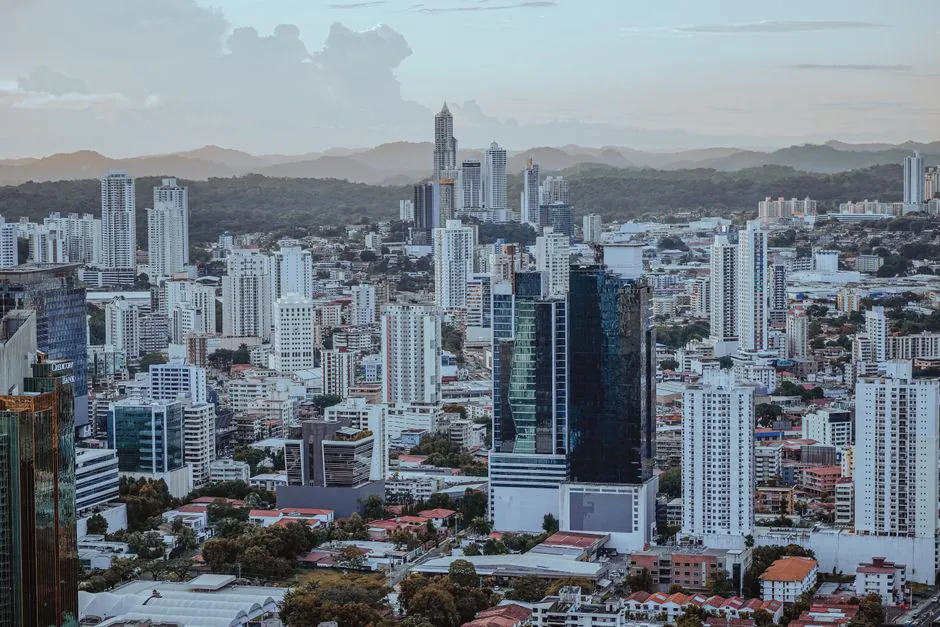
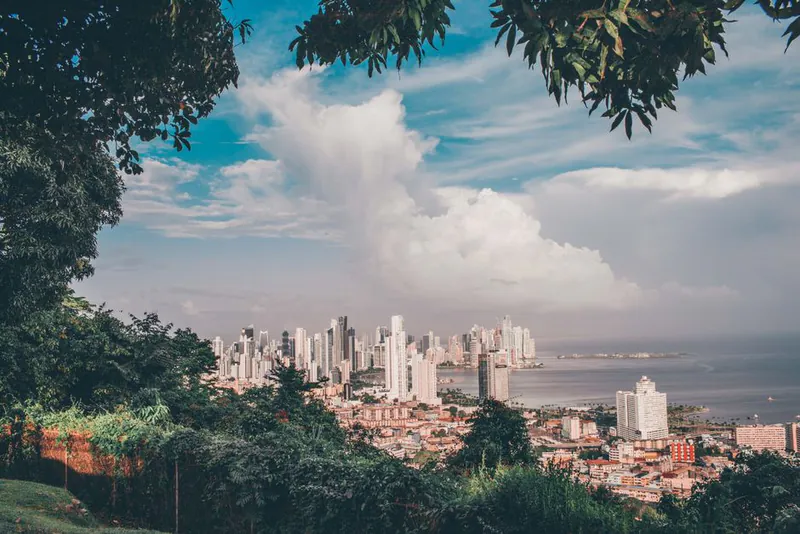
Cover photo by Luis Quintero on Pexels.
Want to see how Panama stacks up?
Are you seriously considering a move? Use our interactive tools to explore Panama's climate, tax brackets, and nomad visas.
Head-to-Head Relocation Comparisons
Compare taxes, safety, and living costs of Panama against top alternatives.