Moving to Bulgaria in 2026: 10% Flat Tax, Schengen Entry & Nomad Visa Rules
June 27, 2026
ShareBulgaria just became the EU's newest Eurozone member - and it still has the lowest flat income tax in the bloc at 10%, a dividend tax of just 5%, and a one-bedroom apartment in central Sofia for less than €600/month. The country joined the euro on 1 January 2026, eliminated currency risk for European expats overnight, and opened its first-ever Digital Nomad Visa the same week. GDP grew 3.1% in 2025 - well above the eurozone average. This is everything you need to know before you move.[1][2][3]
The Economy: Eyes Open
Bulgaria's numbers are among the most honest in Eastern Europe right now. GDP grew an estimated 3.1% in 2025, driven by strong domestic demand, record real wage growth of ~10.4% in the public sector, and accelerated absorption of EU Recovery and Resilience Facility funds. Forecasts for 2026 vary by institution - the European Commission projects 2.5%, the EBRD 2.7%, the IMF 2.8%, and the Bulgarian National Bank 3.0% - but all point the same direction: solid, above-eurozone-average growth.[4][5][6][7][1]
The weak spots are real. The government deficit reached 3.5% of GDP in 2025 and is forecast to exceed 4% in 2026, driven by social spending and public sector wages. Political instability is a running theme - Bulgaria had seven elections in three years, the government resigned in late 2025 amid anti-corruption protests, and the country operated under a bridge budget for the first part of 2026. Inflation is forecast at 4.2% in 2026, pushed up by energy prices linked to Middle East instability.[8][1]
What keeps Bulgaria at the top of the expat shortlist despite this? The structural advantages don't budge: 10% flat income tax, 5% dividend tax, Schengen membership since 2024, Eurozone membership since January 2026, and a cost base still far below Western Europe. Unemployment hit a historic low of 3.5% in 2025 - the labour market is genuinely tight. The job market is strongest in IT, shared services, manufacturing management, and multinational back-office operations, mostly centred on Sofia.[1]
Visas and Residency: What You Need to Know in 2026
EU Citizens
No visa. No work permit. You can stay freely for up to three months. After that, register at the Migration Directorate (local Ministry of Interior office) - documents must be submitted within three months of arrival, and your application is processed within 24 hours.[9][10]
You'll receive a residence certificate (laminated paper copy, issued immediately) and a personal number - Bulgaria's equivalent of a national ID number. The personal number is essential for banking, NHIF healthcare registration, and every government service. The plastic card version is issued within three days (express) or 30 days (standard service).[10]
Required documents: valid passport or national ID, proof of address (rental contract), proof of employment, self-employment, or sufficient funds.[11][9]
Non-EU Citizens
Non-EU citizens staying beyond 90 days apply for a Type D long-stay visa at a Bulgarian embassy or consulate in their home country, then convert to a residence permit at the Migration Directorate within 14 days of arrival. Processing time for the visa: budget 4-8 weeks.[12][13]
Investor residence: Non-EU foreigners who purchase property worth at least €300,000 may qualify for an extended residence permit in Bulgaria. This is not a formal Golden Visa programme but a residency-by-property pathway available under existing law.[14]
Digital Nomad Visa (launched December 2025)
Bulgaria's Digital Nomad Visa officially opened for applications on 30 December 2025 - one of the last EU countries to introduce one, but with a competitive income threshold.[15]
Who qualifies (non-EU/EEA/Swiss citizens only):[16][13]
- Remote employees of companies registered outside the EU, EEA, or Switzerland
- Owners or shareholders (>25%) of companies registered outside the EU/EEA/Switzerland
- Freelancers with at least one year of remote work experience and zero Bulgarian clients
- Minimum annual income of approximately €31,000/year (50Ã - the Bulgarian minimum monthly wage) - one of the lowest thresholds in the EU
- Valid health insurance covering Bulgaria with minimum €30,000 coverage (Schengen-compliant)
- Clean criminal record certificate from country of origin
- Proof of accommodation in Bulgaria (rental contract, hotel booking, or property ownership)
- Foreign documents translated into Bulgarian; apostilled where necessary
Process: Two-stage - first apply for a multi-entry Type D visa abroad (1-2 months), then apply for the residence permit at the Migration Directorate within 14 days of arrival. Total timeline: 2-3 months.[12][15]
Duration: 1 year, renewable once. The Digital Nomad Visa does not lead directly to permanent residence - holders typically switch to another residency category after the second year.[13][15]
Family sponsorship (spouse and children) is available after the main applicant's permit is approved.[15]
Cost of Living: The Real Numbers
Bulgaria adopted the euro on 1 January 2026 at the fixed rate of 1.95583 BGN = €1, eliminating the currency guessing game for European expats. Prices that used to be listed in lev are now in euros - which also means the psychological fog around "is this cheap- has cleared.[17][8]
A single person living comfortably in Sofia spends €1,175-€1,800/month including rent. In Plovdiv, that drops to €700-€1,200/month. Budget-conscious living in Bansko (the mountain town that has become one of Europe's best-known digital nomad spots) runs €600-€900/month all-in.[2][18]
Rent by City (2026)
| City | Studio | 1-Bedroom (Centre) | 1-Bedroom (Outside) | 2-Bedroom |
|---|---|---|---|---|
| Sofia (central) | €410-€500 | €550-€612 | €323-€437 | €600-€900 |
| Plovdiv | - | €350-€500 | €250-€350 | €400-€600 |
| Varna | - | €400-€550 | €306-€400 | €500-€700 |
| Burgas | ~€400 (studio) | €300-€450 | €200-€350 | €400-€600 |
| Bansko | - | €250-€400 | €200-€300 | €350-€500 |
Sources: WheretoemigratE, Numbeo, ExpatLife 2026
Sofia's rental market has been pushed up by the eurozone premium - prices in the best central districts have climbed significantly as euro-priced listings attract Western buyers. The rest of the country remains much more affordable.[14]
Daily Expenses
| Item | Price |
|---|---|
| Restaurant meal (inexpensive) | €5-€8 |
| Monthly public transport (Sofia Metro) | €23-€26[18] |
| Fibre internet (100-300 Mbps, monthly) | €13-€15[18] |
| Private health insurance (monthly) | €30-€80[18][22] |
| Private clinic consultation | €25-€50[22] |
| 1-litre milk | ~€1.20 |
| Coffee (espresso) | €1.50-€2.50 |
Taxes: What You Actually Pay
Residency Trigger
You become a Bulgarian tax resident - and owe tax on worldwide income - if you spend more than 183 days in Bulgaria in a calendar year, or if Bulgaria is your centre of vital interests.[13]
Income Tax Rates 2026
Bulgaria has the lowest flat personal income tax in the European Union - and it's been that way for years. No brackets. No surtaxes. Same rate whether you earn €15,000 or €200,000.[23][24]
| Tax Component | Rate |
|---|---|
| Personal income tax (flat) | 10%[25][26] |
| Dividend tax | 5% (lowest in EU)[2] |
| Capital gains tax | 10%[23] |
| VAT (standard rate) | 20%[23] |
| Employee social security | ~13.78% of gross[24] |
| Health insurance (employee) | 4.0% of gross[24] |
| Social contribution ceiling | €4,130/month gross[24] |
Source: CountryTaxCalc, TaxRavens, ExpatLife.ai 2026
There's also an annual tax-free allowance of BGN 9,600 (~€4,900). Income above that threshold is taxed at 10%.[24]
For freelancers: Registered self-employed individuals get a 25% lump-sum statutory expense deduction before PIT applies - dropping the effective rate to 7.5% of gross revenue.[24][2]
For Business Owners: The EOOD Structure
Register a Bulgarian EOOD (single-member LLC) and the company pays 10% corporate income tax on profits. Distribute those profits as dividends and pay 5% dividend tax. Combined effective rate on distributed profits: approximately 14.5%. This is one of the most competitive owner-operator tax structures in the EU - and it benefits from Eurozone membership with no currency conversion costs for euro-denominated transactions.[3][2]
US Expats
Bulgaria has a tax treaty with the United States. Americans can use Foreign Tax Credits to reduce double taxation exposure. FBAR and FATCA reporting obligations still apply - consult a dual-filer specialist before establishing Bulgarian tax residency.
Healthcare: Public vs. Private
The Public System (NHIF)
Bulgaria's national health insurance - the NHIF (National Health Insurance Fund) - covers employed residents through payroll contributions of 8% of income (split between employer and employee). EU/EEA citizens can use their EHIC card for emergency and necessary care in NHIF-contracted public facilities.[27][22]
The honest picture: Bulgaria spends only 4-5% of GDP on healthcare - the lowest or among the lowest in the EU. Public hospitals face chronic underfunding and understaffing. Most expats use the public system for emergencies and routine prescriptions, then go private for anything requiring speed or English-speaking staff.[28][27]
Emergency numbers: 112 (universal, English-speaking operators available); 150 (ambulance directly).[29]
Private Healthcare
Private care in Sofia is modern, affordable, and reliably English-speaking. Key reference points:[22][28]
- Private clinic consultation: €25-€50 at Acibadem City Clinic or Tokuda Hospital Sofia
- Private hospitalisation: €50-€100/day
- Local private insurance (Bulstrad, DZI): from €30/month
- International plans (Allianz, Cigna, Bupa): €60-€150/month
Bulgaria has become a notable medical tourism destination - particularly for dental care, cosmetic procedures, and orthopaedics, where prices are a fraction of Western European costs. Non-EU residents need proof of health insurance (minimum €30,000 coverage) for their Type D visa application.[28][22]
Outside Sofia, specialist care drops off sharply. Bansko and rural areas have very limited capacity - Sofia is effectively required for anything beyond emergency and basic care.[28]
Safety
Bulgaria's 2026 Crime Index is 35.5 - Safety Index 64.5, placing it in the low-crime tier for Eastern Europe. Safety walking alone during daylight is rated very high (85.2); safety at night is rated high (60.3).[30][31]
The main documented concern is corruption - Numbeo's corruption/bribery index for Bulgaria sits at 75.6 (high), which tracks with Bulgaria's long-running governance challenges. Violent crime, muggings, and physical attacks are rated low.[30]
Sofia's expat districts (Lozenets, Oborishte, Iztok) are quiet, well-lit, and perceived as safe. Petty theft near tourist attractions is the standard caution; no documented no-go zones exist in major cities.
English in Everyday Life
Bulgaria ranked 18th globally on the EF English Proficiency Index 2025, with a score of 594 - well above the global average of 488. Sofia scores 616; Varna scores 553.[32][33]
Young professionals in IT, finance, and multinational environments are reliably English-fluent. The gap appears at Migration Directorate offices (Bulgarian is often required), some public healthcare settings, and older service staff outside Sofia. For daily comfort in Sofia, Plovdiv, or Varna, Romanian is not required - but Cyrillic literacy makes navigating addresses, menus, and signage considerably easier.
Which City?
Sofia
The capital. Population 1.3 million, the deepest job market, every major multinational present, direct flights to 40+ European cities. Best for corporate professionals, senior tech hires, and anyone running an EU-registered company. Sofia has four metro lines, a serious coworking ecosystem, and the best private healthcare in the country.[18][28]
Best expat neighbourhoods: Lozenets and Iztok (upscale, leafy, embassy quarter, expat-favourite cafés); Oborishte (central, historic, cosmopolitan); Mladost (practical, metro access, multinational offices nearby).[18][17]
Plovdiv
Bulgaria's second city (population 350,000) and arguably its most liveable. Europe's oldest continuously inhabited city, 2019 European Capital of Culture, 20-30% cheaper than Sofia, and with a quality of life that punches above its weight. Plovdiv is the choice for digital nomads, artists, remote professionals, and budget-conscious expats who don't need corporate job access. The Old Town is walkable, café culture is strong, and €3 dinners are genuinely available.[34][18]
Varna
Bulgaria's Black Sea capital. Population ~350,000. A completely different lifestyle proposition from inland cities: beach access, maritime climate (milder winters than Sofia), growing IT cluster, and a strong rental market for investment buyers. Best for coastal living, lifestyle-focused expats, and property investors targeting tourist and long-term rental income. Direct budget airline connections to Western Europe seasonally.[35][34]
Burgas
Ranked first for best city to live in Bulgaria by several 2026 surveys. More compact than Varna, less touristy, and increasingly chosen for permanent residence over holiday-town reputation. Strong infrastructure, affordable housing, proximity to both coast and mountains. Best for families and retirees who want Black Sea life without Varna's price premium.[21][34]
Bansko
The ski resort town that became one of Europe's best-known digital nomad destinations. Population small, but with a disproportionate concentration of coworking spaces, coliving buildings, and international remote workers - especially from November through March (ski season) and June through August (hiking season). All-in living cost: €600-€900/month. Healthcare is very limited - Sofia trips required for anything specialist.[36][37][38][2][28]
City Snapshot
| City | Monthly Budget (Single) | 1-BR Rent (Centre) | Best For |
|---|---|---|---|
| Sofia | €1,175-€1,800[18] | €550-€612[19] | Corporate, tech, entrepreneurs |
| Plovdiv | €700-€1,200[18] | €350-€500[20] | Nomads, culture, budget expats |
| Varna | €765-€1,300[19] | €400-€550[19] | Coastal living, investors |
| Burgas | €650-€1,100[21] | €300-€450 | Families, retirees |
| Bansko | €600-€900[2] | €250-€400 | Digital nomads, ski/outdoor expats |
Climate: Four Real Seasons
Bulgaria has a temperate climate with strong continental influences and four distinct seasons. The Black Sea coast benefits from a maritime moderating effect; inland Sofia sits in a valley surrounded by mountains and experiences colder winters.[39][40]
| Season | Months | Sofia (°C) | Varna (°C) |
|---|---|---|---|
| Spring | March-May | 6°C to 18°C | 8°C to 20°C |
| Summer | June-August | 20°C to 30°C (peaks to 35°C+) | 22°C to 28°C[39] |
| Autumn | September-November | 8°C to 20°C | 10°C to 22°C |
| Winter | December-February | -5°C to 3°C (snaps to -15°C) | -1°C to 6°C[41][39] |
Best months to visit before committing: May-June and September-October - warm enough for outdoor activities, not peak tourist pricing, and genuinely representative of daily life.[39]
For skiers and outdoor expats: Bansko is one of Europe's most affordable ski resorts, with a full ski season from December to March. Summer transforms it into a hiking and mountain biking base.
Internet and Remote Work Infrastructure
Bulgaria's mobile internet is ranked 10th globally (May 2026, Speedtest/Ookla). Fixed broadband ranks 71st globally, with a market average download speed of approximately 90 Mbps and the leading provider (Vivacom) averaging 110 Mbps. Fibre internet in Sofia costs €13-€15/month - among the cheapest in Europe for quality broadband.[42][43][18]
Bansko has developed into a genuine coworking infrastructure hub disproportionate to its size - premium coworking spaces with gigabit fibre are available year-round. Sofia's coworking scene is concentrated in the Mladost tech park area and several central co-working buildings. Plovdiv and Varna have growing but smaller ecosystems.[38][36]
Buying Property
EU and EEA citizens can buy property in Bulgaria - including apartments and buildings - under the same conditions as Bulgarian citizens. Buying agricultural or forest land was restricted for non-Bulgarians, but a 2024 EU court ruling struck down the 5-year residency requirement for EU citizens purchasing agricultural land.[17][14]
Non-EU citizens cannot directly own land, but can own apartments freely. The workaround for land ownership is purchasing through a Bulgarian EOOD (limited liability company), which requires a minimum capital of just 2 BGN (~€1).[14]
Bulgaria's eurozone entry has already pushed prices up, particularly in Sofia and along the Black Sea coast - in some premium areas by as much as 30%. Even so, Bulgaria remains the most affordable property market among its European neighbours.[44][14]
- Sofia median asking price: €1,400-€1,700/sqm (city-wide); premium districts reach €2,500-€4,000+/sqm[17]
- National median housing price: approximately €105,000[45]
- Rural/smaller city areas: €500-€800/sqm[14]
Rental yields: Gross yields in Sofia range from 2.5-5.5% depending on location. Student-belt areas (Studentski Grad) show the strongest gross yields at up to 7.6%. Varna coastal properties (Briz district) run 4.8-5.1%. Bansko ski apartments: 6.2% net yield.[46][35][17]
Closing costs: 3-5% of purchase price total, including:
- Property transfer tax: ~2.5% (Sofia municipality; 2-3% nationally)[17]
- Notary fees: 0.4-0.8% of transaction value[17]
- Agent commission: 2-3%[17]
- Legal/translation: €500-€1,500[17]
Annual property tax is low by European standards - Sofia municipality charges approximately 0.15% of assessed value/year.[17]
Important: buying property in Bulgaria does not automatically grant residency, but purchasing at least €300,000 in property may qualify non-EU buyers for an extended residence permit.[14]
Your First 30 Days: The Checklist
- EU citizens: register at the Migration Directorate within 3 months - documents processed within 24 hours; you get your residence certificate and personal number[9][10]
- Get your personal number - required for banking, NHIF enrollment, and every government service[10]
- Open a Bulgarian bank account - bring your personal number; Fibank, DSK Bank, UniCredit Bulbank, and Revolut (available immediately) are expat-friendly
- Arrange health insurance - EU citizens can use EHIC during setup; non-EU residents need private insurance meeting the €30,000 minimum for visa compliance; after enrollment, NHIF costs 8% of income[27][22]
- Non-EU: apply for Type D visa before arrival - at a Bulgarian consulate; convert to residence permit at Migration Directorate within 14 days of entry[12][13]
- Check Digital Nomad Visa eligibility - minimum ~€31,000/year income required; currently one of the most accessible EU DNV programmes[15][12]
- Register your rental contract - required as proof of address for residence registration; confirm with your landlord before signing
- Decide on your company structure - if you're self-employed, the EOOD + dividend structure delivers an effective rate of ~14.5% on distributed profits; freelancer status gets you a 25% expense deduction[2][24]
Key Data at a Glance
| Indicator | Value |
|---|---|
| GDP Growth (2025) | 3.1%[1] |
| GDP Forecast 2026 | 2.5-3.0% (various institutions)[1][6][7] |
| Unemployment (2025) | Historic low of 3.5%[1] |
| Inflation (2026 forecast) | ~4.2%[1] |
| Personal Income Tax | 10% flat[26][23] |
| Dividend Tax | 5% (lowest in EU)[2] |
| Corporate Income Tax | 10% flat[2] |
| EOOD + Dividend Combined Rate | ~14.5%[2] |
| Eurozone Member Since | 1 January 2026[3][47] |
| Digital Nomad Visa Min. Income | ~€31,000/year[12][15] |
| EF English Proficiency Rank | 18th globally (2025)[33] |
| Numbeo Crime Index (2026) | 35.5[31] |
| Safety Index | 64.5[31] |
| Safety Walking Alone (Day) | Very High (85.2)[30] |
| Fixed Broadband Global Rank | 71st (May 2026)[43] |
| Mobile Internet Global Rank | 10th (May 2026)[43] |
| Sofia Broadband Speed | 100-300 Mbps for €13-15/mo[18] |
| Sofia Apt. Price/sqm (median) | €1,400-€1,700[17] |
| Rental Yield (Sofia, best areas) | 5.5-7.6% gross[46][17] |
| Schengen Member Since | 2024 |
Bulgaria doesn't sell itself on glamour. It sells on structure: the EU's lowest income and corporate tax, fresh Eurozone membership, 10th-ranked mobile internet, and a cost base that makes Sofia feel like Berlin in 2008. The political noise is real - but it hasn't dented the structural case. The expats arriving now are doing so with eyes wide open and bank accounts still intact.
References
- Economic forecast for Bulgaria - Economy and Finance - The latest macroeconomic forecast for Bulgaria. The European Commission publishes a full set of macr...
- Bulgaria Cost of Living Guide (2026) | ExpatLife.Ai - Bulgaria has the lowest personal income tax and lowest corporate income tax in the European Union - ...
- [PDF] 7 January 2026
- EBRD projects 2.7% economic growth for Bulgaria in 2026 - Bulgaria's real GDP growth remained robust in 2025 at an estimated 2.9%, supported by strong real wa...
- EBRD Forecasts GDP Growth Deceleration to 2.9% in Bulgaria in ... - BTAwww.bta.bg "º news "º economy "º 1072144-ebrd-forecasts-gdp-growth-dec... - Bulgaria's real GDP growth remained robust in 2025 at an estimated 2.9%, according to European Bank ...
- Bulgarian National Bank revises inflation and GDP growth ... - Тhe analysis is based on data as of March 19, 2026
- IMF Lowers Economic Growth Forecast for Bulgaria - BTA - The International Monetary Fund (IMF) has lowered its forecast for Bulgaria's economic growth in 202...
- What will joining the eurozone mean for the Bulgarian economy? - The Balkan country of 6.5 million people joined the EU in 2007 and formally began the process of joi...
- Moving to Bulgaria: Registration Guide for Expats - MoveToEU - EU/EEA citizens can register their residence at the Migration Directorate within 3 months of arrival...
- LONG-TERM RESIDENCE PERMIT
- Bulgaria Residence Permit for EU Citizens: Complete Guide (2026) - Step-by-step 2026 guide for EU citizens applying for a Bulgaria residence permit: 7-day Migration Di...
- Bulgaria has launched a digital nomad visa. Here's who ... - Euronews - Documents required include proof of accommodation in Bulgaria (e.g. A rental contract, hotel booking...
- Guide to Digital Nomad Visa in Bulgaria (2026) - MH Legal - Bulgaria's 2026 Digital Nomad Visa allows non-EU citizens to reside in the country while working rem...
- Buying Land as a Foreigner in Bulgaria (January 2026) - The latest update about buying land as a foreigner in Bulgaria. Conditions, eligibility, zones, rest...
- Bulgaria Opens Its Digital Nomad Visa in 2026 - YouTube - ... Bulgaria Digital Nomad Visa actually is "¢ Who qualifies and who does not "¢ The income requiremen...
- Bulgaria Digital Nomad Visa 2026: Requirements, Cost & Eligibility - Bulgaria digital nomad visa: who can apply, income requirements, cost, and step-by-step process for ...
- Sofia Property Investment Guide 2026 - EuroYield
- Sofia vs Plovdiv for Expats (2026) - Capital vs Cultural Capital - Sofia (€1,175-€1,800/mo) vs Plovdiv (€700-€1,200/mo) - compare rent, cost of living, internet & life...
- Bulgaria Cost of Living 2026 - Expat Data | WTE - Detailed cost of living comparison across 3 cities in Bulgaria. Rent, monthly budgets for singles an...
- Investment Property Bulgaria 2026 | Real Estate Returns Guide - Invest in Bulgarian property for returns. Rental yields, appreciation potential, and tax benefits-ma...
- The best cities to live in Bulgaria in 2026 - THE BEST CITIES TO LIVE IN BULGARIA Ranking of the TOP-5 of the best cities for immigration and resi...
- Health Insurance for Expats in Bulgaria (2025 Guide) | Compare Expat Plans - Complete guide to expat health insurance in Bulgaria. NHIF public system, Sofia private hospitals, E...
- Bulgaria Tax Guide 2026 | 10% Flat Income Tax (EU's Lowest), Sofia Tech Hub, Eurozone Candidate - Bulgaria has a 10% flat income tax - the lowest flat income tax rate in the European Union. Employee...
- Bulgaria Income Tax Calculator 2026 - 10% Flat (Lowest EU) | TaxBracketCalc.com - Calculate Bulgarian 2026 income tax at the flat 10% PIT rate, social security 13.78% employee, healt...
- Bulgaria Tax Calculator 2026: 10% Flat Tax + 5% Dividends (EU's ... - Bulgaria: 10% flat income tax + 13.78% employee social = 23.78% total burden (vs 45% Romania). €60K ...
- Bulgaria Tax 2026: Only 10% Flat Rate - What You Need to Know - Bulgaria has one of Europe's lowest tax rates - just 10% flat on all income. See how it works in 202...
- Guide to Healthcare in Bulgaria - Allianz Care - Bulgaria's public healthcare has limitations such as poor facilities, understaffing and a lack of fu...
- Bulgaria Healthcare Guide (2026) | ExpatLife.Ai - Bulgaria's public healthcare system (NHIF) is functional but underfunded - Bulgaria spends only 4-5%...
- Healthcare in Bulgaria 2026 - WhereToEmigrate - Complete guide to healthcare in Bulgaria for expats in 2026: system type, insurance, costs, emergenc...
- Crime in Bulgaria - Information about crime in Bulgaria. Shows how much people think the problem in their community are ...
- Eastern Europe: Crime Index by Country 2026 - Cost of Living
- [PDF] Bulgaria | EF English Proficiency Index
- Bulgaria | EF English Proficiency Index | EF United States - Discover the EF English Proficiency Index score for Bulgaria
- Bulgaria: Which City to Choose for Relocation in 2026 - EU citizenship - Sofia, Plovdiv, Varna, or Burgas - which Bulgarian city is best for relocation? Explore living costs...
- Rental yields in Bulgaria: Sofia and 5 other cities - What rental returns (yields) do residential investments in Bulgaria earn? Research on average income...
- Coworking Bansko | Spaces and Cafes - Nomadico - Our Bansko location is the perfect place for you to set up shop. We have beautiful rooms, a sauna in...
- Bansko Nomad Wonderland 2026: Digital Nomad Workation in ... - An epic 1-month workation experience in Bansko, Bulgaria for digital nomads & remote workers. June-J...
- Coworking Bansko - Coworking, Coliving & Team Building in Bansko - A coworking and coliving space in Bansko, Bulgaria - 64 apartments across 6 floors, with 3 floors de...
- Varna Vs. Sofia -- Climate... - Discover Bulgaria's weather and climate including seasonal temperatures, rainfall patterns, and what...
- Weather in Bulgaria - Most of Bulgaria, including Sofia and the interior regions, has a temperate continental climate typi...
- Compare Varna & Sofia Weather and Climate - Comparison of the weather and climate of Varna, Bulgaria with Sofia, Bulgaria including average year...
- [PDF] Vivacom - SpeedGeo.net - Vivacom ranked first in Bulgaria's SpeedGeo® Broadband Internet Speed Ranking for the period from. 0...
- Bulgaria's Mobile and Broadband Internet Speeds - Bulgaria ranked 10th in the world for mobile speeds and 74th for fixed broadband speeds during May 2...
- Is Bulgaria property still cheap in 2026? (Sept 2025) - Authored by the expert who managed and guided the team behind the Bulgaria Property Pack Everything ...
- Housing Prices in Bulgaria (2026) - The latest update about housing prices in Bulgaria. Prices per property type, neighborhood, per sqm,...
- Bulgaria Latest Rental Yields Data (2026) - Investropa - The latest update about rental yields in Bulgaria. Rents, rental income, vacancy, occupancy rate, et...
- Bulgaria adopts the euro - European Central Bank - The European Central Bank (ECB) is the central bank of the European Union countries which have adopt...
Frequently Asked Questions
What are the primary visa and residence options for moving to Bulgaria in 2026? Non-EU citizens staying beyond 90 days apply for a Type D long-stay visa at a Bulgarian embassy or consulate in their home country, then convert to a residence permit at the Migration Directorate within 14 days of arrival.
How does personal income tax work for expats in Bulgaria? You become a Bulgarian tax resident - and owe tax on worldwide income - if you spend more than 183 days in Bulgaria in a calendar year, or if Bulgaria is your centre of vital interests.
What is the average cost of rent and living in Bulgaria? A single person living comfortably in Sofia spends €1,175-€1,800/month including rent.
How many years of residence are required for citizenship or permanent residency in Bulgaria? The Digital Nomad Visa does not lead directly to permanent residence - holders typically switch to another residency category after the second year.
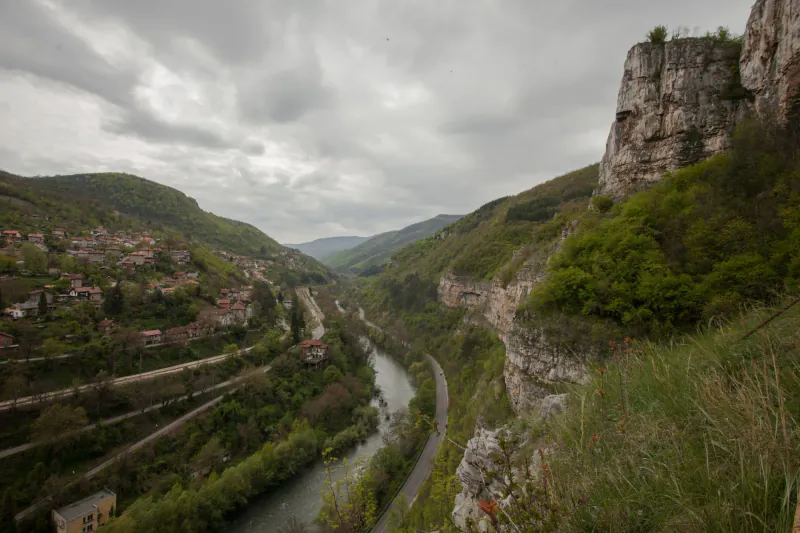
Cover photo by Rainer Eck on Pexels.
Want to see how Bulgaria stacks up?
Are you seriously considering a move? Use our interactive tools to explore Bulgaria's climate, tax brackets, and nomad visas.