Moving to Montenegro in 2026: Property Residency Cost Tripled and Shell Companies Banned
August 3, 2026
ShareMontenegro just tripled its property-residency threshold to €150,000 and raised the minimum salary tax-free allowance to the highest in Europe - €700/month - while quietly closing all 33 EU accession chapters and targeting membership around 2028. A single person lives comfortably on €1,200-1,500/month, income tax tops out at just 15%, and Podgorica's own crime index has fallen for five consecutive years running. This is everything you need to know before you move.[1][2][3][4]
The Economy: Eyes Open
Montenegro's 2026 growth outlook clusters in a genuinely narrow band, though the government's own projections run notably more optimistic than external institutions.
| Source | 2026 Forecast |
|---|---|
| Montenegrin government (Cabinet, July 2026) | 3.1%[5][1] |
| EBRD (upward revision, Feb 2026) | 3.2%[6] |
| EBRD (later revision) | 2.9%[7][8] |
| IMF | 2.8%[1][9] |
| European Commission | 2.8%[1] |
| World Bank | 2.9%[1][10] |
The government's own Macroeconomic and Fiscal Policy Guidelines project real GDP growth averaging 3.1% annually through 2029, which would compound to roughly 13% higher output over that period. Growth actually moderated to 2.7% in 2025, down from a strong 3.2% in 2024, following the closure of the Pljevlja power plant and softer tourism performance. Inflation ran at 3.1% in March 2026, driven by higher oil prices, expansionary fiscal policy, and prior strong wage growth - the government partially offset this by cutting excise duty on fuel.[7][8][1]
The EU Accession Angle
Montenegro's 2026 economic story is increasingly framed as a test of EU accession economics: all 33 accession chapters are now open and 14 provisionally closed, with the government targeting membership around 2028, though this is not yet guaranteed. Public debt is projected to rise to 68% of GDP in 2026, and the fiscal deficit sits around 3.7-4% of GDP - a genuine vulnerability given the country's limited fiscal buffers and narrow economic diversification, concentrated heavily in tourism.[9][10][2][1][7]
Visas and Residency: What Changed in 2026
Montenegro tightened its most popular residency route dramatically this year, while keeping several other paths genuinely accessible.
The 90-Day Visa-Free Baseline
Citizens of the EU, UK, US, Canada, Australia, and most Western countries can stay visa-free for up to 90 days within any 180-day period - this counts across the entire window, not per individual entry, so days must be tracked carefully. Beyond 90 days, a temporary residence permit (boravak) is required.[11]
The Standard Temporary Residence Process
| Step | Detail |
|---|---|
| Valid grounds | Property ownership, employment, family reunification, study, digital nomad status, retirement[11] |
| Core requirements | Valid passport (6+ months), proof of accommodation, health insurance, proof of financial means, clean criminal record[11] |
| Application fee | €25[11] |
| Where to apply | Local police station (MUP)[11] |
| Processing time | 30-60 days[11] |
| Permit validity | 1 year, renewable[11] |
| Path to permanent residence | After 5 years of continuous temporary residence[11] |
The Digital Nomad Route
Montenegro's digital nomad program requires remote work for a non-Montenegrin company, minimum monthly income of €3,500+, and valid health insurance - the permit runs for up to 2 years.[11]
The Big Change: Property-Based Residency Just Tripled in Cost
This is the single most important 2026 update. Since 17 January 2026, a non-EU buyer can ground a renewable one-year temporary residence permit only by owning property whose tax base is at least €150,000 - up dramatically from the previous no-minimum-threshold policy, and separately reported by other sources as a €200,000 minimum adopted in November 2025 amendments.[12][2][13]
| Detail | Requirement |
|---|---|
| Minimum property tax base (non-EU buyers) | €150,000, per Tax Authority's transfer-tax decision[2] |
| Minimum ownership share required | At least 50% of the asset[13] |
| EU/EEA/Swiss nationals | Exempt from the threshold entirely[2] |
| Existing permit holders (pre-17 Jan 2026) | Can renew without proving the new value[2] |
| Additional bank balance required | ~€3,650 in a Montenegrin account[12] |
The Shell Company Crackdown
Montenegro is now actively cracking down on shell companies used purely for residency purposes - business owners seeking to maintain a residence permit through company ownership must now employ at least three people, two of whom must be Montenegrin citizens.[12]
The Citizenship-by-Investment Program Is Closed
Montenegro's citizenship-by-investment scheme closed at the end of 2022 and has not been revived. The standard path now requires 5 years of temporary residence to qualify for permanent residence, followed by an additional 5 years before citizenship eligibility - a genuinely long 10-year minimum runway with no fast-track alternative currently available.[12]
Freelancing as an Entry Point
Registering as a sole trader (preduzetnik) offers a genuinely low-friction way to work legally in Montenegro, taxed at a flat 9% with minimal bureaucracy - a notably attractive option for remote-adjacent self-employed professionals who don't meet the digital nomad program's €3,500 threshold.[11]
Cost of Living: The Real Numbers
Montenegro delivers genuinely strong value relative to Western Europe, though estimates vary meaningfully across sources - largely because the coast runs dramatically more seasonal than the capital.
Monthly Budget Ranges by Lifestyle (2026)
| Profile | Monthly Budget (incl. Rent) |
|---|---|
| Single person, budget | €800-1,200[14][15] |
| Single person, comfortable | €1,200-1,500[14][15][16] |
| Couple, comfortable | €1,800-2,500[14][15][17] |
| Family of four (coastal) | €2,500-3,500+[15][17] |
Rent by City (1-Bedroom, City Center)
| City | Low Season | High Season (Jun-Sep) |
|---|---|---|
| Podgorica | €400-600 (stable year-round)[15][16] | €400-600 (largely unaffected)[15][16] |
| Herceg Novi | ~€580[16] | Higher, coastal seasonality applies[16] |
| Kotor | €450-700[14] | Higher, popular with visitors[16] |
| Budva | €500-800[14][15] | €800-1,200+[15][16] |
| Tivat | ~€880 (Porto Montenegro premium)[16] | Highest and most seasonal of all[16] |
| Bar | €300-450[14] | More moderate seasonal swing[18] |
The core takeaway across every source: Podgorica is the only major town that behaves the same in January as in July, while the coast can see rents jump 20-40% during peak summer as landlords pivot to short-term holiday lets.[17][16]
Everyday Costs
| Item | Monthly Cost |
|---|---|
| Utilities (electricity, water, heating) | €70-160, rising to €100-150 in winter[16][19] |
| Home internet | €25-40[14][16] |
| Mobile plan | €10-30[14][16] |
| Groceries (1 person) | €200-350[14][15] |
| Public transport | €10-12/month pass[18] |
Taxes: What You Actually Pay
Montenegro runs one of the most genuinely competitive tax regimes covered in this entire guide series, anchored by Europe's highest tax-free salary threshold.
2026 Personal Income Tax Brackets (Employment Income, Monthly)
| Monthly Gross Salary | Rate |
|---|---|
| Up to €700 | 0%[20][3][21] |
| €700.01 - €1,000 | 9% on the excess over €700[20][3][21] |
| Above €1,000 | 15% on the full gross salary[20][3][22] |
Sources consistently describe the €700 monthly exemption as the highest tax-free threshold anywhere in Europe for a euro-currency country.[3][23]
Entrepreneurial / Self-Employment Income (Annual)
Other Personal Income Categories
| Category | Rate |
|---|---|
| Dividends, capital gains, rental income, royalties, interest | 15% flat[20][21] |
| Gambling winnings up to €50 | 0%[21] |
| Gambling winnings €50.01-€1,500 | 10%[21] |
| Gambling winnings above €1,500 | 15%[21] |
The Municipal Surtax Catch
A municipal surtax applies on top of the national personal income tax amount (not on income directly) - 13% in most municipalities, 15% in Podgorica and Cetinje - pushing the effective top personal rate to roughly 16.95-17.25%.[20][24]
Other Key Rates
| Tax Category | Rate |
|---|---|
| Corporate income tax | 9-15%, progressive[25][26] |
| Standard VAT | 21%[25][26] |
| Reduced VAT rates | 15% and 7%[25] |
| Employee social security contributions | ~10.5% (pension 10%, unemployment 0.5%; health contribution abolished October 2024)[22] |
| Combined effective burden (income tax + social security, €1,000/month example) | ~30-35%[26] |
Healthcare: Public vs. Private
Montenegro runs a genuinely small, underfunded public system that most expats treat as a backstop rather than a primary care source. The Clinical Center of Montenegro (KCCG) in Podgorica handles complex cases, General Hospital Kotor serves the Bay of Kotor area, and various private clinics in Tivat and Podgorica offer faster service with English-speaking staff. A private doctor consultation runs €25-80 (~$27-87), with prices rising in coastal tourist areas during summer.[27]
The Honest Assessment
Healthcare quality can vary significantly between cities and rural areas, and serious or highly specialized procedures may genuinely require medical evacuation to Belgrade or further - a limitation worth planning around rather than discovering after the fact. The WHO Universal Health Coverage index for Montenegro sits at 70/100, with 2.8 physicians per 1,000 people. Crucially, Montenegro sits outside the EU as an accession candidate, meaning the EHIC/GHIC card does not apply - comprehensive private travel or expat health insurance covering repatriation is genuinely necessary, not optional.[28][29][30]
Emergency Numbers
| Service | Number |
|---|---|
| General emergency (all services) | 112[28][30] |
| Police | 122[28][30] |
| Fire | 123[28][30] |
| Ambulance | 124[28][30] |
Safety
Montenegro consistently posts a genuinely reassuring safety profile - multiple independent trackers converge on the same conclusion, with petty theft and road safety as the practical concerns rather than violent crime.
The National Picture
| Metric | Score |
|---|---|
| Overall Safety Score (IsItSafeToTravel, 2026) | 7.7/10, Low risk (ranked 50th of 248 countries)[31] |
| Crime sub-score (weakest category) | 5.0/10[31] |
| Governance sub-score (strongest category) | 9.9/10[31] |
| Homicide rate | 0.8 per 100,000 (UNODC)[29] |
| Robberies (Eurostat) | 5.13 per 100,000[29] |
| National Crime Index (2026, statbase.org) | 34.4, falling for 5 consecutive years[4] |
| US State Department Advisory | "Exercise normal precautions"[32] |
| Podgorica US State Dept crime threat level | LOW[32] |
City-by-City Safety Index
Note the counterintuitive pattern here: Podgorica, the capital, scores lower on this particular independent tourist-safety index than the coastal towns, despite the US State Department separately rating it a low-threat location - a reminder that different trackers weight different risk factors, and coastal resort towns often benefit from concentrated tourist-police presence that inland cities lack.[32][33]
The One Standout Concern: Corruption
Consistent with every other country in this guide series, corruption and bribery perception is the clear statistical outlier in Podgorica's Numbeo data, scoring 74.63 ("High") against otherwise low-to-moderate scores across every other crime category.[34]
Podgorica Crime Breakdown (Numbeo)
| Category | Score | Rating |
|---|---|---|
| Overall level of crime | 41.17 | Moderate[34] |
| Safety walking alone, daylight | 77.56 | High[34] |
| Safety walking alone, night | 61.01 | High[34] |
| Corruption and bribery | 74.63 | High[34] |
| Violent crime concern | 36.72 | Low[34] |
| Crime increasing over past 5 years (perception) | 63.34 | High[34] |
The Genuine Risk: Roads, Not Crime
Multiple independent sources agree on the real practical hazard: road traffic, not street crime, is the most significant safety risk for tourists and expats in Montenegro - twisting mountain roads, aggressive driving, and hairpin coastal serpentines. Organized crime does exist and occasionally surfaces in headline-grabbing incidents (concentrated in Podgorica, Bar, and Budva), but these involve disputes between criminal actors and have essentially no bearing on ordinary residents or visitors.[30][28][32]
Practical Precautions
- Use Bolt or licensed taxis and agree fares in advance rather than hailing unmarked vehicles[28]
- Drive defensively on mountain serpentines - slow down, keep lights on, never drink and drive[28]
- Protect your PIN and monitor card activity at ATMs, particularly during the May-September tourist season when theft increases[32]
- Secure valuables in crowds and never leave them visible in a parked car[30][28]
- Purchase comprehensive travel/health insurance covering repatriation, since EHIC/GHIC does not apply outside the EU[30][28]
English in Everyday Life
English proficiency runs genuinely strong in tourist-heavy coastal towns (Budva, Kotor, Tivat) and among younger, educated Montenegrins, reflecting the country's deep tourism dependence. Montenegrin (closely related to Serbo-Croatian) remains the practical default for government offices, healthcare outside private clinics, and daily life inland - though English-speaking staff are increasingly common at private medical clinics and in Podgorica's business districts.[27]
Which Region?
Podgorica
The capital offers the most stable, year-round cost of living in the country, with rents remaining largely unaffected by seasonal tourism swings - the practical choice for anyone prioritizing predictability over sea views. Safest neighborhoods for expats include City Kvart, Preko Morace, and Krusevac, all noted for reliable infrastructure and lower street crime.[16][27]
Kotor and the Bay of Kotor
Montenegro's UNESCO-listed old town, posting the highest city-level safety index in the country (79) and drawing the deepest concentration of Western expats along Dobrota, just outside the old town proper.[33][27]
Budva
The country's busiest resort town, with strong summer demand pushing rents up 60-100% between low and high season - genuinely spectacular in July, noticeably quieter come November.[15][16]
Tivat and Herceg Novi
Tivat centers on the premium Porto Montenegro marina development, commanding the highest rents in the country, while Herceg Novi (specifically the Savina area) offers a calmer, more affordable coastal alternative popular with expat families.[16][27]
Buying Property
Montenegro remains one of Europe's most genuinely accessible property markets for foreigners on built residential real estate, though the rules governing land specifically are more restrictive and just underwent meaningful clarification in 2026.
What Foreigners Can Buy Freehold, No Restrictions
Foreign individuals may purchase apartments, houses, villas, and built commercial units on freehold, on exactly the same conditions as Montenegrin citizens - with no ownership permit and no reciprocity test required of any nationality. There is also no foreign ownership quota system, meaning no cap on the percentage of units in a building that non-citizens can own.[2][12]
What Remains Off-Limits to Direct Foreign Ownership
Under Article 415 of Montenegro's Law on Ownership and Other Property Rights, foreign persons cannot directly acquire:
- Agricultural land and forest/forest land[35][36]
- Natural resources and goods in general public use[36][35]
- Cultural assets of exceptional or special importance[35][36]
- The roughly 1-kilometer border strip inland from land borders[36][35]
- Islands[35][36]
- Areas restricted on national-security grounds[36][35]
The One Narrow Exception
A foreign natural person may exceptionally acquire agricultural or forest land of up to 5,000 square meters, but only if a residential building stands on that land and the sale contract transfers the land together with that dwelling as a single package.[2][35][36]
The Company Workaround
For anything beyond that narrow exception - larger plots, islands, or border-zone land - foreign investors typically register a Montenegrin limited company (d.o.o.), which counts as a domestic entity and can hold restricted land without limitation. Foreign investors can also access restricted land through long-term lease, concession agreements, or BOT (build-operate-transfer) arrangements under the same conditions as domestic entities.[2][36]
The EU Accession Twist Worth Understanding
A 2025 amendment adds that natural and legal persons from EU member states will be able to acquire property on the same terms as domestic persons - but this provision only takes effect on the day Montenegro actually joins the EU, not before. As of mid-2026, Montenegro remains a candidate country still negotiating accession, so this provision is not yet in force for anyone. Separately, the EU has noted that Montenegro intends to maintain restrictions on real estate acquisition by third-country nationals even post-accession, exercising rights preserved under Article 64 of the TFEU with a 22 June 2009 reference date.[37][35]
The Buying Process
- Shortlist and view properties, then pay a 10% reservation deposit with a preliminary contract[12]
- Hire a lawyer to conduct due diligence and verify the cadastre extract[12]
- Sign the final sales contract at a notary office with a certified translator[12]
- Transfer the remaining payment to the seller[12]
- Pay the transfer tax within 15 days[12]
- Register ownership with the Real Estate Cadastre - this registration has constitutive effect, meaning legal ownership transfers only upon registration, regardless of when the contract was signed[36][12]
Current Price Levels (2026)
| Location | Price per m² (new residential) |
|---|---|
| National average | €2,200-2,400 (~$2,400-2,600)[27] |
| Podgorica | €2,100-2,300[27] |
| Budva / Tivat (premium coastal) | €2,600-3,200+[27] |
Your First Steps: The Checklist
- Track your 90-day visa-free window carefully - it applies across the entire 180-day period, not per individual entry[11]
- If planning residency through property, budget the new €150,000 threshold (non-EU buyers) - a genuinely major increase from the prior no-minimum-value policy, effective since 17 January 2026[2]
- Confirm you'll own at least 50% of the qualifying property if pursuing the property-based residency route[13]
- Consider the digital nomad or sole-trader (preduzetnik) routes if you don't want to buy real estate - €3,500/month income for the nomad visa, or a flat 9% tax rate for freelance registration[11]
- Budget realistically for the 10-year minimum runway to citizenship - 5 years temporary residence, then 5 more as a permanent resident, since the citizenship-by-investment program closed in 2022[12]
- Choose Podgorica if you want year-round rent stability, or accept a 20-40% summer premium if settling on the coast[17][16]
- Understand Europe's highest tax-free salary threshold works in your favor: the first €700/month is untaxed, with a top marginal rate of just 15% (plus municipal surtax)[20][3]
- Arrange comprehensive private health insurance with repatriation coverage - Montenegro sits outside the EU, so EHIC/GHIC does not apply, and serious cases may require evacuation to Belgrade[29][28]
- Treat road safety, not crime, as your primary practical risk - mountain roads and coastal serpentines pose more real danger than street crime[28][30]
- If buying land beyond the narrow 5,000m² house-plus-land exception, plan to register a Montenegrin company (d.o.o.) as the practical workaround for agricultural, forest, island, or border-zone parcels[2][36]
Key Data at a Glance
| Indicator | Value |
|---|---|
| GDP Growth Forecast 2026 (government) | 3.1%[5][1] |
| GDP Growth Forecast 2026 (IMF/EC) | 2.8%[1][9] |
| GDP Growth 2025 (actual) | 2.7%[7][8] |
| Public Debt 2026 (projected) | 68% of GDP[1] |
| Visa-Free Stay Limit | 90 days within any 180-day period[11] |
| Property Residency Threshold (non-EU, since Jan 2026) | €150,000 tax base, 50%+ ownership[2][13] |
| Digital Nomad Visa Minimum Income | €3,500/month[11] |
| Sole Trader (preduzetnik) Flat Tax | 9%[11] |
| Years to Permanent Residence | 5 years continuous temporary residence[11] |
| Years to Citizenship (total) | 10 years (5+5)[12] |
| Citizenship by Investment | Closed since end of 2022[12] |
| Tax-Free Monthly Salary Threshold | €700 (highest in Europe)[3][23] |
| Top Personal Income Tax Rate (effective, incl. Surtax) | ~16.95-17.25%[20][24] |
| Flat Rate on Dividends/Capital Gains/Rental | 15%[20][21] |
| Corporate Tax | 9-15%[25][26] |
| VAT | 21%[25][26] |
| Single Person Comfortable Monthly Budget | €1,200-1,500[14][15] |
| Foreign Land Ownership | Banned (agricultural, forest, border zone, islands), narrow 5,000m² house-plus-land exception[35][36] |
| Homicide Rate | 0.8 per 100,000[29] |
| National Crime Index 2026 | 34.4, falling 5 consecutive years[4] |
| Podgorica Corruption Perception (Numbeo) | 74.63, High[34] |
| US State Department Advisory | Normal precautions[32] |
| EU Accession Target | ~2028 (not guaranteed)[9] |
Montenegro in 2026 rewards those drawn to Europe's most tax-friendly euro-currency country and a genuinely relaxed, low-violent-crime lifestyle, while requiring a clear-eyed read of a residency system that just raised its property bar substantially and a healthcare system that works well for routine care but demands real insurance planning for anything serious.
References
Montenegro targets 3.1% growth through 2029 as public ... - Montenegro expects its economy to expand by an average of 3.1 per cent a year between 2026 and 2029,...
Can Foreigners Buy Property in Montenegro? 2026 - Yes. Foreigners buy homes and urban land freehold on the same terms as citizens; land needs a compan...
Personal Income Tax 2026 - Montenegro - Progressive taxation system with automatic tax-free threshold of €700 for salaries and €8,400 for en...
Crime index by country | Montenegro (2012−2026) - Official data of Montenegro for all available years in an easy-to-read format. Crime index by countr...
Press release from the 135th Cabinet session - The Montenegrin Cabinet held its 135th session, chaired by Deputy
EBRD revises upward Montenegro economic growth outlook amid ... - The European Bank for Reconstruction and Development (EBRD) has raised its forecast for Montenegro’s...
Montenegro's 2026 forecast becomes a test of EU accession economics - Montenegro’s 2026 forecast is increasingly becoming a test of whether EU accession momentum can tran...
Property Foreign Ownership Montenegro (2026) - What can foreigners own and buy in Montenegro? We study property rights, visas, buying process, taxe...
Montenegro Revamps Residency-By-Property Framework - Montenegro has officially revised its residency-by-property framework. Since January 2026, foreign n...
Cost of Living in Montenegro: 2026 Guide - Complete guide to cost of living in Montenegro. Monthly expenses, rent prices, utilities, and lifest...
Cost of Living in Montenegro 2026: What Expats Actually Spend ... - What foreigners actually spend in Montenegro in 2026 - real rent, food, tax, and hidden costs by cit...
Cost of living in Montenegro: a 2026 budget guide - How much does it cost to live in Montenegro in 2026? Rough monthly budgets, rents by city and a digi...
Cost of living in Montenegro in 2026 in dollars and euros - Find out the cost of living in Montenegro in 2026: rent, food, transport, healthcare, internet and l...
Cost of Living in Montenegro 2025 - Complete Expat Guide - Cost of living in Montenegro: CoL index 44.0 (NYC=100), 56% cheaper than New York. Budget from $880/...
Montenegro Tax Guide 2026: Low Rates, Euro & Residency - Montenegro tax guide for 2026: 9-15% income tax, 9-15% corporate, 21% VAT, light social security, no...
Montenegro - Individual - Taxes on personal income - Personal income tax (PIT) rates · Earnings up to EUR 8,400 are subject to 0% tax. · Earnings from EU...
Montenegro Tax Calculator 2026: 0-15% Progressive Tax - Montenegro: 0% tax on €700/month, 9% on €701-1,000, 15% above €1,000. Dividends 15%. Employee social...
Montenegro - Sebastian Sauerborn - Montenegro's 9-15% progressive income tax and €700 monthly allowance are the lowest in Europe for a ...
Montenegro Tax Rates 2026: Income, Corporate, VAT - TaxGlass - Montenegro: 15% top income tax, 15% corporate, 21% VAT. Sources and brackets, updated 2026.
Main Taxes in Montenegro in 2026: Corporate Tax, Personal ...
Tax Rates in Montenegro for Expats 2026 - Income, Corporate & VAT - Montenegro income tax 21% (top rate), corporate 9%, VAT 21%. EU candidate, lowest corporate tax in E...
What Kind Of Foreigners... - Moving to Montenegro? Cost of living, monthly budget, schools, hospitals, visas, etc.
Is Montenegro Safe? A Practical 2026 Safety Guide - Is Montenegro safe in 2026? An honest look at crime, solo and female travel, driving risks, natural ...
Montenegro Relocation Guide 2026 - WhereNext - Living in Montenegro: $1,200/mo cost of living, ranked #57/95 overall. Strongest in lifestyle & safe...
Is Montenegro Safe? 2026 Honest Safety Guide for Tourists - Montenegro is generally safe for tourists. Low violent crime, but road traffic is the main risk. Hon...
Is Montenegro Safe? 7.7/10 Safety Score (2026) | IsItSafeToTravel - Montenegro safety score: 7.7/10 (Low risk). Top concern: crime (5.0). Best: governance (9.9). Free d...
Montenegro Country Security Report - Travel Advisory - OSAC - OSAC is a partnership between the U.S. State Department and private-sector security community that e...
Is Budva Safe for Travel RIGHT NOW? (2026 Safety Rating) - Budva is Montenegro’s best-known beach town, sitting on the Adriatic coast between dramatic mountain...
Buying Land in Montenegro: Zoning, Cadastre & Foreign ... - Can foreigners buy land in Montenegro? A local lawyer explains Article 415 restrictions, zoning (UTU...
Frequently Asked Questions
What are the primary visa and residence options for moving to Montenegro in 2026? Beyond 90 days, a temporary residence permit (boravak) is required.
How does personal income tax work for expats in Montenegro? A municipal surtax applies on top of the national personal income tax amount (not on income directly) - 13% in most municipalities, 15% in Podgorica and Cetinje - pushing the effective top personal rate to roughly 16.95-17.25%.
What is the average cost of rent and living in Montenegro? The core takeaway across every source: Podgorica is the only major town that behaves the same in January as in July, while the coast can see rents jump 20-40% during peak summer as landlords pivot to short-term holiday lets.
How many years of residence are required for citizenship or permanent residency in Montenegro? The standard path now requires 5 years of temporary residence to qualify for permanent residence, followed by an additional 5 years before citizenship eligibility - a genuinely long 10-year minimum runway with no fast-track alternative currently available.
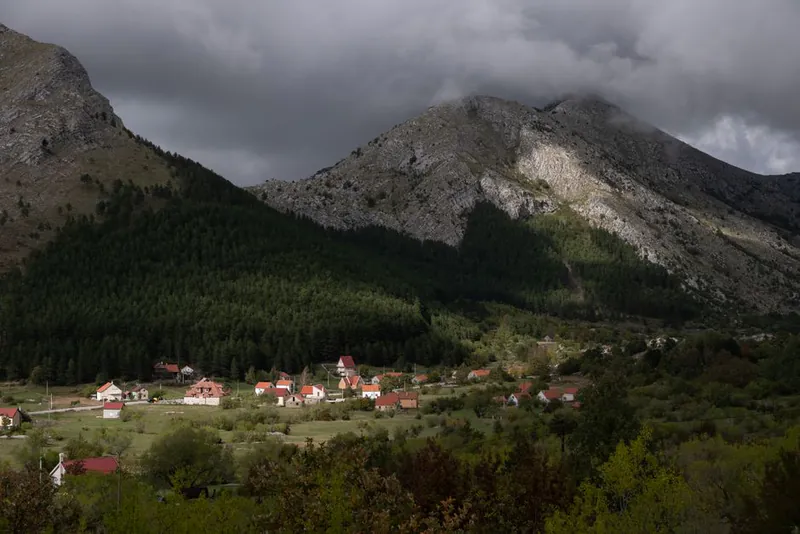
Cover photo by Anastasia Prideina on Pexels.
Want to see how Montenegro stacks up?
Are you seriously considering a move? Use our interactive tools to explore Montenegro's climate, tax brackets, and nomad visas.
Head-to-Head Relocation Comparisons
Compare taxes, safety, and living costs of Montenegro against top alternatives.