Moving to Mexico in 2026: CDMX vs Mérida, Temporary Residency UMA Rules, and Expat Costs
August 25, 2026
ShareMexico City and Mérida sit roughly 800 miles apart, run the same visa system and the same tax code - and yet Numbeo's crime data shows Mexico City's nighttime walking safety score at a grim 23, "Low," while Mérida sits at 80, "High." That's not a rounding difference; it's two entirely different countries wearing the same passport stamp. Mexico in 2026 is genuinely the most-requested and least-uniform expat destination covered in this series: a stagnating national economy squeezed by US trade friction, one of the most workable long-term residency visas in Latin America, and a country where your safety, cost of living, and quality of life depend almost entirely on which of its wildly different regions you choose.
The Economy: Barely Growing, With Forecasts Ranging From Contraction to 2.8%
Mexico's 2026 growth outlook is the widest, most contradictory forecast spread of any country in this guide series - and the divergence itself tells you something important about the underlying uncertainty.
The Reuters poll of 32 economists, published July 2026, cut the median 2026 GDP forecast to just 1.1%, down from 1.5% in the April survey, with concerns "over trade rules with the United States" cited as the primary driver, following anemic growth of just 0.5% in 2025[1]. Mexico's own central bank, Banxico, raised its forecast to 1.6% in February, up from an earlier 1.1% call, citing "stronger-than-anticipated results" in late 2025, though a deputy governor separately flagged growth "still below the historical average"[2][3]. The OECD's February 2026 Economic Survey projects 1.4% growth, up slightly from its December call of 1.2%[4]. BBVA Research upgraded its own forecast to 1.8% in March, "supported by the sustained resilience of consumption," while flagging that "formal employment begins to improve" only gradually after a weak 2025[5].
Mexico's own finance ministry has maintained an unusually optimistic 1.8-2.8% range throughout the year, even after Q1 data showed the economy had likely contracted 0.8% - officials insisted in July that the economy "would have to contract in the second half of the year to miss a baseline of 1.5% growth," a defense that reads as notably more bullish than outside forecasters[6][7]. Citi's survey of 35 banks found a median 1.3% forecast, with individual bank estimates ranging from Banorte's optimistic 1.8% down to Scotiabank México's gloomy 0.6%[8]. Inflation forecasts cluster more tightly around 4% by year-end 2026, with the policy rate expected to fall to roughly 6.50% after further rate cuts[8]. The consistent throughline across nearly every source: US trade policy uncertainty, not domestic weakness, is the dominant risk overhanging Mexico's 2026 outlook.
Visas: One of Latin America's Strongest Long-Term Residency Pathways, With Genuinely Confusing Numbers
Mexico's Residente Temporal (Temporary Resident) visa, built on Article 52 of the Ley de Migración, is widely regarded as one of the most workable long-term residency routes in Latin America - a 4-year path to permanent residency with no minimum physical-presence requirement - but sources diverge meaningfully on the exact 2026 income threshold, and that gap is worth flagging directly.
- Income path: sources cite figures ranging from ~$4,400/month (680× UMA) to ~$5,400/month (300× UMA), verified via 6 months of bank statements - a genuinely wide spread reflecting the fact that the government shifted its calculation basis from daily minimum wage to UMA in mid-2025, and different sources have updated at different speeds[9][10][11]
- Savings path: figures range from ~$74,000 to ~$216,000 in average balance over the preceding 12 months, again reflecting the same calculation-basis discrepancy across sources[9][10]
- Consulate-shopping is real and legal: thresholds vary meaningfully by consulate - Houston has historically run more lenient (accepting cases at $3,500-4,500/month), while San Diego applies the stricter end of the range[10]
- Alternative qualifying routes beyond economic solvency: real estate ownership ($226,000-432,000 minimum), Mexican investment ($113,000+), family unity with a Mexican citizen or permanent resident, a formal work offer, or student enrollment[11]
- You cannot apply from inside Mexico - the visa must be obtained at a Mexican consulate abroad before travel[10][9]
- Consulate visa fee: roughly $48-56 USD, paid at the consulate[10][9]
- The canje (visa-to-card conversion) is mandatory within 30 days of entry at your local INM office, costing roughly MXN 6,224 (~$280 USD) for the residence card[11][10]
- Timeline: 1-year initial permit, renewable to a 4-year cumulative cycle, then automatic eligibility for Permanent Residency (Residente Permanente); Mexican citizenship becomes available after 5 years of continuous residence[11]
- No annual physical-presence minimum applies to maintain the residence permit - a genuinely rare and valuable feature compared to many countries' residency programs[11]
- Family applicants: each added dependent raises the income threshold by roughly 50% (or savings threshold by 25%); spouses, minor children, and dependent parents all qualify under Unidad Familiar[9][10]
Taxes: A Steep Progressive Ladder, With Residency Defined by Center of Vital Interests
Mexico's 2026 individual income tax structure carried forward largely unchanged, taxing residents on worldwide income through an 11-bracket progressive system that climbs steeply once you clear the entry brackets.
| Threshold (MXN, annual) | Marginal Rate |
|---|---|
| 0 | 1.9% |
| 10,135 | 6.4% |
| 86,022 | 10.9% |
| 151,176 | 16% |
| 175,736 | 17.9% |
| 210,404 | 21.4% |
| 424,354 | 23.5% |
| 668,840 | 30% |
| 1,276,926 | 32% |
| 1,702,568 | 34% |
| 5,107,704 | 35% (top rate) |
(Source:[12], citing PWC Worldwide Tax Summaries as of January 2026)
Tax residency hinges on a specific "center of vital interests" test: you're a resident if you establish a home in Mexico, or, if you also maintain a home elsewhere, if more than 50% of your income comes from Mexican sources or Mexico is the primary location of your professional activity[12]. Residents whose only income is compensation are exempt from filing if it doesn't exceed MXN 400,000/year (subject to conditions), and joint returns aren't permitted - though a married couple can have the higher earner report all investment income[12].
| Other Tax | Rate |
|---|---|
| Corporate income tax | 30%[12] |
| VAT (IVA) | 16% standard[12] |
| Non-resident individuals | Separate schedule applied only to Mexican-source income[12] |
A useful planning note for American expats specifically: Mexico's residency structure "interacts cleanly" with the US Foreign Earned Income Exclusion, with roughly $130,000 of foreign-earned income excludable in 2026 for those passing the Physical Presence Test, and Temporary Residence Visa holders staying a full year "qualify cleanly"[10].
Cost of Living: Playa del Carmen's Numbers Swing Wildly Depending on Which Guide You Trust
Playa del Carmen produces some of the most inconsistent cost-of-living figures in this entire guide series - a genuine warning sign that "average cost" claims for beach-town Mexico need heavy discounting until you know exactly which neighborhood a source is describing.
Rent (1-Bedroom, Playa del Carmen, 2026)
| Zone | Range (USD/month) | Sources |
|---|---|---|
| Local/inland (Colosio, Ejidal) | $400-800/mo | [13][14][15] |
| Central/near beach (5th Avenue) | $700-1,400/mo | [13][16][17] |
| Playacar (gated, premium) | $1,200-4,000+/mo | [17][18][15] |
| National average (Nomads.com) | $1,001/mo | [19] |
Monthly Budget Estimates (Single Person, All-In, 2026)
| Source | Modest | Comfortable | Premium |
|---|---|---|---|
| TheLatinvestor / Rio Times | $1,700-2,200/mo | $2,500-3,600/mo | $4,400-6,700/mo[16][17] |
| The Mexico Handbook | $1,280/mo | $2,560/mo | $5,600+/mo[15] |
| VentasPlaya | $1,200/mo | $1,800/mo | $3,500+/mo[18] |
| Nomads.com | - | $2,032/mo (expat) | $2,707/mo (nomad)[19] |
| CostLiving.net | - | $2,525/mo | -[20] |
Despite the spread, a realistic center of gravity sits around $1,800-2,600/month for a comfortable single-person lifestyle, with the wide variance driven almost entirely by proximity to 5th Avenue and beachfront zones, which are "priced at tourism-market levels rather than local Mexican rates"[16]. Summer air conditioning is the single biggest budget wildcard on the coast, with electricity bills swinging from $60/month with strict management up to $150-300/month at moderate-to-heavy AC use[15][18]. A family of four should plan $4,000-6,500/month on the Riviera Maya, meaningfully more than in inland cities like Mexico City or Mérida[13][19].
Healthcare: A Genuine Three-Tier System, With One Route Closed to Most Newcomers
Mexico's healthcare system for foreigners runs on three realistic tiers, and understanding which one you actually qualify for - versus which one guides mention in passing - matters more here than almost anywhere else in this series.
| Tier | Eligibility | Annual Cost (2026) | Coverage |
|---|---|---|---|
| IMSS (formal employment) | Formal-sector employees | ~2% of salary (employee share); employer pays ~20.4% | Full IMSS network, automatic via employer[21] |
| IMSS Voluntario (Modalidad 33) | Must hold Residente Temporal or Permanente + CURP; tourist FMM holders cannot enroll | MXN 9,300-14,850/year depending on age (2026 schedule, effective March 1) | Primary care, hospitalization, surgery, maternity, most prescriptions; excludes dental, eye care, elective/cosmetic surgery, medical evacuation[22][21] |
| IMSS-Bienestar | Anyone with a CURP, regardless of residency status | Free | Free at point of care, no premiums/copays/deductibles; long wait times, limited English-speaking staff, quality varies by region[22][21] |
| Private insurance | Anyone who can pay | $80-500+/month depending on age and coverage; ~$5,485/year average comprehensive plan for an individual (2024 data) | Hospital ABC, Médica Sur, Star Médica, Hospital Ángeles; short waits, English-speaking staff common, pre-existing conditions often excluded or surcharged[22][21] |
The single most important eligibility fact many first-time expats miss: tourists on an FMM entry stamp cannot enroll in IMSS Voluntario at all - you need legal residency (Residente Temporal or Permanente) plus a CURP first[22]. IMSS-Bienestar (which absorbed INSABI's functions after INSABI was dissolved by decree effective May 30, 2023) is technically open to anyone with a CURP, but has "limited practical value" for expats given long waits and inconsistent regional quality[22][21]. Most long-term expats settle on a hybrid: basic IMSS Voluntario coverage plus an international policy for serious illness or medical evacuation, since IMSS explicitly excludes evacuation and most elective procedures[21]. On the coast specifically, cash-pay private clinic visits with English-speaking doctors run notably cheap - roughly $30-50 USD out-of-pocket in Playa del Carmen[15].
Safety: Mexico City and Mérida Are Practically Different Countries
This is the single most decision-critical section in this guide, because the safety gap between Mexico's most common expat landing spots isn't subtle - it's one of the widest documented in this entire series, and it should shape your city choice more than cost or climate.
| City | Numbeo Crime Index | Numbeo Safety Index | Level |
|---|---|---|---|
| Mexico City | 67.0-67.1 | 33.0-33.0 | Poor[23] |
| Mérida | 24.2-24.4 | 75.6-75.8 | Very High[24] |
Mexico City's safety walking alone at night rates a "Low" 23.1, while Mérida's equivalent score is a "High" 79.6-79.8 - a 56-point gap between two cities in the same country, and one of the starkest disparities documented anywhere in this guide series[23]. Daytime walking safety shows the same pattern at a smaller scale: Mexico City rates a moderate 51.4, while Mérida rates a "Very High" 91.9-92.0[24]. Independent Russian-language crime-tracking source Statbase corroborates the trend from Mérida's side specifically, showing the city's crime index has fallen for three consecutive years to 23.7 in 2026, categorized as "very low" on a scale where anything under 20 is the lowest band and 20-40 is "low"[25]. Mérida's reputation as one of the safest cities in Latin America, not just Mexico, is a genuinely consistent thread across both English- and non-English-language sources reviewed here. Mexico City's numbers, by contrast, reflect the reality that most sources treating "Mexico" as a single safety story are averaging across a country with genuinely enormous internal variance - a pattern echoed in nearly every country covered in this series so far.
Which Region?
Mérida and the Yucatán - the clear safety leader by a wide margin, with a lower cost of living than the coast, a large and well-established expat community, and a climate that runs hot but drier than the Caribbean coast.
Playa del Carmen and the Riviera Maya - the most tourism-priced region covered here, with genuinely strong healthcare access and English-speaking staff at coastal private clinics, but rent and dining costs that can rival coastal Florida in premium zones like Playacar.
Mexico City - the country's economic and cultural center, with the deepest job market, healthcare infrastructure, and international connectivity, but a materially worse safety profile than either Mérida or the Yucatán coast, and higher-altitude climate adjustment for new arrivals.
First Moves After Landing
- Apply for the Residente Temporal visa at a consulate abroad before travel - you cannot start the process from inside Mexico, and consulate-shopping between Houston, San Diego, or other locations is legal and can meaningfully affect your approval odds[10]
- Complete the canje (visa-to-card conversion) within 30 days of entering Mexico at your local INM office - missing this deadline is the most common DIY failure point[10]
- Get your CURP registered immediately after your canje - it's required for IMSS Voluntario enrollment, banking, and most formal transactions[22]
- Enroll in IMSS Voluntario as soon as you have residency and a CURP - tourist-stamp holders cannot access this tier at all, so timing your enrollment right after the canje matters[22]
- Layer international private insurance on top of IMSS if you want medical evacuation coverage or elective procedures - IMSS explicitly excludes both[22]
- Weight your city choice heavily on the safety data specifically - Mexico City's cultural and economic advantages come with a dramatically worse safety profile than Mérida's[23]
- If settling on the Riviera Maya, budget conservatively for summer electricity - AC-heavy usage can push bills well above the low-season baseline[18]
Key Data at a Glance
| Indicator | Value |
|---|---|
| GDP Growth 2026 (range across forecasts) | 1.1%-2.8%[1][7] |
| Inflation 2026 (year-end target) | ~4.0%[8] |
| Policy Rate (year-end target) | ~6.50%[8] |
| Residente Temporal Income Threshold | $4,400-5,400/month (source variance on UMA calculation basis)[9][10] |
| Residente Temporal Savings Threshold | $74,000-216,000 (source variance)[9][10] |
| Path to Permanent Residency | 4 years cumulative on Temporary Resident status[11] |
| Path to Citizenship | 5 years continuous residence[11] |
| Top Personal Income Tax Rate | 35% (above MXN 5.1 million/year)[12] |
| Corporate Tax Rate | 30%[12] |
| VAT (IVA) | 16%[12] |
| Playa del Carmen Single-Person Budget | $1,800-2,600/month (comfortable)[16][20] |
| IMSS Voluntario (2026 annual fee, under 40) | MXN 9,300-12,350/year[22] |
| IMSS-Bienestar | Free, open to anyone with a CURP[22] |
| Private Insurance (individual, comprehensive) | ~$5,485/year average (2024 data)[22] |
| Mexico City Numbeo Safety Index | 33.0, Poor[23] |
| Mérida Numbeo Safety Index | 75.6-75.8, Very High[24] |
| Official Language | Spanish |
Mexico's honest pitch for 2026 is one of Latin America's most workable long-term residency pathways, a genuinely flexible three-tier healthcare system, and living costs that stay reasonable outside the tourist-priced coastal strips - set against a national economy hostage to US trade policy uncertainty, visa income thresholds that different sources genuinely can't agree on, and a safety gap between its cities so wide that Mexico City and Mérida barely qualify as the same country on paper.
References
[2] WSJ
[3] Mexican economy to grow by 1.1 pct in 2026: central bank official-Xinhua - Mexican economy to grow by 1.1 pct in 2026: central bank official-
[5] Mexico Economic Outlook. March 2026 | BBVA Research - We upgraded our 2026 GDP growth forecast to 1.8% (1.2% previously), supported by the sustained resilience of consumption and the anticipated gradual r...
[8] Mexico News Daily/Citi Survey
[9] Mexico Temporary Resident Visa Requirements - 2026 · Relocate Nomad - Income thresholds, document checklist, and consulate-specific quirks for the Mexico Temporary Resident visa used by digital nomads in 2026.
[10] Nomad Compass Hub
[11] Mexico Temporary Residency Visa: A 2026 Guide - Mexico Temporary Residency: 4,541 dollar income test or 75,617 dollar savings test. One year permit, four year cycle to permanent residency, five to.
[12] Mexico Tax Rates 2026: Income, Corporate, VAT - TaxGlass - Mexico: 35% top income tax, 30% corporate, 16% VAT, 10% capital gains, 0% wealth. Sourced and dated 2026. Free calculator.
[13] Cost of Living in Playa del Carmen 2026: Rent, Budget & Prices - Playa del Carmen costs $1,400-$2,500 (MXN 23,800-42,500)/month for a single expat. Rent from $900-$1,400 (MXN 15,300-23,800). Groceries $200-$300 (MXN...
[14] Playa del Carmen Cost of Living 2026 - Real Numbers for Expats and Long-Term Visitors - The real cost of living in Playa del Carmen in 2026 - rent, food, transport, healthcare, and utilities, with honest numbers for every budget level.
[15] Cost of Living in Playa del Carmen: Living Costs in 2026 - Mexico Handbook - Playa del Carmen in 2026 is no longer a sleepy fishing village, nor is it merely a backpacker stopover. It is a mature, rapidly growing, and heavily
[16] Playa del Carmen: The Expat Guide Updated (2026) - TheLatinvestor - Moving to Playa del Carmen? Cost of living, monthly budget, schools, hospitals, visas, etc.
[17] Living in Playa del Carmen: The 2026 Expat Guide | The Rio Times - Living in Playa del Carmen in 2026: cost of living, best neighbourhoods, safety, sargassum season, internet, and residency for expats and digital noma...
[18] Cost of Living in Playa del Carmen 2026 - A Real Guide with Numbers - Cost of living in Playa del Carmen 2026 with real numbers in pesos and dollars: rent by area, monthly breakdown of utilities, 3 budget profiles, and a...
[19] Cost of Living in Playa del Carmen in Aug 2026 - The Cost of Living in Playa del Carmen is high. A single person costs: $2,372 per month. A family costs: $4,888 per month. A single traveler costs: $3...
[20] Cost of Living in Playa del Carmen (2026) | CostLiving - Playa del Carmen cost of living: $2,525/month moderate lifestyle. Rent, food, transport breakdown for expats and remote workers.
[21] Healthcare in Mexico 2026: IMSS, Bienestar & Private | Tolatam - Complete guide to Mexico
[22] Mexico Healthcare for Foreigners: IMSS vs Private (2026) - How IMSS, IMSS-Bienestar (formerly INSABI), and private insurance work for foreigners in Mexico in 2026, with current fees, eligibility, and pitfalls.
[23] Crime Comparison Between Mexico City, Mexico And Merida, Mexico. Safety Comparison.
[24] Crime Comparison Between Merida, Mexico And Mexico City, Mexico. Safety Comparison.
[25] Индекс преступности, по городам | Мерида, Мексика. Данные по годам - Таблица и график индекса преступности по городам - Мерида, Мексика. Полный набор статистических данных с 2012 по 2026 годы из официального источника. ...
Frequently Asked Questions
What are the primary visa and residence options for moving to Mexico in 2026? Residents whose only income is compensation are exempt from filing if it doesn't exceed MXN 400,000/year (subject to conditions), and joint returns aren't permitted - though a married couple can have the higher earner report all investment income.
How does personal income tax work for expats in Mexico? Mexico's 2026 individual income tax structure carried forward largely unchanged, taxing residents on worldwide income through an 11-bracket progressive system that climbs steeply once you clear the entry brackets.
What is the average cost of rent and living in Mexico? Summer air conditioning is the single biggest budget wildcard on the coast, with electricity bills swinging from $60/month with strict management up to $150-300/month at moderate-to-heavy AC use.
How many years of residence are required for citizenship or permanent residency in Mexico? Residents whose only income is compensation are exempt from filing if it doesn't exceed MXN 400,000/year (subject to conditions), and joint returns aren't permitted - though a married couple can have the higher earner report all investment income.
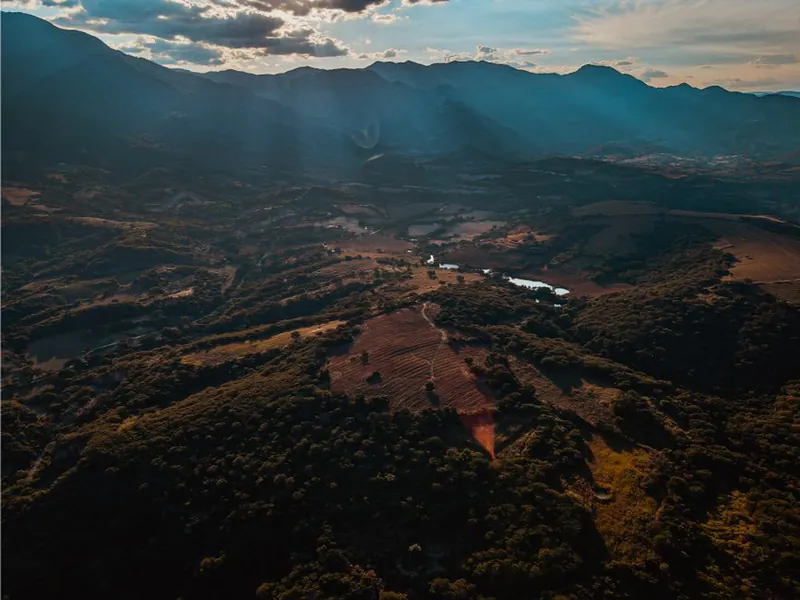
Cover photo by Nacho Guillén on Pexels.
Want to see how Mexico stacks up?
Are you seriously considering a move? Use our interactive tools to explore Mexico's climate, tax brackets, and nomad visas.
Head-to-Head Relocation Comparisons
Compare taxes, safety, and living costs of Mexico against top alternatives.