
Japan Digital Nomad Visa 2026: Requirements, Costs, Process, and What Nobody Tells You
July 7, 2026
ShareIf your annual income falls even one yen short of ¥10,000,000, do not bother applying. Japan’s Digital Nomad Visa (DNV) is a high-barrier "Super-Tourist" status designed to extract foreign capital without offering a shred of social integration [1, 3]. Launched on April 1, 2024, and tightened by the Takaichi administration in 2026, this visa is a strategic tool for importing purchasing power while keeping professionals at arm's length [1, 7].
The administrative reality is a sharp contrast to the 90-day tourist waiver. While tourists are largely ignored, DNV holders are tracked with precision. Under the 2026 JESTA (Japan Electronic System for Travel Authorization) protocols, travelers from 71 visa-exempt countries must now undergo mandatory pre-clearance to ensure they aren't attempting to bypass the ¥10,000,000 floor [7]. This is an elite filter, not a residency path [4].
Ignoring the "non-renewable" nature of this status is professional suicide. You are permitted to stay for a maximum of 180 days [9]. Once that clock hits zero, you must leave. There is no extension, no "bridging visa," and no legal recourse to stay [13]. This is a consumption trap. Before you sacrifice your time to Japanese bureaucracy, understand the legal cage you are entering.
The Japanese government maintains control by classifying this visa as "Specified Visa: Designated Activities" [8]. It is a legally narrow category administered by the Ministry of Foreign Affairs (MOFA) and the Immigration Services Agency to ensure you do not compete with the domestic labor market [7]. Primary applicants fall under "Notification No. 53," while spouses and children are relegated to "Notification No. 54" [9].
This status is strictly for remote workers providing services to foreign entities. The "Who Qualifies" list is limited to:
- IT and software developers [11].
- Digital designers [11].
- Online secretaries [11].
- Sole proprietors managing foreign companies [11].
This status does not issue a Zairyu Card (Residence Card), which is the functional key to Japanese society [4]. Because you lack this card, the government treats you as a long-term guest rather than a resident [3]. If you are caught providing services to a Japanese client, you risk three years of imprisonment or a fine of ¥3,000,000 [12]. The six-month gap required between stays is a deliberate "reset button" to prevent nomads from establishing a "center of life" in Japan [7, 12].
The income floor of ¥10,000,000 (roughly 65,000-70,000 USD) is a filter for elite human capital [11]. This distinguishes Japan from lower-barrier neighbors like Thailand and ensures you won't rely on their public infrastructure [7].
| Criteria | Specification | Source |
|---|---|---|
| Minimum Income | ¥10,000,000 individual annual earnings | [11] |
| Health Insurance | Coverage of ¥10,000,000 minimum | [11, 13] |
| Nationality | Citizen of 51 specific jurisdictions | [11] |
| Work Scope | Foreign clients only (No Japanese entities) | [12] |
| Stay Limit | 180 days (Non-renewable) | [13] |
The income requirement is based strictly on individual earnings; household totals are irrelevant [7]. Regarding crypto and passive income, the rules are rigid: you must prove your work is in the field of IT or communication technology [11]. A "safe" application requires contracts or tax certificates that explicitly link your income to these digital fields [11, 20].
Japanese consulates are relics of a "physical-first" philosophy. They demand the administrative "certainty" of wet ink, rejecting digital convenience for the sake of their paper-based files [13]. The Chicago Consulate specifications are the gold standard; anything else is a waste of postage [13].
The Phone Number Workaround: The "Description of Intended Activities" form asks for a local phone number you cannot possibly have. Successful applicants use the following phrasing: "Will acquire a local mobile phone number upon arrival and registration of a local eSIM" and list a pre-booked apartment address [5, 11].
Nomads should use the "Direct Consular Pathway," which skips the Certificate of Eligibility (COE) and the need for a Japanese proxy [11, 14].
- Step 1: Preparation: Collect physical documents and translations [11].
- Step 2: Submission: Mail your folder in an envelope measuring exactly 12.5x9.5 inches for the Chicago Consulate [13]. Use a tracking number or your application is as good as lost [13].
- Step 3: Processing: Expect a wait of four to eight weeks [8]. If referred to the Tokyo head office, it takes two months [8].
- Step 4: JESTA Pre-clearance: As of 2026, ensure your JESTA authorization is active before flight [7].
- Step 5: Arrival: Enter Japan, get a stamp, and accept that no Residence Card will be issued [9].
- Step 6: The Exit: Depart by day 180. You cannot re-apply until you have spent six consecutive months outside the country [7, 12].
This application is a gamble with your wallet. You must purchase insurance for the full six months before you even know if the visa will be granted [4].
| Item | Cost (JPY) | Cost (USD Approx.) | Frequency |
|---|---|---|---|
| Visa Fee | ¥3,300-¥6,600 | 21-43 | Per Application [17] |
| Insurance | ¥45,000-¥90,000 | 300-600 | Six Months [4, 5] |
| Mailing | ¥3,000-¥8,000 | 20-52 | Per Shipment [13] |
| Overstay Fine | ¥3,000,000 | $19,500 | Penalty [12] |
Consulates are famously hostile toward modern payment. They typically only accept exact cash [13]. Arrive with the wrong amount, or a credit card, and you will be turned away at the window [13].
Japan’s DNV is a rare island of fiscal clarity. DNV holders are structurally "Non-Residents" because the six-month cap makes it legally impossible to stay for one year or establish a domicile [22, 25].
- The 183-Day Rule: You are exempt from local income tax if you stay for less than 183 days in a 12-month period and your salary is paid by a foreign employer [4, 27].
- The 183-Day Trap: Even if your visa is for 180 days, spending just four extra days in Japan on a tourist waiver in the same calendar year triggers tax residency [22].
- Exemptions: You are exempt from the 10% Inhabitant Tax and Social Security because you are not on the residency ledger [7, 24].
- Taiwan Special Case: For those with Taiwan household registration, staying in Taiwan for just 31 days makes you a resident there, regardless of your Japan status [22].
This is a massive financial win over the Working Holiday Visa, which hits you with a 20.42% flat tax on gross remote earnings [23].
The "Super-Tourist" status is an administrative dead end. Without a Zairyu Card, you are a ghost in the Japanese system [4].
- No local bank accounts: Banks will not even speak to you without a Residence Card [4].
- No National Health Insurance (NHI): Your private policy is your only safety net [4].
- No long-term leases: Standard apartments are reserved for residents [4].
- No PR path: Not one day spent on a DNV counts toward Permanent Residency [6].
- No local phone numbers: You cannot get a standard Japanese number, making it impossible to receive 2FA codes for local apps [5].
Japan offers "Tax Safety" but fails miserably on "Duration" when compared to the regional market [5, 22].
| Vector | Japan DNV | Thailand DTV | Malaysia DE Rantau |
|---|---|---|---|
| Duration | 6 Months [9] | 5 Years [22] | 12 Months [22] |
| Income Bar | ¥10M (~$65k) [11] | Lower Barrier [22] | $24,000 USD [22] |
| Tax Status | Structurally Exempt [22] | Taxed on Remittance [22] | Exempt if filed [22] |
| Residence Card | No [4] | No [22] | Yes [22] |
The Working Holiday Visa is a trap; staying longer costs you 20.42% of your income [23]. If you earn less than ¥10,000,000, the 90-day tourist waiver is your only legal, albeit unstable, option.
| Category | Requirement / Status |
|---|---|
| Official Name | Designated Activities (Notification No. 53) |
| Min. Income | ¥10,000,000 individually |
| Max. Stay | 180 days (Non-renewable) |
| Processing Time | 4 to 8 Weeks |
| Tax Trigger | 183 days in one calendar year |
| Resident Card | Not Issued |
- I-socia Advisors, Designated Activities for Digital Nomad: Requirements and Validity Timelines (2026).
- I-socia Advisors, Filing Locations and Proxy Procedures.
- I-socia Advisors, COE Processing for Remote Workers.
- I-socia Advisors, Required Documents List and Work Phrasing Templates.
- I-socia Advisors, Immigration Office Format and Authority Certificates.
Frequently Asked Questions
What is the minimum income requirement for the Japan Digital Nomad Visa? Applicants must provide official bank statements or employment contracts verifying stable remote income meeting the statutory financial threshold for Japan.
How long is the Japan Digital Nomad Visa valid and can it be extended? The permit is typically issued for an initial term of 6 months to 1 year and can be renewed subject to maintaining qualifying foreign employment status.
Do digital nomads pay local income tax in Japan? Foreign-source earnings for remote workers staying under 183 days are generally exempt from local personal income taxes in Japan.
Does the Japan Digital Nomad Visa lead to permanent residency or citizenship? Time spent on a digital nomad temporary permit does not automatically count toward permanent residency or naturalization in Japan.
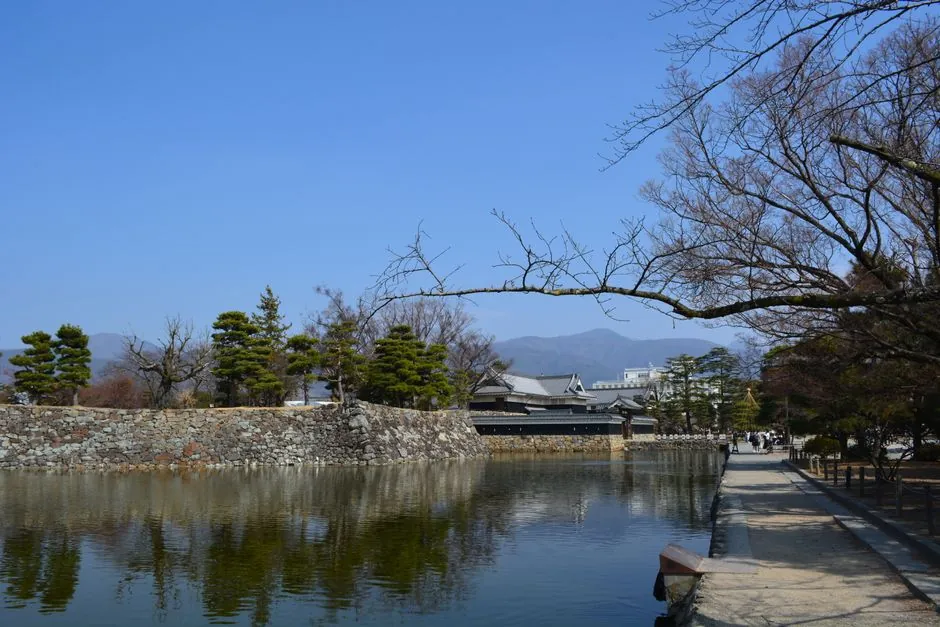
Cover photo by SHIMADA MASAKI on Pexels.
Want to see how Japan stacks up?
Are you seriously considering a move? Use our interactive tools to explore Japan's climate, tax brackets, and nomad visas.
Looking for other options?
See how this visa compares against 55 other countries.
📊 Compare all 56 digital nomad visasRelated Articles
June 19, 2026
Japan in 2026: The World's Safest Country, a Points-Based Fast Track to Permanent Residency, and a Citizenship That Requires You to Pick One Passport Forever
October 12, 2026
Moving to Yemen in 2026: Active Conflict, Dual Currencies, and Expat Security
October 11, 2026