Cyprus Digital Nomad Visa 2026: The Brutal Truth About the 0% Tax Loophole
July 11, 2026
ShareIf you are a high-earning remote professional looking for a strategic base in the Mediterranean, the 2026 landscape in Cyprus presents a complex but rewarding arbitrage opportunity. While the headline news of January 1, 2026, was the corporate tax rate hike to 15%, the real story for digital nomads is the preservation of the "Non-Dom" regime [2]. For those who can clear the €3,500 net monthly income bar, Cyprus remains one of the few jurisdictions where you can legally reside while paying 0% tax on dividends and interest for up to 17 years [12]. This is a massive play for those with significant passive income, effectively shielding you from the high-tax environments that are currently cannibalizing the wealth of remote workers in Western Europe and North America.
However, the "Digital Nomad Visa Scheme" is not an open-ended invitation. It operates under a strict annual quota of only 500 permits [11]. Unlike a standard tourist visa, which offers no legal right to work and limits your stay to 90 days, the Digital Nomad Visa (DNV) is a formal residence permit. It allows you to stay for an initial 1 year, with the option to extend for an additional 2 years, totaling a maximum of 3 years [11]. This provides a stable, multi-year legal framework for your remote career, provided you do not attempt to sell your services to the local market. For many, this 3-year window is the perfect duration to test the waters of Cypriot life before deciding whether to pivot toward the more permanent, albeit more expensive, residency programs.
The 2026 reforms have updated the mechanics of residency with a "give and take" approach. While the government has simplified certain evidentiary requirements for the "60-day rule," they have simultaneously tightened enforcement on local employment and digital compliance [2]. If you are lured by the promise of the Mediterranean lifestyle, you must understand that the Civil Registry and Migration Department (CRMD) is not looking for tourists; they are looking for financially self-sufficient individuals who will contribute to the economic ecosystem without drawing on public resources [11]. The following guide serves as a technical briefing for the professional nomad who prioritizes tax efficiency and legal certainty over marketing fluff.
1. What Is Cyprus's Digital Nomad Visa?
The "Digital Nomad Visa Scheme" was officially introduced by the Council of Ministers in October 2021 as a central pillar of the "Strategy for Attracting Business and Talent" [11]. Its strategic intent is clear: to foster economic development by attracting a global "skilled workforce" of location-independent professionals [15]. By providing a legal residency pathway, Cyprus aims to position itself as a premier center for service provision in the EU, leveraging its high quality of life to compete with other Mediterranean hubs like Spain and Portugal [11].
The 2026 Scope
Under the current regulations, the DNV is defined by several rigid parameters administered by the Civil Registry and Migration Department (CRMD)
[11]
- Legal Basis: The program is part of the Council of Ministers' strategy to enhance the local business ecosystem by attracting non-EU/EEA talent [11].
- Qualification: It is exclusively available to non-EU/EEA nationals who perform work via telecommunications technology. This includes salaried employees of companies registered abroad and self-employed individuals providing services to clients outside Cyprus [11].
- Ineligibility: EU/EEA nationals are excluded from this specific scheme (as they have freedom of movement), as are any individuals seeking to enter the local Cypriot labor market or consult for local firms [11].
- Duration: The permit is granted for an initial 1-year period. It can be renewed for up to 2 additional years, reaching a total stay limit of 3 years [11].
- Residency Path: While the DNV does not provide a direct, automatic path to permanent residency (PR) or citizenship, it serves as a bridge for professionals to establish the physical presence requirements that can later lead to the Permanent Residency Programme (PRP) if they decide to invest [12].
WARNING: The 500-permit ceiling is the most significant bureaucratic "trap" for the unwary. This is a "hard" quota, not a target [11]. If your application is submitted after the 500th permit has been allocated for the year, your file will be rejected regardless of whether you earn €3,500 or €35,000. Prospective applicants should aim to submit as early in the calendar year as possible to avoid being locked out by this administrative cap. If you apply in November, you are essentially gambling that enough people had their applications rejected earlier in the year.
The transition from a visitor to a resident requires meeting high financial bars, which the Cypriot authorities enforce with a level of scrutiny that can be jarring to those accustomed to more relaxed digital nomad destinations.
2. Eligibility Requirements
The fundamental philosophy of the Cyprus DNV is to ensure that nomads do not become a burden on the state. Consequently, proving financial self-sufficiency is the non-negotiable core of the application [10]. The authorities require proof of a stable monthly income that remains consistent even after your home-country tax obligations are met. They are looking for recurring, predictable cash flow - not just a large savings balance that could be depleted.
Eligibility Checklist Table
| Requirement | Threshold/Detail | Required Proof |
|---|---|---|
| Minimum Income | €3,500 net per month [11] | 6 months of bank statements & payslips |
| Spouse Supplement | +20% (€4,200 total) [10] | Marriage certificate + income proof |
| Child Supplement | +15% per minor child [10] | Birth certificates + income proof |
| Health Insurance | Full inpatient/outpatient coverage [10] | Policy including repatriation of remains |
| Criminal Record | No convictions in residence country [10] | Police certificate issued within 6 months |
| Remote Work | Foreign employer or clients [11] | Notarized contracts or business registry |
Grey Areas: Crypto and Passive Income
The 2026 tax reform introduced an 8% flat tax on crypto asset disposals [2]. While high crypto gains can boost your net worth, for the purposes of the DNV income threshold, the CRMD looks for recurring remote work income. Passive income, such as dividends or interest, can be used to meet the supplements for family members, but the primary applicant must still demonstrate they hold a remote "job" or "business" that utilizes telecommunications technology [11]. You cannot simply be a "retired" investor; you must be an active remote professional. If your "business" is just trading your own portfolio, the CRMD may view this as a lack of external "employment," which can lead to a rejection.
WARNING: The term "net income" is the primary reason for immediate rejection [12]. The CRMD requires €3,500 after all tax deductions and social security contributions. If you provide gross income statements that dip below €3,500 once taxes are removed, your application is dead on arrival. You must provide bank statements that clearly show the final deposit amount matching or exceeding these thresholds consistently for at least 6 months. There is no "averaging" allowed; every month must clear the bar.
Gathering the required funds is only the first step; the true hurdle lies in the specific, legalized paperwork required by the Nicosia bureaucracy.
3. Required Documents
Cypriot bureaucracy is notoriously meticulous and operates on a "paper-first" mentality. Documents issued outside the EU must generally be "Apostilled" or legalized by the Ministry of Foreign Affairs in the issuing country [10]. If your documents are not Apostilled, they do not exist in the eyes of the CRMD. Failure to provide the correct level of authentication will result in your file being returned without review.
Document Checklist
- Passport: Must have at least 3 months of validity remaining after your intended stay [10].
- MVIS3 Form: The official "Application for Residence" specifically for the Digital Nomad Scheme [12].
- Photos: Two recent passport-style photographs (standard 35mm x 45mm) [10].
- Income Proof: 6 months of comprehensive bank statements and payslips showing the source and stability of funds [10].
- Remote Proof: A notarized employment contract or client agreements. If you own the business, provide the certificate of incorporation and a certificate of shareholders from the foreign registry [10].
- Criminal Check: A police clearance certificate issued within the last 6 months from your current country of residence [10]. Note that this must be from the country where you currently live, not necessarily your country of citizenship.
- Health Certificate: This is a physical check-up that must be performed in Cyprus. It must include blood tests (for HIV, Hep B/C, and Syphilis) and a chest X-ray for Tuberculosis [10].
- Accommodation: A rental agreement or title deed. Rental agreements for values over certain thresholds must be officially stamped by the tax office [10].
Authentication Requirements
Non-EU documents are not accepted at face value. They must be Apostilled in accordance with the Hague Convention or legalized by the relevant Ministry of Foreign Affairs and the nearest Cypriot consulate [10]. If your country is not a member of the Hague Convention, you must go through the multi-stage "chain authentication" process, which can take months.
WARNING: Do not attempt to bring medical tests from your home country. The CRMD requires tests performed by approved professionals within Cyprus [10]. This is the most common "Step 4 stall." If you bring international lab results - even from the most prestigious clinics in London or New York - they will be rejected. You must book a local appointment in Nicosia or Limassol, have your blood drawn, and have a Cypriot doctor sign off on the results.
4. Application Process: Step by Step
The application for the Cyprus DNV is a hybrid process. You cannot apply from abroad; you must be physically present in Cyprus to submit your biometrics and complete the medical checks. This "boots on the ground" requirement catches many nomads off guard.
Step-by-Step Breakdown
- Step 1: Entry: Enter Cyprus on a valid tourist visa or via visa-free entry if your nationality permits [11]. You cannot apply for this visa from a consulate in your home country.
- Step 2: Submission: Book an appointment and apply at the CRMD in Nicosia within 90 days of your arrival [12]. The Nicosia office is a masterclass in Mediterranean friction; expect long wait times and zero digital transparency.
- Step 3: Biometrics: During your appointment, you must provide fingerprints and digital photos. This is mandatory for the issuance of the residence card [10].
- Step 4: The Wait: While the official examination time is cited as 5-7 weeks, the "real" timeline in 2026 is typically 2-3 months due to processing volume and the 500-permit quota review [11].
- Step 5: Registration: Once approved, you obtain your Aliens Registration Certificate (ARC) and your residency card [12].
- Step 6: Renewal: You must apply for renewal at least 1 month before your 1-year permit expires [12]. Failure to do so requires you to leave the country and restart the process (if the quota allows).
The Nicosia Reality
The Civil Registry and Migration Department in Nicosia is where applications go to live or die. You will receive an official receipt upon submission, often called the "Blue Slip." This document is your only legal protection while your application is pending. Without it, you are just another tourist whose time is running out.
WARNING: If you leave Cyprus while your application is "pending," you must carry the "Blue Slip" and your passport. However, if you overstay your original 90-day tourist allowance while waiting for the DNV result and leave the country without the proper documentation, your re-entry will be blocked. You could be flagged for a visa overstay, potentially leading to a multi-year ban from the Schengen area and Cyprus [12]. Always confirm your travel plans with a legal advisor if your residency card hasn't arrived.
5. Costs: Complete Fee Breakdown
Compared to the "Golden Visa" programs that require hundreds of thousands of euros in investment, the DNV is highly affordable. Most of your costs will be administrative rather than investment-based.
Fee Breakdown Table
| Fee Type | Cost (EUR) | Cost (USD - approx 1.10) |
|---|---|---|
| Application Fee | €70 [12] | $77 |
| ARC Certificate | €70 [12] | $77 |
| Medical Tests | €50-€100 [10] | $55-$110 |
| Health Insurance (Annual) | €200-€500 [10] | $220-$550 |
| Apostille/Translation | €150 (Estimated) [10] | $165 |
Total Estimated Cost: €540-€890
WARNING: Be aware that the €70 application fee is strictly non-refundable [11]. If you apply in October and the 500-person quota was reached in September, the department will pocket your €70 and send you a rejection letter weeks later. There is no mechanism to check the "live" status of the quota, so the later in the year you apply, the more you are effectively paying for a lottery ticket.
6. Tax Implications
The January 2026 Tax Reform is the most significant update to the Cypriot tax code in decades. While the corporate tax rate increased to 15%, the reform was surgically designed to preserve the "Non-Dom" (Non-Domiciled) status, making it a masterpiece of regulatory arbitrage [2].
The Residency Thresholds
- 183-Day Rule: If you spend more than 183 days in Cyprus, you are an automatic tax resident [2].
- 60-Day Rule: Under the 2026 simplification, you can become a tax resident in just 60 days if you have a business/employment in Cyprus (which the DNV establishes), maintain a permanent home, and do not stay in any other single country for more than 183 days [2]. Crucially, the reform removed the requirement to prove you are not a tax resident elsewhere, a massive reduction in the evidentiary burden [^2, ^12].
Tax Rates for Nomads in 2026
- Personal Income Tax (PIT): The tax-free threshold has been increased. The first €22,000 of your income is taxed at 0% [2].
- Dividend Tax: This is the crown jewel. Non-Doms pay 0% on dividends for their first 17 years [2]. Even for domiciled residents, the rate was slashed from 17% to 5% for post-2026 profits [2].
- Crypto Gains: A new flat tax of 8% applies to all crypto disposals [2].
- Social Security: Nomads are generally exempt from local contributions if they can provide an A1 or equivalent certificate proving they remain covered in their home country via a Double Taxation Agreement (DTA) [7].
The Non-Dom Certificate
Being a resident is not the same as being a "Non-Dom." To claim the 0% dividend benefit, you must separately apply for a Non-Domicile Certificate from the Tax Department. This requires proving your "domicile of origin" is outside Cyprus (i.e., you weren't born there) and that you haven't lived in Cyprus for 17 of the last 20 years [^2, ^3].
WARNING: The new Section 3D extension is a bureaucratic "trap" for the mid-level earner. It allows you to push the Non-Dom status to 27 years, but it requires an irrevocable, non-refundable payment of €250,000 for each 5-year block [2]. This only makes sense if your SDC exposure (dividend/interest tax) would exceed €50,000 per year. Unless your passive income is consistently above €1M, this extension is an expensive mistake. Stick to the standard 17-year window.
7. What This Visa Does NOT Give You
The Digital Nomad Visa is designed for guests, not participants. It is vital to understand that this status places you outside the local economic and social fabric in several key ways [10].
The "No" List
- Local Jobs: You have zero access to the Cypriot labor market. You cannot be hired by a local company, even for a "remote" role [11].
- Local Clients: You are strictly prohibited from providing services to companies or individuals based in Cyprus. Your client base must remain 100% international [10].
- Public Healthcare: You do not have automatic access to GESY (the public healthcare system) [2]. You are paying for private insurance because you are a guest.
- Automatic Permanent Residency (PR): Time spent in Cyprus under the DNV does not count toward the residency years required for standard PR [12]. It is a dead-end visa in terms of long-term "time served."
WARNING: The prohibition on local work is absolute and enforced with deportation [10]. If the authorities discover you are consulting for a local Cypriot startup or even performing "pro bono" work for a local entity, your permit will be revoked. This leads to immediate deportation and a permanent re-entry ban. The CRMD regularly audits the LinkedIn profiles and social media of permit holders to ensure compliance with the "non-Cypriot work" declaration.
8. Digital Nomad Visa vs. Alternatives
In 2026, the choice between Cyprus, Portugal, and Spain often comes down to your income level and your long-term goals for European citizenship [1].
Comparison Table
| Feature | Cyprus DNV | Portugal D8 | Spain DNV | Cyprus PRP |
|---|---|---|---|---|
| Income Req. | €3,500 [1] | €3,280 [1] | €2,800 [1] | €50k (income) [7] |
| Initial Stay | 1 Year [1] | 1-2 Years [1] | 3 Years [1] | Life [7] |
| Citizenship Path | None [^1, ^12] | 5 Years [1] | 10 Years [1] | 7 Years [7] |
| Investment | None | None | None | €300,000 [7] |
Strategic Summary
If you have €300,000 in liquid capital, the Permanent Residency Programme (PRP) is a superior choice. It grants life-long rights and a legitimate path to citizenship [7]. However, for cash-flow-rich nomads who want to avoid high taxes without a major upfront investment, the DNV is the most efficient tool for short-term residency.
WARNING: Be wary of comparing Cyprus's Non-Dom status to Spain’s "Beckham Law" or Portugal’s NHR. While those programs offer reduced rates, they are significantly more complex to maintain and often involve higher effective tax rates on diversified income streams than Cyprus's simple 0% dividend rule [12]. Spain’s Beckham Law, for instance, still taxes Spanish-source income at 24%, whereas Cyprus’s Non-Dom status covers worldwide dividends entirely [1].
Quick Reference Cheat Sheet
| Feature | Detail |
|---|---|
| Official Name | Digital Nomad Visa Scheme |
| Minimum Income | €3,500/month net |
| Application Portal | Tax For All / CRMD Nicosia |
| Initial Duration | 1 Year |
| Maximum Total Stay | 3 Years |
| Processing Time | 2-3 Months (Real) |
| 2026 Tax-Free Threshold | €22,000 |
| Crypto Tax Rate | 8% |
References
- Corpenza: 2026 Digital Nomad Visa Countries and Requirements. [1]
- Koufettas Law: Cyprus 2026 Tax Reform Guide: Every Change Explained. [2]
- Nomad Capitalist: Cyprus 60-Day Tax Residency Rule Requirements. [3]
- Sovereign Group: Cyprus Tax Reform 2026: Corporate and Personal Tax Changes. [7]
- Citizen Remote: Cyprus Digital Nomad Visa 2025/2026 Update. [10]
- KPMG Cyprus: Immigration Services Alert - Digital Nomad Visa Scheme. [11]
- MyExpatTaxes: Cyprus Digital Nomad Visa Guide for American Remote Workers. [12]
- OECD STIP Compass: Tax Exemption Framework for Non-Residents in Cyprus. [15]
- Blevins Franks: Cyprus Tax in 2026 - Retirement and Relocation. [16]
- Harneys Regulatory: Key Insights of the 2026 Cyprus Tax Reform. [17]
- Trident Trust: Summary of Cyprus's 2026 Tax Reforms. [18]
- EY Tax News: LTJ list 2026 - Defensive Measures. [19]
- European Commission: Minimum Corporate Taxation and OECD Pillar Two. [20]
Frequently Asked Questions
What is the minimum income requirement for the Cyprus Digital Nomad Visa? The CRMD requires €3,500 after all tax deductions and social security contributions.
How long is the Cyprus Digital Nomad Visa valid and can it be extended? Duration: The permit is granted for an initial 1-year period.
Do digital nomads pay local income tax in Cyprus? 183-Day Rule: If you spend more than 183 days in Cyprus, you are an automatic tax resident .
Does the Cyprus Digital Nomad Visa lead to permanent residency or citizenship? Automatic Permanent Residency (PR): Time spent in Cyprus under the DNV does not count toward the residency years required for standard PR .
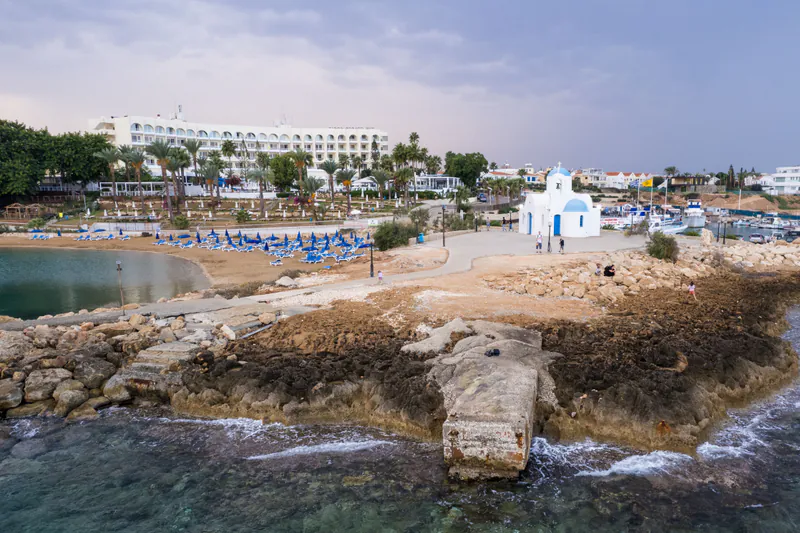
Cover photo by Ollie Craig on Pexels.
Want to see how Cyprus stacks up?
Are you seriously considering a move? Use our interactive tools to explore Cyprus's climate, tax brackets, and nomad visas.
Looking for other options?
See how this visa compares against 55 other countries.
📊 Compare all 56 digital nomad visasHead-to-Head Relocation Comparisons
Compare taxes, safety, and living costs of Cyprus against top alternatives.