Sweden Expat Field Guide 2026: Work Permits & Property
June 10, 2026
ShareSweden just rewired its labour immigration system on June 1, 2026. The new rules impose a salary floor of 90% of the median wage for all new work permits - a hard threshold, not a guideline. At the same time, the Swedish Parliament voted in March 2026 to raise the citizenship residency requirement from 5 to 8 years, with the new rules entering into force on June 6, 2026. If you were planning for a 5-year path to a Swedish passport, that window has closed.[1][2]
What doesn't change: Sweden remains one of the most genuinely open economies in Europe. The economy is recovering - the European Commission projects GDP growth of 1.8% in 2026 and 2.2% in 2027, driven by household consumption, fiscal expansion, and a rebound in residential construction. The healthcare system caps your annual out-of-pocket costs at SEK 1,450. Foreigners can buy property with no restrictions whatsoever. And the country's social infrastructure - parental leave, unemployment insurance, subsidised childcare - is among the most comprehensive anywhere. This guide gives you the honest numbers.[3]
The Economy: Recovery After Two Years of Stagnation
Sweden's economy stagnated through 2024 and most of 2025. The turnaround is underway.
| Institution | 2025 GDP | 2026 Forecast | 2027 Forecast |
|---|---|---|---|
| European Commission (May 2026) | 1.5% | 1.8% | 2.2% |
| OECD (June 2026) | ~1.5% | 1.9% | 2.5% |
The recovery is domestic-demand-led: lower interest rates, income tax reductions, and a temporary VAT cut on food from 12% to 6% (valid from April 2026 to January 2028) are all pushing household consumption upward. Inflation is forecast at 1.5% in 2026 - low by European standards.[4][3]
Sweden's unemployment stood at 8.8% in 2025 and is projected to decline to 7.9% by 2027 as the labour market firms up. For skilled expats, the relevant figure is sector-specific: technology, engineering, finance, and healthcare are all hiring. The job market in these verticals is structurally tight.[3]
Key sectors for expat professionals in 2026:
- Technology and IT: Stockholm is the world's second-largest tech startup hub per capita, producing Spotify, Klarna, King, iZettle, and Mojang. The ecosystem concentrates in Kista (Stockholm), Lindholmen (Gothenburg), and Western Harbour (Malmö).
- Engineering and manufacturing: Volvo, SKF, ABB, and Atlas Copco all have significant R&D and manufacturing footprints. Industrial engineering, mechanical engineering, and electrical engineering remain perennial shortage occupations.
- Life sciences and pharma: AstraZeneca (Gothenburg/Mölndal), Getinge, and a growing biotech cluster around Lund's Science Village drive demand for researchers, regulatory specialists, and clinical professionals.
- Construction: A structural housing shortage - worsened by rent controls that suppress new rental supply - sustains chronic demand for civil engineers, architects, and project managers.[5]
- Healthcare: Sweden's 21 regions continuously recruit nurses, GPs, and specialists. Non-EU healthcare professionals face credential validation requirements through the National Board of Health and Welfare (Socialstyrelsen), which adds 6-18 months to the process.
Median monthly salary in Sweden (2026): SEK 37,100 - up from SEK 35,600 in 2024, per Statistics Sweden (SCB). Average monthly salary for private-sector non-manual workers in March 2026: SEK 52,430.[6][7]
Visas and Work Permits: The June 2026 Reform
EU/EEA Citizens
If you hold an EU or EEA passport, you have full right of free movement. Register your right of residence at Migrationsverket within three months of arrival if you plan to stay beyond that point. For stays beyond one year, register with Skatteverket (Swedish Tax Agency) to obtain your personnummer - the 10-digit personal identity number you will need for virtually everything.[8][9]
Work Permit (Arbetstillstånd) - The Standard Non-EU Path
Sweden's work permit is employer-sponsored. The employer applies on your behalf through the Swedish Migration Agency (Migrationsverket) at migrationsverket.se. You cannot apply independently.
Requirements (from June 1, 2026):[10][1]
- A confirmed, full job offer from a Swedish employer
- Salary of at least 90% of the median wage - currently SEK 33,390/month (90% of SEK 37,100)[1][6]
- Terms equivalent to Swedish collective agreements (kollektivavtal) or industry norms
- The employer must have advertised the position to EU/EEA workers first (handled by the employer)
- From June 2026: for stays up to 12 months, comprehensive health insurance is required - the employer must provide it
Transitional rule: Those who were granted a work permit before June 1, 2026 and apply for an extension between June 1 and December 1, 2026 remain under the old threshold of SEK 29,680/month (80% of median). From December 2, 2026, the new 90% rule applies to all extensions too.[11]
Work permit duration: Typically tied to the employment contract, up to 2 years per grant, renewable. There is no overall cap on how many times you can renew.
Key change - employer accountability: From June 2026, Migrationsverket can reject applications if the employer has been issued certain regulatory sanctions, is suspected of crimes, or has committed permit fraud. Two new criminal offences - exploitation of foreign labour and trading in work permits - now carry penalties.[10]
EU Blue Card
The EU Blue Card is the high-skill track for non-EU professionals with higher education qualifications or at least 5 years of equivalent experience.
Requirements for Sweden's EU Blue Card:[12][13]
- Higher education qualification (bachelor's or equivalent) or 5 years of equivalent documented experience
- Valid job offer or employment contract of at least 12 months
- Salary above SEK 52,000/month (the current Blue Card threshold - approximately 1.5àƒ - the average gross annual salary)[12]
- Valid travel document and health insurance
From June 1, 2026: The EU Blue Card validity period in Sweden is extended from 2 years to 4 years per grant - a meaningful reduction in renewal friction.[14][1]
Blue Card vs regular work permit: The Blue Card has a higher salary bar but offers mobility advantages across EU member states after 18 months, and the path to permanent residence is more clearly defined. For professionals comfortably above the salary threshold, it is generally the better option.
Self-Employment
Sweden allows foreign nationals to establish their own company (AB - aktiebolag, the Swedish limited company) and obtain a residence permit as a self-employed person. Requirements include demonstrated business viability, sufficient own funds, and prior industry experience. This path is more complex and slower than the employed route; consulting a Swedish immigration lawyer before proceeding is strongly recommended.
Permanent Residence and Citizenship
Permanent Residence (Permanent Uppehållstillstånd / PUT)
Sweden's permanent residence is conditional on how you arrived. For work permit holders:[15]
| Permit Type | Time Required for PUT | Notes |
|---|---|---|
| Work permit holder | 4 years | Continuous employment required throughout |
| EU Blue Card | 5 years (EU-wide) | Can combine time in different EU countries |
| Family member of Swedish citizen | 3 years | After probationary period |
| Family member of permanent resident | 3 years | After probationary period |
General requirements for PUT: continuous legal residence for the required period, financial self-sufficiency, no serious criminal record, and a demonstrated intent to continue residing in Sweden.[16][15]
Important 2027 warning: Sweden's government has announced plans to introduce Swedish language and society knowledge tests as a requirement for permanent residence, with entry into force projected for July 1, 2027. If you are close to the 4-year mark on a work permit in 2026, applying before July 2027 avoids the language test requirement. Early applications are the safest path.[17]
Swedish Citizenship - New Rules from June 6, 2026
The Swedish Parliament passed a significant tightening of citizenship rules that entered into force on June 6, 2026. Key changes:[2][18][19]
- Residency requirement raised from 5 to 8 years for standard naturalization
- Financial self-sufficiency requirement introduced: Annual salary or business income must be at least 3 income base amounts (approximately SEK 200,000-210,000/year). Income support (socialbidrag) received for more than 6 months total in the last 3 years disqualifies the application
- Language and society knowledge test: A citizenship test covering Swedish language (reading, listening, writing, speaking) and knowledge of Swedish society will be introduced, with the test framework entering force in October 2027
- Higher conduct requirement: Conviction or reasonable suspicion of crimes carrying a maximum sentence of 2+ years imprisonment, or repeated lesser crimes, now bars citizenship
Exceptions and shorter tracks:
- Married to or cohabiting with a Swedish citizen: 7 years (previously 3), provided the Swedish partner has held citizenship for at least 5 years[2]
- Nordic citizens: still eligible via the notification procedure after 5 years
- EU/EEA citizens: citizenship after 5 years of documented right of residence[20]
Dual citizenship: Fully permitted. Sweden does not require renunciation of your original nationality. A Swedish passport provides visa-free access to approximately 188 countries.
Application fee: SEK 2,900. Processing time: currently up to 56 months for 75% of cases - a significant wait, driven by case backlogs at Migrationsverket.[20]
Cost of Living: Stockholm is Expensive, Gothenburg is Competitive, Malmö is Surprisingly Affordable
Sweden's cost of living is materially lower than the UK or Switzerland, broadly comparable to Germany in cities, and significantly cheaper than Norway. The headline driver is rent - controlled rental queues (up to 20-year waits in Stockholm for a first-hand contract) push most expats into the secondary market, where prices are free. That is what you will be paying.
Monthly Rent by City (2026)
| City | 1-BR City Centre | 1-BR Outside Centre | 3-BR City Centre |
|---|---|---|---|
| Stockholm | SEK 8,800-15,000[21] | SEK 6,900-11,000[21] | SEK 12,000-25,500[21] |
| Gothenburg | SEK 8,000-10,000[22] | SEK 6,000-8,500[22] | SEK 10,000-16,000 |
| Malmö | SEK 7,000-10,000[22] | SEK 5,500-8,000[22] | SEK 9,000-14,000 |
| Uppsala | SEK 7,500-10,000 | SEK 5,800-8,500 | SEK 9,500-14,000 |
National average for a 1-bedroom apartment: approximately SEK 7,750/month in 2026. Second-hand furnished rentals in Stockholm city centre can run 30-50% above these figures.[23]
The rent control problem: Sweden's rent law (hyreslagen) sets first-hand (landlord-tenant) contract rents far below market. Most available apartments for expats are second-hand sublets, which sit at full market rates. There is a legal grey area: landlords on first-hand contracts who sublet at a large premium ("illegal profit subletting") can face legal action. This creates opacity in the rental market. Use reputable platforms - Blocket Bostad, Hemnet, Qasa - and get a proper written tenancy agreement.[5]
Monthly Budget (Single Professional, Stockholm 2026)
| Item | Monthly Cost (SEK) |
|---|---|
| 1-BR apartment (mid-market, secondary market) | SEK 9,500-12,000 |
| Utilities (electricity, heating, water, internet) | SEK 1,200-1,600[21] |
| Groceries | SEK 2,800-3,500 |
| Public transport (SL monthly card, Stockholm) | SEK 860[21] |
| Phone plan (10GB+ data) | SEK 150-400[21] |
| Gym | SEK 300-500 |
| Eating out 2àƒ - /week | SEK 1,800-2,500 |
| Total (excluding rent) | ~SEK 7,000-8,500 |
| Total (with rent) | ~SEK 16,500-20,500 |
At a gross salary of SEK 50,000/month (~SEK 33,000/month net after tax), the Stockholm budget is tight but workable. At SEK 65,000-70,000/month gross (~SEK 42,000-44,000 net), comfortable.
Daily Expenses
| Item | Price (SEK) |
|---|---|
| Meal at inexpensive restaurant | SEK 100-200[21] |
| Burger or fast food | SEK 80-130 |
| Coffee (flat white/cappuccino) | SEK 45-70 |
| Domestic beer (bar) | SEK 70-90 |
| Fuel, 95 unleaded (per litre) | SEK 16-21[21] |
| Weekly groceries (single) | SEK 650-900 |
| Stockholm SL monthly public transport card | SEK 860[21] |
| Volkswagen Golf (new) | SEK 329,900[21] |
Taxes: Municipal Flat Rate Plus a State Top-Up
Sweden's tax system is transparent and structurally simple for employees. All income tax is withheld at source (PAYE). The surprise for most expats: there is no national income tax below SEK 643,000/year. Below that threshold, you pay only municipal tax - a flat rate averaging 32% nationwide, varying by municipality (typically 30-34%).[24]
Income Tax Rates (2026)
| Taxable Income (SEK/year) | National Tax | Municipal Tax | Effective Marginal Rate |
|---|---|---|---|
| SEK 0 - SEK 643,000 | 0% | ~32% | ~32% |
| Over SEK 643,000 | 20% | ~32% | ~52% |
Municipal rate is the average; varies by municipality.[25][24]
Real-world take-home examples (2026, Stockholm municipality ~30.4% municipal rate):
- Gross SEK 40,000/month (SEK 480,000/year): Net approximately SEK 27,000-28,000/month
- Gross SEK 55,000/month (SEK 660,000/year): Net approximately SEK 35,000-36,000/month
- Gross SEK 80,000/month (SEK 960,000/year): Net approximately SEK 46,000-47,000/month (with state tax on portion above SEK 643,000)
Average net monthly salary across all workers (2026): approximately SEK 30,366.[21]
Expert Tax Relief (Expertskatten)
This is the most important tax provision for high-earning expats and one that most overlook. Expert tax relief exempts 25% of your employment income from Swedish tax and social security contributions for up to 7 years if you moved to Sweden after March 31, 2023.[26]
To qualify (2026):[26]
- Earn at least SEK 88,201/month (the 2026 remuneration threshold), OR qualify as a researcher, expert, or key employee based on role
- Not a Swedish citizen
- Have not lived or worked permanently in Sweden during the 5 calendar years before starting employment
- Intend to stay for no more than 7 years
- Work for an employer based in Sweden or with a permanent establishment here
Both the employer and employee can apply. Application must go to the Taxation of Research Workers Board (Forskarskattenà¤mnden) within 3 months of starting work - this deadline is not flexible.[26]
At SEK 100,000/month gross, expert tax relief reduces the taxable base to SEK 75,000, cutting the monthly tax bill by roughly SEK 7,000-8,000. Over 7 years, this is a very significant sum.
Non-Resident Tax (SINK)
Foreign residents who work short assignments in Sweden (and choose not to be fully tax-resident) can opt for SINK - Special Income Tax for Non-Residents. From January 1, 2026: flat rate of 22.5% at source, reduced from 25%. From January 1, 2027, this drops further to 20%.[27][24]
Capital Gains Tax
Capital income (dividends, capital gains on shares and funds, bank interest) is taxed at a flat 30%. There is no wealth tax and no inheritance tax in Sweden.[24]
Social Contributions (Employer-Paid)
Swedish employers pay arbetsgivaravgifter (employer social contributions) of approximately 31.42% of gross salary on top of your salary. This is not deducted from your pay - it is paid by the employer. It funds pension, parental insurance, sick pay, unemployment insurance, and healthcare.
Healthcare: World-Class System, Annual Costs Capped at SEK 1,450
Sweden's healthcare quality index sits at 95/100 - among the highest recorded globally. The system is universal, funded by regional taxes, and administered by 21 independent regions. All legal residents registered in Sweden have access at subsidised rates.[28]
Access for Expats
You access the public system once you have a personnummer and are registered in the Swedish Population Register. This requires a residence permit valid for 12 months or more and a visit to Skatteverket to register.[29][8]
Before you have a personnummer: EU/EEA citizens can use the EHIC (European Health Insurance Card) for necessary care at Swedish subsidised rates. Non-EU citizens should carry comprehensive private health insurance.[29]
Costs (2026)
| Service | Patient Fee |
|---|---|
| GP / healthcare centre visit | SEK 200-350[30] |
| Specialist visit | SEK 350-400[30] |
| Emergency room | SEK 400-450[30] |
| Hospital stay (daily) | ~SEK 120/day[30] |
| Annual out-of-pocket cap (Högkostnadsskydd) | SEK 1,450[31] |
| Under 18 (under 20 in some regions) | Free |
| Prescription medication annual cap | SEK 3,800[32] |
The Högkostnadsskydd (high-cost protection) is the defining feature: once you have paid SEK 1,450 in healthcare fees within a 12-month period, all further outpatient care is free for the remainder of that period. Similarly, once prescription medication costs exceed SEK 3,800 in a year, the regional council covers the rest.[30][32][31]
Emergency: 112 (police, ambulance, fire). Non-emergency medical advice: 1177 - staffed 24/7 by nurses who triage and advise in both Swedish and English.[33][28]
Waiting times: GP appointment: maximum 7 days by law. Specialist referral: up to 90 days. Public hospital waiting times for non-urgent surgery can extend beyond 90 days in some regions. Approximately 13% of employed residents carry private supplemental insurance to jump specialist queues. Private providers (Capio, Praktikertjà¤nst) offer faster access and are often covered by employer benefit packages.[34]
Dental care: Adults (from age 20) pay a large portion of dental costs themselves. Each adult receives an annual dental care grant of SEK 300 or SEK 600 (depending on age). Once dental costs exceed SEK 3,000/year, the state covers part of the excess.[32]
Safety: Malmö is the Outlier, Stockholm and Gothenburg Are Moderate
Sweden's national Crime Index in 2026: 53.23 - Moderate. The picture is uneven by city.[35]
| City | Crime Index | Safety Index |
|---|---|---|
| Malmö | 55.0[36] | 45.0 |
| Stockholm | 46.5[36] | 53.5 |
| Gothenburg | 45.8[36] | 54.2 |
| Lund | 32.1[36] | 67.9 |
Malmö's headline crime figure reflects concentrated gang violence in specific suburbs (Rosengård, Seved, Herrgà¥rden). For most professional expats living in central Malmö or Hyllie, daily life is safe. The city has improved substantially in recent years following targeted policing operations.[35]
Stockholm's 46.5 crime index puts it ahead of London (55.6), Dublin (54.2), and Manchester (55.9) in Northern Europe. Crime in Stockholm concentrates in specific hotspots (Rinkeby-Kista, Jà¤rva, parts of Södermalm); the inner neighbourhoods where most expat professionals live - àƒ-stermalm, Vasastan, Kungsholmen, Södermalm's northern sections - are substantively safer than the aggregate figure implies.[36]
Lund, at 32.1, is one of the safest cities in Northern Europe. Gothenburg's 45.8 reflects occasional gang-related incidents in northern suburbs (Angered, Biskopsgà¥rden), not the Haga-Linné-Majorna belt where most expats settle.
What the data doesn't capture: Cybercrime, card fraud, and bicycle theft are the most common crimes affecting expats in Swedish cities. Violent crime against strangers in residential areas is low. Sweden consistently scores well on corruption indexes (ranked 6th least corrupt globally per Transparency International 2025).
Which City?
Stockholm
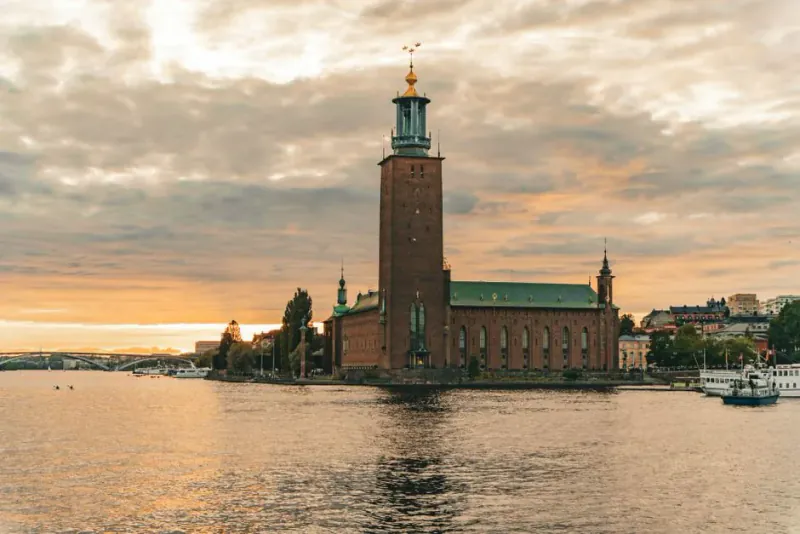
Sweden's capital and economic engine. Population 2.3 million in the metropolitan area. Concentration of headquarters, tech companies, banks, and international employers. Direct flights from Arlanda to virtually every major global hub. The city is architecturally extraordinary - 14 islands, 70 bridges, old town on a medieval island, and water everywhere.[37]
The rent premium is real. A central Stockholm 1-BR typically costs SEK 10,000-14,000/month on the secondary market. The SL transport card at SEK 860/month covers all buses, metro (tunnelbana), commuter rail, and some ferries - and the network is genuinely excellent.[21]
Best Stockholm areas for expats:
- Södermalm - the creative and tech professional hub; independent cafes, design studios, startups; buzzing but not touristy
- Vasastan / àƒ-stermalm - upper-middle class residential, embassies, hospitals; families and finance professionals
- Kungsholmen - emerging, well-connected, slightly cheaper than àƒ-stermalm; strong expat community
- Lidingච/ Nacka / Djursholm (outer suburbs) - families with children; excellent schools; larger apartments; car or commuter rail dependent
Gothenburg (Göteborg)
Sweden's second city. Metropolitan population 1 million. The industrial and maritime heart - Volvo, SKF, and the Port of Gothenburg (Scandinavia's largest) are all here. The biotech corridor in Mölndal (AstraZeneca's Swedish HQ) drives significant demand for life sciences professionals. Gothenburg has a justified reputation for being friendlier and more relaxed than Stockholm.[37]
Rent is approximately 20-25% cheaper than Stockholm. The Västtrafik public transport card covers the whole region. Gothenburg's Haga neighbourhood - cobblestone streets, cinnamon-bun cafes, boutiques - is frequently cited as the most liveable neighbourhood in Sweden.[38]
Best Gothenburg areas for expats: Haga, Linnéstaden, Majorna (west side, creative, young professional), Askim-Frà¶lunda (families, access to sea bathing).
Malmö
Sweden's third city; 670,000 in the metro. Sits at the foot of the àƒ-resund Bridge - 35 minutes by train to Copenhagen, giving residents access to the largest job market in Scandinavia. For expats working in Copenhagen, Malmö rental rates (substantially lower than Copenhagen) make cross-border living financially compelling.[37]
Architecturally, Malmö is a surprise: the Turning Torso, the Western Harbour urban regeneration district, and the old town are all worth knowing. Food scene punches above its weight. Malmö University is a growing technology and innovation hub.
Best neighbourhoods for expats: Western Harbour (Västra Hamnen), Hyllie (modern, close to the bridge), Mà¶llevà¥ngen (multicultural, affordable, lively food market).
Uppsala
Sweden's fourth city; 295,000 in the metro. Home to Uppsala University (founded 1477, Sweden's oldest and most prestigious), Uppsala University Hospital (one of six national university hospitals), and a growing pharma-biotech cluster. 40 minutes by regional train from Stockholm. Considerably cheaper than Stockholm while offering a high quality of life and a large English-speaking academic community.[37]
Best for: researchers, academics, medical professionals, and anyone working in Stockholm who refuses to pay Stockholm rent.
Lund
University town in Skåne (southern Sweden). The safest city in Sweden per Crowdsourced Data 2026 (Crime Index 32.1). Lund University is internationally ranked (top 100 globally). MAX IV (Europe's most brilliant X-ray facility) and ESS (European Spallation Source) create structural demand for physicists, engineers, and biologists. 15 minutes from Malmö by regional train.[36]
Best for: scientists, researchers, academics, life sciences professionals.
City Quick Reference
| City | 1-BR Rent (Centre) | Key Sector | Crime Index | Best For |
|---|---|---|---|---|
| Stockholm | SEK 8,800-15,000[21] | Tech/Finance/All | 46.5[36] | HQ roles, all-round expat base |
| Gothenburg | SEK 8,000-10,000[22] | Engineering/Biotech | 45.8[36] | Industry, relaxed lifestyle |
| Malmö | SEK 7,000-10,000[22] | Cross-border/Copenhagen | 55.0[36] | Copenhagen workers, affordability |
| Uppsala | SEK 7,500-10,000 | Academia/Healthcare | - | Researchers, Stockholm commuters |
| Lund | SEK 7,000-9,500 | Research/Life Sciences | 32.1[36] | Scientists, safest city |
Climate: Dark Winters, Brilliant Summers, Light Until Midnight
Sweden's climate divides sharply between south and north, and between summer and winter.[39]
| Region | Summer (Jun-Aug) | Winter (Dec-Feb) | Notes |
|---|---|---|---|
| Stockholm | 20-25°C | -5 to 3°C | Warmest summers in Sweden (Mälaren Valley effect) |
| Gothenburg | 16-22à‚°C | 0-5à‚°C | Maritime, rainy; milder winters |
| Malmö | 17-23à‚°C | 1-5à‚°C | Mildest major city; some snow |
| Northern Sweden (Umeå+) | 15-24à‚°C | -15 to -25°C | Extreme cold, midnight sun |
The darkness is the adjustment. Stockholm sees only 6-7 hours of daylight in December. Gothenburg and Malmö are slightly better. This is the single most commonly cited adjustment challenge from expats at northern latitudes. Vitamin D supplementation is near-universal. Light therapy lamps (dagsljuslampor) are sold in every pharmacy. The payoff: Swedish summer is extraordinary - 18-21 hours of daylight, warm evenings, outdoor swimming in lakes and archipelago.
Midnight sun: North of the Arctic Circle (Kiruna, Abisko), the sun does not set for roughly 50 days in summer. South of the Arctic Circle, long twilight replaces true night. In Stockholm in June, it never gets fully dark.
Internet and Infrastructure
Sweden's digital infrastructure is world-class. The country has one of the highest fibre penetration rates in Europe, with Telia, Bahnhof, and Telenor offering gigabit connections across most urban areas.[21]
- Broadband: Unlimited 100-1,000 Mbps plans: approximately SEK 250-500/month[21]
- Mobile: Telia, Tele2, Telenor, and Three are the main operators. SIM plans with unlimited calls and data: SEK 150-400/month[21]
- Public transport:
- Stockholm (SL): Metro (Tunnelbana, 3 lines, 100 stations), commuter rail (pendeltåg), buses, trams, Djurgà¥rdslinjen ferry. Monthly card: SEK 860[21]
- Gothenburg (Västtrafik): Trams, buses, commuter rail (Pendeln)
- Malmö (Skånetrafiken): Buses, Pågatågen regional trains, Öresundståg to Copenhagen
- Cars: Drive on the right. Swedish licence required after one year of residence. Congestion charges apply in Stockholm and Gothenburg central zones. EV charging infrastructure is excellent.
Buying Property: Open Market, No Restrictions
Sweden is one of the very few European countries where foreigners face no legal restrictions on purchasing property - neither residential nor commercial. No permits, no nationality requirements, no investment thresholds. EU and non-EU citizens alike can buy exactly as Swedish citizens do.[40][41][42]
What this means in practice:
- Any foreigner can buy a house (äganderätt / freehold) or an apartment share in a housing cooperative (bostadsrà¤tt) without any government approval
- The housing cooperative (BRF) may reject any buyer based on its membership criteria - this is the one practical friction point, and it rarely affects creditworthy expats
- Property ownership does not provide a path to residency or citizenship - no golden visa program exists in Sweden[43]
- Find a property via Hemnet (Sweden's dominant portal), Booli, or through a mäklare (licensed estate agent)
- Attend viewings; properties in Stockholm regularly sell above asking price via blind bidding - 5-10% above list is common in competitive markets[44]
- Submit a bid (bud) through the agent; the bidding process is fast - often concluded within 2-3 days of viewing
- Sign the purchase contract (köpekontrakt) and pay a 10% deposit
- Final settlement (tillträde): typically 4-12 weeks after signing
- Register ownership with Lantmäteriet (Swedish land registration authority)
- Pay stamp duty (stämpelskatt): 1.5% of the purchase price for individuals
Mortgage financing:[43]
- Swedish banks (Swedbank, SEB, Handelsbanken, Nordea, Länsförsäkringar) require a minimum 15% deposit for Swedish residents
- Non-residents without a personnummer typically face 20-40% deposit requirements
- Mortgage rates in January 2026: approximately 2.9-4.0% for standard residential mortgages
- Annual property fee (fastighetsskatt): capped at SEK 10,425/year for houses (approximately €880)[43]
Stockholm apartment prices (2026):[45]
- City centre: SEK 70,000-100,000 per square metre
- Gothenburg/Malmö: SEK 40,000-70,000 per square metre
- Smaller cities and rural areas: SEK 20,000-40,000 per square metre
At a 60 m² central Stockholm apartment at SEK 85,000/m², the purchase price is SEK 5,100,000 (~à¢"š¬480,000). With 15% down (SEK 765,000) at 3.5% over 30 years, monthly mortgage payment: approximately SEK 19,000-20,000.
Your First 30 Days: The Checklist
- Register at Skatteverket and get your personnummer - book an appointment online before you arrive if possible; you must appear in person at a Skatteverket service centre; bring your residence permit, passport, lease agreement or rental contract, and employment contract; personnummer is your master key in Sweden - without it you cannot fully open a bank account, access healthcare, get a phone contract, register a gym membership, or file taxes; processing time: 1-4 weeks after your appointment[9][46][8]
- Open a Swedish bank account - major options: Swedbank, Handelsbanken (most expat-accessible), SEB, Nordea; for those waiting on personnummer: Revolut, Wise, or N26 work in the interim; some banks now allow account opening before personnummer with a passport and residence permit; Bankgirot is the domestic payment system - get your bankgiro number for receiving salary
- Apply for your BankID - Sweden's digital identity system, used for signing documents, logging into government portals, filing taxes, and accessing virtually every online service; issued through your bank once you have a personnummer; without BankID, administrative life in Sweden is significantly harder
- Register with a healthcare centre (Vårdcentral) - go to the healthcare centre nearest your home and register as a patient; in Stockholm, use 1177.se to find the nearest one; registering before you are sick is critical - walk-in slots are limited in busy urban centres
- Get your EHIC if you are EU/EEA - while waiting for personnummer, your EHIC provides access to Swedish healthcare at subsidised rates; after personnummer registration, you access the system as a Swedish resident
- Get a Swedish phone number and SIM - Tele2, Telia, Comviq, Hallon, and Vimla all sell plans; monthly plans starting SEK 79 for basic data; unlock your phone before travelling; most operators require personnummer for contracts but prepaid SIMs are available immediately
- Apply for expert tax relief within 3 months of starting work - if you qualify - do not miss this deadline; the Forskarskattenà¤mnden application window is strict; check the SEK 88,201/month income threshold or whether your role qualifies as researcher/expert/key employee; this can save you tens of thousands of SEK per year[26]
- Enrol in the unemployment insurance fund (A-kassa) - voluntary but highly recommended; monthly fee approximately SEK 100-130; if you lose your job and have been a member for at least 12 months, you receive up to 80% of your previous salary for a defined period; without A-kassa membership, you receive the basic state unemployment benefit (significantly lower)
- Register at migrationsverket.se if non-EU - maintain your residence permit documents; track expiry dates; apply for extension no later than your existing permit's expiry date (ideally 2-3 months before); keep employment documentation and payslips showing consistent earnings at or above the required salary threshold - Migrationsverket will request these for any extension or PR application
- Understand the rental market before signing a lease - confirm whether you are signing a first-hand or second-hand (andrahand) contract; for second-hand: ensure your landlord has permission to sublet (requires approval from BRF or landlord if they are themselves renting); use Hyresnà¤mnden (Rent Tribunal) as recourse for disputes; get everything in writing; landlords asking for cash-in-hand arrangements are operating outside the law
Key Data at a Glance
| Indicator | Value |
|---|---|
| GDP Growth 2026 (EC forecast) | 1.8%[3] |
| GDP Growth 2026 (OECD forecast) | 1.9%[4] |
| GDP Growth 2027 | 2.2-2.5%[3][4] |
| Inflation 2026 | 1.5%[3] |
| Unemployment 2026 | 8.5% (declining)[3] |
| Median monthly salary (SCB 2025 data) | SEK 37,100[6] |
| Work permit salary floor (from June 1, 2026) | SEK 33,390/month (90% of median)[1] |
| Old extension salary floor (until Dec 1, 2026) | SEK 29,680/month (80% of median)[11] |
| EU Blue Card salary threshold | SEK 52,000+/month[12] |
| Expert tax threshold (2026) | SEK 88,201/month[26] |
| Expert tax benefit | 25% of income exempt, up to 7 years[26] |
| Permanent residence (work permit track) | 4 years continuous employment[15] |
| Citizenship residency requirement (from June 6, 2026) | 8 years (previously 5)[2] |
| Citizenship fee | SEK 2,900[20] |
| Citizenship language test | October 2027 (not yet in force)[2] |
| PR language test | July 1, 2027 (planned)[17] |
| Dual citizenship | Permitted - no renunciation required |
| Income tax (below SEK 643,000/year) | ~32% municipal only[24] |
| Income tax (above SEK 643,000/year) | ~52% (municipal + 20% state)[24] |
| Non-resident SINK tax (from Jan 2026) | 22.5% flat (drops to 20% from Jan 2027)[24] |
| Capital gains tax | 30% flat[24] |
| Wealth/inheritance/gift tax | None |
| VAT on food (April 2026 - Jan 2028) | 6% (temporarily reduced from 12%)[3] |
| Stockholm 1-BR rent (centre) | SEK 8,800-15,000/month[21] |
| Malmö 1-BR rent (centre) | SEK 7,000-10,000/month[22] |
| Stockholm apartment price per mà‚² (centre) | SEK 70,000-100,000[45] |
| Mortgage rate (January 2026) | 2.9-4.0%[43] |
| Property purchase restrictions for foreigners | None - fully open market[40] |
| Annual property fee cap (houses) | SEK 10,425/year[43] |
| Stamp duty | 1.5% of purchase price[45] |
| GP visit (registered resident) | SEK 200-350[30] |
| Annual healthcare out-of-pocket cap | SEK 1,450 (Högkostnadsskydd)[30] |
| Annual prescription medication cap | SEK 3,800[32] |
| Healthcare quality index | 95/100[28] |
| Stockholm Crime Index 2026 | 46.5 - Moderate[36] |
| Malmö Crime Index 2026 | 55.0 - Moderate[36] |
| Lund Crime Index 2026 | 32.1 - Low[36] |
| Emergency | 112[28] |
| Non-emergency medical advice | 1177 |
The June 2026 salary increase from 80% to 90% of the median represents a real tightening. At SEK 33,390/month, Sweden's floor is now higher than Germany's standard work permit threshold and comparable to the Netherlands. For anyone already in Sweden on a work permit granted before June 1, 2026 and planning an extension: the 80% threshold of SEK 29,680 still applies until December 1, 2026 - after that, 90% applies to you too. Verify your payslips now. Document everything. Migrationsverket will not give you credit for months where your salary fell short of the required threshold.[11][1]
References
New rules for work permits from 1 June 2026 - Migrationsverket - From 1 June 2026, new rules for work permits will begin to apply in Sweden. The rules affect those w...
Stricter requirements for Swedish citizenship - KPMG International - The legislative amendments are proposed to enter into force on June 6th, 2026. The legislative amend...
Economic forecast for Sweden - Economy and Finance - The latest macroeconomic forecast for Sweden. The European Commission publishes a full set of macroe...
Sweden: OECD Economic Outlook, Volume 2026 Issue 1 - Real GDP growth is projected to rise by 1.9% in 2026 and 2.5% in 2027. Domestic demand is supported ...
Sweden Economic Snapshot - OECD - Real GDP growth is projected to rise by 1.9% in 2026 and 2.5% in 2027. Domestic demand is supported ...
Sweden Raises Median Salary Requirement for Work Permits - As of June 2025, Sweden's median salary has increased to SEK 37100, raising the minimum salary for w...
Short-term statistics, wages and salaries, private sector (KLP) - SCB - The statistics show the monthly development of wage and salary levels, the average monthly salary fo...
Apply for a Swedish personal identity number (personnummer) - To obtain a Swedish personal identity number, you must visit your local Swedish state service centre...
Immigration and registration | International Citizen Hub Lund - Obtaining a personal identification number involves registering to the national population register ...
Sweden Work Permit Rules 2026: Stricter Labor Immigration - Sweden approved Prop. 2025/26:87, tightening labor immigration rules from June 1, 2026, with new wag...
A good living - maintenance requirement for work permits - Applies during a transitional period to those applying to extend their permit. From 2 December 2026,...
How long will my EU Blue... - Am I eligible to apply for an EU Blue Card?
Apply for an EU Blue Card for highly qualified employment in Sweden - Requirements for being granted an EU Blue Card à‚· You must have a valid passport à‚· You must have high...
Sweden will extend the validity of both the EU Blue Card ... - Facebook - Sweden will extend the validity of both the EU Blue Card and seasonal work permits starting June 1, ...
Permanent Residence in Sweden: Requirements & Timeline - Permanent residence (PUT) after 5 continuous years in Sweden. Income required, no language test. Ful...
Apply for a permanent residence permit - Swedish Migration Agency - To be granted a permanent residence permit in Sweden, you must meet special requirements relating to...
Sweden Permanent Residency Qualifications in 2027 - Envoy Global - Sweden plans to introduce additional qualification measures as part of its permanent residence appli...
New rules for Swedish citizenship from 6 June 2026 - Migrationsverket - New rules for Swedish citizenship will come into force on 6 June 2026. This will affect you if you h...
Sweden: Citizenship Eligibility Restrictions Forthcoming - Fragomen - The Swedish government has approved a package of restrictive citizenship eligibility rules, includin...
Apply for Swedish citizenship - Swedish Migration Agency - You want to apply to become a Swedish citizen.
Cost of Living in Sweden. Prices in Sweden. Updated Jun 2026 - Cost of Living in Sweden ; 1 Bedroom Apartment in City Centre, 8,592.10kr ; 1 Bedroom Apartment Outs...
Cost of Living in Sweden (2026) - Movinn - Housing ; 1-bedroom apartment (city center), 8,000-12,000 SEK, From 11,000 SEK (all-inclusive) ; 1-b...
Updated Rents in Sweden (2026) - Investropa - A 1-bedroom in Sweden costs around 7,750 SEK monthly in 2026, but second-hand furnished rentals in S...
Sweden - Individual - Taxes on personal income - ... Sweden are taxed a flat rate of 22.5% at source from 1 January 2026. From 1 January 2027, the ta...
Tax rates - 2026 - Tax related information - State income tax is 20 per cent of that part of your taxable earned income that exceeds SEK 643 000 ...
Expert tax relief in Sweden - àƒËœresunddirekt - Expert tax applies to employees in Sweden who qualify as experts, researchers or key employees, or w...
SINK - special income tax for foreign residents | Skatteverket - The Riksdag has decided to reduce special income tax for non-residents (SINK) from 25% to 22.5% of t...
Healthcare in Sweden 2026 | WhereToEmigrate - Complete guide to healthcare in Sweden for expats in 2026: system type, insurance, costs, emergency ...
Patient Fees & Cost Caps (Högkostnadsskydd) in Sweden - Patient Fees & Cost Caps (Högkostnadsskydd) in Sweden: Sweden's healthcare system is primarily tax-f...
Guide Healthcare in Sweden - Allianz Care - The Swedish healthcare system is considered by many to be one of the world's best, offering high qua...
Sweden | Commonwealth Fund - Sweden's publicly funded health care system provides all legal residents with comprehensive health c...
Crime in Sweden - Information about crime in Sweden. Shows how much people think the problem in their community are pr...
List of metropolitan areas in Sweden - Wikipedia - Sweden has three metropolitan areas consisting of the areas surrounding the three largest cities, St...
Moving to Sweden? Here's the Real Difference Between Stockholm ... - This quick guide breaks down the pros, cons, and lifestyle differences between the two most popular ...
Swedish weather and climate - Visit Sweden - Winter and summer temperature differences in Scandinavia are extreme, but generally Sweden enjoys a ...
Sweden Property Foreign Ownership : Last Update ... - The latest update about what foreigners can and can't own in Sweden. Freehold, leashold, residency, ...
Property Buying & Ownership for US Citizens in Sweden (2026) - Can american people buy and own all type of properties in Sweden? What are the requirements?
The Ultimate Guide to Buying Property in Sweden - Sweden consistently ranks among the world's most stable, prosperous, and liveable countries. Its rob...
Property Foreign Ownership Sweden (2026) - Investropa - What can foreigners own and buy in Sweden? We study property rights, visas, buying process, taxes, m...
Sweden Real Estate Market Analysis (2026) - Investropa - Sweden's residential property market is recovering in early 2026, with prices expected to rise betwe...
Sweden - Buying Property - Expat Focus - The Swedish real estate market ranks among the most accessible in all of Europe for international bu...
Moving to Sweden - Population registration - Skatteverket - Your personal identity number is your unique identifier in Sweden. Let me take you through the five ...
Cover photo by Dawid Tkocz on Pexels.
Frequently Asked Questions
How much is the annual out-of-pocket cost cap for healthcare? The annual out-of-pocket cost cap for healthcare is SEK 1,450.
What are some key sectors for expat professionals in 2026? Key sectors for expat professionals in 2026 include:
- Technology and IT: Stockholm is the world's second-largest tech startup hub per capita.
- Engineering and manufacturing: Companies like Volvo, SKF, ABB, and Atlas Copco are hiring.
- Life sciences and pharma: Sectors driven by companies such as AstraZeneca, Getinge, and a growing biotech cluster in Lund.
- Construction: Civil engineers, architects, and project managers are needed due to a structural housing shortage.
- Healthcare: Continuous recruitment for nurses, GPs, and specialists.
What is the projected GDP growth for Sweden in 2026 according to the European Commission? The European Commission projects 1.8% GDP growth for Sweden in 2026.
Want to see how Sweden stacks up?
Are you seriously considering a move? Use our interactive tools to explore Sweden's climate, tax brackets, and nomad visas.
Head-to-Head Relocation Comparisons
Compare taxes, safety, and living costs of Sweden against top alternatives.