South Korea Digital Nomad Visa 2026: Requirements, Costs, Process, and What Nobody Tells You
June 19, 2026
ShareThe single most significant barrier to entering South Korea as a remote professional in 2026 is the updated annual income requirement of 104,832,000 KRW (approx. $76,000)[5][16]. This figure, calculated as exactly twice the national Gross National Income (GNI) per capita, is a deliberate gatekeeping mechanism designed to filter for high-earning senior professionals[4][10]. If your gross pre-tax income falls even slightly below this threshold, the Ministry of Justice (MOJ) will reject your application without a second glance[12].
The F-1-D "Workation" visa is a rigid residency permit, fundamentally distinct from the standard B-1 or B-2 tourist entries that nomads previously exploited[10]. While working on a tourist visa remains technically unauthorized and legally precarious, the F-1-D provides formal remote work authorization for up to 2 years[10][12]. You must view this as a high-stakes compliance exercise rather than a casual travel document; it is the only way to be 100% compliant with the Korean immigration environment[5][11].
As of 2026, the South Korean government has finally closed the loophole-heavy pilot phase, replacing it with a permanent immigration pathway characterized by strict oversight and bureaucratic friction[3][8]. The program has stabilized into a "high-gatekeeping" system intended to extract economic value while preventing any leakage into the local labor market[3][8]. You are expected to meet perfect documentary standards, or you will find yourself caught in a compliance trap that ends in immediate deportation[4][10].
1. What Is South Korea's Digital Nomad Visa?
The F-1-D Workation Visa is the MOJ's strategic response to global labor mobility, formally administered to allow foreign-affiliated professionals to reside in Korea without local job sponsorship[4][10]. Launched on January 1, 2024, and codified as a permanent program in 2026, it targets employees of foreign entities or self-employed freelancers with at least 1 year of industry tenure[3][4][10].
The visa allows for an initial stay of 1 year, with a single available extension for an additional 1 year, totaling a maximum of 2 years[10][12]. While it permits you to maintain your offshore career, it explicitly forbids any local profit-making or employment with Korean firms[10][12].
Section Warning: No Relocation Value This visa is a temporary residency tool, not a relocation pathway. It provides zero credit toward Permanent Residency (PR) or citizenship[21]. If you lose your foreign employment, your residency status evaporates instantly, regardless of how much time is left on your visa[12].
Section Warning: Tourist Visa Enforcement The MOJ gatekeepers treat "remote work" on a tourist visa as a violation of stay conditions. This visa is not an "option" for long-term stays-it is a non-negotiable requirement for anyone who values their ability to re-enter the country[5][11].
2. Eligibility Requirements
The 2026 eligibility criteria are indexed to the latest GNI figures, functioning as a high-finance filter to ensure applicants are self-sufficient senior professionals who will not burden the state[4][10].
Eligibility Metrics Table
| Category | Requirement | Source/Evidence Needed |
|---|---|---|
| Annual Income | 104,832,000 KRW (~$76,000 / €70,000) | Tax returns, bank statements, gross pay stubs[5][16] |
| Age | 18 years or older | Federal-issued passport[10] |
| Experience | 1+ year in current industry | Certificate of Employment issued within 3 months[10][12] |
| Health Insurance | 100,000,000 KRW minimum coverage | Policy with repatriation and medical cover[10][16] |
| Criminal Record | Clean federal-level check | Apostilled criminal record certificate[4][10] |
Section Warning: Single-Income Threshold Financial eligibility is strictly individual and based on gross income[12]. If you are a high-earning couple, you must apply separately. You cannot combine incomes to meet the threshold; the primary applicant must earn the full 104,832,000 KRW independently to sponsor any dependents[11][12].
Section Warning: Irregular Income Risks The MOJ has zero tolerance for the "lumpy" income common in freelancing; they prioritize steady, predictable monthly salary deposits and often reject those who rely on irregular dividends or asset sales to hit the floor[8].
3. Required Documents
Korean bureaucracy operates on a "zero-defect" policy regarding Apostilles. If your documents are not authenticated exactly to MOJ specifications, your application will be discarded[4][10].
- Passport: Minimum 6 months of validity[16].
- Visa Application: Form No. 17[10].
- Photo: 1 standard passport photo with a white background[10][16].
- Proof of Employment: Certificate issued within 3 months proving offshore affiliation[12].
- Income Proof: Bank certificates and pay stubs for the last 3-6 months[12][16].
- Criminal Record: Federal-level check with Apostille (e.g., FBI for Americans, ACRO for UK)[4][10].
- Medical Insurance: Policy showing 100,000,000 KRW coverage. Note: UK residents often need £90,000 coverage to satisfy this[10][16].
Section Warning: Translation Audits Documents not in English or Korean require certified translations. Any inconsistency between your translated income and your bank statements will trigger a manual audit of your finances, extending the wait for weeks[12].
Section Warning: Document Lifespans Criminal record checks expire after 6 months, while employment certificates expire after 3 months[4][16]. If your background check is 5 months old and your employment letter is 1 month old, you have exactly 30 days to submit before the gatekeepers void the entire stack.
4. Application Process: Step by Step
You can apply at an embassy abroad or change status in-country. While in-country switching is faster, it is plagued by appointment scarcity[8][16].
- Step 1: The Paperwork Sprint. Secure Apostilled records (takes 2-6 weeks)[8].
- Step 2: Submission. Submit at an embassy or change status (B-1/B-2 to F-1-D) at a local office[8][10].
- Step 3: The Wait. Official review takes 10-15 business days, but reciprocity-based delays for certain nationalities are common[8][16][17].
- Step 4: Registration. You must apply for an Alien Registration Card (ARC) within 90 days of entry[5][12].
Section Warning: The ARC Lifeline The ARC is the bureaucratic tether that controls every aspect of your functional life. Fail to secure it, and you are effectively a ghost in the system-unable to get a phone plan, open a bank account, or use essential delivery apps[5][12].
Section Warning: Slot Scarcity Switching status in-country requires a pre-booked appointment on "Hi Korea." In districts like Seoul, these slots are often fully booked 4 weeks out; if your tourist stay expires before your appointment, you must leave the country[12][18].
5. Costs: Complete Fee Breakdown
While the income floor is high, the liquidity required for upfront fees is often underestimated by applicants.
| Item | Cost (KRW) | Cost (USD/EUR) | Frequency |
|---|---|---|---|
| Visa Fee (US) | ~62,000 KRW | $45 | Once[17] |
| Visa Fee (UK) | ~345,000 KRW | $250 | Once[17] |
| ARC Issuance | 30,000 KRW | ~$22 | Once[16] |
| Private Insurance | ~1,368,000 KRW | ~$1,000 | Annual[21] |
| NHIS Monthly | 150,000 KRW | ~$110 | Monthly[29][30] |
Section Warning: Hidden Costs Professional translation and Apostille fees are a hidden drain, typically adding $200 - $400 to your pre-submission budget[16].
6. Tax Implications
South Korea's 183-day rule is a financial non-negotiable. Staying longer than half a year triggers tax residency status[8][19].
Under the "5-year rule," foreign residents are only taxed on foreign-source income if it is remitted into a Korean account[23][24]. Professionals may also elect a 19% flat tax rate, which serves as a ceiling for high earners but a floor for those in lower brackets[23][26].
Section Warning: remittance Rigidity Korean tax officials are increasingly monitoring remittances. To minimize liability, do not use your Korean bank account for anything other than local rent and groceries; keep your primary salary in an offshore account to avoid the 19% flat tax becoming an inescapable burden[23][24].
Section Warning: Double SE Tax US citizens remain liable for the 15.3% self-employment tax. There is no totalization agreement covering self-employed nomads, meaning you may be forced to contribute to two social security systems simultaneously[8].
7. What This Visa Does NOT Give You
Managing expectations is pivotal to avoiding a legal compliance trap in the eyes of the MOJ.
- No Local Side Gigs: You are strictly prohibited from working for Korean companies or clients[10][12].
- No PR Pathway: Time spent on an F-1-D does not count toward any long-term residency or citizenship goals[21].
- No NHIS for 6 Months: You are ineligible for the National Health Insurance (NHIS) until you hit the 6-month residency mark[28].
- No "Partner" Visas: Korea does not recognize unmarried partners or fiancés; only legally married spouses and minor children qualify for dependency[12].
Section Warning: Job Dependency If you lose your offshore job, your visa becomes invalid immediately. You are a guest of the state only so long as you are a high-income foreign earner[12].
Section Warning: Automatic Blocks Unpaid NHIS premiums after the 6-month mark act as a legal block on your visa renewal; the system is automated and unforgiving[30].
8. Digital Nomad Visa vs. Alternatives
For those who find the F-1-D's high-finance barrier insurmountable, regional or cultural alternatives exist.
| Visa Type | Income Floor | Max Stay | Strategic Benefit |
|---|---|---|---|
| National F-1-D | 104.8M KRW | 2 Years | Formal residency for senior execs[10][16] |
| Jeju Regional | 4.16M KRW (mo) | 90 Days | Half-income floor for mid-level tech[5][7] |
| K-Culture Visa | Pro Status | 2 Years | Aesthetic focus for Hallyu creatives[3][18] |
| Tourist (B-1/B-2) | 0 KRW | 30-90 Days | Short-term stay; no work rights[5][9] |
Section Warning: regional Limits The Jeju extension is region-specific; do not expect a Jeju governor's recommendation to carry weight with immigration offices in Seoul[6].
Quick Reference Cheat Sheet
| Feature | Detail |
|---|---|
| Official Name | Workation Visa (F-1-D)[10] |
| Income Floor | 104,832,000 KRW (Gross)[5][16] |
| Insurance Floor | 100M KRW coverage[10] |
| Stay Duration | 1 Year + 1 Year extension[10] |
| ARC Deadline | Within 90 days of arrival[5][12] |
| NHIS Trigger | Mandatory after 6 months residency[28] |
| Tax Residency | Triggered at 183 days[8][19] |
| Local Work | Strictly Banned[10] |
References
- South Korea's "K-Culture" Digital Nomad Visa, Cellesim (2026) [3]
- Notice on the Extension of Workation Visa Test Period, Embassy of the Republic of Korea (2026) [4]
- Korea Digital Nomad Visa 2026: Requirements and Income Threshold, Korea Work Expert (2026) [5]
- Jeju Lowers Workation and International School Visa Barriers, AsiaE (2026) [6]
- Jeju to halve salary requirement, triple stay limit, K-campus (2026) [7]
- South Korea Digital Nomad Visa: Requirements and Tax Rules, Greenback Tax Services (2026) [8]
- Jeju Visa & Entry Requirements (2026), ThingsToDoInJeju [9]
- Digital Nomad (Workation) Visa Official Guidelines, Ministry of Justice [10]
- Korea Digital Nomad Visa Information - How to Apply, The Digital Nomad Asia (2026) [11]
- South Korea's Digital Nomad Visa: The Complete Guide, Digital Nomads Korea (2025) [12]
- South Korea logs per capita GNI for 2025, Hankyoreh (2026) [14]
- South Korea Digital Nomad Visa Simple Guide, My Nomad Space (2026) [16]
- Visa and Service Fees, Korea Visa Application Center [17]
- Guide to Immigration Petitions, Hi Korea [18]
- Practical Guide to Obtaining Your Tax Residency in South Korea, Heavnn University (2026) [19]
- The South Korea Digital Nomad Visa: a Guide for US Expats, Bright!Tax (2025) [21]
- U.S. Taxes in South Korea: A Guide for American Expats, Greenback Tax Services (2026) [23]
- Korea, Republic of - Individual Taxes on personal income, PwC [24]
- Tax Benefits for Foreign Nationals, Easy to Find Practical Law [26]
- National Health Insurance Service for Foreigners, Ajou University [28]
- How to Enroll in the Korean National Health Insurance, 10mag [29]
- How National Health Insurance (NHI) Works for Foreigners, Reddit /r/seoul (2025) [30]
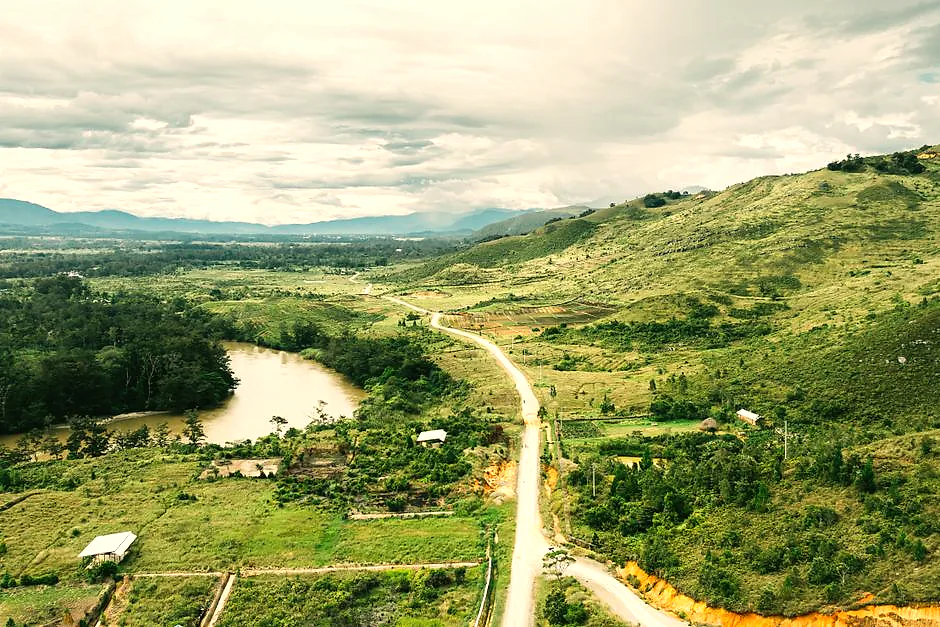
Cover photo by Muneeb Babar on Pexels.
Frequently Asked Questions
What is the minimum income requirement for the South Korea Digital Nomad Visa in 2026? The minimum annual income requirement is 104,832,000 KRW (approximately $76,000 USD), which is calculated as exactly twice the national Gross National Income (GNI) per capita.
How long can I stay in South Korea on the F-1-D Workation Visa? The visa offers an initial stay of 1 year, with the option to extend for an additional 1 year, allowing for a maximum total stay of 2 years.
Does time spent on the South Korea Digital Nomad Visa count toward Permanent Residency? No, the F-1-D Workation Visa is a temporary residency permit and does not count as credit toward Permanent Residency (PR) or citizenship.
Looking for more options? Compare all 56 digital nomad visa countries to find the perfect destination for your remote work setup.
Want to see how South korea stacks up?
Are you seriously considering a move? Use our interactive tools to explore South korea's climate, tax brackets, and nomad visas.
Looking for other options?
See how this visa compares against 55 other countries.
📊 Compare all 56 digital nomad visas