Netherlands in 2026: Expat Guide to the 30% Ruling, Visas & Rent
June 9, 2026
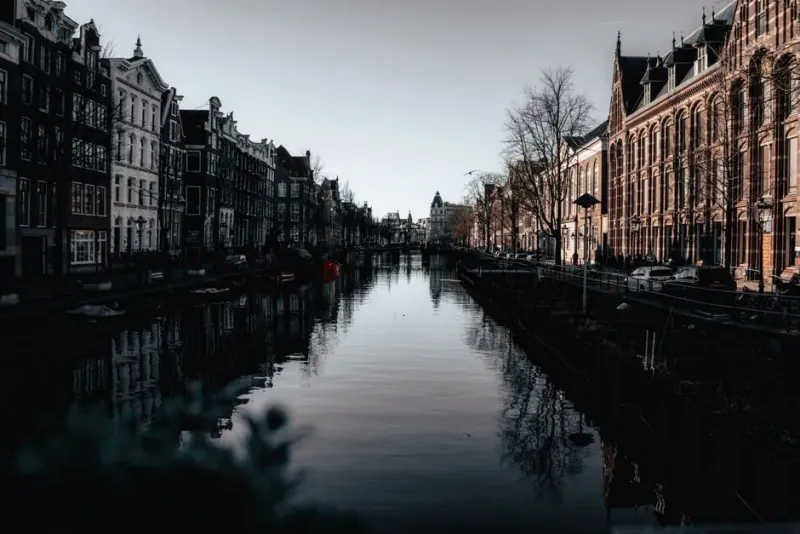
ShareFree-sector rental supply in the Netherlands dropped by more than 36% in 2025. National average rent hit €1,838/month. In Amsterdam, overbidding is still the norm for property purchases - 65-70% of homes sell above asking price, typically 6-7% above. And in March 2026, municipalities gained the power to tax vacant homes to force them back onto the market. The Dutch housing situation is not a short-term disruption. It is a structural condition that will define your first months in the country more than any other factor.[1][2][3]
Against this: the 30% ruling survives through all of 2026 at its full rate. GDP growth of 1.1-1.3% keeps the economy moving. The Hague ranks among the top 10 safest cities in Europe. English proficiency is universally excellent. And for skilled professionals in tech, finance, logistics, agri-food, or energy, the Netherlands remains the most accessible non-English-speaking country in Europe to build a real career and life. This guide gives you the numbers to make that calculation accurately.[4]
The Economy: Modest Growth, Global Headwinds, Consumer as the Engine
The Dutch economy entered 2026 in a state of moderate recovery. GDP grew 1.0% in 2024 and is forecast to grow 1.1-1.3% in 2025-2026 across all major institutions.[5][6][7]
| Institution | 2025 GDP Forecast | 2026 GDP Forecast |
|---|---|---|
| OECD (June 2025) | 1.3% | 1.1%[7] |
| European Commission | 1.3% | 1.2%[6] |
| ING Think | 1.7% | 1.3%[5] |
Consumer spending is the primary driver - real wages are rising as inflation eases to approximately 2.0-2.5% in 2026 (down from 3.0% in 2025). Export growth remains constrained by global trade uncertainty and tariff pressures on the EU's manufacturing supply chain. The government deficit is widening to approximately 2.7-2.8% of GDP as healthcare, housing, and defence spending increase.[6][7]
Unemployment: 4.0% in 2026 - among the lowest in the EU, reflecting a structurally tight labour market. The Netherlands' economy concentrates in logistics and trade (port of Rotterdam: largest in Europe by volume), financial services (Amsterdam: ING, ABN AMRO, NN Group), technology and startups (ASML, Booking.com, Adyen, Philips, NXP), agri-food (world's second largest food exporter by value), and energy - Groningen's gas fields are largely closed, but offshore wind (North Sea) and hydrogen development represent the next energy chapter.[7][6]
For expats: the demand for English-speaking technical, financial, and digital professionals is structural and sustained. ASML alone employs tens of thousands internationally and regularly sponsors Highly Skilled Migrant permits.
Visas and Residency: Four Real Paths in 2026
EU/EEA Citizens
Register in the Basisregistratie Personen (BRP) - the municipal personal records database - within 5 days of arrival at your local gemeente (municipality). No permit required, no labour market test, no immigration authority involved. After BRP registration you receive your BSN (Burger Service Number) - the national ID number required for banking, tax, health insurance, and housing contracts.[8]
Practically speaking, you need a rental address before you can register - which creates the notorious Dutch chicken-and-egg problem: no BSN without an address, but many landlords require a BSN before signing. Corporate relocation packages and expat-specialist housing agents (Pararius, HelloHousing, HousingAnywhere) bridge this gap. Keep proof of your BSN application process on hand when dealing with landlords.
Highly Skilled Migrant Permit (Kennismigrant)
The primary non-EU expat route, operated by the IND (Immigration and Naturalisation Service). Fast, employer-sponsored, no quota system.
Official 2026 salary thresholds (gross monthly, excluding 8% holiday allowance):[9][10][11]
| Category | Monthly Salary Threshold (2026) |
|---|---|
| HSM / Blue Card, age 30+ | €5,942 |
| HSM / Blue Card, under 30 | €4,357 |
| Recent graduates (orientation year) | €3,122 |
| EU Blue Card (recent graduates <3 years) | €4,754 |
These thresholds are indexed annually and increased 4.46% from 2025. Applications submitted after 31 December 2025 must meet these 2026 thresholds.[10][11]
From 1 January 2026: Recognised sponsors (large employers with IND certification) must retain bank statements proving salary payments to employees - maintained for 5 years, available for audit on request.[12]
How the permit works:[9]
- Your employer must be a recognised sponsor (IND-certified organisation) - the sponsor does the bulk of administrative work
- Application submitted by employer to IND; typical processing: 2-4 weeks for recognised sponsors
- Permit valid for the duration of the employment contract, up to 5 years renewable
- After first permit approval, you can switch employers within 3 months - new employer must also be a recognised sponsor and the new application must be filed before your permit expires
- Family members (partner, children under 18) can receive a dependent permit automatically
Orientation Year Visa (Zoekjaar)
Graduates from a top 200 Times Higher Education university (or equivalent) can apply for a 1-year Orientation Year permit to seek work in the Netherlands, with the lower salary threshold of €3,122/month during that year. The purpose: arrive without a job offer, find one while legally resident, then transition to the full HSM permit. Processing: through the IND; requires proof of recent graduation (within 3 years).[9]
Self-Employment / Freelance (Zelfstandige)
A residence permit for self-employed foreigners does exist but is substantially more burdensome than the HSM route. The IND applies a "points test" assessing business plan viability, economic value to the Netherlands, and personal competence. This route is used by established entrepreneurs rather than incoming freelancers. Most incoming freelancers who want to work independently use their HSM permit, build 5 years' residence, and then operate through a BV (Dutch limited company) after receiving permanent residency.
The 30% Ruling: 2026 Still Full Rate, 2027 Cut Incoming
The 30% ruling (expat facility / expatregeling) is the defining financial feature of skilled expat life in the Netherlands. If you qualify, your employer can pay 30% of your gross salary tax-free for up to 5 years - in effect, treating extraterritorial costs as a tax-exempt allowance.
In 2026: the 30% rate remains unchanged. The previously announced cut to 27% takes effect from 1 January 2027.[13][14]
2026 Qualifying Criteria
| Requirement | Detail |
|---|---|
| Minimum taxable salary after 30% deduction | €48,013/year (standard) [11] |
| Under 30 with qualifying Master's degree | €36,497/year taxable after deduction[11] |
| Prior residence | Must have lived more than 150km from Dutch border for at least 16 of the 24 months before starting work in NL[14] |
| Application deadline | Within 4 months of starting work - otherwise no retroactive application[14] |
| Maximum salary cap | €262,000/year - the ruling does not apply to income above the WNT norm[14][15] |
| Duration | Maximum 5 years[14] |
Transitional rules apply based on when the ruling started:[16]
| Ruling started | 30% or 27%? | Partial foreign tax liability? |
|---|---|---|
| On or before 31 Dec 2023 | 30% until end of 5-year period | Until 2027 (transition) |
| In 2024 | 30% through 2026; 27% from 2027 | Abolished from 2025 |
| From 1 Jan 2025 | 30% through 2026; 27% from 2027 + higher salary criterion from 2027 | Abolished from 2025 |
What the 30% ruling means in practice: On a salary of €100,000/year, the employer pays 30% (€30,000) as a tax-free allowance. Only the remaining €70,000 is taxed. At a 49.5% marginal rate on the upper portion, the annual tax saving exceeds €12,000-14,000. For someone earning €150,000, the saving approaches €18,000-22,000/year over the 5-year period.
Critical 2026 change - partial foreign tax liability abolished: As of 1 January 2025, expats using the 30% ruling can no longer choose non-resident tax status for Box 2 (substantial interest income) and Box 3 (savings and investments). Your worldwide income is now fully taxable in the Netherlands from 2025 (with transition until 2027 for pre-2024 ruling holders). If you have significant foreign investment portfolios, rental income abroad, or substantial savings, this substantially increases your Dutch tax exposure compared to previous years. Get professional Dutch tax advice before relocating if you hold non-employment assets.[14][17]
How to Apply
- Application filed jointly by employer and employee via the Belastingdienst (tax authority) online portal
- File within 4 months of starting work to apply it retroactively from day one
- When changing employers: the ruling must be applied for again under the new employer's name - starts within 3 months of leaving previous employment; the remaining 5-year duration applies, not a new 5 years[14]
- Certain qualifying scientists, medical specialists in training, and researchers qualify automatically regardless of salary threshold[11]
Cost of Living: Amsterdam is Expensive, the Netherlands is Not
Amsterdam is one of the most expensive rental markets in continental Europe. The rest of the country - particularly Rotterdam, Eindhoven, Groningen, and the smaller cities - offers substantially better value.
| City | 1-BR (Centre) | 1-BR (Outside) | Total Single (incl. Rent) |
|---|---|---|---|
| Rotterdam | €1,447[1] | €1,100[18] | ~€2,350[18] |
| Amsterdam | €2,030[18] | €1,500[18] | ~€3,133[18] |
| The Hague | €1,600[18] | €1,150[18] | ~€2,480[18] |
| Utrecht | €1,515[1] | €1,100 | ~€2,300 |
| Groningen | €1,976[1] | €1,300 | ~€2,200 |
| Eindhoven | €1,348[1] | €900 | ~€2,000 |
Source: RentBuzz March 2026 (4,810+ active listings) and WheretoeEmigrate May 2026[18][1]
The 2024 Rent Law Change: What It Means for Expats
Since 1 July 2024, two laws reshaped the Dutch rental market:[19][20]
Affordable Rent Act (Wet betaalbare huur): Mid-range homes (up to 186 WWS points) are now rent-controlled, with maximum rent of approximately €1,157/month. The government estimates this lowered rents by €190/month for over 300,000 mid-range homes.[20][19]
Permanent Rental Contracts Act (Wet vaste huurcontracten): As of 1 July 2024, most new rental contracts must be indefinite-term (open-ended). Temporary contracts are only permitted in specific situations - and expats are not one of the exempt categories.[20]
The practical consequence for expats: You will almost certainly end up in the private rental sector (above 186 WWS points, uncapped rents), because your income exceeds the social and mid-range housing thresholds. Your contract will be open-ended - you cannot easily offer a landlord a 1-year term knowing you may not stay forever. This is changing how corporate relocation packages work: more companies are using specialist expat housing agents rather than navigating the market independently.[20]
Free-Sector Supply Crisis
Free-sector rental supply dropped 36% in 2025. The cause: small private landlords are exiting the market after the Affordable Rent Act and upcoming Box 3 capital gains reform made small-scale property letting less financially viable. In Amsterdam specifically, rents jumped over 30% in recent years. This drives the market towards longer queues, faster decision-making, and higher prices in the available supply.[3][1]
Where to search: Pararius (premium private sector), Funda (all listings), HousingAnywhere (furnished, international-friendly), HuurdersUnite (rights information). Apply fast - good apartments go within 24-72 hours in competitive cities.
Daily Expenses (Netherlands, 2026)
| Item | Price (EUR) |
|---|---|
| Meal at inexpensive restaurant | €17-22[21] |
| Three-course meal for two (mid-range) | €65-90[21] |
| Coffee (cappuccino) | €4-5.50 |
| Monthly public transport pass | €90 (national average)[21] |
| Single OV-chipkaart tram/bus/metro (local) | €3.40[21] |
| Intercity train (Amsterdam-Rotterdam) | ~€18 single, ~€35 return |
| Grocery shop, weekly (single person) | €60-100 |
| Gym membership | €25-50/month |
| Cinema ticket | €14-18 |
| Non-rent monthly costs (single person) | ~€1,019 (excl. Rent)[21] |
Taxes: Three Boxes, Three Rates, One Flat 49.5% Cap
The Dutch tax system divides personal income into three separate "boxes," each taxed at different rates:
Box 1 - Employment and Home Income
The main box for most expats. Three brackets in 2026:[22][23]
| Bracket | Income Range | Combined Rate (2026) |
|---|---|---|
| 1 | Up to €38,883 | 35.75% (includes 27.65% national insurance)[24] |
| 2 | €38,883 - €78,426 | 37.56%[24][23] |
| 3 | Above €78,426 | 49.50%[24][23] |
Bracket limits raised slightly from 2025 to reflect inflation indexation.[22]
For Box 1 earners at €100,000 gross (without 30% ruling):
- Approximate income tax: ~€36,000
- Effective rate: ~36%
- Net take-home: €64,000 (€5,333/month)
Same earner with 30% ruling (taxable income: €70,000):
- Approximate income tax: ~€21,000
- Effective rate: ~21% on gross
- Net take-home: €79,000 (€6,583/month)
- Annual saving: ~€18,000
Box 2 - Substantial Interest (Shares ≥5% in a Company)
Box 3 - Savings and Investments
Currently in a transitional system (2023-2027) following Supreme Court rulings that deemed the old deemed-yield system unlawful. The transitional system applies a deemed return to three asset categories (bank deposits, other assets, debts) and taxes the result at 36% above a personal exemption of €59,357 in 2026. Taxpayers can override the deemed return if their actual return was lower - request this from the Belastingdienst.[17]
Permanent Box 3 system: expected from 1 January 2028 at the earliest, based on actual returns rather than a flat deemed yield.[17]
Employer-Level Contributions
- Social security contributions: Employer pays approximately 23-26% on top of gross salary (AOW pension, WW unemployment, WIA disability)
- Employee: No separate social security contribution once national insurance is included in Box 1 bracket 1 rate
- Health insurance: Mandatory; employee pays premium directly (see Healthcare section); employer contributes income-related health insurance contribution (Zvw) of 6.57% on salary up to €75,000 - this is an employer cost, not deducted from your payslip
Healthcare: Mandatory Private Insurance with Government Subsidy
The Dutch healthcare system is a mandatory private insurance model - not a pure public system. Everyone legally residing in the Netherlands must take out basic health insurance (basisverzekering) from a private insurer within 4 months of arrival.[26]
2026 healthcare insurance numbers:[27]
| Item | Amount |
|---|---|
| Average basic monthly premium | €159.63/month (~€1,916/year) |
| Mandatory annual deductible (eigen risico) | €385 (unchanged from 2025)[27] |
| Prescription medication co-pay cap | €250/year[27] |
| GP consultation deductible | Free - GP visits no longer count toward deductible from 2026[27] |
Zorgtoeslag (Healthcare Allowance): If your income is below €40,857/year (single), the government pays you a monthly subsidy of up to €129/month toward your premium. For couples: combined income below €51,142/year, subsidy up to €246/month. Apply via toeslagen.belastingdienst.nl with your DigiD - applications can be retroactive until 1 September of the following year.[28][26]
What the Basic Package Covers
Basic basisverzekering covers: GP (huisarts) consultations (no deductible from 2026), specialist consultations (with GP referral), hospitalisation, emergency care, most prescription medications, mental health care (GGZ), and maternity care. The deductible of €385 applies to most specialist, hospital, and medication costs within a calendar year.[27]
What is not covered:
- Dental care for adults 18+ - entirely private, out of pocket
- Physiotherapy (covered for chronic conditions only)[27]
- Corrective lenses, contacts
- Cosmetic procedures
Supplemental insurance (aanvullende verzekering): Available from all major insurers (VGZ, CZ, Zilveren Kruis, Menzis, Zorg & Zekerheid) at €10-60/month depending on coverage. Strongly recommended to include dental cover - a routine check-up costs €50-100, a filling €100-200.
The huisarts (GP) system: Register with a local huisarts immediately upon getting your BSN. The GP is the gatekeeper to all specialist care - you typically cannot see a specialist without a GP referral. In Amsterdam and Utrecht, waiting lists for popular GPs are long. Register the week you arrive.
Healthcare emergency: 112 (universal) or 0900-8844 (non-emergency GP out of hours).[29]
Safety
Netherlands national Crime Index 2026: 25.5 - Low, the lowest recorded level since tracking began, declining from 26.9 in 2025. Safety walking alone at night nationally: 67.93% "High."[30][31]
Dutch cities ranked, Crowdsourced Data 2026:[31][4]
| City | Crime Index | Safety Index | Safety Rank (Europe) |
|---|---|---|---|
| The Hague | 20.0 | 80.0 | Top 10 Europe[4] |
| Eindhoven | 20.9 | 79.1 | Top 15 Europe[4] |
| Utrecht | 22.0 | 78.0 | - |
| Groningen | 22.1 | 77.9 | - |
| Rotterdam | 26.3 | 73.7 | - |
| Amsterdam | 26.4 | 73.6 | - |
Violent crime: "Low" nationally. Drug activity is the primary concern in Amsterdam (Wallen/Red Light District area, central station) and central Rotterdam, rated "Low" even there. Property crime (bike theft specifically) is extremely common across all Dutch cities - lock your bike with two locks, always, everywhere. It is a national ritual, not an exaggeration.[31]
Dutch Language: A2 Now, B1 Expected, Start Immediately
English in the Netherlands is functionally native at the professional and service level - the country consistently ranks #1 globally in EF's English Proficiency Index. You will never struggle to communicate in daily life, and many Dutch companies operate partly or entirely in English.[32]
The integration (inburgering) obligation is separate. Non-EU nationals required to integrate must complete the civic integration examination within 3 years of arrival, via a Personal Integration Plan (PIP) issued by your municipality. EU citizens are exempt from the legal obligation, but integration is highly recommended for anyone planning long-term residence.[33]
2026 language requirements for residence and citizenship:[34]
| Status | Level Required |
|---|---|
| Civic integration (inburgering) completion | B1 (most routes, arrived after 2022)[35] |
| Permanent residency (standard) | A2 (current) - B1 widely expected to become the requirement; apply at A2 before the change[34] |
| Dutch citizenship | A2 (current) - same advisory applies[34] |
The IND and DUO confirmed in early 2026 that A2 remains the current minimum for permanent residency and citizenship - but the government has repeatedly signalled it plans to raise this to B1. The practical advice from immigration lawyers: if you are eligible for permanent residency or citizenship at A2 level now, apply before the requirement changes.[36][34]
Free language courses: Non-EU newcomers have a legal right to state-funded Dutch language courses through DUO (Dienst Uitvoering Onderwijs). Register at inburgeren.nl to access your Personal Integration Plan and course funding of up to €10,000 for the full integration programme. The 3-year clock starts from your arrival date, not when you register - register immediately.[33]
Dutch belongs to the West Germanic language family. Native English speakers find it significantly easier than French, German, or Scandinavian languages - many expats achieve A2 in 6-9 months of part-time study, B1 in 12-18 months.
Which City?
Amsterdam
The capital: international business, tech, finance, creative industries, tourism. Headquarters of Adyen, Booking.com, KPMG Netherlands, ABN AMRO, and hundreds of EU-facing tech companies. Richest expat community in the country; also the tightest rental market, highest rents, and most competitive property market.[2][1]
Best neighbourhoods for expats:
- Oud-Zuid / De Pijp - premium residential, good schools, independent food market, professional expat community; expensive
- Jordaan / Oud-West - historic canal houses, restaurants, independent shops; highly sought-after, expensive but smaller apartments available
- Amsterdam-Noord (across the IJ, ferry to Central Station in 5 min) - cheaper, faster-changing, younger tech/creative demographic; best value in the central zone
- Buitenveldert / Amstelveen - families, international schools, quieter; used by corporate transferees and senior expats
Rotterdam
The port, the architecture, the EU's largest logistics hub, and the best-value major city in the country. Rotterdam was rebuilt after WWII - the result is Europe's most striking contemporary urban skyline (Cube Houses, Markthal, Erasmus Bridge). 30-40% cheaper rents than Amsterdam. Good international schools. Best for: port and logistics professionals, architects, Erasmus University researchers, anyone who wants a European city without Amsterdam pricing.[18]
The Hague (Den Haag)
The seat of Dutch government, international law courts (ICJ, ICC), NATO, and a disproportionately high concentration of international organisations and embassies. Safety Index: 80.0 - top 10 in Europe. Housing calmer than Amsterdam. Best for: international civil servants, diplomats, lawyers, government and IGO professionals, and anyone who wants a quieter city pace with strong infrastructure.[4]
Utrecht
Central Netherlands, 30 minutes from Amsterdam by train, 25 minutes from Rotterdam. University city (Utrecht University - oldest in the Netherlands). More affordable than Amsterdam, excellent public transport, a tight-knit expat community in IT and academic sectors. Best for: academics, researchers, tech workers, families who want a city feel without Amsterdam scale.
Eindhoven
The tech manufacturing capital. Home to ASML (semiconductor lithography - the most important tech company most people have never heard of), Philips, NXP Semiconductors, DAF, and a deep high-tech supply chain ecosystem. 30% cheaper rents than Amsterdam. The High Tech Campus Eindhoven is the most productive R&D campus in Europe by patent output. Best for: engineers, semiconductor professionals, hardware/manufacturing tech, anyone joining ASML or the Brainport ecosystem. Eindhoven has the highest density of IND-sponsored HSM permits outside Amsterdam.[29]
Groningen
The north. A major university city with a young population and the most affordable rents among the major Dutch cities. The transition from gas extraction to renewable energy is reshaping the regional economy. Best for: academics, researchers, students, and those drawn to a genuinely Dutch city experience at a fraction of Amsterdam costs.[1]
City Comparison
| City | 1-BR Rent (Centre) | Key Sector | Safety Index 2026 | Best For |
|---|---|---|---|---|
| Amsterdam | €2,030[18] | Finance/Tech/Creative | 73.6[31] | EU HQ roles, creative industries |
| Rotterdam | €1,447[1] | Logistics/Port/Architecture | 73.7[31] | Shipping, logistics, value |
| The Hague | €1,600[18] | Government/International Law | 80.0[4] | IGOs, diplomats, legal |
| Utrecht | €1,515[1] | Academia/Tech | 78.0[31] | Research, central location |
| Eindhoven | €1,348[1] | Semiconductor/Manufacturing | 79.1[4] | Engineers, ASML, HSMP |
| Groningen | €1,976[1] | Academia/Energy Transition | 77.9[31] | Students, researchers |
Climate: Mild, Grey, and Wetter Than You Expect
The Netherlands has a temperate oceanic climate (Kà¶ppen Cfb). It is not extreme in any direction: winters rarely drop below −5°C, summers rarely exceed 30°C. What it is: frequently overcast, regularly windy, and drizzly throughout the year.
| Season | Months | Temperature | Condition |
|---|---|---|---|
| Spring | March-May | 8-17°C | Mixed; improves late April |
| Summer | June-August | 18-24°C | Best period; long evenings; pleasant |
| Autumn | September-November | 7-15°C | Cooling; increasing rain and wind |
| Winter | December-February | 1-7°C | Mild; rarely severe; grey and damp |
Average annual sunshine hours in Amsterdam: approximately 1,700 - comparable to London, considerably less than Paris or Brussels. The Dutch handle this with an extraordinary cycling culture (the Netherlands has 35,000 km of dedicated cycle paths), indoor hospitality (brown cafés, gezelligheid), and the practical attitude of simply getting on with things in the rain.
No significant natural hazard threats. The Netherlands is below sea level in large portions - managed by the world's most advanced water management infrastructure (Deltawerken). Flooding risk in urban areas: very low, actively managed. The country's single notable climate vulnerability (rising sea levels) is a long-term national infrastructure planning issue, not a residential risk for anyone choosing where to live in 2026.
Internet and Infrastructure
Fixed broadband average speed: approximately 130-180 Mbps nationally; fibre connections available at 1 Gbps in most urban areas through KPN, VodafoneZiggo, and T-Mobile from approximately €35-55/month. Among the top 5 countries globally for internet penetration and speed. 5G: broadly available in all major cities.[21]
Dutch public transport is a national network operated under the OV-chipkaart system - a stored-value card used on all trains (NS), trams, buses, and metros. A monthly NS subscription (unlimited national train travel): approximately €400/month (peak) or €140/month (off-peak). Many employers provide an NS Business Card as part of the compensation package. The Dutch government's NS direct debit subscription is widely recommended: subscribe at ns.nl.[21]
Cycling infrastructure: The Netherlands has invested decades in segregated cycle paths. In Amsterdam, Utrecht, and Groningen, many residents cycle to work year-round. A decent secondhand bike costs €100-200; a new city bike €400-800. In Amsterdam, bike theft is a serious problem - a €60 chain lock is non-negotiable.
DigiD: The Dutch digital identity system for accessing government services. Request your DigiD at digid.nl as soon as you have your BSN - it enables access to tax returns, health allowance applications, municipal services, and university portals.
Permanent Residency and Citizenship
Permanent Residency
After 5 years of continuous legal residence:[37][34]
- Valid residence permit throughout the period
- Dutch language: currently A2 minimum (apply while this remains the standard - B1 expected future requirement)[34]
- Completion of civic integration exam (inburgering) or exemption[38]
- Stable sufficient income
- No serious criminal record
- Application via the IND; fee: approximately €170
Dutch Citizenship
After 5 years of continuous legal residence (same as PR, no additional waiting time after PR):[37]
Requirements:
- Hold permanent residency or 5-year continuous residence
- Dutch language: currently A2 (same B1 risk - apply early if eligible)[34][37]
- Pass civic integration examination (inburgeringsexamen)[38][33]
- No serious criminal record
- Renounce original nationality - dual citizenship is generally not permitted, with exceptions for EU citizens (in some cases), recognised refugees, and some specific treaty situations[37]
- Exception: if renunciation is impossible or would cause serious harm (statelessness, loss of property rights in home country), the renunciation requirement can be waived - speak to a Dutch immigration lawyer about your specific nationality
Application processing: Currently approximately 6-12 months through your gemeente (municipality).
Buying Property
No restrictions on foreign buyers - any nationality can purchase residential property in the Netherlands freely.[39]
2026 Market State:
The market is in a modest correction after years of rapid appreciation. Q1 2026: average purchase price €492,199 across the Netherlands, up 4.72% year-on-year from Q1 2025. In early 2026, NVM data showed prices fell 2.7% between Q4 2025 and Q1 2026 - a seasonal cooling trend, but supply is increasing slightly and transaction volumes remain high.[40][39]
In Amsterdam: overbidding remains the norm. 65-70% of homes sell above asking price by an average of 6-7%. Smaller apartments are becoming more accessible as some landlords exit the buy-to-let market due to the Affordable Rent Act and Box 3 tax changes.[2]
Transaction costs (buyer side) in 2026:
- Transfer tax (overdrachtsbelasting): 2% of purchase price for owner-occupiers buying their main residence (0% for first-time buyers under 35 - check current rules at belastingdienst.nl)[39]
- Notary fee: approximately €1,000-2,500
- Valuation report (taxatierapport): €400-700 (required for mortgage)
- Real estate agent (makelaar): typically 1-1.5% of purchase price (buyer can hire their own agent, common in competitive markets)
- Mortgage advisory fee: €1,500-3,000
Mortgage: Dutch banks (ING, ABN AMRO, Rabobank, Obvion) lend to residents with HSM permits. Maximum loan-to-value: 100% of purchase price (plus transfer tax paid separately). Income requirements: typically 4.5à - gross annual income for the primary earner. Pre-approval (hypotheekofferte) before bidding is standard practice.
Dutch bidding process: Unlike some markets, Dutch property transactions involve open bidding in sealed format - all bids are submitted by a deadline, the seller chooses the best offer (not necessarily highest). A buyer's agent (aankoopmakelaar) at 0.5-1% of purchase price is highly recommended for expats - they handle negotiation, technical inspection, and legal review in a market where speed and knowledge of the process matter.
Your First 30 Days: The Checklist
- Register at your gemeente (municipality) within 5 days of arrival - bring passport, rental contract, and (for non-EU) residence permit confirmation; you receive your BSN on the spot or within a few business days; without a BSN nothing else is possible[20]
- Apply for Dutch health insurance within 4 months - do it within the first week - choose a basic package from CZ, VGZ, Zilveren Kruis, Menzis, or Zorg & Zekerheid at approximately €159.63/month; add dental supplement immediately; compare at independer.nl or zorgkiezer.nl[27]
- Apply for DigiD at digid.nl - your digital identity for every government interaction; apply the day after getting your BSN; physical activation letter arrives in 5-7 days
- Apply for zorgtoeslag (healthcare allowance) at toeslagen.belastingdienst.nl - if your income is under €40,857/year single (€51,142 combined), apply immediately; you are entitled retroactively from your registration date[28]
- Open a bank account - ABN AMRO, ING, and Rabobank are the main banks; bring BSN, passport, and rental contract; most accounts open same-day in branch; digital banks (Bunq, Revolut NL) work from day one with just a BSN and phone
- Register with a huisarts (GP) immediately - bring BSN and insurance policy number; GP lists in Amsterdam and Utrecht fill quickly; register the first week you arrive; use zorgkaartnederland.nl to find a GP accepting new patients near your address
- Register with IND for your 30% ruling (if applicable) - immediately, jointly with your employer - file within 4 months of starting work; the 30% ruling is not automatic; your HR department needs to initiate this[14]
- Register for inburgering at DUO (if applicable) - non-EU nationals - your PIP (Personal Integration Plan) starts the 3-year clock; register at inburgeren.nl within the first month; the courses are fully funded up to €10,000 through DUO[33]
- Buy an OV-chipkaart - the national transport card; available at any NS station; load credit and use on all trains, trams, buses and metros; add the NS subscription at ns.nl if your employer does not provide one[21]
- Get a bike - not optional in any Dutch city; buy secondhand from Marktplaats (Dutch eBay equivalent) or a local bicycle shop; invest in a minimum €50 chain lock plus a frame lock; consider insurance (often available as an add-on with Aegon or Interpolis home insurance)
Key Data at a Glance
| Indicator | Value |
|---|---|
| GDP Growth 2024 | 1.0%[6] |
| GDP Forecast 2026 (OECD) | 1.1%[7] |
| GDP Forecast 2026 (ING) | 1.3%[5] |
| Inflation 2026 | ~2.0-2.5%[6][7] |
| Unemployment 2026 | 4.0%[6] |
| HSM Salary Threshold (30+) | €5,942/month gross excl. Holiday[10] |
| HSM Salary Threshold (<30) | €4,357/month gross excl. Holiday[10] |
| Orientation Year threshold | €3,122/month[9] |
| 30% Ruling min. Taxable salary 2026 | €48,013/year (after deduction)[11] |
| 30% Ruling rate in 2026 | 30% (reduced to 27% from 2027)[14] |
| 30% Ruling salary cap | €262,000/year[14] |
| Box 1 Top Tax Rate | 49.50% (income above €78,426)[24] |
| Box 1 Bracket 1 Rate | 35.75% (up to €38,883)[24] |
| Basic Health Insurance Premium | €159.63/month[27] |
| Annual Deductible (eigen risico) | €385 (frozen)[27] |
| Zorgtoeslag max (single) | €129/month[28] |
| Zorgtoeslag max (couple) | €246/month[28] |
| Inburgering language requirement | B1 (current); A2 for PR/citizenship (change expected)[34] |
| Permanent Residency | 5 years + A2 (apply before B1 change)[34] |
| Citizenship | 5 years + A2 (same) + renounce original nationality[37] |
| National Crime Index 2026 | 25.5 - Low (all-time lowest)[30] |
| The Hague Safety Index | 80.0[4] |
| Amsterdam 1-BR (Centre) | €2,030/month[18] |
| Eindhoven 1-BR (Centre) | €1,348/month[1] |
| National Avg Free-Sector Rent | €1,838/month (+36% supply drop)[1] |
| Average Property Price Q1 2026 | €492,199 (+4.72% YoY)[39] |
| Amsterdam overbid rate | 65-70% of homes above asking[2] |
| Transfer Tax (own use) | 2% (0% for first-time buyers under 35)[39] |
| Gigabit Fibre (monthly) | €35-55[21] |
| Emergency | 112 (ambulance/fire/police)[29] |
The 30% ruling application deadline of 4 months is the single most expensive administrative mistake expats make in the Netherlands. Miss it and you lose the ability to apply retroactively - not for a few weeks, but permanently for that employment relationship. File jointly with your employer on or before week 16 of your start date. Mark it in your calendar on day one.
References
Average Rental Prices in the Netherlands by City (2026) | RentBuzz - Compare average rental prices in Amsterdam, Rotterdam, The Hague, Utrecht, Groningen and Eindhoven. ...
Amsterdam Real Estate Market Analysis (2026) - Investropa - As of early 2026, properties in Amsterdam typically sell for about 6% to 7% above the asking price, ...
A new move against the housing crisis in the Netherlands! Starting ... - Starting next week, municipalities can tax homes left vacant for more than a year. In Amsterdam, whe...
The Dutch economy in 2026: Moderate growth ahead - ing think - We project Dutch GDP growth of 1.3% in 2026, driven primarily by consumer spending
Economic forecast for Netherlands - Economy and Finance - The latest macroeconomic forecast for Netherlands.
OECD Economic Outlook, Volume 2025 Issue 1: Netherlands - The global outlook is becoming increasingly challenging. Substantial increases in barriers to trade ...
Expat Guide: Guide for Expats moving to the Netherlands - An index of quality businesses and services with English speaking staff to help make moving to and l...
Salary Thresholds Highly Skilled Migrants 2026 - All About Expats - Highly skilled migrant salary thresholds for 2026. Learn about IND income requirements, reduced crit...
2026 Salary Thresholds: Highly Skilled Migrants & EU Blue ... - Official 2026 salary thresholds for Highly Skilled Migrants and EU Blue Card holders in the Netherla...
New threshold amounts for Expats and Highly Skilled ... - Several thresholds and salary criteria for residence permits and the 30% ruling have changed. Our ex...
30% ruling: compensation for expats down to 27% | Business.gov.nl - Do you use the 30% ruling? The maximum tax benefit will be 27% from 2027. Read how the expat facilit...
Expat ruling 2026-2027: de belangrijkste wijzigingen - Forvis Mazars - De expatregeling verandert in 2026 en 2027. Lees welke regels voor u gelden en welke stappen u nu ku...
Netherlands 2026 Salary Thresholds for Highly Skilled Migrants ... - See the projected 2026 salary thresholds for highly skilled migrants and the updated 30 percent ruli...
Changes in 30% facility now final | EY - Netherlands - With both the House of Representatives and the Senate having given their approval for the Tax Plan 2...
Netherlands - Individual - Significant developments - Detailed description of significant developments in individual taxation in Netherlands
Netherlands Cost of Living 2026 - Expat Data | WTE - Detailed cost of living comparison across 3 cities in Netherlands. Rent, monthly budgets for singles...
Addressing high rents: the impact of the Netherlands' Affordable ... - The government expects that for more than 300.000 homes, the rent will drop by an average of € 190 p...
Moving to the Netherlands as an expat: how does the rental market ... - Expats almost always end up in the private rental sector, as their income usually exceeds the limits...
Cost of Living in Netherlands - Average prices of more than 40 products and services in Netherlands. Prices of restaurants, food, tr...
Changes to Income Tax Brackets and Rates for 2026 Enter Into Effect - Changes to Income Tax Brackets and Rates for 2026 Enter Into Effect
Tax brackets for income tax will change in 2026 - Business.gov.nl - The tax brackets and tariffs for the income tax will change in 2026. Read more
Dutch Tax Budget 2026 - rates and tax credits - Deloitte - On 16 September 2025, the Dutch Ministry of Finance published the government's tax plan for 2026. In...
Netherlands - Individual - Taxes on personal income - Detailed description of taxes on individual income in Netherlands
Health insurance allowance in the Netherlands (zorgtoeslag) - The government provides a health insurance allowance in the Netherlands (zorgtoeslag) to help people...
Healthcare Insurance in the Netherlands: What's Changing in 2026? - As with every year, there are always changes. Here is the lowdown on what is changing in healthcare ...
What is zorgtoeslag? Guide to getting healthcare allowance - Discover what's zorgtoeslag, how to apply, and who is eligible for healthcare benefits in the Nether...
Netherlands cost of living calculator 2026 - NLCompass - €2,450/month Amsterdam, €1,950 Rotterdam, €2,200 Utrecht. Health insurance €159, rent, groceries, tr...
Crime index by country | Netherlands (2012−2026) − Data, Charts ... - Official data of Netherlands for all available years in an easy-to-read format. Crime index by count...
Crime in Netherlands - Information about crime in Netherlands. Shows how much people think the problem in their community a...
Moving to the Netherlands: A Practical Guide for Internationals (2026) - A complete and practical guide to moving to the Netherlands. Learn about visas, jobs, housing, cost ...
Civic integration (inburgering) in the Netherlands | Government.nl - People who move to the Netherlands permanently or for a longer period can take part in the civic int...
Dutch integration exam: Do you need language level A2 or B1? - Learn which Dutch language level you need for permanent residence or citizenship in 2026 and how to ...
Dutch language Netherlands 2026 | B1 inburgering €350-400 - B1 Dutch now required for most residence permits and naturalization (2022 Act) · 3-year deadline fro...
Seeking Advice on A2/B1 Requirements for 2027 Citizenship ... - I need to apply for citizenship around the end of 2027 (Q4). Should I already start working on the A...
Becoming a Dutch national through naturalisation - IND - Requirements · You must be 18 years or older. · You can prove your identity and nationality with val...
Civic integration for more secure residence permit and naturalisation - You usually have to fulfil the integration requirement. That means you first have to pass the civic ...
The Netherlands' Residential Property Market Analysis 2026 - In Q1 2026, the average purchase price increased further to EUR 492,199 (USD 576,020), up 4.72% comp...
The Dutch housing market is stabilising, and that is good news - Dutch housing market stabilises with falling prices and more supply. Learn about mortgage rates, fou...
Cover photo by Sven Schulze on Pexels.
Frequently Asked Questions
How much did the free-sector rental supply drop in the Netherlands in 2025? Free-sector rental supply in the Netherlands dropped by more than 36% in 2025.
What is the average rent in Amsterdam as of March 2026? National average rent hit €1,838/month. In Amsterdam, overbidding is still the norm for property purchases - 65-70% of homes sell above asking price, typically 6-7% above.
Which cities rank among the top 10 safest in Europe according to this guide? The Hague ranks among the top 10 safest cities in Europe.
Want to see how Netherlands stacks up?
Are you seriously considering a move? Use our interactive tools to explore Netherlands's climate, tax brackets, and nomad visas.
Head-to-Head Relocation Comparisons
Compare taxes, safety, and living costs of Netherlands against top alternatives.