Moving to Romania in 2026: 10% Flat Tax, €550 Rent & Fast-Track Visas
June 4, 2026
ShareRomania ranked 11th globally on the EF English Proficiency Index - and it just became the only Eastern European country offering world-class broadband at under €6/month while sitting inside the full Schengen area. Cost of living runs 42% below the US average, income tax is a flat 10%, and a one-bedroom apartment in central Bucharest costs less than a week's rent in Munich. This is everything you need to know before you move.[1][2][3][4][5][6]
The Economy: Eyes Open
The picture here is honest, not rosy. Romania's GDP grew just 0.7% in 2025 - its weakest year in a decade outside the pandemic. The European Commission forecasts near-stagnation at 0.1% GDP growth for 2026, followed by a 2.3% rebound in 2027. Inflation peaked at 9.7% in 2025 - the highest in the EU - and is forecast to remain elevated at 7.0% through 2026. The budget deficit stood at 7.9% of GDP in 2025, narrowing to a projected 6.2% in 2026.[7]
What keeps Romania on the expat radar despite this? Three things: a record year of EU fund absorption expected in 2026, major infrastructure investment backed by the Recovery and Resilience Facility, and a structural cost-of-living gap with Western Europe that fiscal turbulence hasn't closed. Unemployment sits at around 6.1% for 2025, rising modestly to 6.3% in 2026 before receding. The job market is strongest in IT, automotive, engineering, and business process outsourcing - all sectors where English is the working language and international employers dominate.[8][7]
Visas and Residency: What Changed in 2026
EU Citizens
No visa. No work permit. If you're staying longer than 90 days, register at the local office of the General Inspectorate for Immigration (IGI) within 30 days of arrival and get your Registration Certificate (Certificat de àŽnregistrare) - which comes with your CNP (personal identification number). The CNP is Romania's equivalent of a national ID number and is the key to banking, healthcare, and every government service. Registration fee: approximately €1. Required documents: passport or national ID, proof of address, and proof of employment, self-employment, or sufficient funds (~RON 3,000/month).[9][10][11][12]
Non-EU Citizens
Romania completed full Schengen integration on 1 January 2025 - including land borders. For stays over 90 days, non-EU citizens apply for a long-stay Type D visa through the eVisa portal (evisa.mae.ro), then convert to a temporary residence permit at the IGI within 30 days of arrival.[2][13][14]
In April 2026, Romania enacted Emergency Ordinance No. 32/2026, a major overhaul of its immigration framework for non-EU workers. The key changes:[15]
- The existing work permit system is being replaced by two new long-stay visa types: D/AM1 (highly qualified workers, not quota-subject) and D/AM2 (general labour, subject to annual quotas)[15]
- A new centralised digital platform - WorkinRomania.gov.ro - will replace the multi-step application process, with full launch expected on 8 August 2026[15]
- Until then, current rules apply: apply at your local Romanian consulate, then register at IGI on arrival[15]
- New visas include the worker's CNP directly on the visa sticker[15]
Processing times under current rules: budget 30-45 days for visa approval.[16]
Digital Nomad Visa (Remote Work Visa)
Romania's remote work visa has catapulted the country to global 7th in the VisaGuide.World Digital Nomad Visa Index 2025. Key requirements for non-EU applicants:[16]
- Monthly income of at least RON 29,604 (~€6,000) for the prior 6 months[16]
- Valid employment contract or company registered outside Romania[16]
- Travel medical insurance with minimum €30,000 coverage[17][16]
- Apply via eVisa portal; convert to residence permit within 30 days of entry[16]
- Renewable annually with no legal cap on renewals[16]
- Path to permanent residency: 5 years of continuous temporary residence[16]
Family reunification is available after the main applicant's permit is approved.[16]
Golden Visa (Investor Residence)
Announced in October 2025, Romania is introducing a residence-by-investment programme requiring a minimum €400,000 investment in real estate, government bonds, company shares, or approved investment funds. The 5-year permit is renewable, physical presence is not required to maintain status, and family members are included. Path to permanent residence at 5 years; citizenship eligibility at 8 years.[18]
Cost of Living: The Real Numbers
A single person living comfortably in Bucharest spends €1,000-€1,400/month including rent. In Cluj-Napoca, expect €800-€1,100/month. Budget-conscious living (shared housing, public transport, home cooking) is achievable for €700-€900/month in most cities. These are not estimates - they're figures reported by expats and cross-checked against Crowdsourced Data data updated June 2026.[19][20][1]
Rent by City (2026)
| City | Studio | 1-Bedroom | 2-Bedroom |
|---|---|---|---|
| Bucharest (central) | €380-€500 | €450-€650 | €700-€1,000 |
| Bucharest (outer) | €280-€380 | €350-€450 | €500-€700 |
| Cluj-Napoca (central) | €350-€450 | €400-€550 | €600-€900 |
| Timișoara | €250-€350 | €300-€450 | €450-€650 |
| Iași | €200-€300 | €250-€380 | €380-€550 |
| Brașov | €250-€350 | €300-€420 | €450-€650 |
| Sibiu | €200-€280 | €250-€370 | €380-€530 |
Sources: Investropa, Crowdsourced Data 2026[4][1]
Bucharest's rental market is growing around 8% year-on-year. Cluj-Napoca studios in central areas reach €400/month - the country's most expensive market outside premium Bucharest zones. Metro proximity in Bucharest adds €50-€100/month.[4]
Daily Expenses
| Item | Price (RON) |
|---|---|
| Restaurant meal (inexpensive) | 50 RON[1] |
| Monthly public transport pass | 110 RON[1] |
| 1 Gbps home internet (monthly) | 25 RON (€5)[5] |
| Milk (1 liter) | ~7 RON |
| Private health insurance (monthly) | 45-180 RON (~€10-€40)[21] |
| Taxi (starting fare) | 3.75 RON[1] |
Taxes: What You Actually Pay
Residency Trigger
You become a Romanian tax resident - and owe tax on worldwide income - if you spend more than 183 days in Romania in a calendar year, or if Romania is your centre of vital interests.[20][22]
Income Tax Rates 2026
Romania operates a flat 10% personal income tax - joint-lowest in the EU. There are no brackets. Salary, freelance income, rental income, and investment income are all taxed at 10%.[3][20]
| Tax Component | Rate |
|---|---|
| Personal income tax (flat) | 10%[3] |
| Social health contribution (CASS) | 10% of income |
| Social security contribution (CAS) | 25% of gross (employed) |
| VAT (standard rate) | 19%[3] |
| Dividend tax | 16% (raised from 10% in 2025)[20][23] |
| Rental income (flat) | 10% (minus 40% deduction = effective ~6%)[24] |
Source: Accace Tax Guideline Romania 2026[23]
The combined employer + employee tax wedge is significant - Romanians in formal employment pay 35% of gross in social contributions before the 10% income tax applies. Self-employed individuals (PFA) have more flexibility in managing contributions.
For Business Owners: The Micro-Enterprise Tax
Register a Romanian SRL (limited liability company) with revenues under €100,000/year and the company pays just 1% of total revenue - not profit. This is one of the most favourable business tax structures in the EU. The threshold was tightened in 2026 from the previous €250,000 ceiling, but the 1% rate is unchanged.[20][23]
US Expats
Romania has a tax treaty with the United States, allowing Americans to use Foreign Tax Credits and potentially avoid double taxation. US citizens still have FBAR and FATCA reporting obligations - consult a dual-filer specialist.[22]
Healthcare: Public vs. Private
The Public System (CNAS)
Romania's national health insurance - CNAS (Casa Națională de Asigurări de Sănătate) - covers employed residents automatically through payroll contributions. EU/EEA citizens can also use their EHIC card for CNAS-covered treatment.[25][21]
How it works:[25]
- Register with a family doctor (medic de familie) - the gatekeeper to all specialist care in the public system
- Your family doctor refers you to specialists, lab tests, and imaging
- Without a referral, your public system access is limited to emergency rooms
- Emergency: 112[25]
The honest picture: public hospitals are chronically underfunded. Romania has one of the lowest physician-to-population ratios in the EU, as many doctors emigrate to wealthier EU countries. Public facilities in major cities are functional but variable. Most expats use the public system for emergencies and routine prescriptions, then pay privately for anything requiring speed or English-speaking staff.[26]
Private Healthcare
Private insurance subscriptions start at around €10-€20/month for basic coverage and €20-€40/month for comprehensive plans including specialists, dental, and optical. Major private clinic networks - Regina Maria, MedLife, Medicover - offer English-speaking doctors, online booking, and same-day or next-day appointments in all major cities. Many private clinics also hold CNAS contracts, giving you publicly-funded care in a private setting.[21][26][25]
Non-EU residents need proof of health insurance to obtain a residence permit - a private policy meeting the €30,000 minimum coverage threshold works until CNAS enrollment is possible.[17]
Safety
Romania's 2026 Crime Index is 32.8 - giving it a Safety Index of 67.2 and placing it among the safer countries in Europe, though behind Poland (71.3) and the Czech Republic (73.6).[27][28]
Bucharest's own crime index sits at just 28.5 - lower than London, Paris, Stockholm, or Berlin. The city has no documented "no-go zones." Petty theft near tourist attractions is the primary concern; violent crime is rare.[29]
City-Level Safety
Timișoara ranks first for overall quality of life in Romania, with a particularly stable and low-crime environment. Romania's Ministry of Internal Affairs has acknowledged that the country is perceived as safer than France, the UK, Italy, Germany, Hungary, and Norway.[30][31]
English in Everyday Life
Romania ranked 11th globally on the EF English Proficiency Index in 2025, with a score of 605 - well above the global average of 488. In major cities, English proficiency is high: Bucharest scores 608, Iași 612, Brașov 613, and Sibiu 614.[32][6]
Young professionals in IT, finance, and multinational companies are reliably English-fluent. The gap shows up at government offices (IGI appointments often require Romanian), some medical practices, and older service staff. Romanian is not required for daily comfort in Bucharest, Cluj, or Timișoara - but learning the basics gets you a measurably warmer reception.
Which City?
Bucharest
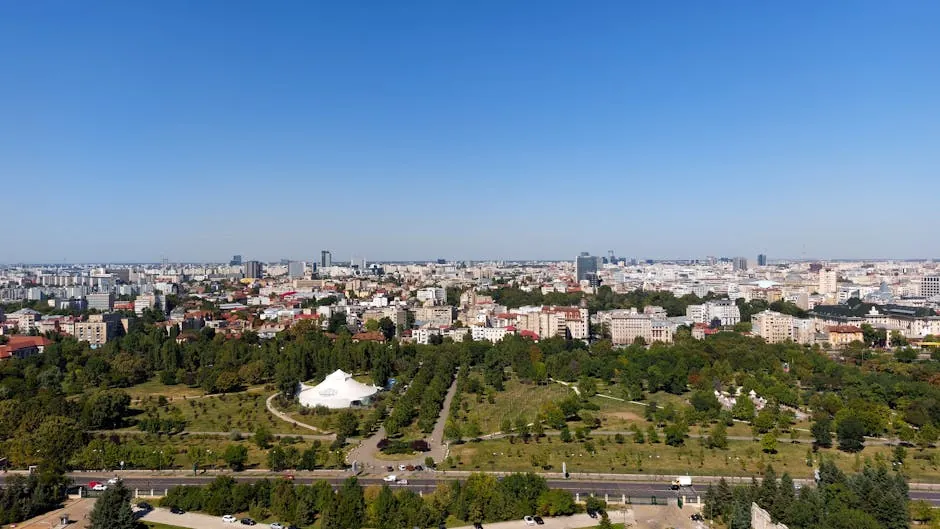
The capital. Highest salaries, deepest job market, every multinational present. Quality of Life Index: 131.1 (Crowdsourced Data) - lower than other Romanian cities but still solid. Safety index: 71.9. Best for corporate professionals, senior hires, and anyone who needs direct international flights. Traffic and air quality are the main drawbacks.[31][30]
Best expat neighborhoods: Floreasca, Dorobanți, and Herăstrău (north of the city, green, diplomatic quarter); Titan and Militari for value.
Cluj-Napoca
Romania's tech capital. Home to a massive university complex, a booming IT sector, and a young, international-feeling population. Quality of Life Index: 163.7 - the third highest in the country. Rents are the highest outside central Bucharest but justified by the lifestyle. Best for digital nomads, remote workers, and tech professionals.[30][31]
Timișoara
Ranked #1 in the "Perfect City 2026" quality of life ranking of Romanian municipalities. Strong German-influenced culture (historically multicultural), good salaries, direct connections to Western Europe, and lower congestion than Bucharest or Cluj. Best for families and long-term settlers.[33][31]
Brașov
Stunning mountain setting, strong tourism, manageable city size. Quality of Life Index: competitive with Timișoara in lifestyle factors. Rents are lower than Cluj but rising. Best for outdoor enthusiasts and those who want a quieter city without sacrificing infrastructure.[34]
Iași
Largest city in northeastern Romania, major university city, and the cheapest among the main expat destinations for rent and daily costs. Growing tech and research sector. Less international in feel than Bucharest or Cluj, but English is widely spoken. Best for students, academics, and cost-focused expats.[32][4]
City Comparison at a Glance
| City | Crowdsourced Data Quality of Life | Approx. 1-BR Rent | Best For |
|---|---|---|---|
| Timișoara | Highest in Romania[31] | €300-€450 | Families, long-term settlers |
| Cluj-Napoca | 163.7[30] | €400-€550 | Tech workers, nomads |
| Brașov | High[34] | €300-€420 | Outdoor/lifestyle expats |
| Bucharest | 131.1[30] | €450-€650 | Corporate professionals |
| Iași | Mid-range | €250-€380 | Students, budget expats |
Climate: Four Real Seasons
Romania has a temperate-continental climate - hot dry summers and genuinely cold winters. The climate is often compared to the northeastern United States.[35]
| Season | Months | Temperature Range (Bucharest) |
|---|---|---|
| Spring | March - May | 6°C to 18°C[36] |
| Summer | June - August | 18°C to 30°C (heat waves to 35°C+)[37] |
| Autumn | September - November | 8°C to 20°C[36] |
| Winter | December - February | -5°C to 3°C (cold snaps to -15°C)[36] |
The Black Sea coast (Constanța) runs warmer, with July highs around 28°C. Mountain areas (Brașov, Sinaia) are cooler year-round and see heavy snowfall. Best months to visit before committing: May-June and September-October.[38][35]
Internet and Remote Work Infrastructure
Romania is ranked 12th globally for fixed broadband speed as of April 2026. Average broadband download speed: approximately 143 Mbps market-wide, with leading providers (Orange, DIGI) delivering 160-207 Mbps. Home fiber connections at 1 Gbps are available in all major cities for under €6/month - the cheapest in Europe. Mobile internet averages around 58 Mbps.[5][39][40][41]
Coworking ecosystems are well-developed in Bucharest and Cluj-Napoca. Bucharest has an established network of coworking spaces in the central and northern districts. Cluj's tech hub cluster around the city centre has made it a favourite for remote-work communities.[42]
Buying Property
EU and EEA citizens can buy property in Romania - including land - under the same conditions as Romanian citizens. Non-EU citizens can purchase apartments and buildings freely but cannot directly own land; a common workaround is purchasing through a Romanian company (SRL).[43][44]
Bucharest apartment prices reached approximately €2,200/sqm by late 2025 - a 43% increase over two years. Premium neighborhoods (Aviatorilor, Primăverii) range from €4,600-€4,900/sqm. Closing costs typically run 1-3% of purchase price (notary fees, legal due diligence). Property transfer tax: 1% on values up to RON 450,000; 3% above. Annual property taxes are low by European standards - typically €100-€400/year for a city apartment.[45][44][46][24]
Mortgage rates for foreigners in 2026: 5.5-7.5% for RON-denominated loans. Rental yields in major cities remain attractive at 5-7% gross - above most EU capitals.[44][4]
Important: buying property in Romania does not automatically grant residency or citizenship.[44]
Your First 30 Days: The Checklist
- EU citizens: register at IGI within 30 days to get your Registration Certificate and CNP - required for banking, healthcare, and everything else[10][12]
- Get your CNP - 13-digit personal identification number issued with your Registration Certificate[11][9]
- Open a Romanian bank account - bring your CNP; BRD, BCR, ING Romania, and Revolut (available immediately) are expat-friendly
- Arrange health insurance - EU citizens can use EHIC while sorting out CNAS enrollment; non-EU residents need private insurance (€10-€40/month) meeting the €30,000 coverage minimum for visa compliance[21][17]
- Non-EU: apply for Type D visa before arrival via evisa.mae.ro; convert to residence permit at IGI within 30 days of entry[13][16]
- Register your rental contract with ANAF - required as proof of address for registration; ask your landlord before signing[12]
- Check digital nomad visa eligibility - minimum €6,000/month income required for the remote work permit[16]
- Monitor WorkinRomania.gov.ro - the new immigration platform launches August 2026 and will change how work visas are processed[15]
Key Data at a Glance
| Indicator | Value |
|---|---|
| GDP Growth (2025) | 0.7%[7] |
| GDP Forecast 2026 | ~0.1% (EC forecast)[7] |
| GDP Rebound 2027 | 2.3%[7] |
| Unemployment (2026) | ~6.3%[7] |
| Inflation (2026) | ~7.0%[7] |
| Personal Income Tax | 10% flat[3] |
| Micro-Enterprise Tax (SRL) | 1% of revenue up to €100k[20] |
| Dividend Tax (2026) | 16%[20] |
| Digital Nomad Visa Min. Income | ~€6,000/month[16] |
| Fixed Broadband Global Rank | 12th (April 2026)[40] |
| 1 Gbps Internet (monthly) | ~€5-6[5] |
| EF English Proficiency Rank | 11th globally[6] |
| Crowdsourced Data Crime Index (2026) | 32.8[27] |
| Bucharest Crime Index | 28.5[29] |
| Bucharest Apt. Price/sqm | ~€2,200[24] |
| Rental Yield (major cities) | 5-7% gross[4] |
| Schengen Full Integration | Since Jan 1, 2025[2] |
Romania's economy is navigating a rough patch - that's the honest summary of 2025-2026. But the structural advantages - 10% flat income tax, world-class cheap internet, full Schengen access, and a cost base 42% below the US - don't disappear during a fiscal consolidation cycle. The expats arriving now are buying in at the bottom of the sentiment curve.
References
Cost of Living in Romania. Prices in Romania. Updated Jun 2026 - ... Rent. Cost of living in Romania is, on average, 42.7% lower than in United States. Rent in Roman...
Travel authorities & visas - the FEPSAC Congress 2026 - EU/EEA/Swiss Citizens: Do not need a visa and can enter Romania with a valid passport or national ID...
Tax System in Romania 2026 - whereTOemigrate.io - Understanding Romania's tax system as an expat in 2026: income tax brackets, VAT, special regimes, f...
Who Rents, And What Do... - The latest update about rents in Romania. Rents, rental income, rental yields, vacancy, occupancy ra...
This Is How Fast Romania's Internet REALLY Is in 2025 - Check out Romania's internet speed - one of the fastest in Europe, both for broadband internet (whic...
Romania | EF English Proficiency Index | EF Global Site (English) - Discover the EF English Proficiency Index score for Romania
Economic forecast for Romania - Economy and Finance - The latest macroeconomic forecast for Romania. The European Commission publishes a full set of macro...
EBRD: Romania's GDP growth to reach 1.2% in 2026 - The European Bank for Reconstruction and Development (EBRD) projects that Romanias economic growth w...
How to Get a Registration Certificate / CNP in Romania as an EU Citizen - Learn how to obtain a registration certificate as an EU citizen in Romania. Follow my step-by-step g...
Moving to Romania: Registration Guide - MoveToEU - Complete guide to registering in Romania. Requirements, documents, fees and official procedures.
Obtain Residence in Romania - Updated for 2026 - Non-EU citizens need to obtain a Romanian residence permit, a long-stay visa and a work permit to be...
Romania Digital Nomad Visa 2026: Requirements, Costs, and How ... - Valid passport with at least 6 months of validity remaining ; Bank statements covering the last 6 to...
Romania Undertakes Major Immigration Law Reform for Non-EU ... - The new D/AM1 and D/AM2 visas will include the worker's Romanian personal identification number (CNP...
Romania Digital Nomad Visa: Low-Cost Schengen Living for ... - Income Threshold (Most Important): Monthly income of at least 29,604 RON (approx. €6,000) for the pa...
Expat health insurance in Romania | Feather - Expat health insurance is designed for foreigners staying in Romania for more than 90 days who need ...
Romania's New Golden Visa Program - EU Residence by Investment - After five years of successfully maintaining resident status, the investor becomes eligible to apply...
Cost of Living in Romania 2026 Thinking of moving to Romania ... - Here's a quick idea €800-€1,300/month (average for single person) Rent: €350-€900/month ðŸ½ï¸ Food: €20...
Romania Cost of Living Guide (2026) | ExpatLife.Ai - Romania combines a 10% flat personal income tax (joint-lowest in EU) with a remarkable 1% micro-ente...
Student Health Insurance Romania - Costs & Guide 2026 - Complete guide to student health insurance in Romania. CNAS coverage ~€20/month or private from €10/...
Romania Tax Guide for U.S. Expats: Rates, Filing & Benefits - Flat 10% income tax, U.S. Tax treaty benefits, and a comprehensive filing guide for Americans living...
2026 Tax Guideline for Romania - Accace - Download our Tax Guideline for Romania which provides all the necessary information for those who co...
Property Foreign Ownership Bucharest (2026) - What can foreigners own and buy in Bucharest? We study property rights, visas, buying process, taxes...
Healthcare in Romania for Foreigners | English Guide - Many private clinics in Romania have contracts with CNAS, meaning you can receive publicly funded ca...
International Health Insurance for Expats in Romania - Pacific Prime - International health insurance ensures expats in Romania have access to private healthcare everywher...
Eastern Europe: Crime Index by Country 2026 - Cost of Living
Bucharest, Romania: Safer Than You Expect According to the ...
[Romania stands out for high safety levels in Crowdsourced Data's quality of life index](https://www.romania-insider.com/Crowdsourced Data-romania-quality-life-safety-february-2025) - Romania's quality of life index has been evaluated at 142 out of 240, according to data from Crowdsourced Data,...
Top of the best cities to live in Romania in 2026 - spotmedia.ro - Top of the best cities to live in Romania in 2026
Timișoara, Bucharest ahead of other Romanian major ... - Timișoara, Bucharest, and Cluj-Napoca occupy the top three positions in the "Perfect City 2026" rank...
Best Cities to Live in Romania in 2025, Based on Safety, Infrastructure, Air Quality and More - These are the best cities to live in Romania: they are safe, offer plenty of options to spend your t...
Travel and Tourism Information. Climate and weather in Romania - Information about Romania climate and weather, seasons and temperature from RomaniaTourism. Travel b...
Climate in Bucharest (Romania) - Climate information for Bucharest (Romania) - weather averages in Celsius and Fahrenheit, millimeter...
Climate and Weather in Bucharest - Climate charts and advice on the best time to visit best time to visit Bucharest.
Weather Overview of Bucharest, Romania - Discover the comprehensive climate chart for Bucharest, Romania. Get detailed insights into the weat...
Internet Speed in Romania - Check the fastest broadband and mobile Internet Providers in Romania. Take a speed test and compare ...
Romania's Mobile and Broadband Internet Speeds - Speedtest ... - Romania ranked 54th in the world for mobile speeds and 12th for fixed broadband speeds during April ...
TOP 5 Cities in Romania for Remote Work and Living in 2026 - Complete guide to choosing a city in Romania for a digital nomad or remote worker. 2026 Ranking: Clu...
Romania Property Foreign Ownership: Last Update (2026) - The latest update about what foreigners can and can't own in Romania. Freehold, leashold, residency,...
Property Foreign Ownership Romania (2026) - Investropainvestropa.com "º blogs "º news "º romania-foreigner - What can foreigners own and buy in Romania? We study property rights, visas, buying process, taxes, ...
Best Areas to Buy Property in Romania (2026) - Investropa - For entry-level apartments in affordable neighborhoods like Militari, Berceni, or Rahova in Buchares...
Buying Property In Romania: The 2026 Ultimate Legal & Investment ... - Buying property in Romania in 2025? The legal steps, due diligence checklist, costs, and risks for i...
Cover photo by Botond Czapp on Pexels.
Frequently Asked Questions
How long do I need to register at the local office of the General Inspectorate for Immigration (IGI) after arriving as an EU citizen? You need to register within 30 days of arrival.
What are the required documents for registering and obtaining a Registration Certificate and CNP as an EU citizen in Romania? The required documents include your passport or national ID, proof of address, and proof of employment, self-employment, or sufficient funds (~RON 3,000/month).
What changes were introduced with Emergency Ordinance No. 32/2026 for non-EU citizens applying for work permits in Romania? The existing work permit system was replaced by two new long-stay visa types: D/AM1 (highly qualified workers, not quota-subject) and D/AM2 (general labour, subject to annual quotas). A new centralised digital platform, WorkinRomania.gov.ro, will replace the multi-step application process, with full launch expected on 8 August 2026. Until then, current rules apply: apply at your local Romanian consulate, then register at IGI on arrival. New visas include the worker's CNP directly on the visa sticker. Processing times under current rules are budgeted for 30-45 days for visa approval.
Want to see how Romania stacks up?
Are you seriously considering a move? Use our interactive tools to explore Romania's climate, tax brackets, and nomad visas.