Mauritius Digital Nomad Visa 2026: $1,500 Rule, 0% Tax Reality & Free Application
July 4, 2026
ShareIf you are planning to leverage the Mauritius Premium Visa in 2026, you need to strip away the marketing gloss and look at the operational friction. While the government-sponsored websites still hint at 48-hour turnarounds, the ground reality for the current fiscal year is a landscape of administrative bottlenecks where processing times have ballooned to several weeks or even 3 to 6 months for complex cases [35]. You must now demonstrate a rock-solid monthly income of at least USD 1,500 just to get past the initial digital gatekeeper [10]. This is no longer a casual "working holiday" permit; it is a calculated filter for the Mauritian International Financial Centre, designed to identify high-value individuals who can contribute to the economy without placing a single cent of burden on the local social infrastructure [1][4].
The strategic positioning of this visa has shifted significantly following the 2026 fiscal overhaul. This "Premium" status acts as a low-friction entry point, allowing you to stress-test the island's infrastructure - from the 5G reliability in the Moka Smart City to the logistics of Grand Baie - before you commit to the USD 375,000 real estate residency path or the USD 50,000 business permits [5][8]. It is essentially a "try-before-you-buy" residency model that avoids the heavy lifting of a formal Occupation Permit (OP) but comes with significant legal trade-offs that most relocation agents conveniently omit in their sales pitches [5][15].
The most critical update for the 2026-27 cycle is the complete restructuring of the tax code. The long-standing Solidarity Levy has been scrapped in favor of a permanent progressive system that tops out at a marginal rate of 35% for those with annual chargeable income exceeding MUR 12,000,000 [18][23]. While the "remittance-basis" of taxation still provides a sanctuary for your foreign-earned salary, the lack of a formal Residence Permit means you are trapped in a "Tax Residence Certificate (TRC) Black Hole" [15][16]. You may be physically present in the jurisdiction, but without the ability to produce a TRC, your home country’s tax authority - whether it’s in Pretoria, London, or Berlin - will likely still view you as their property [3][15].
1. What Is Mauritius's Digital Nomad Visa?
The Premium Visa is a strategic instrument managed by the Economic Development Board (EDB) to attract high-value talent and "retired wealth" without disrupting the delicate balance of the local labor market [3][4]. Legally, it is not a residency permit; it is an extended-stay permit that allows non-citizens to remain in Mauritius for more than 6 months, up to a maximum of 1 year, with the option to renew [4][10]. It is designed to facilitate the transition of global professionals into the Mauritian ecosystem while ensuring they remain "fiscal tourists" rather than integrated social participants [4][5].
Who Qualifies for the 2026 Cycle?
- Remote Professionals: Individuals employed by Domestic Mauritian Companies (DMCs) are strictly excluded. You must be employed by a company registered outside the jurisdiction or be a freelancer with a strictly foreign client base [4].
- Retirees: Individuals aged 50 or older who can prove they have the financial runway to live without local employment [6].
- Long-Stay Tourists: Those who intend to stay for more than 180 days for purely leisure purposes, often as a precursor to property investment [4].
Strict Legal Exclusions
The PIO (Passport and Immigration Office) and EDB are uncompromising regarding local market participation [4][9]. You are strictly barred from seeking employment with a local firm or providing services to Mauritian entities while on this visa [9]. If you invoice a local client from a Mauritian IP address while holding a Premium Visa, you are in material breach of your stay conditions and risk immediate deportation or rejection of your renewal [4][9].
The "residency trap" is the operational reality that most marketing fluff avoids. Because this is legally an extended tourist permit, you are a "second-class" resident in the eyes of the administrative system [3][15]. You will not be issued a National Identity Card, which is the "master key" to the island's bureaucracy. This exclusion is deliberate. By keeping you on a Premium Visa, the government ensures you remain a net consumer of services rather than a claimant of rights. For many, this means you are effectively "stateless" from a tax perspective - physically in Mauritius but legally anchored to your previous jurisdiction's tax net because the MRA will refuse to issue the Tax Residence Certificate (TRC) necessary for formal tax emigration [5][15].
Honest Warning: If your primary goal for moving to the island is to legally sever ties with a high-tax home jurisdiction, the Premium Visa is a wasted step. Without a TRC, you have no shield against the "days spent" tests of your home country. You will eventually be forced to transition to a Self-Employed or Investor Occupation Permit (OP) to secure the necessary tax documentation, a process that can take 3 to 6 months of additional bureaucratic labor [5][15].
2. Eligibility Requirements
The eligibility criteria for 2026 are designed to ensure that every long-stay visitor is a net contributor to the Mauritian International Financial Centre. The EDB uses financial thresholds as a primary filter to ensure that only those who can afford the island's high-inflation environment are granted entry [1].
Eligibility Checklist (2026 Thresholds)
Requirement Parameter (2026 Threshold) Mandatory Proof Min. Income (Principal) USD 1,500 per month [10][12] 3 months of certified bank statements or employment contract [9][10]. Dependent Income USD 500 per child [10][11] Birth certificate + parent's bank statements [9][10]. Labor Restriction 100% foreign-sourced income [4][9] Signed declaration + proof of foreign business location [4][9]. Health Insurance Full coverage for the total stay [9] Comprehensive travel and health insurance policy [4][9]. Accommodation Registered Mauritian address [9] Lease agreement, hotel booking, or host invitation letter [9][10]. Exit Guarantee Confirmed return/onward ticket [9][10] Airline ticket valid for a stay exceeding 6 months [9][10].
Analyzing the "Grey Areas" of Income
The MRA and EDB focus heavily on the "source" of your funds rather than just the total amount. Bank statements from the last 3 months are the primary evidence of self-sufficiency [10]. They are looking for consistency and liquidity. If you are a freelancer with sporadic payments, ensure your average over the preceding 90 days meets the USD 1,500 floor. A single large deposit at the end of the period is often flagged as suspicious and may lead to a request for a further 3 months of history, pushing your wait time into the 6-month danger zone [3][35].
Rejection risks are high for those relying solely on crypto-assets [16]. While Mauritius is aggressively implementing the OECD Crypto-Asset Reporting Framework to track digital wealth, the PIO remains fundamentally conservative [20]. If your income is 100% crypto-based, you should move funds into a standard "fiat" bank account at least 6 months before applying to create a clear paper trail that a traditional immigration officer can verify [16].
Honest Warning: The EDB's "evidence of funds" requirement is interpreted strictly. If your bank statements show your balance frequently dipping below the equivalent of your intended stay costs, your application will be flagged for "insufficient financial means." Maintain a healthy buffer of at least USD 5,000 in your account above the minimum requirements to avoid a manual review that could stall your application for 30 to 60 days [9][10].
3. Required Documents
Documentation is the point where 40% of applications fail in the 2026 cycle. The PIO has zero tolerance for "approximate" paperwork. Every scan must be a high-resolution digital file, and every document not in English or French must be accompanied by a certified translation and, in some cases, an apostille [10].
The Mandatory Document Suite
- Passport Bio-Data Page: Must be valid for at least 6 months beyond your intended stay.
- Passport Size Photo: Digital format, meeting the strict ICAO specifications [10].
- Airline Ticket: This must be a confirmed ticket, not a flight reservation. It must include a return or onward journey. Crucially, if your ticket is for a period less than 6 months, the authorities will truncate your visa duration to match that ticket [9][10].
- Travel and Health Insurance: Must cover the entire "intended duration" of your stay. A 12-month visa requires a 12-month policy.
- Proof of Income: A combination of an employment contract or a formal attestation of monthly revenue, supported by 3 months of bank statements [10][13].
- Accommodation Details: If staying with a host, you need a signed invitation letter, a copy of the host's ID (or residence permit), and their proof of address (utility bill showing less than MUR 100k balance if it’s a CWA/CEB statement) [9][10].
- Civil Status Documents: Marriage certificates for spouses and birth certificates for children are non-negotiable. These must be in English or French [10][12].
A common operational failure involves the 6-month rule for in-country applicants. If you enter on a tourist visa and apply for a Premium Visa, your new permit will only be as long as your remaining insurance and ticket validity [9]. If your return flight is scheduled for 4 months from your application date, you will only receive a 4-month visa, regardless of your intention to stay for 1 year [9][35].
Honest Warning: The "Return Ticket Trap" is a major financial hurdle. Immigration requires a physical ticket, not just a booking. This means tying up significant capital - often USD 1,000 to USD 2,000 - in a flight that might be 12 months away. Many nomads attempt to use "onward ticket" rental services, but PIO officers are now trained to verify ticket numbers in real-time. A fake ticket results in an immediate permanent ban from the jurisdiction [9].
4. Application Process: Step by Step
The 2026 modernization of Mauritian immigration has shifted all processing to the "E-Visa" system via the MauPass portal. This is part of a national digital transformation that includes 5G island-wide deployment and digitalized social services [24][26].
The Procedural Workflow
- Step 1: Digitalize All Files: Ensure every scan is under the 5MB limit and perfectly legible. Do not use phone "scans"; use a flatbed scanner to ensure clarity [10].
- Step 2: Online Submission: Apply via the portal at passport.govmu.org [9][14]. There is MUR 0 application fee at this stage [9].
- Step 3: Digital All-In-One Travel Form: Arriving passengers must complete this form for the Ministry of Health. It streamlines immigration checks at Sir Seewoosagur Ramgoolam International Airport [14].
- Step 4: The Waiting Game: While the official stance remains optimistic, the 2026 reality is a wait of 3 to 6 months for applicants from "high-risk" jurisdictions or those with complex income sources [35].
- Step 5: Activation: If applying from abroad, travel to Mauritius within 6 months of approval. Your 1-year clock starts the moment you clear immigration [9].
Citizens of the 114 pre-approved countries can enter as tourists and apply from within [8][15]. However, you must submit the application well before your 90-day tourist stay expires. If your tourist visa expires while your Premium Visa is "in processing," you are technically an illegal alien and could face a fine of MUR 10,000 or more upon departure [9].
Honest Warning: Do not fly to Mauritius expecting a quick approval. The administrative backlog is real. Reference the "Chagos deal" delays in Source 8; fiscal and administrative tightening has increased the scrutiny on all foreign entries. If your 90-day tourist stay runs out before your Premium Visa is granted, the PIO will likely require you to leave the territory and wait for the approval abroad [9][35].
5. Costs: Complete Fee Breakdown
On paper, the Mauritius Premium Visa is "free." There are no government levies for the application itself [4][9]. However, the actual "cost of entry" in the 2026 high-inflation environment is significant, especially given the depreciation of the Mauritian Rupee [3].
Comparative Cost Table (Est. 2026)
Item Fee (Local MUR) Fee (Est. USD/EUR) Notes Application Fee MUR 0 $0 / €0 Strictly free of charge [4][9]. Health Insurance MUR 25,000 - 60,000 $550 - $1,300 Annual cost for comprehensive coverage [9]. Return Flight MUR 45,000 - 90,000 $1,000 - $2,000 Must be confirmed beyond 6 months [9]. Translation/Apostille MUR 2,000 - 5,000 $45 - $110 Per document (if not in English/French) [10]. Prepaid Tourist SIM MUR 750 $17 200 GB for 30 days (Emtel/My.T) [26]. Min. Monthly Living 68,000 MUR $1,500 The mandatory legal floor [10].
While the visa is free, the liquidity barrier is high. To secure a 1-year stay, you must pay for a full year of health insurance upfront and purchase a return flight upfront. For a family of four, this can represent an immediate capital outlay of USD 6,000 to USD 10,000 before you even clear customs [9][10].
Honest Warning: The "Free Visa" is a marketing hook. When you factor in the mandatory upfront insurance premiums and the inflated costs of short-term "Airbnb-style" rentals (since you cannot sign a long-term local lease without a residency permit), your first month's expenses will be 300% higher than a local's. The new 5% tax on short-term general insurance starting January 1, 2027, will further inflate these costs [3][9].
6. Tax Implications and the 2026 Overhaul
The 2026-27 fiscal year marked the end of the Solidarity Levy and the Fair Share Contribution (FSC). In their place is a permanent progressive bracket system. For the investigative nomad, understanding Section 73B of the Income Tax Act is the only way to avoid the MRA's crosshairs [16][19].
The Remittance Basis and Section 73B
Under the current law, Premium Visa holders are taxed on a remittance basis [16]. This is your primary legal shield:
- Foreign Income: Salary or profits earned abroad are not taxable in Mauritius if they remain in your foreign bank account [16].
- Foreign Card Spending: Any expenditure in Mauritius made using a foreign-issued credit or debit card is legally excluded from the definition of remitted funds [4][10][16].
- Local Bank Deposits: Transfers into a Mauritian bank account are taxable. However, you can negate this by filing Form PV1 with the MRA, declaring the funds were already taxed in your country of origin [4][16].
The 2026-27 Tax Formula
If you do trigger a tax liability (e.g., failing to file Form PV1 or earning local interest), your tax is calculated as follows:
Annual Chargeable Income (MUR) 2026-27 Tax Rate First 500,000 0% [18] 500,001 to 1,000,000 10% [18] 1,000,001 to 12,000,000 20% [18] Above 12,000,000 35% [18][23]
Premium Visa holders are completely exempt from local social security and training levies like the Contribution Sociale Généralisée (CSG) [16]. However, be aware of the new Corporate Climate Responsibility (CCR) Levy of 2%, which targets high-earning entities and may affect you if you transition to an Investor permit later [10].
Honest Warning: Filing Form PV1 is not optional if you want to avoid the 20% to 35% tax hit on local deposits. You must submit this form to the MRA before October 15th of each year or before your departure from the island. Failure to do so will result in an automatic tax assessment based on your local bank inflows, and the MRA now has the power to raise assessments beyond statutory limits in cases of "wilful neglect" [16][20].
7. What This Visa Does NOT Give You: The Reality of Spatial Ecosystems
The Premium Visa is a lifestyle product, not a tool for social integration. It is designed to keep you at arm's length from the local system. In 2026, this manifests in frustrating daily logistical barriers.
Major Constraints
- The Mobile/Fiber Trap: Local providers like My.T and Emtel generally refuse to sign you up for postpaid fiber contracts because you lack a formal Residence Permit [26]. You will be stuck with prepaid SIMs or "AirBox 5G" solutions [25][26].
- No Path to PR: Time spent on a Premium Visa does not count toward the 3-year or 5-year residency requirements for a Permanent Residence Permit (PRP) [15].
- Utility Friction: Because you have no National ID card, opening a bank account at a local branch of a major bank like MCB can take weeks of manual due diligence [5][26].
Regional Hubs and Connectivity
- The North (Grand Baie/Pereybere): The lifestyle hub. Home to co-working spots like "Bloom" and "The Hive." Expect high rental premiums [31][34].
- The West (Tamarin/Black River): The surf/outdoor hub. Supported by "CoWork Zen" and "The Yard." Internet here can be spotty during cyclonic weather [31][33].
- The Center (Moka/Ebene): The commercial heart. Home to "Workshop17" and the best 5G coverage. If you need a corporate "vibe," this is your only option [31][32].
Honest Warning: You will feel like a "second-class" resident. Without a formal ID card, you cannot easily sign for a 1Gbps fiber package (costing MUR 6,500) and will instead pay more for a slower, prepaid 50 Mbps home solution (costing MUR 1,200). If your work requires consistent, high-speed upload for video or data-heavy tasks, your only reliable option is to rent an office at a co-working space like Workshop17, adding an extra MUR 10,000 to your monthly overhead [26][29].
8. Digital Nomad Visa vs. Alternatives
If your net worth exceeds USD 1 million or you have USD 50,000 in capital, the Premium Visa might be an inefficient choice. The 2026 budget introduced the "Golden Visa" to specifically target high-net-worth individuals.
Comparison Table: 2026 Residency Options
Feature Premium Visa Self-Employed OP Golden Visa (2026) Entry Cost $0 [9] USD 50,000 [15] USD 1,000,000 [24] Min. Income USD 1,500/mo [10] MUR 2m (Yr 3) [36] N/A [24] Local Work? No [4] Yes (Independent) [15] Yes [24] Path to PR? No [15] Yes [15] Yes (Direct) [24] Duration 1 Year [4] 10 Years [36] 20 Years (PRP) [24]
For those with domestic staff, the Golden Visa offers an "insider" perk: work permits for domestic workers are processed within 5 working days [24]. In contrast, a Premium Visa holder has no right to sponsor foreign domestic staff.
Honest Warning: Converting permits in-country is a bureaucratic nightmare. If you start on a Premium Visa and decide to open a business, you must restart the entire process with the EDB, transfer your USD 50,000, and provide a detailed 3-year business plan. If you have even a 10% intention of staying longer than 12 months, skip the Premium Visa and go straight for the Self-Employed OP [5][15].
Quick Reference Cheat Sheet
Category Specification Official Name Premium Visa [4] Administering Body Economic Development Board (EDB) [1] Income Threshold USD 1,500/month (Principal) / USD 500/month (Dep.) [10] Application Fee $0 [9] Processing Time 3 to 6 months (2026 reality) [35] Tax Resident Trigger 183 days (Physical presence) [15] Right to Work Strictly Foreign Entities [4][9] Key Exclusion No Tax Residence Certificate (TRC) [15]
References
[1] EDB Mauritius - Apex statutory body, https://edbmauritius.org/
[2] Doing Business in Mauritius 2020, GMNI.
[3] Tax residency in Mauritius - Smart Traveller, https://smarttraveller.mu/en/tax-residency-in-mauritius/
[4] Mauritius Premium Visa - Residency.mu, https://residency.mu/live/mauritius-premium-visa/
[5] Mauritius Premium Visa 2026: What's Changing - Smart Traveller, https://smarttraveller.mu/en/mauritius-premium-visa-2026/
[6] Mauritius Visas & Permits: IBN Immigration Solutions, https://www.ibn.co.za/mauritius/
[7] Andersen Budget Brief 2026-2027.
[8] Mauritius Premium Visa, https://relocatemauritius.com/mauritius-premium-visa/
[9] Stay in Mauritius under Premium Visa FAQs, EDB Mauritius.
[10] Premium Visa - Visa in Mauritius, https://visainmauritius.com/premium-visa/
[11] Mauritius Travel Visa Free - NDTV Lifestyle.
[12] Mauritius Premium Visa - IBN Immigration Solutions.
[13] Mauritius Now - Premium Visa: Live, Work, Play.
[14] Mauritius - Visarun AI Knowledge Base.
[15] Is Mauritius a Tax Haven? - TBI Mauritius.
[16] Mauritius Revenue Authority (MRA) - FAQs Premium Visa.
[17] Andersen Tax Card 2025-26.
[18] Mauritius Payroll & Tax Regulatory Updates - Ramco Systems.
[19] Andersen Budget Highlights 2023-2024.
[20] PwC Mauritius - Taxation Budget 2023-2024.
[21] MRA - Solidarity Levy Guidelines.
[22] Navigating the New Fiscal Reality: 2026/2027 Budget - Regan van Rooy.
[23] KPMG Mauritius Budget Highlights 2026-2027.
[24] PwC Mauritius - National Budget 2026-2027 Taxation.
[25] Smart Traveller - How to stay connected in Mauritius.
[26] New Horizon - Internet, phone and TV in Mauritius [2025 Edition].
[27] Quora - Best internet providers in Mauritius.
[28] My.T Home - Broadband Fibre offers.
[29] My.T Home - 1Gbps Package Specifications.
[30] My.T Broadband Only - Price List 2026.
[31] Digital Nomads in Africa - Mauritius Guide 2025.
[32] Voila Hotel - Work in Mauritius/Ebene Cybercity.
[33] Coworker.com - Coworking Spaces in Mauritius.
[34] The Hive - Coworking Locations.
[35] Relocate Mauritius - Application Process Backlogs 2026.
[36] Xpatweb - Mauritius Visa Options & Salary Thresholds.
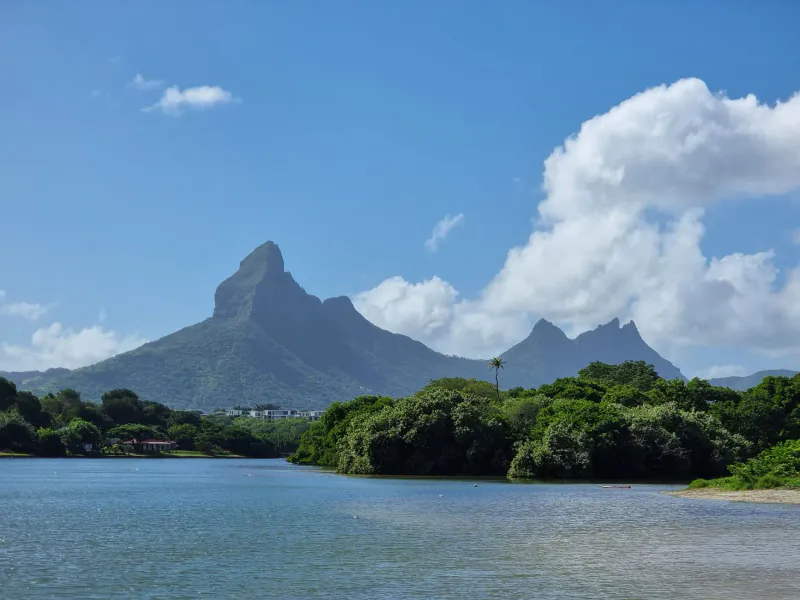
Cover photo by Gopinath Mohanta on Pexels.
Frequently Asked Questions
How much does the Mauritius Digital Nomad Visa cost? The application is completely free ($0 in government visa processing fees).
What is the minimum monthly income for the Mauritius Premium Visa? You must demonstrate a verifiable foreign income of at least USD 1,500 per month (or an account balance of USD 18,000), plus USD 500/month per dependent.
Do digital nomads pay local tax in Mauritius? You are exempt from local taxes for the first 183 days. Beyond 183 days you trigger tax residency, but only funds remitted and deposited into Mauritian bank accounts become taxable.
How long is the visa valid and can it be renewed? It is issued for an initial period of 1 year and can be renewed online from within Mauritius as long as you continue to meet the income criteria.
Cover photo by Gopinath Mohanta on Pexels.
Want to see how Mauritius stacks up?
Are you seriously considering a move? Use our interactive tools to explore Mauritius's climate, tax brackets, and nomad visas.
Looking for other options?
See how this visa compares against 55 other countries.
📊 Compare all 56 digital nomad visasHead-to-Head Relocation Comparisons
Compare taxes, safety, and living costs of Mauritius against top alternatives.